From specialty cafés on the Ao Nang beachfront looking out at the Andaman Sea and the limestone cliffs, to old coffee shops in Krabi Town's old quarter where locals sip iced oliang with patongko in the morning — Krabi has more than one kind of place to sit over a coffee.
Most people come to Krabi for the sea, the islands and the limestone cliffs. But if you're the kind of traveller who likes sitting in a café, Krabi has a coffee scene worth knowing about. Picture an iced filter coffee on the Ao Nang beachfront, the Andaman Sea and a wall of limestone cliffs rising out of the water in front of you. Or picture the other version — a wooden table in an old coffee shop in Krabi Town, an old local reading the newspaper at the next table, an ice-cold glass of oliang and a plate of hot fried dough sticks in front of you. Krabi lets you do both in one town.
Coffee in Krabi splits roughly into two worlds. The first is southern-style old coffee, which arrived with Krabi Town's Hokkien-Chinese community — coffee dark-roasted and brewed through a cloth sock, served as oliang or hot coffee with condensed milk. Southerners call it kopi, after the Hokkien root, and it has been drunk with breakfast for generations. The second is specialty coffee, which has grown with the tourism boom of the last few years — filter coffee and espresso from Thai arabica beans, smartly designed rooms, and in many cases a sea or cliff view as the draw.
To be straight with you, Krabi's specialty beachfront café scene is newer and pricier than the old coffee shops. But it has its own draw: the view, something a café in another town can't give you. The cheap, traditional thing — where Krabi life actually happens in the morning — is the old coffee shop in Krabi Town's old quarter. This guide walks you through both, plus the café areas and the drinks worth trying.
In Krabi you aren't only paying for the coffee — you're paying for a seat that looks out at the Andaman Sea and a wall of cliffs rising from the water.
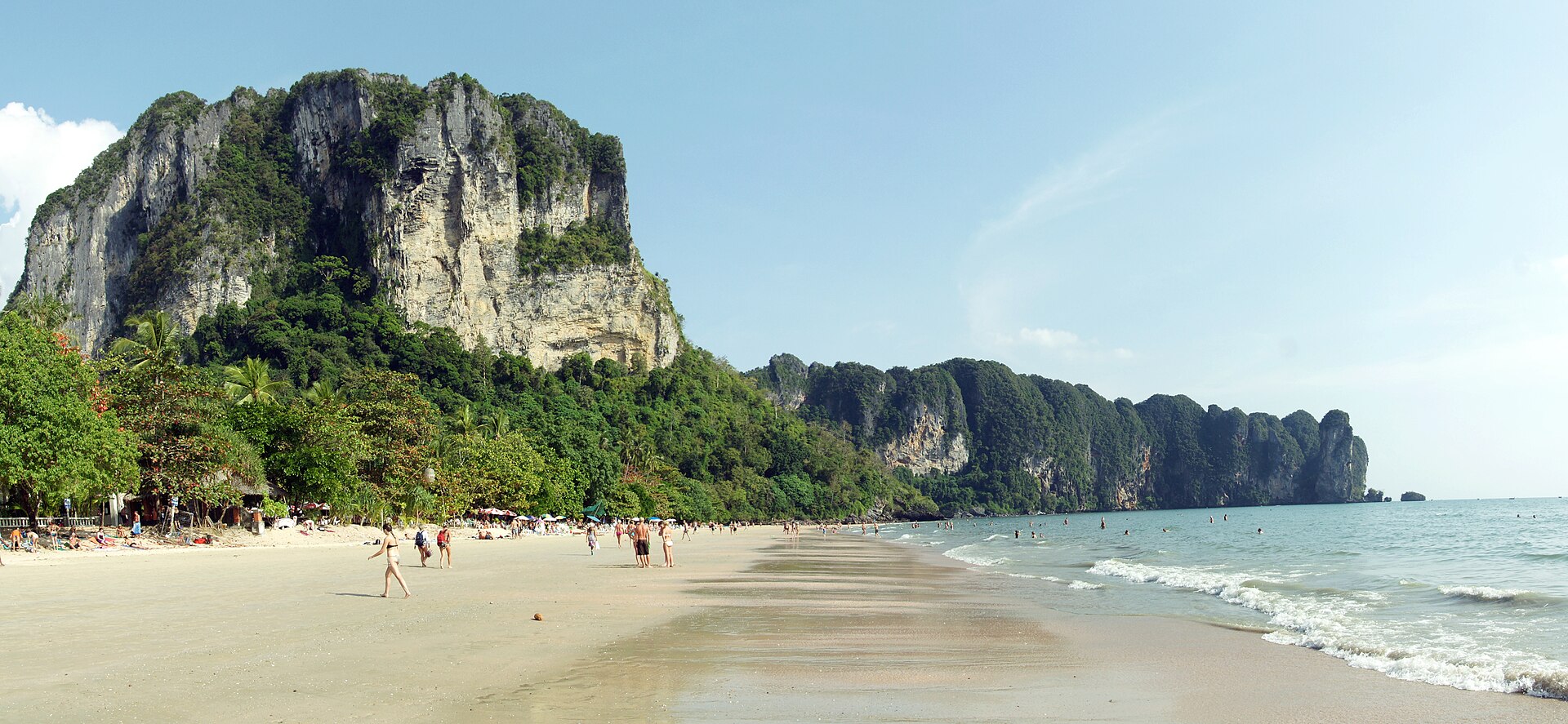
Ao Nang beach — the limestone cliffs and the Andaman Sea, the view many Ao Nang beachfront cafés angle their seats toward.
Krabi's best café-view spots cluster in Ao Nang, the main beach town and base for the area — there are cafés along the beach road that look out to sea, and hillside spots with a wide bay-and-cliff view. Another is Railay, reachable only by longtail boat, with beachfront cafés and bars where you can sit facing the cliffs and the sunset on the Railay West side. Krabi Town has no open-sea frontage, but it has riverside cafés on the Krabi River and old-quarter spots with a different charm.
Krabi's appeal is the drinks that suit the sea and a tropical coast — coconut coffee made with fresh southern coconut water, cold blended drinks, and filter coffee from Thai arabica. An iced coconut coffee on the sand as the light softens, watching the waves roll in below the cliffs, sums up Krabi in a single cup.
Get the types straight first, then decide whether today is about a sea view, a proper specialty coffee, or sitting in an old coffee shop like a local.
This is the café scene that sets Krabi apart — places on the beachfront or up a hill, with seats angled out at the Andaman Sea and a wall of limestone cliffs. Ao Nang is the easiest area to reach, with cafés along the beach road and spots up the hill with a wide bay view. Railay has beachfront cafés where you can sit facing the cliffs and the sunset. To be straight, the coffee ranges from fine to good and the prices run a little above an ordinary café, but what people come for is the view and the golden hour by the sea.
Over the last few years Krabi has seen more specialty cafés open in both Ao Nang and Krabi Town. Many brew filter coffee and espresso from Thai arabica beans, such as from the northern highlands; some roast their own or rotate seasonal beans. They serve it hot and iced, plus signature drinks that play with southern ingredients. The mood is usually a small, well-designed room with photo corners and seats you can work from — good for a proper coffee break in the day, or for getting out of the midday heat. It's a different mood from the beachfront places and the old coffee shops.
Krabi Town has long had a Hokkien-Chinese community, so its old quarter still has southern-style traditional coffee shops — coffee dark-roasted and brewed through a cloth sock, served as oliang (iced black coffee with sugar) or hot coffee with sweet condensed milk. Southerners call it kopi, after the Hokkien root, and it's usually drunk with patongko (fried dough sticks), kaya-toast or soft-boiled eggs for breakfast. These shops are plain, with old wooden tables and chairs, very cheap, and they're where Krabi locals actually sit and talk in the morning. Order an oliang with patongko and watch the slow rhythm of the town.
The south is coconut country and a tropical-fruit basket, and Krabi's cafés lean right into it. Coconut coffee blends espresso with fresh southern coconut water for a sweet, creamy, cooling cup — some shops serve it inside a real coconut. There are also lattes with mango or passionfruit, blended coconut drinks, and fresh-fruit smoothies. They suit Krabi's hot, humid air perfectly, and you'll find them in beachfront cafés and at drink stalls all over town. They're a good thing to drink during the day, or after a swim in the sea.
Krabi Town has a different café mood from the beachfront — riverside spots on the Krabi River where you sit watching longtail boats and the mangroves on the far bank, and small old-quarter cafés set in old shophouses with street art. It feels like a town rather than a resort, with more locals than tourists, and prices tend to be friendlier than Ao Nang. It's good in the morning or late afternoon, over a coffee watching the town go by, or as a break while you wander the old quarter before the riverside evening market.
If you want a decent cup that's easy to find before a full day on the water, the chains are the convenient answer. Café Amazon is everywhere — petrol stations, Ao Nang and Krabi Town — with friendly prices and a steady taste, and some branches do seasonal drinks with coconut or fruit. Starbucks and other chains are in the main tourist areas and malls. They're a good morning cup before you board a boat to the islands, or a mid-day top-up. Nothing fancy, but you get a coffee you can predict and an air-conditioned seat out of the heat.
Four areas every coffee lover should know — each a different experience, from a sea view to an old coffee shop.
The main beach town and base for Krabi, and the easiest café-view area to reach. There are specialty cafés, beach-road cafés that look out to sea, and hillside spots with a wide bay-and-cliff view. Walk along the Ao Nang beach road and you'll pass cafés and drink shops one after another. It's good in the afternoon after a swim, or in the evening waiting for the sunset. It's the area that balances convenience with a sea view.
If you want the Krabi tourists rarely see, the old quarter in Krabi Town is the answer. This is where the southern-style old coffee shops the locals actually use are found — sock-brewed coffee, oliang, hot coffee with condensed milk, drunk with patongko in the morning — mixed in with newer specialty cafés and shops in old shophouses with street art. The mood is local and town-like, and it's far cheaper than Ao Nang. It's a half-day that feels completely different from the beachfront cafés.
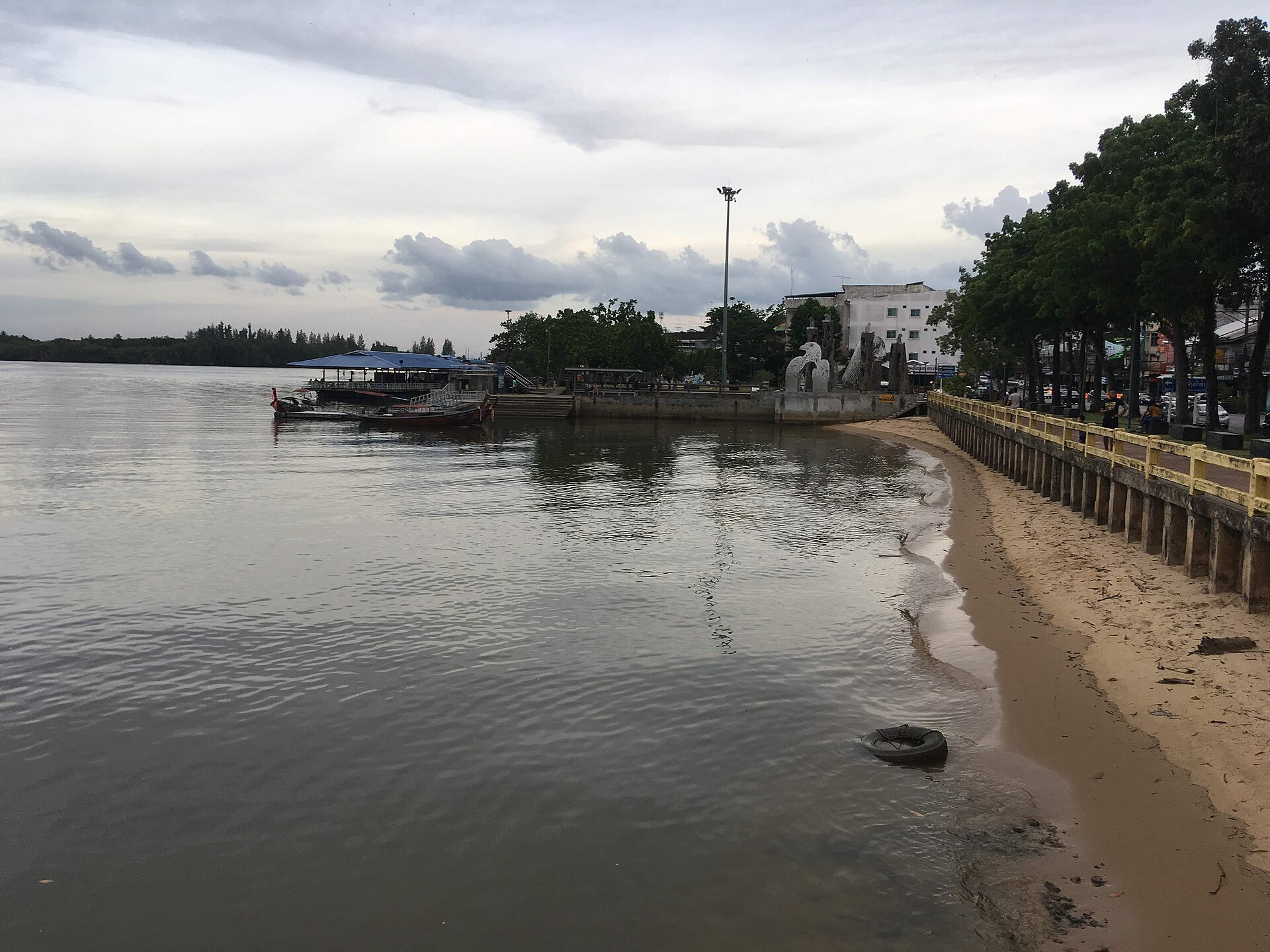
Along the Krabi River in town are cafés and spots where you sit looking at the river, the longtail boats and the mangroves on the far bank — calmer and more natural than the tourist strip. The light is good in the morning and the evening. It's a nice place to sit over a coffee and watch the boats come and go. The Chao Fah pier and the riverside evening market are close by, so you can have a coffee in the evening and then move on to the market for food. Prices are friendlier than the Ao Nang side.
The Railay peninsula is ringed by limestone cliffs, so no road reaches it — you take a longtail boat from Ao Nang (about ฿100–150). The beachfront cafés and bars here look out at the cliffs and the sea, especially on the Railay West side, which faces west for the full sunset. The mood is relaxed, full of climbers and nature-minded travellers. Prices run higher than in town because everything has to come in by boat, and places may open seasonally — check the return boats and allow time, especially during the monsoon when seas are rougher and boats reduce.
Cafés in Krabi open and close with the tourist seasons, so we point you to the kinds of place to look for rather than names that may change.
Look for cafés along the Ao Nang beach road, or up the hill on the way out of town, that angle their seats toward the Andaman Sea and the limestone cliffs. Many have a balcony or a roof terrace for a wide view. Order an iced filter coffee, a coconut coffee or a blended drink and take a seat by the rail; the hour before sunset is the prettiest. To be straight, the coffee is fine to good and prices run above an ordinary café because you're paying for the view — but the view and the golden hour are what you come for. Arrive before the light softens to claim a good seat.
Look for a small café that's serious about the coffee — a good espresso machine, a barista who cares, and Thai arabica beans to choose from. Some roast their own or show off seasonal beans. They serve filter coffee, espresso and signature drinks that play with coconut or southern fruit. The mood is usually a well-designed room with seats you can work from and photo corners. It's good for a proper coffee break in the day or for getting out of the midday heat — a different mood from the beachfront places and the old coffee shops. Prices are usually around ฿80–150 a cup.
In the Krabi Town old quarter there are still southern-style old coffee shops where locals actually sit in the morning. Look for an old shophouse with a sock-brew coffee pot and old wooden tables and chairs. Order an oliang (iced black coffee with sugar) or a hot coffee with sweet condensed milk, and have it with patongko (fried dough sticks), kaya-toast or soft-boiled eggs for a southern breakfast. The mood is plain — old regulars reading the newspaper and chatting — and it's very cheap, around ฿25–50 a cup. Sitting here gives you a side of Krabi the beachfront cafés can't. Come in the morning, when the locals are there, for the full atmosphere.
Along the Krabi River in town, look for a café whose seats face the river — watching longtail boats come and go and the mangroves on the far bank. The mood is calmer and more natural than the tourist areas, and the light is good in the morning and the evening for photos and for sitting back. Order a coffee or a cold drink and watch the river-town go by. The Chao Fah pier and the riverside evening market are close, so you can have a coffee in the evening and then move on to the market for food. Prices are friendlier than the Ao Nang side.
On Railay beach, ringed by limestone cliffs and reachable only by longtail boat, there are beachfront cafés and bars where you can sit facing the cliffs and the sea — especially on the Railay West side, which faces west for the full sunset. The mood is relaxed, full of climbers and nature-minded travellers. Order a coffee, a fresh coconut or a cold drink and watch the waves below the cliffs. To be straight, prices run higher than in town because everything comes in by boat, and places may open seasonally. Check the return boats and allow time, especially during the monsoon when seas are rougher and boats reduce.
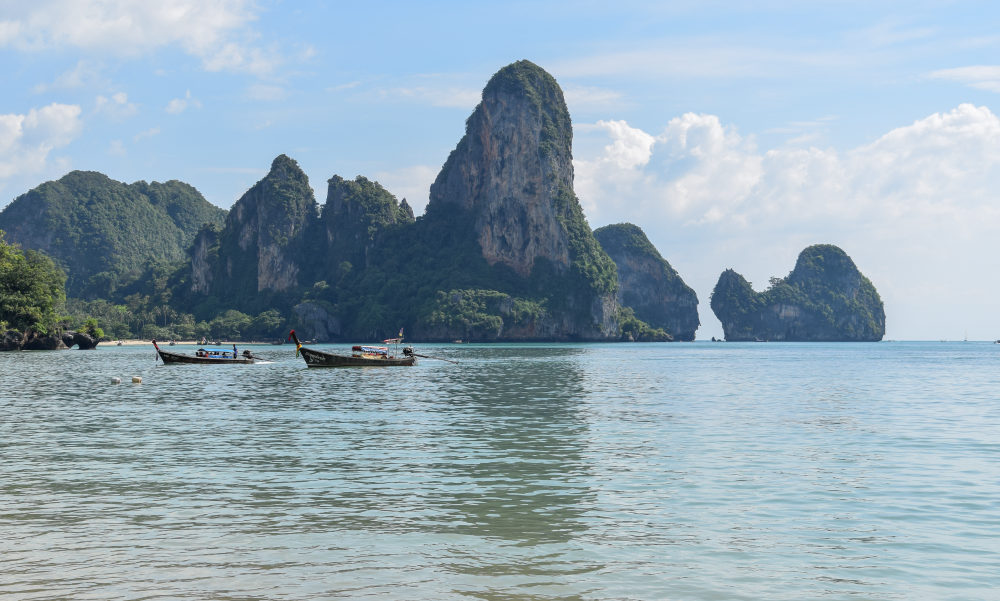
The Andaman Sea with its karst islands and longtail boats — the view the Ao Nang sea-view cafés and Railay build around.
What you drink at Krabi's cafés and coffee shops, from old-style coffee to cold drinks to beat the heat.
A drink that sums up Krabi Town's roots in a single glass — coffee dark-roasted and brewed through a cloth sock, served as oliang (iced black coffee with sugar, strong and sweet and refreshing) or as hot coffee with sweet condensed milk. It's the traditional southern style the locals call kopi. Order it with patongko or kaya-toast in the morning at an old coffee shop in the Krabi Town old quarter — it's how Krabi people have drunk coffee for a long time, it's cheap, and it comes with a genuinely local atmosphere.
The signature of Krabi's modern cafés — espresso shaken with fresh southern coconut water for a sweet, creamy, cooling cup. Some shops serve it inside a real coconut so you sip and scoop the flesh as you go; others blend it over ice. It's a drink that fits the coast's hot, humid air and a sea view perfectly. If you get the chance to sit at a beachfront café in Ao Nang or Railay, this is the cup to order.
If you like a clear, defined cup, many of Krabi's specialty cafés brew filter coffee from Thai arabica beans, such as from the northern highlands — fruity and naturally sweet. Order it hot to taste it fully, or iced for something refreshing in the heat. Some shops have several beans to choose from and will talk you through the tasting notes. It suits anyone who wants a good, consistent coffee rather than a very sweet one — a different mood from old-style oliang.
Beyond coffee, Krabi's cafés and drink stalls are full of cold drinks to beat the heat — fresh-fruit smoothies with mango, passionfruit or watermelon, blended coconut, and freshly pressed juices. They suit the hot, humid air and a day spent walking in the sun. You'll find them in cafés, beachfront places and drink stalls all over Ao Nang and Krabi Town, prices are friendly, and they're good during the day or after a swim. They're also the option for anyone who doesn't drink coffee.
Specialty cafés and most places in Ao Nang take both cash and PromptPay (QR scan), and many take credit cards too. Old coffee shops, drink stalls and small places in Krabi Town tend to take cash or PromptPay first, so it's worth carrying some small cash for small shops and markets. If you'll need internet while island-hopping or getting around, see our Thailand eSIM & SIM guide before you travel.
The thing to know is that the most traditional isn't the most expensive — an old coffee shop in the Krabi Town old quarter gives you a deeper, far cheaper slice of the south than a smart beachfront café. Don't be shy about walking into a plain local place; just order an oliang and some patongko. The specialty beachfront cafés are good for sitting back, photos and the sunset hour. Treat them as two different experiences and try both on one trip.
For beachfront cafés that face west (Ao Nang, Railay West), the golden window is about an hour before sunset — grab a seat by the sand before the light softens. For old coffee shops, go in the morning to catch the locals at their tables. The thing to watch is the monsoon (May–October): it rains often, the open sea is rougher, boats to Railay and the islands may reduce or shift, and some beachfront cafés cut their hours or close. Check the weather and opening hours first. See more in the best time to visit Krabi.
The Krabi Town riverside — the calm riverside café area, watching longtail boats and the mangroves, near the riverside evening market.
Staying around Ao Nang is the easiest way to reach the beach cafés and the eating on foot, while Krabi Town suits you if you want to be near the old coffee shops and to spend less.