One thing at a time, and what to order
From the market at the heart of town to the roadside produce worth taking home
 1
1
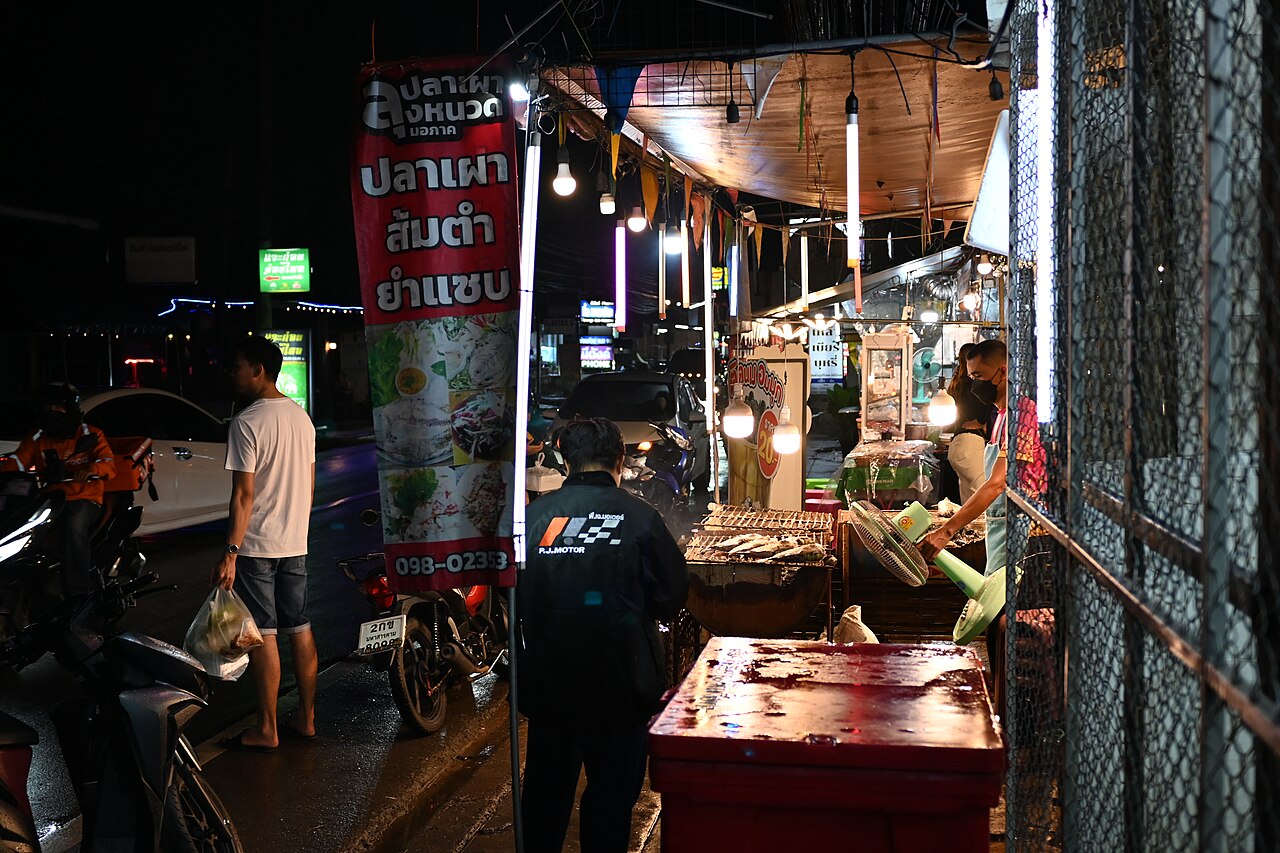
This is the market at the heart of Pak Chong — an evening market in the centre of town where locals come to buy dinner and graze on the way home. It's open most evenings, split into food, fresh-produce and goods zones, and it's an easy place to wander and nibble as you go.
The spread is everything: grilled pork and chicken skewers at a few baht each, hot sticky rice; som tam, larb and koi with that bold Isan kick; fried snacks, grilled fish and prawns; and seasonal fruit like custard apple, sweet corn, rambutan and mangosteen. It's far cheaper than the cafés and resorts on the hill — a pork skewer is around ฿10, and you can eat well for about ฿80-150 per person.
 2
2
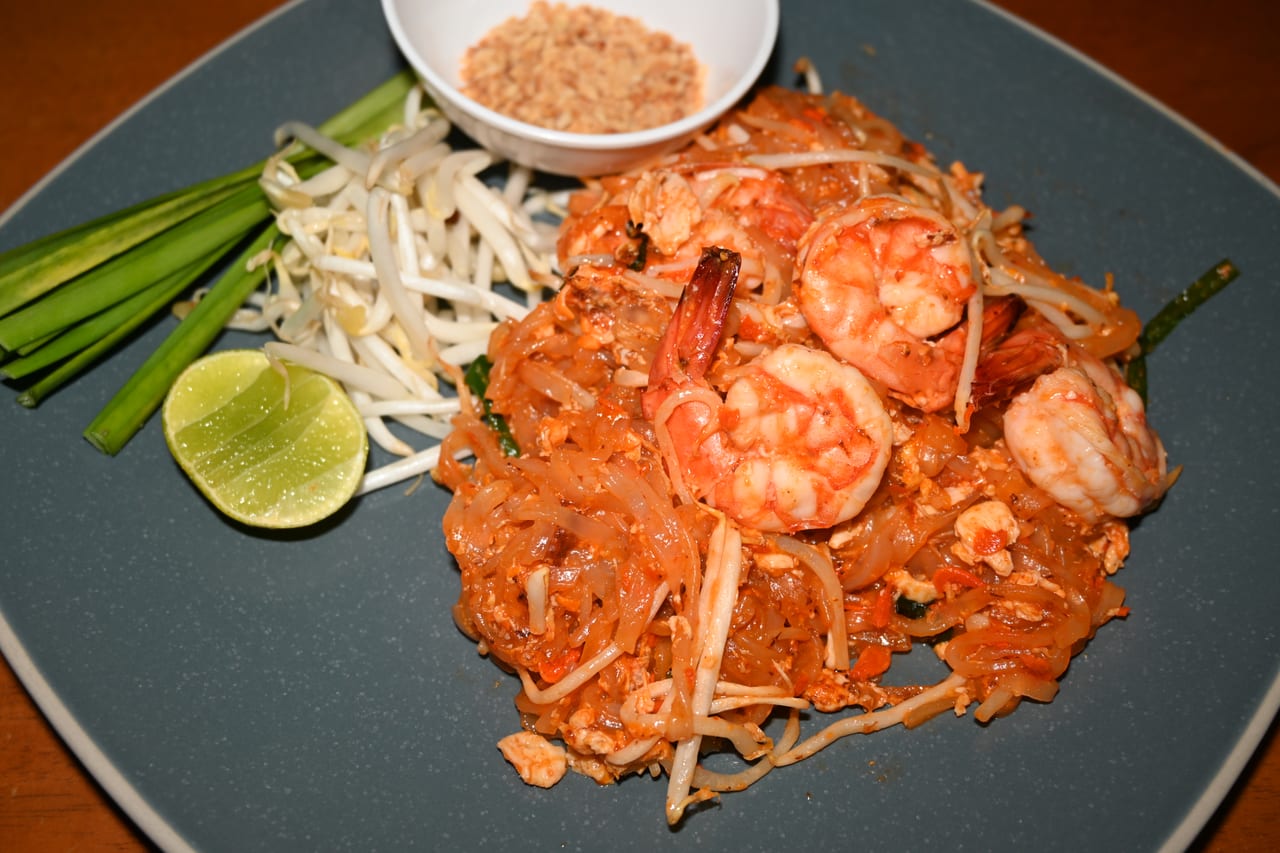
If you want to eat something genuinely of this region, try this — pad mee Korat is the stir-fried thin rice-noodle dish from Nakhon Ratchasima. It looks like pad Thai but it's a different beast: drier, bolder, leaning sweet-salty-sour from a sauce simmered with palm sugar, tamarind and fermented soybean.
Where it parts ways with pad Thai is that it usually skips the tofu, pickled radish and crushed peanuts, so the flavour rides on the noodles and the sauce. Korat locals like it as a set with som tam and fresh vegetables. You'll find it in the night market, at roadside shops along the Pak Chong-Korat stretch, and in Nakhon Ratchasima city — a light, filling, cheap lunch.
 3
3
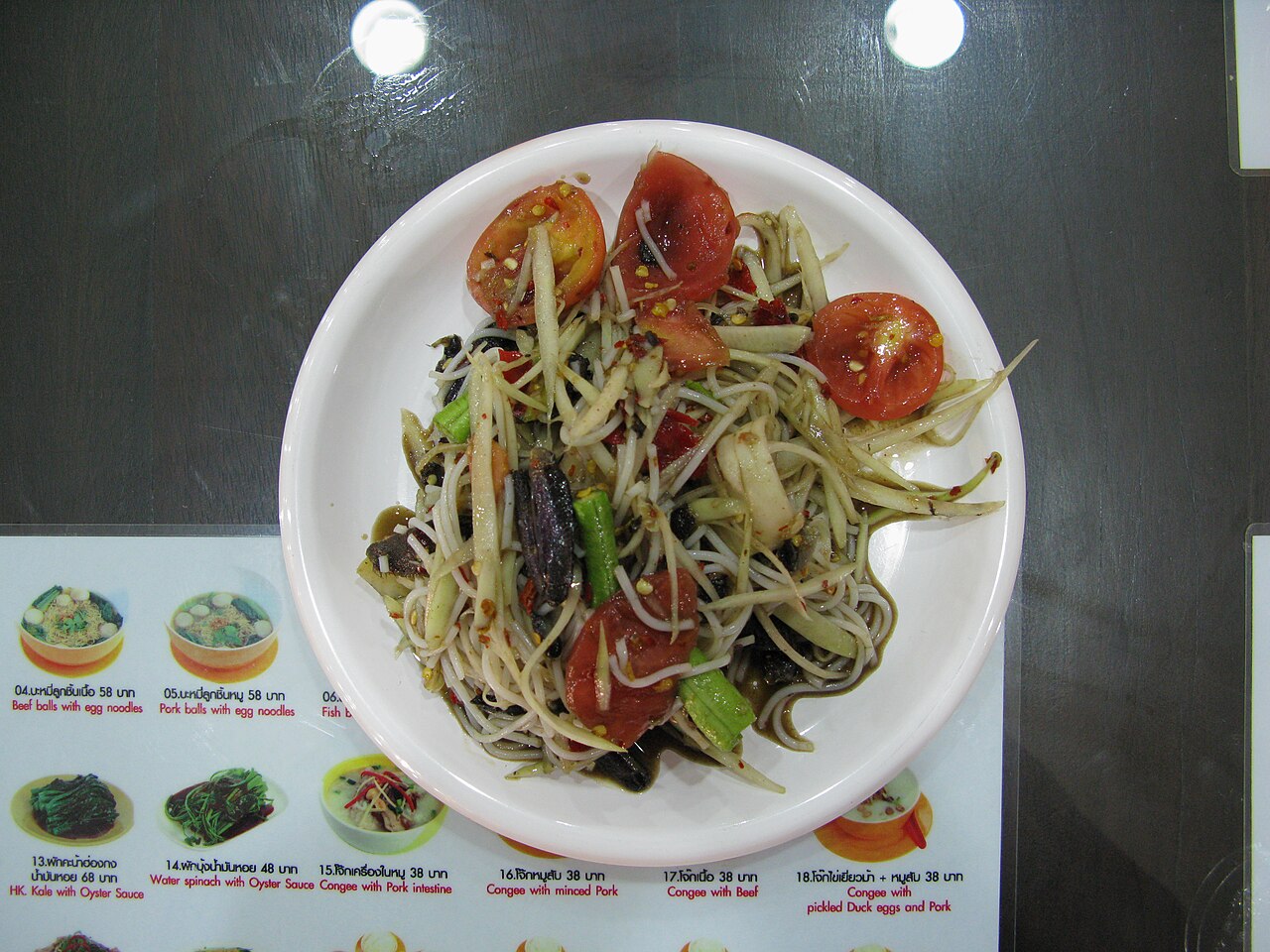
Korat is the gateway to Isan, so Isan food is on every corner here — and it's the cheapest, most punchy food in the area. Som tam and grilled chicken stalls open from midday into the evening, in the night market and along the main roads.
What to try: som tam in all its forms — som tam Thai, with crab, or the funky fermented-fish (pla ra) version; larb, koi and nam tok with hot sticky rice; moo yor and Isan sausage (sai krok Isan), tangy snacks you can take home; and tom saap or aom curry if you want a proper meal. Most plates run ฿40-80, so ordering a spread to share still comes cheap.
 4
4
Honestly, the dinner locals around Pak Chong and Korat arrange most often is mu kratha — a charcoal burner in the middle of the table, a moat of broth around the rim, a dome to grill on, and one price to eat as much as you like: pork, chicken, seafood, vegetables and meatballs, all in one meal. It's made for groups and families.
Most places charge around ฿150-300 per person (buffet; drinks billed separately), clearly cheaper than resort dining on Thanarat Road. The restaurants tend to sit in Pak Chong town and along the main roads, where you can settle in for a long, easy, wallet-friendly evening — a filling, good-value way to close the day.
 5
5
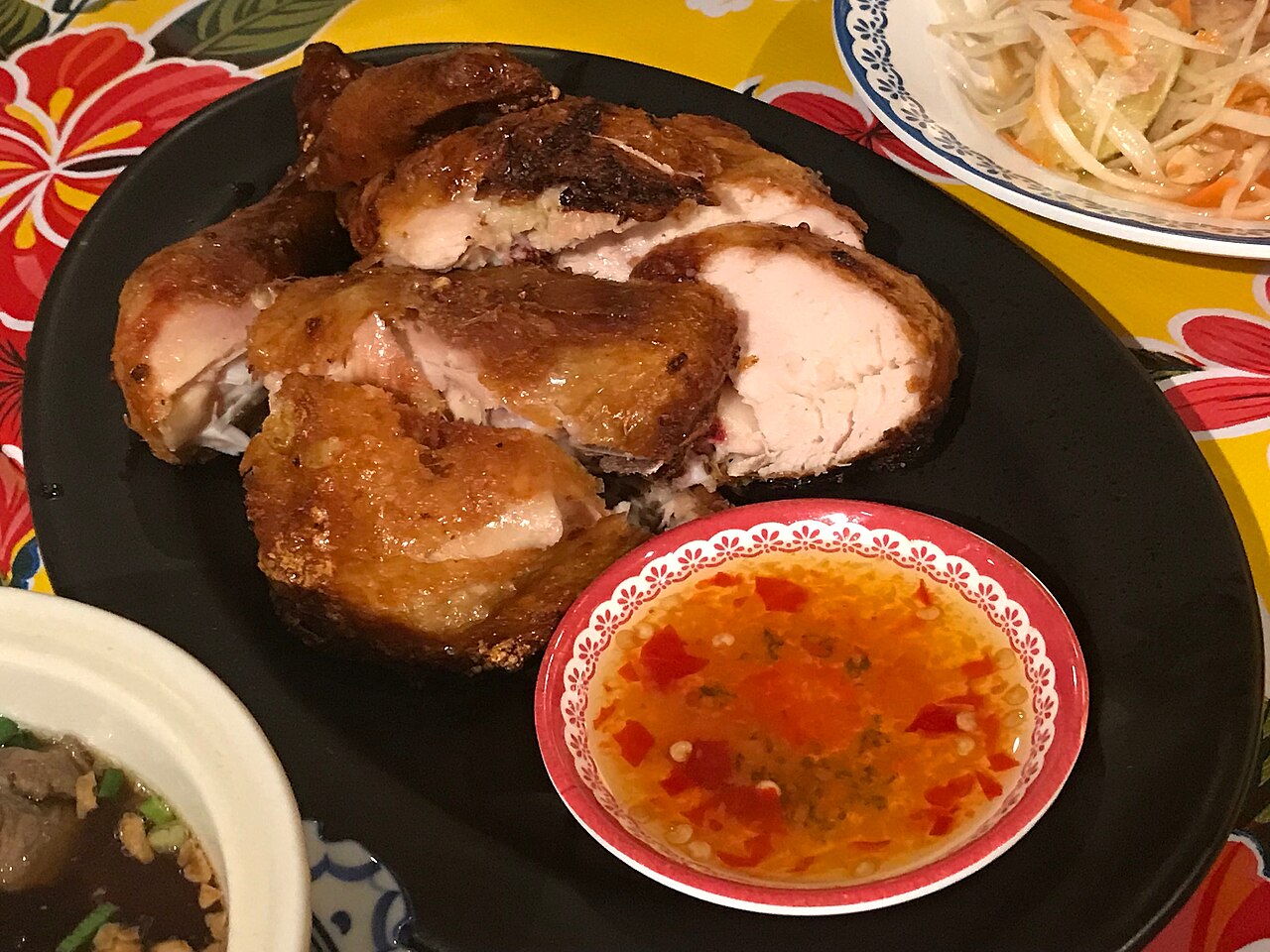
As you drive the Pak Chong-Korat stretch, you'll pass grill stalls trailing smoke every so often — this is the cheapest, tastiest grab-and-go food around here. Gai yang (grilled chicken) is marinated and charcoal-grilled until the skin crisps, eaten with sticky rice and a tart jaew dipping sauce. Moo ping skewers run around ฿10 a stick, sweet and tender, easy to keep eating.
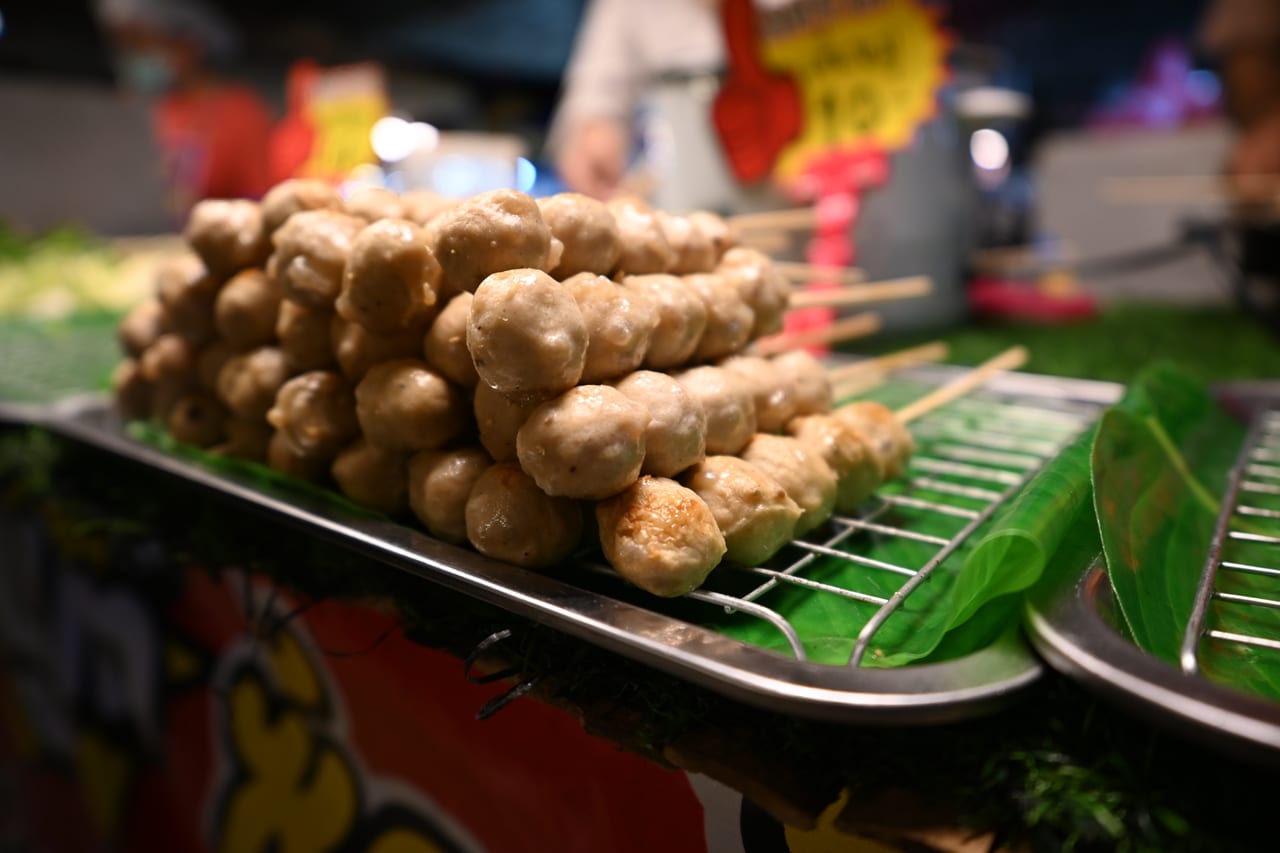
There are also grilled meatball skewers dipped in sweet sauce, and grilled prawns and fish at the market stalls. It's all quick food for the road or to take back to your room, and the prices are easy to agree on, starting in the tens of baht — a light meal or a snack between sights.
 6
6
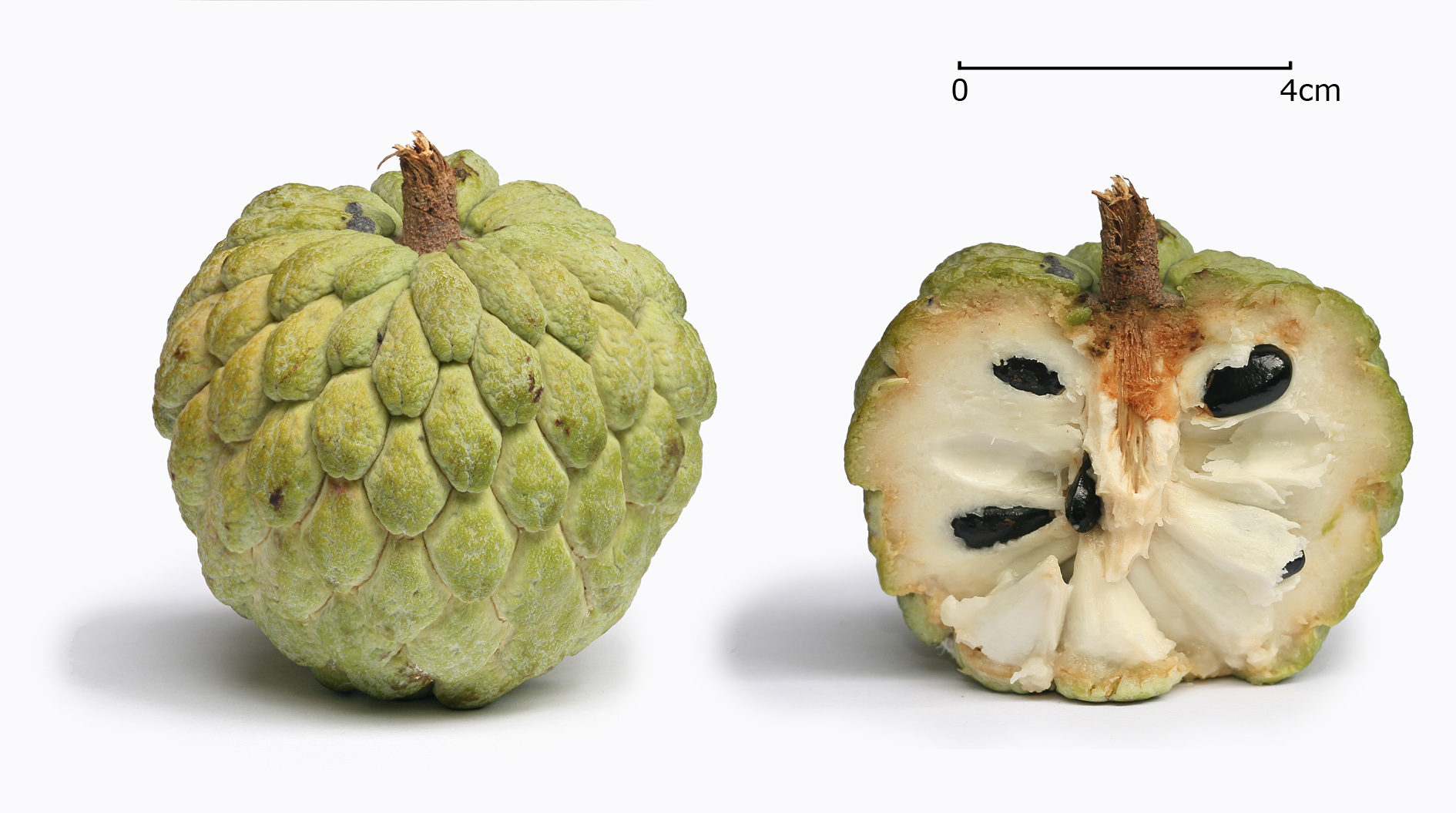
Pak Chong is known for two things grown here — custard apple, especially the Phet Pak Chong variety: big, firm-fleshed, gently sweet and with fewer seeds, a famous take-home buy. Custard apple season runs roughly mid-year into the late rains (around June-September), when roadside stalls along the route sell it fresh.
The other is sweet corn grown locally, boiled and grilled at roadside stalls and farms such as Suwan Farm, a regular stop for a hot ear of corn. It's available almost year-round and juicier than corn from the big cities. Both are cheap and fresh — worth grabbing a bag to take home in the car.
7
Beyond the grab-and-go, Pak Chong has take-home buys and home-style food to stock up on before you leave. The fresh markets and town stalls carry traditional Thai sweets — kanom krok coconut cups, sticky rice with mango, grilled bananas, kanom tuay — at a few tens of baht, easy snacking as you walk the market.
The popular take-home buys are moo yor and Isan sausage, and seasonal fruit like custard apple, rambutan and mangosteen, plus local milk and dairy from the dairy farms around here, sold in shops and markets. Eat a meal in town and pick up your souvenirs in the same place — it saves both money and time compared with buying at the tourist spots on the hill.