Home Hiroshima Japan Hiroshima Prefecture About
Home  ›  Asia  ›  Japan  ›  Hiroshima  ›  Hiroshima Food Guide
Hiroshima Food Guide · 2026

What to eat in Hiroshima
6 dishes the city claims as its own

Hiroshima is far more than its painful history — it is a city that eats with real confidence. Layered okonomiyaki that people here refuse to confuse with the Osaka version. Oysters so fat they supply sixty percent of Japan's output. Spicy cold tsukemen noodles, conger eel rice on a ferryboat, and maple-leaf cakes that taste better here than anywhere. Here is where to start.

Why eat here

Hiroshima's table runs deep

Six rivers flow through Hiroshima before emptying into the Seto Inland Sea — carrying minerals from the Chugoku mountains into a sheltered bay that grows oysters at a rate the rest of Japan depends on. Hiroshima Prefecture produces around 60% of Japan's farmed oysters, and the plankton-rich water from those rivers is exactly why they grow so fat. Every October the season starts and the city's oyster bars fill up again.

Alongside the oysters, Hiroshima has its own firm views on cooking. Hiroshima-yaki, the city's layered okonomiyaki, is nothing like what you find in Osaka — the technique is different, the volume is larger, and locals are quietly emphatic about the distinction. Tsukemen, cold thick noodles dipped in a spiced broth, became a Hiroshima speciality through decades of local refinement. Anago-meshi, conger eel glazed in sweet soy over dashi rice, originated on Miyajima in 1901 and has barely changed since. And momiji manju — the little maple-leaf cakes — are the most purchased souvenir in Hiroshima and genuinely worth eating fresh off the iron. We chose six dishes that together tell this city's full story.

The essential dishes

6 things to eat before you leave Hiroshima

Ranked by how irreplaceably local they are — dishes you will not find done quite like this anywhere else.
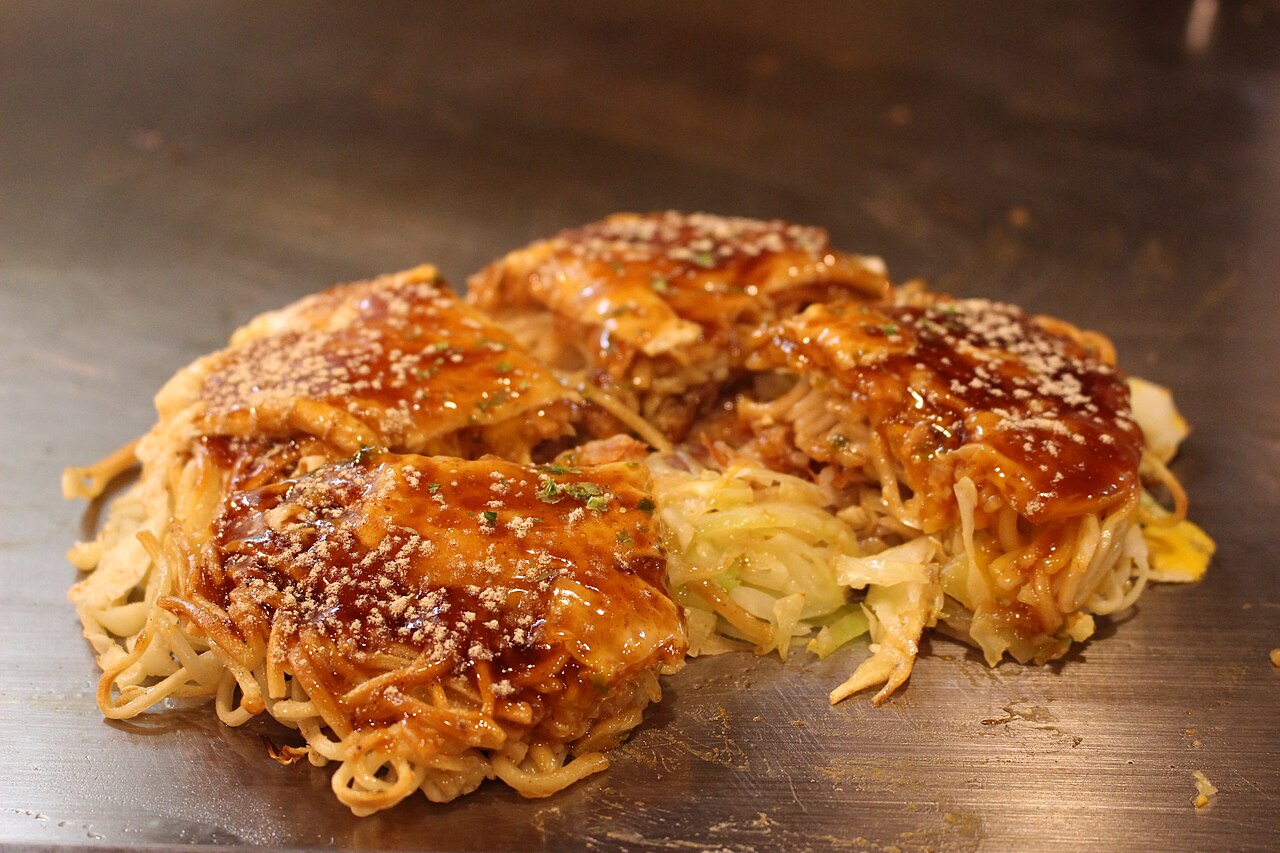
Hiroshima-style okonomiyaki on a hot iron griddle — thick layered savoury pancake with crispy noodles and cabbage, glazed with rich brown okonomiyaki sauce 1
Hiroshima-yaki (広島焼き)
Hiroshima okonomiyaki · layered, not mixed · the city's defining dish

If you have eaten okonomiyaki in Osaka, set that aside for now — the Hiroshima version starts with a thin crepe of batter on the iron, then a mountain of shredded cabbage (genuinely enormous), then fried yakisoba or udon noodles, then pork slices or seafood, then another thin batter layer. Underneath, separately, a cracked egg fries in the pan's edge before the whole stack is flipped onto it. You end up with distinct, readable layers — soft sweet cabbage, crisp noodles, fragrant egg — all topped with thick okonomiyaki sauce and Japanese mayonnaise. It is a much larger plate than the Osaka version and the flavour is richer for it. The debate between the two cities is settled, locally, in Hiroshima's favour.
Where: Okonomimura (お好み村 · 5-storey building with 20+ stalls on floors 2–4 · near Hondori Arcade) · neighbourhood restaurants throughout the city
Price: ¥800–1,500 / pancake depending on toppings
Rule: Walk all the floors at Okonomimura before choosing — the one with something sizzling right now is worth the wait
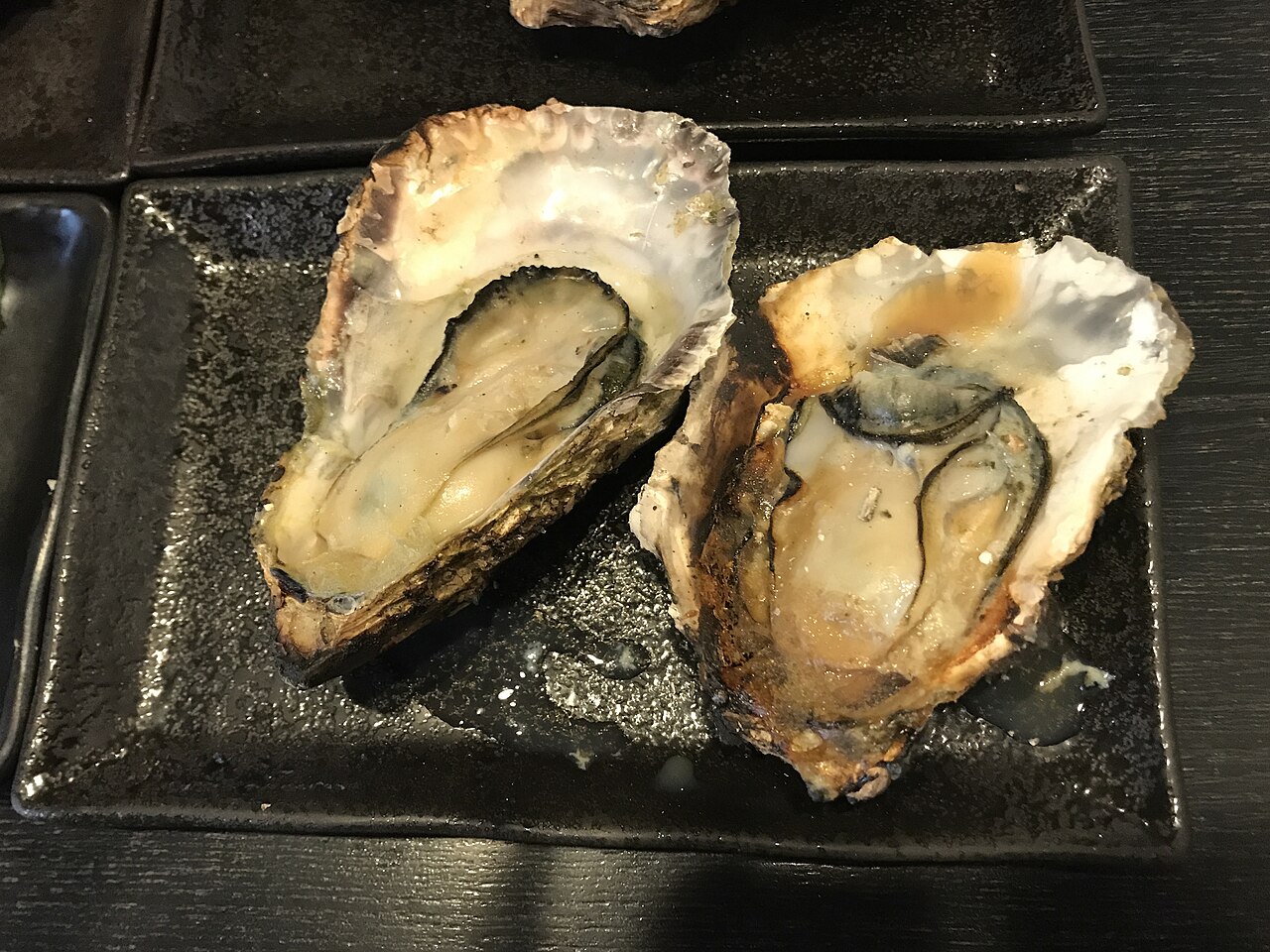
Two grilled Hiroshima oysters on a dark slate plate — large plump flesh with a creamy, briny interior, just opened from the shell 2
Hiroshima Oysters (広島牡蠣)
Hiroshima kaki · Japan's #1 oyster producer · 60% of national output

If you have ever bought oysters at a Japanese supermarket and wondered where they came from, the answer is probably Hiroshima. Six rivers drain mineral-rich mountain water into a sheltered bay that produces the ideal conditions for fast-growing, flavour-dense oysters. The result is a shellfish that is visibly larger than oysters from most other Japanese prefectures — and the flavour is correspondingly deep, briny and sweet. You can eat them three ways: nama-gaki (raw, with a squeeze of lemon), yaki-gaki (grilled over charcoal until the edges just curl and the juices concentrate), or kaki furai (breaded and fried to a crisp golden shell). All three are correct answers.
Where: Kakiya (牡蠣屋) on Miyajima · seafood restaurants around Hondori · izakayas throughout the city from evening
Best season: October–March (plumpest, sweetest) · summer oysters are thinner and less flavourful
Price: Raw or grilled ¥300–600 / oyster · kaki furai set ¥1,000–1,800
Seasonal note: If you visit June–August, oysters are still on menus but past their best for the year. Good restaurants will tell you whether their stock is fresh or from cold storage.
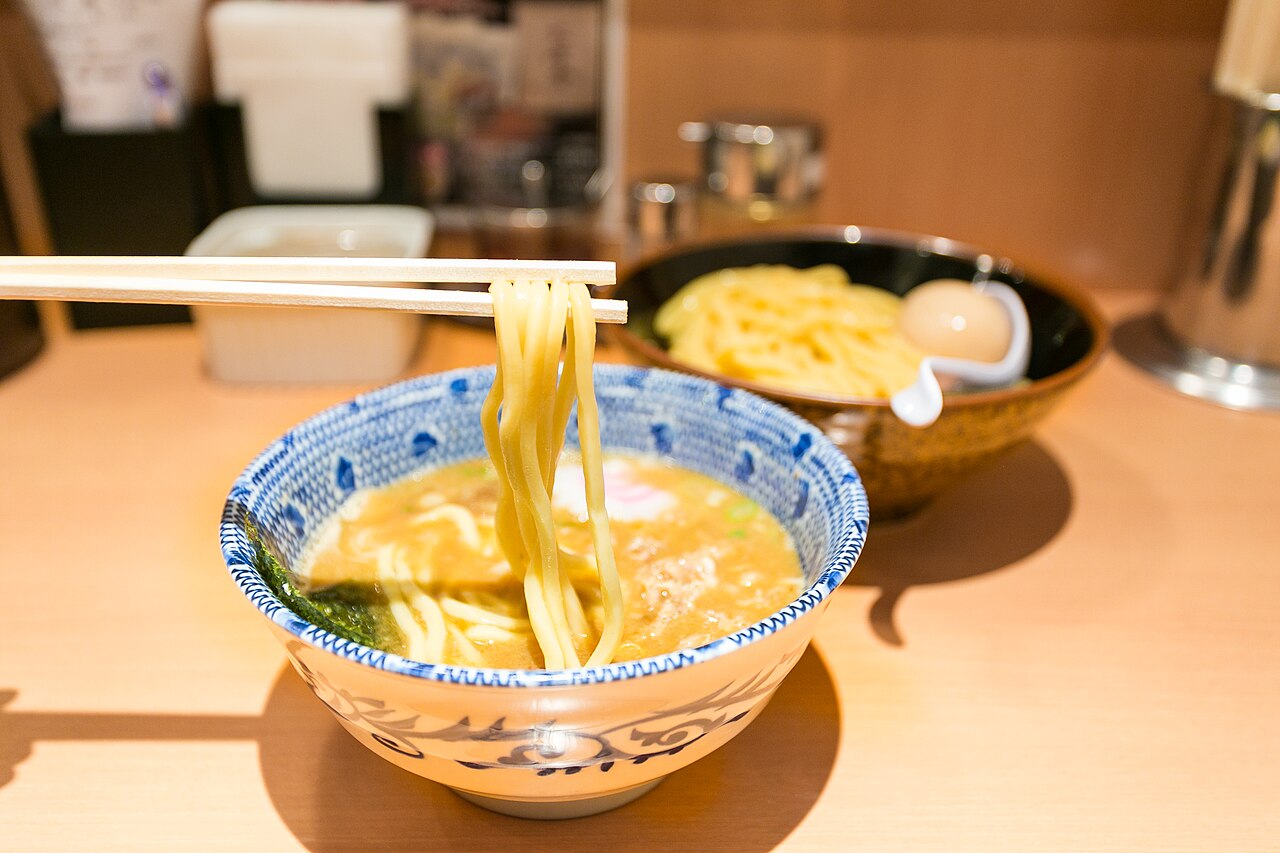
Hiroshima tsukemen — thick yellow noodles in a blue-and-white bowl, chopsticks lifting a portion, with a dark dipping broth bowl in the background 3
Tsukemen (つけ麺)
Cold dipping noodles · Hiroshima's spicy, seafood-dashi version

Tsukemen — thick noodles eaten by dipping into a separate broth rather than swimming in it — originally came from Tokyo. Hiroshima took the format and rewrote the broth. The Hiroshima version uses dried chilli, chilli oil, sesame, rice vinegar and seafood dashi from the Seto Inland Sea, served cold. You lower a tangle of thick noodles into it, coat each strand, and eat. The broth is bold and layered — spicy on the front, nutty in the middle, deeply savoury and faintly sour throughout. Most restaurants let you choose your chilli level from zero to ten. At the end, staff bring hot water to pour into your remaining broth so you can drink it as a warm soup — do not skip this part.
Where: Mita Seimenjo (三田製麺所 · multiple branches in Hiroshima) · tsukemen shops near the station and throughout the city centre
Price: ¥750–1,000 / bowl by noodle size
For first-timers: Start at spice level 2 or 3 — the full flavour comes through without burning
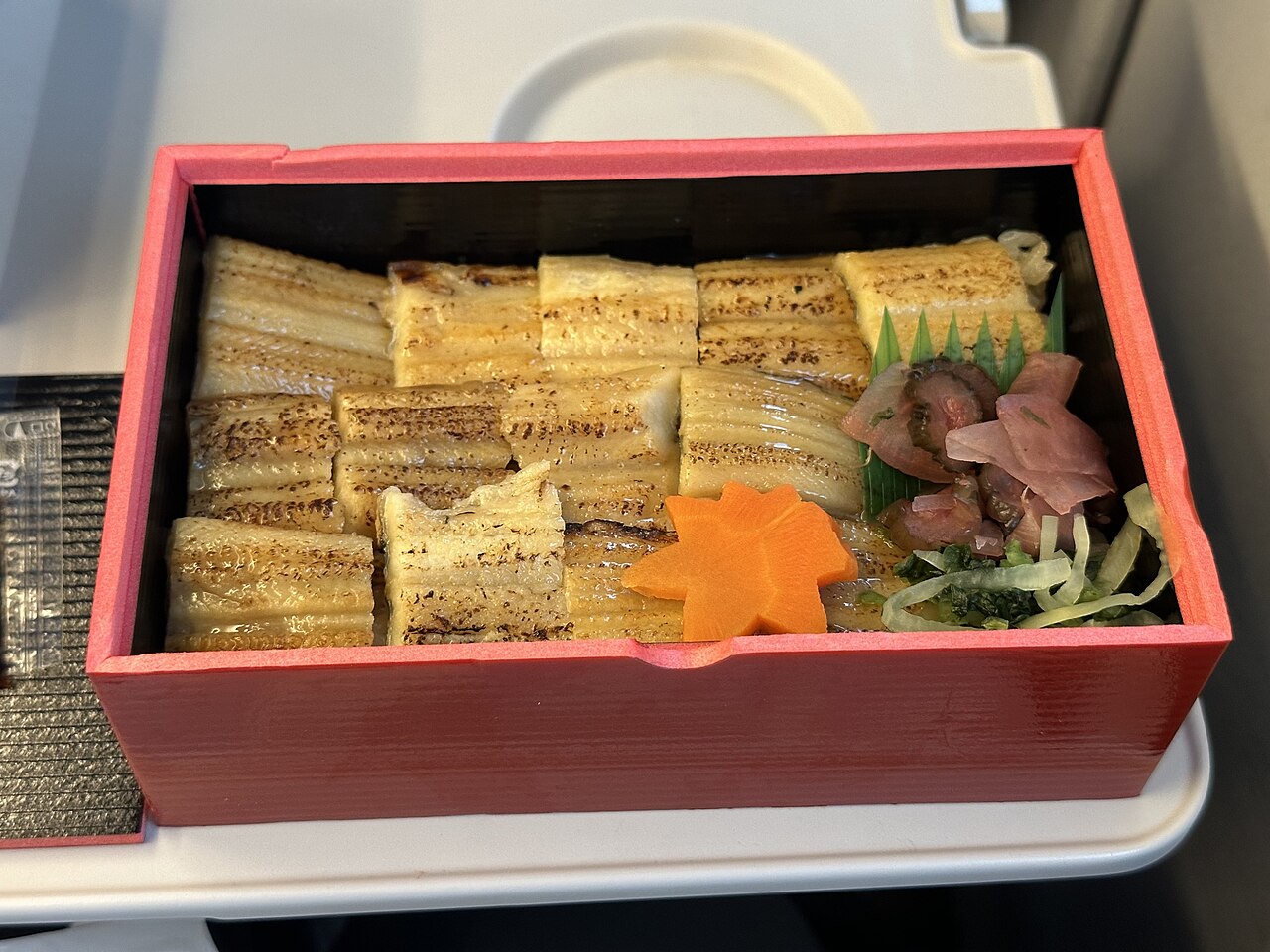
Anago-meshi bento box — a red lacquer box filled with sliced grilled conger eel glazed in sweet soy sauce, arranged over steamed rice, garnished with a carved carrot and green shiso 4
Anago-meshi (あなごめし)
Conger eel rice · a Miyajima tradition since 1901

Anago (穴子) is saltwater conger eel — leaner, more delicate and sweeter than the freshwater unagi most visitors know. The Miyajima preparation is centuries old in spirit and formalized since 1901, when Tanikichi Ueno refined it into a bento lunch: the eel is gutted, skewered and grilled over bincho charcoal while being basted repeatedly in a glaze of soy, mirin and sake. The finished pieces are arranged over rice that has been steamed with dashi stock rather than plain water. The flavour is quietly rich — sweet and smoky, nothing aggressive, the eel dissolving softly rather than needing to be chewed. It tastes best eaten on the ferry from Miyajimaguchi.
Where: Anagomeshi Ueno (あなごめし うえの · Miyajimaguchi ferry terminal · founded 1901) · anago restaurants on Miyajima island
Price: Bento box ¥1,620–2,200 · in-restaurant set ¥2,200–3,000
Warning: Queues at Ueno are real at peak lunch — arrive before 11 am or after 2 pm
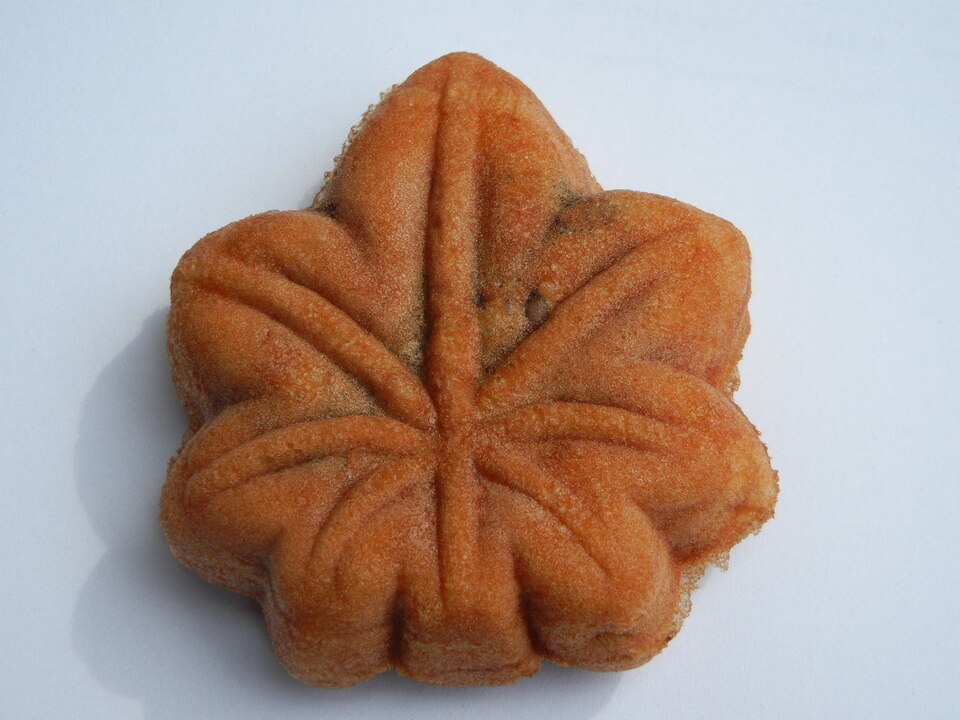
Momiji manju — a golden-brown maple-leaf-shaped Japanese cake, lightly crisp on the outside with a soft interior, on a white background 5
Momiji Manju (もみじ饅頭)
Maple-leaf cakes · the taste of Miyajima · since the early 20th century

The Japanese maple leaf (momiji) is the symbol of Miyajima, and the little cakes pressed into that shape are one of the best-selling souvenirs in all of Japan — which should not put you off them. The classic filling is anko, a smooth sweet red-bean paste, but the shops on Miyajima's Omotesando arcade now offer dozens of variations: custard cream, matcha, chocolate, yuzu, cheese, chestnut in season. The base cake — a fluffy, faintly sweet castella-style sponge — is good enough that the filling almost doesn't matter. More important: the fried version, age-momiji, is sold on sticks at street stalls on the island. Batter-fried until the shell shatters slightly, warm and yielding inside, it costs ¥200–250 and should be eaten on the spot.

Where: Omotesando arcade, Miyajima (every shop has its own recipe) · souvenir shops throughout Hiroshima city · age-momiji from island street stalls
Price: ¥130–180 / piece · gift box of 8 ¥1,000–1,400 · age-momiji ¥200–250 per stick
Note: Yamadasuya and Fukuya are the names locals mention most often when asked which shop does it best
🍋 6
Hiroshima Lemon (広島レモン)
Seto Inland Sea lemon · thin-skinned, unsprayed, in everything

Hiroshima is Japan's largest producer of lemons — a fact most visitors do not know until they start noticing the citrus motifs everywhere. The lemons come from small islands in the Seto Inland Sea and are grown without the post-harvest pesticide treatment used on most imported lemons, which means the zest is edible and the skin is thin enough that the oil in the peel comes straight through. You will find Hiroshima lemon in beer (the Setouchi Lemon cans are genuinely refreshing), in ramen broth, squeezed over grilled oysters, baked into tarts and loaf cakes, and mixed into soft-serve ice cream. Any menu that says "Hiroshima lemon" is worth investigating — it does not taste like the lemons you are used to.

Where: Souvenir shops and supermarkets city-wide · cafes selling fresh lemon cake · izakayas that serve oysters with lemon
Try first: Setouchi Lemon Beer ¥250–350 per can · lemon tart or pound cake ¥200–400
Season: Fresh lemons are most plentiful November–April
One day of eating

How to eat Hiroshima in a single day

A route that covers the city and Miyajima — without needing a second stomach.

7.30 am
Breakfast — tsukemen or lemon ramen near the station Several tsukemen and ramen shops near Hiroshima Station open early. A light bowl of tsukemen at level 2 spice is an easy ¥750–900 start before a long walking day.
9.00 am
Train to Miyajimaguchi — anago-meshi bento at Ueno Take the San'yo Line to Miyajimaguchi, then the 10-minute ferry. Anagomeshi Ueno opens at 9 am — buy a bento box (¥1,620) and eat it on the boat. No queue problem solved.
10.30 am
Omotesando arcade — momiji manju and age-momiji while walking From the ferry dock the Omotesando arcade leads toward Itsukushima Shrine. Grab a stick of hot age-momiji (¥200) from the first stall that smells right and eat it while it is warm. Browse the dozen shops and compare fillings.
12.30 pm
Lunch — grilled oysters at Kakiya on Miyajima Kakiya on the island specialises in oysters every way — raw, grilled over charcoal, or fried. Order 2–3 yaki-gaki (¥600–1,200) and a Setouchi Lemon beer. A light lunch before the afternoon ferry back.
3.00 pm
Back in the city — choose a stall at Okonomimura The five-storey okonomiyaki village is 10 minutes on foot from the station. Walk floors 2–4, watch what is sizzling, and pick a counter. Budget ¥800–1,400 for a full Hiroshima-yaki with pork and egg.
7.00 pm
Evening — raw oysters and lemon beer at a Hondori izakaya The Hondori arcade area has izakayas with fresh nama-gaki from ¥300 per oyster alongside local Hiroshima lemon beer. A relaxed end to a full day.
Where to stay

Hotels in Hiroshima for food lovers

Sleep close to the eating — from a city-centre five-star to a traditional inn on Miyajima.

1
Sheraton Grand Hiroshima
Five-star inside the station · direct access to shinkansen and city · Japanese restaurant on-site

Built directly into Hiroshima Station, this is the most convenient base if you plan to eat your way around the city and take the ferry to Miyajima. The hotel's Japanese restaurant features fresh Hiroshima Bay oysters and Seto Inland Sea seafood in season. Okonomimura is a 10-minute walk.

Location: Inside Hiroshima Station · See: Full Hiroshima guide →
2
ANA Crowne Plaza Hiroshima
Four-star in the city centre · near Hondori arcade and Peace Memorial Park

Between Peace Memorial Park and the Hondori shopping arcade — Okonomimura is a 5-minute walk, the Miyajima tram departure point about 20 minutes. The breakfast buffet includes local Hiroshima oysters on weekends and a good selection of Japanese dishes.

Location: 10 minutes on foot from Hiroshima Station · See: Full Hiroshima guide →
3
Miyajima Grand Hotel Arimoto
Traditional inn on Miyajima island · sea views and daily fresh seafood dinner

Staying overnight on Miyajima means waking before the day-trippers arrive — a different island entirely. Arimoto serves a kaiseki dinner of fresh Seto Inland Sea seafood each evening, including anago and oysters. Watching the Torii gate change colour at dusk from the hotel's terrace, without needing to catch the last ferry, is reason enough.

Location: On Miyajima island · See: Full Hiroshima guide →
Frequently asked questions

FAQ · What people ask before eating their way through Hiroshima

How is Hiroshima-style okonomiyaki different from the Osaka version?
The two styles use completely different techniques. Hiroshima-yaki is built in layers on the iron: thin batter first, then a mound of shredded cabbage, then fried yakisoba or udon noodles, then pork or seafood, then a second batter layer, with a separately fried egg flipped underneath everything. The Osaka (Kansai) style mixes all ingredients together in a bowl before cooking. Hiroshima's result is substantially larger, has distinct visible layers and a more complex texture. Most people from Hiroshima will tell you theirs is definitively better — the layered structure genuinely does produce a different eating experience.
Are Hiroshima oysters available year-round?
Oysters are on menus almost year-round, but the best season is October to March. In cooler water, oysters accumulate more glycogen and grow noticeably plumper and sweeter. During summer (June–August) they are older and leaner with a less pronounced flavour. If you want to eat them raw (nama-gaki), November through February is ideal. A good restaurant will always tell you whether their oysters are fresh from the bay or from cold storage — and that distinction matters.
How spicy is Hiroshima tsukemen, and can I adjust the heat level?
Hiroshima tsukemen comes with a cold dipping broth made from dried chilli, chilli oil, sesame, rice vinegar and Seto Inland Sea seafood dashi. Most restaurants offer a spice scale from zero (nashi — no heat at all) up to level 10. Level 2 or 3 is a good starting point for most people — enough chilli warmth to complement the sesame and umami without overwhelming it. The broth is excellent even without spice. At the end, ask for hot water (yu-wari) to mix into the remaining broth and drink as a finishing soup.
How long is the wait at Anagomeshi Ueno on Miyajima?
Anagomeshi Ueno (あなごめし うえの) is located at Miyajimaguchi ferry terminal on the mainland, not on the island itself — a detail many visitors miss. At weekend lunchtimes expect to queue for 20 to 60 minutes. Arriving before 11 am or after 2 pm cuts the wait significantly. The bento box costs ¥1,620–2,200 and tastes very good eaten on the ferry crossing. There are also anago restaurants on the island itself if Ueno's queue is too long on the day.
How do I choose between the stalls at Okonomimura?
Okonomimura (お好み村) is a five-storey building with more than 20 individual stalls across floors 2 to 4, each with a slightly different recipe and loyal following. Yama-chan (operating since 1965) is valued for its traditional soba-based recipe; Hassho is known for organic cabbage and an especially crisp noodle layer. Prices are similar throughout at ¥800–1,500. Walk all three floors before committing — the best signal is a teppan with something actively sizzling on it and a cook who looks like they have been doing this for twenty years. The building is near Hondori Arcade, about 10 minutes on foot from Hiroshima Station.