Kanchanaburi is only about 130 km from Bangkok. You can take the historic Death Railway train across the River Kwai bridge and along the Tham Krasae cliffside viaduct, a quick minivan, a cheap bus, or a private car for the waterfalls. Here's every option compared, with real fares, before you set off.
Planning a trip to Kanchanaburi and not sure how to get there? The good news is it sits very close to Bangkok — only about 130 km away, roughly a 2–3 hour run — so there's no flying involved (and you couldn't anyway, since there's no commercial airport here). Everyone arrives overland from Bangkok. The only real decision is how you travel, and the answer depends on whether you want speed, the cheapest fare, or the experience — because the historic train here isn't just a way to get there, it's a ride people come specifically to take.
The historic line that crosses the Bridge over the River Kwai and clings to the cliff on the Tham Krasae wooden viaduct. The cheapest and most scenic way, though slower than the road, and it follows a wartime railway that deserves a respectful frame of mind. Best if you want the experience and aren't in a hurry.
Faster and more direct than the train, with frequent departures all day. The minivan is the nimblest, the bus is a touch cheaper, and a private car is the most flexible — well worth it if you're heading for Erawan Waterfall or the sights out of town.
The cheapest and most scenic option, slower than the road — and a ride to take with respect.
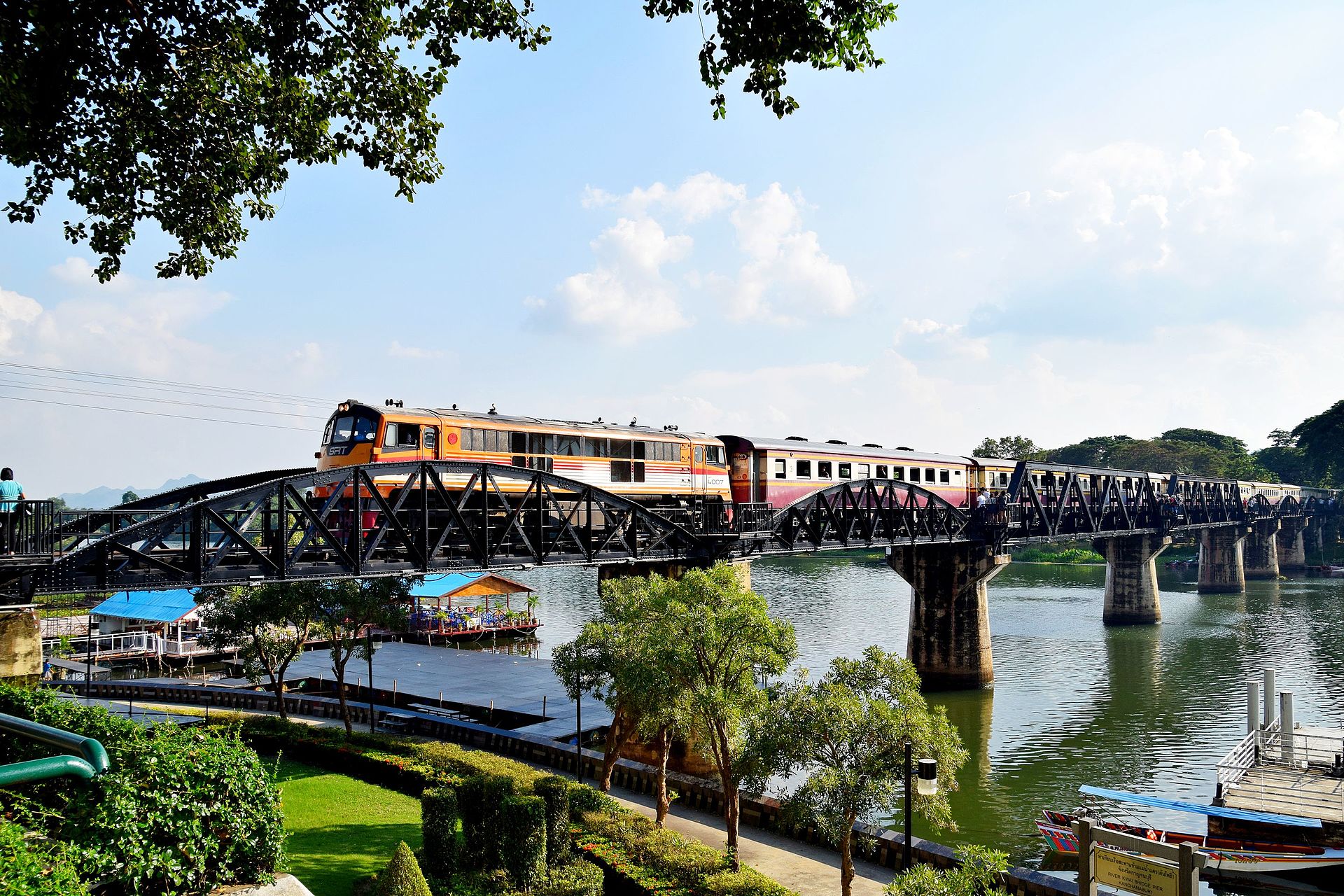
If you only try one way, make it this train. The Death Railway (the Thailand–Burma line) runs from Thonburi (Bangkok Noi) station, through Nakhon Pathom, into Kanchanaburi, across the Bridge over the River Kwai, then along the cliff on the Tham Krasae wooden viaduct (the Wampo viaduct) above the Kwai Noi, ending at Nam Tok. There are about 2–3 services a day on this historic line. A 3rd-class ticket is very cheap — around ฿100 for foreigners on the special service, just a few baht for locals on the ordinary run. The train slows over the Tham Krasae curve so you can take in the view and the photos.
Everything leaves Bangkok and reaches Kanchanaburi in ~2–2.5 hours — the difference is convenience and flexibility.
If the train isn't your thing, or you simply want to arrive fast, the road is the answer. All three follow Highway 4 (Phetkasem) out of Bangkok and take about 2–2.5 hours when traffic is light. Which one to choose comes down to whether you value convenience, the lowest fare, or the freedom to stop where you like.
Leaves from the Mo Chit 2 and Sai Tai Mai (Southern) terminals, running frequently all day and quicker off the mark than the bus. It drops you at the Kanchanaburi bus terminal in the town centre. This is the most popular choice because it's fast and departs often; seats per van are limited, so arrive a little early on weekends.
Scheduled Bangkok–Kanchanaburi buses also leave from Mo Chit 2 and Sai Tai Mai, a little cheaper than the minivan and more comfortable thanks to the larger coach, with legroom and luggage stowed underneath. It makes more stops, so it's slightly slower — a good pick if you have a lot of bags or want a roomier seat.
Driving yourself or hiring a car with a driver from Bangkok takes 2–2.5 hours and is the most flexible option. It's well worth it if you're set on Erawan Waterfall, Hellfire Pass or the sights 65–80 km out of town, where public transport struggles. Shared between a few people, it isn't expensive.
A set-route tour picks up from Bangkok hotels and runs a fixed itinerary — say the bridge plus a short train ride and Erawan Waterfall, or the war-history circuit — with transport, a guide and usually lunch. You don't plan a thing. Compare prices on Klook below.
Kanchanaburi has no commercial airport, so if you're flying in from abroad you'll land at Suvarnabhumi (BKK) or Don Mueang (DMK) first, then head into Bangkok and continue to Kanchanaburi by road or rail — there's no point looking for a direct flight, as none exists. Just plan it like a domestic leg of the trip.
Kanchanaburi has two main railway stations and one bus terminal in town. Knowing where you'll arrive makes reaching your accommodation easier — especially if you've booked a River Kwai raft house, the signature stay here.
The in-town station, close to the Don Rak war cemetery, the Thailand–Burma Railway Centre and the markets. You can walk or cycle to the central sights from here. Convenient if your accommodation is in the town area.
The station right by the bridge — step off and you can walk to it and take photos straight away. It's close to Mae Nam Khwae Road, the strip of guesthouses, bars and tour shops. The handy one if your place is by the river.
Where the minivans and buses from Bangkok drop you, central in town, with songthaews and motorbike taxis on hand to continue to the accommodation strip. It's not far to Mae Nam Khwae Road — a short songthaew or motorbike-taxi hop and you're there.
Mae Nam Khwae Road is the heart of the visitor strip, with guesthouses, bars and tour shops lining the river, while the River Kwai raft houses are the town's signature floating stays. Many offer a pickup from town, so check with your place. See the options in our where to stay in Kanchanaburi guide.