Kanchanaburi has no BTS or MRT like Bangkok — but songthaews run around town, you can rent a scooter to reach Erawan Waterfall, cycle along the river, and ride the historic Death-Railway train across the Bridge over the River Kwai and the Tham Krasae viaduct: transport and a sight in one. The one thing to plan: many of the famous places sit far out of town, so map out your transport.
If you're used to hopping on the BTS or MRT to get anywhere in Bangkok, here's the first thing to know: Kanchanaburi has no skytrain, no subway and no metro. This River Kwai town moves at a slower, more spread-out pace and runs mostly on wheels. It sounds like a hassle, but it's easier than you'd think once you know what to use and when.
Getting around central Kanchanaburi relies on songthaews (the converted pickup trucks that serve as the main public transport), rental scooters, bicycles and walking. The town isn't big, and plenty of spots are within easy walking distance — especially the Bridge over the River Kwai area, Mae Nam Khwae Road and the riverside. Grab exists but has few cars, so don't lean on it.
There's one thing that sets Kanchanaburi apart from other small towns, and it's good news: Kanchanaburi has an intercity train — the State Railway of Thailand's Death Railway. It runs from town across the Bridge over the River Kwai, past the curved wooden trestle hugging the cliff at Tham Krasae, out to Nam Tok. The line is both a way to travel and one of the most beautiful — and solemn — rail rides in Thailand, with a wartime history that deserves to be remembered with respect. This guide walks through every way to move around Kanchanaburi — songthaews, scooters, bicycles, the Death-Railway train, river boats — and how to reach the far-flung sights.
Songthaews are the main public transport; a rental scooter is your freedom to reach the far sights — between them they cover almost everything in Kanchanaburi.
In a town with no metro, the best public stand-in is the songthaew — a pickup truck fitted with two bench seats that runs set routes around town. Fares are cheap, you flag one from the roadside, and you can charter the whole truck to reach a spot the regular routes don't cover. And if you want the freedom to go where you like — especially to the sights outside town — renting a scooter is the backpacker favourite.
Kanchanaburi's songthaews run set routes — for example from the market and bus station along Saengchuto Road and the River Kwai Bridge area. Fares around town are about 10–20 baht a trip; flag one from the roadside and press the buzzer to get off. They suit temples, markets, the war cemetery and other in-town stops that aren't far apart.
To reach somewhere the regular routes skip, or for a group, you can charter the whole truck — agree the price first, around 300–600 baht depending on distance and time. You can also ask a driver to take you round several stops in a day.
Renting a scooter is the most flexible way to get around Kanchanaburi. Rental shops cluster along Mae Nam Khwae Road (the backpacker strip) for about 200–300 baht a day, and it's easy to ride around town and along the river. It unlocks Erawan Waterfall (~65 km) and Hellfire Pass (~80 km), which are awkward to reach by public transport.
But the far sights are a long stretch of highway, so wear a helmet, fill the tank before you set off and ride carefully. Check the bike and brakes before you take it, photograph any scratches, and carry your licence. If you're not confident with long-distance riding, take a chartered car or a tour instead.
The charm of central Kanchanaburi is how walkable and ride-able it is. Many of the in-town spots and the riverfront sit close enough that these two ways work best of all — no waiting for a ride, no fares — just soaking up the river atmosphere at your own pace.
Many guesthouses and rental shops offer bicycles for ~50–100 baht a day. Ride the riverside, out to the Don Rak war cemetery, and around Mae Nam Khwae Road with ease — the streets are flat.
The Bridge area, Mae Nam Khwae Road and the riverfront all connect on foot. The evening atmosphere is lovely, and restaurants and markets are within walking distance.
You can walk across the Bridge over the River Kwai for free, with refuge bays along the spans. The local train still crosses it, so walk carefully and step aside in good time.
Long-tail boats run along the River Kwai through town, past the bridge and the riverfront. Agree the price before you board; you can hire one for the boat. Good for river-angle photos.
Honestly, if you stay in the Bridge area or on Mae Nam Khwae Road, you'll barely need a ride in town at all — you can walk and cycle to the war cemetery, museums, markets and the river. Keep the rental scooter or a chartered car for the day you head out to Erawan Waterfall or the far sights. Compare the areas in our where to stay in Kanchanaburi guide.
Kanchanaburi has no metro, but it has an intercity train you can genuinely ride for the journey — and one of the most beautiful rail rides in Thailand.
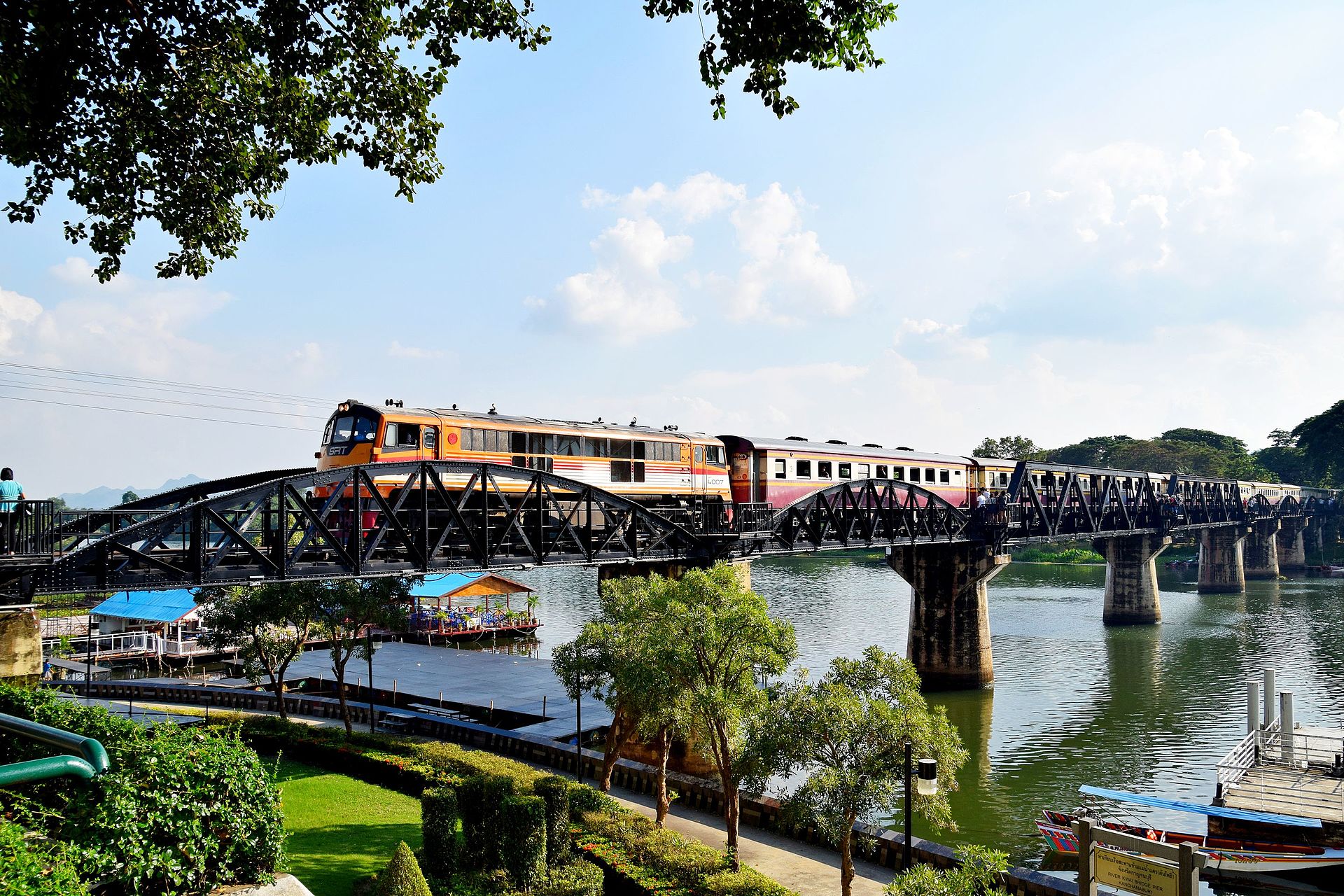
In-town train → Nam Tok
The State Railway of Thailand's historic line stops in town at Kanchanaburi Station and River Kwai Bridge Station, then runs on across the bridge to Tham Krasae (the curved wooden trestle hugging the cliff above the river) and out to the terminus at Nam Tok (Sai Yok Noi). There are roughly 2–3 services a day on this line.
Fares are very cheap — around 100 baht in 3rd class for tourists on the special run, or a few baht on the local train (check the timetable ahead, as times can change). The stretch across the Tham Krasae viaduct is the highlight and worth riding once; sit on the river/cliff side for the view, and there are also special weekend excursion trains from Bangkok.
Another angle on Kanchanaburi is from the river. Long-tail boats run along the River Kwai through town, past the Bridge over the River Kwai, the floating raft restaurants and the mountain views. You can hire one for the boat or join a shared run — always agree the price and duration before you board.
Boats are ideal for river-angle photos and catching the cool evening breeze, and many floating raft restaurants are reachable by water. If you stay at a riverside raft house, your accommodation often arranges a boat transfer or a short cruise — ask first.
This is what sets Kanchanaburi apart from the usual small town, and it's worth understanding before you plan the trip.
If you remember one thing from this page, make it this: you can explore central Kanchanaburi on foot and by songthaew, but the big draws all sit outside town. The Bridge over the River Kwai, the war cemetery, the museums and the markets are in town and walkable — but Erawan Waterfall, Hellfire Pass, Prasat Muang Sing and Sangkhla Buri are tens to a couple of hundred kilometres away, and public transport is limited.
| Destination | Distance + time | How to get there |
|---|---|---|
| Central Kanchanaburi | In town · walk / cycle / songthaew | Bridge over the River Kwai · Don Rak war cemetery · museums · markets |
| Tham Krasae / Nam Tok Station | ~50–60 km along the line · a scenic train ride | Death-Railway train (town → Tham Krasae → Nam Tok) |
| Erawan Waterfall | ~65 km · ~1.5 hr (road) | Morning songthaew/minibus (few returns) · scooter · charter/tour |
| Hellfire Pass (Konyu Cutting) | ~80 km northwest · ~1.5 hr | Scooter · charter/tour (little public transport) |
| Prasat Muang Sing | ~43 km west · ~50 min (road) | Local train to Tha Kilen Station then walk · charter |
| Sangkhla Buri / Mon Bridge | ~220 km northwest · ~3.5–4 hr | Minibus from the bus station · charter/tour with overnight |
For the far-flung sights like Erawan Waterfall, Hellfire Pass or the Srinakarin Dam, a chartered car with driver is the most flexible and comfortable choice. You set the timing, you don't have to gamble on a return bus, and you can string several stops into one day. It suits families or small groups who can split the cost.
Hotels, guesthouses and tour desks in town can arrange a car charter — agree the route, stops and price clearly before you set off. A chartered car also works well if you're heading to Sangkhla Buri with an overnight.
A day tour sorts the classic route for you — for example the Bridge over the River Kwai + the Death-Railway train + Erawan in one package. It suits solo travellers or anyone who'd rather not plan the logistics. Some operators run a Bangkok round-trip in a single day.
Find tours at town desks or book ahead online — browse Kanchanaburi, Erawan and Death-Railway tours on Klook (search Kanchanaburi).
If we had to boil it down to two points: one — stay in the Bridge area or on Mae Nam Khwae Road, then use songthaews, a bicycle and your feet in town. The in-town sights are close together, so you won't need a ride much. Grab is thin on the ground in Kanchanaburi, so don't rely on it the way you would in Bangkok — keep it as a backup for late nights or when you're loaded with luggage.
Two — plan how you'll reach the far sights before you travel. Erawan, Hellfire Pass and Sangkhla Buri sit far out and public transport is limited. Decide ahead whether you'll rent a scooter, charter a car or take a tour — and don't miss riding the Death-Railway train across the Tham Krasae viaduct at least once, because it's both transport and an experience you won't find anywhere else.