Home Bangkok Thailand Bangkok Hotels About
Home  ›  Thailand  ›  Bangkok  ›  Food Guide
Bangkok Food Guide · 2026

What to eat in Bangkok
11 dishes, from pad thai to street food

The pad thai fired over charcoal at a shop that's been at it for decades. The chicken rice with a queue that moves faster than the Skytrain. The tiny boat-noodle bowls nobody manages to stop at one of. And the coconut desserts a whole city waits for mango season to eat. Here's where to start.

Why eat here

One city, the whole country's kitchen

Bangkok is the city where street food earned Michelin stars, and where shophouse kitchens pushing a century old still set up their burners next to glass towers. Its kitchen pulls in the best of every region — som tam and grilled chicken from Isan in the northeast, chicken rice and braised pork leg from the Thai-Chinese kitchens of Yaowarat, tom yum from the central plains, and coconut desserts that predate every skyscraper in view. Ten minutes on foot in the old town can turn up more good things to eat than some entire cities.

The other thing that makes Bangkok special is the price. Plates people cross town and queue for start at pocket change, and several Michelin Bib Gourmand names still charge under a hundred baht. We picked 11 dishes and treats that tell the city's whole story, each with real restaurants where real queues form, and directions by BTS, MRT and boat — and we'll tell you plainly which ones need planning ahead and which are waiting at the bottom of the station stairs.

The essential dishes

11 things to eat before you leave Bangkok

Ordered from the dishes to meet first through to the desserts and drinks that close the day — every one comes with a real place to eat it and how to get there by train or boat.
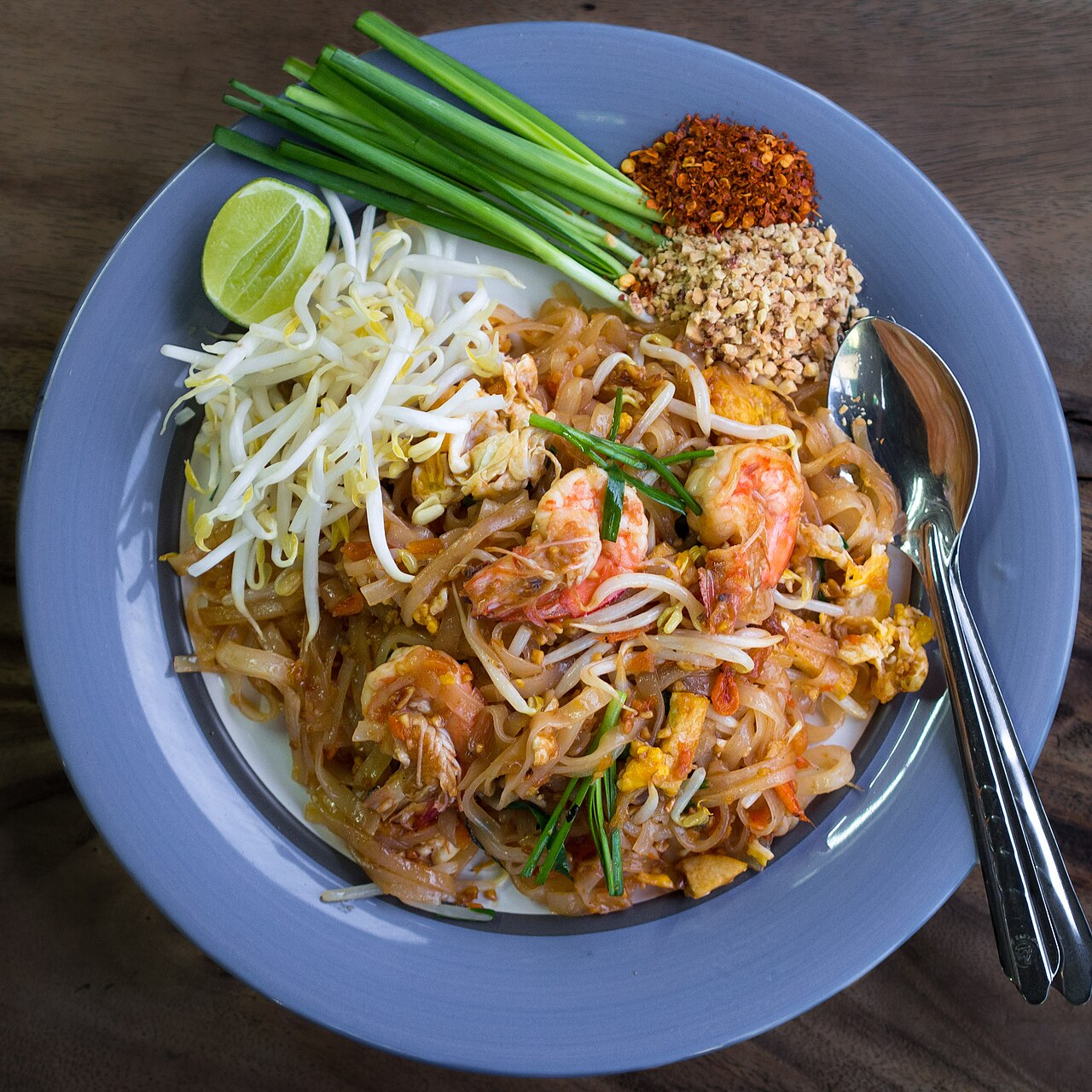
A plate of pad thai with fresh prawns, orange-brown rice noodles, served with bean sprouts, garlic chives, lime, chili flakes and crushed peanuts 1
Pad thai
ผัดไทย · the dish the world knows Thailand by

Start here. Thin rice noodles fired in a hot wok with a sweet-sour tamarind sauce, egg, tofu and dried or fresh prawns, finished with crushed peanuts, a squeeze of lime, and chili flakes you add yourself. The whole point is the balance — sour, sweet and salty pulling against each other in one plate. The legendary shops fry each portion to order over charcoal until the edges catch a little smoke; plenty of street carts do a startlingly good version at half the price.
Where: Thipsamai "Pad Thai Pratu Phi" (Maha Chai Rd · MRT Sam Yot, ~10–15 min walk · mainly evenings till late, check hours first) · pad thai carts citywide
Price: Street carts ~฿50–80 · Thipsamai from about ฿90–150, special versions cost more
Tip: Order it "wrapped in egg" for the famous version · season a little at a time — it comes well-balanced
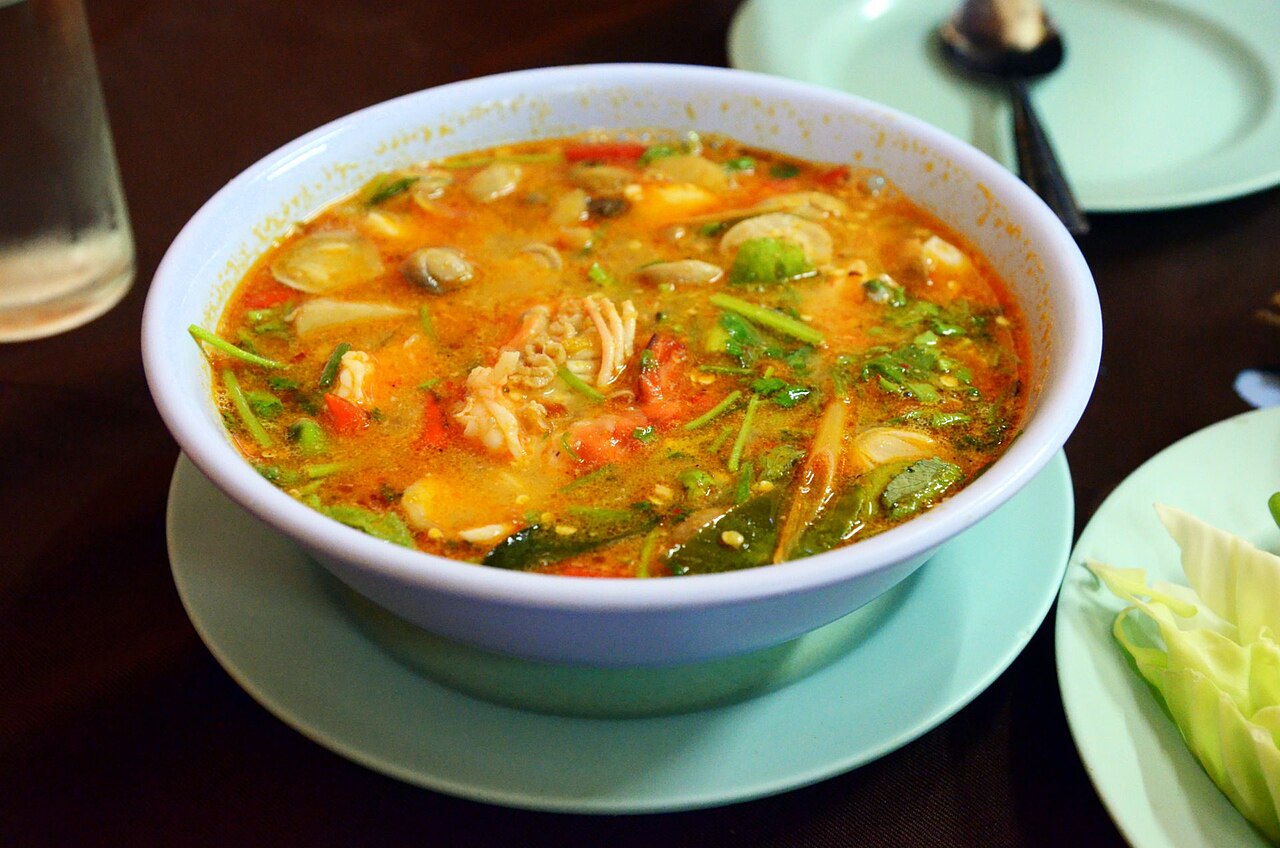
A large bowl of tom yum soup with deep orange broth, straw mushrooms, tomato and Thai herbs, served steaming hot 2
Tom yum kung
ต้มยำกุ้ง · hot, sour, fragrant — the flagship of the Thai kitchen

The soup the whole world can pronounce. Lemongrass, kaffir lime leaf, galangal, chilies and lime sharpen a broth built around river or sea prawns. It comes two ways: clear (nam sai), clean and sharp, or creamy (nam khon), rounded out with milk and chili paste. Nearly every Thai restaurant makes it, but the version people fly in for is Jay Fai's dry tom yum, reduced until the sauce clings to the prawns. Fair warning — the price is as legendary as the cook. An ordinary restaurant bowl at a few hundred baht is already a very good time.
Where: Jay Fai (Sao Chingcha · one Michelin star · MRT Sam Yot · queue and booking rules change often, check first) · Krua Apsorn (Dinso Rd · Saen Saep canal boat to Phanfa pier, then ~10 min walk)
Price: Typical restaurants ~฿120–300 · Jay Fai runs several hundred to over a thousand
Tip: Clear broth for sharpness, creamy for richness
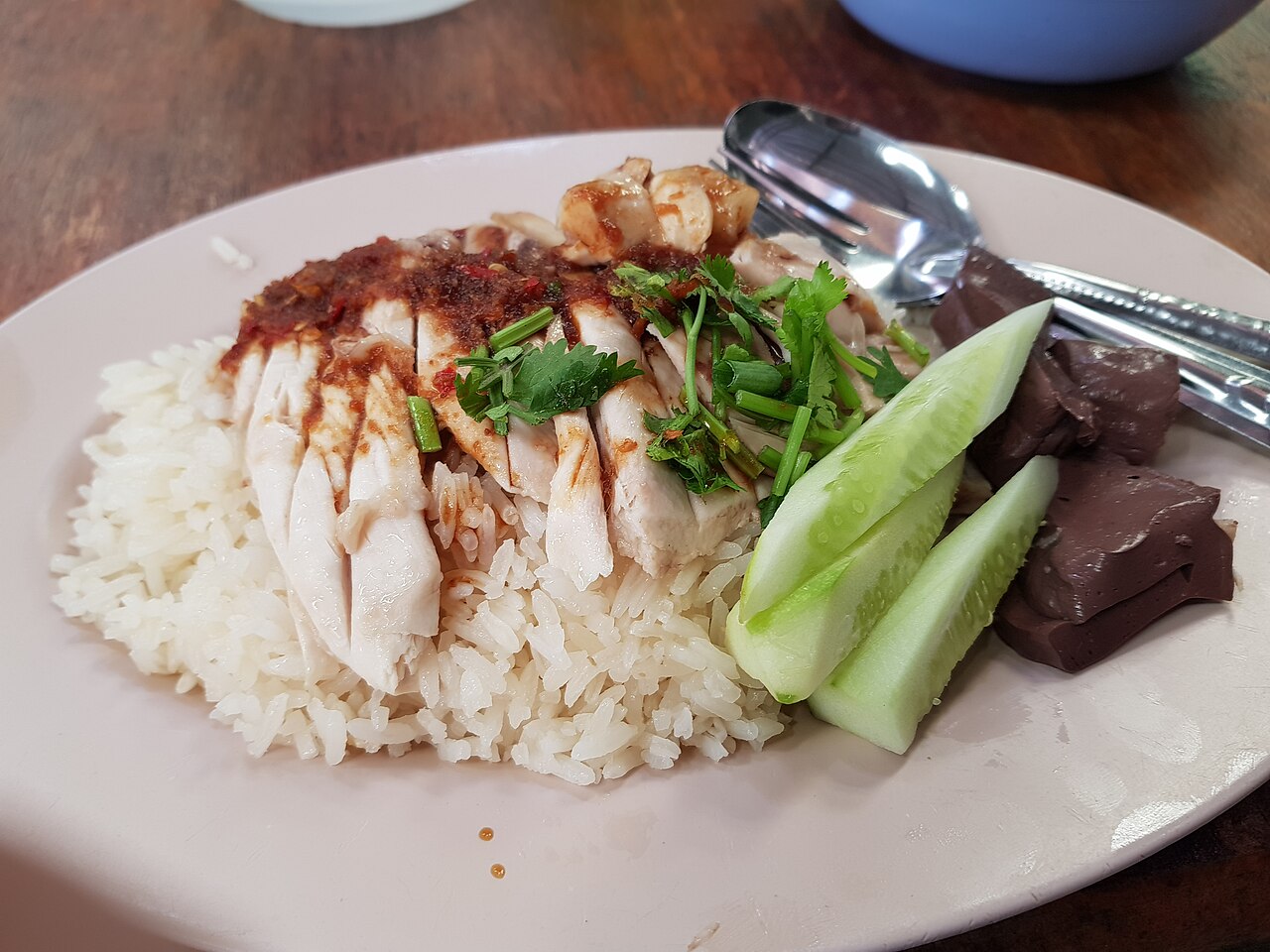
A plate of khao man kai — sliced poached chicken on chicken-fat rice with fermented soybean sauce, cucumber and blood cake on the side 3
Khao man kai
ข้าวมันไก่ · tender chicken, fragrant rice, and a sauce that decides everything

The easy meal Bangkok eats every week — silky poached chicken sliced over rice cooked in the poaching broth until it's rich and fragrant, with a bowl of winter-gourd soup and a ginger-chili fermented-bean sauce that separates the real shops from the rest. The most famous name in town is Go-Ang Pratunam, the "pink-shirt chicken rice," going since around 1960 and holding a Michelin Bib Gourmand year after year. The queue looks long but moves fast, because everything is ready at the chopping block.

Where: Go-Ang Pratunam (Airport Rail Link Ratchaprarop, ~5 min walk / BTS Chit Lom, ~12–15 min walk) · chicken-rice shops citywide
Price: ~฿50–100/plate
Tip: The sauce is the verdict — take extra · order "piset" (large) if you're hungry
🍜4
Boat noodles
ก๋วยเตี๋ยวเรือ · tiny bowls, intense broth, eaten by the stack

Pork or beef noodles in miniature bowls, once sold from paddle boats on the canals. The broth is dark, spiced and deeply savoury, with noodles, meat, balls and morning glory packed into a few spoonfuls. Because each bowl costs pocket change, the culture is to keep ordering — five to ten bowls each, stacking the empties into a tower to compare. The most famous spot is the lane beside Victory Monument, where boat-noodle shops line up one after another. If noodles are your thing, another legend worth knowing is Wattana Panich in Ekkamai — not true boat noodles, but a beef-stew pot the shop is said to have kept simmering and topping up for decades.

Where: Boat Noodle Alley, Victory Monument (BTS Victory Monument) · Wattana Panich (BTS Ekkamai, then a short motorbike or taxi hop)
Price: Small bowls ~฿20–30 · Wattana Panich large bowls ~฿100–300
Tip: Start with 3–5 bowls and go from there · the broth is already big — season gently
🍢5
Moo satay
หมูสะเต๊ะ · charcoal pork skewers, peanut sauce, pickle relish

Pork marinated in turmeric and coconut milk, threaded onto skewers and grilled over charcoal until the edges char and the fat smells irresistible. It comes with a thick, gently sweet peanut sauce and ajat — a quick relish of cucumber, shallot and chili in vinegar — that cuts the richness exactly right. You'll find it at evening street grills, markets and food courts all over town. Ten skewers is the standard order, because nobody's hand stops at five. Eat it as a warm-up before a bigger meal, or sit down and make it the meal with toasted bread.

Where: Grill stalls at markets and roadsides citywide · Yaowarat in the evening (MRT Wat Mangkon) · MBK Food Island (BTS National Stadium)
Price: ~฿8–15/skewer · a set of 10 around ฿80–150
Tip: Pick a stall grilling to order — the smoke trail is the signpost
🥗6
Som tam + kai yang
ส้มตำ–ไก่ย่าง · papaya salad and grilled chicken — sticky rice is not optional

The double act from Isan, Thailand's northeast, that became everyday food for the entire city. Shredded green papaya is pounded in a mortar with chilies, garlic, tomato and long beans, balanced sour-sweet-salty-hot to order. Versions run from the gentle som tam Thai to the deep, funky fermented-crab-and-fish style. Eat it with smoky grilled chicken and warm sticky rice. There's an Isan shop in nearly every soi in Bangkok, from roadside shelters to air-conditioned places in malls. New to it? Start with som tam Thai, no fermented fish, and name your spice level — "phet noi" (mildly spicy) is a phrase vendors hear all day.
Where: Isan shops in sois citywide · Pier 21 (Terminal 21 · BTS Asok / MRT Sukhumvit) · the food hall at Or Tor Kor Market (MRT Kamphaeng Phet)
Price: Som tam ~฿50–90 · half a grilled chicken ~฿90–180
Tip: Order "som tam Thai, phet noi" first, then work toward the fermented styles
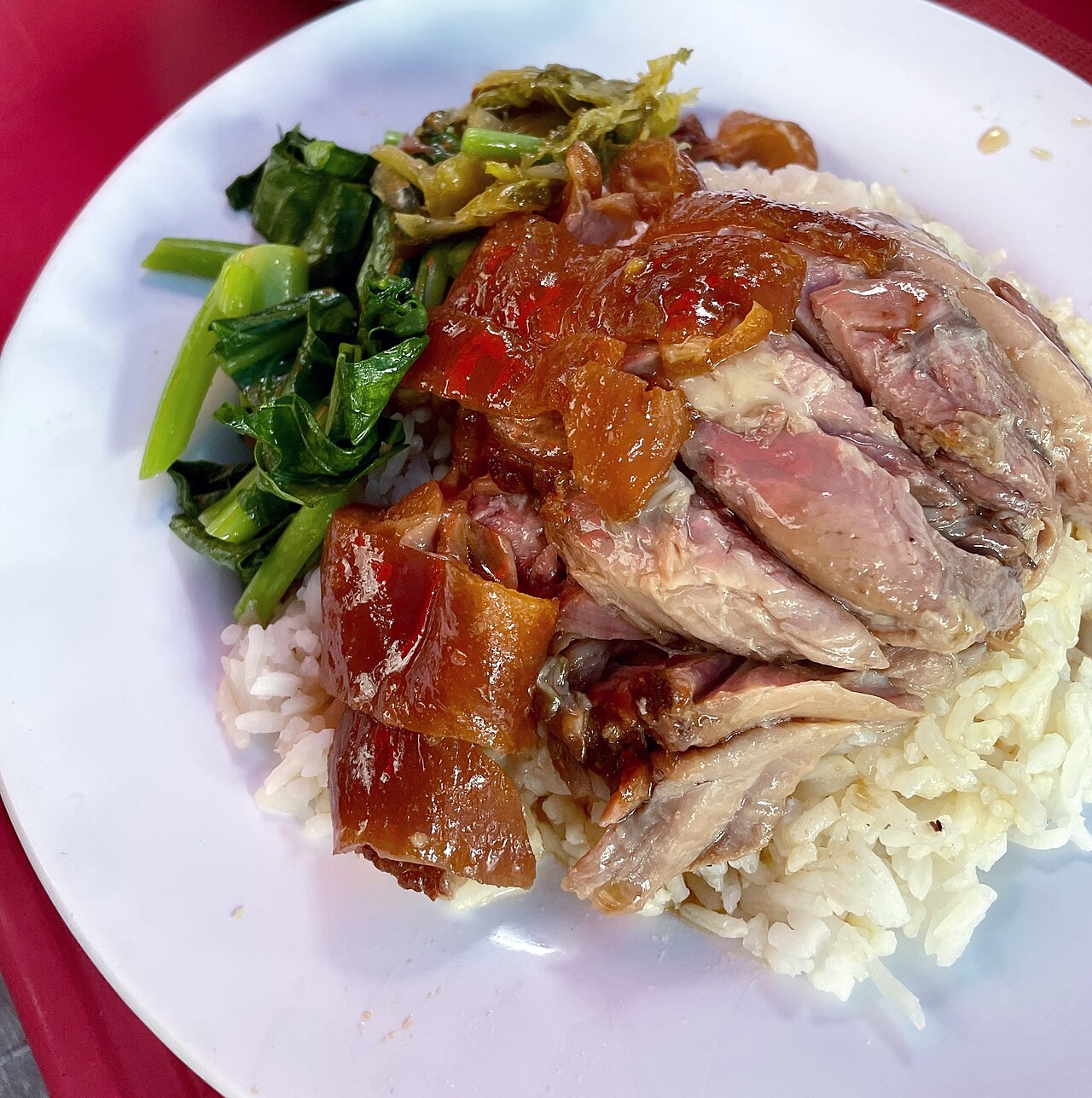
A plate of khao kha moo — glossy braised pork leg with tender skin served over rice with blanched Chinese broccoli and pickled greens 7
Khao kha moo
ข้าวขาหมู · braised pork leg on rice with egg and greens

Pork leg braised in a five-spice soy broth until the skin turns soft and springy and the meat falls apart under a spoon, served over rice with blanched greens, pickled mustard, boiled egg and a garlicky vinegar-chili sauce you should spoon on to cut the richness. Few dishes show the Thai-Chinese roots of Bangkok's food more clearly. The veteran shops are shophouses and market-front carts that have kept their own pot and their own recipe going for decades — when the five-spice smell drifts across the pavement, that's your cue to stop.

Where: Old-town and Yaowarat veterans (MRT Wat Mangkon / Sam Yot) · nearly every food court
Price: Regular ~฿50–90 · large/with egg ~฿60–120
Tip: Ask for "kha-ki" (the knuckle) if you love the soft skin and tendon
🍳8
Pad krapao
ผัดกะเพรา · the national one-plate order — add a fried egg and it's complete

Ask a Thai person what to eat when nothing comes to mind, and the answer is krapao. Minced pork (or chicken, beef, seafood) flash-fried on high heat with garlic, chilies and holy basil — a herb with a peppery fragrance like nothing else — served over rice with a crisp-edged fried egg whose yolk is meant to run into everything. Every made-to-order shop in every soi cooks it; it's cheap, it's fast, and it's the truest test of a kitchen. A shop that fries krapao with real basil fragrance can be trusted with almost anything on the menu.

Where: Made-to-order shops in every soi · every food court
Price: ~฿50–80 street-side · fried egg +฿10–15
Tip: "Krapao moo sap, kai dao" (minced pork, fried egg) is the standard code · mild spice on request
🥣9
Jok
โจ๊ก · silky rice congee, the breakfast and late-night bowl

Rice simmered until the grains dissolve into a thick, silky porridge, with hand-formed pork meatballs, offal if you like, a soft-poached egg, and slivered ginger and spring onion on top. It's the breakfast Bangkok grew up on, and many shops also run deep into the night for the after-work and after-party crowd. The old quarters around Yaowarat have big-pot jok going from before dawn. For the full old-school Thai-Chinese breakfast, On Lok Yun — a heritage coffee shop going since 1933 — is nearby, serving pan-fried eggs, custard toast, and the strong, sweet tea and coffee Bangkok has drunk for close to a century.
Where: Jok shops around Yaowarat and the old town (MRT Wat Mangkon), early morning and after 8pm · On Lok Yun (Charoen Krung Rd · MRT Sam Yot · morning to early afternoon, check hours)
Price: Jok ~฿40–70 · On Lok Yun breakfast sets ~฿60–150
Tip: Add a soft egg and order patongko (fried dough) for dipping — that's the standard move
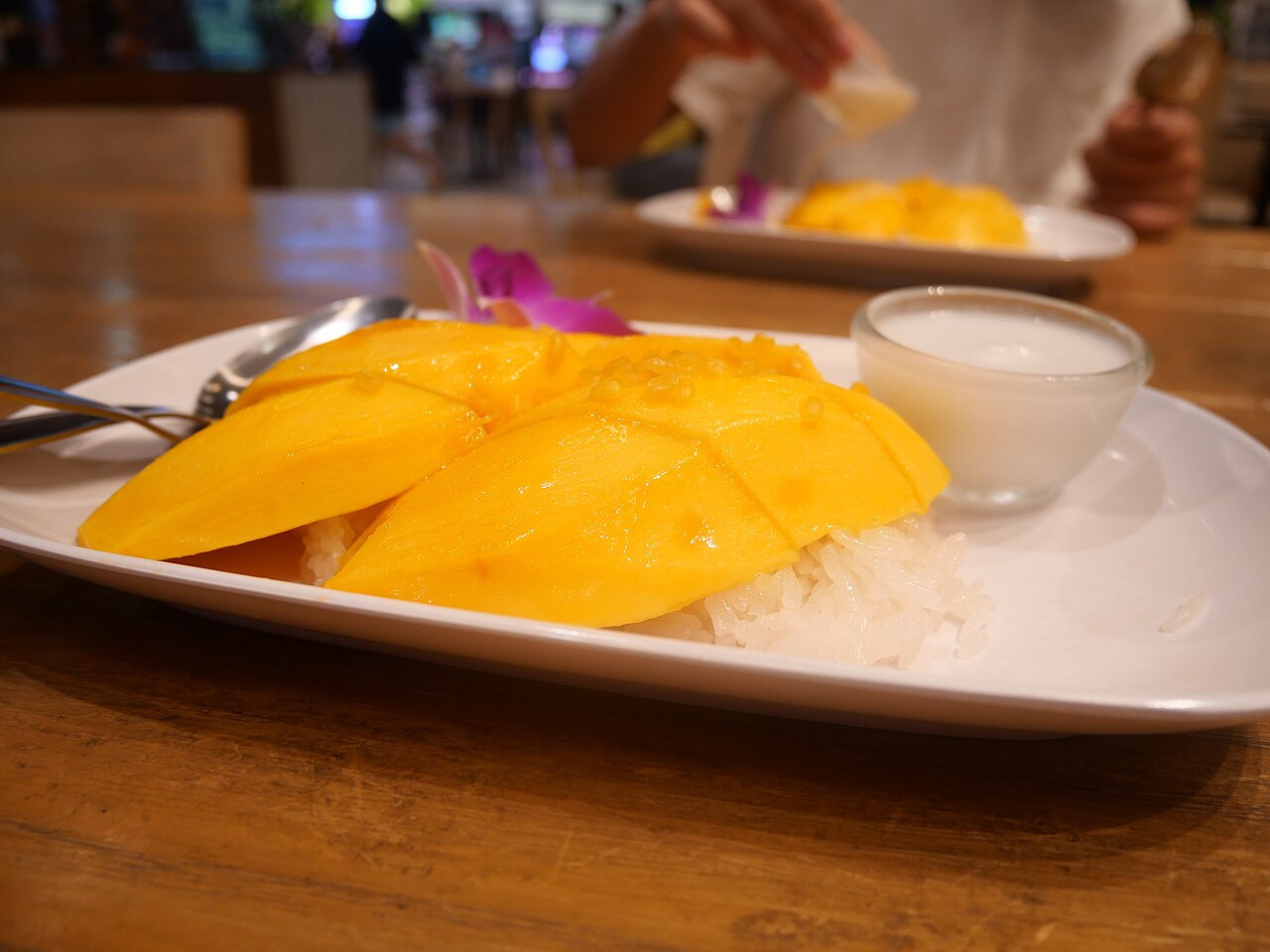
Slices of golden ripe mango on coconut sticky rice with a small cup of coconut cream beside the plate 10
Mango sticky rice + lod chong
มะม่วงข้าวเหนียว + ลอดช่อง · the coconut desserts worth planning around

Thailand's most famous dessert right now — ripe, fragrant mango beside sticky rice soaked in sweetened coconut milk, with a salty-sweet coconut drizzle and crunchy mung beans on top. It genuinely lives and dies by the season: mango season, roughly March to June, is the golden window, with nam dok mai mangoes at their best around April–May. The other treat to chase on a hot day is lod chong — pandan-scented rice-flour strands in iced sweet coconut milk. A Yaowarat institution everyone calls "Lod Chong Singapore" has sold it for decades (the name comes from an old cinema nearby, not the country).
Where: Dessert shops and fruit stalls citywide · premium grade at Or Tor Kor Market (MRT Kamphaeng Phet) · the old lod chong shop on Yaowarat (MRT Wat Mangkon · check opening days)
Price: Mango sticky rice ~฿80–150 · lod chong ~฿25–45
Season: Mango peaks Mar–Jun · off-season versions cost more and smell of less
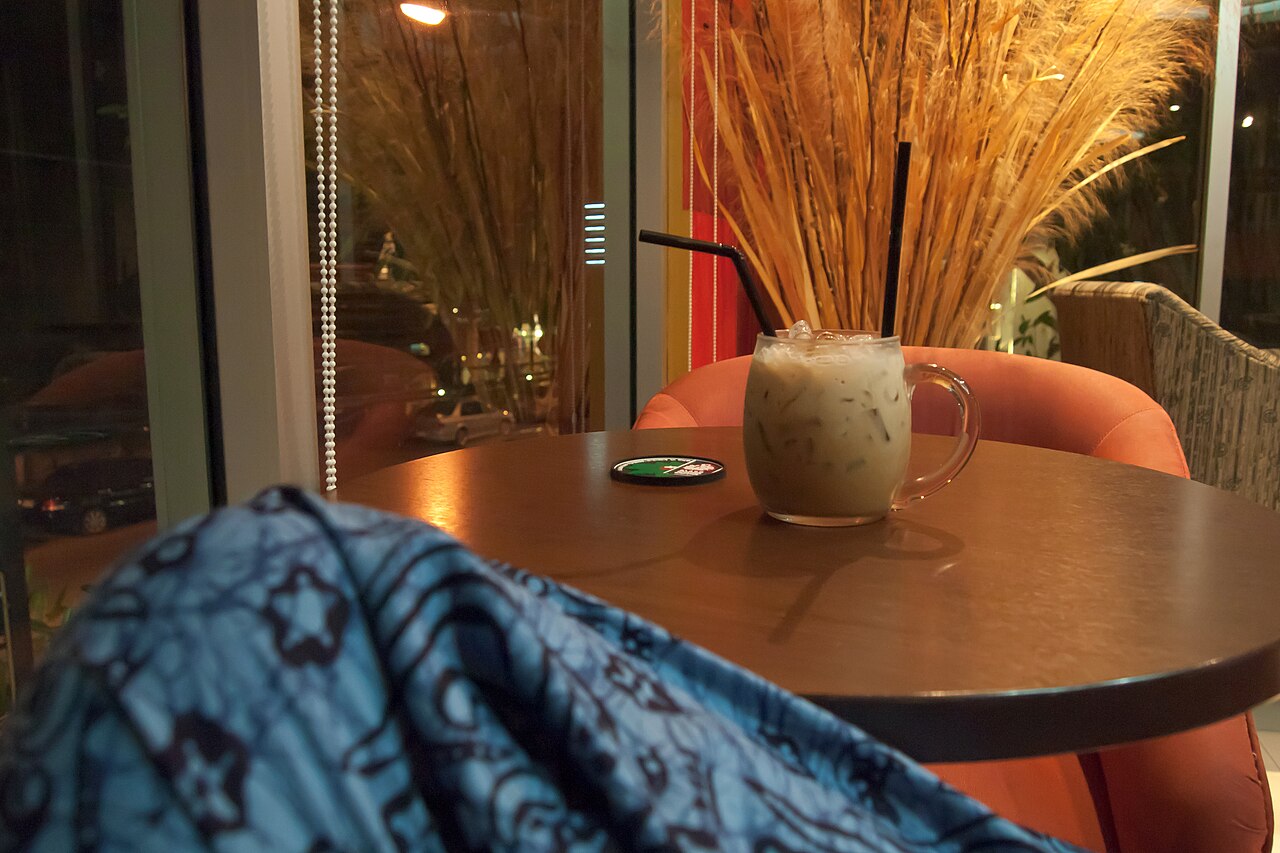
A glass of iced milk coffee with a straw on a wooden café table 11
Thai coffee + Thai tea
กาแฟโบราณ + ชาไทย · street-cart oliang to specialty cafés

Bangkok drinks coffee in two worlds at once. The old world is oliang — dark, sweet iced coffee brewed through a cloth sock — and the famous orange Thai tea, thick with condensed milk, both poured at carts and shophouse counters for pocket change. The new world is a serious specialty scene, with cafés around Charoen Krung, Ari and Thonglor pulling shots and brewing filters at competition level. You can do both in a day without trying — oliang on the pavement in the morning, a slow filter in the air-conditioning by afternoon.

Where: Carts and old coffee shophouses citywide · Factory Coffee (BTS Phaya Thai) · Roast (Thonglor · BTS Thong Lo) · Sarnies (Charoen Krung · BTS Saphan Taksin, ~10 min walk)
Price: Thai tea/oliang from carts ~฿25–45 · specialty cafés ~฿80–180
Tip: "Wan noi" (less sweet) works everywhere — the default lands sweet
Where to eat

Which area suits the mood

Bangkok is big and the traffic is real — pick the right area and eat your way through it, rather than criss-crossing town.

Yaowarat (Chinatown)
200-year-old Chinatown · MRT Wat Mangkon, steps away

The biggest and most famous night-eating arena in the city. After sunset the whole street turns into a line of stalls — corner seafood institutions like T&K, Nai Ek's white-pepper pork-broth kuai chap, roasted chestnuts scenting whole sois, and heritage desserts like the Lod Chong Singapore shop. This is the Thai-Chinese kitchen handed down across generations. Arrive hungry and graze the full stretch a little at a time.

Best for: Seafood · kuai chap · heritage desserts · Hours: ~18:00–24:00 (many stalls close Mondays)
Pratunam
Airport Rail Link Ratchaprarop · Saen Saep canal boat, Pratunam pier

A wholesale garment district with food packed into every corner. The headliner is Go-Ang's pink-shirt chicken rice, where the queue turns over all day, but the blocks around the market hide a dozen smaller finds, from red-pork rice to fried bananas and fruit smoothies. Late morning on a weekday is the calm window, and afterwards you can walk through to the Ratchaprasong malls.

Best for: Chicken rice · market snacks · Hours: Morning–evening
Thonglor–Ekkamai
BTS Thong Lo / BTS Ekkamai

The sit-down and café side of the city — specialty coffee, polished restaurants, late bars, and a legend like Wattana Panich, where the same beef broth has been simmering for decades. It suits the day you want air-conditioning and a long table rather than a stall crawl. Prices step up a notch from the old town, but the quality and range step up with them.

Best for: Cafés · brunch · long dinners · Hours: Late morning–late
Or Tor Kor Market
Premium fresh market · MRT Kamphaeng Phet, exit at the door

Widely considered one of the cleanest, best-stocked fresh markets in the city. Export-grade fruit sits in neat rows — in-season mangoes almost too pretty to touch — and the food hall inside serves som tam, grilled chicken and the full Thai repertoire, with dried goods to carry home. It sits directly opposite Chatuchak Weekend Market, so the two pair into one weekend trip.

Best for: Premium fruit · mango sticky rice · edible souvenirs · Hours: ~08:00–18:00
The institutions

The places not to miss

Restaurants Bangkok locals and serious eaters have recommended for decades — put them in the plan.

1
Jay Fai (เจ๊ไฝ)
One-Michelin-star street food · Sao Chingcha

The shophouse where Jay Fai herself, in her ski goggles, fires every wok over charcoal — one of the first street-food places in the world to earn a Michelin star. The dish people fly in for is the crab omelette: a crisp egg shell packed with a dense log of crab meat, around ฿1,000 and up per plate, alongside her intensely reduced dry tom yum kung. The queue is real, and the booking rules swing between phases — sometimes reservations, sometimes walk-in only. Check the latest notice before you go, and budget waiting time either way.

Address: Maha Chai Rd, Sao Chingcha area · MRT Sam Yot, ~10 min walk
Hours: Open limited days and hours that change often — check first · Signature: Crab omelette ~฿1,000+ · dry tom yum kung
2
Thipsamai (ทิพย์สมัย ผัดไทยประตูผี)
The city's legendary pad thai · since around 1966

The most talked-about pad thai in Bangkok, fried wok by wok over charcoal so the noodles pick up the breath of the fire. The signature is the egg-wrapped pad thai, a thin omelette sheet folded around the whole portion, with premium versions adding river prawns at a higher price. The evening queue looks intimidating but moves quickly — the kitchen is a production line in the best sense. It stands on the same street as Jay Fai, an easy walk apart, so many people collect both legends in a single evening.

Address: Maha Chai Rd, near Pratu Phi · MRT Sam Yot, ~10–15 min walk
Hours: Mainly evening till late — check current hours first · Price: From about ฿90–150
3
Go-Ang Kaomunkai Pratunam (โกอ่าง)
The pink-shirt chicken rice · Bib Gourmand · since around 1960

The most famous chicken rice in town — so famous the staff's pink shirts became the shop's nickname. Tender poached chicken is sliced nonstop at the block, the rice is rich without being heavy, and the ginger-chili fermented-bean sauce is the formula half the city has tried to copy. It has held a Michelin Bib Gourmand for years while staying at street prices. The queue at mealtimes turns over fast. It makes an ideal first meal of a trip: easy, excellent, and cheap enough that you don't have to think.

Address: Phetchaburi Rd, Pratunam · Airport Rail Link Ratchaprarop, ~5 min walk / BTS Chit Lom, ~12–15 min
Hours: Morning–afternoon, plus some evenings — check first · Price: ~฿50–100/plate
4
Wattana Panich (วัฒนาพานิช)
The legendary beef-noodle pot · Ekkamai

Famous for the giant pot at the front of the shop — a beef broth said to have been simmering and topped up continuously for decades, never emptied. The stewed beef is fall-apart soft down to the tendon, and the broth has the deep, rounded sweetness only time can build. Order it as noodles or as a plain bowl with rice on the side. The room is an old shophouse with a handful of tables, packed from late morning through lunch, so arrive before you're starving.

Address: Ekkamai Rd (Sukhumvit 63) · BTS Ekkamai, then a short motorbike or taxi hop
Hours: Roughly 09:00–19:00, check closing days · Price: ~฿100–300/bowl
5
On Lok Yun (ออน ล็อก หยุ่น)
Old-school Thai-Chinese breakfast · since 1933

A heritage coffee-and-breakfast shop running since 1933: pan-fried eggs with Chinese sausage, ham and minced pork, toast with butter and sugar or pandan custard, and hot old-style tea and coffee. The room, the signage and the chairs have barely changed eras, and locals share the tables with travellers from first light. It's one of the best ways to start a day in the old town — finish breakfast and walk straight on to the Giant Swing and Wat Suthat.

Address: 72 Charoen Krung Rd (beside Sala Chalermkrung Theatre) · MRT Sam Yot, ~5 min walk
Hours: Early morning to early afternoon — check first · Price: ~฿60–150/set
Frequently asked

FAQ · what people ask before they go eating

How much does a meal in Bangkok cost?
Bangkok genuinely works on any budget. A street-side plate of noodles, curry on rice or a made-to-order stir-fry starts around ฿50–80. Food courts like Pier 21 at Terminal 21 are truly cheap at roughly ฿40–80 a plate (more in our Bangkok food court guide). Even Michelin Bib Gourmand names like Go-Ang Pratunam sit around ฿50–100. An ordinary sit-down restaurant runs ฿150–400 per person, and at the legend end, Jay Fai's crab omelette is around ฿1,000 and up for a single dish — you can mix cheap and special in the same day.
Is the queue at Jay Fai real, and can you book?
The queue is real. Jay Fai (one Michelin star, in the Sao Chingcha area near MRT Sam Yot) draws people before the shutters open. In recent years the shop has switched between reservation systems and limited walk-in queues, and the rules change fairly often — check the latest notice at the shop or recent news before you go. The famous dishes are the crab omelette (around ฿1,000 and up) and the dry tom yum kung. Go on a weekday if you can, and accept that you might not get in that day.
Where should I eat pad thai in Bangkok?
The first name everyone mentions is Thipsamai, the "Pad Thai Pratu Phi" shop open since around 1966. Its signature is pad thai wrapped in a thin egg sheet, from roughly ฿90–150, with queues after dark — it's near MRT Sam Yot, about a 10–15 minute walk. Honestly though, plenty of street carts fry a ฿50–80 plate that's seriously good. If you see a smoking wok and locals queueing, that's your sign.
Do Bangkok restaurants take credit cards, or do I need cash?
Street stalls, market vendors and small shophouse restaurants mostly run on cash and Thai QR payments (PromptPay), which usually require a Thai bank app — so foreign visitors should always carry small notes. Mall food courts typically use a stored-value card system: pay cash at the counter for a card, spend it at the stalls, and refund the balance after. Mall restaurants and mid-range places upward take credit cards as normal.
Where do I find Bangkok street food?
Yaowarat (Chinatown) is the biggest arena — go in the evening, straight out of MRT Wat Mangkon (note that many stalls close on Mondays). Pratunam is the chicken-rice quarter with plenty of small eats around the market. Night markets like Jodd Fairs are a different kind of fun, and early risers will find congee and old Thai-Chinese breakfasts in the old town. Our Bangkok street food guide and Yaowarat food guide break it down area by area.
Is mango sticky rice available all year, and when is it best?
You can find it most of the year, but the real peak is mango season, roughly March to June — especially fragrant ripe nam dok mai mangoes around April–May. A typical plate is about ฿80–150. Out of season it still appears in malls and big markets, but prices rise and the fruit is less fragrant. For serious fruit, Or Tor Kor Market (MRT Kamphaeng Phet) sells premium-grade mangoes whole or plated with coconut sticky rice.
Klook · food tour

Bangkok Food Tour — the right shops, with someone who knows

A Bangkok food tour with a local guide who walks you through Yaowarat after dark — street eats, heritage shops and the dishes you'd never order on your own — so you taste the real thing without guessing. Ideal for the first night in town.

See Bangkok food tours on Klook →
Wherebest is a Klook affiliate partner — we may earn a commission when you book through our link, at no extra cost to you.