Step through the red paifang gate and you're among 600-plus Chinese restaurants, the smell of hot steamed nikuman drifting down the whole street, dazzling red-and-gold shrines — and a few minutes' walk away, a waterfront park and a historic shopping street. We'll walk you through the entire district on one page.
Picture a narrow street lined on both sides with Chinese restaurants, red-and-gold signs glowing overhead, the smell of steamed buns and roast duck drifting past in waves, and a towering dragon gate guarding every way in and out. This is Yokohama Chinatown (Yokohama Chukagai) — the largest Chinatown in Japan, squeezed into roughly 500 metres square yet home to more than 600 restaurants and shops. You could walk it all day and still not eat everything.
The district began taking shape when Yokohama's port opened to foreign trade in the late 19th century and Chinese merchants settled here, growing into the most vibrant Chinese community in Japan today. The best part is that it's small and easy to explore — walk straight through the district in a few minutes and you reach the waterfront Yamashita Park and the Motomachi shopping street. String these three spots together and you've got a perfectly paced half-day to full-day trip.
The district is small but jam-packed — photograph the dragon gates, grab a hot nikuman, pray at the red-and-gold shrines, then walk straight out to the bay. These are the highlights people come home talking about.
Ten brightly coloured dragon gates ring the district on every side. The most famous is Zenrinmon (善隣門, meaning friendship and peace), a regular on TV and in magazines, while the eastern gate, Choyomon (the East Gate / rising-sun gate), leads out toward Yamashita Park. Each gate is carved with different designs.
Yokohama Guide →The star of the district is nikuman (肉まん, hot steamed pork buns) and anman (red-bean filling), with several famous shops clustered around the Zenrinmon gate. You'll also find dim sum, fried sesame balls, roast duck, and unusual ice creams to graze on all the way down the street — come hungry and it's the most fun.
What to Eat in Yokohama →The most lavish temple in the district, built in 1862 and dedicated to Guan Yu, the legendary warrior of the Three Kingdoms. Decked out in full red-and-gold with dragons coiling across the roof, it draws people praying mainly for success in business and trade. Even if you don't pray, the carving and colour are worth a close look.
Yokohama Guide →The newer shrine, opened in 2006 and dedicated to Mazu, the sea goddess revered by coastal Chinese for safe passage. Unlike Kanteibyo, it's done in blue tones decorated with dragons, and people come to pray for safe travel, love, and family. It sits on the east side of the district, near the exit toward Yamashita Park.
Yokohama Guide →
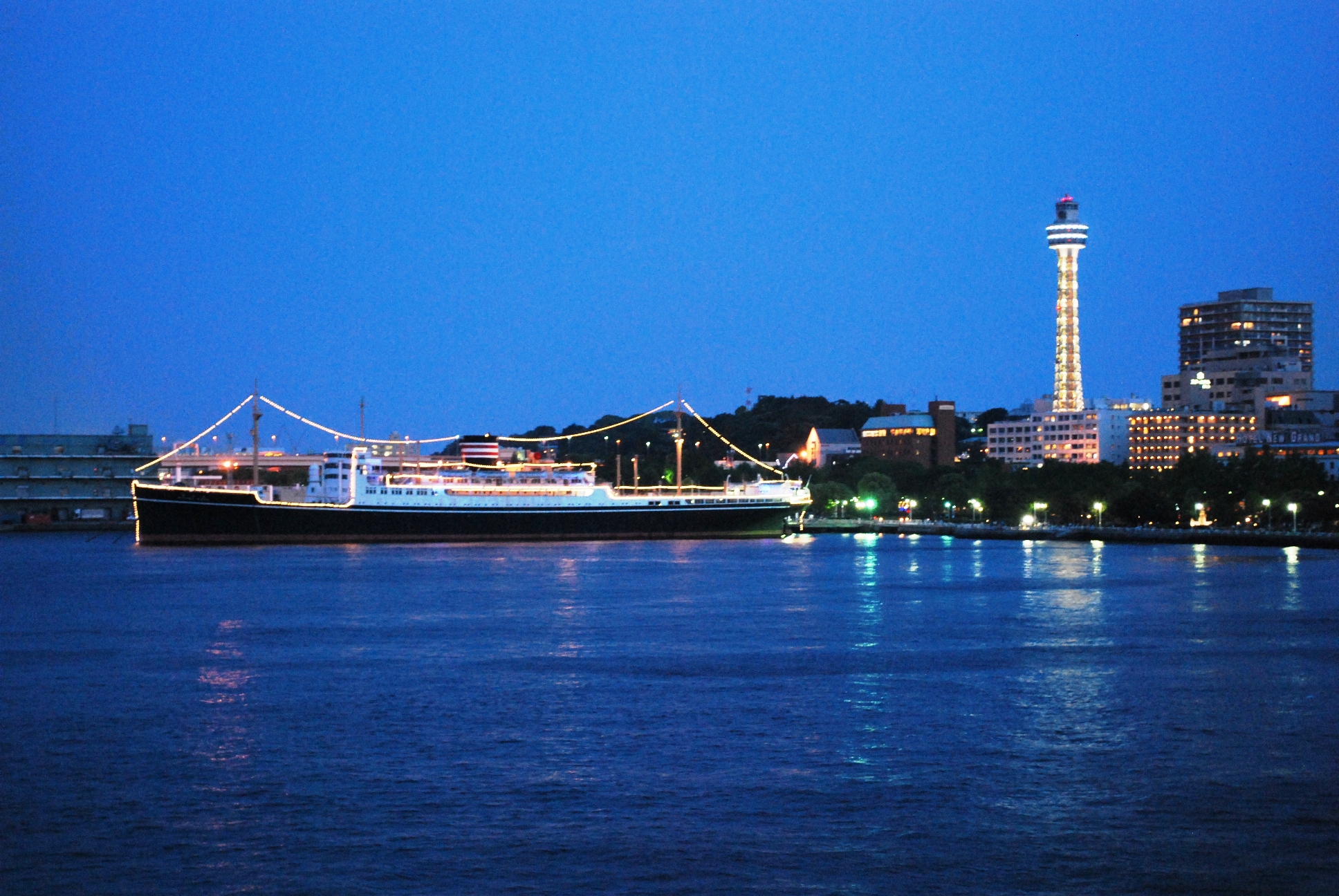
🌊 2–5 min walk5
From the eastern gate of Chinatown it's a 2–5 minute walk to this long waterfront park along the bay. The star attraction is the Hikawa Maru, a 1930s ocean liner now retired and moored as a floating museum, plus the view of Marine Tower. It's the perfect place to sit after you've eaten your fill — and the light at dusk is gorgeous.
Yokohama Guide →
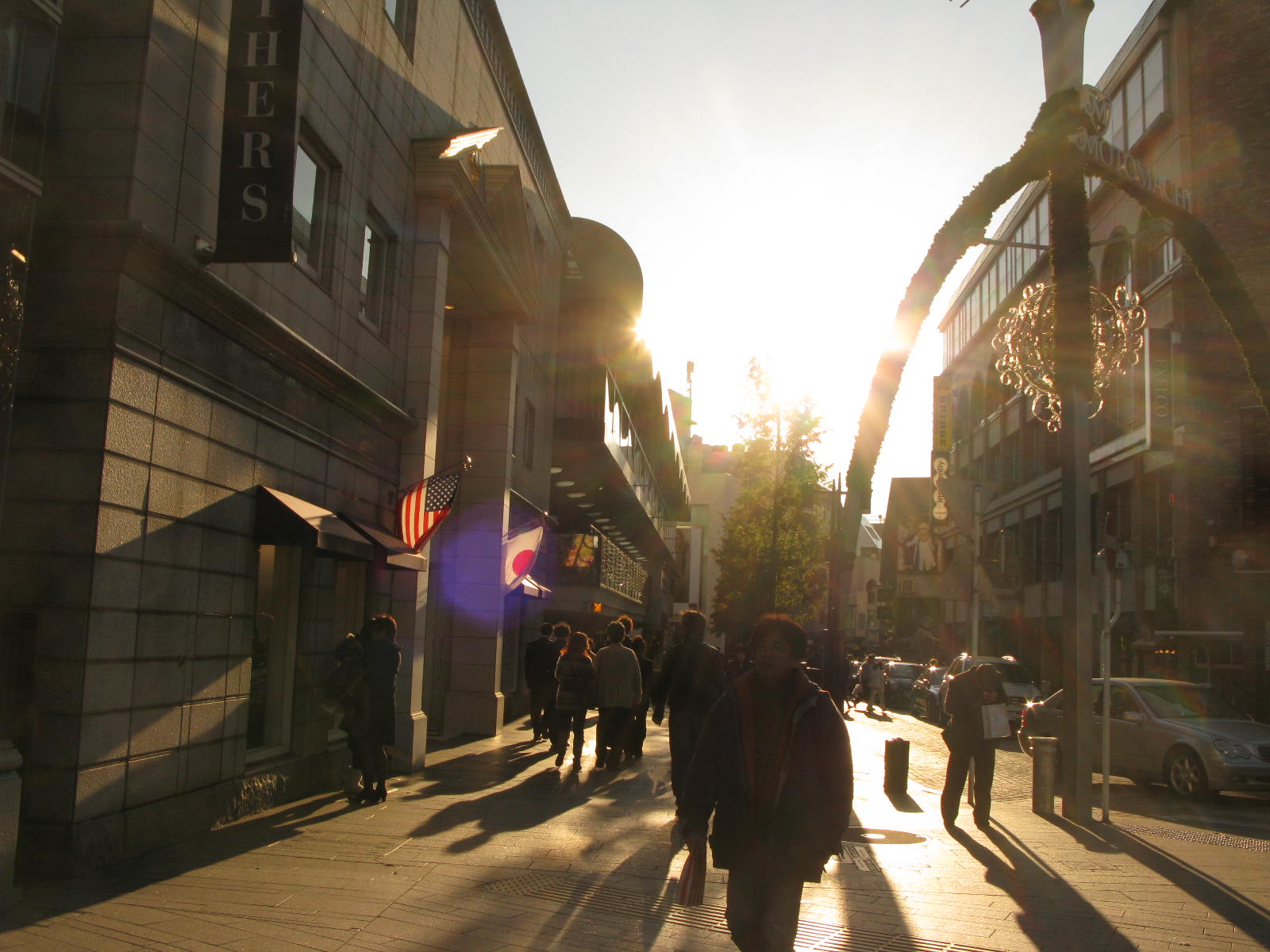
🛍️ 5 min further6
Another 5 minutes on from Yamashita Park brings you to Yokohama's historic shopping street — the polar opposite of Chinatown's bustle. It's quiet and stylish, full of fashion boutiques, bakeries, and chic cafés. This is the birthplace of "Hama Trad," the city's classic port-town fashion style, and a lovely, laid-back way to finish the trip.
Yokohama Guide →Eating here splits two ways: grazing on street food as you walk (a snack-walk), or sitting down to an all-you-can-eat buffet (tabehoudai) in one of the bigger restaurants. Both are fun in their own way — here's what people come here to try.
| Dish | What it is | Rough price | How to eat it |
|---|---|---|---|
| NikumanNikuman · 肉まん | Hot steamed pork buns — the star of the district | a few hundred yen each | Buy and eat on the move · famous shops near Zenrinmon |
| AnmanAnman · あんまん | Sweet red-bean steamed buns, the partner to nikuman | a few hundred yen each | A sweet walking snack |
| Dim SumDim Sum · 点心 | Xiao long bao, har gow, shumai — freshly steamed | from a few hundred yen | Sit down, or grab a box to walk with |
| Roast Duck / Peking DuckRoast Duck | Crispy-skinned duck served with thin wrappers | varies by shop | A sit-down menu item · often in the buffet |
| Fried Sesame BallsGoma Dango · 胡麻団子 | Sesame-coated fried dough with red-bean filling, crisp outside, soft inside | a few hundred yen each | A walking dessert |
| All-You-Can-Eat BuffetTabehoudai · 食べ放題 | Dozens of Chinese dishes — duck, dim sum, desserts | around 1,500–4,500 yen/person | Sit-down at a bigger restaurant · usually time-limited to ~90–120 min |
Chinatown itself doesn't have many hotels right inside the district, but the nearby Minato Mirai side (just a few stops on the Minatomirai Line) has far more to choose from. Stay there and you can wake up and walk over before the crowds arrive.
Our pick of hotels on Yokohama's Minato Mirai side — bay views, landmark towers, shopping, and a short train ride to Chinatown.
See Recommended Hotels →Where to stay, what to see, where to eat, and how to get around Yokohama — pick the location that fits your plans.
Open the City Guide →Compare available rooms in Yokohama for your dates, and filter by location, budget, and reviews.
Search on Agoda →Two main stations leave you within a short walk of the district gates — pick the one that suits where you're coming from. Both are just a few minutes on foot from the station (double-check the latest fares, as they can change).
The Minatomirai Line — get off and take the Chukagai Exit for a 1–3 minute walk to the gates. The closest and most convenient. About 8 minutes from Yokohama Station, and it's the line's terminus, so you can't miss your stop.
The JR Negishi Line — about a 7–8 minute walk from the station to the Chinatown gates. Handy if you hold a JR Pass or are already on a JR line. Around 17 minutes from Yokohama Station.
From Shibuya, take the Tokyu Toyoko express straight to Motomachi-Chukagai in about 45 minutes (~500 yen) with no transfer. Or from Tokyo Station, take the JR to Ishikawacho in about 1 hour (~570 yen).
You can see at a glance why this area is so easy to explore — the Zenrinmon gate, Kanteibyo shrine, Yamashita Park, and Motomachi street are all close together, an easy half-day on foot.
Yokohama's bayfront — landmark towers, the Ferris wheel, and the Red Brick Warehouse — a few minutes by train from Chinatown.
Minato Mirai Guide →Nikuman, Yokohama ramen, Chinese sweets, and the best spots across the city — going deeper than Chinatown.
Yokohama Food Guide →The city's top sights, from the waterfront to its lovely parks and museums — plan a full day in one go.
Yokohama Attractions →A ready-made route through Yokohama with no planning needed — Chinatown, Minato Mirai, and the bay in one trip.
See the Itinerary →Where to stay, what to see, where to eat, and how to get around the port city of Yokohama — start planning here.
Open the City Guide →Visa · eSIM · IC Card · JR Pass · yen · power plugs · Japanese etiquette — everything before you fly.
Travel Prep →Plan your Yokohama trip to take in Chinatown, Minato Mirai, and the waterfront — open the city guide for hotels, sights, and transport, or start looking early for a hotel near the district.