Home Destinations Taiwan Taipei Guide Taipei Attractions Yangmingshan Beitou Hot Springs About Us 🇹🇭 ภาษาไทย🇬🇧 English🇨🇳 中文🇪🇸 Español🇫🇷 Français
🏔️ Day Trip from Taipei · Updated 2026

Waterfall, Wooden Train, Hot Springs
The Wulai & Atayal Village Guide

Ride the MRT to the end of the line, switch to a winding mountain bus, and an hour later you step out into a deep river gorge that has been Atayal indigenous territory for centuries. A waterfall crashes eighty metres into the valley. A toylike train trundles up the old logging track. Bamboo-tube rice steams on the Old Street. And mineral-rich hot springs seep along the riverbank, waiting for you after the walk.

Overview

A gorge that holds a waterfall, hot springs and one of Taiwan's most accessible indigenous cultures

Wulai (烏來) sits just 27 km south of Taipei, tucked into the steep mountain watershed of New Taipei City where the jade-green Nanshi River carves a narrow valley through the hills. This is, and has always been, Atayal territory. The Atayal (泰雅族) are one of Taiwan's sixteen officially recognised indigenous peoples, historically known as hunters and weavers whose territory stretched deep into the mountains of northern Taiwan. The Japanese colonial period brought logging railways and roads into the valley; the post-war decades brought tourism.

Today Wulai wears several identities at once: nature escape (waterfall, forested gorge, river swimming), living cultural site (Atayal Museum, traditional crafts, indigenous food), and hot-spring resort town. What makes it unusual is that all three are genuinely present, not performed for tour buses. The Old Street is short but honest — grandmothers still sell bamboo-tube rice they packed that morning. The Atayal Museum is free and unexpectedly moving. And the sodium-bicarbonate springs that seep into the Nanshi River are among the softest, most skin-kind waters in Taiwan.

Best of all, it takes about one hour door to door from central Taipei, costs almost nothing to enter, and can be done as a comfortable day trip — with the option to stay overnight in a riverside spa hotel if you're not ready to leave.
💦
80 m Waterfall
Tallest waterfall in northern Taiwan — a single dramatic plunge over bare rock
🚃
Historic Train
Rebuilt log-cart railway from the Japanese logging era, NT$50 per ride
🧖
Beauty Springs
Sodium-bicarbonate hot springs — clear, odourless, and famously good for skin
🏹
Atayal Culture
Free museum, traditional food and crafts from Taiwan's indigenous mountain people
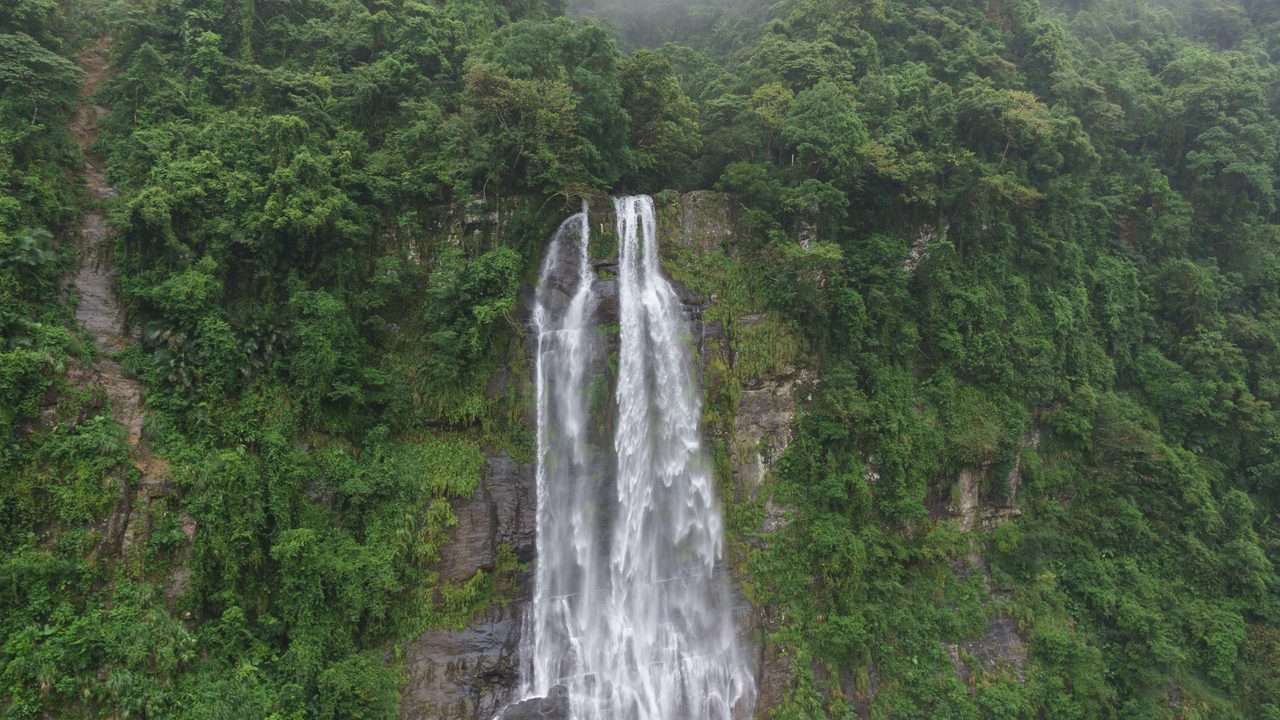
Wulai Waterfall (烏來瀑布), an 80-metre waterfall plunging over grey rock cliffs surrounded by green forest in New Taipei, Taiwan
Wulai Waterfall — the tallest in northern Taiwan at around 80 metres. Flow is strongest after rain, May–September.
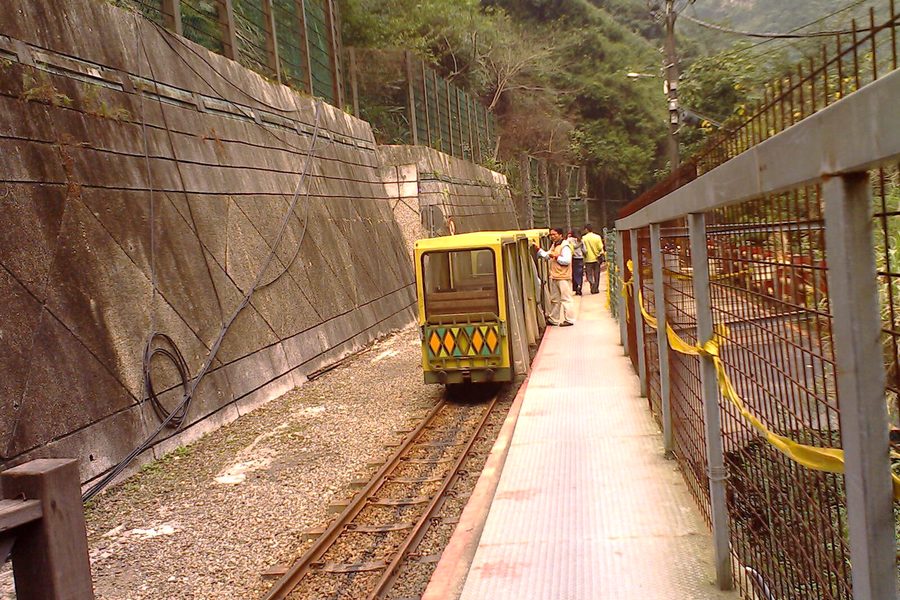
Wulai scenic train (台車), a small colourful railway car running on narrow tracks through the forested Wulai valley
The 台車 (táichē) scenic train — once used to haul logs down from the mountains, now NT$50 for a 1.5 km ride to the waterfall.
Book Tours & Onsen

Wulai Day Trip — Hot Springs, Waterfall & Atayal Culture
One-day tours from Taipei

Day tours from Taipei to Wulai with private transport + cable car + waterfall + onsen on Klook (approximately NT$1,800–3,000/person) — a much more relaxed alternative to taking the MRT + Bus #849 yourself.

✓ Often cheaper than counter ✓ Instant QR ticket ✓ Includes private transport ✓ Free cancellation on some
🚎 See Wulai Tours on Klook →
Wherebest is an affiliate partner of Klook — we may earn a commission when you book through our links, at no extra cost to you.
Getting There · Bus 849

MRT to Xindian, then Bus 849 — about one hour from central Taipei

No MRT reaches Wulai, but the public-bus connection from the last MRT stop is straightforward and cheap. EasyCard handles everything.

🚇 Step-by-step directions

  • 🟢Take the MRT Green Line (Xindian Line) to its final stop: Xindian Station (新店站). From Taipei Main Station this takes about 30 minutes.
  • 🚌Exit the station and board Bus 849 from the stop directly outside. Fare: NT$15, EasyCard accepted. Journey time approximately 45 minutes on a winding mountain road.
  • 🏁The bus terminates at Wulai Old Street. The waterfall, scenic train, cable car, museum and hot-spring hotels are all within easy walking distance from the bus stop.
  • ⏱️Total door-to-door time from central Taipei: approximately 1 hour. Return buses run frequently — no need to rush.

💡 Alternative options

  • 🚕Taxi / Grab from Xindian MRT: around NT$600–800 one-way. Worthwhile for groups of three or four splitting the cost.
  • 🛵Scooter rental from Taipei: the mountain road is scenic — river views on every bend — and takes about 40 minutes. Recommended for experienced riders only.
  • 🎒Day tours via Klook: guided packages that combine Wulai with hot-spring entry and lunch. Convenient if you prefer not to navigate public transport.
  • 🅿️Driving yourself: parking exists but fills by 9 am on weekends. The bus is genuinely easier and cheaper.
⚠️

Always check facility status before you go: Typhoon Soudelor (2015) devastated Wulai — it washed out the scenic train tracks (closed for two years), destroyed the original cable-car system, and flooded the Old Street. Everything has been rebuilt, but after heavy rain or a typhoon warning, the scenic train and cable car can close at short notice. Search "烏來台車" on Google Maps or check the operator's Facebook page before travelling, especially June–September.

The Main Sights

Four things that make Wulai worth every minute of the journey

From the waterfall at the head of the gorge to the cable car above it — everything clusters together and can be done comfortably in a single day.

Star Attraction · Nature

Wulai Waterfall (烏來瀑布)

The headline act — a single-drop waterfall of approximately 80 metres, the tallest in northern Taiwan, plunging straight over a bare rock face into a deep green pool. After heavy rain it splits into two or three roaring channels; in dry winter months the flow is thinner but still impressive.

The viewing platform is at the top of the scenic train line and can also be reached on foot in about 20–30 minutes from the Old Street. Entry is free. Spray from the falls on a good day drifts all the way to the viewing deck — bring a light jacket.

Industrial Heritage · Fun Ride

The Log-Cart Scenic Train (烏來台車)

In the 1920s the Japanese colonial government laid narrow-gauge tracks up the Wulai valley to haul timber down from the forests above. When logging declined, the tracks were repurposed for tourism. Today bright little cars run 1.5 km up the mountainside from the Old Street area to the waterfall base.

Fare: NT$50 one-way. Hours: generally 09:00–17:00 (until 18:00 in summer), closed the first Tuesday of each month for maintenance. The ride itself is part of the experience — slow, open-sided, threading between rock walls and overhanging trees, with the river glinting below.

Cable Car · Views

Aerial Tramway & Yun Hsien Resort (雲仙樂園)

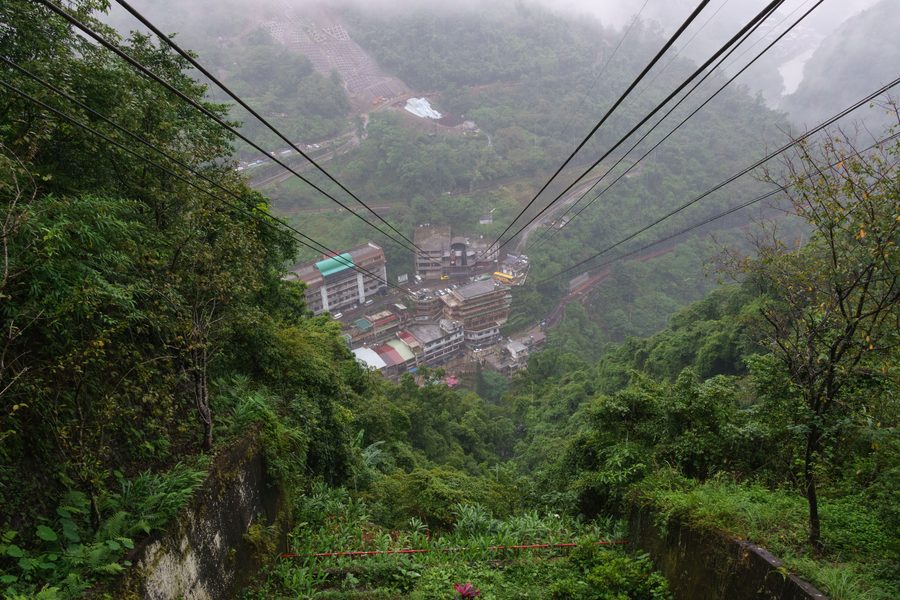
At the waterfall's base, an aerial tramway swings you across the gorge and up to Yun Hsien Resort (雲仙樂園) on the ridge above. Fare: NT$220 return. The resort — rebuilt entirely after Typhoon Soudelor demolished the original 1950s park — now operates as a nature eco-lodge with forest trails, a small waterfall and panoramic views across the Wulai ridgeline.

Allow at least 2–3 hours if you go up. It's quieter and greener than the valley floor, and a good way to escape the weekend crowds without leaving Wulai.

Museum · Free Entry

Wulai Atayal Museum (烏來泰雅民族博物館)

A thoughtful four-storey museum dedicated entirely to Atayal history and culture — free to enter. Exhibits cover traditional weaving techniques, hunting equipment, ceremonial dress, the spiritual system (gaga), and most strikingly, the facial tattooing tradition: for centuries, Atayal men and women received facial tattoos as marks of adulthood, skill and social standing.

On days with live programming you may see weaving demonstrations or hear traditional music. It takes an hour to do properly and offers far more context for everything else you'll see in Wulai that day.

Wulai Old Street · Indigenous Food

Wulai Old Street — where to eat food you won't find anywhere else in Taiwan

A short lane dense with vendors selling Atayal ingredients that have been gathered and cooked this way for generations — not tourist theatre, just genuine mountain food.

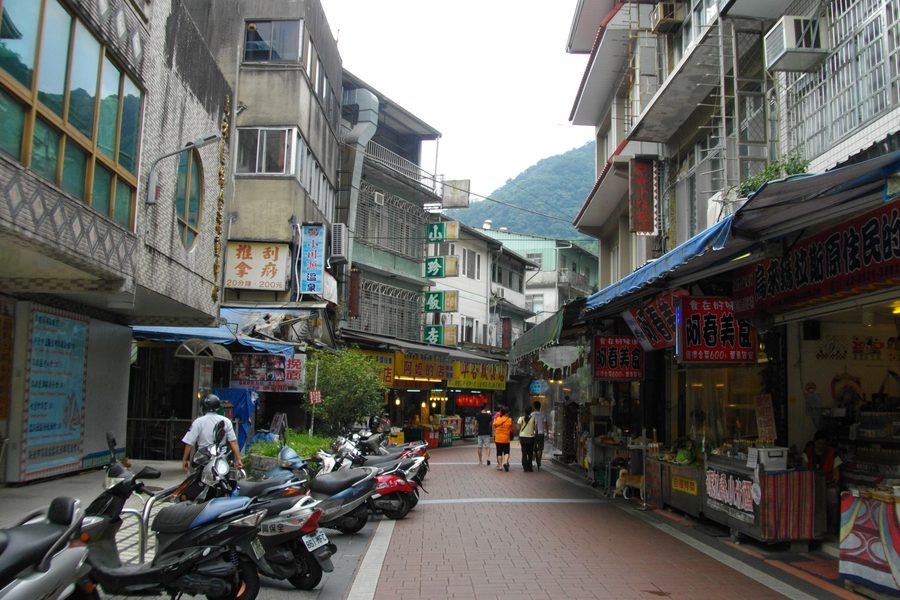
Wulai Old Street (烏來老街), a row of shops and food stalls in the mountain valley with visitors browsing
Wulai Old Street — a compact strip of Atayal food vendors, craft shops and souvenir stalls.
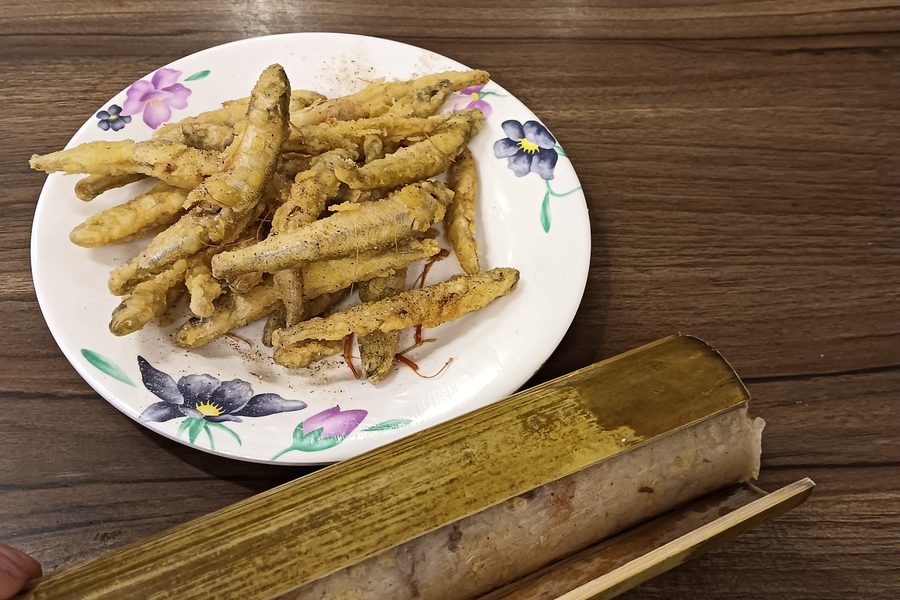
Bamboo-tube rice and fried river fish, traditional Atayal food from Wulai Old Street, Taiwan
Bamboo-tube rice (竹筒飯) and river fish — two of the defining flavours of a day in Wulai.
🎋
Bamboo-Tube Rice (竹筒飯)
Sticky rice packed into fresh bamboo and steamed. The bamboo imparts a subtle, grassy fragrance that no pot can replicate.
🥩
Wild Boar Sausage
Smoked sausage made from wild boar — darker and more gamey than standard Taiwanese sausage, served with mountain herbs.
🍵
Millet Wine (小米酒)
Fermented millet brew — the ceremonial drink of the Atayal. Comes in sweet (mild) and traditional (stronger) versions.
🍡
Millet Mochi (麻糬)
Pounded sticky mochi, grilled or pan-fried until crisp outside, served with honey, peanut powder or sesame.
🌿
Mountain Vegetables
Foraged greens, wild mushrooms and mountain herbs wok-fried simply — the flavours are intensely earthy and clean.
🐟
River Shrimp & Fish
Stream-caught fish and shrimp deep-fried crispy — a staple of the Old Street that has not changed much in decades.
Atayal people in traditional dress at Wulai, Taiwan, representing the indigenous culture of the mountain valley
The Atayal people — Wulai's original inhabitants, whose weaving, tattooing and hunting traditions shaped the valley's identity.
Wulai aerial tramway cable car gondola crossing the valley gorge above the river toward Yun Hsien Resort
The Wulai aerial tramway crossing the gorge — NT$220 return to Yun Hsien Resort on the ridge above the falls.

Insider tip: The Old Street is only about 200 metres long but gets very crowded on weekends. Visit the waterfall and museum first, then return to eat when the midday wave of day-trippers has thinned out. Stalls with long queues are almost always the best ones.

Hot Springs · Spa

Sodium-bicarbonate springs — the 'beauty water' of northern Taiwan

Wulai's springs are a different beast from the sulphur waters of nearby Beitou — clear, odourless and skin-soft, making them genuinely accessible for everyone.

A riverside hot-spring spa hotel in Wulai, white buildings beside the Nanshi River surrounded by green forested mountains
Riverside spa hotels in Wulai — the best rooms look directly over the Nanshi River and the forested gorge.

♨️ What to know about the springs

  • 💧Water type: Sodium bicarbonate (carbonate spring). Colourless, odourless, slightly alkaline. Temperature: 42–55°C. Known locally as the 'beauty spring' (美人湯) for its skin-softening properties.
  • 🏊Public riverside options: Some spots along the Nanshi River offer free or inexpensive outdoor soaking. Quality and maintenance vary; check conditions on arrival.
  • 🏨Private spa hotels: Numerous properties line the river, offering private tatami-style hot-spring rooms from NT$500–1,500 per hour. Views are often directly over the water.
  • 💆Staying overnight: Booking a riverside spa hotel for a night turns Wulai from a day trip into a proper retreat. Book 2–3 weeks ahead for weekends.
💡

Wulai vs Beitou hot springs: Beitou (easily reached by MRT) has sulphur and radium springs — stronger, with a distinctive smell, and steeped in Japanese colonial spa history. Wulai's sodium-bicarbonate springs are milder and odourless. The two are complementary rather than competing: if you're spending several days in Taipei, both are worth a visit.

Seasons · Best Time to Visit

Winter for hot springs, spring for cherry blossoms along the mountain road

Wulai is rewarding in every season — but each period has its defining reason to come.

Feb–Mar · Cherry Blossoms

Sakura season — pink against deep green

In late February and March, cherry trees lining the mountain road to Wulai burst into bloom simultaneously, the pale-pink blossom vivid against the evergreen gorge walls. It's a sight unavailable in central Taipei and draws considerable crowds.

This is the peak season. Weekdays are strongly recommended — weekends see long queues for the bus back to Xindian and packed Old Street stalls.

May–Sep · Rainy Season

Full waterfall — but watch the weather

The waterfall is at its most dramatic during the wet months, sometimes splitting into multiple torrents after a heavy downpour. The forest is intensely green and the river runs jade.

This is also typhoon season. A single serious storm can close the scenic train, flood the Old Street and make the mountain road impassable. Check the Central Weather Bureau forecast before every visit, June through September.

Oct–Jan · Hot-Spring Peak

Cool air, warm water — the best of Wulai

As temperatures drop from October onwards, the draw of Wulai's hot springs becomes irresistible to Taipei residents. Slipping into a 45°C riverside pool while cold mountain air touches your face is one of the most satisfying experiences northern Taiwan offers.

Book spa hotels 2–3 weeks ahead for weekends. Prices rise significantly in November and December.

All Year · Weekday Tip

Weekdays — a different Wulai entirely

Wulai is one of Taipei's most popular weekend escapes. On Saturdays and Sundays the Old Street is shoulder-to-shoulder, bus queues are long and the scenic train can have 30-minute waits.

On Tuesday through Friday the valley is unhurried, vendors have time to chat, and the walk to the waterfall feels genuinely secluded. If your schedule allows it, go on a weekday.

Rain and typhoons — don't force it: Wulai sits in a deep valley where water levels can rise rapidly. If there is heavy rain or a typhoon in the forecast, reschedule rather than risk the trip. The scenic train and cable car close at short notice, the road can be dangerous, and a day spent sitting in a flooded Old Street waiting for a bus is not the Wulai anyone wants to experience. The typhoon risk is highest July–September.

Insider Tips

Six things that make the day run smoothly

🌅
Go early
Bus 849 gets packed from 9 am on weekends. Leaving Xindian by 7:30–8:00 gives you the valley to yourself for the first hour.
💳
EasyCard for the bus; cash for the rest
EasyCard works on the MRT and Bus 849 — but the scenic train and cable car are cash-only at the gate. Bring NT$300–500 in small bills.
🎒
Pack a towel if you plan to soak
Public riverside soaking spots don't supply towels. Some spa hotels do; call ahead. A small quick-dry travel towel solves the problem.
🚃
Walk up, train down
The footpath from the Old Street to the waterfall takes 20–30 minutes and hugs the river beautifully. Take the scenic train back and see it from the other angle.
🍽️
Eat before or after the peak crowd
The Old Street is busiest 11 am–2 pm. Eat early before the day-tripper wave, or after 2:30 pm when the crowds thin and vendors may be more relaxed about samples.
🔍
Always check train status
Google "烏來台車" before leaving Taipei. After any significant rain, the scenic train can be suspended. Don't skip this step — the train is half the fun.
Plan Your Next Stop

Pair Wulai with these Taipei-area day trips and guides

Wulai is the starting point, not the whole story — combine it with Beitou's famous sulphur springs, Yangmingshan's volcanic plateau, or the full Taipei attractions map.

♨️

Beitou Hot Spring Guide

Sulphur and radium springs with a century of Japanese spa history — just 20 minutes from Taipei by MRT and very different from Wulai.

Beitou Guide →
🌋

Yangmingshan National Park

An active volcanic park on Taipei's northern edge — sulphur fumaroles, buffalo grasslands, hot springs and seasonal flowers, all free to enter.

Yangmingshan Guide →
📍

Taipei Attractions

The full map of Taipei's best sights — temples, night markets, viewpoints and nature escapes, all in one place.

Taipei Attractions →
🟠 Klook

♨️ Wulai Day Tour from Taipei
Waterfall + Onsen + Atayal Culture

Take a guided day tour from Taipei covering Wulai's famous waterfall, the log-cart scenic train, indigenous Atayal culture and a private hot-spring soak. No need to navigate buses on your own — just relax and let the guide take you through everything in one smooth day.

🛒 Check Price on Klook →
Wherebest is a Klook affiliate partner — we may earn commission at no extra cost to you
Frequently Asked Questions

What you need to know before visiting Wulai

How do I get to Wulai from Taipei?
Take the MRT Green Line (Xindian Line) to the final stop, Xindian Station. Board Bus 849 directly outside the station — NT$15 fare, EasyCard accepted. The bus takes about 45 minutes on a winding mountain road (take motion-sickness medication if needed). Total journey from central Taipei is roughly one hour. Taxis and Grab are also available from Xindian for around NT$600–800 one-way.
Is there an entry fee for Wulai?
Entering the town and viewing the waterfall is free. The log-cart scenic train costs NT$50 per trip. The aerial tramway (cable car) to Yun Hsien Resort costs NT$220 return. Hot springs range from free or cheap public riverside spots to private spa hotel rooms from NT$500 per hour. The Atayal Museum is also free to enter.
When is the best time to visit Wulai?
Autumn and winter (October–February) are best for hot springs — cool air makes soaking blissful. Spring (late February–March) is cherry-blossom season, with sakura lining the mountain road. The waterfall is most powerful May–September during the rainy season, but that overlaps with typhoon season (July–September) so always check the weather before going. Weekdays are significantly quieter and more pleasant than weekends throughout the year.
What are the hours for the Wulai Scenic Train (台車)?
The log-cart train generally runs from about 09:00 to 17:00, with extended hours to 18:00 in summer. It closes for maintenance on the first Tuesday of each month. Fare is NT$50 per trip for the 1.5 km ride from the Old Street to the waterfall viewing area. Check current status on Google Maps or the operator's Facebook page before visiting — the train can be suspended after heavy rain or typhoons.
What makes Wulai's hot springs special — how are they different from Beitou?
Wulai's springs are sodium-bicarbonate (carbonate) water — clear, colourless, odourless and at around 42–55°C. They are nicknamed the 'beauty springs' because the mildly alkaline water is said to benefit the skin. Beitou's springs are sulphur or radium-type — stronger, with a distinctive smell, good for joint problems. Both are worthwhile; Wulai is better if you dislike the sulphur scent or have sensitive skin.
Should I book a hot-spring hotel in Wulai in advance?
On weekdays, less critical — you can often walk in. But on weekends and public holidays, especially during cherry-blossom season and the November–January peak, riverside spa hotels sell out weeks in advance. Book at least two to three weeks ahead for weekend stays. Search "Wulai hot spring hotel" on Agoda or Booking.com. See Taipei Attractions for more day-trip ideas while you plan.
Ready to go

Stay riverside in Wulai
or base yourself in Taipei and go in the morning

A riverside spa hotel in Wulai turns the day trip into an overnight retreat — or pick a Taipei hotel near an MRT station and you can be at the waterfall by 9 am. Open the full Taipei guide to plan every day of your trip.

📍 Taipei Attractions Taipei Guide