Japan's most expensive and most elegant shopping street is home to high-end department stores, top-tier sushi counters, a historic kabuki theatre, and art galleries — here's how to walk all of Ginza, from the free things to the meals of a lifetime, plus how to get there and where to stay.
Say "Ginza" and most people picture rows of designer logos and price tags that don't bear thinking about. But honestly, Ginza is a lot more fun than that. The district was once the site of an Edo-period silver mint (Ginza literally means "silver place"), and over time it grew into Japan's most upmarket shopping street. What really sets it apart is how much it packs into a few blocks — beautiful high-end department stores, some of the country's best sushi counters, a historic kabuki theatre, and art galleries, all within walking distance of each other.
What people love to pass on is that Ginza is more free to enjoy than you'd expect. Admire the architecture, window-shop, head up to a department store's rooftop garden, or come on a Saturday or Sunday when the main avenue closes off entirely for pedestrians — then choose to splurge on one sushi meal or a kabuki ticket and call it money well spent. This page walks you through all of Ginza, from the free things to an experience you'll remember for a long time.
Ginza lines up its big department stores and flagship shops along Chuo-dori — here's a quick rundown to pick from by style. Hours are typical and can shift by day and season, so check the official site before you go.
| Place | Type | Known for | Hours (typical) | Best for |
|---|---|---|---|---|
| Ginza SixGinza Six | Luxury mall | 241+ shops · free rooftop garden on level 13 | ~10:30–20:30 | Brands + a free view |
| Ginza MitsukoshiMitsukoshi | Heritage store | Outstanding depachika (basement food hall) | ~10:00–20:00 | Gifts + sweets |
| Wako ClockWako · Ginza 4-chome | Landmark | The clock tower that symbolises the district | Photo anytime | Classic photo spot |
| Uniqlo GinzaFlagship | Flagship | Huge store, everything across many floors | ~11:00–21:00 | Great-value shopping |
| Apple GinzaFlagship | Flagship | The first Apple Store outside the United States | ~10:00–21:00 | Gadget lovers |
| Ginza PlaceGinza Place | Design building | Nissan + Sony showrooms on the 4-chome corner | ~11:00–20:00 | Architecture watching |
The experiences that make Ginza Ginza — from luxury stores and free things like the pedestrian street, to a sushi meal and a night at the kabuki you won't find anywhere else.
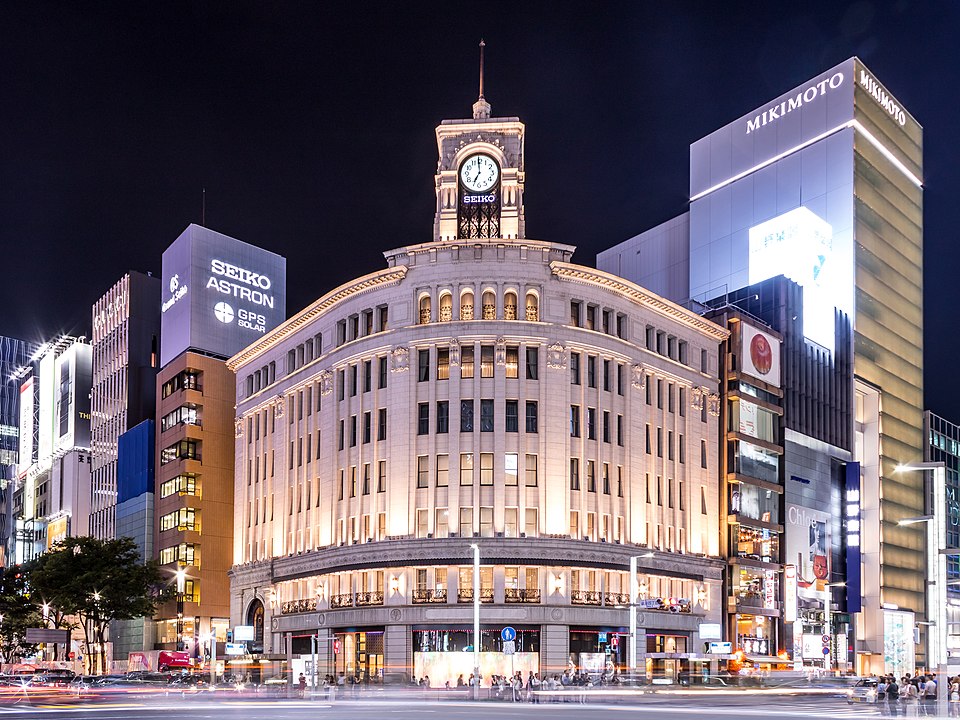
🛍️ Chuo-dori1
The heart of Ginza is Chuo-dori, lined with high-end department stores and brand flagships. The highlights are Ginza Six, a big mall with 241+ shops (and a free rooftop garden on level 13), the heritage Mitsukoshi store, and the Wako clock tower at the 4-chome crossing, the symbol of the district. Just walking past the handsome buildings and window-shopping is a pleasure in itself.
Hotels in Ginza →Ginza is one of Japan's great hubs for Edomae sushi, with one of the densest clusters of Michelin and omakase restaurants in the city. Sitting at the counter and watching the chef shape each piece in front of you is the experience people talk about most. On a tighter budget, many famous shops offer lunch sets that are far more accessible than dinner.
Japan Sushi Guide →Japan's largest and most famous kabuki theatre, a striking Japanese-style building right by Higashi-Ginza Station. If you don't fancy sitting through a full programme (3–4 hours), there are single-act tickets for just one act, about an hour, sold on the day before the act begins — an easy, low-commitment way to sample this classic performing art.
Tokyo Attractions →Every Saturday, Sunday, and public holiday, the main avenue Chuo-dori from 1-chome to 8-chome (about 1,100 metres) closes to all traffic and becomes a "pedestrian paradise" where you can walk right down the middle of the road and take photos at your leisure. Shops often put chairs out for a rest — it's the most laid-back, and most free, way to experience Ginza.
Tokyo Guide →Beyond fashion, Ginza has the densest concentration of art galleries in Tokyo, from tiny galleries in old buildings to the art spaces of big brands. Most are free to enter and easy to drift in and out of — a quiet activity that slots nicely between bouts of shopping without costing a thing.
Tokyo Attractions →A few minutes' walk east of Ginza brings you to the Tsukiji Outer Market, Tokyo's liveliest seafood market. The wholesale auctions moved to Toyosu, but the outer market is still going strong, with fresh sushi, skewered sweet egg omelette, grilled scallops, and street snacks that are far easier on the wallet than Ginza's restaurants. Great for breakfast or a late morning.
Japan Food Guide →Ginza has a reputation for being pricey, but you really can eat at every level here, from lunch sets at famous shops to Michelin omakase — here are three approaches to choose from by budget and time.
Lunchtime is Ginza's golden hour — many sushi and famous restaurants offer lunch sets for far less than dinner. Or head down to a department store basement (a depachika, like the one at Mitsukoshi), where ready-to-eat dishes, sweets, and quality bento are sold; buy something and eat it up on the rooftop garden.
Ginza has long-established shops (shinise) that have been open for decades — rice-bowl restaurants, tempura, and kissaten (old-style cafés) serving coffee with Japanese sweets. A meal here gives you the district's atmosphere without paying fine-dining prices.
If you've come to eat seriously, Ginza is the home of sushi omakase and one of the densest clusters of Michelin restaurants in Tokyo. Dinner runs into the tens of thousands of yen and usually needs a reservation — plan the booking and budget ahead so you don't miss the place you want.
Ginza sits in central Tokyo with a great location for walkers — stay nearby and you can do Tsukiji in the morning, shopping in the afternoon, and kabuki in the evening with ease, plus reach other cities simply thanks to nearby Tokyo Station.
You can clearly see Ginza sits in central Tokyo, within walking distance of the Tsukiji Outer Market, close to Tokyo/Marunouchi Stations, and one metro ride from Asakusa and Ueno in the same day.
The legendary scramble crossing, Hachiko, Shibuya Sky, youth shopping, and nightlife — the district that never sleeps.
Shibuya →Kabukicho, Golden Gai, the yakitori alley, Shinjuku Gyoen, and the free observation deck at the Tokyo Government Building.
Shinjuku →Senso-ji temple, the Kaminarimon gate, Nakamise street, and Tokyo Skytree — old Tokyo that's still very much alive.
Asakusa →Ueno Park, the museums, the zoo, and the bargain-filled Ameyoko market — museums, market, and park in one district.
Ueno →The best sights across Tokyo — temples, viewpoints, shopping districts, and museums, all in one place.
Tokyo Attractions →A sample 5-day route for first-timers, balancing Tokyo and Kansai just right — with Ginza in the plan.
5-Day Plan →Stay in the heart of Ginza and you can shop, eat sushi, and see kabuki all within walking distance. Open our handpicked hotel roundup, or start checking Tokyo accommodation prices early before rooms fill up at peak times.