🌏 Destinations 🇹🇭 Thailand — Overview Getting Around Thailand Best Time to Visit Southern Islands eSIM & SIM Cards Budget Calculator Thailand on a Budget ← You are here About 🇹🇭 Thai🇬🇧 English
💰 Budget Guide  ·  Updated June 2026

Thailand costs less than you think
if you know where to go

A rice-and-curry plate for ฿50. An overnight Bangkok–Chiang Mai sleeper from ฿800. A clean hostel dorm in Chiang Mai for ฿300. This guide breaks down real costs in Thai baht (฿) across three honest budget levels — and tells you plainly which places are cheap and which are not.

Overview

Thailand stretches any budget — if you choose well

Ask anyone who has been: Thailand is one of the most flexible countries in the world for your money. Street food famous across the globe for ฿40–80 a plate. Overnight trains and buses that cross the country for a few hundred baht. Clean hostel dorms from ฿200–400 a night, and good 3-star hotels for ฿900–1,800. You can travel here on almost any budget; the question is mostly where you point it.

The traps are predictable once you know them: the southern islands and Phuket cost far more than the north, because everything on an island arrives by boat. Add foreign-card ATM fees (about ฿220 per withdrawal), ferry fares to the outer islands, and dive-tour prices that vary wildly between operators. This guide breaks down every category and says clearly which regions are cheap and which are not — no rounding up.

📋 Prices as of June 2026. All figures are in Thai baht (฿ / THB) and are planning estimates from commonly seen prices, not fixed rates. Exchange rate used for the USD hints: ฿1 ≈ $0.0275 USD (source: Wise/XE, June 2026). Accommodation and food vary a lot by region — the north and northeast run about 30–40% cheaper than Phuket and the southern islands, and high season (Nov–Feb) costs more. Check current rates before travelling.
3 Budget Levels

Daily spending by travel style

Pick your level, then scroll down for a full per-category breakdown. These figures assume a mid-priced city; add 30–50% on the southern islands.

🎒
Backpacker
฿900–1,500 / day
~$25–42 USD / day
🏨 Accommodation ฿250–450
Hostel dorm / fan guesthouse
🍜 Food ฿200–350
Street food + food courts
🚇 City transport ฿80–150
BTS/MRT, songthaew, boat
🏛️ Attraction tickets ฿0–200
Many temples + parks free
📶 eSIM data ฿30–50 / day avg
Amortised trip plan
🧳
Mid-Range (Comfortable)
฿2,000–3,500 / day
~$55–96 USD / day
🏨 Accommodation ฿900–1,800
3-star, AC, near food
🍜 Food ฿500–900
Sit-down + street food mix
🚇 City transport ฿200–400
Grab + public transport
🏛️ Attraction tickets ฿300–600
Temples, museums, light tours
📶 eSIM data ฿40–60 / day avg
10–20GB trip plan
👑
Comfort
฿5,000–12,000+ / day
~$138–330+ USD / day
🏨 Accommodation ฿3,000–8,000+
4–5 star / beach resort
🍜 Food ฿1,200–2,500
Good restaurants + drinks
🚇 City transport ฿500–1,000
Grab/taxi throughout day
🏛️ Attraction tickets ฿800–2,000
Private tours + activities
📶 eSIM data ฿50–80 / day avg
Large / unlimited plan
Per-Category Breakdown

Real prices, every spending category

Planning estimates from commonly seen prices, updated June 2026. Island and Phuket prices in high season run higher than these.

🏨 Accommodation (per night)
Hostel dorm, 6–8 beds~฿200–400
Guesthouse / fan private room~฿400–700
3-star hotel, AC, near food~฿900–1,800
4-star hotel~฿2,000–4,000
5-star beach resort~฿5,000–15,000+

⚠️ Chiang Mai and Isan run cheaper; Phuket / Samui / islands in Nov–Feb run 1.5–2x higher. Booking several nights often lowers the rate. Try the budget calculator →

🍜 Food (per meal / per day)
Rice + curry, 1–2 toppings~฿40–60
Noodles / pad thai / fried rice~฿50–80
Som tam + sticky rice + grilled chicken~฿100–150
Mall food court~฿60–120
Air-con sit-down / nicer restaurant~฿250–600+

💡 Eating street food and food courts all day: full daily food budget around ฿200–350. A small bottle of water from 7-Eleven is ฿7–14.

🚇 City Transport
Bangkok BTS / MRT (per trip)~฿17–62
Chao Phraya river boat, orange flag (Bangkok)~฿16
Songthaew (per trip, Chiang Mai / regional)~฿30–50
Grab, ~5 km city trip~฿80–150
Scooter rental (per day)~฿200–300

📱 Only Bangkok has a metro/skytrain. Elsewhere use Grab, songthaew shared trucks, or rent a scooter (an international driving permit and helmet are legally required).

🚄 Intercity / Inter-Region Travel
Sleeper train, Bangkok ↔ Chiang Mai~฿800–1,400
Bus, Bangkok ↔ Chiang Mai~฿600–900
Low-cost domestic flight (each way)~฿800–2,000
Minivan between nearby cities~฿150–400
Ferry to the islands (each way)~฿300–800

📲 Overnight trains and buses save a night of accommodation. Book transfers, ferries and day tours via Klook.

🏛️ Attraction Tickets / Activities
Most temples nationwide✅ Free or ฿20–50
Grand Palace + Wat Phra Kaew (Bangkok)~฿500
Wat Arun / Wat Pho (each)~฿100–200
National park entry~฿100–400
Join-in island / dive day tour~฿900–2,500

⚠️ National parks and island tours often charge foreigners more than the Thai rate. Markets, floating markets, walking streets and public beaches are almost all free.

📶 Internet / eSIM & Fees
Tourist SIM, AIS/dtac/TrueMove (8–15 days)~฿300–600
eSIM, 10–20GB for the trip~฿300–700
ATM withdrawal fee (foreign card)~฿220 / withdrawal
Refill water station / large 7-Eleven bottle~฿1–15
Home carrier roaming (per day)Much pricier — avoid

🔑 With a foreign card, withdraw larger amounts to reduce the number of ฿220 fees, and carry some cash — markets, small shops and songthaews are cash-only. See our eSIM & SIM guide.

Where Is Cheaper, Where Is Pricier

Choosing your region can almost halve the bill

The thing guidebooks rarely spell out: your Thailand budget depends more on where you go than on how you travel.

💸 Cheaper

North · Northeast · Smaller cities
  • Chiang Mai — a large city with a low cost of living. Hostel dorms from ฿250, cheap cafes and khao soi, the favourite base for budget travellers and remote workers.
  • Pai — a small mountain town with backpacker-priced rooms and food, and an easy pace.
  • Chiang Rai — cheaper still than Chiang Mai, with striking temples and local-priced night markets.
  • Isan (Khon Kaen, Udon Thani, Ubon, Korat) — real local prices; som tam and grilled chicken for around ฿100. Few foreigners treat it as a destination, so there is no tourist markup.
  • Sukhothai / Ayutthaya — historic-park towns with inexpensive rooms and food; easy to explore by bicycle.

💰 Pricier

Islands · South · High season
  • Phuket — food and lodging around Patong and Kata clearly cost more than the mainland, especially Nov–Apr.
  • Koh Samui / Koh Phangan / Koh Tao — everything arrives by boat, so prices sit above the mainland, plus a return ferry fare.
  • Koh Phi Phi / Koh Lanta / outer islands — the further from shore, the pricier; water and food on small islands can double.
  • High season, Nov–Feb — prices rise nationwide; beachfront rooms climb 50–150%, peaking over New Year and Chinese New Year.
  • Famous-island dive tours (Phi Phi, Similan) — high per-person prices; compare several operators before booking.
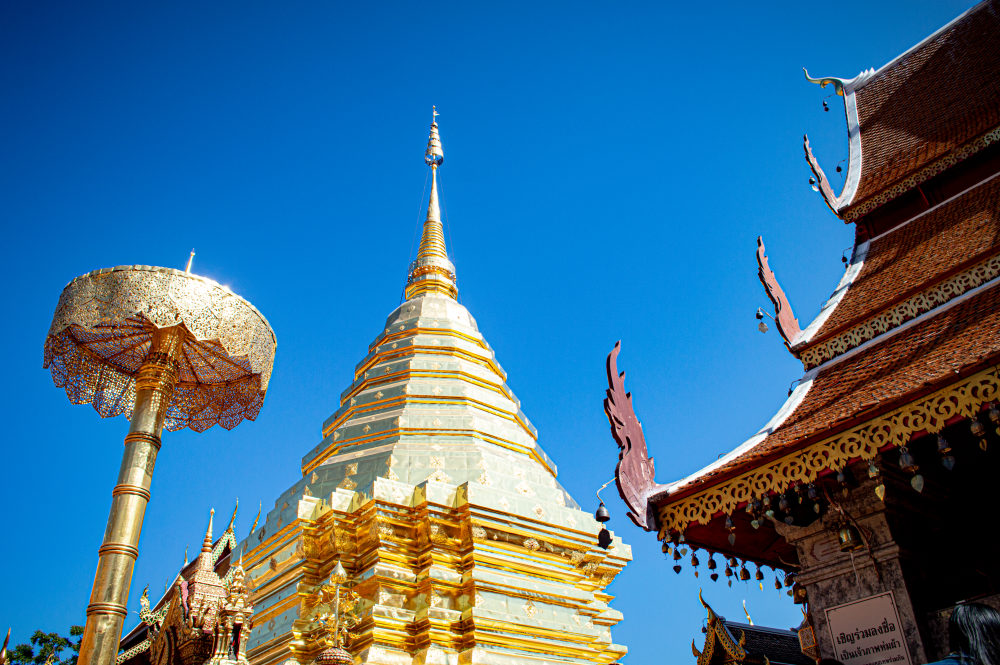
Chiang Mai old city, a popular base for budget travellersChiang Mai — cheap & easy
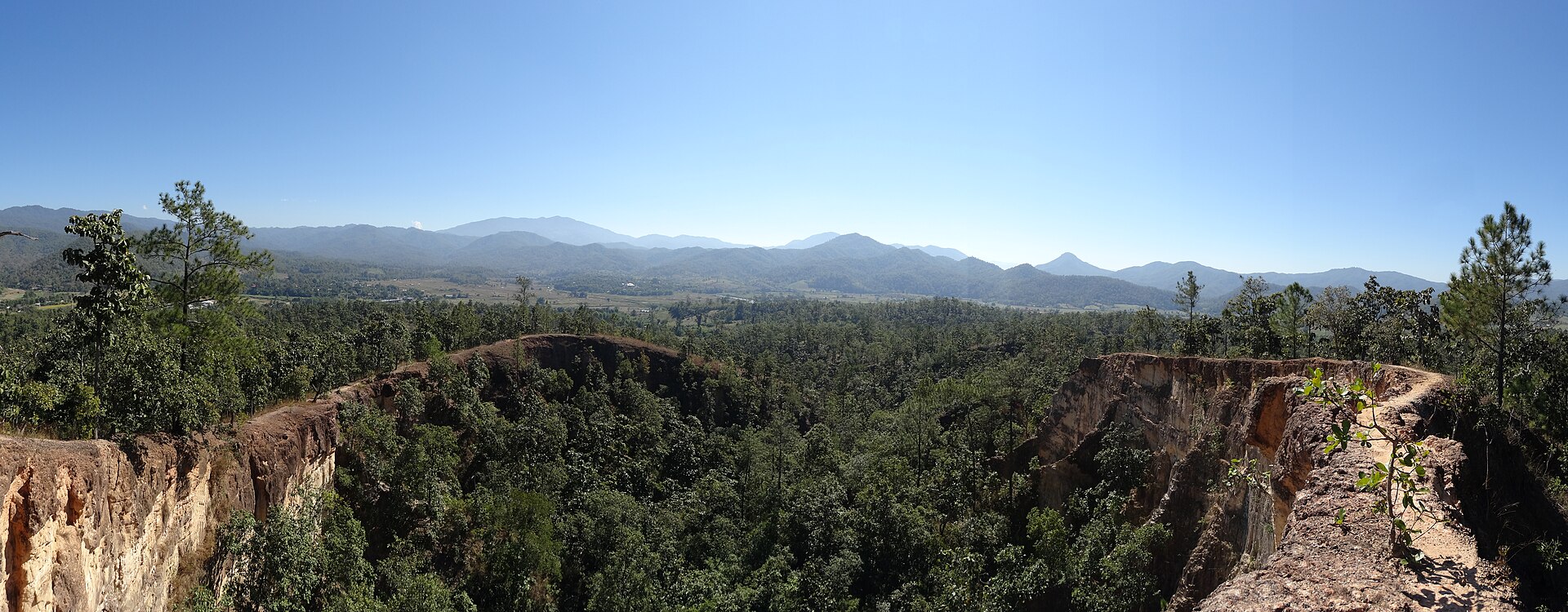
Mountain views around Pai, Mae Hong SonPai — backpacker budget
Roadside street food in AyutthayaAyutthaya — cheap eats
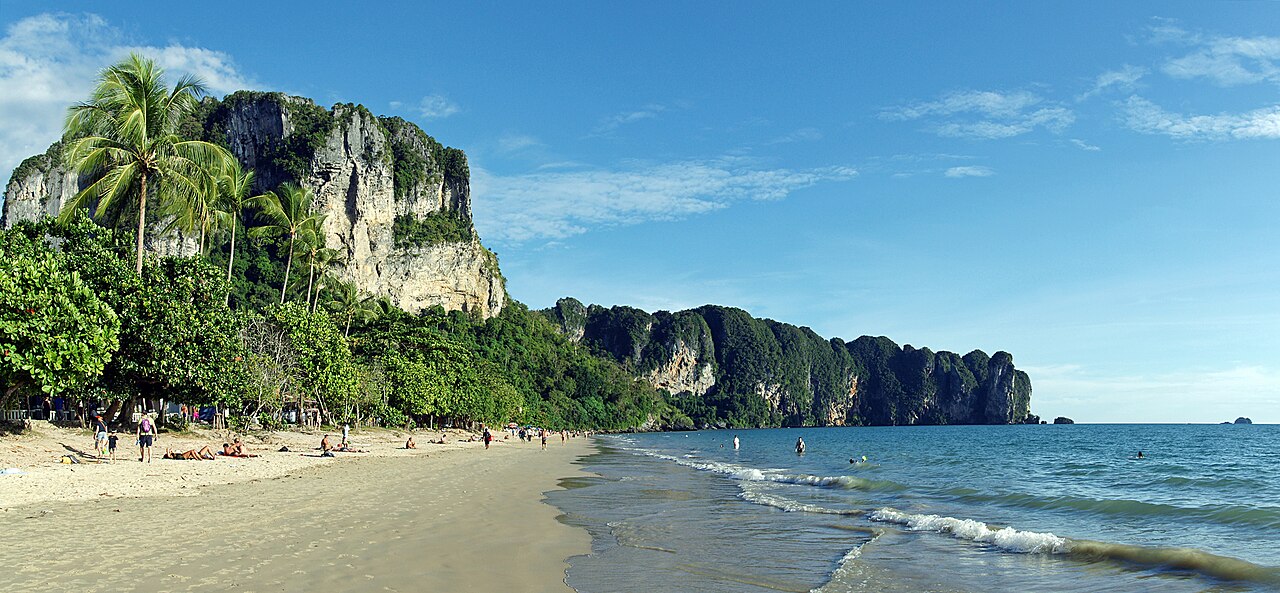
Ao Nang beach in Krabi on the Andaman coastSouthern coast — pricier
Sample Trip

1-week Thailand trip total (international flights not included)

Example route: 3 days in Bangkok + an overnight sleeper train to Chiang Mai + 4 days there. Use as a planning reference, not a guarantee.

Category 🎒 Backpacker 🧳 Mid-Range 👑 Comfort
Accommodation (6 nights) ฿1,500–2,700
dorm / GH
฿5,400–10,800
3-star
฿18,000–48,000
4–5 star
Food (7 days) ฿1,400–2,450
street / food court
฿3,500–6,300
sit-down mix
฿8,400–17,500
good restaurants
City transport (7 days) ฿560–1,050
BTS/songthaew/boat
฿1,400–2,800
Grab + public
฿3,500–7,000
Grab/taxi
Sleeper train, Bangkok→Chiang Mai ฿800
2nd-class fan sleeper
฿1,000–1,400
2nd-class AC sleeper
฿1,400 or fly
~฿800–2,000
Attraction tickets / tours (7 days) ฿300–800
mostly free + temples
฿1,500–3,500
+ 1–2 day tours
฿4,000–9,000
private tours
eSIM / SIM (whole trip) ฿300–500
10GB
฿400–700
20GB
฿600–900
large plan
Total, 7 days (no int'l flights) ฿4,860–8,300
~$135–230
฿13,200–25,500
~$365–700
฿35,900–93,400+
~$990–2,570+
ℹ️ Not included: international flights, shopping, souvenirs, spa/massage, tips, travel insurance (recommended). If you stay in one city and skip the inter-region leg, remove the train fare. For the southern islands in high season, add 30–50%.
Money-Saving Tips

6 ways to spend less without missing out

🍜
Eat where locals eat
A roadside rice-and-curry shop or a mall food court costs 2–4x less than a tourist restaurant, and is usually as good or better. Look for the queue — it is the best quality signal you have.
📅
Travel in low season
May–October brings accommodation and tour discounts of 30–50% and far smaller crowds, at the cost of rain (heaviest on the Andaman coast). If you can take rain in bursts, it is excellent value. Avoid New Year and Chinese New Year, when prices peak.
🚄
Take the overnight train or bus
Crossing the country at night saves a night of accommodation and a day of travel — you wake up in the next city. A Bangkok–Chiang Mai sleeper is ฿800–1,400 and more comfortable than the bus. Book ahead on the State Railway website.
📱
Use an eSIM, not roaming
A Thai eSIM or tourist SIM costs a fraction of home roaming and gives you data for Grab and maps. Install the eSIM before you fly and switch it on when you land. See the eSIM guide for the right plan.
💳
Withdraw larger amounts at the ATM
Thai ATMs charge foreign cards a flat fee of about ฿220 per withdrawal, no matter the amount. Take out more at once to reduce the number of fees, and keep some cash — small shops, markets and songthaews are cash-only.
💧
Refill water instead of rebuying
Coin-operated water stations are everywhere at roughly ฿1 per litre; carrying a refillable bottle saves money and waste. Picking a place within walking distance of food and transport also trims your Grab spending across the whole trip.
On Seasons

The month you go changes the bill

High season, Nov–Feb, has the best weather nationwide — little rain, clear seas — but it is also the most expensive and most crowded time, especially over New Year and Chinese New Year, when beachfront rooms multiply in price. For a balance of good weather and tolerable prices, try early November or late February, before the heat peaks and as the crowds thin.

Low season, May–Oct, is the best value — accommodation and tours drop 30–50% and crowds thin out — but it is the rainy season. The Andaman coast (Phuket, Krabi, Phi Phi) sees the heaviest rain and rough seas, and some island tours close. The Gulf side (Samui, Phangan, Tao) stays drier longer, often good into September, and city sights — temples, markets, cafes — work year-round. In the north, March–April brings burning-season haze; skip it if you are sensitive to air quality.

💡 For a region-by-region breakdown of when to go, read Best Time to Visit Thailand, and if you are island-bound, check the Southern Islands guide first.
Plan Your Trip

Budget set — now plan the rest

Essential guides for planning a Thailand trip.

🧮

Thailand Budget Calculator

An adjustable daily-budget tool — set your days, accommodation level and eating style, and get a total in baht instantly.

Open the calculator →
🚌

Getting Around Thailand

Trains, buses, domestic flights, Grab, songthaew and ferries — which option is best value on each route.

Transport guide →
📶

eSIM & SIM Cards in Thailand

Compare eSIMs against AIS/dtac/TrueMove tourist SIMs — which plan is best value, how to install, and what works on arrival.

eSIM guide →
🌤️

Best Time to Visit Thailand

High vs low season by region, the Andaman vs Gulf split, and the months that give the best value.

Seasons guide →
🏔️

Chiang Mai & Pai

Thailand's most popular budget bases — old city, cafes, mountains and a low cost of living, ideal for longer trips.

Visit Chiang Mai →
🌏

Full Thailand Guide

The hub for everything — cities, southern islands, temples, markets, street food and hotels at every budget.

Read the guide →
FAQ

Common questions about Thailand travel costs

How much does it cost to travel Thailand per day?
It depends on your style and which region you visit. Backpackers spend around ฿900–1,500 per day (roughly $25–42 USD) for a hostel dorm, street food and public transport. Mid-range travellers spend ฿2,000–3,500 per day ($55–96) for a 3-star hotel, sit-down meals and the occasional Grab ride. Comfort-level travellers spend ฿5,000 or more per day ($138+) for 4–5 star stays and good restaurants. The north and northeast — Chiang Mai, Pai, Isan — run about 30–40% cheaper than Phuket and the southern islands. Prices as of June 2026; check again before you travel.
How much does a 1-week trip to Thailand cost?
Excluding international flights, a 7-day trip costs roughly ฿7,000–11,000 at the backpacker level (~$190–300), ฿16,000–26,000 at mid-range (~$440–715), and ฿38,000 or more at the comfort level. If you travel between regions — for example Bangkok to Chiang Mai by overnight train or bus — add about ฿300–900 per journey. A low-cost domestic flight runs roughly ฿800–2,000 each way depending on dates.
Where is the cheapest place to travel in Thailand on a budget?
The north and northeast are the cheapest. Chiang Mai, Pai, Chiang Rai and Isan cities such as Khon Kaen and Udon Thani have hostel dorms from ฿200–400 a night and street-food meals at ฿40–60. Phuket, Koh Samui, Koh Phi Phi and the southern islands cost much more, especially in high season — accommodation and food on the islands can run 1.5–2x mainland prices because everything is brought in by boat.
How cheap is street food in Thailand?
Thai street food is cheap and very good. A rice-and-curry plate with one or two toppings is around ฿40–60. A bowl of noodles is ฿50–70. Pad thai or fried rice is ฿50–80. Som tam (papaya salad) with sticky rice and grilled chicken is about ฿100–150. Eating street food and mall food courts all day, your full daily food budget sits around ฿200–350. A small bottle of water from 7-Eleven is ฿7–14.
How do you get around Thailand cheaply?
In Bangkok use the BTS/MRT (around ฿17–62 per trip) and the Chao Phraya river boats (orange flag is about ฿16). Between regions, overnight trains and buses save both a night of accommodation and a day of travel — a Bangkok–Chiang Mai sleeper is roughly ฿800–1,400, a bus ฿600–900. In other cities use Grab, songthaew shared trucks, or rent a scooter (about ฿200–300 per day; an international driving permit and a helmet are legally required). Islands are reached by ferry.
Which month is cheapest to visit Thailand?
Low season, May to October, has the cheapest accommodation and tours — discounts of 30–50% off high-season rates — but it is the rainy season. The Andaman coast (Phuket, Krabi) is wettest from May to October. High season, November to February, has the best weather nationwide but the highest prices and the biggest crowds, peaking over New Year and Chinese New Year. In the north, March to April brings burning-season haze, which is worth avoiding if you are sensitive to air quality.
Pin down your budget first

Put in your own numbers
and see the trip total

The Thailand budget calculator makes it concrete — choose your days, accommodation level, eating style and region, and get a total in baht straight away. Plan before you go so nothing runs over.

🧮 Budget Calculator 📖 Thailand Guide