🌏 Destinations · All 🇹🇼 Taiwan · Full guide Taipei Kaohsiung · Taichung · Tainan Jiufen · Hualien · Yilan 📍 Taiwan Attractions 🍜 Taipei Food & Sights 🧭 Practical Guide About Contact 🇹🇭 ไทย🇬🇧 English🇨🇳 中文🇪🇸 Español🇫🇷 Français
🛕 Taiwan Culture Guide · Updated 2026

Taiwan Temples 101
Types, Deities, Etiquette & Where to Start

Taiwan has more than 33,000 temples — more than convenience stores. This guide takes you from zero to confident visitor: the three temple types, five deities you'll actually recognise, a seven-step etiquette walkthrough, how to read what's carved on the roof, and the five best temples to begin with.

Why Temples Matter

33,000 Temples on One Island — More Than Convenience Stores

Walk any street in Taiwan for ten minutes and you're almost guaranteed to pass a temple. The island hosts more than 33,000 shrines and places of worship — a number that exceeds the total count of 7-Eleven, FamilyMart and Hi-Life outlets combined. These buildings are not museum pieces: they are living community hubs where people seek blessings, celebrate festivals, settle disputes and keep centuries-old traditions alive every single day.

Taiwan's religious landscape is a graceful blend of Mahayana Buddhism, Taoism and Chinese folk belief — three currents so intertwined that the same temple may enshrine Guan Yin the Buddhist bodhisattva, Mazu the sea goddess from folk religion, and Guan Gong the Taoist warrior saint all under one roof, without anyone considering that unusual. The architecture is equally remarkable: curved rooftops encrusted with glazed ceramic dragons, stone-carved pillars, gilded wood beams — each temple a collaboration between master craftsmen that can take decades to complete.

🏛️
33,000+ temples island-wide
Every neighbourhood has its own — this is the densest temple-to-person ratio in East Asia
🤝
Community heart
Festivals, parades, free meals for the elderly, neighbourhood councils — the temple organises it all
🌀
Buddhism + Taoism + folk
Three traditions woven seamlessly — no strict boundaries, refreshingly fluid
🐉
World-class craftsmanship
Glazed-ceramic dragons, stone dragon pillars, intricate wood panels — every temple is fine art
Temple Types

The Three Main Temple Types — Know Before You Go

Taiwan's temples look similar from the street but differ significantly inside. Knowing the type tells you which deities you'll find, what atmosphere to expect, and what you can ask for.

佛寺 · Buddhist Temple

Buddhist Temples

Resident monks live and practise here. The atmosphere is quiet, centred on meditation and study. All food served in the temple is vegetarian. The main deities are Sakyamuni Buddha and the bodhisattva Guan Yin.

Atmosphere: serene, formal, contemplative

Fo Guang Shan, KaohsiungDharma Drum Mountain
道觀 · Taoist Temple

Taoist Temples

Ceremony-rich and deity-focused, with an elaborate celestial hierarchy of gods. Ritual offerings, incense clouds and the sound of drums and gongs are all normal. The majority of Taiwan's larger, older temples belong here.

Atmosphere: vibrant, colourful, ceremonial

Bao'an Temple, TaipeiXingtian Temple, Taipei
廟 · Folk / Community Temple

Folk & Community Temples

The most common type — built and maintained by local neighbourhoods. They enshrine whatever deities the community reveres, with no strict doctrinal rules. These are the heartbeat of festivals: processions, firecracker runs, puppet theatre, ghost-month rituals.

Atmosphere: communal, lively, deeply local

Tu Di Gong shrine on any streetMazu temples in coastal villages
💡

Good to know: Many of Taiwan's most famous temples are deliberate hybrids — Longshan Temple in Taipei, for instance, enshrines Buddhist Guan Yin, Taoist Mazu, and folk-religion deities all in the same compound. Don't feel pressured to categorise every temple you visit. Embrace the fluidity — it's one of Taiwan's most distinctive cultural qualities.

Deities to Know

Five Deities You'll Recognise Everywhere

Learning to spot these five gives you an immediate foothold in any Taiwanese temple — each has distinct iconography and a distinct domain of blessings.

🌊

Mazu

媽祖 · Sea Goddess

Taiwan's most-worshipped deity. Protector of sailors and travellers, usually robed in red or gold with a darkened face (from incense smoke over centuries). Over 900 Mazu temples in Taiwan alone.

🪷

Guan Yin

觀音 · Bodhisattva of Mercy

Gentle figure in white robes, often holding a lotus or vase. The most recognisable Buddhist deity in Taiwan. Sought for health, family harmony and compassion.

⚔️

Guan Gong

關公 · War & Loyalty God

Unmistakable: red face, long black beard, green robe, crescent halberd. Patron of merchants, police and sworn brotherhoods. Embodies loyalty and righteousness.

⚖️

Cheng Huang

城隍 · City God

Every city in Taiwan has its own Cheng Huang temple. He oversees justice, records the deeds of the living and judges them after death. People come to him with legal disputes and grievances.

🏡

Tu Di Gong

土地公 · Earth God

The smiling old man in the small roadside shrines you'll see everywhere. He guards each neighbourhood, brings prosperity, and connects heaven and earth at the very local level.

5 Temples to Start With

Where to Begin — Five Temples That Cover Every Type

Each of these five represents a different dimension of Taiwanese temple culture. Visit all five and you've experienced the full range — Taoist, Buddhist, folk, Confucian and pilgrimage-scale.
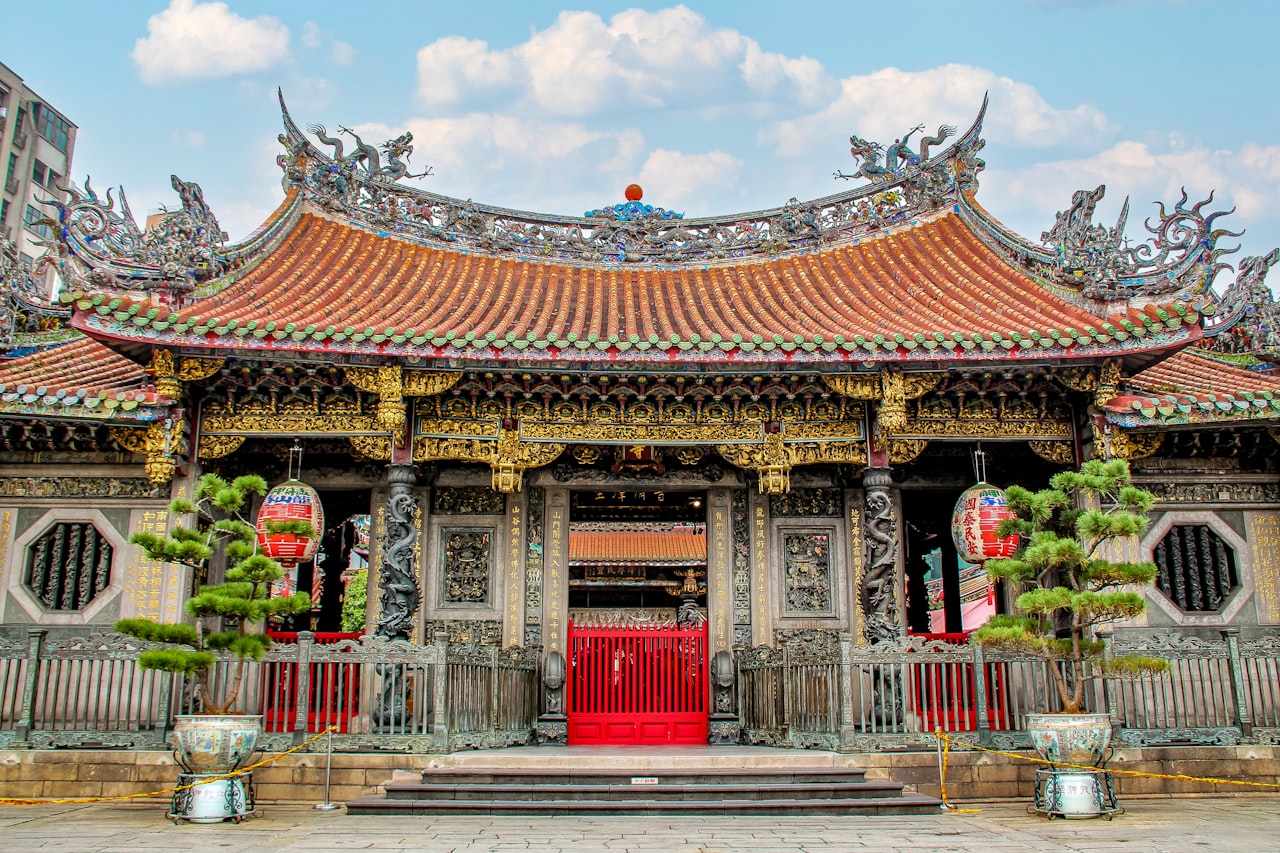
Longshan Temple Taipei exterior, ornate southern Chinese architecture under blue sky with worshippers in the courtyard
Temple 1 · Taipei

Longshan Temple

Founded 1738. The most accessible first temple in Taiwan — MRT stop right at the gate, free entry, Guan Yin as the main deity, and a famous love shrine where visitors pray for a partner.
📍 MRT Longshan Temple · Free · Daily 06:00–22:00
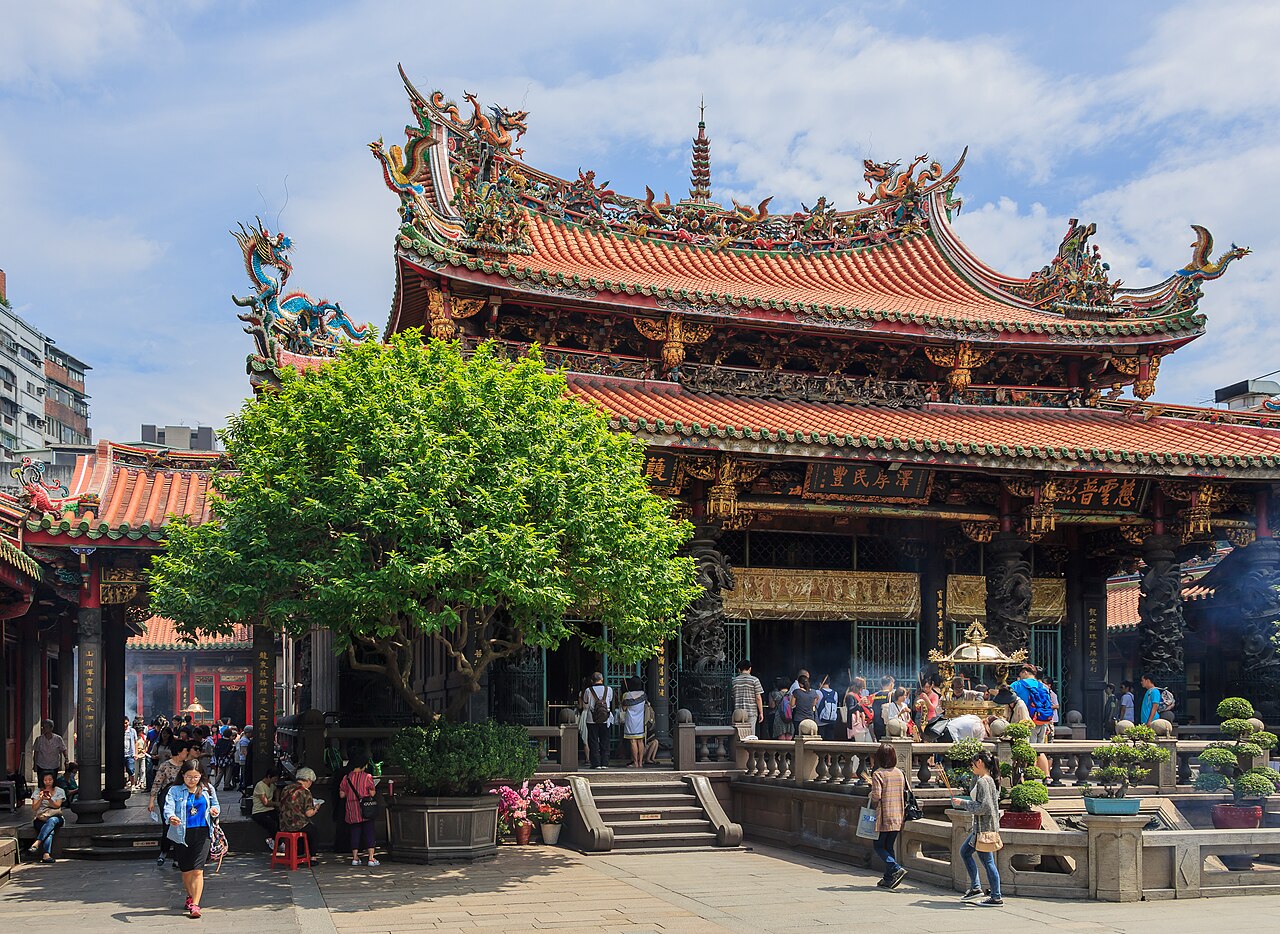
Taiwan temple courtyard with ornate carved roofline, stone pillars and incense burners
Temple 2 · Taipei

Bao'an Temple

UNESCO Asia-Pacific Heritage Award winner, 2003. The finest temple craftsmanship in Taipei — jiannian ceramic mosaic, stone carvings, Jiaozhi pottery work by rival master craftsmen. Dedicated to Baosheng Dadi, deity of medicine.

📍 MRT Yuanshan · Free · Daily 06:00–21:00
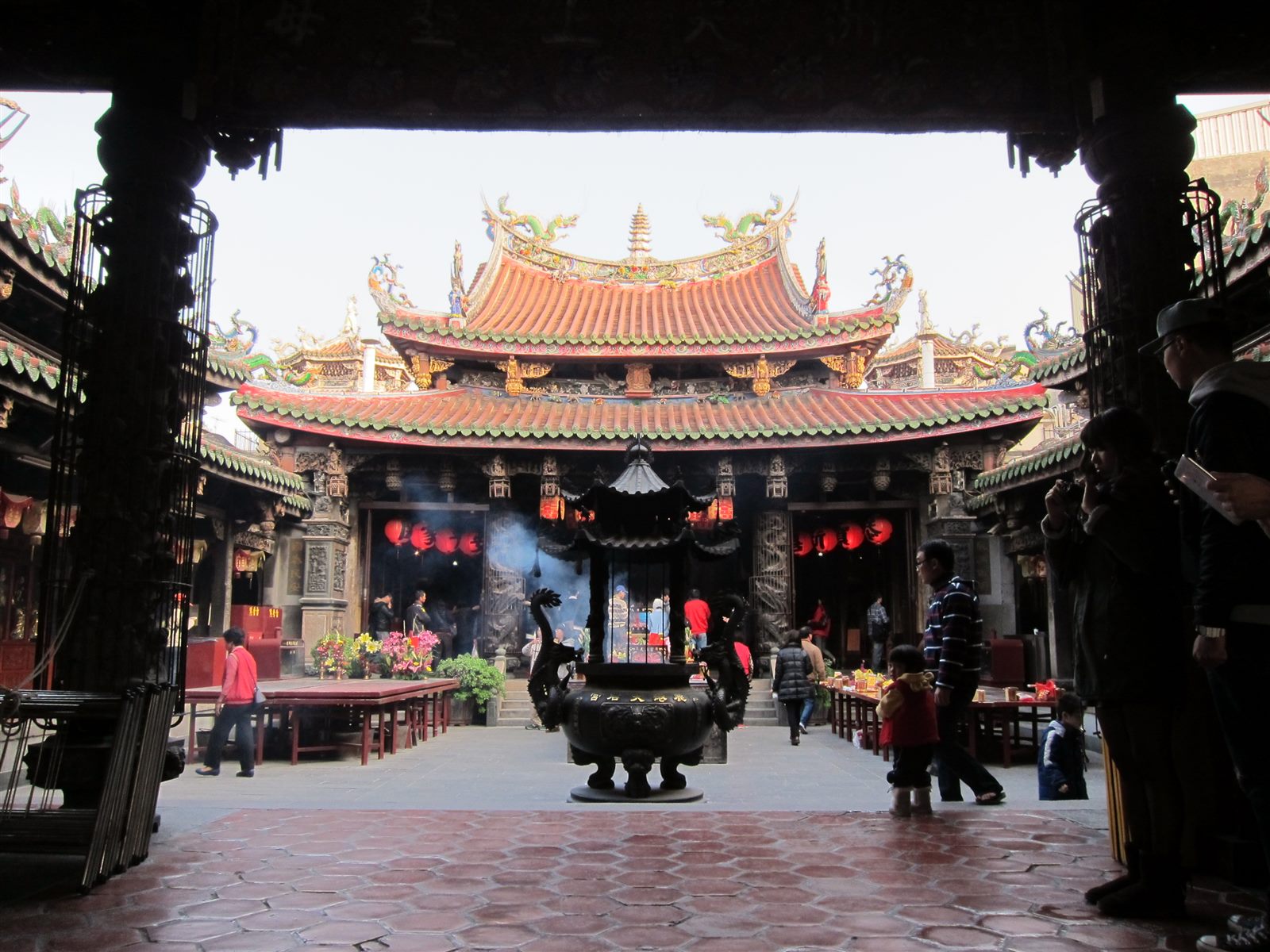
Lukang Tianhou Temple entrance with traditional red temple facade and visitors passing through
Temple 3 · Lukang

Tianhou Temple, Lukang

One of the oldest and most revered Mazu temples in Taiwan, with origins in the late 16th century. National Historic Landmark. The surrounding old-street district of Lukang makes the whole trip worthwhile.
📍 Lukang, Changhua County · Free
Taiwan temple roofline with colourful glazed dragon ornaments against blue sky
Temple 4 · Tainan

Confucius Temple, Tainan

Taiwan's first Confucian school, established 1665. Understated and scholarly in feel compared to folk temples — a counterpoint that makes it worth seeking out. The birthday ceremony in September is spectacular.
📍 Tainan · Free · Tue–Sun 08:30–17:30
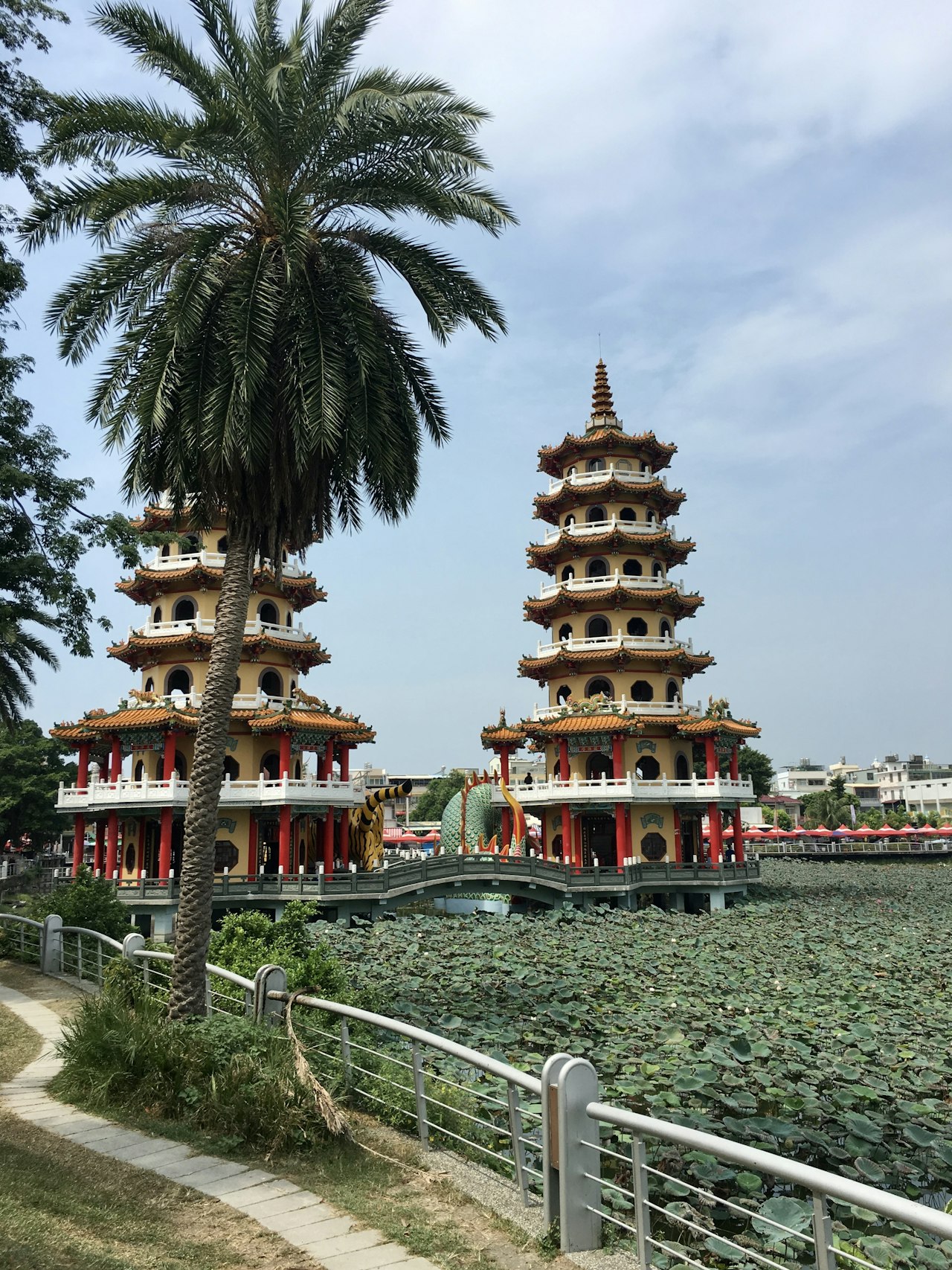
Scenic lake and temple complex in southern Taiwan, green water reflecting pagodas
Temple 5 · Kaohsiung

Fo Guang Shan (Foguangshan)

Taiwan's largest Buddhist monastery and the Fo Guang Shan Buddha Museum — a 108-metre seated Buddha, 10+ million visitors per year, free vegetarian meals and the option to stay overnight as a retreat guest.
📍 Dashu, Kaohsiung · Free · Mon–Fri 09:00–18:00 · Sat–Sun 09:00–19:00
Etiquette

Seven Steps to Visiting a Taiwan Temple Respectfully

You don't need to be Buddhist or Taoist — just keep these seven rules in mind and you'll navigate any temple with confidence and genuine respect.

Use the side doors — never the centre door

The grand central door of a Taiwanese temple is reserved exclusively for the gods. Ordinary visitors enter through the right-hand door (the Dragon Gate) and exit through the left (the Tiger Gate) when facing the temple. This rule applies to most folk and Taoist temples.

Step over the threshold — never on it

The raised wooden sill across the bottom of each doorway serves two purposes: it blocks malevolent spirits (who cannot step over it), and it forces you to pause and be mindful before entering a sacred space. Always step over, never tread on the threshold.

Remove your hat, put away food and drink

Take your cap off before entering the main hall area as a mark of respect. No eating or drinking inside the temple building itself — courtyards outside and vendor stalls in front of the gate are fine. Silence your phone or set it to vibrate.

Light 1 or 3 sticks of incense, wave — never blow — to extinguish

Hold incense with both hands, thumbs on top, raised to chest height. Bow slightly as you face each deity or direction. Always use an odd number (one or three sticks). To extinguish, wave your hand — never blow: breath is considered impure in this context. Many temples have reduced incense use for air-quality reasons; clasped hands in prayer work perfectly.

Bow three times and introduce yourself

Stand before the deity's altar and mentally — or quietly — state your name, birth date and address, then your request. Follow with three respectful bows. The custom holds that naming yourself allows the deity to "recognise" you and act on your behalf.

Donation boxes are optional

Most temples have a wooden box for offerings. Donating or not is entirely your choice — no one will pressure you. Almost every major temple in Taiwan is free to enter. If a temple particularly moved you, a small donation is genuinely appreciated by the community.

Photograph courtyards freely — check before shooting inside

Open courtyards and exteriors are fair game. Inner halls may restrict photography or prohibit flash — look for signs or watch what others do. Never take a selfie pressed up against the deities' statues. Early morning offers the best light and fewest crowds. If someone is mid-prayer, give them space.

Reading the Symbols

What You're Actually Looking At When You Look at a Temple

Once you know what the carvings mean, every temple becomes a text you can read. Start with these four.

🐉

Dragons and Phoenixes on the Roofline

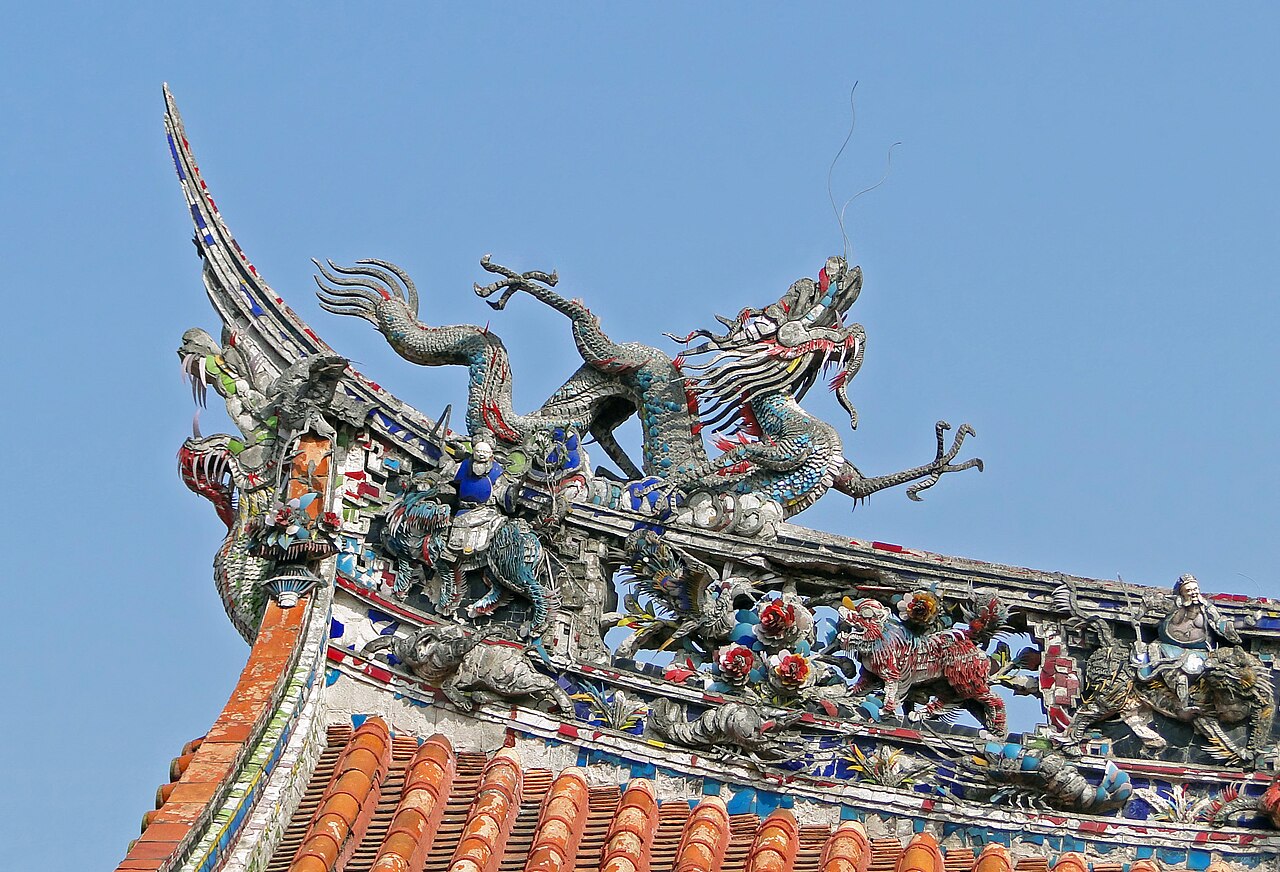
The dragon (龍) represents yang energy — strength, power, heaven. The phoenix (鳳) represents yin — beauty, grace, earth. The two appear in pair on either side of the ridge, embodying cosmic balance. A roof covered in both signals a temple of particular prestige.

🚪

Door Gods (門神) on the Gate Panels

The two imposing warrior figures painted on the main gate doors are guardians against malevolent forces. Each temple chooses its own patron pair. The colours of their armour and weapons identify the specific generals — a small but fascinating detail that differs from temple to temple.

🦁

Lions at the Entrance — Open and Closed Mouths

The lion with its mouth open (yang) is said to be speaking to the gods. The one with its mouth closed (yin) listens to them. Together they guard the threshold. Notice which side each faces — conventions vary between north and south Taiwan traditions.

🏮

Lantern Colour and Incense Smoke

Red lanterns symbolise prosperity and warmth — the redder the lantern cluster, the more active the temple community. As for incense: red or standard sticks are for living deities; white sticks honour ancestors and the departed. Swapping them is a cultural misstep.

Glazed ceramic dragon ornament on the roofline of Longshan Temple Taipei, jianinian mosaic craft in vivid colours
Dragon ridge ornament at Longshan Temple — jiannian glazed-ceramic mosaic, a craft that requires specialist masters and can take years to complete for a single roofline
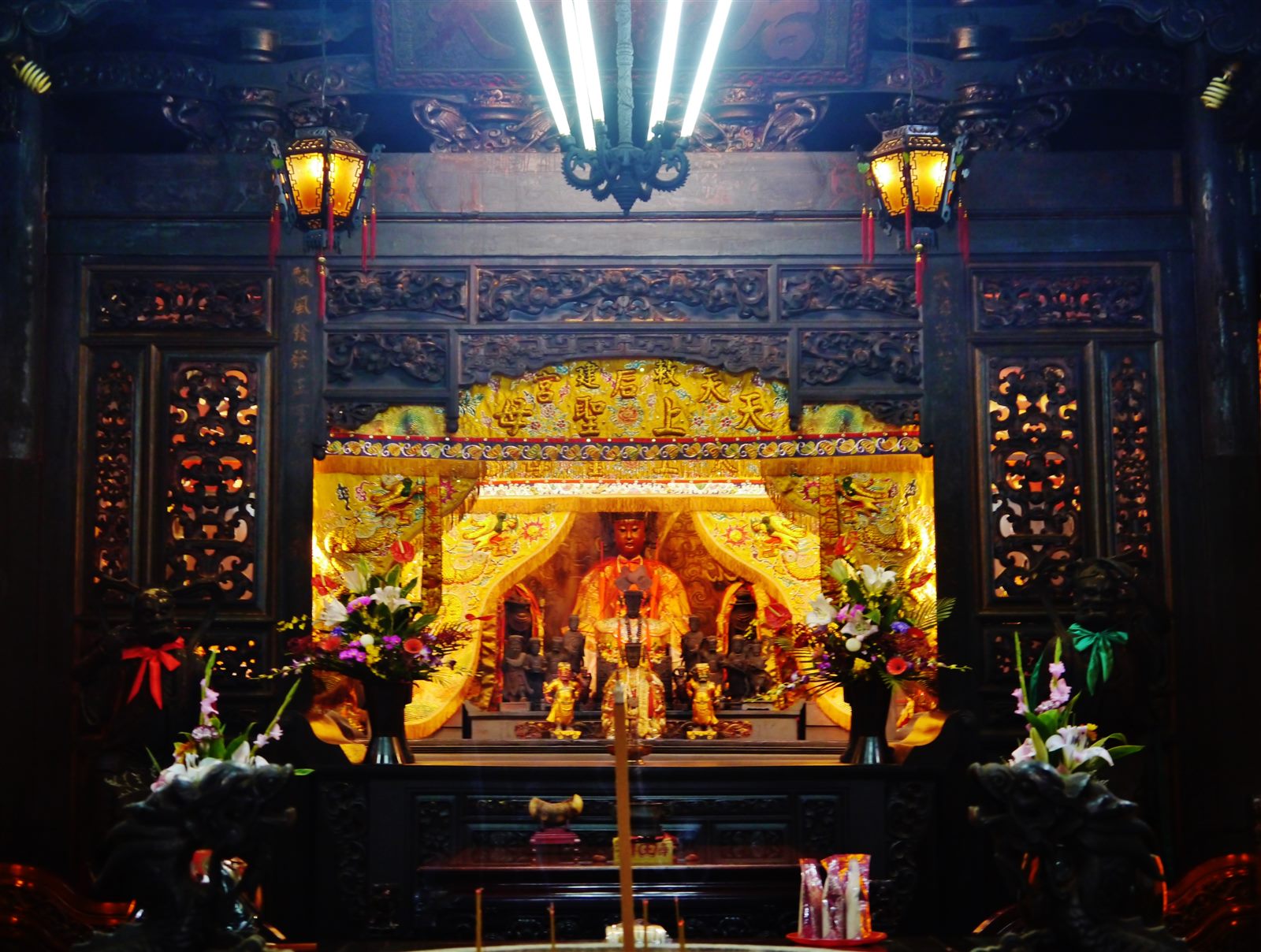
Interior of Lukang Mazu Temple with incense smoke, golden altar and warm amber lighting
Inside the Mazu temple at Lukang — warm amber light, coiling smoke and the scent of sandalwood define the sensory world of Taiwan's folk temples
Festival Timing

Visit During a Festival and Everything Changes

Temples on an ordinary Tuesday are good. Temples during a festival are unforgettable — colour, sound, ritual and community energy at full intensity.

🎆

Lunar New Year (Jan–Feb)

The first day of the first lunar month draws enormous crowds from midnight. Every temple is packed; the atmosphere is electric. Arrive early and expect queues at the main altars.

🌊

Mazu's Birthday (Mar–Apr)

The 23rd day of the third lunar month. Massive week-long pilgrimages at Lukang and Dajia — processions, firecrackers, eight-generals troupes and marathon all-night ceremonies.

👻

Ghost Month (Jul–Aug)

Seventh lunar month. Local belief advises against evening temple visits as spirits roam freely. Daytime is fine — and the ceremonial offerings and roadside rituals are fascinating to observe.

📚

Confucius Birthday (Sept 28)

Taiwan's Teacher's Day. Confucius Temples nationwide hold a dawn ceremony beginning at 6 am with ancient music and ritual dance. Arrive very early to claim a spot near the courtyard.

📅

Insider tip: The 1st and 15th of every lunar month are high-activity days at temples across Taiwan, when worshippers make regular offerings. The atmosphere is richer, but crowds can be intense. For quieter photography and a more contemplative visit, early morning on a weekday is hard to beat.

Photography

Getting the Shot Without Causing Offence

🌅
Golden hour: 06:00–08:00
Soft light, drifting incense smoke, few tourists — the single best window for temple photography at any site in Taiwan
🏞️
Courtyards are always fair game
Shoot the architecture, courtyard, roofline and gate figures freely without asking permission
Check for no-photo signs inside
Some inner sanctuaries restrict photography or prohibit flash. Look for signs or mirror the behaviour of those around you
🙏
No deity selfies
Posing for a selfie pressed against a statue is considered disrespectful in Chinese culture. Photograph the setting, not the icon at close range
👥
Respect active worshippers
If someone is mid-prayer, give them physical and visual space. Shoot from a respectful distance or wait for the moment to pass
📱
Turn off flash in dim halls
Flash disrupts meditation and signals disrespect. Use Night Mode or Pro mode with high ISO instead — the amber light of the altar is worth capturing naturally
FAQ

Questions Before Your First Temple Visit

Can non-Buddhist tourists visit Taiwan temples?
Yes — every temple in Taiwan is open to visitors of any faith or no faith at all. Simply dress modestly, speak quietly, and act with respect. The vast majority of temples are free to enter and genuinely welcome foreign visitors. Staff are often delighted when travellers show real interest and curiosity about the rituals and iconography.
Do I need to remove my shoes at Taiwan temples?
Unlike temples in Thailand or Japan, most Taiwanese folk and Taoist temples do not require you to remove shoes. Some Buddhist meditation halls are an exception — check for signs or follow the lead of others around you. The key rule everywhere is never to step on the raised wooden threshold at doorways, whether you're wearing shoes or not.
How do I light incense at a Taiwan temple?
Hold the incense with both hands, thumbs on top, raised to chest height. Bow slightly and face each deity in turn. Always use an odd number — one or three sticks. Never blow out the incense; wave your hand over it instead. Many temples have reduced incense for air-quality reasons: folded hands in prayer work just as well and are equally respected.
Are Taiwan temples free to enter?
Almost all folk and Taoist temples are free, including Longshan Temple, Bao'an Temple and Tianhou Temple in Lukang. Fo Guang Shan Buddha Museum in Kaohsiung is also free. Donation boxes exist but are entirely optional. A small number of attached museums or special exhibitions may charge a separate fee, but the main temple grounds are always open without charge.
What is Ghost Month and should I avoid temples at night?
Ghost Month falls in the seventh lunar month (roughly July–August each year). Local belief holds that spirits from the afterlife roam freely during this period, and some Taiwanese prefer not to visit temples late at night as a precaution. Daytime visits are perfectly normal throughout Ghost Month. As a visitor you can make your own call — the month itself is a fascinating cultural phenomenon to observe, with roadside offerings, outdoor puppet theatre and elaborate rituals.
What is the difference between Buddhist and Taoist temples in Taiwan?
Buddhist temples (佛寺) house resident monks, maintain an atmosphere of quiet contemplation, serve vegetarian food, and centre on the Buddha and bodhisattvas like Guan Yin. Taoist and folk temples (道觀 / 廟) are livelier, host a pantheon of deities ranked by celestial hierarchy, and serve as community hubs for festivals, processions and colourful offerings. In practice, many of Taiwan's most famous temples blend all three traditions under the same roof — a uniquely Taiwanese form of pluralistic faith.
Go Deeper

Plan Your Taiwan Temple Journey — Further Reading

🛕

Complete Longshan Temple Guide

The most beloved and accessible temple in Taipei — every deity explained, how the Yue Lao love shrine works, and how to receive a red thread blessing.

Read the Longshan Guide →
⚖️

Compare Taiwan's Top 5 Temples

Longshan vs Bao'an vs Sanxia vs Confucius Temple vs Hsinchu City God — which one to visit first and why each experience is different.

Compare the Temples →
🏮

Lukang — Taiwan's Temple Town

The old port of Lukang holds some of the finest surviving Qing-era temples and architecture in Taiwan. A half-day trip from Taichung that rivals any temple district in Asia.

Explore Lukang →
Ready to Go

Start in Taipei or Head to Lukang
Both Welcome You With Open Gates

Whether you begin at Longshan Temple in Taipei or make the pilgrimage to Lukang's Mazu shrine, Taiwan's temples open their doors to every curious visitor. Open the full Taiwan travel guide to plan your itinerary, or start looking for a hotel near your first temple stop.

📍 Taiwan Attractions Taiwan Guide