Railay has no road in — just limestone cliffs and the sea, with a small longtail boat as the only way across. And on this little peninsula sit four areas, each with its own character: one with the best sand and sunsets, one a cheaper mangrove side, one beautiful enough to define Krabi. Here's exactly which beach suits your trip.
Most people hear "Railay" and picture one beach, but it's actually a small peninsula just south of Ao Nang, walled off from the mainland by tall limestone cliffs — so the only way in is by longtail boat. Cut off from the road, it feels quieter and more rugged than a typical beach, and within it sit four areas you can walk between, each with a different feel. You can stay at Railay West, with white sand, clear water and a sunset every evening, or at Railay East, a mangrove side where you can't swim but rooms cost far less. Those are two very different trips.
Picture the peninsula: the west side is Railay West (the swimming beach, where Ao Nang longtails land); walk a few minutes across to Railay East (mangrove, mud at low tide, cheaper stays and bars); from East a cliffside path runs south about 10 minutes to Phra Nang Beach (the most beautiful, with a cave and shrine); and just northwest of West is Tonsai, the corner for climbers and backpackers. We'll compare them one by one — swimming, quiet stays, climbing, budget — so you can match the area to your trip.
Ordered from the best swimming sand to the climbers' corner — pick by what you actually want.
1
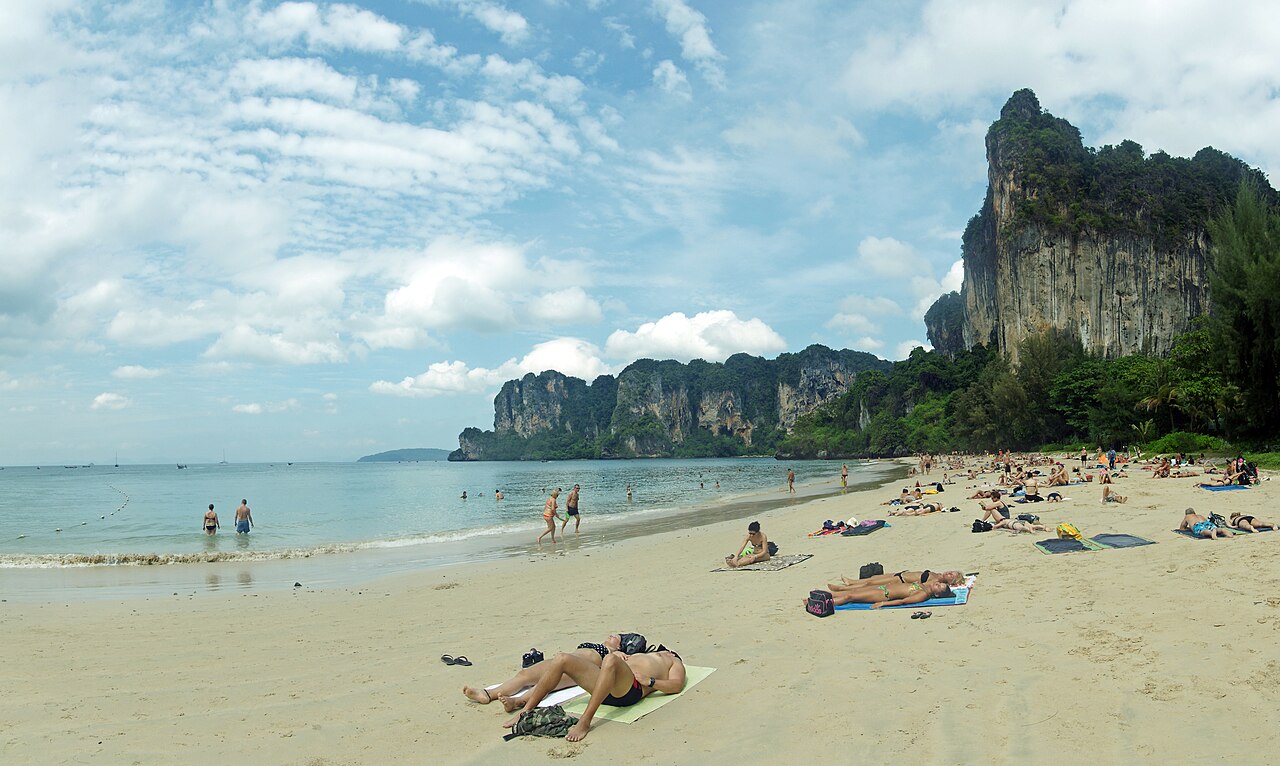
If you had to pick one beach on Railay for the best sand and clearest water, Railay West is the answer. The fine white sand runs long enough for an easy stroll, the water is clear and good for swimming, and this is where the longtails from Ao Nang land (at low tide they pull up short, so expect a quick wade through shallow water onto the sand). It's Railay's resort strip, and in the evening it becomes the gathering point for the sunset. The trade-off is price: rooms on this side run noticeably higher than on the East.
2
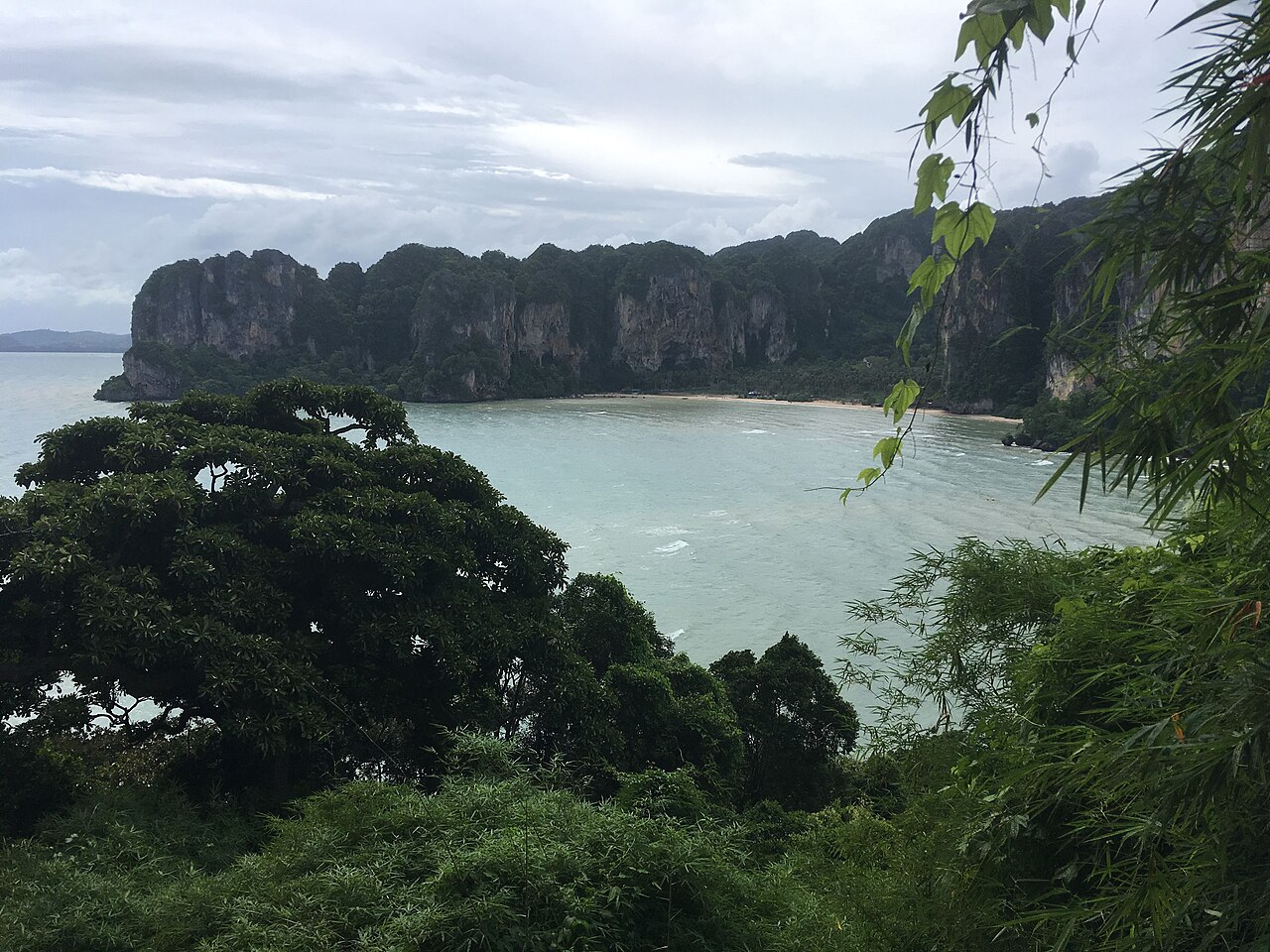
Railay East sits on the other side of the peninsula, a few minutes' walk from West. To be straight with you, you can't swim here — it's mangrove, and at low tide it becomes a wide mud flat. What it has going for it is price: the guesthouses, bars and restaurants on this side are clearly cheaper than on West, and the nights are livelier, with a string of bars along the walkway. Plenty of people stay on the East side to save money and walk over to swim at West or Phra Nang during the day. It's the walking hub that connects to the peninsula's other beaches.
3
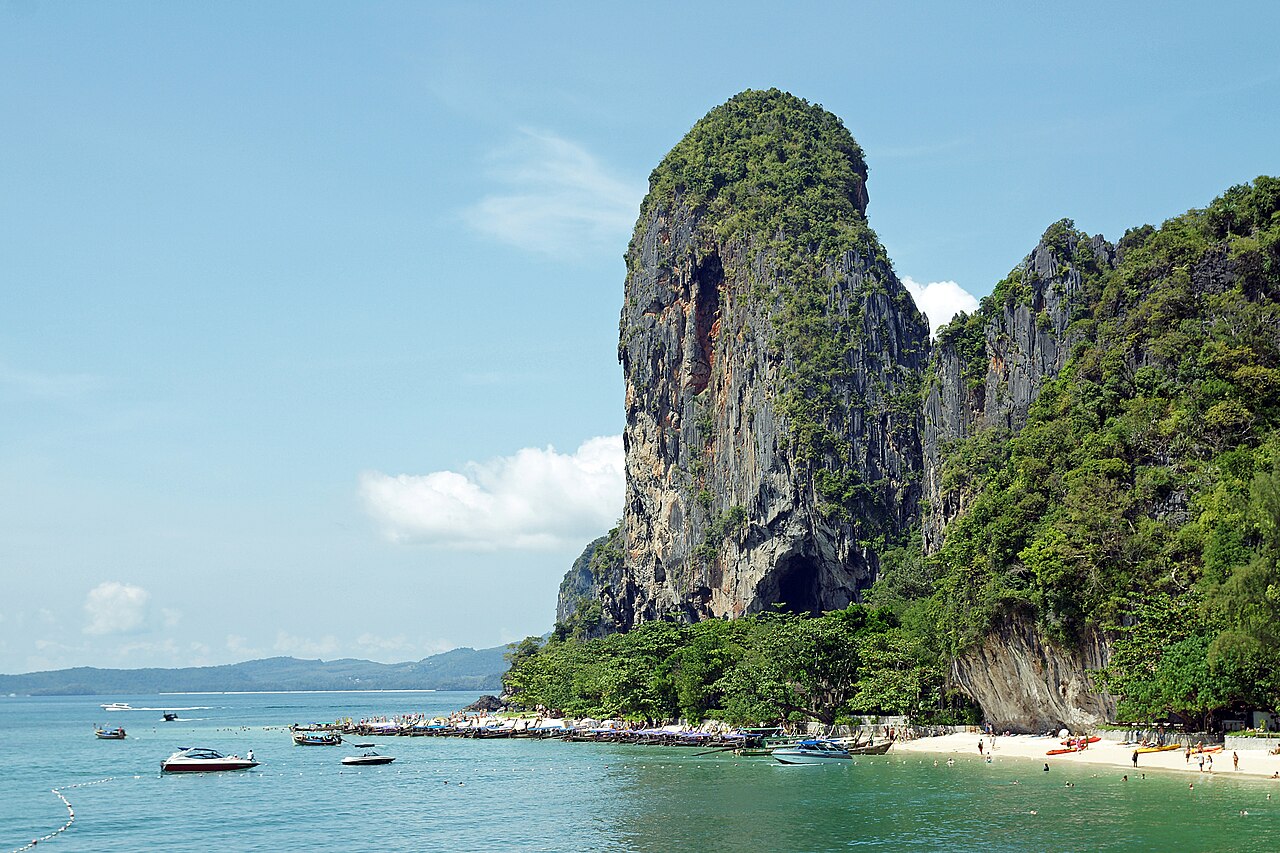
If you've ever seen a Krabi postcard with a huge limestone cliff rising straight out of clear water, there's a good chance it was Phra Nang — the most beautiful beach on the Railay peninsula. The sand is fine and white, the water clear and emerald, the swimming good, and it's home to Phra Nang Cave (Tham Phra Nang), which fishermen believe is the home of a sea princess, so it holds a shrine with distinctively shaped offerings. You reach it on a roughly 10-minute walk from Railay East along a cliffside path. There are no permanent shops to speak of — just boats selling food and drinks offshore — so bringing your own water and supplies makes the day easier. And you'll almost always see climbers on the cliffs at the back of the beach.
Just northwest of Railay West is Tonsai — a small beach tucked into a cleft in the cliffs that has become home to climbers from around the world and to backpackers. It's the most rugged, laid-back corner of all, with budget bungalows and hostels, a few reggae bars and small cafés. The cliffs around Tonsai are first-rate climbing terrain, with routes from beginner to hard. You can walk over from Railay West at low tide by scrambling around the rocks, or take a short longtail from West or Ao Nang. The trade-off is that the Tonsai beach itself turns rocky at low tide and isn't as good for swimming as West.
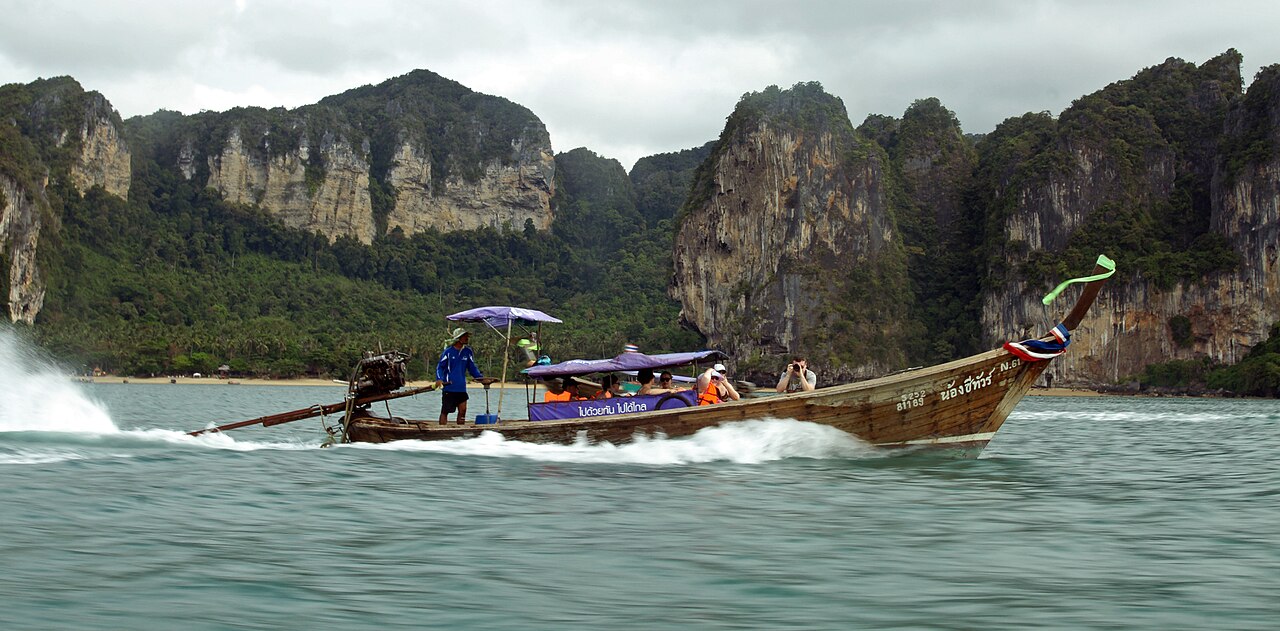
No road, no cars — a small longtail is the only way in. Here's what to know before you go.
The easiest and most common way is to head to Ao Nang beach and find one of the longtail boats waiting for passengers. The fare is about ฿100–150 per person, and boats usually leave once they have around 6 to 8 passengers (you can charter the whole boat for more if you don't want to wait). The crossing takes about 10 to 15 minutes and lands at Railay West. At low tide the boat may stop short of the sand, so you'll wade through shallow water — wear shoes you don't mind getting wet.
Railay is on the Andaman coast, so its seasons mirror Phuket's. November to April is peak season — clear water, calm seas and the easiest boat conditions, ideal for islands and climbing (April is very hot and includes Songkran). May to October is the southwest monsoon, with more rain and bigger swells; some longtail crossings can be cancelled when the sea is rough, and the water is murkier on some days. The upside is fewer people and cheaper rooms. Whatever the season, check the sea conditions on the day before you board.
A quick summary to decide in 30 seconds.
White sand, clear water, good swimming — Railay West is most convenient since the boats land there, while Phra Nang is the prettiest but needs a short walk on. Both are better for swimming and photos than the East side.
Stays, guesthouses and bars on the East side and at Tonsai are clearly cheaper. Neither is for swimming, but you can walk to a good beach in minutes — a fit for long stays and anyone who doesn't need luxury.
The cliffs around Tonsai and Phra Nang are some of Asia's best climbing, with routes at every level and several climbing schools. First-timers can try a half-day intro course, and if you don't climb you can still watch.
The West side faces the sunset, and in the evening golden light falls over the sea and cliffs. Cut off from the road, it's genuinely quiet — a fit for couples and anyone who wants to switch off.