8 local dishes Pai really eats
From the northern Thai favourites, through Shan food scented with fermented soybean, to the Yunnanese kitchen of Santichon.
 1
1
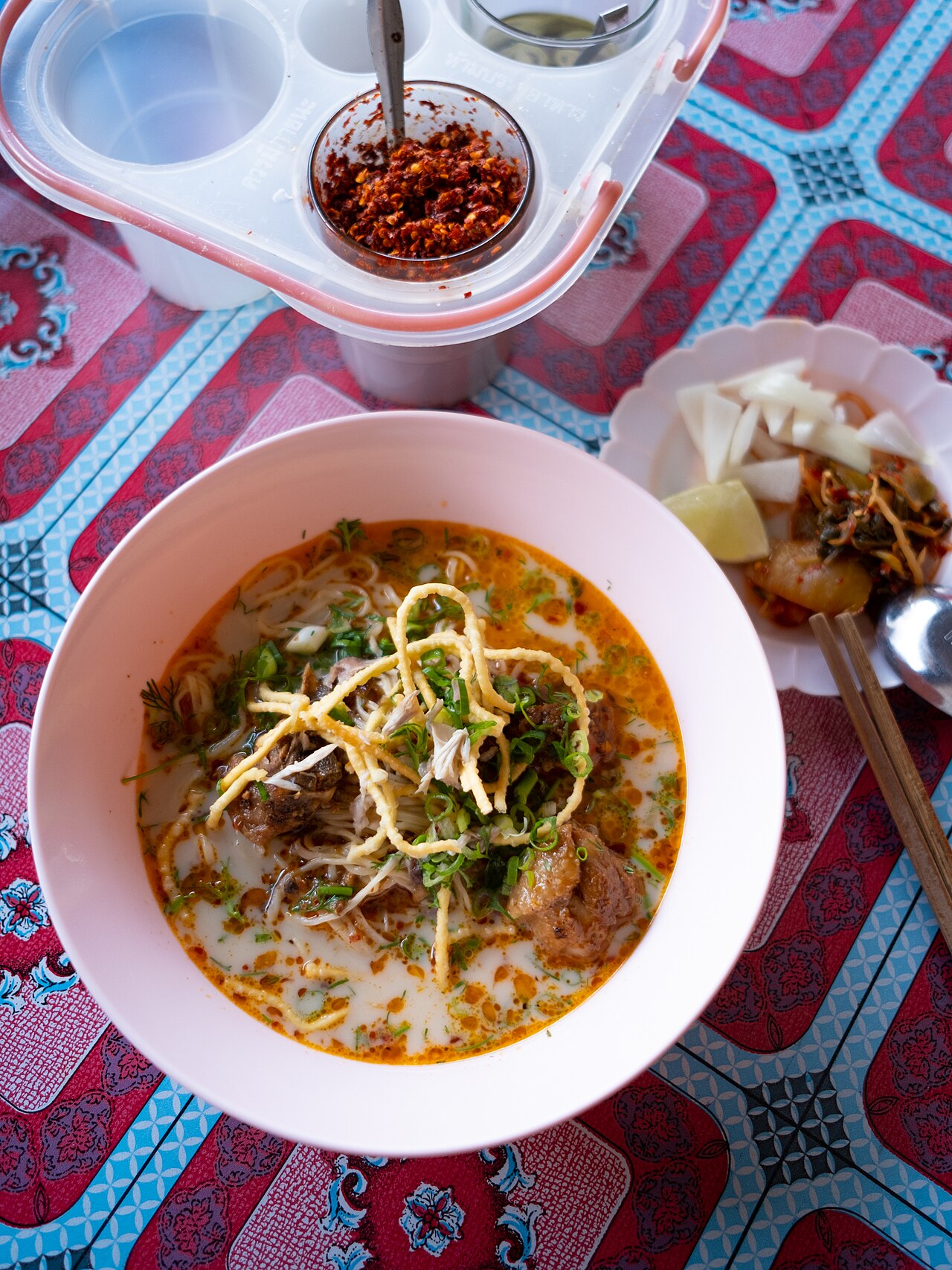
The northern Thai dish to eat at least once in Pai — egg noodles in a golden-orange coconut-curry broth, fragrant with curry paste and turmeric, with tender braised chicken or beef, and a tangle of crispy fried noodles on top for crunch. It comes with pickled mustard greens, sliced shallots and lime on the side to add yourself, so it's rich and creamy but cut through with something sour. It's good any time of day, morning or lunch. Pai has several local khao soi shops, each a touch different in richness and spice — fun to compare a couple.
 2
2
A Shan dish northerners eat for breakfast and lunch — rice vermicelli in a tomato-and-pork-rib broth, a lovely red-orange, with dried red kapok flowers and fermented soybean giving it that distinctive Shan aroma. Some places add cubes of pork blood. It's tangy and mellow from the tomato, not rich like khao soi, and clearly lighter on the stomach. You eat it with the fresh herbs, bean sprouts and lime set beside the bowl. This is the best example of how Shan food differs from typical northern Thai cooking — try it alongside khao soi in the same trip and the contrast is obvious.
 3
3
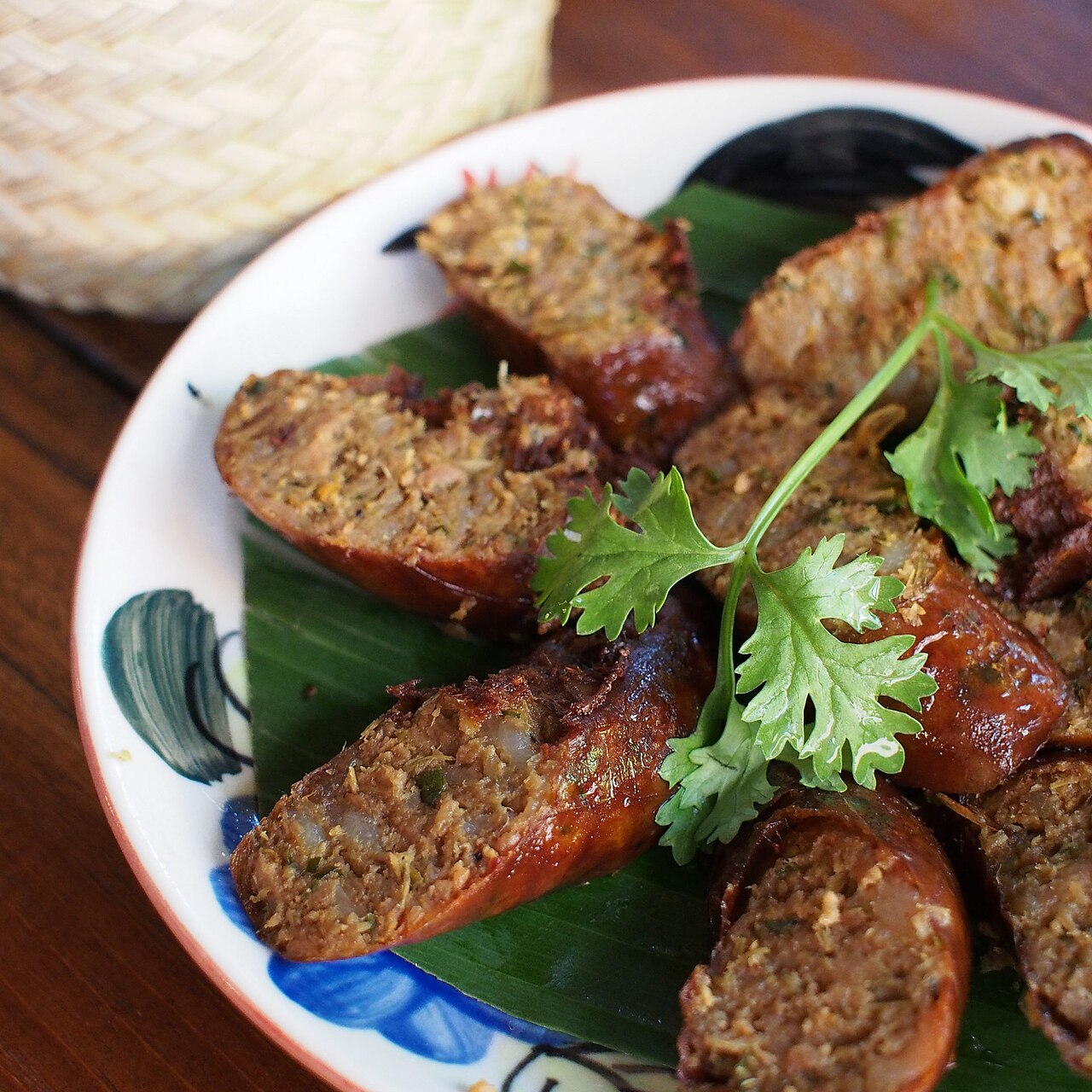
A northern sausage you can smell before you see the grill — minced pork mixed with curry paste and herbs, lemongrass, kaffir lime leaf, turmeric, shallot and garlic, packed into a casing, coiled and grilled slowly until the skin crisps and the inside stays juicy and gently spicy. It isn't fiery, just full of aromatics in every bite. Northerners eat it with sticky rice, a chilli dip and fresh vegetables. In Pai you'll find it at markets and along the Walking Street in the evening, sold by weight or on a stick to eat as you wander, or ordered as a side in a northern restaurant. It also makes a popular thing to take home.
 4
4
The heart of a northern spread is these two dips — nam prik num is made from roasted young green chillies pounded with shallot and garlic, not very hot, smelling of roasted chilli, smooth and green. Nam prik ong is a minced-pork-and-tomato relish, balanced sour-salty-sweet and a lovely orange, a touch spicier than num. Both are eaten with sticky rice and steamed vegetables (pumpkin, long beans, cabbage, cucumber), and some places add crispy pork rinds. It looks simple but it's one of the most satisfying, homely meals in the north. Order them as a set to share.
A curry that captures Pai's border character — a Burmese-influenced pork curry using pork belly and fatty pork simmered with hang lay curry powder, sliced ginger, pickled garlic and tamarind until you get a thick brown sauce that's sour-sweet-salty and balanced, with pork so soft it melts. There's no coconut milk and it isn't very spicy, but the spices smell deep and warm. Northerners cook it for merit-making and feasts, and eat it with sticky rice or steamed rice. It's a great pick for anyone who doesn't eat spicy, and a clear example of the northern kitchen picking up Burmese influence across the Mae Hong Son border.
Mae Hong Son is home to the Shan (Tai Yai) people who came over from the Myanmar side, so Shan food is another strand you can find in Pai. The star is thua nao — fermented soybean used in place of shrimp paste, both as crisp grilled dried discs (thua nao paen) and as a wet paste in curries and dips. The aroma is strong, a little like aged cheese, but a small amount adds umami to a whole pot. Other Shan dishes worth trying are clear noodle soups, fish curry and khao soi noi (thin steamed rice sheets). The flavours are generally milder and more sour than northern Thai food. If you like the unusual, find a place doing proper Shan cooking.
Ride about 5 km west of Pai town and you reach Santichon village, a Yunnanese-Chinese community descended from 93rd-Division soldiers. The signature dish at the village restaurants is Yunnanese braised pork leg, simmered with Chinese herbs and soy until the skin is soft and gelatinous and the meat falls apart, eaten with mantou (plain steamed or deep-fried buns) torn and dipped in the braising sauce — really good. The flavour is deep and herbal, unlike anything in northern Thai food. The village has clay houses and a Chinese-style gate, you can wander to see the way of life and taste Chinese tea. Go late morning to afternoon when everything's open, and continue up to the Yun Lai viewpoint above.
The other Yunnanese dish that pairs with braised pork leg in Santichon — a black chicken soup simmered with Chinese herbs. It uses black chicken (a breed with dark meat and bones) stewed with goji berries, red dates and ginseng, cooked long enough for a clear but deep, herbal broth. In Chinese tradition it's a restorative soup that simply makes you feel settled — no chilli, no heavy seasoning, the gentlest dish on this list. It suits a cold Pai evening (the winter nights here genuinely drop low), when a bowl of warm soup is exactly right. Order it as a pot in the middle of the table to share with the rest of your meal.