Home Nara Nara Prefecture Japan About
Home  ›  Asia  ›  Japan  ›  Nara  ›  Itinerary
🦌 Nara Itinerary · 1–2 Days · 2026

Nara in 1–2 Days
Deer, Great Buddha, Thousand Lanterns

From a deer bowing its head for a cracker at first light, to bronze lanterns glowing amber along the ancient forest path at Kasuga — this plan works whether you have a single afternoon or a full two-day stay.

How Many Days for Nara?

The honest answer: it depends what you want to see

Nara is one of those rare destinations where one day is genuinely sufficient for the highlights — and two days never feel wasted. If you are on a tight schedule, a day trip from Kyoto or Osaka covers the deer park, Todai-ji Temple, Kasuga Shrine and Naramachi old town with time to spare.

But here is what the day-trippers miss: Nara Park before 08:00. When the tour coaches are still in their garages and the park belongs to early joggers and a thousand deer drifting through low mist, you begin to understand why this city served as Japan's capital from 710 to 784 AD. The grandeur is still there — it just requires showing up before everyone else does.

The plan below handles both cases. Day 1 is designed to be done as a day trip if needed. Day 2 is for those who want to see Nara the way locals see it, plus a trip out to Horyuji Temple — the oldest wooden building on earth.

Getting to Nara

From Kyoto & Osaka — closer than you think

🚆
From Kyoto

Kintetsu Limited Express Kyoto Station → Kintetsu-Nara ~35 min ¥1,280 (includes supplement) — fastest · Kintetsu Express ~44–50 min ¥620 no supplement · JR Miyakoji Rapid ~45 min ¥720, covered by JR Pass

🚆
From Osaka

Kintetsu from Osaka-Namba → Kintetsu-Nara ~36 min ¥680 · JR Yamatoji Rapid from JR Osaka Station ~50 min ¥800, JR Pass valid · Kintetsu recommended if you have no JR Pass — closer to the park

🦶
Two Stations in Town

Kintetsu-Nara Station (underground) is a 5–10-min walk to the deer park — closest · JR Nara Station is 15–20 min walk, or take a city bus (¥250/ride) · 1-Day Bus Pass ¥700, Wide Pass ¥1,100 (covers Horyuji)

Day One

Deer · Great Buddha · Thousand Lanterns

Park deer at opening hour · squeezing through the Buddha's nostril · lantern-lit forest path at dusk — the day that explains why Nara has never stopped being sacred
01
Day 1
Deer · Todai-ji · Kasuga Shrine · Naramachi
Nara Park — a large herd of Sika deer graze on open grassland with ancient pine trees and temple rooftops in the background
Morning · 08:30–11:00 · ~2.5 hours
Nara Park + Kofukuji Temple

Step out of Kintetsu-Nara Station and walk straight into the park. Arrive before 09:00 and you'll find the place almost to yourself — over 1,000 Sika deer roam freely, some drifting through morning mist, others lying in loose clusters near the ponds. The deer here are designated as national treasures and considered divine messengers of the Kasuga gods.

Pick up a packet of shika senbei (deer crackers, ¥200/bundle) from a vendor along the path. Some deer have learned to bow before receiving a cracker — trained by generations of tourists without anyone intending to train them. They are still wild animals: do not turn your back when holding food, and step aside calmly if a large stag approaches.

From the park, climb the gentle slope to Kofukuji Temple. The five-storey pagoda (Gojunoto), standing 50 metres tall and first built in 725 AD, appears in almost every photograph of Nara — and on the right morning, deer will wander beneath it as if posing.

Access: 5-min walk from Kintetsu-Nara Station east exit
Nara Park: Open 24 hours, free · shika senbei ¥200/bundle from vendors
Kofukuji: Temple grounds free · National Treasure Hall ¥700 · open 09:00–17:00
Deer safety note: In autumn rut season (September–November) male deer carry sharp antlers and can be unpredictable. Walk calmly, do not wave food or make sudden movements. In May–June you may encounter newborn fawns — keep your distance and do not approach them.
Mid-Morning · 11:00–12:30 · ~1.5 hours
Todai-ji Temple — Great Buddha Hall

Continue north from Kofukuji, passing souvenir stalls, until the colossal Nandaimon Gate rises ahead — nearly 19 metres high and flanked by a pair of fearsome Nio guardian statues, each the size of a small house. Entry to the gate is free.

Beyond the gate is the Daibutsuden (Great Buddha Hall), the largest wooden building in the world. Inside stands the Vairocana Buddha, cast in 752 AD at the order of Emperor Shomu: nearly 15 metres tall, 500 tonnes of bronze, and still possessing a presence that quiets even the noisiest tour group. The hall itself was rebuilt in 1709 at only two-thirds its original size, which means the original building was almost incomprehensibly vast.

Look for the wooden pillar with the Buddha's nostril hole near the back of the hall — visitors who can squeeze through are said to receive the Buddha's wisdom. The hole is roughly 37 cm by 30 cm. Most adults cannot do it. Children invariably want to try.

Access: 15-min walk from Kofukuji, or 20 min from Kintetsu-Nara Station
Admission: ¥800 adults · open 07:30–17:30 (Apr–Oct) / 08:00–17:00 (Nov–Mar)
Time needed: 45–60 min inside the hall at a comfortable pace
Afternoon · 13:30–16:30 · ~3 hours
Kasuga Taisha Grand Shrine

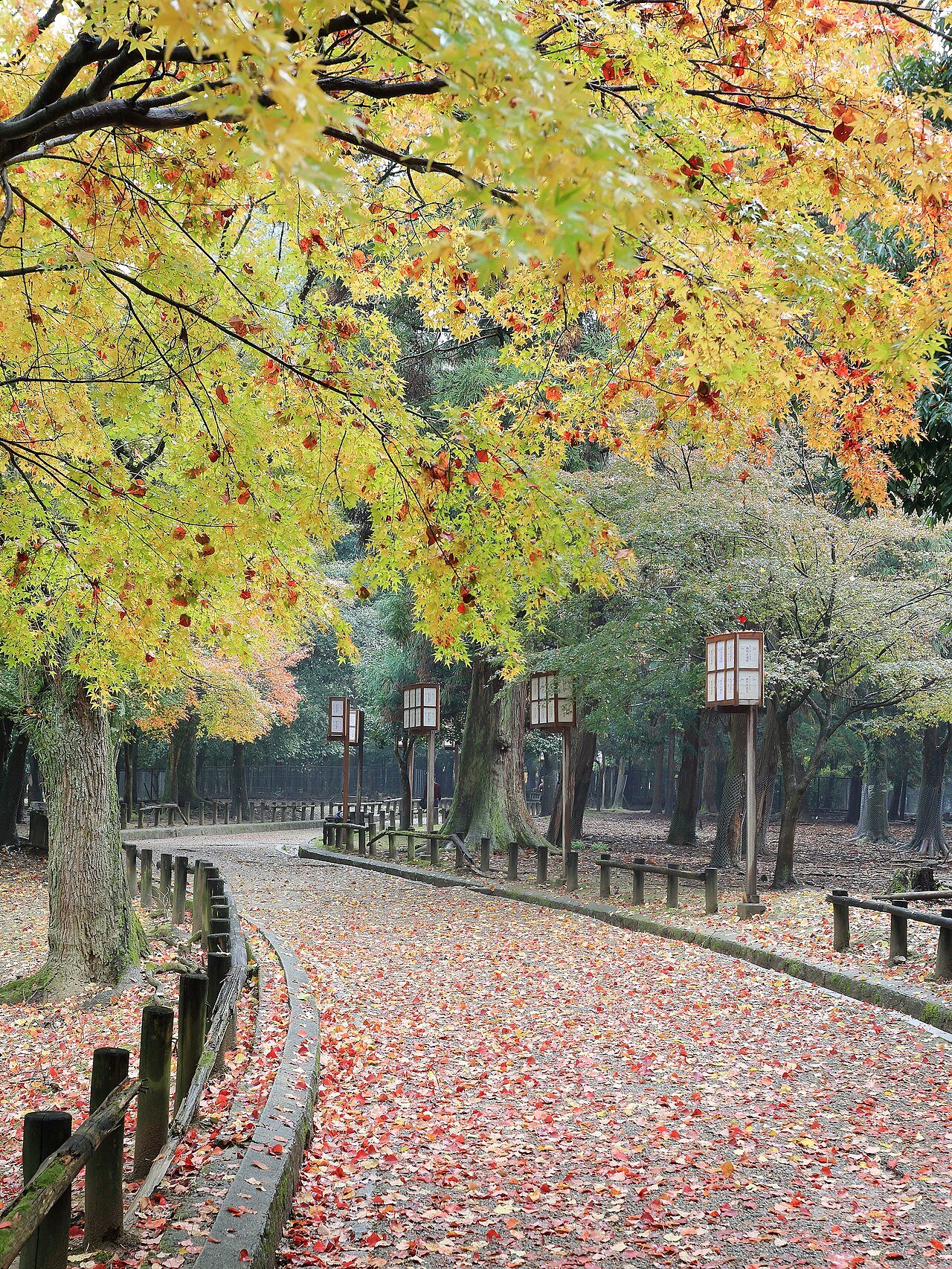
After lunch in the park area, follow the stone-lantern-lined path into the forest toward Kasuga Taisha — one of Shinto's most revered shrines, founded in 768 AD and rebuilt in the traditional style every 20 years as an act of renewal. The 20-minute walk through ancient cryptomeria forest is as much a part of the experience as the shrine itself.

Kasuga is distinguished by its thousands of bronze and stone lanterns lining every pathway and hanging from every eave. In ordinary daylight they hang quietly, their verdigris surfaces dappled with sunlight through the canopy. Twice a year — at Setsubun (early February) and Obon (mid-August) — every lantern is lit simultaneously, a spectacle that has continued for over a thousand years.

The outer precinct, free to enter, gives you the full atmosphere of the forest and most of the lanterns. The inner sanctuary (Honden) costs ¥500 extra and houses the four deity shrines with their characteristic vermilion lacquer and white walls.

Access: 20–25-min walk from Todai-ji following signs through the forest
Outer precinct: Free · open 06:30–17:30 (Mar–Oct) / 07:00–17:00 (Nov–Feb)
Inner sanctuary: ¥500 · Treasure Hall: additional ¥500 · Botanical Garden: additional ¥500
Best light: Late afternoon around 15:00–16:30 is when slanting light filters through the cedar canopy most beautifully, and crowd numbers drop noticeably after 15:30. If you are staying overnight, the walk back through the forest at dusk — the stone lanterns just visible in failing light — is something that cannot be photographed adequately.
Late Afternoon · 16:30–18:30 · ~2 hours
Isuien Garden + Naramachi Quarter

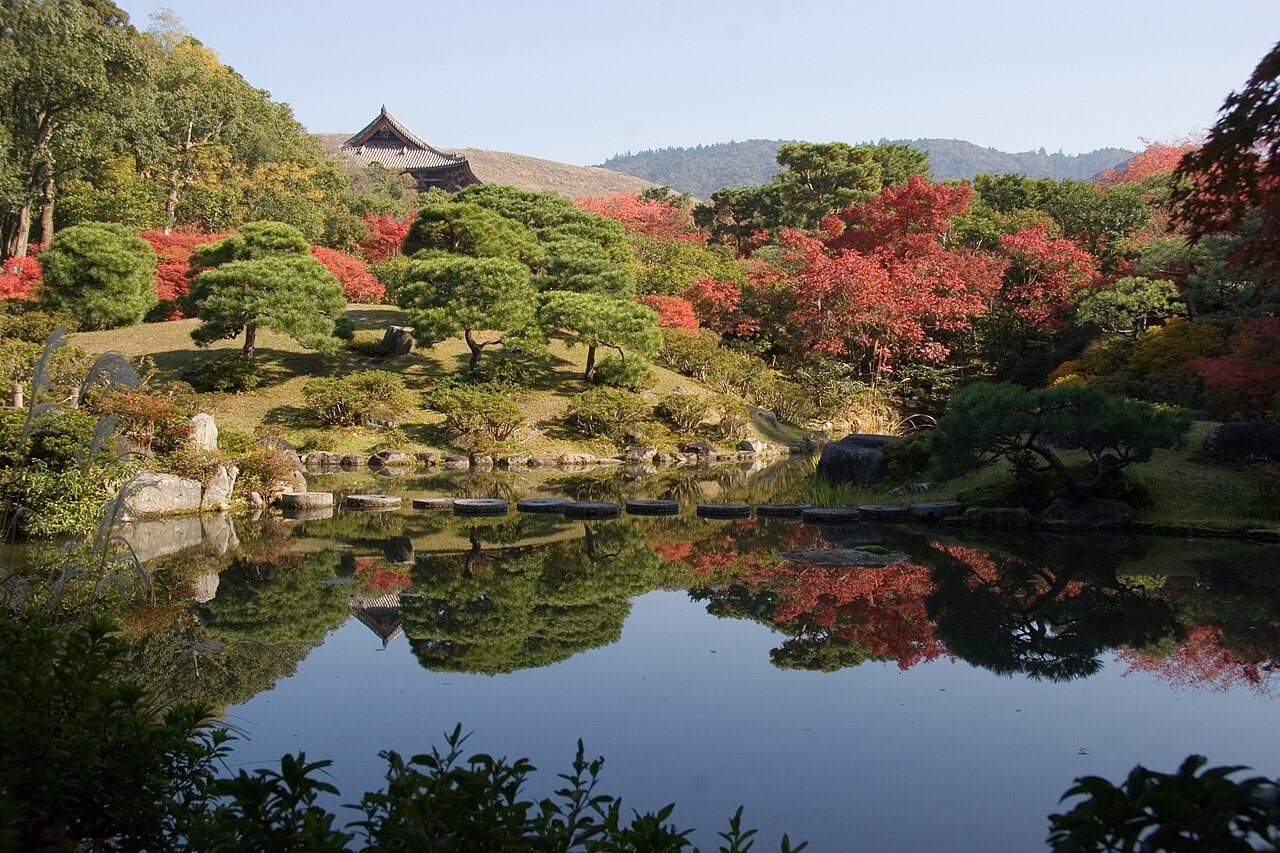
Walk back through the park and stop at Isuien Garden (依水園). The garden is laid out in two sections — a front garden from the late 17th century and a Meiji-era rear garden that uses Mount Wakakusa and Todai-ji's roof as borrowed scenery. Standing at the main pond, the temple seems to float at the far edge of the garden as if it were part of the design — which, of course, it is.

Next door, Yoshikien Garden is free for foreign tourists (show your passport at the gate) and contains a traditional tea garden that is almost never crowded.

Finish the day in Naramachi, the best-preserved merchant district of the Edo and Meiji periods in the region. Narrow grey-stone lanes, craft shops, small cafes in converted machiya townhouses, and the Harushika Sake Brewery (brewing since 1884) which offers free tastings in its century-old storehouse. Take your time — Naramachi rewards wandering.

Isuien Garden: ¥1,200 (with museum) / ¥650 (garden only) · open 09:30–16:30
Yoshikien: Free for foreign tourists (passport required) · open 09:00–17:00
Naramachi: Free to walk · most shops 10:00–17:00
Evening · from 18:00
Nara Food Before You Leave

Nara has its own culinary traditions worth trying before the return train. Kakinoha-zushi is rice pressed with fish and wrapped in persimmon leaves — the leaves contain antimicrobial tannins and were used by traders to preserve fish on long journeys. Most shops sell set boxes for ¥1,500–2,500. Miwa somen is thin handmade wheat noodle that has been produced in the Miwa area since the 8th century. And kimpeki mochi is golden-glazed pounded rice cake made with Nara-grown glutinous rice.

If you are day-tripping, Kintetsu-Nara trains depart every 20–30 minutes. Kyoto in ~35–50 min, Osaka Namba in ~36 min.
Dinner around Naramachi: ¥1,200–2,500/person · most restaurants close 19:00–20:00
Return to Kyoto: Kintetsu ~35–50 min ¥620–1,280 · Return to Osaka: ~36 min ¥680
Day Two (Optional)

Dawn Park · Isuien at Leisure · Horyuji Temple

The park at first light with no one else there · a garden that borrows mountains as its backdrop · a temple that has stood for 1,400 years — the day most visitors miss entirely

02
Day 2
Dawn Park · Isuien · Horyuji Temple
Isuien Garden Nara — a still pond reflects a stone bridge and red maple trees, with Todai-ji's roof visible as borrowed scenery in the background
Early Morning · 07:00–09:00 · for overnight guests
Nara Park at Dawn — What Day-Trippers Never See

This is the real reason to stay overnight. Between 07:00 and 08:30, Nara Park belongs to the deer and a handful of early walkers. The mist sits low over the grass. Groups of deer rest near the pond edges. Light moves through pine boughs in long diagonal columns. There are no tour buses, no megaphones, no queues at the shika senbei carts — just the particular silence that comes from being somewhere ancient before the day crowd arrives.

Consider walking toward Mount Wakakusa (Wakakusayama) — the 342-metre grassy hill that rises on the park's eastern edge. From March to December (closed January–February) it opens at 09:00 (¥150 entry); the summit view takes in the entire park, the temple rooftops and the Yamato Plain beyond. Save this for morning of Day 2 when you have time to climb properly.

Nara Park dawn walk: Free, open 24 hours
Mount Wakakusa: ¥150 · open March–December, 09:00–17:00 (closed Jan–Feb)
Morning · 09:30–11:30 · ~2 hours
Isuien Garden — the Way It Deserves to Be Seen

Yesterday you may have passed through briefly. Today, take your time. Isuien (依水園) has two distinct sections: the front garden dates to the late 17th century, with a round pond, stepping stones and a tea house; the rear Meiji-era garden was designed to frame Todai-ji's Nandaimon Gate and Mount Wakakusa as living components of the composition — a technique called shakkei, or borrowed scenery.

The effect is most powerful on a clear morning: the temple gate appears to float in the middle distance beyond the main pond, and the mountain behind it fills the upper frame, making the garden feel several times larger than its actual size. Sit at the main viewing point for five minutes and you begin to understand why the Meiji-period industrialist who commissioned the rear garden chose to build here rather than anywhere else in Nara.

Adjacent Yoshikien (free for foreign tourists with passport) has a traditional tea garden that is rarely busy — a good option if you want a quiet space without the entrance fee.

Isuien: ¥1,200 (incl. Neiraku Museum) / ¥650 (garden only) · open 09:30–16:30
Access: 12-min walk from Kintetsu-Nara Station via Nobori-oji Street
Afternoon · 12:30–16:30 · ~4 hours including travel
Horyuji Temple — The Oldest Wooden Building on Earth

Horyuji Temple (法隆寺) was founded in 607 AD by Prince Shotoku and became the first site in Japan inscribed on the UNESCO World Heritage List (1993). The Western Precinct's five-storey pagoda and main hall have stood for over 1,400 years — they are the oldest surviving wooden structures in the world, not just Japan.

What makes Horyuji quietly astonishing is not its fame but its survival. Hinoki cypress wood, scientists have found, actually hardens rather than decays over time — the structural integrity of these beams improves with each century. The craftsmen who felled these trees in the 7th century chose wood that would outlast every earthquake, typhoon and fire the region has since experienced.

Allow at least two hours: the Western Precinct (five-storey pagoda + Golden Hall), the Eastern Precinct (Dream Hall/Yumedono, an octagonal hall housing a hidden gilded figure of Prince Shotoku revealed to the public once a year), and the Treasure Hall containing some of Japan's finest early Buddhist sculptures.

Access option 1: JR Nara → JR Horyuji ~12 min ¥210, then walk or local bus ~5 min
Access option 2: Nara Kotsu bus #98 from Kintetsu-Nara ~60–70 min ¥760 (1-Day Wide Bus Pass covers this)
Admission: ¥1,500 adults (all precincts + Treasury) · open 08:00–17:00 (Feb–Nov) / 08:00–16:30 (Dec–Jan)
For those interested in early Buddhist art: Near Horyuji are Yakushiji Temple (Tang-dynasty architecture reconstructed) and Toshodaiji Temple (the most complete Nara-period complex remaining). Both require separate planning — they are in different directions and each takes 60–90 minutes to explore properly.
Evening · from 16:30
Return to Nara or Head Directly Onward

From Horyuji you can return to Nara city for a final evening in Naramachi — the old town at dusk, when the souvenir shops have closed and the sake bars and small restaurants take over, is quieter and more genuine than the daytime. Most places serve until 20:00–21:00.

Alternatively, JR Horyuji connects directly to JR Osaka (Yamatoji Rapid, ~35 min ¥500) or via JR Nara to Kintetsu connections for Kyoto (~45–55 min).

JR Horyuji → JR Osaka: Yamatoji Rapid ~35 min ¥500 (JR Pass valid)
JR Horyuji → Kyoto (via JR Nara + Kintetsu): ~55–65 min total
🌸
Extend the Trip
Spring in Nara? Continue to Yoshino Mountain — thousands of cherry trees in tiers across the hillside
Explore Nara Prefecture →
Practical Info

Where to Stay · Getting Around · Budget

🏨
Where to Stay

For an overnight stay, the area around Kintetsu-Nara Station puts you 10–15 min on foot from the park — ideal for an early start. Business hotels run ¥8,000–15,000/night; traditional ryokan with meals ¥18,000–35,000+. If budget is tight, stay in Kyoto or Osaka and do Nara as a day trip.

🚌
Getting Around

The main cluster (park, Todai-ji, Kasuga, Isuien, Naramachi) is entirely walkable from Kintetsu-Nara in 5–25 minutes. City buses are only needed for Horyuji or outer areas: ¥250/ride · 1-Day Bus Pass ¥700 · Wide Pass ¥1,100 (covers Horyuji bus route)

🎫
Useful Passes

Kintetsu Rail Pass (foreign tourists only) 1-day ¥1,900 · 2-day ¥3,700 — unlimited Kintetsu trains (Kyoto/Osaka/Nara) + Nara city buses including Horyuji. Good value if you're making the round trip from Kyoto or Osaka and visiting multiple sites.

Budget

Estimated Daily Costs per Person

Item Budget Mid-Range Comfortable
Accommodation (per night) ¥3,000–5,000
(hostel)
¥8,000–15,000
(business hotel)
¥18,000–35,000+
(ryokan with meals)
Food (3 meals) ¥1,500–2,500
(convenience store + local)
¥2,500–5,000
(sit-down restaurants)
¥5,000–12,000
(kaiseki or ryokan dinner)
Local Transport ¥0–250
(walk everywhere)
¥700–1,100
(Day Bus Pass)
¥1,900–3,700
(Kintetsu Pass)
Main Admissions ¥800
(Todai-ji only)
¥2,300–3,800
(Todai-ji+Kasuga+Isuien)
¥3,800–5,300
(+ Horyuji ¥1,500)
Day-Trip Total (per person) ¥2,300–3,550
(~$15–23 USD)
¥6,500–11,100
(~$42–72 USD)
¥10,700–20,000
(~$70–130 USD)

Exchange reference: ¥1 ≈ $0.0065 USD · Train fares from Kyoto/Osaka are not included above.

Frequently Asked Questions

FAQ · Nara Itinerary

Is one day enough for Nara?
One full day is enough to cover Nara's main highlights — the deer park, Todai-ji Great Buddha, Kasuga Taisha Shrine and Naramachi quarter — but you need to leave your base by 08:30 and keep moving. With two days you can add Isuien Garden at a proper pace and make the 60-minute trip out to Horyuji Temple, the world's oldest standing wooden structure.
Should I do Nara as a day trip or stay overnight?
A day trip from Kyoto or Osaka covers the main highlights in 6–8 hours. But staying overnight gives you Nara Park before 08:00 — deer moving through morning mist, no tour groups, no tannoy — which is a completely different experience from the midday rush. Evening at Kasuga Shrine, with its thousands of stone and bronze lanterns, is also only accessible to overnight guests.
Is it better to come from Kyoto or Osaka?
Both are roughly equal. From Kyoto: Kintetsu Limited Express ~35 min ¥1,280, or JR Miyakoji Rapid ~45 min ¥720 (JR Pass valid). From Osaka Namba: Kintetsu ~36 min ¥680. Kintetsu-Nara Station is a 5–10-minute walk to the park; JR Nara Station is 15–20 minutes. If you have no JR Pass, Kintetsu is both faster and drops you closer.
What are Todai-ji's opening hours and admission fee?
The Great Buddha Hall (Daibutsuden) opens 07:30–17:30 (April–October) and 08:00–17:00 (November–March). Admission is ¥800 for adults. Inside you will find the 15-metre bronze Vairocana Buddha cast in 752 AD, and a wooden pillar with a hole said to be the same size as one of the Buddha's nostrils — those who squeeze through are said to receive enlightenment.
When is the best time of year to visit Nara?
Spring (March–May) is the most photogenic — cherry blossoms fall among the deer in the park. Autumn (October–November) brings fiery maple foliage that reflects in the ponds at Isuien Garden. Winter (December–February) has the smallest crowds and the clearest skies; the lanterns at Kasuga Shrine glow especially beautifully against cold air. Summer (July–August) is hot and humid but the deer are more active early in the morning.