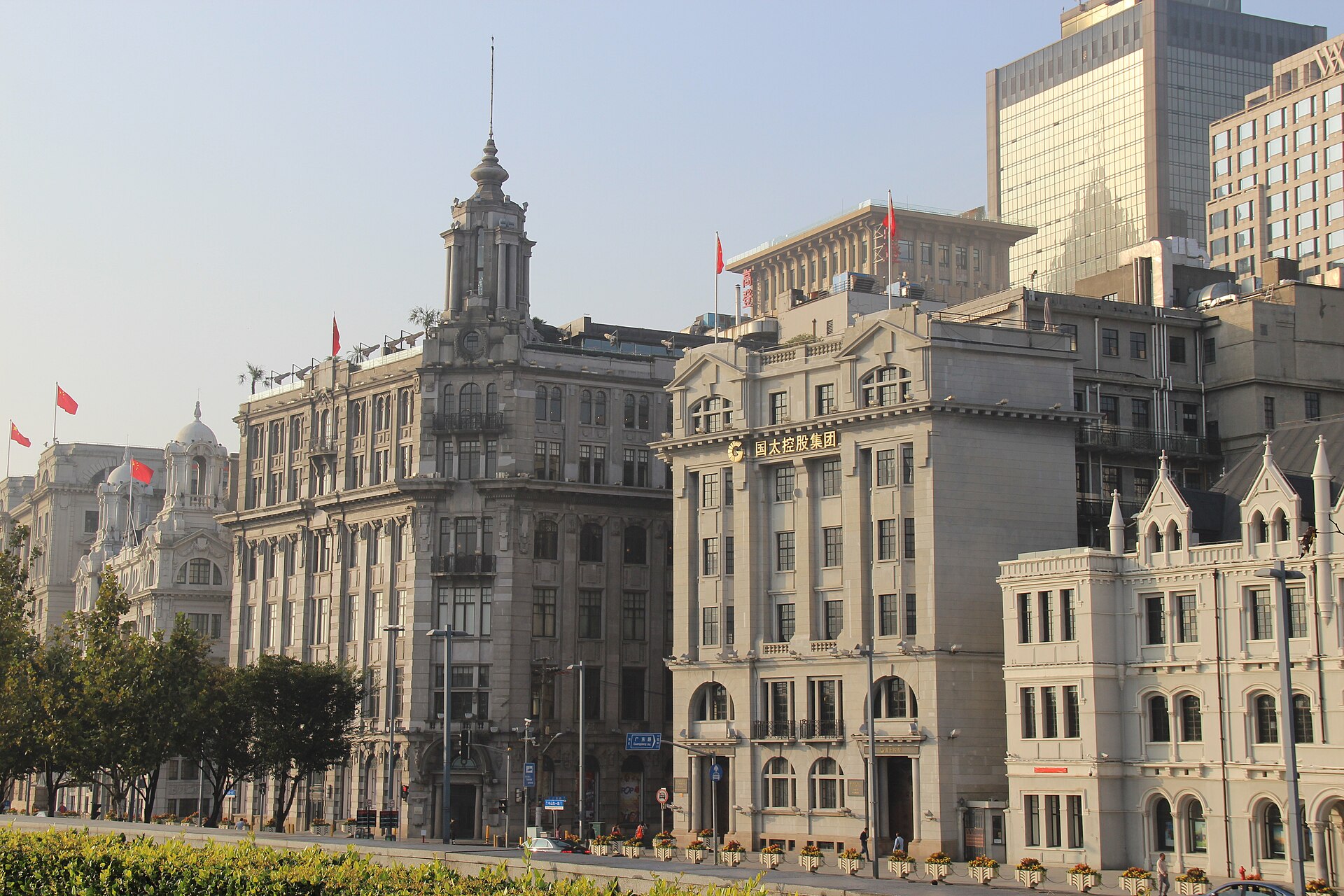
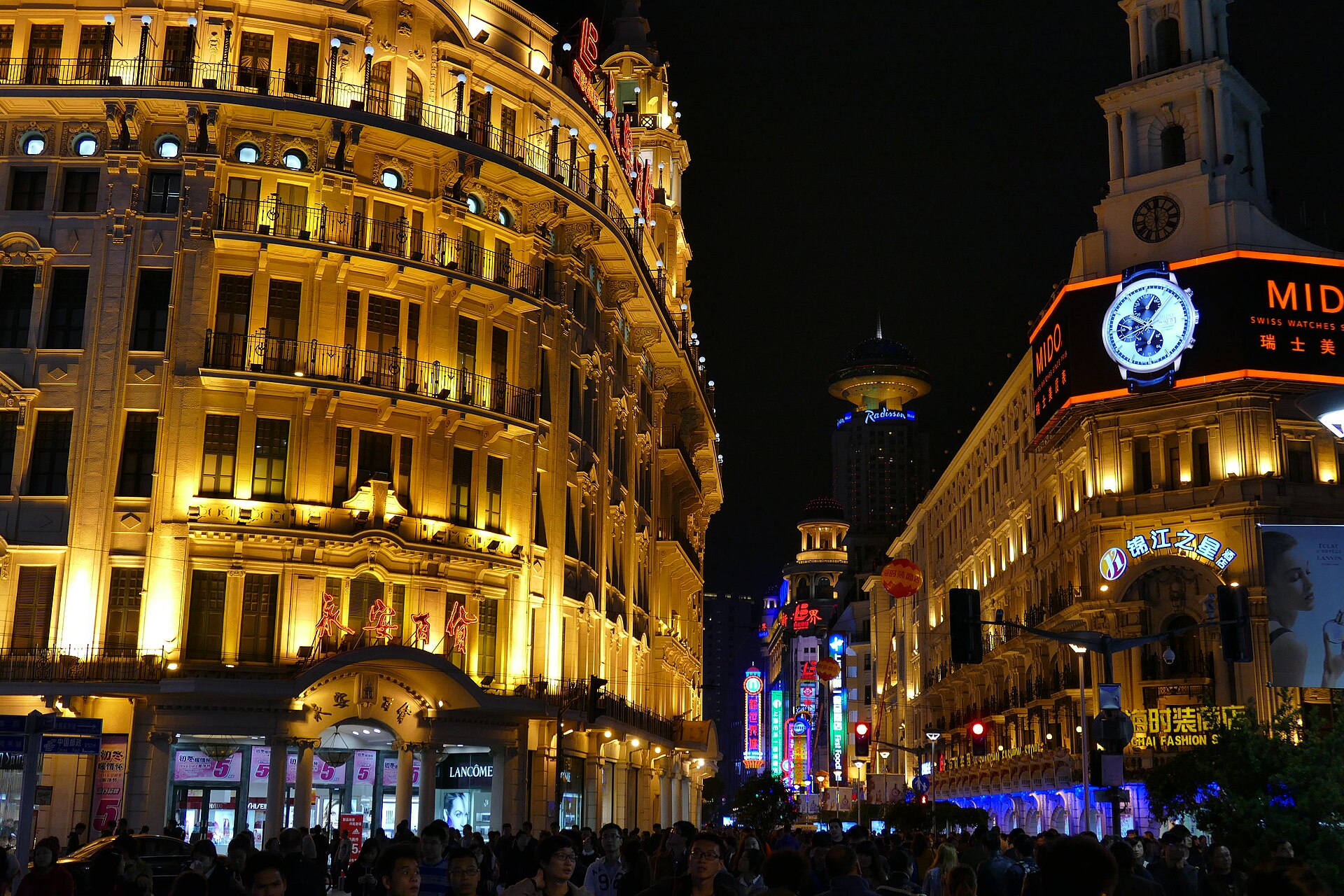
A 5.5-kilometre spine through central Shanghai, free to walk at any hour — but come after dark, when the neon signs on both sides blaze together and the eastern end opens straight onto the Huangpu River.
Ask someone in Shanghai where to take a first-time visitor and the answer is almost always the same: Nanjing Road. Not because it is the cheapest place to shop or the most refined — it is neither — but because it concentrates more of what Shanghai feels like into a single walkable route than anywhere else in the city.
Nanjing Road (南京路) runs approximately 5.5 kilometres east–west through central Shanghai's Huangpu District, connecting People's Square in the west to the Bund and the Huangpu River in the east. It has a reasonable claim to being China's most famous commercial street — a title it has held, with different tenants in the shopfronts, since the late nineteenth century. The pedestrianised eastern stretch is what most visitors picture: department stores hung with banners, snack shops, souvenir stalls, and overhead neon signs that turn the whole corridor orange and gold after dark.
The practical fact that matters most: free to walk, open 24 hours, no ticket, no queue. Shanghai residents use this street daily — running errands, meeting friends, bringing their parents from out of town. That tells you something a promotional description cannot.
Knowing which half you are heading for before you arrive saves time and sets the right expectations.
The section everyone means when they say "Nanjing Road." Fully pedestrianised since 1999–2000, the eastern stretch runs from People's Square to the riverfront, flanked on both sides by historic department stores, snack shops and souvenir stalls beneath towering neon signs. No.1 Department Store — Shanghai's oldest — anchors the western end. A small red tourist tram shuttles the length of the zone if your feet give out. The eastern end of the promenade opens directly onto The Bund and the Huangpu River, making this the most natural evening combination walk in the city.
A different register entirely. West Nanjing Road runs near the Jing'an district and carries the city's upscale commercial real estate: Plaza 66 (恒隆广场, with its twin towers rising above a luxury mall), CITIC Square and Reel Shopping Mall. International fashion brands, quieter pavements, and a noticeably more composed atmosphere than the neon-and-crowds scene to the east. If you are shopping for something specific rather than absorbing atmosphere, this is where to come.
At the eastern end of the pedestrian zone, where Nanjing Road meets the Bund, stands the Fairmont Peace Hotel — the 1929 Art Deco building with a verdigris copper roof that frames the corner in every photograph. The No.1 Department Store, opened in 1949 and still trading, sits at the western end near People's Square. Shanghai No.1 Provisions Store is the place locals buy traditional food gifts — preserved meats, pastries and sweets you will not find packaged the same way anywhere else.
The case for coming at night is simple: the neon. Both sides of the pedestrian zone are hung with oversized illuminated signs in red, gold and white that turn on together after about 6 pm, transforming what is an unremarkable shopping street by day into something genuinely photogenic. Walking from People's Square toward the river takes roughly 25 to 35 minutes at a comfortable pace — just long enough to absorb the atmosphere without exhaustion. From the eastern end, continue straight onto The Bund for the full evening without needing a metro ride in between.
The street is lively but not unpleasant most evenings. The exception is the major holiday weeks — see below.
A small red tram runs the length of the East Nanjing Road pedestrian zone. The fare is approximately ¥10 per person (~฿50) for a single ride from one end to the other. It moves slowly and stops frequently, so it is not faster than walking — but it is a different vantage point, and it is genuinely useful if you are travelling with young children or anyone who finds extended walking difficult.
Shanghai No.1 Provisions Store has packaged traditional foods worth picking up if you want to bring something home. Along the pedestrian zone there are stalls and small restaurants selling sheng jian bao (pan-fried soup dumplings), scallion pancakes and various local snacks at prices that vary considerably — the shops set back from the main drag tend to be more honest on price than the ones directly on the pedestrian zone with multilingual menus displayed facing the crowd.
For a proper guide to where to eat in the neighbourhood, the Shanghai street food guide covers the best nearby areas by district.
Three metro stations serve different parts of the street — pick the one that matches where you are heading.
Nanjing Road is where Shanghai's two most common tourist scams operate most visibly. The first is the tea ceremony approach: a friendly person — often presenting as a student, a local guide, or someone practicing English — will chat with you and suggest visiting a nearby tea house for a traditional tea ceremony. Once you are seated, the bill arrives for several hundred yuan per person, sometimes much more. The invitation is the mechanism; the tea is incidental.
The second is the art student approach: someone claims to be a local art student with a nearby gallery exhibition and steers you in. Work is then sold at heavily inflated prices, sometimes with social pressure to buy. The counter in both cases is identical: eye contact, a polite acknowledgement, and keep walking. No confrontation necessary — these approaches depend on your stopping; once you continue, they do not pursue.
Golden Week crowds: National Day Golden Week (1–7 October) and Labour Day (1 May) bring enormous numbers of domestic tourists to Nanjing Road. The pedestrian zone becomes genuinely congested. If your dates overlap, come early in the morning or consider a different attraction for the peak days.
Footwear matters: The pedestrian zone is paved in decorative stone — attractive but firm underfoot. Comfortable shoes make the difference between an enjoyable two-hour walk and a tiring one.
Price-checking: For anything with a ticket price that seems high relative to equivalent items elsewhere, a quick search on Taobao or JD.com gives a realistic market reference before committing.
Central Shanghai — walk to the pedestrian zone from your door, with every metro line accessible.