Home Matsumoto Nagano Japan About
Home  ›  Asia  ›  Japan  ›  Matsumoto  ›  Travel Tips
🏛 Before You Go · Matsumoto 2026

Matsumoto Travel Tips
Everything the guidebooks skip

A black castle at 600 metres, alpine air that turns crisp the moment the sun drops, and Kamikochi waiting ninety minutes up the valley. Here is the honest prep guide before you board the Azusa.

Getting There

Arriving in Matsumoto — pick the route that suits you

No shinkansen serves Matsumoto directly, but getting here is easier than most people expect.

🚃
Limited Express Azusa — from Tokyo
Shinjuku → Matsumoto · The most direct option from Tokyo

The Azusa runs non-stop from Shinjuku Station to Matsumoto in about 2 hours 30 minutes. A reserved seat costs roughly 6,800 to 7,000 yen, and the JR Pass covers the full fare. Trains depart close to every hour. The ride through the Kanto plain and into the Nagano mountains is genuinely scenic, especially in autumn and spring. Some Azusa services start from Tokyo Station or other Chuo Line stops — check the timetable on HyperDia or the JR East website to pick the most convenient departure.

~2 hrs 30 min ~¥6,800–7,000 reserved JR Pass valid
Best if: You are based in Tokyo or anywhere on the Chuo Line, or if you already hold a JR Pass — the marginal cost drops to near zero.
🚌
Alpico Highway Bus — from Tokyo (budget option)
Busta Shinjuku → Matsumoto Bus Terminal · Around 40% cheaper than the train

Alpico Kotsu and Keio Bus both run express coaches from Busta Shinjuku (the bus terminal above Shinjuku Station's South Exit) to Matsumoto Bus Terminal. The journey takes 3 to 3.5 hours and costs 3,500 to 4,300 yen depending on the day and departure time. Coaches have reclining seats, a power socket, and an overhead bin. Overnight departures are also available, useful if you want to save a night's accommodation. Book online at least a few days ahead during peak season — seats sell out.

~¥3,500–4,300 ~3–3.5 hours Book online in advance
Best if: You do not have a JR Pass and want to keep costs down. The overnight bus lets you skip a hotel night entirely.
🚅
Limited Express Shinano — from Nagoya
Nagoya → Matsumoto · Ideal for a Chubu circuit

The JR Shinano Limited Express runs direct from Nagoya Station to Matsumoto in about 2 hours 10 minutes. A reserved seat costs around 5,610 yen, and the JR Pass covers it fully. If your itinerary strings together Nagoya, Takayama, and Matsumoto, this route slots in naturally. The Kiso Valley section of the track, with its forested gorge and historic post towns, is one of the more beautiful stretches of railway in central Japan.

~2 hrs 10 min ~¥5,610 reserved JR Pass valid
Best if: You are starting from Nagoya, or building a Chubu loop that includes Takayama and/or Nagano.
🚄
Shinkansen + Shinano — from Osaka / Kyoto
Shin-Osaka → Nagoya → Matsumoto · One transfer at Nagoya

From Osaka (Shin-Osaka Station), take the Tokaido Shinkansen to Nagoya (about 50 minutes), then switch to the Shinano Limited Express for Matsumoto (about 2 hours 10 minutes). Total journey time is around 3 hours; total fare around 11,000 to 12,000 yen. The JR Pass covers both legs entirely. If you prefer to skip the shinkansen, Alpico and other operators run long-distance coaches from Osaka to Matsumoto in 6.5 to 7.5 hours for around 4,000 to 5,500 yen — an overnight bus from Osaka works well if you want to save on accommodation.
~3 hours (shinkansen + express) ~¥11,000–12,000 JR Pass covers both legs
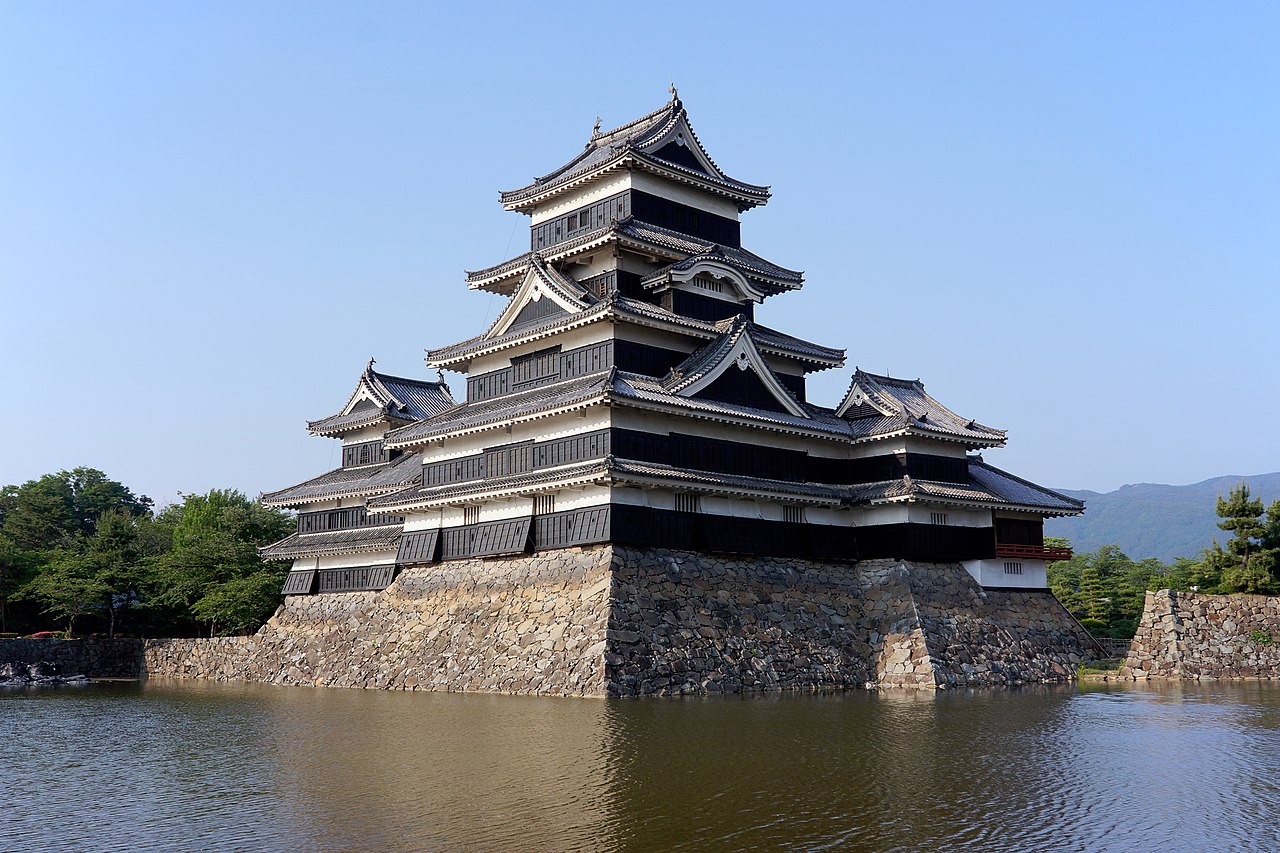
Matsumoto Castle, the black-walled Crow Castle, reflected in the surrounding moat surrounded by trees
Matsumoto Castle — one of Japan's five National Treasure castles and the oldest surviving wooden castle keep in the country. A 15-minute walk from the station.
Getting Around

Town Sneaker, bicycle or on foot — which one fits your day

Central Matsumoto is compact and walkable. The castle is 15 minutes from the station on foot. But a few sights need a bus or car.

Something a lot of visitors discover only after they arrive: the main sights of Matsumoto sit within an easy walk or cycle of the station. The castle, Nakamachi Street, Nawate Street and the Kaichi School form a loose triangle you can cover on foot in a few hours. If you are heading to the Daio Wasabi Farm, Asama Onsen, or Kamikochi, you will need a bus or train. Plan your transport around where you are actually going that day.

Town Sneaker — tourist loop buses

Four colour-coded loop routes depart from the bus rotary in front of Matsumoto Station every 20 to 30 minutes (the South route runs hourly). The North route passes the castle and Former Kaichi School; the East route covers Nakamachi Street and the Matsumoto City Museum of Art.

Fare: ¥200 per ride or ¥500 all-day · Day pass perk: 10% off castle admission (saves ¥70) · Buy on board or at the station
Bicycle — what locals recommend

Matsumoto is built for cycling: flat roads, clear bike lanes, and parking racks at every major sight. HELLO CYCLING electric-assist bikes and regular rental bicycles are available near the station for around 300 to 500 yen a day. You can pick up and drop off at different HELLO CYCLING docks across the city.

HELLO CYCLING: pick up and drop off at different docks · Hours: 24/7 · Good for: castle + Nakamachi + Nawate in one loop
Matsumoto Electric Railway — to Kamikochi

This local train runs from Matsumoto Station to Shin-Shimashima in 30 minutes (fare: ¥730). From Shin-Shimashima, an Alpico bus continues to Kamikochi in about 50 minutes (fare: ¥1,750 one way). Private cars are banned from the Kamikochi valley, so this bus is the only option. Depart before 8 am during peak season to avoid queues.

Total one-way fare to Kamikochi: ~¥2,480 · Season: late April to mid-November (closed in winter)
Taxi and rental car

Taxis queue outside the station exit at all hours and are the easiest option for groups or when you have luggage. A taxi to Asama Onsen costs around 1,000 to 1,200 yen. Car rental is worthwhile if you are combining Matsumoto with outlying spots like Daio Wasabi Farm or the Alpine Route. You need an international driving permit.

Station to Asama Onsen: ~¥1,000–1,200 · Car rental: several agencies in front of Matsumoto Station
Tip: If your day covers Matsumoto Castle, the Former Kaichi School, Nakamachi Street, and the Yayoi Kusama Museum, the ¥500 Town Sneaker day pass pays for itself immediately — the castle discount alone saves ¥70 and the bus eliminates the back-and-forth walk. If you are sticking to one neighbourhood or cycling, save the ¥500 and pedal. See everything worth doing in the full Matsumoto city guide.
Practical Tips & Etiquette

Behave well in a city that takes its heritage seriously

Matsumoto is proud of its castle, its streets, and its traditions. A little awareness goes a long way.

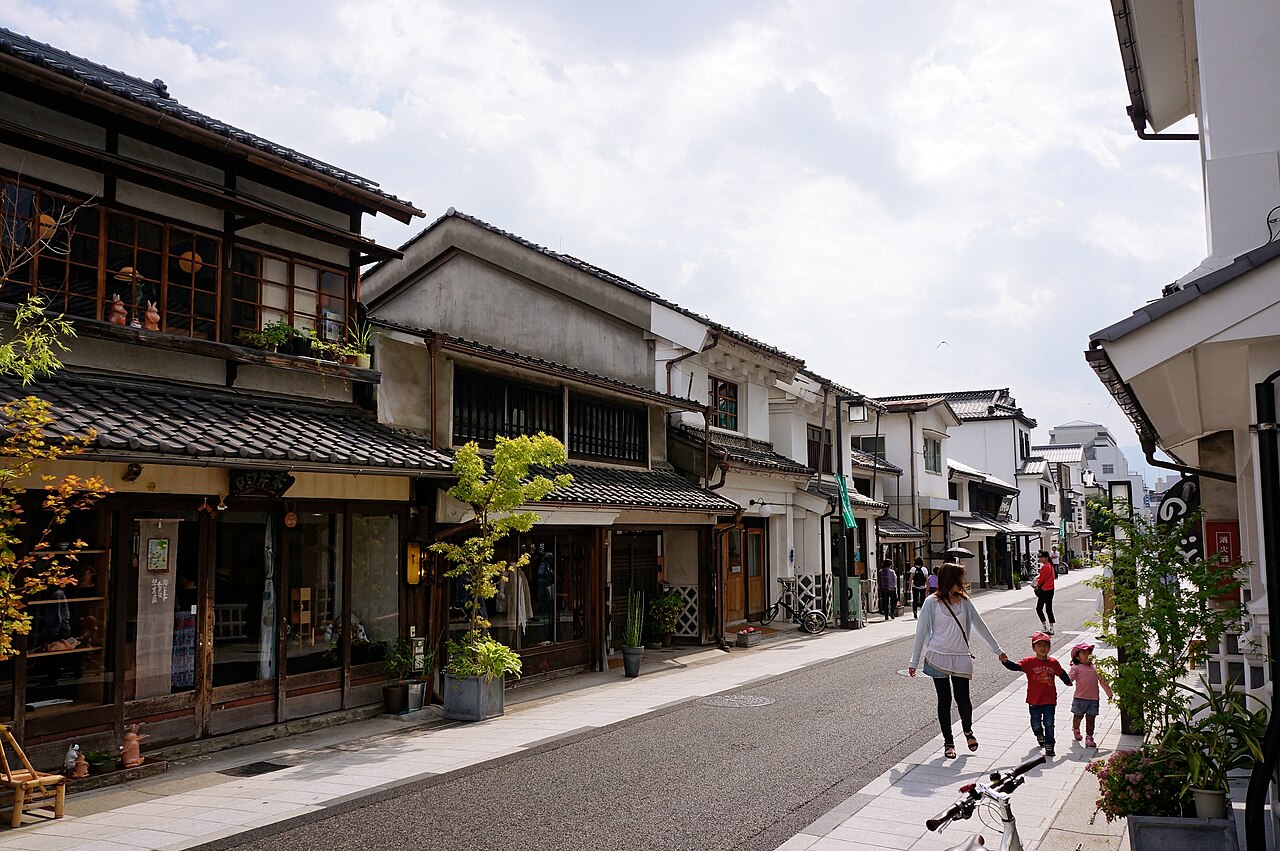
Nakamachi Street in Matsumoto, Edo-period white and black kura storehouses lining both sides of the street
Nakamachi Street — two-hundred-year-old kura merchant storehouses now housing cafes, galleries, and crafts shops. Five minutes on foot from the castle.
Best Time to Visit

Matsumoto through four distinct seasons

The city sits at 600 metres, ringed by peaks over 3,000 metres — every season brings a different version of the same beautiful place.

Spring (late March – May) — cherry blossoms at the moat

Cherry blossoms ring the castle moat in late March to early April, producing one of the most photographed views in Nagano. The contrast between the black keep and pale pink blooms is striking at any hour. Temperatures run 8 to 18°C; pack a layer for evenings. Hotels fill fast — book two to three months ahead for the peak bloom period.

Summer (June – August) — gateway to Kamikochi

Kamikochi is at its greenest and clearest in summer, making this the best season if Kamikochi is your main reason for coming. The city itself can reach 29 to 30°C in August but stays 4 to 5 degrees cooler than Tokyo. There is a rainy season (tsuyu) in June and early July — pack a compact umbrella. July before the rains arrive is quieter and more pleasant than mid-August.

Autumn (October – mid-November) — recommended

Deciduous foliage turns gold, orange, and red around the castle and throughout the surrounding mountains. Temperatures are comfortable at 7 to 14°C. Kamikochi (open until mid-November) is also glorious at this time of year. Weekends in October book up — reserve accommodation a couple of weeks to a month ahead. This is the finest season for photography and for combining city sightseeing with mountain hiking.

Winter (December – March) — snow and quiet streets

Matsumoto in snow has its own quiet charm. Temperatures drop to -5 to 0°C; January nights can reach -8°C. Kamikochi is closed from mid-November, but ski resorts at Shiga Kogen and Hakuba are easily reached. Hotels are cheaper and the city is uncrowded. Asama Onsen is at its most inviting when frost glitters on the old wooden buildings outside.

Seasons to avoid if possible: Golden Week (29 April to 5 May) and Obon (mid-August) see accommodation prices spike, trains packed, and the castle approach extremely crowded. If you must travel during these periods, book everything at least two to three months in advance.
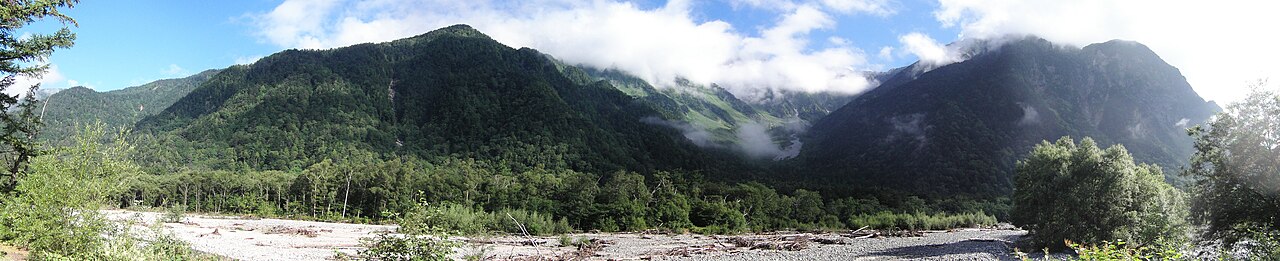
Kamikochi alpine valley in Nagano, Japan, with clear river water and snow-capped peaks reflected in a calm pond
Kamikochi — a car-free alpine valley at 1,500 metres, reached in 90 minutes from Matsumoto by train and bus. Open late April to mid-November.
Daily Budget

How much does a day in Matsumoto cost?

Matsumoto is meaningfully cheaper than Tokyo and Kyoto across all spending levels.

Category Budget Mid-range Comfortable
Accommodation (per night/person) ¥3,500–5,500 (hostel / guesthouse) ¥7,000–12,000 (business hotel) ¥18,000+ (onsen ryokan in Asama)
Food (3 meals) ¥1,500–2,500 (soba set, convenience store) ¥3,000–5,000 (sit-down lunch and dinner) ¥7,000+ (quality Shinshu soba + ryokan dinner)
Matsumoto Castle ¥700 adults / ¥300 children and students — same at all levels
Local transport ¥0–300 (walking / bicycle rental) ¥500–1,000 (Town Sneaker day pass) ¥1,500–2,500 (taxi + optional car hire)
Kamikochi day trip (if going) ~¥4,960 return (train + bus) + ¥500 conservation fee (introduced 2024)
Asama Onsen (if going) ¥300–500 (public bath) ¥800–1,200 (hotel day-use) ¥2,500+ (private bath)
Rough daily total ~¥6,000–9,000 ~¥12,000–18,000 ¥25,000+
Budget tip: Shinshu soba — the region's buckwheat noodle — is Matsumoto's point of culinary pride. A lunchtime soba set (two layers of cold noodles, dipping broth, side dishes) runs 900 to 1,200 yen at most neighbourhood shops. The quality-to-price ratio is exceptional. Look for small restaurants on the back streets off Nakamachi, where locals eat rather than the tourist-facing shops on the main strip.
What to Pack

Pack for a city at 600 metres — not for Tokyo

Matsumoto runs 3 to 5 degrees cooler than the lowlands throughout the year, and the mountains above change weather fast.

Clothing by season

Bring a light jacket or fleece regardless of season — even peak summer evenings drop noticeably. Spring and autumn call for layering (two or three light layers rather than one heavy coat). For winter, a proper down jacket, gloves, scarf, and hat are essential. If you plan to go up to Utsukushigahara Plateau (2,034 m) or Norikura (2,716 m), add a windproof shell and waterproof trousers whatever the season.

Summer: T-shirt + light jacket + waterproof · Spring/Autumn: 2–3 layers · Winter: heavy coat, gloves, hat, thermal underlayers
Footwear — think about the castle

You will remove your shoes before climbing the wooden stairs inside Matsumoto Castle. Shoes that slip off and on quickly — loafers, low-top sneakers with easy laces — make the visit much smoother. For Kamikochi and mountain walks, a pair of trail runners or light hiking shoes with grip is far more comfortable than urban sneakers on uneven paths.

Castle: easy on/off shoes, clean socks · Kamikochi: trail runners or hiking shoes · City: comfortable walking shoes
Money, SIM and apps

Carry 5,000 to 10,000 yen in cash per day. Many local soba restaurants, craft shops, and Nawate market stalls are cash only. Foreign cards work reliably at 7-Eleven and Japan Post ATMs. For connectivity, a Japan tourist eSIM (Airalo, IIJmio, or similar) bought before departure is easier than searching for a pocket Wi-Fi unit on arrival.

Useful apps: Google Maps (excellent in Japan) · HyperDia or Navitime (train times) · Google Translate camera (reads Japanese menus instantly)
Families with children

The castle interior has very steep staircases on the upper floors — young children will need to be carried or closely supervised. Viewing the outside and the moat is free and perfectly enjoyable without climbing inside. Kamikochi has a flat, easy loop trail around Taisho Pond (about one hour) that works well for families. Daio Wasabi Farm has paved paths, clear streams, and open space children enjoy naturally.

Castle entry: ¥300 children · Kamikochi: prams work on the flat Taisho Pond loop · Wasabi Farm: free entry, flat paths
Asama Onsen district in Matsumoto at dusk, narrow streets lined with traditional wooden buildings and warm lantern light
Asama Onsen — a hot spring district 3 km from Matsumoto Station, fed by water that has been used since the Nara period more than 1,300 years ago.
Altitude note: If your plans include the Utsukushigahara Plateau (2,034 m) or Norikura Plateau (2,716 m), mountain weather can shift within minutes regardless of what the valley forecast says. Mist, cold rain, and sudden wind are common even in July and August. Always pack a windproof waterproof layer and check the summit forecast before heading up.
Frequently Asked Questions

FAQ · Before You Go to Matsumoto

How do I get to Matsumoto from Tokyo?
The fastest and most direct option is the Limited Express Azusa from Shinjuku Station, arriving in Matsumoto in about 2 hours 30 minutes. A reserved seat costs around ¥6,800 to 7,000, and the JR Pass covers the full fare. There is no shinkansen to Matsumoto. If you want to save money, the Alpico highway bus from Busta Shinjuku takes 3 to 3.5 hours and costs roughly ¥3,500 to 4,300 — you can even take an overnight coach to skip a night's hotel cost.
What is the Town Sneaker bus and is the day pass worth buying?
The Town Sneaker is a set of four colour-coded tourist loop buses departing Matsumoto Station every 20 to 30 minutes. A single ride is ¥200; an all-day pass is ¥500 and includes a 10% discount on castle admission (saving ¥70). The North route serves the castle and Former Kaichi School; the East route covers Nakamachi Street and the Matsumoto City Museum of Art. The day pass is worth it if you are making three or more bus trips that day. If you are sticking to one area or cycling, the ¥500 spend may not be necessary.
When is the best time to visit Matsumoto?
Autumn (October to mid-November) is the finest season. Deciduous trees turn golden and red against the black castle walls; the air is cool and clear at 7 to 14°C. Spring (late March to early April) brings famous cherry blossoms around the castle moat and is the most popular season, though crowds and prices peak. Summer is best if Kamikochi is a priority. Winter is affordable and uncrowded but Kamikochi closes. Avoid Golden Week and Obon if you can — prices spike and accommodation is scarce.
Matsumoto sits at 600 metres elevation — what should I pack?
The city runs 3 to 5°C cooler than Tokyo year-round. A light jacket or fleece is useful every season, even in August. For the castle visit, wear shoes you can slip off and on easily — you remove footwear before climbing the steep wooden stairs inside. If you are heading to higher ground — Utsukushigahara Plateau at 2,034 m or Norikura at 2,716 m — pack a windproof waterproof shell regardless of the forecast. Mountain weather changes fast in the Japanese Alps, and conditions up there bear little resemblance to what the valley looks like at 8 am.
What is a realistic daily budget for Matsumoto?
Budget travellers — hostel, local soba set meals, walking or cycling — can manage on around ¥6,000 to 9,000 per day. A mid-range day (standard hotel, restaurant meals, Town Sneaker pass, castle entry) runs roughly ¥12,000 to 18,000. A comfortable day with an onsen ryokan in Asama and a quality dinner comes to ¥25,000 or more. On days you travel to Kamikochi, add about ¥5,500 for the return train, bus, and the 2024 conservation fee.