Lamai is Koh Samui's second-largest beach, about 10 km south of Chaweng — a long curve of soft sand with clear water you can swim most of the year, backed by a small town's worth of restaurants, bars, cafés and massage shops running at a clearly slower pace. At its southern end sit Hin Ta & Hin Yai, the island's most famous legend-bound rocks. This is the base for people who want a proper beach and their sleep.
When people picture Koh Samui, most picture Chaweng Beach — the island's longest, busiest main strip. Drive 15 to 20 minutes south along the ring road, though, and you reach Lamai, the second-largest beach, which looks much the same — a long arc of sand, clear water, green hills behind — but feels distinctly different: fewer shops, fewer people, less noise, and mostly lower prices.
Lamai is not a deserted beach. Behind the sand is a town with everything you need — restaurants, bars, cafés, massage shops, markets and convenience stores, all within walking distance of each other. It is simply Chaweng with the volume turned down by about half. At the southern end of the beach stand Hin Ta & Hin Yai (หินตา หินยาย), the Grandfather and Grandmother rocks of local legend and one of the island's most photographed spots, and once a week the Lamai walking street fills an evening with cheap food.
Ever booked a beach with plenty of restaurants and bars, only to find the music pounding outside your room at 2 a.m.? Lamai is the fix for that, because it gives you nearly all of Chaweng's convenience at a far gentler pace. That is why couples, longer-stay travellers and second-time Samui visitors so often end up on this side — compare the whole coastline first in the guide to all of Koh Samui's beaches.
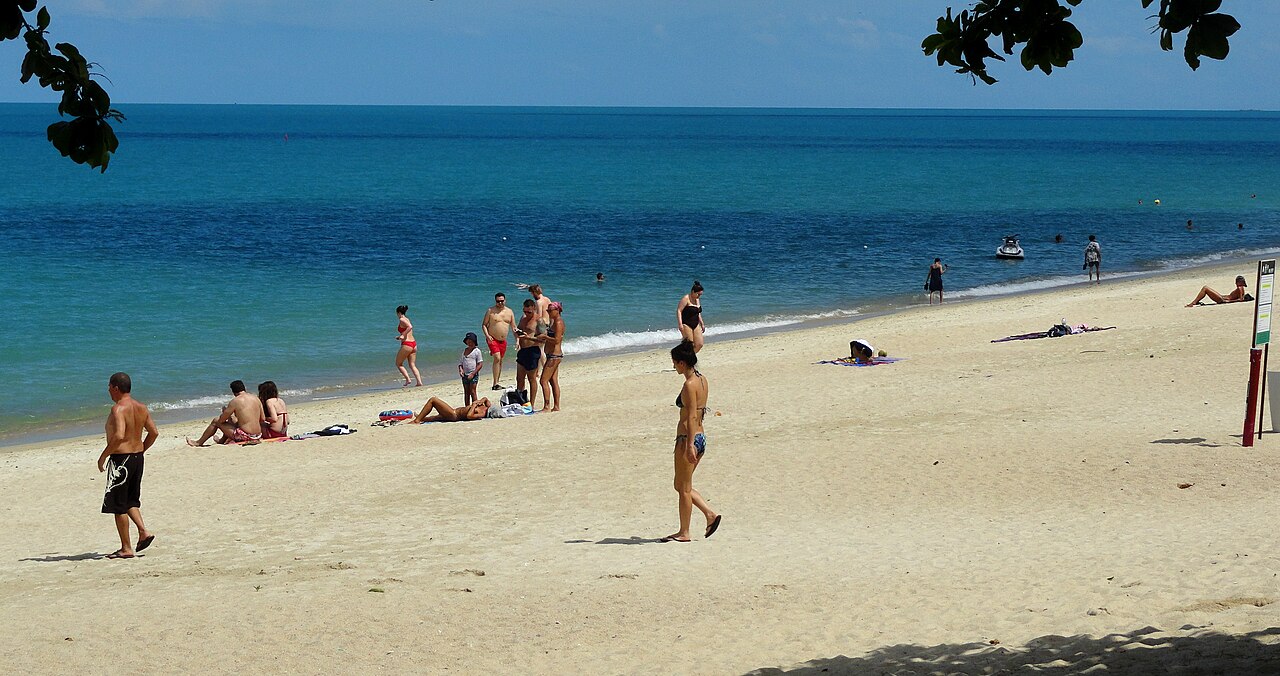
Swim or read under the palms by day, take a beach massage in the afternoon, walk to Hin Ta & Hin Yai before sunset, then close the day with a seaside dinner and a low-key bar — all without the commotion.
The appeal of Lamai is that it sits exactly halfway between a party beach and a silent one. By day the sand is wide enough to find your own patch without trying. The water is deep enough for a real swim. In the afternoon, beach massage shops charge around ฿300 to 400 an hour and there are plenty to choose from. As evening falls, the streets behind the beach come to life — restaurants light their grills, bars play music at a level where you can still hold a conversation, and if you hit walking-street night you can graze for hours on small change. If Chaweng feels like too much and Maenam feels like too little, Lamai is where many people land.
This is who Lamai was made for — a beach nearly as good as Chaweng, with restaurants, bars, convenience stores, ATMs and clinics all in one area, yet you walk back to your room and sleep without club bass following you. Compare the personality of every beach first in the guide to all of Koh Samui's beaches.
Lamai's rhythm suits unhurried trips — coffee by the sea in the morning, a swim before noon, a beach massage in the afternoon, photos at Hin Ta & Hin Yai before dinner by the water. People settling in for a week or more tend to pick this side because it never wears you out, and every major sight on the island is still a 20-to-30-minute drive away.
Room rates in Lamai generally run lower than Chaweng for a similar standard — from guesthouses and small beachfront resorts up to the top tier — and the local food around the area is well priced too. Work out which part of the island fits you in the where-to-stay guide for Koh Samui, and compare standout stays in the top 10 hotels on Koh Samui.
Lamai sits right on the ring road (Route 4169) on the southeast coast — Chaweng is 15 to 20 minutes north, the Na Muang waterfalls about 15 to 20 minutes inland, and the temples and old fishing villages of the south coast are close. With a rented car or scooter, everywhere feels easy from here. See the full list of sights in things to do on Koh Samui.
The beach itself is the main event — several kilometres of curved, soft sand with water that stays clear most of the year. What sets it apart from Chaweng is that in places the seabed drops away a little faster, so you can have a proper swim without wading out forever. Both ends of the beach have rocks (some underwater), so the middle stretch is the easiest place to get in. In the monsoon months (~October to December) the waves build and some days bring red flags or rip currents — never swim against a red flag, and judge the sea day by day. Read how the Gulf-coast seasons really work in the best time to visit Koh Samui.
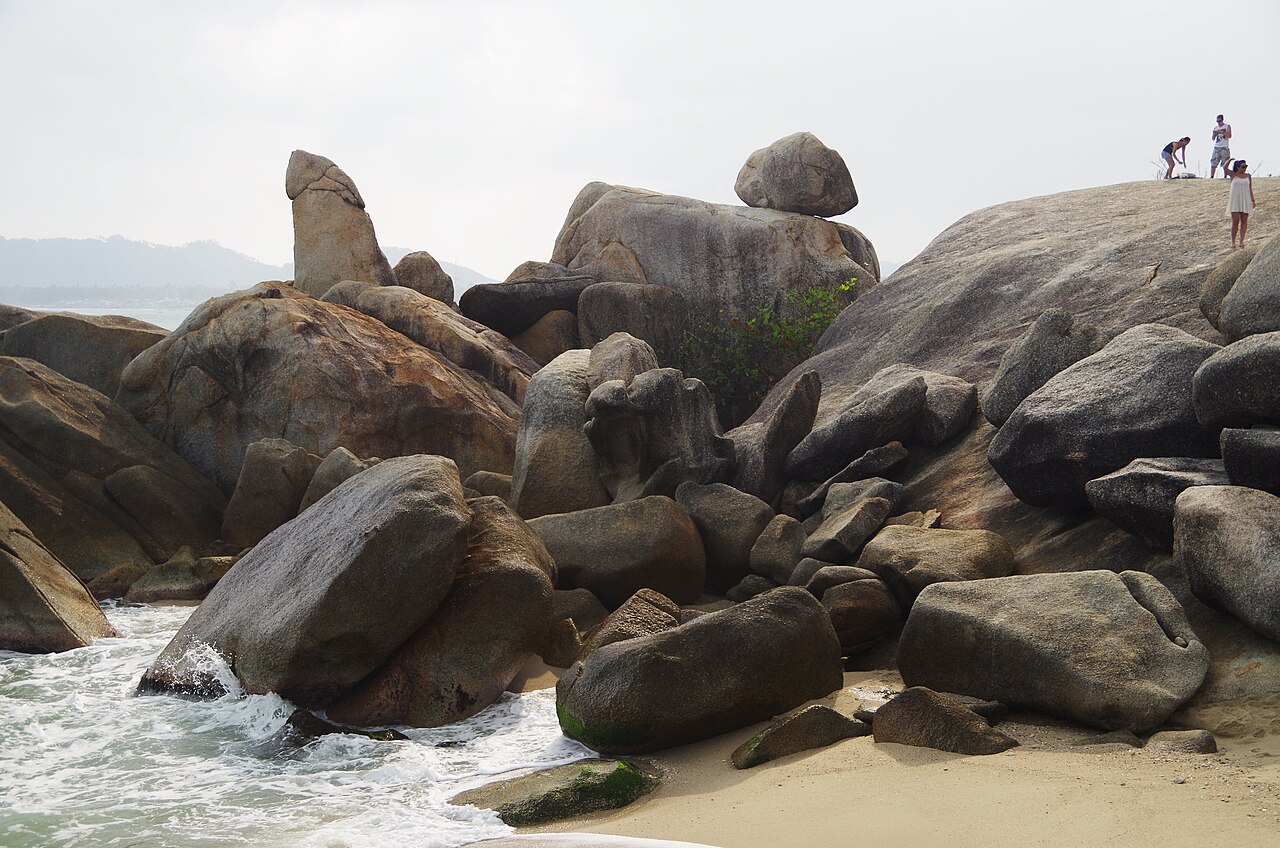
At the southern end of the beach stand Hin Ta & Hin Yai (หินตา หินยาย), the Grandfather and Grandmother rocks — granite formations naturally shaped like male and female genitalia, which has made them a photo stop nearly everyone on Samui makes. Local legend tells of an elderly couple who sailed off to ask for a bride for their son, drowned when a storm sank their boat, and turned to stone to prove their good intentions. Visiting is mostly free (there may be a donation box or a small parking fee — check on the day). The walkway in passes souvenir stalls whose speciality is kalamae (กะละแม), a local sticky coconut-caramel sweet you can usually taste before buying. Morning or late afternoon brings the best light and thinner crowds.
Land on the right evening and you get the Lamai walking street — stalls of local food, clothes, souvenirs and sweets running the length of the central street, with most snacks around ฿20 to 80 each, so you can graze your way full for under ฿200. It usually runs on Sunday night (nights can change — confirm with your hotel). On other evenings, central Lamai still has clusters of food stalls and small night-market areas to keep you fed. If you want the island's biggest market night, Friday belongs to the Fisherman's Village walking street in Bophut on the north coast.
A few hundred metres from the tourist strip is Lamai's local side — Wat Lamai, the neighbourhood temple, keeps a small hall of old island household tools and artefacts that you can wander quietly (opening times vary — treat it as a bonus if it is open). Around the temple are a morning market and southern-Thai rice-and-curry shops at genuinely local prices, where people from the neighbourhood actually eat. Dress modestly on this side — shoulders and knees covered — and you will see the Lamai most visitors drive straight past.
The land rises straight behind Lamai, and the hills hold several viewpoints and hillside cafés looking down over the whole bay (most charge an entry fee or a minimum drink — check on the day). Drive another 15 to 20 minutes inland and you reach the Na Muang waterfalls, the island's best-known falls — an easy half-day pairing with an afternoon swim back at the beach. For routes and everything else around the island, see things to do on Koh Samui.
Lamai feeds every budget — market stalls and local rice-and-curry shops on one side, beachfront seafood grills and bars where you can hear the waves on the other.
Samui belongs to Surat Thani province, so the local cooking is properly spicy southern Thai — sour orange curry with fish (gaeng som), dry-fried kua kling, and stir-fried liang leaves with egg, found at local rice-and-curry shops for about ฿60 to 120 a plate. Along the beach it is seafood: prawns, fish and crab grilled out front in the evening, with most beachfront mains around ฿150 to 400 and whole seafood priced by weight — always ask the price per kilo before you order. Tables on the sand pay extra for the view; move one row back to the road side and prices drop while the cooking does not.
Café people get both beachfront coffee shops and hillside cafés over the bay, with most coffees around ฿70 to 150 a cup; the beach staples are roasted coconuts and fruit shakes, available every hundred metres. After dark, Lamai runs to beach bars and live-music spots spread through the town — the overall mood is a drink and a conversation, not a full-scale party like central Chaweng. If you want that kind of night, ride 15 to 20 minutes to Chaweng and come back to sleep somewhere quiet.
Every level is here, from guesthouses to beachfront resorts — generally for less than the equivalent in Chaweng.
The case for sleeping in Lamai is simple: a beach in Chaweng's class, usually for less money, with better sleep. Many beachfront places put you straight onto the sand, while the inland side of the ring road carries plenty of budget options. The central stretch is the most convenient — close to both the restaurants and the walking street. The beach gets quieter toward its northern and southern ends; the far south near Hin Ta & Hin Yai suits people who want real calm, at the cost of a longer walk or a short ride into the centre.
The trade-off to know: Lamai's late-night scene is clearly smaller than Chaweng's — if big nights out are the point of your trip, this town goes to bed earlier than you will. And in the monsoon months (~October to December) the sea picks up here just as it does island-wide, so choose your season before you book with the best time to visit Koh Samui. We will not guess hotel names and risk a bad booking — use the two pages below, which carry real picks with booking links.
Lamai sits on the ring road on the island's southeast coast, a moderate ride from both the airport and the main piers. There is no metro or train on Koh Samui — you move by songthaew (shared pick-up truck), negotiated taxis, hotel transfers, or a rented car or scooter. The figures below are estimates; confirm on the day.
14:30 — Swim or claim a shaded spot on central Lamai Beach as the sun softens
16:30 — Walk or ride to the southern end for Hin Ta & Hin Yai, tasting kalamae at the stalls by the entrance
17:30 — An hour's beach massage (~฿300–400) before dinner
19:00 — Seafood by the water — or if it is walking-street night (usually Sunday), graze the stalls instead
20:30 — Finish at a beach bar where the waves are still louder than the music
Add an inland morning before the beach:
09:00 — Drive inland to the Na Muang waterfalls while the water is cool and the crowds thin
11:30 — Stop at a hillside café or viewpoint behind Lamai for the full sweep of the bay
13:00 — Southern-Thai rice and curry on the local side of town, then a rest out of the midday sun
15:00 — Down to the beach and straight into the half-day plan above
To swap the full day for a sea day, Samui's classic day trip is a boat tour to Ang Thong National Marine Park (boats often stop running in the ~November–December monsoon). See the island-wide list in things to do on Koh Samui and the complete Koh Samui guide.