11 things to do beyond the party
From jungle and waterfalls to hidden beaches and boat days — each with directions, costs and the right time to go.
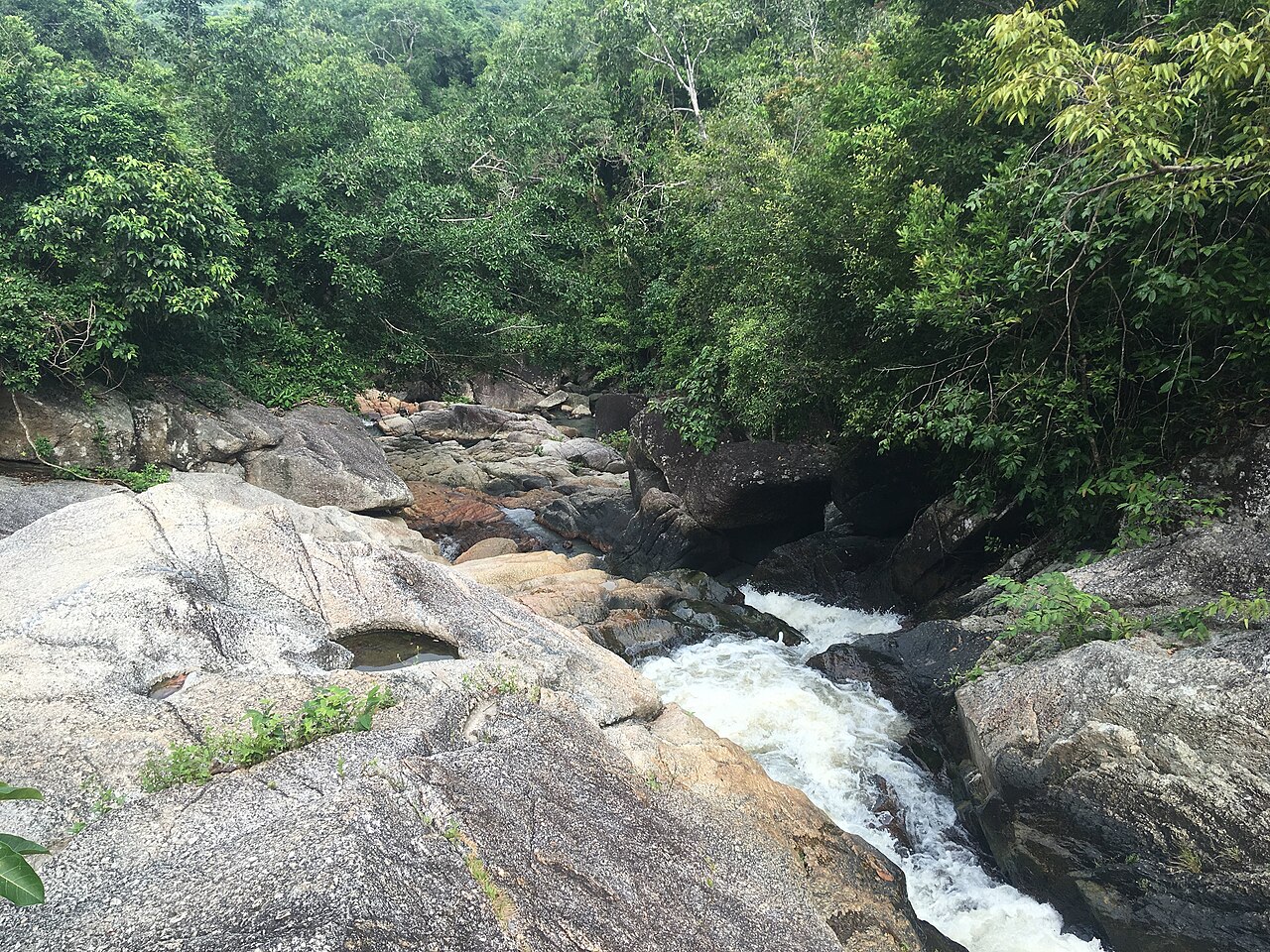
Most of Koh Phangan's interior and east coast is the Than Sadet–Ko Pha Ngan National Park — thick green rainforest, streams, waterfalls and a still-quiet rocky shoreline. The park takes in the Than Sadet and Phaeng waterfalls and several hiking trails up to viewpoints, and it's the place to see the side of Koh Phangan that has nothing to do with beach parties. Fair warning: many spots are reached by steep hill roads or on foot, so bring proper shoes and water. The two most popular are Than Sadet and Phaeng, covered next.
 2
2
The island's most meaningful waterfall — a stream running over granite boulders down to the east coast. What makes it special is the royal initials of Rama V and other Thai kings carved into the rock, dating from their visits to Koh Phangan; that's where the name "Than Sadet" (the royal stream) comes from. There are pools to soak in along the way, and the setting is shaded and peaceful. Honestly, the water is at its best from late rainy season into early dry season (roughly October–January) when it's full; in the height of the dry season, April–May, it can run low. The access is a steep hill road — wear shoes with grip, as the rock gets slippery after rain.
One of the largest waterfalls on the island, in the interior inside the national park, between Thong Sala and the east coast. It's a short walk from the car park to the lower falls, with a pool for a cool dip. The real draw is the trail that continues up to the Domsila viewpoint on the ridge, looking out over jungle and a wide stretch of sea. The upper section is fairly steep with some rock scrambling — a sweaty climb, but the view earns it. Like Than Sadet, the falls look their best in the late rainy season (roughly October–December) and thin out in the dry months. Wear grippy shoes and carry water up.
The oldest temple on Koh Phangan, set on a low hill near Thong Sala. It's a working temple the local community still uses, calm and a world away from the noise of Haad Rin. There's a chedi, an ordination hall, and a spot that looks out over Thong Sala town and the sea below. It's best in the morning or late afternoon when it's not too hot, and it doesn't take long — pair it with a wander through Thong Sala's market and shops. Dress modestly (keep a sarong or cover-up handy for shoulders and knees) and take your shoes off before entering the temple buildings, as is the custom.
Koh Phangan has a long-established Chinese community, and its clearest trace is the Chinese temple (shrine) in Thong Sala, still a focus of worship for the island's Chinese-Thai families. Red-and-gold architecture, dragons and Chinese offerings give it a different feel from a Thai temple like Wat Phu Khao Noi, and it's at its liveliest during the Vegetarian Festival or Chinese New Year. It's a quick stop while you explore Thong Sala, which is both the main ferry town and the island's hub for shops, restaurants and markets. Dress modestly and be respectful when people are praying.
Koh Phangan's middle is all hills and forest, with viewpoints scattered through it. The best known is the Domsila viewpoint, reached on the trail above the Phaeng waterfall, looking over green jungle and open sea — and there are several roadside lookouts along the hill roads where you can pull over for a photo. Being straight with you: some of these hill roads are very steep and winding, and if you're not a genuinely confident scooter rider, a 4WD tour or a local driver is the safer way up. Go early or late for nicer light and cooler air than the middle of the day.
 7
7
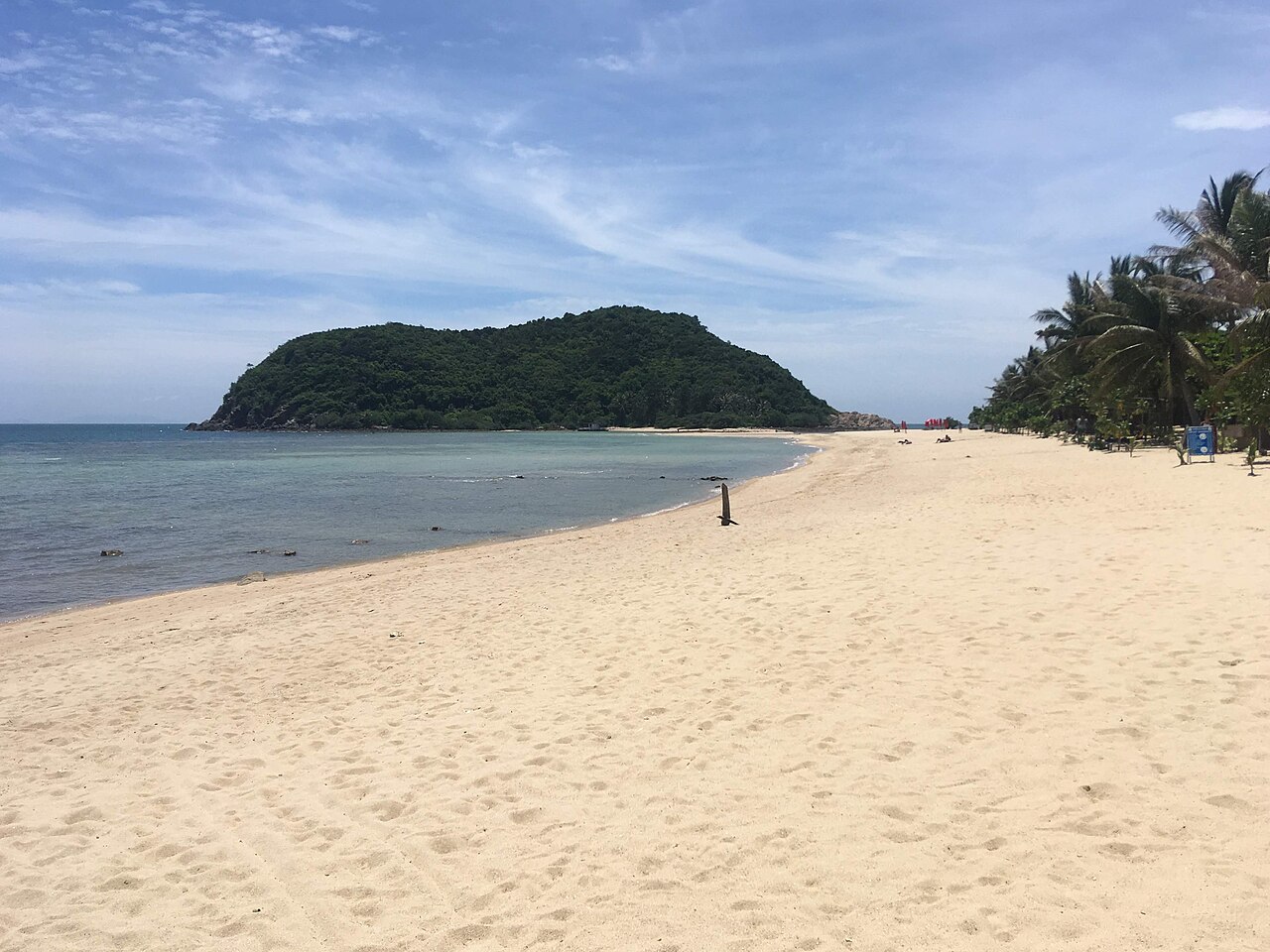
The north-west corner of the island is Mae Haad beach, whose highlight is a sandbar that runs out from the shore to Koh Ma, a small island just offshore. At low tide you can wade straight across it. The shallow reef around Koh Ma is reckoned the best snorkelling on Koh Phangan — coral and fish close to the surface. Bring your own mask and snorkel or rent on the beach. Check the tide times before you go, since the sandbar is prettiest and easiest to walk at low tide, and the water is clearest in the calm season, February–September.
 8
8
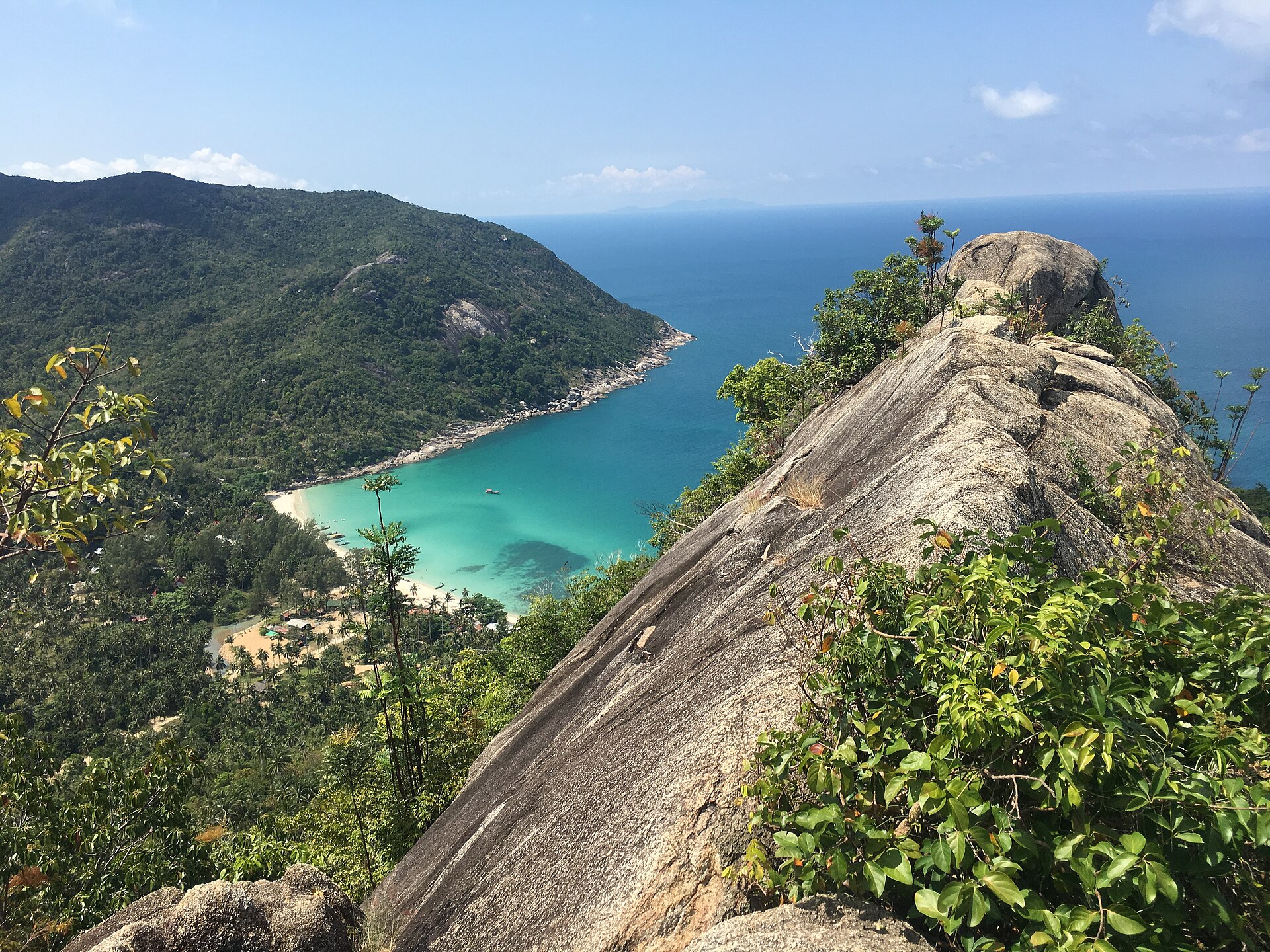
The beach plenty of people call the prettiest on Koh Phangan — Bottle Beach, or Haad Khuat: a curve of white sand and clear water on the north coast, ringed by green hills and with no paved road in. That hard access is exactly what keeps it special. You get there two ways: by longtail boat from Thong Nai Pan or Chaloklum (the easy option), or on a jungle hike of roughly 30–45 minutes over the headland from the end of Thong Nai Pan (tiring and slippery in the wet season). There are a handful of bungalows and restaurants on the sand, and power and phone signal can be patchy. It's for people who really want to escape the crowds onto a quiet beach. Don't try to ride a scooter here — there's no road in and the surrounding hills are dangerous.
 9
9
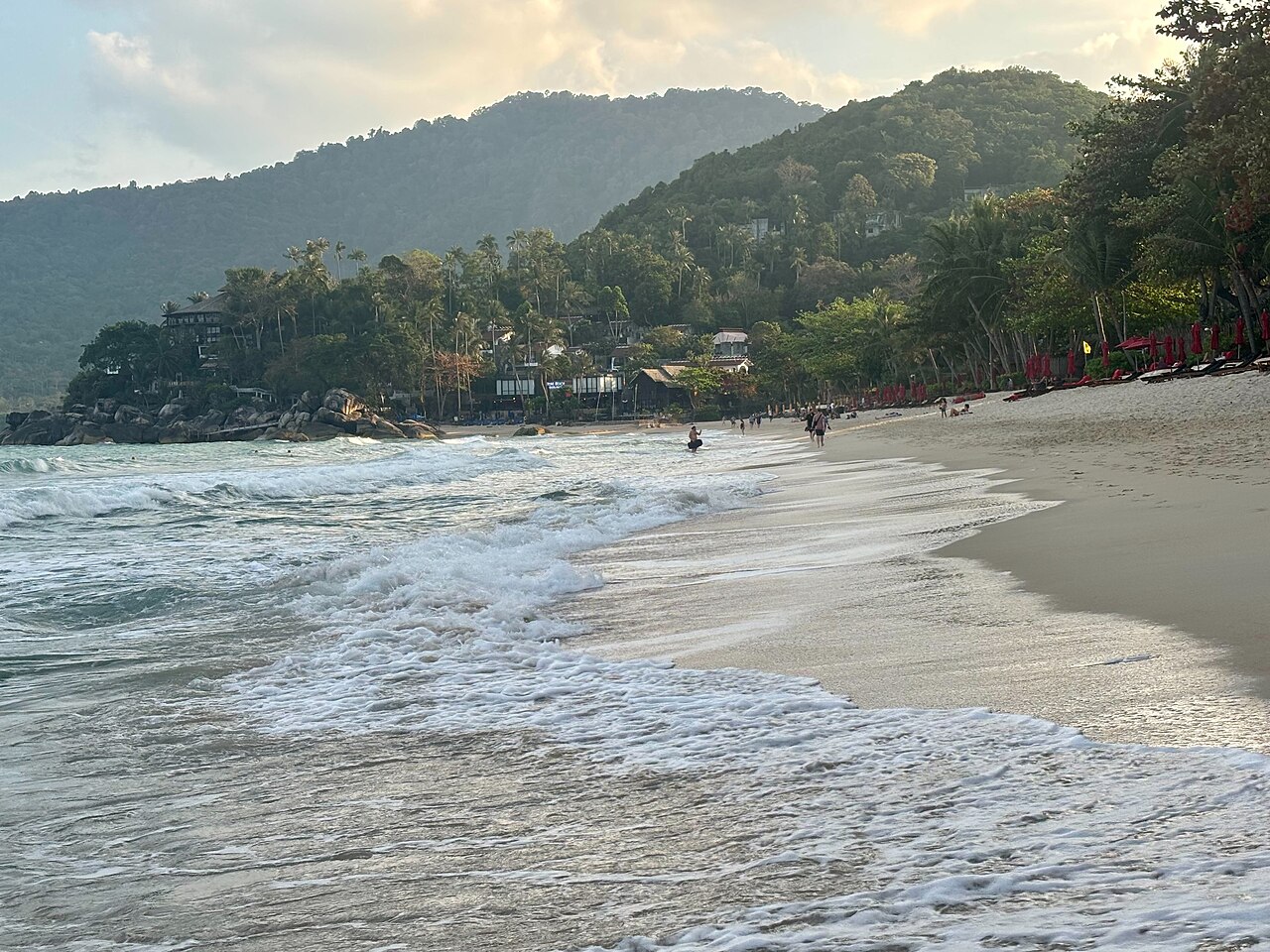
The north-east corner holds two sister bays — Thong Nai Pan Noi (the smaller, quieter one, with some upscale resorts) and Thong Nai Pan Yai (larger, with a wider range of places to eat and stay). Both are white sand and clear water wrapped in green hills, calm and natural, a world away from Haad Rin. They suit couples and families who want a lovely beach without a party attached. The honest catch: the road into Thong Nai Pan is very steep and winding, and notorious for scooter accidents — if you're not confident, take a songthaew or taxi in instead. It's also the launch point for the boat or hike to Bottle Beach.
The west coast around Sri Thanu, Haad Yao and Haad Salad has, over recent years, become the island's wellness centre — yoga studios, meditation and breathwork courses, detox retreats and health-food cafés spread across the area. The mood is relaxed and friendly to solo travellers, and crucially this side faces west, so the sunsets are excellent — the complete opposite of the party end. It's for people who come to Koh Phangan to reset rather than to go out at night. Most studios and retreats let you book courses or stays ahead through their own websites.
 11
11
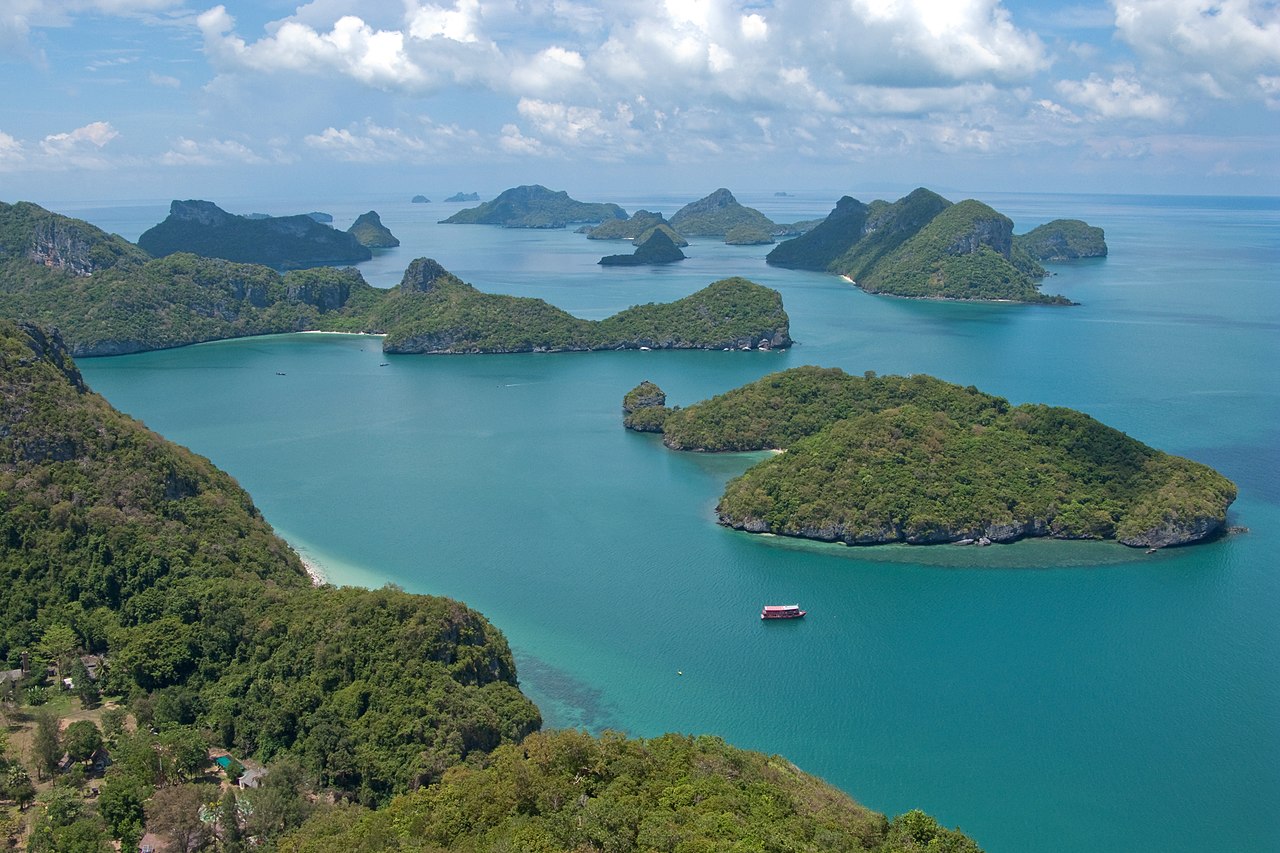
Ang Thong National Marine Park is an archipelago of 42 limestone islands rising out of the Gulf west of Koh Phangan. The two stars: the Emerald Lake, a ring of green saltwater locked inside cliff walls, and the Koh Wua Talap viewpoint, a sweaty climb rewarded with islands stacked to the horizon. Day tours from Koh Phangan usually leave from Thong Sala pier, as either speedboats (faster, more stops) or big boats (slower but steadier if you get seasick), and most include kayaking and snorkelling. Being straight with you: in the monsoon, roughly October to December, the park often closes or boats stop running on rough days — don't build a late-year trip around it.
We deliberately kept the party out of the nature list above, because the Full Moon Party is its own world — held at Haad Rin on the southern tip, around the full moon each month (the date shifts with the lunar calendar, so check the official dates before you plan). Tens of thousands of people turn up on the big nights, there's a beach entry fee of about ฿100–200, and there are other parties too — Half Moon, Black Moon, Jungle and Waterfall — on other nights. If you want to go, we cover the dates, safety and how to get back to your beach in a separate guide. And if you'd rather skip it, stay up north or on the west coast and the 11 things above will fill your trip nicely.