Home Kawaguchiko Japan Yamanashi About
Home  ›  Asia  ›  Japan  ›  Kawaguchiko  ›  Itinerary
🗓️ Kawaguchiko Itinerary · 1–3 Days · 2026

Kawaguchiko
Make Every Day Count

From 398 stone steps to Chureito Pagoda at dawn, to a glass-smooth lake reflecting Mount Fuji at sunrise — this plan makes sure you don't waste a single hour, even if you only have one day.

Before You Plan

Kawaguchiko Rewards Strategy

Here's the honest reality: Mount Fuji is clearly visible only about 30–40% of the time. Clouds typically build from late morning, so the best Fuji views are almost always before 09:00. That is why this itinerary puts Chureito Pagoda first thing on Day 1 — not after lunch.

The lake sits roughly 100 minutes from Shinjuku on the direct Fuji Excursion limited express (departs 07:30, 08:30 and 09:30, fares around ¥4,370 with reserved seating). A highway bus from Shinjuku Expressway Bus Terminal takes 115–130 minutes and costs about ¥2,100 one way — book ahead through Willer Express or Fujikyu Bus. For a day trip take the earliest train; for an overnight stay the bus is fine.

The Fujikyu Bus Area Pass (2 days, ¥1,500) covers the Red Line around Kawaguchiko, the Green Line to Saiko and the Blue Line to Motosuko. Buy it at Kawaguchiko Station or through Jorudan Mobile Tickets before you leave Tokyo — it pays for itself with the first two stops.

Day One

Chureito Pagoda + Oishi Park + Kachi Kachi Ropeway

398 steps before the tour groups · Fuji reflected in still water · panoramic views from 1,075m · hoto noodles to finish — the day that makes the whole trip worthwhile
01
Day 1
Chureito · Oishi Park · Kachi Kachi · Onsen
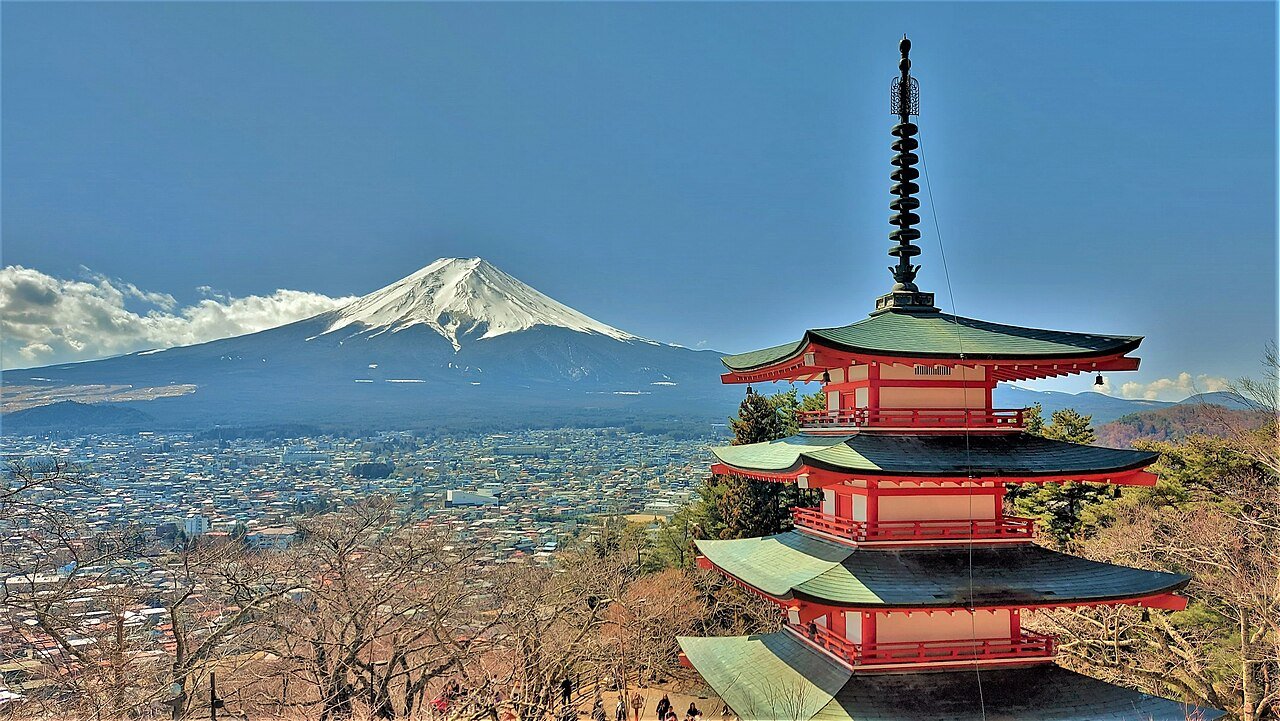
Chureito Pagoda at dawn — five-storey red pagoda with snow-capped Fuji rising behind it, pink cherry blossoms in the foreground
Morning · 08:00–11:00 · ~3 hours
Chureito Pagoda — Japan's most-photographed viewpoint

Alight at Shimo-Yoshida Station on the Fujikyu Railway line, then walk about 10 minutes to Arakura Sengen Shrine. The climb to Chureito begins at the red torii gate at the base — 398 steps taking about 20 minutes — and ends on a stone terrace where the five-storey vermilion pagoda stands directly in front of Mount Fuji.

There are no two ways about it: this is one of the most iconic photographs in Japan, especially during cherry blossom season (late March–April) and autumn colour (October–November). But even on a clear winter morning the pagoda framed against snow-dusted Fuji is genuinely breathtaking. Leave Tokyo early to reach here before 09:00, well ahead of the first group tours.

Getting there: From Kawaguchiko Station take the Fujikyu Railway one stop back to Shimo-Yoshida (~4 min, ¥200), or board the Red Line bus toward Fujiyoshida
Entry fee: Free (no charge for the pagoda or the approach steps)
Hours: No set closing time — the pagoda is outdoors; aim to arrive before 09:00
Late Morning · 11:00–13:30 · ~2.5 hours
Oishi Park — the finest free Fuji-over-lake viewpoint in the region

Return to Kawaguchiko Station and board the Red Line bus to the Oishi Koen stop (~25 minutes, covered by pass). This lakeside garden on the northern shore is the best place to see Mount Fuji reflected in Lake Kawaguchiko, particularly on calm mornings when the water surface is unbroken. During lavender season (June–July) the purple-flowered meadow with Fuji as backdrop produces some of the most-shared images in the entire Fuji Five Lakes region.

Walk the 500-metre lakeside promenade slowly — each bend opens a slightly different angle. Small cafes and restaurants near the park are good for a late breakfast or early lunch. Alternatively, bring a convenience-store picnic and sit on the grass.

Bus: Red Line from Kawaguchiko Station to Oishi Koen, ~25 min (pass covers this; ¥500/trip without pass)
Entry fee: Free · Open at all times
Tip: If Fuji is hidden in cloud when you arrive, wait 20–30 minutes before moving on. Cloud cover here is patchy — brief gaps open and close. The lake acts as a mirror the moment it clears, so patience often pays off.
Afternoon · 13:30–16:30 · ~3 hours
Kachi Kachi Ropeway — Mount Tenjo summit at 1,075m

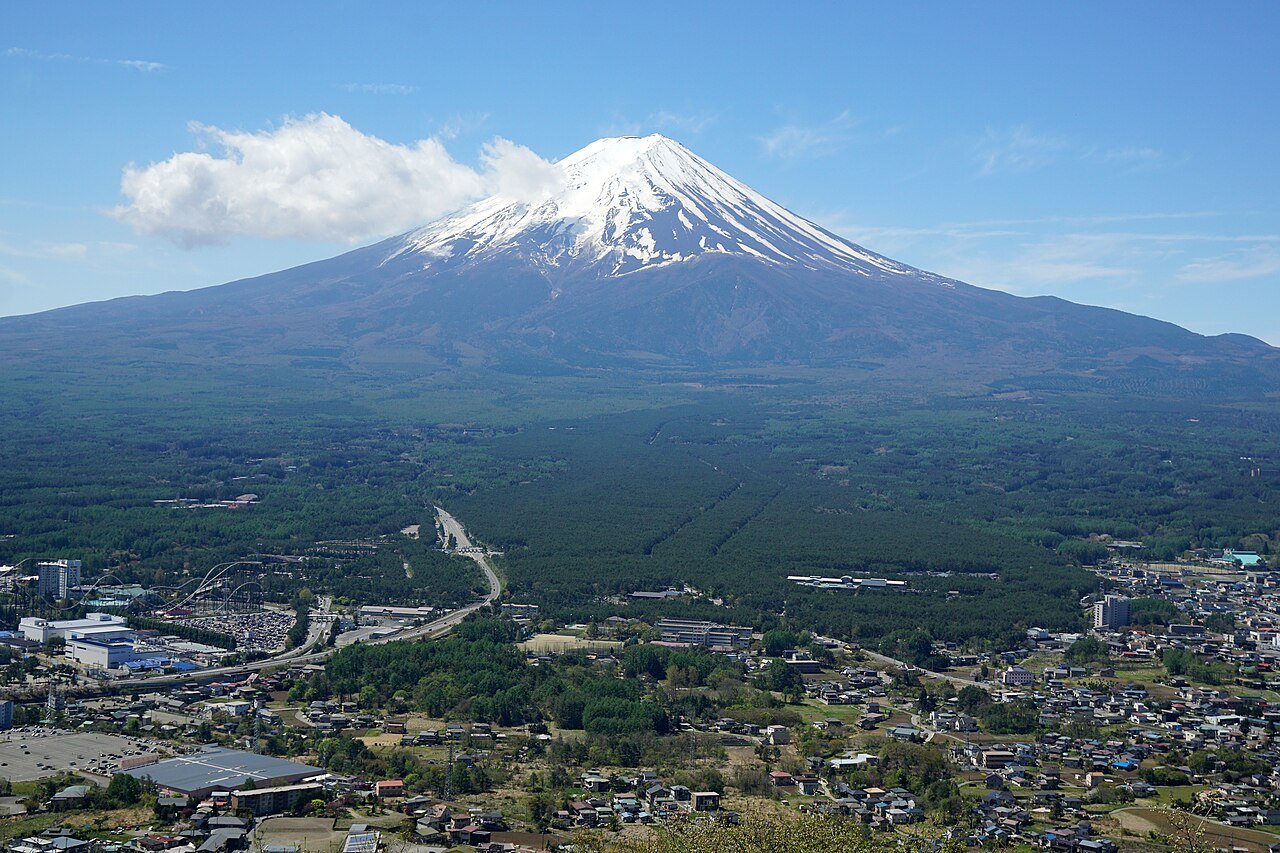
Head back towards Kawaguchiko Station (five-minute walk or one Red Line stop) to the Mt. Fuji Panoramic Ropeway — known locally as the Kachi Kachi Ropeway. The gondola takes just three minutes to reach the observation deck near the summit of Mount Tenjo at 1,075 metres, from where you look across the full width of the lake with Fuji rising behind it.

A 20-minute forest walk from the upper station leads to the actual summit of Tenjo, which is wider and quieter. On a good day you can see all five Fuji lakes from up here — the lake you were standing beside an hour ago now looks like a blue postage stamp.

Getting there: 5-min walk from Kawaguchiko Station, or Red Line to Ropeway Shita stop
Price: ¥1,000 adults round trip · ¥600 one way · ¥500/300 elementary school children
Hours: 09:00–17:00 (Mon–Fri) · 09:00–17:30 (Sat–Sun and holidays) · ⚠️ Closed for maintenance 11 May–15 July 2026
Important: The ropeway is closed 11 May–15 July 2026. If your dates fall in that window, spend the extra time at Oishi Park or walk the Panoramic Walk trail along the lake's northern shore instead — both are free and deliver excellent views.
Evening · 17:00–20:00
Hoto Noodles for Dinner + Lakeside Onsen

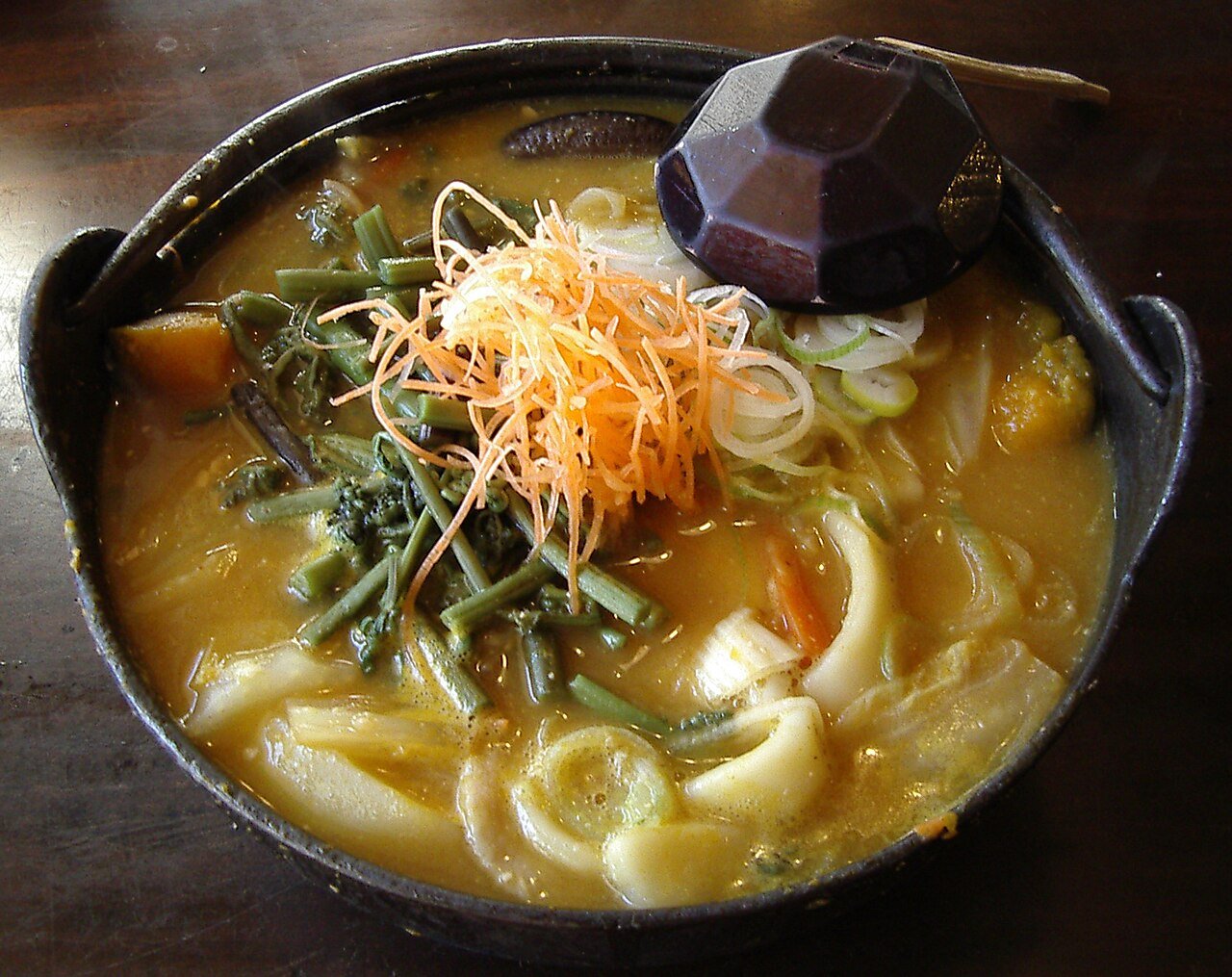
Dinner tonight should be hoto (ほうとう) — the definitive Yamanashi comfort dish. Thick, flat wheat noodles simmer in a rich miso broth loaded with kabocha pumpkin, taro, mushrooms and seasonal vegetables. Served in a clay pot still bubbling at the table, it is exactly what you want after a day of walking. The most well-known restaurant is Hoto Fudo, which has several branches around the lake; the Kawaguchiko branch is about 10 minutes by Red Line bus from the station. A bowl typically costs ¥1,200–1,500.

If you're staying overnight, finish with an onsen soak close to your accommodation. On a clear night, some open-air baths at lakeside ryokan look directly across the water at the silhouette of Fuji — something travellers who have experienced it tend to describe as genuinely hard to forget.
Hoto Fudo Kawaguchiko: ~5-min walk from Kawaguchiko Natural Living Center bus stop (Red Line) · Open 11:00–21:00
Onsen options: Fuji Tama no Yu (~¥800) · Kawaguchiko Onsen Yurari (~¥700), both near the lake
Day Two

Oshino Hakkai + Momiji Tunnel + Dawn Reflection

Eight springs filtered through 80 years of Fuji snowmelt · autumn maple canopy on fire · the second morning is your best chance at a perfectly still Sakasa Fuji reflection

02
Day 2
Sakasa Fuji Dawn · Oshino Hakkai · Momiji Tunnel
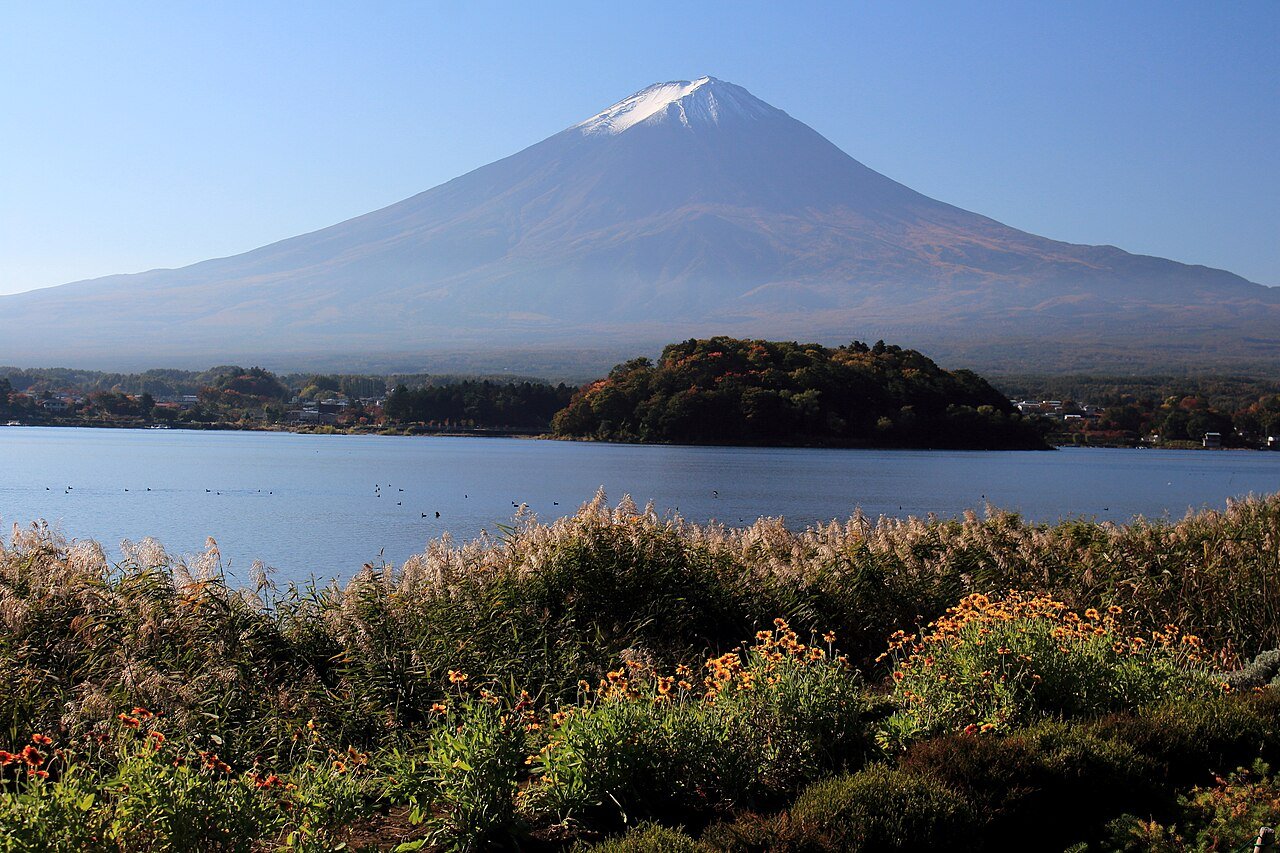
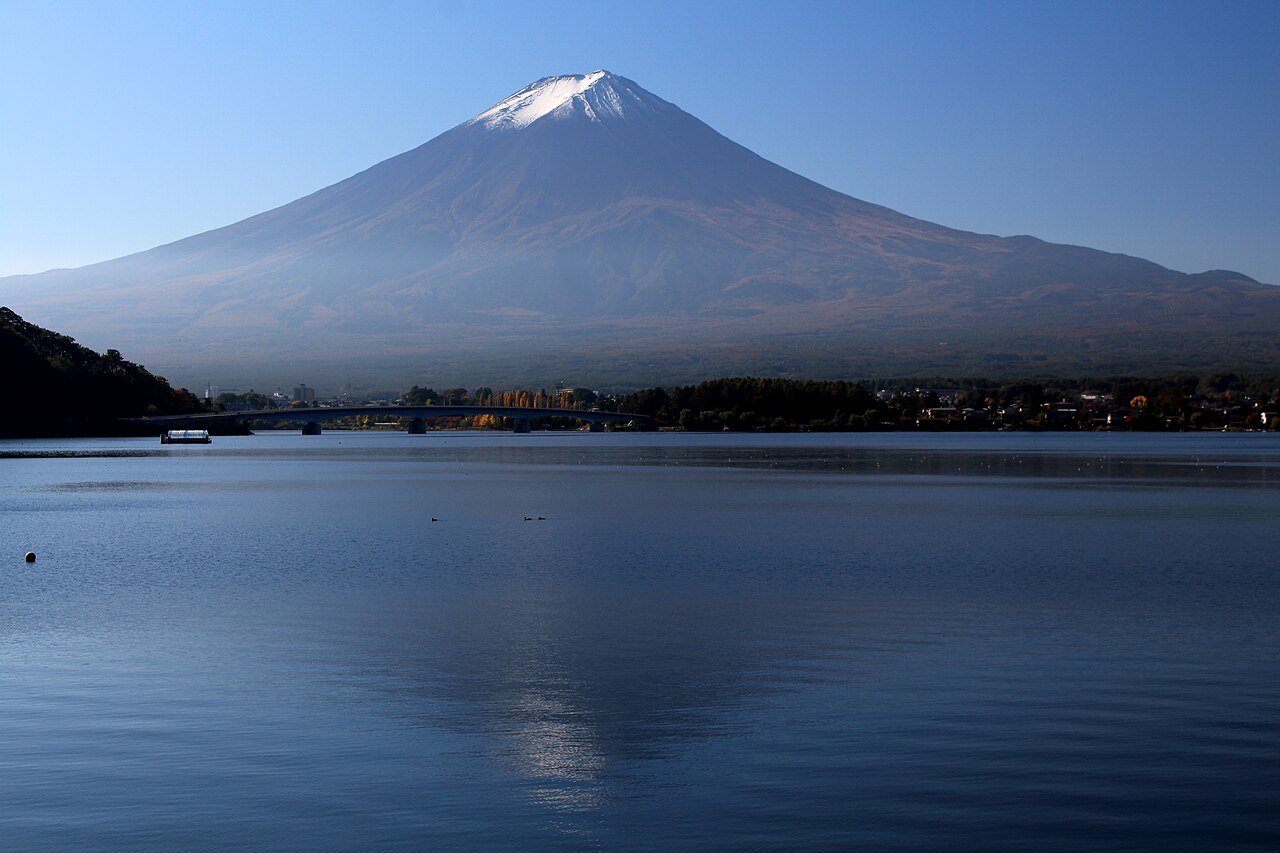
Sakasa Fuji — Mount Fuji perfectly reflected in the still surface of Lake Kawaguchiko at dawn, sky shaded pink and orange
Early Morning · 06:00–07:30 · ~1.5 hours
Sakasa Fuji — the upside-down Fuji reflected in still water

Set the alarm for early on your second day. Walk from your accommodation to the southern shore of Lake Kawaguchiko before 07:00, when the water is glassy and undisturbed by wind or boat traffic. If the sky is clear, you will see what locals call Sakasa Fuji (逆さ富士) — an inverted mirror image of the summit in the lake below.

The jetty area near the lake's southern bank is free to walk along; no entry fee, no set hours. The Kawaguchiko Ohashi Bridge at the western end of the lake is another popular reflection vantage point. Pack an extra layer — mornings here run 5–8°C cooler than central Tokyo year-round.

Getting there: Walk from hotel or Kawaguchiko Station down to the lakeside, ~5–10 min
Entry fee: Free
Best conditions: November–February (clearest skies); any windless morning works
Morning · 08:30–11:30 · ~3 hours
Oshino Hakkai — eight sacred springs filtered through Fuji's lava

The village of Oshino sits about 30 minutes by bus east of Kawaguchiko Station. Its famous eight spring ponds (Hakkai = eight seas) are fed by snowmelt from Mount Fuji that percolates down through porous lava rock over more than 80 years before surfacing here at a constant temperature of around 14°C year-round. The water is so clear you can see the bottom.

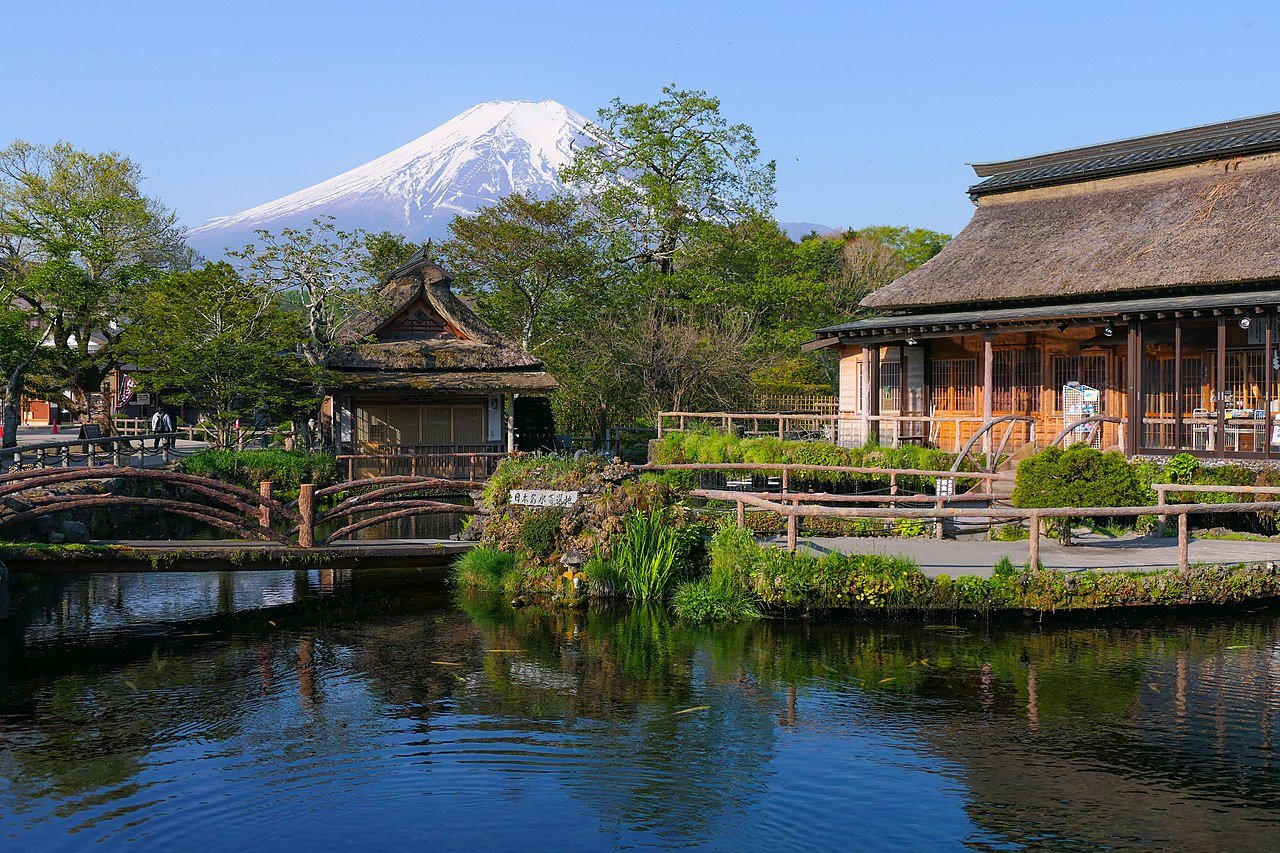
The most photogenic pond is Waku-ike, where colourful koi drift over vivid green weeds with Fuji in the background on clear days. The surrounding village preserves thatched-roof farmhouses, rice paddies and small stalls selling local food and crafts — allow 1.5–2 hours to wander without rushing.

Bus: Fujikyu Bus from Kawaguchiko Station, Oshino Hakkai route, ~30 min, ~¥510/trip (not covered by the standard area pass)
Entry fee: Village is free; some inner pond zones may charge ~¥200 during peak season
Hours: Always open; shops typically 09:00–17:00
Afternoon · 13:00–16:30 · ~3.5 hours
Momiji Tunnel + Hillside Forest — autumn colour and seasonal flowers

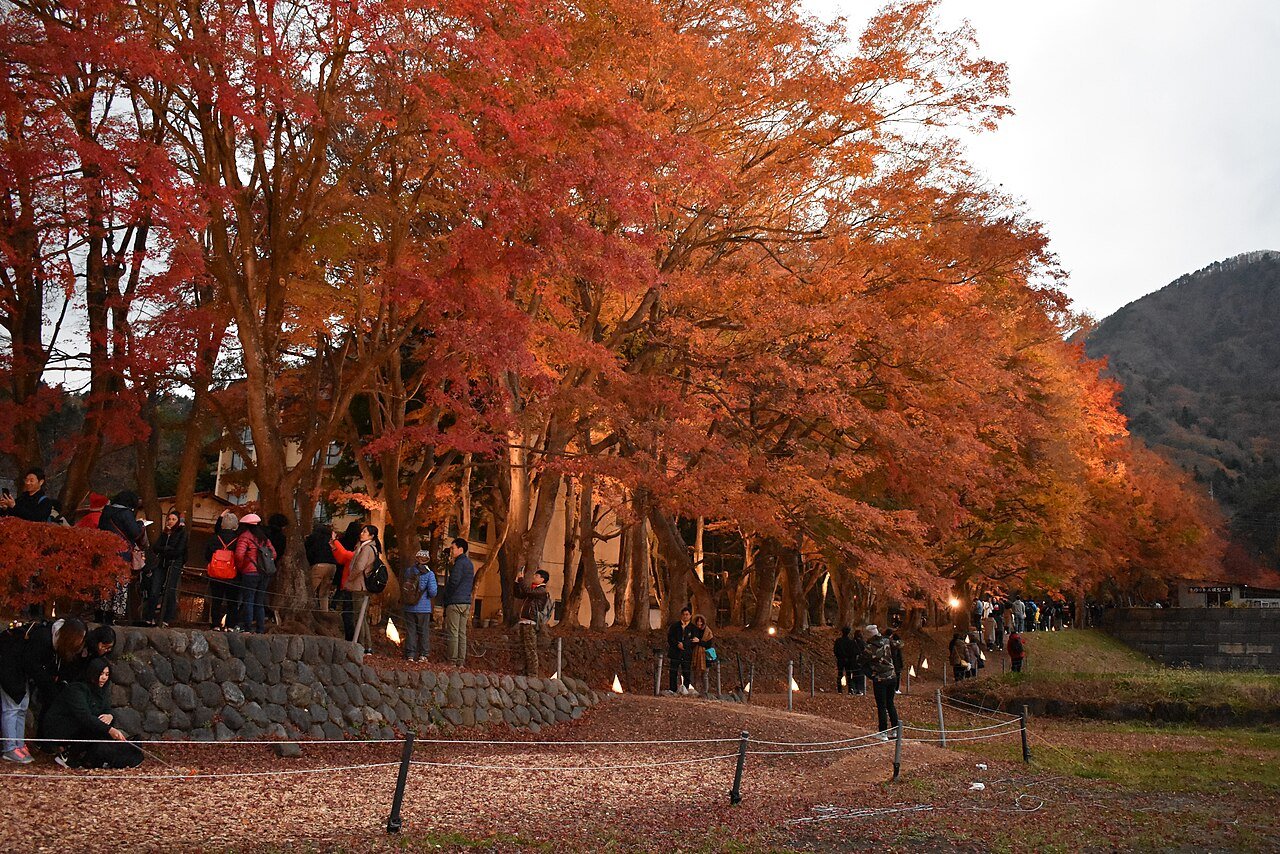
Return to Kawaguchiko and head for the Kawaguchiko Momiji Tunnel — a road lined on both sides by towering maple trees that form a natural canopy. During peak autumn colour (late October to mid-November) the leaves turn deep red and gold and the entire corridor glows. Outside that season the shaded walk is still pleasant, and it connects easily with other lakeside spots by Red Line bus.

Continue on the Red Line to the Kachikachi Hillside Forest area or the Music Forest — a garden with a large outdoor pipe organ, seasonal flower beds and lake views from a gentle hillside. If you would rather wind down, the streets around Kawaguchiko Station have good independent cafes, souvenir shops and a relaxed pace that suits a final afternoon well.

Momiji Tunnel: Near the Momiji Kairo bus stop on the Red Line, northern lakeshore · Free
Music Forest: Entry ~¥1,500 · Open 09:00–17:30 · Pipe organ performances on the hour
Evening · 17:00 onwards
Yoshida Udon for Dinner + Lakeside Night Views

Yamanashi's other noodle specialty is Yoshida Udon — thick, firm, chewy wheat noodles (noticeably harder than Sanuki udon) in a deeply savoury broth, topped with shredded cabbage and carrot. Local restaurants in Fujiyoshida city and around the station serve bowls for around ¥600–900. It's unpretentious, filling and entirely local.

After dinner, a short walk back to the lake is worthwhile even at night. If the sky has stayed clear, the dark outline of Fuji above the lake's reflected city lights is something the daytime version cannot quite match.

Yoshida Udon: Local restaurants near Kawaguchiko and Fujiyoshida stations · ~¥600–900/bowl
Return to Tokyo: Highway buses to Shinjuku run until around 21:00; check current Fujikyu timetables
🏔️
Adding a Third Day?
Climb to Fuji's 5th Station at 2,305m — or explore the quieter sister lakes
See Day 3 Options →
Day Three (Optional)

Fuji 5th Station or the Quieter Lakes

Stand 2,305 metres above sea level without a climbing permit · crystal-clear Saiko · the Motosuko angle that appeared on Japan's old ¥1,000 note — design your third day as you like

03
Day 3 (Optional)
Fuji 5th Station · Lake Saiko · Lake Motosuko
Oshino Hakkai village — crystal-clear spring pond reflecting Mount Fuji, thatched-roof farmhouse and green trees on the banks
Option A · Morning–Afternoon · ~4 hours
Fuji 5th Station (Subaru Line) — as close as you can get without a climbing permit

During the open season (access is year-round but road conditions vary; the climbing season runs July–early September) the Fuji Subaru Line Bus from Kawaguchiko Station reaches the 5th Station at 2,305 metres in about 50 minutes (fares ~¥1,800 round trip). From the station you are above the cloud layer on most days, looking back down at Kawaguchiko and the surrounding mountain range.

You cannot continue higher without registering for the official climbing season and paying the trail conservation fee (¥2,000), but the 5th Station itself has walking trails, a visitor centre, souvenir shops and a handful of restaurants serving curry rice and mountain-style noodles. Even on a short visit the scale of Fuji from this elevation — rock, ice patches and open sky — is genuinely different from anything seen from the lake.

Bus: Fuji Subaru Line from Kawaguchiko Station · ~50 min · ~¥1,800 round trip
Note: Private cars are banned during peak climbing season (July–August) — bus only. Road open to cars outside that window depending on conditions.
Option B · All Day · ~5 hours
Lake Saiko + Lake Motosuko — fewer crowds, different angles

Most visitors stop at Kawaguchiko, which means the two western lakes are noticeably quieter. Lake Saiko (15 minutes by Green Line bus) has deeper, more intensely blue water and sits against a backdrop of forest that changes colour dramatically in autumn. The Saiko Iyashi no Sato Nemba heritage village on its northern bank preserves Edo-period farmhouses with thatched roofs and has stalls selling craft items and local food.

Lake Motosuko is the deepest and most transparent of the five lakes, and the viewpoint on its northern bank produced the famous image that appeared on Japan's old ¥1,000 banknote (before the 2024 redesign). Take the Blue Line (~50 minutes from Kawaguchiko Station, covered by pass) and walk to the lakeside bench — on a clear day the view is immediately recognisable.

Saiko: Green Line from Kawaguchiko Station, ~15–20 min · Covered by area pass · Free entry
Motosuko: Blue Line from Kawaguchiko Station, ~50 min · Covered by area pass · Free entry
Afternoon–Evening · Return to Tokyo
Souvenirs and the Journey Home

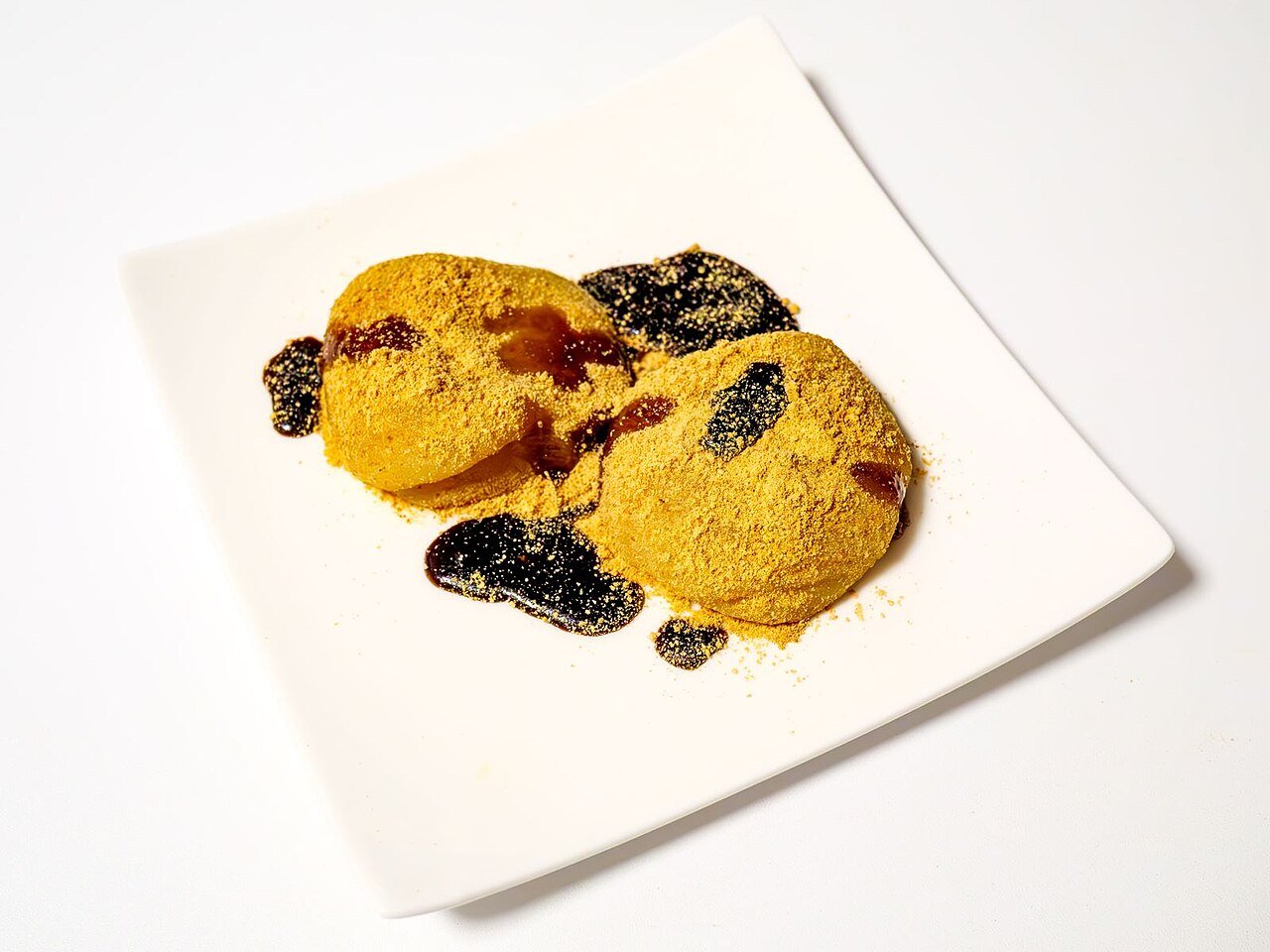
Before leaving, shops around Kawaguchiko Station stock the region's signature souvenir: Shingen Mochi (信玄餅) — rice cakes in a red-and-gold wrapper, drizzled with dark kinako (roasted soybean powder) and kuromitsu (black sugar syrup). Named after the legendary warlord Takeda Shingen, they are a Yamanashi icon that even Japanese tourists buy deliberately. Boxes start at around ¥600–800.

The Fuji Excursion limited express back to Shinjuku runs several afternoon departures. Alternatively the highway bus is comfortable for a relaxed return. Whichever you choose, the view of Fuji from the rear window on a clear afternoon is one last reward on the way out.

Shingen Mochi: Station shops and stalls around Kawaguchiko Station · ~¥600–800/box
Train home: Fuji Excursion to Shinjuku ~100 min · Bus to Shinjuku ~115 min
Practical Information

Where to Stay · Getting Around · Budget

🏨
Where to Stay

For an overnight visit, staying within walking distance of Kawaguchiko Station or on the southern lakeside keeps every bus line within easy reach at any hour. A lakeside ryokan (Japanese inn) typically includes dinner, breakfast and access to an onsen bath — rates range from ¥8,000 to ¥25,000 per person. See the full accommodation guide at Kawaguchiko city guide.

🚌
Getting Around

The three sightseeing bus lines (Red/Green/Blue) depart from outside Kawaguchiko Station and cover every attraction in this guide. Buy the Fujikyu Bus Area Pass: ¥1,000 (1 day) or ¥1,500 (2 days). Buses run frequently during peak season but can fill up — aim to board before 09:00 in the morning. Taxis are available at the station for the Chureito Pagoda area if you want to avoid the train.

🗓️
When to Visit

November–February: clearest skies, snow-capped Fuji, winter onsen · March–May: cherry blossoms + Fuji (classic, crowded) · Mid-October–mid-November: autumn maple colour · Avoid Golden Week (29 April–5 May) and mid-summer (July–August) when afternoon cloud cover reliably hides the summit and visitor numbers are highest.

Budget

Estimated Costs per Person, per Day

Item Budget Mid-range Comfortable
Tokyo–Kawaguchiko return transport ¥4,200
(bus × 2)
¥8,740
(Fuji Excursion × 2)
¥8,740+
(express + window seat)
Local bus pass ¥1,000
(1 day)
¥1,500
(2 days)
¥1,500
(2 days)
Admission (ropeway + others) ¥0
(free spots only)
¥1,000–2,000
(ropeway + Oshino)
¥2,500–4,000
(ropeway + Music Forest + 5th Station)
Food (2–3 meals) ¥1,500–2,500
(hoto + udon)
¥3,000–5,000
(hoto + restaurant + coffee)
¥5,000–10,000
(restaurants + ryokan kaiseki)
Accommodation (overnight) ¥3,000–5,000
(hostel / guesthouse)
¥8,000–15,000
(ryokan incl. meals)
¥20,000–40,000+
(luxury ryokan, Fuji view)
Day-trip total (no accommodation) ¥6,700–7,700
(~$45–52)
¥14,240–17,240
(~$95–115)
¥17,240–23,240
(~$115–155)

Exchange rate reference ¥150 ≈ $1 USD · Prices approximate and may vary by season

Around the Lake

Kawaguchiko Through the Seasons

Oishi Park, Kawaguchiko — lavender field in front of snow-capped Fuji with the blue lake in the foreground
Kachi Kachi Ropeway, Kawaguchiko — aerial view from Mount Tenjo showing the lake and Fuji beyond
Momiji Tunnel, Kawaguchiko — autumn maple leaves in red and gold forming a canopy over the road
Hoto noodles, Kawaguchiko — thick flat wheat noodles in dark miso broth with kabocha pumpkin and seasonal vegetables
Music Forest, Kawaguchiko — large outdoor pipe organ set in a seasonal flower garden with mountain views
Shingen Mochi, Yamanashi — rice cakes in red packaging drizzled with kuromitsu syrup and kinako powder
Frequently Asked Questions

FAQ · Kawaguchiko Itinerary

Is one day enough for Kawaguchiko?
One full day covers the main highlights — Chureito Pagoda, Oishi Park and the Kachi Kachi Ropeway — if you catch the earliest train from Shinjuku (Fuji Excursion departs 07:30, arrives Kawaguchiko ~09:20). Bear in mind that Mount Fuji is fully visible only about 30–40% of the time; an overnight stay gives you two morning windows, which are the clearest part of the day.
How do I get from Tokyo to Kawaguchiko?
Two main options: (1) the Fuji Excursion limited express from Shinjuku Station, direct to Kawaguchiko Station in about 100 minutes, costing around ¥4,370 including the reserved seat; departures at 07:30, 08:30 and 09:30. (2) Highway buses from Shinjuku Expressway Bus Terminal take roughly 115–130 minutes and cost about ¥2,100 one way; book in advance through Willer Express or Fujikyu Bus.
Is the local sightseeing bus pass worth buying?
Absolutely, if you plan to visit more than two spots. The Fujikyu Bus Kawaguchiko Area Pass costs ¥1,500 for two days (adults) and covers the Red Line around Kawaguchiko, the Green Line to Saiko and the Blue Line to Motosuko. A single day's individual fares — ropeway bus, Oishi Park, Oshino Hakkai — easily exceed the pass price before noon.
What is the best time of year to visit Kawaguchiko?
November through February offers the clearest skies and snow-capped Fuji, making onsen after a day of sightseeing especially rewarding. Spring (March–May) gives the cherry blossoms plus Fuji — the classic shot — but draws the largest crowds. Mid-October to mid-November brings brilliant autumn foliage. Avoid Golden Week (29 April–5 May) and mid-summer when afternoon cloud cover frequently hides the summit.
Is the Kachi Kachi Ropeway closed for maintenance in 2026?
Yes — the Mt. Fuji Panoramic Ropeway (Kachi Kachi) closes twice in 2026: 11 May–15 July and 7–18 December. If your trip falls in those windows, replace the ropeway slot with extra time at Oishi Park or the Sakasa Fuji reflection point by the lakeside — both are free and deliver outstanding Fuji views.