🌏 Destinations · All 🇯🇵 Japan · Full guide Osaka Fukuoka Japanese Food Guide 🍢 B-kyu Local Eats 🧭 Travel Prep About Contact 🇹🇭 ไทย🇬🇧 English🇨🇳 中文🇪🇸 Español🇫🇷 Français
🍢 B-kyu Gourmet (B級グルメ)

B-kyu Gourmet — Japan's Best Cheap Local Eats

Not every meal in Japan has to be expensive — many of the dishes locals love most are humble regional eats from tiny shops and market alleys, from Osaka takoyaki and Utsunomiya gyoza to Fujinomiya yakisoba and a bowl of gyudon for a couple of dollars. Here are the regional signatures, their prices, and where to eat them, all on one page.

Start Here

The Food Japanese People Love Most —Not Fancy, but Cheap and Local

Picture this: when most people think of Japanese food, they imagine pricey sushi counters or multi-course kaiseki. But ask a Japanese person what they actually grew up eating, and the answer is usually takoyaki from the stall on the corner, gyoza from their regular spot, or a quick bowl of gyudon late at night. This whole category of food is called B級グルメ (B-kyu gurume / B-kyu gourmet), which literally translates to "B-grade food" — meaning tasty dishes made with ordinary ingredients, cheap to buy, eaten in casual shops or as street food.

The term took off in the 1980s, playing on the idea of Western "B-movies." The slogan was A-grade taste at a B-grade price, the opposite of A級 fine dining. The key thing is that B-kyu doesn't mean inferior — it's the food locals are proud of, and many dishes are so tied to one city that they're the reason people travel across prefectures just to eat the real thing. This page rounds up the regional signature dishes worth trying, with prices and where to eat them.

🍢 Straight up, before anything else: the charm of B-kyu is how affordable it is — most dishes run about 400–900 yen each. But prices shift by shop and by year, so the figures here are rough ranges for 2026 — check at the shop before you order. And many small places still only take cash, so keep some coins on you.
💴
Cheap and Punchy
Most dishes are 400–900 yen — you can eat well without denting your trip budget.
📍
A Local Signature
Each city has its own signature dish you can only eat at the source.
🍳
Humble Ingredients
Flour, cabbage and cheap offal, cooked into something legendary.
🏆
Its Own Festival
The B-1 Grand Prix pits cities' local dishes against each other every year.
Get the Overview First

B-kyu Signature Dishes — What, Where, How Much

A quick table of the popular dishes travellers chase to their source — see at a glance which dish goes with which city and roughly what it costs, then read each one in detail below (prices are 2026 estimates and may change).

DishHome townWhat makes itRough priceHow to eat it
TakoyakiTakoyaki · たこ焼きOsakaRound batter balls with octopus, sauce & mayo~500–700 yen6–8 per box, eaten standing
OkonomiyakiOkonomiyaki · お好み焼きOsakaCabbage-and-batter pancake on a hot griddle~800–1,200 yen1 plate each, a full meal
Hiroshima okonomiyakiHiroshima-yaki · 広島焼きHiroshimaLayered style with yakisoba noodles inside~900–1,300 yen1 plate each, very filling
Utsunomiya gyozaGyoza · 餃子UtsunomiyaThin skins; most gyoza eaten per person in Japan~250–500 yen/plateOrder several plates to share
Fujinomiya yakisobaYakisoba · 焼きそばFujinomiyaExtra-chewy noodles with pork crackling & fish powder~500–700 yen1 plate each or share
MotsunabeMotsunabe · もつ鍋FukuokaBeef-offal hotpot with cabbage, garlic & garlic chives~1,500–2,500 yen/personShared pot for 2+ people
Curry (kare raisu)Kare raisu · カレーNationwideThick, mild curry over rice, often with a cutlet~600–900 yen1 plate each, choose your spice
Gyudon (beef bowl)Gyudon · 牛丼NationwideSweet-simmered beef over rice at fast chains~450–500 yenA quick solo bowl
💴 How to read the table: prices are rough per-dish ranges for 2026 and vary by shop and size — gyudon and curry are the cheapest and found everywhere, while regional specialties like motsunabe or Hiroshima okonomiyaki are best eaten in their home town for the real flavour. Some local dishes come out scorching hot, so let them cool before you bite.
8 Regional Signature Dishes

B-kyu Dishes YouHave to Try at Least Once

A pick of the dishes travellers swear taste genuinely different at the source — from Kansai and Chugoku regional specialties to the fast-chain bowls that fill you up in minutes. All of them are cheap; each one tells you what it is, where to eat it, and roughly what you'll pay.
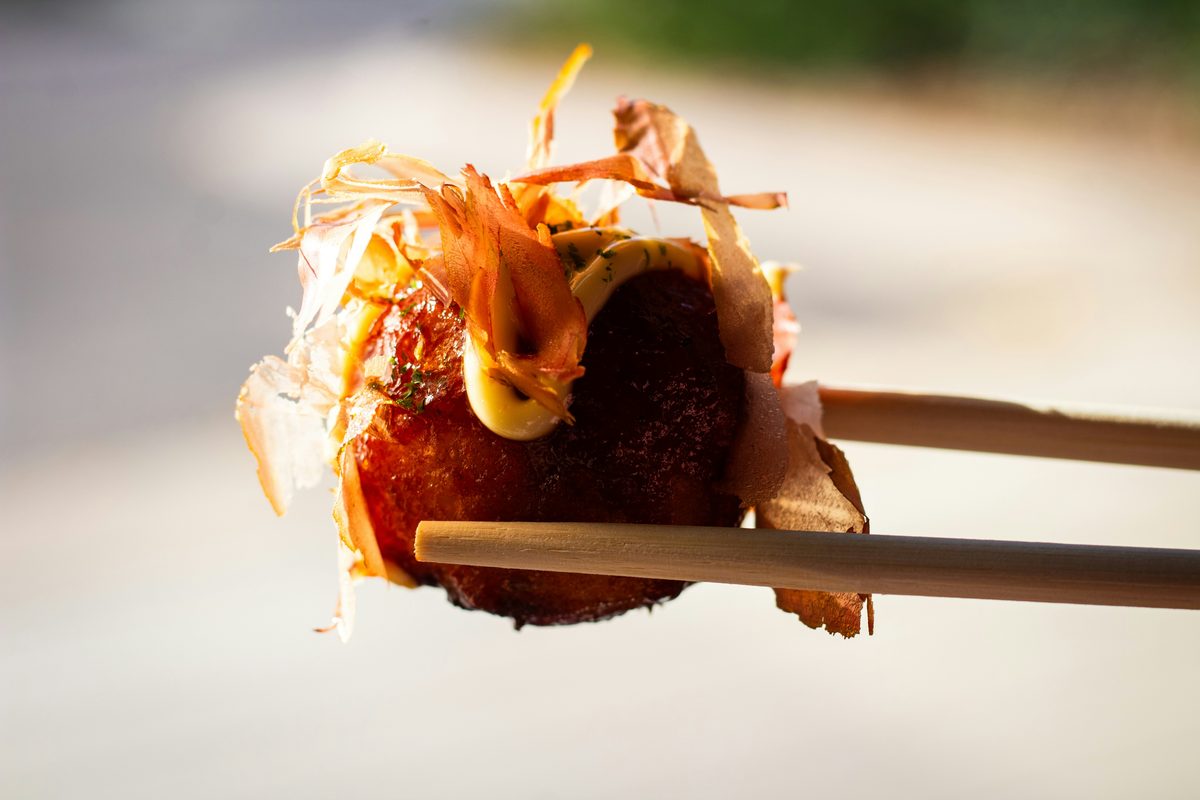
Takoyaki — round batter balls with octopus, topped with sauce and mayonnaise, lifted with chopsticks 🐙 Osaka1
Takoyaki
Takoyaki · たこ焼き

Osaka's king of street food — round balls that are crisp outside and molten inside, with a big chunk of octopus, drizzled in takoyaki sauce and mayonnaise, and topped with bonito flakes that dance in the rising steam. Plenty of Osaka households even own their own dimpled pan. Eaten hot in an alley is the best way there is.

📍Where to eat: Dotonbori, Kuromon Market, and stalls all over Osaka
💴Price: ~500–700 yen per box of 6–8 balls
🐙What stands out: a big chunk of octopus and a creamy molten centre
💡Tip: Fresh off the griddle they're scorching — wait a minute before biting or you'll burn your tongue.
Osaka Travel Guide →
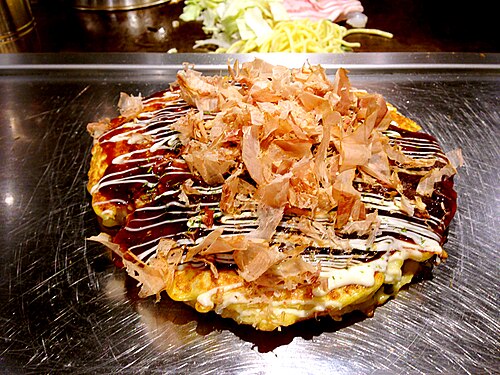
Osaka-style okonomiyaki — a cabbage pancake topped with sauce and bonito flakes, cooked on a hot iron griddle 🥞 Osaka2
Okonomiyaki (Osaka)
Okonomiyaki · お好み焼き

The "savoury pancake" Kansai loves — shredded cabbage mixed with batter and egg, with pork or seafood, griddled until fragrant, then topped with thick sauce, mayo and bonito flakes. The Osaka style mixes everything together before cooking (unlike Hiroshima's layered version), and many shops let you griddle it yourself right at the table.

📍Where to eat: griddle restaurants all over Osaka, especially around Dotonbori
💴Price: ~800–1,200 yen per plate, a full meal
🥄What stands out: the Osaka style mixes all the fillings before griddling
💡Tip: "Okonomi" means "as you like it" — you can choose your own toppings.
Osaka Travel Guide →
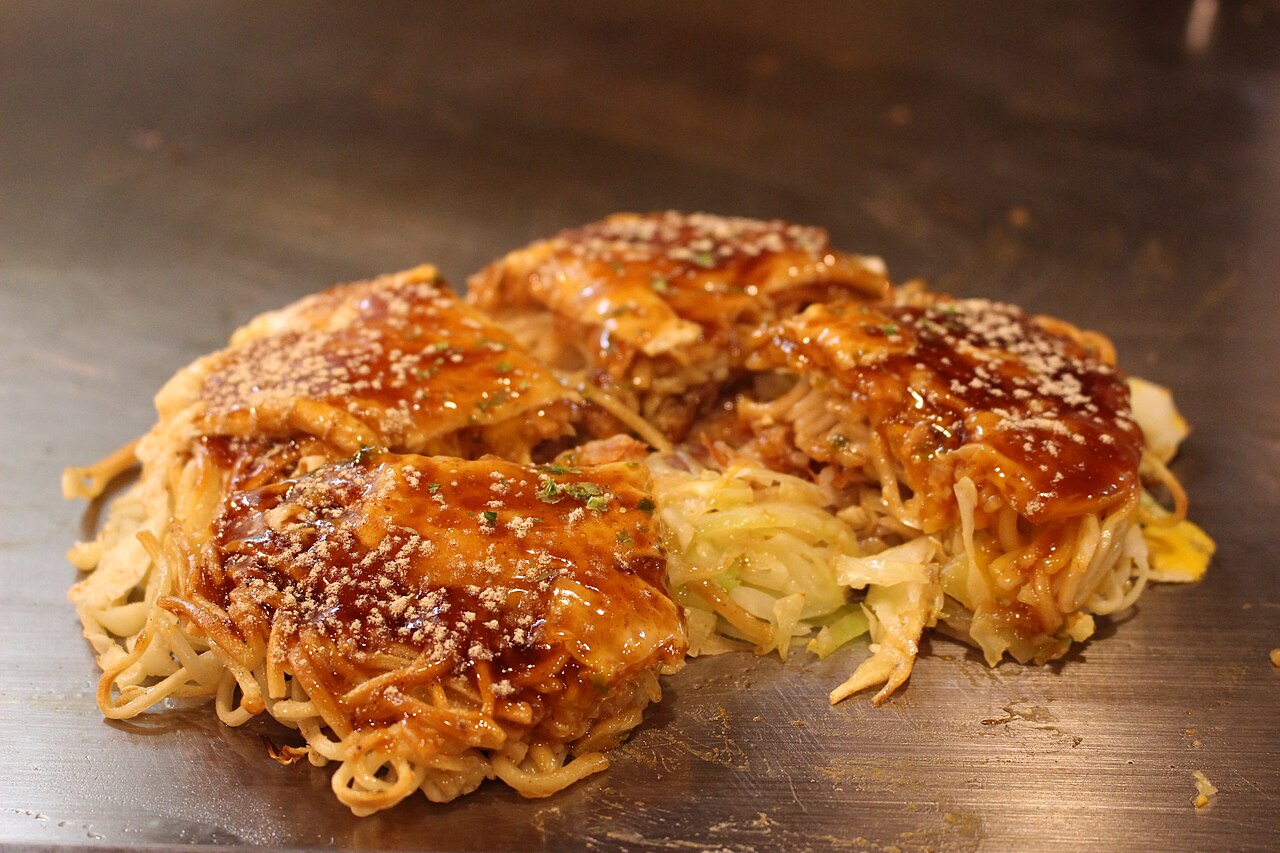
Hiroshima-style okonomiyaki — layered with yakisoba noodles and sauce on an iron griddle 🍜 Hiroshima3
Hiroshima Okonomiyaki
Hiroshima-yaki · 広島焼き

A completely different beast from the Osaka version — instead of mixing everything, Hiroshima builds it in layers: a thin crepe base, then a mountain of cabbage, bean sprouts and pork, then a layer of fried yakisoba noodles with a fried egg on top, finished with a rich sauce. More layers means a much more filling plate, and locals are fiercely proud of this style.

📍Where to eat: Okonomimura, a building full of stalls in central Hiroshima
💴Price: ~900–1,300 yen per plate, packed with noodles
🍳What stands out: layered and built with yakisoba noodles, not mixed
💡Tip: Sit at the counter by the griddle to watch the chef build the layers live.
Japanese Food Guide →
🥟 🥟 Utsunomiya (Tochigi)4
Utsunomiya Gyoza
Utsunomiya Gyoza · 餃子

Utsunomiya is Japan's gyoza capital — its residents eat more gyoza per person than anywhere else in the country, and there are over 200 gyoza shops in town. The local style has a distinctively thin skin, filled with pork, cabbage, garlic chives and garlic, and you can order them fried, steamed or boiled. The backstory: soldiers returning from China after the war brought the jiaozi recipe home.

📍Where to eat: around Utsunomiya Station · ~50 min from Tokyo (shinkansen)
💴Price: ~250–500 yen per plate, order several to share
🥟What stands out: thin skins; order them fried, steamed or boiled
💡Tip: Head to the cluster of shops by the station and graze several in one meal.
Japanese Food Guide →
🍜 🍜 Fujinomiya (Shizuoka)5
Fujinomiya Yakisoba
Fujinomiya Yakisoba · 焼きそば

A yakisoba that won the B-1 Grand Prix twice — the difference is its extra-chewy noodles, made by a method that doesn't boil them but cools them fast and coats them in oil, giving a bouncier bite than ordinary yakisoba. It's tossed with pork crackling (nikukasu) for richness and texture, then dusted with dried fish powder — a dish this town at the foot of Mount Fuji is hugely proud of.

📍Where to eat: Fujinomiya town, at the foot of Mount Fuji on the Shizuoka side
💴Price: ~500–700 yen per plate
🍜What stands out: chewy noodles + pork crackling + dried fish powder
💡Tip: Grab a plate when you visit Fujisan Hongu Sengen Shrine in the same town.
Japanese Food Guide →
🍲 🍲 Fukuoka-Hakata6
Motsunabe
Motsunabe · もつ鍋

The signature hotpot of Hakata, Fukuoka — beef offal (motsu), especially the small intestine that's fatty and sweet with a satisfying bite, simmered in a dashi broth seasoned with soy or miso, loaded with cabbage, a mound of garlic chives, and garlic. It was born in the lean post-war years, turning cheap offal into something delicious, and once you've eaten the lot you finish by dropping ramen noodles into the leftover broth.

📍Where to eat: Hakata/Tenjin areas, Fukuoka · alongside the yatai stalls
💴Price: ~1,500–2,500 yen per person, a shared pot for 2+
🍲What stands out: sweet, fatty beef offal + a ramen finish
💡Tip: Order the soy broth first if it's your first time — it's milder and rounder than miso.
Fukuoka Travel Guide →
🍛 🍛 Nationwide7
Curry (Kare Raisu)
Kare raisu · カレー

Comfort food that Japanese people of every age adore — a thick, mellow Japanese-style curry, gently sweet rather than fiercely spicy like the Indian kind, ladled over rice. The big favourite is katsu curry with a crisp breaded pork cutlet. Curry arrived in the Meiji era via the British Navy and became a homestyle staple; the famous chain CoCo Ichibanya lets you pick your spice level and from nearly 40 toppings.

📍Where to eat: the CoCo Ichibanya chain and curry shops nationwide
💴Price: ~600–900 yen · a katsu curry at CoCo is about 700 yen
🍛What stands out: choose your own spice level, rice portion and toppings
💡Tip: First-timers, start at spice level 1–2 and work your way up.
Japanese Food Guide →
🍚 🍚 Nationwide8
Gyudon (Beef Bowl)
Gyudon · 牛丼

Japan's legendary fast meal — thinly sliced beef simmered with onion in a sweet-savoury sauce (soy, mirin, sugar) over a bowl of hot rice, served in a flash, filling, and so cheap that economists use its price as a cost-of-living index. The three big chains — Yoshinoya, Sukiya and Matsuya — compete fiercely; a regular bowl runs around 450–500 yen, and many branches are open 24 hours.

📍Where to eat: Yoshinoya · Sukiya · Matsuya, in every city nationwide
💴Price: ~450–500 yen for a regular bowl (sizes adjustable)
🍚What stands out: fast, cheap, filling — ideal for eating solo on the go
💡Tip: Many shops order via a ticket machine out front — pick your dish, then hand the ticket to staff.
Japanese Food Guide →
Where to Find It

3 Places to Hunt Down B-kyu Food Most Easily

You don't need a Michelin restaurant — cheap, delicious food like this hides in three main places travellers often overlook. Know them and grazing your way around gets a whole lot more fun.

PLACE 1
Fresh Markets + Food Alleys

Markets like Kuromon Ichiba in Osaka have small stalls to eat at standing up — takoyaki, grilled skewers, seafood on a stick — so you order one thing at a time and graze as you go. The atmosphere is buzzing, prices are clearly posted, and it's perfect for lunch without sitting down at a restaurant.

PLACE 2
Festivals + the B-1 Grand Prix

Almost every local festival (matsuri) has stalls of regional food, and the biggest of all is the B-1 Grand Prix (held once a year around Oct–Nov), where towns enter their signature dishes for visitors to taste and vote on. Some years draw over 400,000 people — it's the one place to try regional dishes from all over the country in a single spot.

PLACE 3
Department-Store Food Halls (depachika)

The basements of big department stores and the concourses of major train stations are depachika — gathering regional eats from across Japan in one place: fresh dishes, sweets and bento to take back to your hotel or eat on the train. Ideal when it's raining or you don't want to hunt down a distant shop.

Tips for Eating Well

6 Tips to Eat B-kyuCheaply and Without Missing Out

Even cheap local food has a few small tricks that make the meal more fun — know them before you go and you can graze with confidence instead of hovering awkwardly outside the shop.

💵
Carry Cash and Coins
Many small shops and market stalls still only take cash. Keep small bills and coins on you to pay fast, no gambling on whether the card reader works.
Avoid Peak Hours
Popular shops queue up at lunch (12:00–13:00) and dinner. Go before or after and you'll be seated faster in a more relaxed atmosphere.
🔥
Mind the Scorching Heat
Takoyaki and grilled items come off the griddle blazing hot. Wait about a minute to let them cool before you bite, or you'll burn your tongue and lose the flavour.
🎫
Get Used to Ticket Machines
Gyudon, curry and many fast shops order via a ticket machine out front — pick from the photos, buy, then hand the ticket to staff.
🍽️
Order the City's Signature
In each city, try the dish that originated there first — gyoza in Utsunomiya, motsunabe in Fukuoka — for the real flavour you can't match elsewhere.
🥢
Share for More Variety
Hotpots like motsunabe and multiple plates of gyoza are made for sharing. Go in a group and you'll try several things in one meal without overeating.
Map

B-kyu Home Townson One Map

See clearly which dish belongs to which city — Osaka is takoyaki and okonomiyaki, Fukuoka is motsunabe. Match the dishes to the cities you're already visiting and plan your eating from there.

Plan Your Eating Trip

Turn the Dish ListInto a Real Food Trip

🗺️
Base Your Trip Around Food Cities
Osaka is the best eating base — takoyaki and okonomiyaki all in one city, with easy train hops on to Hiroshima or the rest of Kansai.
💰
Cap Your Daily Food Budget
B-kyu keeps food costs tiny — at 400–900 yen a dish, three full meals a day still comes in under 3,000 yen, leaving more for sightseeing.
🥢
Brush Up on Table Manners
Japanese shops have small customs — don't stick chopsticks upright in rice; slurping noodles is fine. A quick read of an etiquette guide will put you at ease.
🍜
Pair It with Ramen and Sushi
B-kyu is only one part of Japanese food. Open a ramen and a sushi guide too and you'll have every meal of the trip covered.
📅
Aim for Festival Season
If your trip lines up with the B-1 Grand Prix (around Oct–Nov) or a local festival, you can taste dishes from many prefectures at a single event.
🧳
Save Plenty of Room
The best dishes cluster in the same neighbourhood. Don't fill up at one stop — pace yourself and graze a little at several shops for better value.
Related Guides

Keep Eating Across Japan — Ramen, Sushi and Food Cities

🍱

Japanese Food Guide

The big-picture overview of Japanese food — from regional dishes and street food to famous spots, with links into each category guide.

Japanese Food Guide →
🍜

Japanese Ramen Guide

Ramen styles by region — Hakata tonkotsu, Hokkaido miso, Tokyo shoyu — so you can pick the bowl that's right for you.

Ramen Guide →
🍣

Japanese Sushi Guide

Types of sushi, sushi-eating etiquette, and how to choose a restaurant from conveyor belt to omakase, across every budget.

Sushi Guide →
🐙

Osaka Travel Guide

Japan's street-food capital — Dotonbori, Kuromon Market, and the full rundown of where to stay and what to see, on one page.

Osaka Guide →
🏮

Izakaya Guide

Japanese-style pubs — the snack menu, how to order, and izakaya etiquette for first-timers.

Izakaya Guide →
💴

Japan Trip Budget Calculator

Estimate your daily Japan trip costs — food, accommodation and transport — to plan your spending more accurately before you fly.

Budget Calculator →
Frequently Asked Questions

Questions AboutJapan's B-kyu Local Food

What is B級グルメ (B-kyu gourmet)?
B級グルメ, or B-kyu gourmet, literally means "B-grade food" — humble local dishes that taste great but cost little, made from ordinary, easy-to-find ingredients and eaten in casual shops or as street food. The term took off in the 1980s, built around the idea of A-grade taste at a B-grade price, as opposed to A級 fine dining. Classic examples are takoyaki, okonomiyaki, gyoza, yakisoba and gyudon.
How much do most B-kyu gourmet dishes cost?
The appeal is how cheap they are — most dishes run about 400–900 yen each. A regular gyudon at Yoshinoya/Sukiya/Matsuya is around 450–500 yen, a katsu curry at CoCo Ichibanya is about 700 yen, and 6–8 takoyaki balls run around 500–700 yen. Prices may rise in 2026, so check at the shop before you order.
Which cities are famous for which B-kyu gourmet dishes?
Osaka = takoyaki and okonomiyaki, Hiroshima = layered okonomiyaki with yakisoba noodles inside, Utsunomiya (Tochigi) = gyoza, the city that eats the most gyoza per person in Japan, Fujinomiya (Shizuoka) = extra-chewy yakisoba, Fukuoka-Hakata = motsunabe, a beef-offal hotpot. Curry and gyudon, meanwhile, are found all over the country.
What is the B-1 Grand Prix?
The B-1 Grand Prix is Japan's biggest B-kyu gourmet food festival, first held in Hachinohe, Aomori Prefecture, in 2006. It usually runs in October–November, with towns entering their local dishes and visitors voting with their chopsticks. The aim is to revive local economies and put regional specialties on the map; some years draw over 400,000–600,000 people.
Where can you find B-kyu gourmet food?
There are three main places: fresh markets and food alleys (such as Osaka's Kuromon Market) with small stalls to eat at standing up, local food festivals (matsuri) and the B-1 Grand Prix, and food halls in department-store basements or major train stations (depachika) that gather regional foods from all over Japan in one spot. Specialist shops in each city's own neighbourhoods are the original source.
How should you prepare to eat Japanese B-kyu local food?
Always carry cash and coins, because many small shops and market stalls still only take cash; popular places get long queues at lunch and dinner, so go outside peak hours to avoid the wait; signature dishes like takoyaki are served piping hot, so let them cool before you bite; and try the dish that's the signature of the city you're in.
Ready to Go Hunting for Good Eats?

Start in Osaka
Japan's Best-Value Food City

Osaka is the best base for B-kyu — takoyaki and okonomiyaki all in one city, with easy train hops on to Hiroshima or the rest of Kansai. Open the city guide for hotels and sights, or start looking for somewhere to stay near the markets and food districts.

🔴 Find Hotels in Osaka Japanese Food Guide