Ise is not a big city, but the neighbourhood you choose still determines the whole trip — close to the shrines and trains, deep in the old merchant quarter, by the sea with onsen, or out in pearl-fishing Toba.
Ise Grand Shrine (Ise Jingu / 伊勢神宮) is the most sacred Shinto shrine in Japan — the home of Amaterasu, the sun goddess and ancestral deity of the Imperial family. The inner sanctuaries of both the Outer Shrine (Geku) and the Inner Shrine (Naiku) are rebuilt from scratch every twenty years in a ceremony called Shikinen Sengu, a tradition maintained without interruption for over 1,300 years. The site calls for respectful conduct and quiet appreciation.
Picture your first morning in Ise: you step out of the hotel and walk five minutes through cedar-lined streets to the Outer Shrine before the tour coaches arrive. That is what staying near Iseshi Station actually gives you. Book a cheap room in Futami without realising it sits two train stops away, and you lose that easy morning access entirely.
Ise is compact compared to a city like Nagoya, but its main sites are spread out: Geku and Naiku stand six kilometres apart, Futami is another eight kilometres east, and Toba ten kilometres beyond that. We have divided the area into four distinct neighbourhoods, with honest notes on who each one suits, how long transfers take, and real reviewed hotels in each.
Not sure what there is to do in Ise? The full Ise city guide covers the shrines, Oharai-machi, the Meoto Iwa rocks and everything in between.
For most people visiting Ise for the first time, staying within walking distance of Iseshi Station is the clearest choice. The Outer Shrine (Geku) is 5–10 minutes on foot. The CAN bus to the Inner Shrine (Naiku) departs from outside the station every 10–15 minutes, reaching Naiku in around 20 minutes. From the same station you can catch the Kintetsu or JR train to Futami (10 min) and Toba (20 min) on day two. Hotels here run from ¥5,500 per night for a clean budget room up to a genuine 1926-era historic ryokan — every price point, same central location.
A strong anchor hotel for this area: Comfort Hotel ERA Ise — 3-star business hotel 2 minutes from the station, free buffet breakfast that guests consistently praise, and free bicycle loans for riding between the shrines. Score 8.4/10 from over 1,400 reviews.
Read the full Ise city guide →Honest vibe, getting around, and real reviewed hotels — with links to full reviews.

Area 1
Right for: Travellers who want the most convenient base — walk to the Outer Shrine (Geku) in five minutes, catch the CAN bus to the Inner Shrine (Naiku) from the station forecourt, and connect to Futami and Toba by train the next day. Hotels at every budget level are here, from ¥5,500 budget rooms to a 1926 traditional ryokan. The honest downside: this is a functional area rather than a beautiful one. It is not where you go for atmosphere — it is where you go to get everything done efficiently.
Area 2
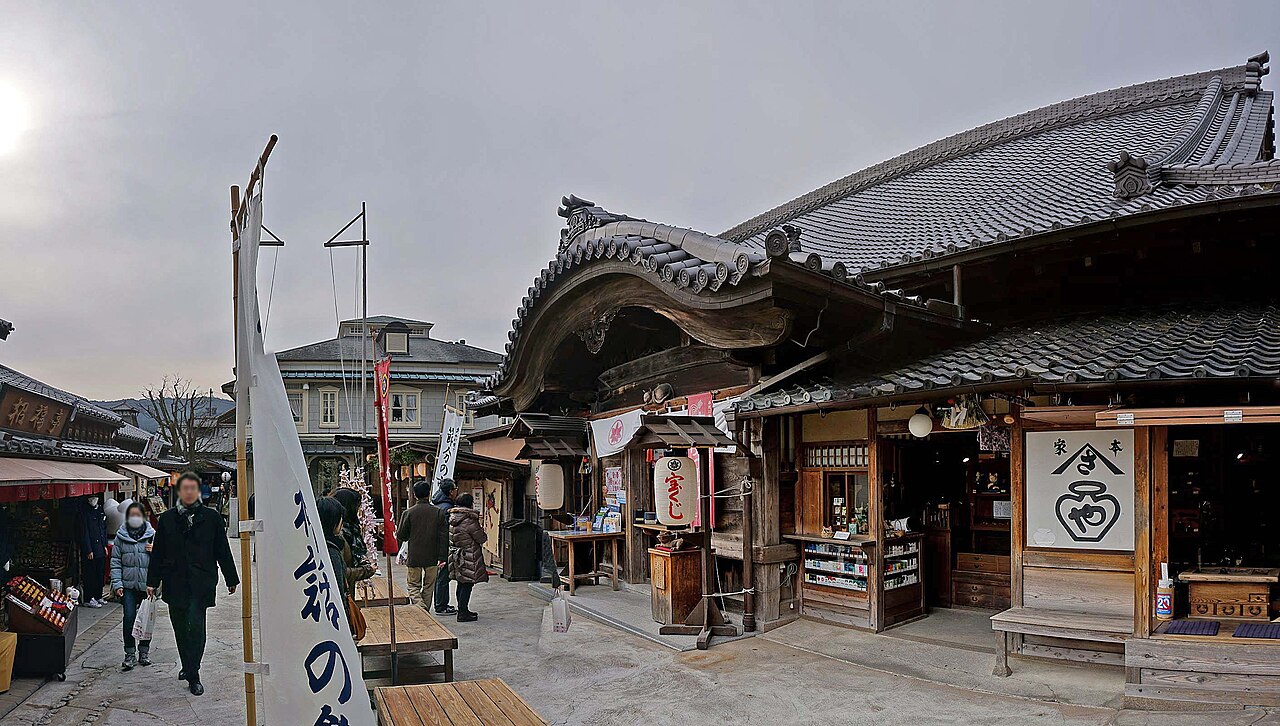
Right for: Travellers who want character over convenience. The Kawasaki merchant district was once called the "kitchen of Ise" — its black-walled storehouses and old timber merchant houses date from the Edo period. Hoshidekan, a National Registered Tangible Cultural Property built in 1926, stands here. Oharai-machi, the historic shopping street leading to the Inner Shrine entrance, is a short distance further and is lined with shops selling Akafuku Mochi (a rice-cake confection made continuously since 1707) and Ise Udon. The honest downside: Iseshi Station is a 7–10 minute walk; on heavy luggage days, it shows.
Area 3
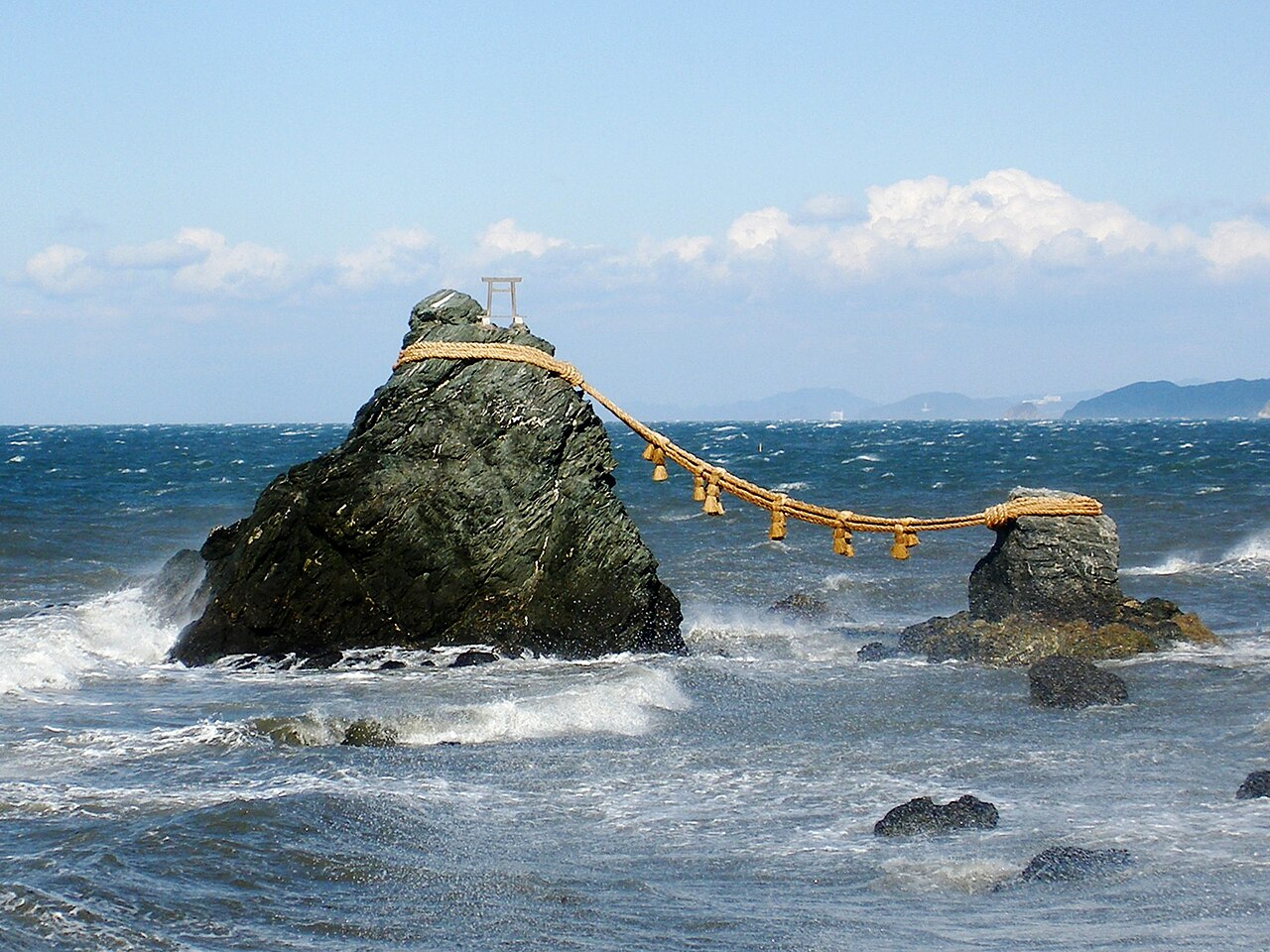
Right for: Anyone for whom an onsen bath is an essential part of a Japanese trip, or travellers who want a traditional ryokan with sea views rather than a business hotel near the station. Meotoiwa Omotesando — the old pilgrimage street that leads to the Meoto Iwa wedded rocks — is still lined with three-storey timber ryokan buildings, a rarity in modern Japan. Futamiura beach, which appears on Japan's list of 100 best beaches, is within walking distance. The honest downside: you are two train stops (about 10 minutes) from Iseshi Station, which adds travel time when visiting Geku or catching onward trains.
Area 4
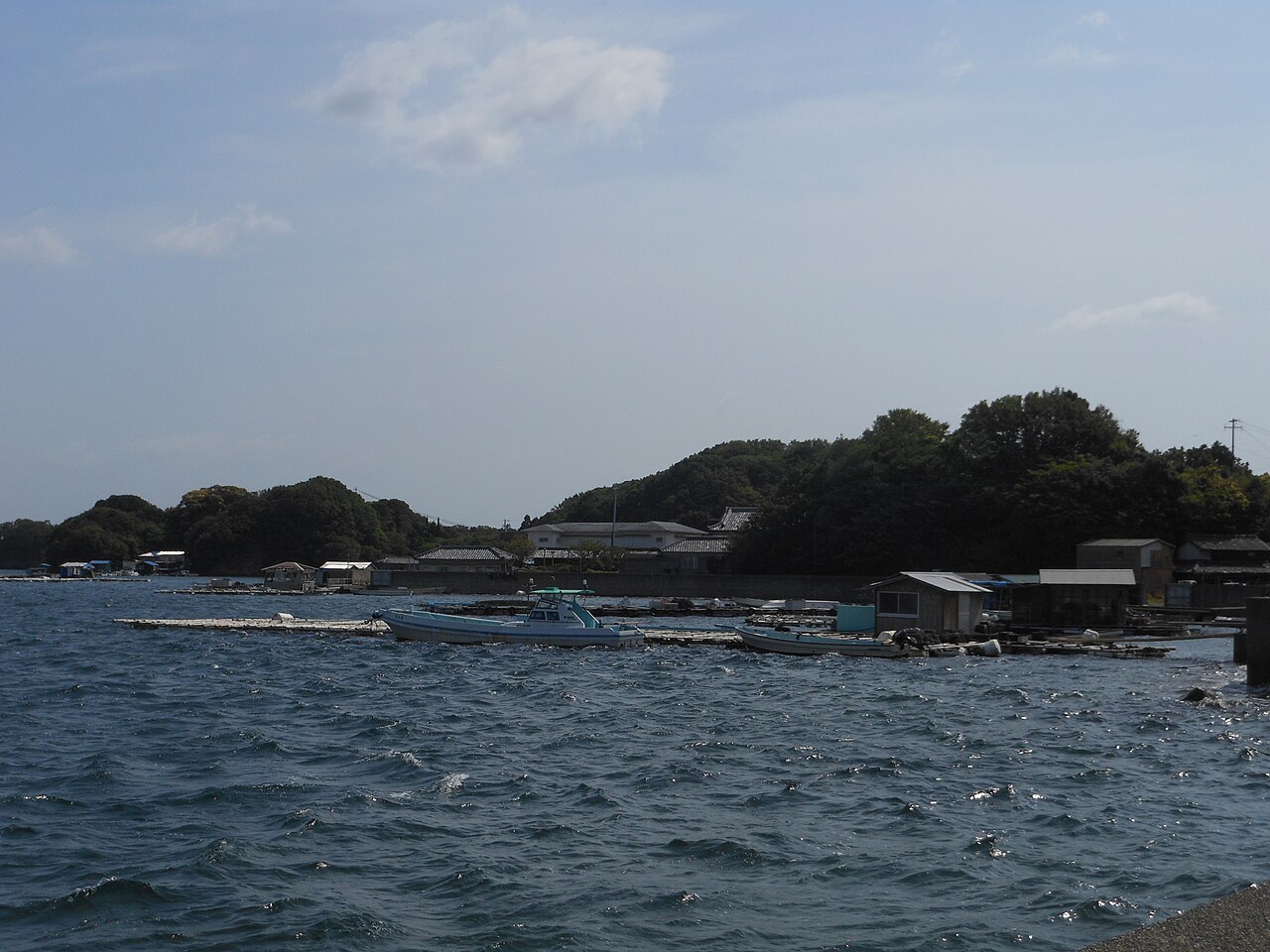
Right for: Travellers extending their Ise trip into a wider Ise-Shima itinerary, or anyone who wants bay views and a more resort-like stay. Toba is 20 minutes east of Ise by Kintetsu train and has Mikimoto Pearl Island (where Ama divers harvest pearls), Toba Aquarium — consistently ranked among Japan's best — and seafront hotels with open-air rotenburo baths overlooking the bay. The honest downside: Geku and Naiku are a 30–40 minute round trip each way, so if the shrines are the main event, Toba is not the most efficient base.
If you are watching costs, EN HOTEL Ise starts at ¥5,500 per night (around US$37) — 5 minutes from Iseshi Station, clean, Wi-Fi works well, shared lounge open 24 hours. No onsen, no breakfast included, but it puts you in exactly the right location for visiting the shrines without spending much.
If you want something memorable, Hoshidekan is a 1926 timber ryokan on Japan's list of registered tangible cultural properties. From ¥6,000 including a traditional Japanese breakfast. Comfort Hotel ERA Ise at ¥7,000 includes a free buffet breakfast and free bicycle loans for riding between Geku and Naiku — the two best-value options in Ise by a wide margin.
Hoshidekan has a traditional wooden bath that can be reserved for private use — good for couples who want privacy without travelling to Futami. For sea-view onsen in traditional multi-storey ryokan buildings, Futami is the answer. Several inns along Meotoiwa Omotesando have both communal and private baths; prices are higher than the station area, but the setting is hard to replicate.
Three foods worth going out of your way for: Ise Udon — thick noodles in a dark, intensely savoury soy-based broth, nothing like udon found elsewhere; Akafuku Mochi — soft rice cakes with sweet bean paste made by the same family since 1707, sold along Oharai-machi from early morning; Tekone Zushi — chunky tuna sashimi over vinegared rice with soy sauce, the traditional food of the Ama diving women. Most of the good restaurants are in Oharai-machi near the Inner Shrine entrance.