Home Hiroshima Hiroshima Prefecture Japan About
Home  ›  Asia  ›  Japan  ›  Hiroshima  ›  1–3 Day Itinerary
🗓️ Hiroshima Itinerary · 1–3 Days · 2026

Hiroshima
an itinerary that honours this city

From a quiet hour at the Peace Memorial Museum before the crowds arrive, to a red torii gate rising from the inland sea at Miyajima, and a bowl of Hiroshima okonomiyaki as the evening streets empty out — this plan is built around what the city actually offers.

How many days do you need?

Hiroshima in 1, 2 or 3 days

Hiroshima is a city of two clearly distinct worlds. One is in the city itself — the Peace Memorial Park and Museum, Hiroshima Castle, the Shukkeien Garden and the atmospheric Hondori covered arcade. The other is on Miyajima Island, a short ferry ride across the Seto Inland Sea, where a vermilion torii gate appears to float on the water and deer wander freely through temple grounds.

1 day: Focus entirely on the city. Peace Memorial Museum, A-Bomb Dome, the park, Hiroshima Castle, and dinner at Okonomimura. You'll leave having seen what matters most — but Miyajima will have to wait for another visit.

2 days: This is the right amount of time. Day 1 for the city at a measured pace, Day 2 entirely on Miyajima — the shrine, the torii at different tidal states, the ropeway with its sea views, fresh oysters grilled over charcoal.

3 days: Add a half-day or full-day trip to Onomichi, a hillside port town 80 minutes east by train, with its cat-inhabited temple path, cliff-perched Senkoji, and one of Japan's most-admired regional ramens.

Each day below is self-contained — if you only have one day, follow Day 1 and you'll be fine.

Day One

The City of Hiroshima

Peace Memorial Museum at first light · A-Bomb Dome beside the river · Hiroshima Castle · Shukkeien Garden · Hondori arcade · okonomiyaki for dinner
01
Day 1
Peace Memorial · Castle · Okonomimura
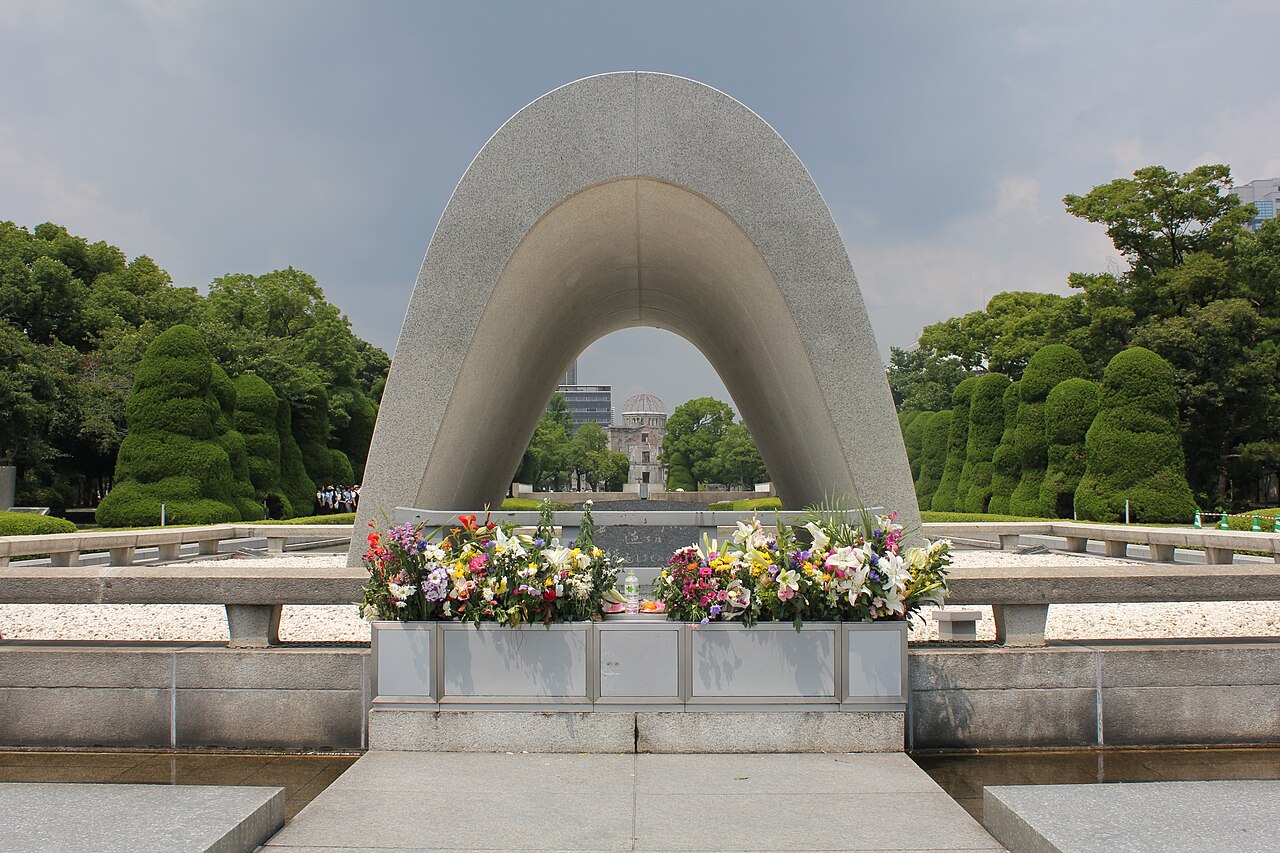
The A-Bomb Dome in Hiroshima — the preserved ruin of the Prefectural Industrial Promotion Hall, the building closest to the hypocentre that remained standing after the August 6, 1945 bombing
Morning · 07:30–12:00 · ~4.5 hours
Hiroshima Peace Memorial Museum + Peace Memorial Park + A-Bomb Dome
A note before you visit: The Peace Memorial Museum is a place of remembrance for one of the most consequential events of the 20th century. Visitors come here with respect. Allow time beyond the schedule for what you may feel — the history here is heavy and it matters.

Arrive at the Peace Memorial Museum when it opens at 07:30. Large tour groups begin arriving from around 09:00, so the early hour gives you the East Building and the more intimate West Building in relative quiet. Budget 1.5–2 hours if you want to read the personal testimonies and look at the exhibits carefully. They deserve that. Audio guides are available for ¥400.

Walk from the museum through the Peace Memorial Park — a broad green space built on the former Nakajima district, one of the areas most destroyed by the bombing. You'll pass the Flame of Peace (平和の灯), which has burned continuously since 1964 and will be extinguished only when all nuclear weapons have been eliminated from the earth. Cross the Motoyasu River to the A-Bomb Dome (原爆ドーム), the skeletal ruin of the Prefectural Industrial Promotion Hall that stood just 160 metres from the hypocentre. It is a UNESCO World Heritage Site and one of the most sobering places in Japan.

Tram: Hiroden Line 2 or 6 to Genbaku-Dome-Mae (原爆ドーム前) stop, 2-minute walk
Museum admission: ¥200 adults · ¥100 high school students · Free under 15 · Open 07:30–19:00 (Mar–Jul, Sep–Nov) · 07:30–20:00 (Aug) · 08:00–18:00 (Dec–Feb)
Peace Park and A-Bomb Dome: Free entry · Open 24 hours
Tip: Arriving before 09:00 means the park is nearly empty. Morning light from the east falls across the dome's skeletal frame in a way the afternoon sun never quite matches — better for reflection as much as for photographs.
Late Morning – Afternoon · 12:00–15:30 · ~3.5 hours
Shukkeien Garden + Hiroshima Castle

Walk or take the Hiroden tram (~15 minutes) to Shukkeien Garden (縮景園), a 17th-century stroll garden whose name translates as "shrunk scenery" — a central pond, arched bridges, miniature islands and stone lanterns arranged to suggest a landscape several times larger than it is. Spend 45–60 minutes here before lunch. The garden is particularly beautiful in late March during cherry blossom season and in November when the maples turn.

From Shukkeien, it's a 10-minute walk to Hiroshima Castle (広島城), known locally as Carp Castle for the golden carp finials on its roof. The original castle was destroyed in the bombing; the current five-storey reconstruction (1958) houses a museum tracing Hiroshima's history from the feudal era through the city's rebuilding. Climb to the top floor for views across the city.

Shukkeien Garden: ¥260 adults · ¥150 seniors 65+ · ¥80 children · Open 09:00–18:00 (09:00–17:00 from September 16–March 15)
Hiroshima Castle: ¥370 adults · Open 09:00–18:00 (October–March until 17:00)
Evening · 15:30–21:00 · ~5.5 hours
Hondori Shopping Arcade + Okonomimura

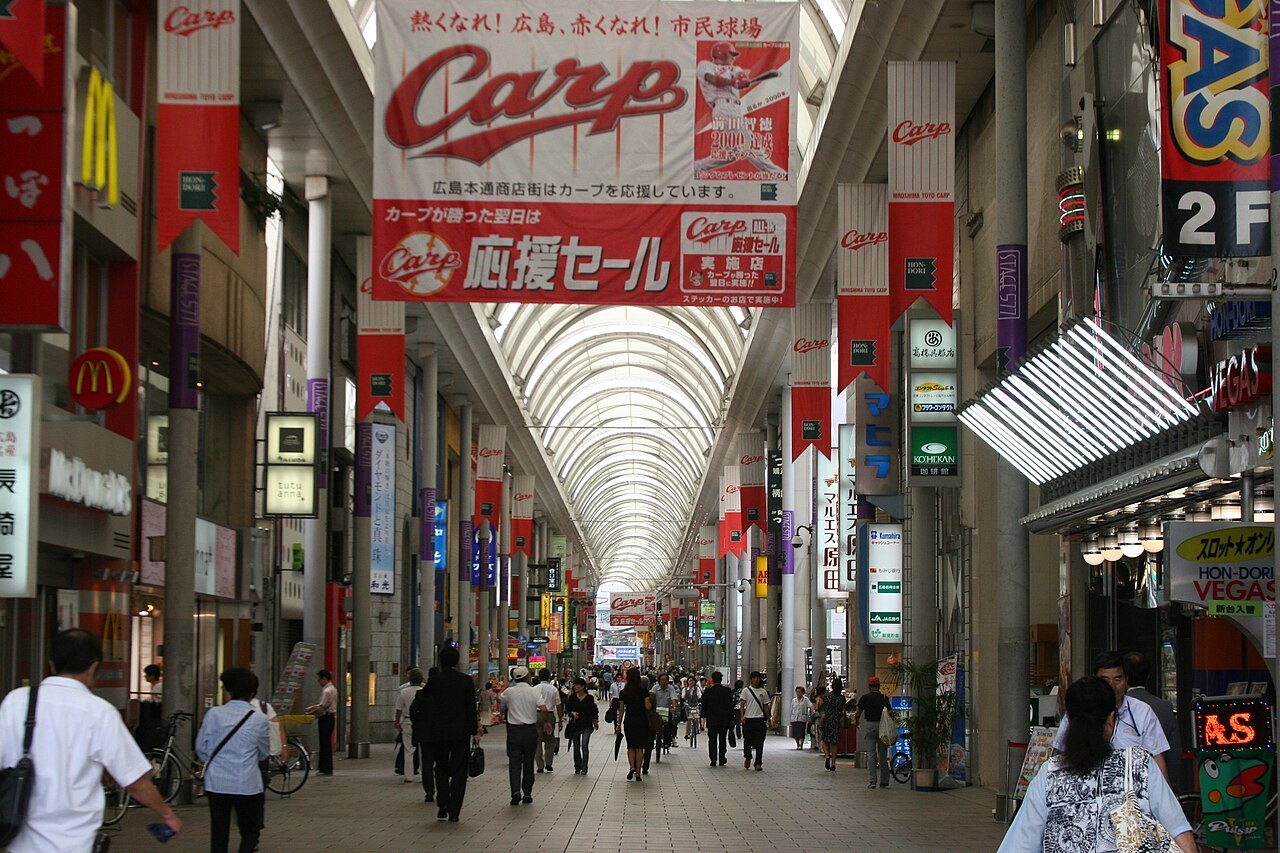
Make your way back to the city centre and walk through Hondori (本通り), a covered shopping arcade 600 metres long running east from near the Peace Park. It is the livelier of Hiroshima's central streets — clothing shops, souvenir stalls, coffee shops, and several bakeries selling freshly baked momiji manju (maple-leaf cakes filled with sweet red bean), the city's signature confection. Good to pick up as gifts.

Dinner at Okonomimura (お好み村), a four-storey building near Hondori housing more than 25 independent okonomiyaki stalls. Hiroshima-style okonomiyaki is built in layers rather than mixed — a thin crepe of batter, a mountain of shredded cabbage, pork belly or oysters, yakisoba noodles, a fried egg on top, finished with a brush of dark Worcestershire sauce. Each stall is an open kitchen; you watch the whole process from a counter seat. One portion costs ¥800–1,200 and is genuinely filling.
Hondori tram stop: Hiroden Hondori (本通) stop, Lines 1/2/6
Okonomimura: Open 11:00–22:00 (most stalls; some until 23:00 on weekends) · ¥800–1,200 per portion · No reservation needed at most stalls
Hiroden 1-day pass: ¥700 adults · ¥350 children · Purchase on the tram or at major stops
How to choose a stall: Walk up to floors 2 and 3 before deciding — most have picture menus or English menus. Pointing works perfectly well. Expect a short wait on weekend evenings; the queue moves quickly once you're at the counter.
Day Two

Miyajima Island and the floating torii

Morning ferry across the inland sea · Itsukushima Shrine at the water's edge · deer that treat the whole island as their own · Sessen Ropeway above the pines · grilled oysters on the main street

02
Day 2
Miyajima · Torii Gate · Shrine · Ropeway
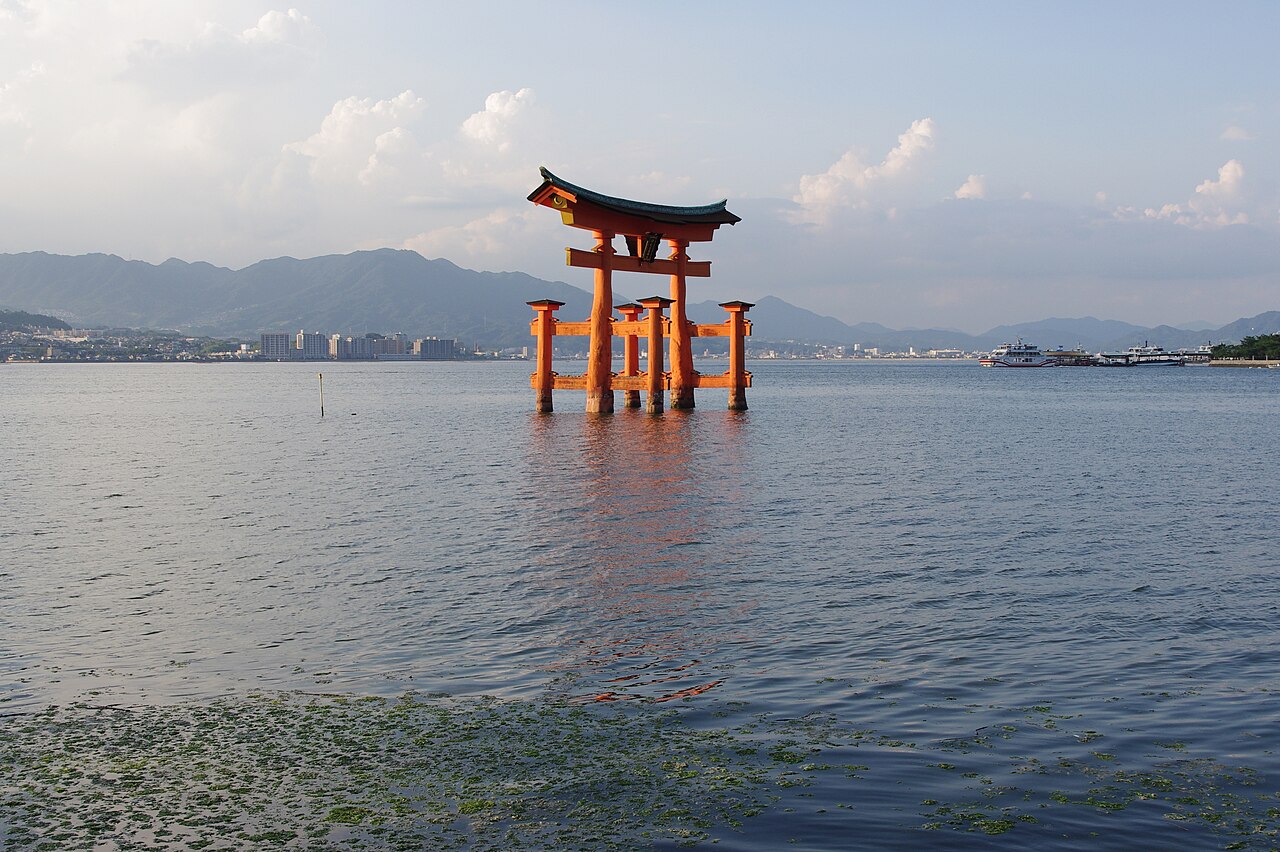
The great vermilion torii gate of Itsukushima Shrine on Miyajima Island, standing in the waters of the Seto Inland Sea at high tide
Morning · 08:00–11:00 · ~3 hours
Ferry to Miyajima + Itsukushima Shrine

Set out early. Take Hiroden Line 2 from central Hiroshima to the terminal at Hiroshimako (広島港) — around 30 minutes and ¥260. From there the JR Miyajima Ferry crosses to the island in 10 minutes (¥200 each way plus ¥100 visitor tax). Ferries run every 15–20 minutes from around 06:25. On the water, the torii gate appears ahead of you across the bay, growing larger as you approach — it is a better arrival than most airports.

On the island, deer wander freely at the dock and through the lanes — they are considered sacred messengers and have the run of the place. The walk to Itsukushima Shrine (厳島神社) takes about 10 minutes along the waterfront. The shrine, a UNESCO World Heritage Site, was built on stilts over the tidal shallows in the 6th century so it would appear to float on the sea — accessible only by boat in the original concept. At high tide, the galleries and the famous torii gate beyond truly seem to rise from the water.

About Itsukushima Shrine: This is an active place of Shinto worship. Visitors come for both tourism and devotion. Please walk quietly, dress respectfully, and be aware that others may be here for religious reasons.
Hiroden Line 2: From Hiroshima Station or central stops to Hiroshimako ~30 min · ¥260
JR Ferry: Hiroshimako to Miyajima, every 15–20 min · ¥200 one-way + ¥100 visitor tax
Itsukushima Shrine: ¥300 adults · ¥100 children · Open ~06:30–18:00 (varies seasonally — check ahead)
Hiroden 1-day tram & ferry pass: ¥1,000 adults — covers all trams plus the ferry in both directions, the most convenient option for the whole day
Afternoon · 11:00–16:00 · ~5 hours
Sessen Ropeway (宮島ロープウェイ) + Lunch

After the shrine, walk up through Momijidani Park (紅葉谷公園) — a ravine of Japanese maples that turns a deep crimson in mid-November — to the lower station of the Miyajima Ropeway (宮島ロープウェイ). The two-stage cable car climbs to Shishiiwa Station at about 430 metres, with panoramic views of the Seto Inland Sea spreading out below you: dozens of islands, fishing boats, the faint outline of the mainland in every direction. On clear days, visibility stretches far into the western sea.

From Shishiiwa, an additional 30–40-minute hike reaches the summit of Mt. Misen (弥山, 535 m), where a sacred fire has allegedly been kept burning for over 1,200 years by Buddhist monks. If the hike sounds like too much, the platform at Shishiiwa Station is perfectly satisfying on its own. Take the ropeway back down.

Lunch on the island's main shopping lane, Omotesando, running between the ferry terminal and the shrine. Try grilled oysters (牡蠣の鉄板焼き, kaki no teppan-yaki) — Hiroshima Prefecture produces about 60 percent of Japan's oyster harvest, and Miyajima's open-air grill stalls sell them fresh and cheap. Expect ¥400–600 for a set of 3–4 shells.

Miyajima Ropeway: ¥1,840 round trip · ¥1,010 one way · Adults · Open 09:00–17:00 (last ascent ~16:15) · Subject to closures for maintenance — verify before visiting
Lunch: Omotesando shopping lane · Oysters ¥400–600 · Fried oysters ¥500–800 · Momiji manju from ¥140
Tides and timing: Check a Miyajima tide chart the day before. At high tide above ~1.5 m the torii floats. At low tide below ~0.5 m you can walk out and stand beside it. Most days have two high tides and two low tides, so with a two-day stay you will likely see both states. The late-afternoon light — around 16:30 in summer — is when the gate glows warmest.
Evening · 16:00–19:00 · ~3 hours
Sunset ferry home + anago meshi dinner

Time the return ferry if you can to catch the golden hour, roughly 16:30–17:30 in summer. From the boat the torii and the mountain behind it are lit in warm orange, and the Inland Sea goes still and coppery. It's one of those moments that feels staged but isn't. Back in Hiroshima, try anago meshi (あなごめし) for dinner — conger eel grilled and lacquered with a sweet soy glaze, served over rice in a flat wooden box. It is Hiroshima's other signature dish and many good restaurants near Hiroshima Station serve it in the evening.

Return ferry: Runs every 15–20 min · last ferry ~23:00 · No reservation needed
Anago meshi dinner: ¥1,500–2,500 · Look near Hiroshima Station or in the Hondori area
Day Three (optional)

Onomichi or your own pace

A hillside port town with temple paths and cat lanes · Senkoji ropeway · Onomichi ramen · back to Hiroshima by evening — or simply stay and let Hiroshima breathe

03
Day 3 · Optional
Onomichi (尾道) — Temples, Cat Town & Ramen
Hondori covered arcade in central Hiroshima — the main pedestrian shopping street running through the heart of the city
Morning · 09:00–12:00
Travel to Onomichi + Temple Hill Walk

From Hiroshima Station, take the JR Sanyo Line east to Onomichi Station (尾道駅) — roughly 80 minutes and ¥1,520 on the local train, or around 40 minutes with a transfer through Mihara via Shinkansen. Onomichi sits at the base of a steep hillside above a sheltered strait of the Seto Inland Sea. The city has barely changed since the early postwar decades and feels different from anywhere else you'll visit on this trip.

Spend the morning on the Temple Walk (寺町), a winding path through stone steps, moss-covered walls and 25 temples climbing the hillside. The path is known for its resident cats — dozens of strays and semi-feral cats have inhabited the hill for generations, sitting on lanterns or in temple doorways. At the top of the hill, take the Senkoji Park Ropeway for views over the strait and the bridge to Mukaishima Island.

JR from Hiroshima: ~80 min · ¥1,520 (JR Pass valid)
Senkoji Ropeway: ¥500 round trip · Open 09:00–17:15
Afternoon · 12:00–16:00
Onomichi Ramen + Senkoji Temple + Return

Lunch is Onomichi ramen (尾道ラーメン) — a soy-based broth enriched with small pieces of pork back fat that melt into the bowl, flat noodles, and green onion. It is one of the more distinctive regional ramens in the Chugoku region, unapologetically rich and deeply savoury. Good shops cluster near the station; most open by 11:00 and sell out by early afternoon, so aim for 12:00–12:30. Around ¥800–1,000 a bowl.

After lunch, walk back up or take the ropeway to Senkoji Temple (千光寺) itself — the cliff-top temple that gives the hill and the park their name. The main hall sits against a red-granite boulder called Gyokusen, said to have shone with a miraculous light guiding ships through the strait in ancient times. Spend 30 minutes here before descending and catching the JR train back to Hiroshima in the late afternoon.

Senkoji Temple: ¥500 inner precinct · Open 09:00–17:00
Return to Hiroshima: JR Sanyo Line, every 30–60 min · ~80 min · ¥1,520
Alternative Day 3: If Onomichi feels like too much ground to cover, Hiroshima itself rewards a slower pace on a third day. Revisit the Peace Park in the afternoon light, cross the Aioi Bridge, walk the full riverside path along the Ota River, or hire a city bicycle (~¥1,000/day) to reach the Ujina port district where the original A-bomb survivors were treated.
🌊
Continue your trip?
From Hiroshima to Beppu — hell valley springs and sand baths, ~2 hours by Shinkansen
Full Hiroshima guide →
Practical information

Getting around · Where to stay · Budget

🚃
Hiroden Tram

The Hiroshima Electric Railway (Hiroden) streetcar network is how locals get around. Lines 1–6 cover every sightseeing point in the city. Flat fare ¥190 within the central zone. The 1-day pass (¥700 adults) pays for itself after 4 rides. The 1-day tram + ferry pass (¥1,000) includes round-trip Miyajima ferry — the best-value option if you're going to the island. Buy digitally via the MOBIRY TRAVEL app or on the tram.

🏨
Where to stay

The Hiroshima Station area and Hondori / Nagarekawa district put you within tram reach of everything in this itinerary. Mid-range hotels (3–4 stars) run ¥8,000–15,000 a night. If you want to be within walking distance of the Peace Park, a handful of hotels in that zone exist but options are fewer. Browse hotels in the Hiroshima city guide.

🌸
Best times to visit

Late March–April: Cherry blossoms in Peace Memorial Park, one of the most moving seasonal sights in Japan. September–November: Cool, clear days; autumn colour on Miyajima. Avoid: Golden Week (April 29–May 5) and August 6 anniversary — both draw large crowds. Winter is quiet and affordable but cold.

Budget

Estimated daily costs per person

Item Budget Mid-range Comfortable
Hotel (per night) ¥3,500–6,000
(~$24–41)
¥8,000–14,000
(~$55–96)
¥16,000–30,000+
(~$110–205+)
3 meals ¥1,500–2,500
(~$10–17)
¥3,000–5,000
(~$21–34)
¥6,000–10,000+
(~$41–68+)
Hiroden tram ¥700
(1-day pass)
¥700–1,000
(pass + ferry)
¥1,000–2,000
(pass + taxi)
Admission (Day 1) ¥570
(Museum + Garden + Castle)
¥570–970
(+ audio guide ¥400)
¥970+
(guided tour)
Miyajima (Day 2) ¥700
(Shrine + ferry)
¥2,600–3,000
(+ ropeway ¥1,840)
¥3,000+
(ropeway + full day)
Total per day (approx.) ¥6,470–9,770
(~$44–67)
¥12,870–20,970
(~$88–143)
¥23,970–42,000+
(~$164–287+)

Exchange rate reference: ¥1 ≈ $0.0068 · Prices are approximate and subject to change · Verify current admission fees before visiting

Frequently asked questions

FAQ · Hiroshima Itinerary

Is 1 day enough for Hiroshima?
One full day covers the city's main highlights — the Peace Memorial Museum, A-Bomb Dome, Peace Memorial Park, Hiroshima Castle, and an okonomiyaki dinner. If you want to include Miyajima Island on the same day, you'll need to drop the castle and accept a rushed pace. Miyajima alone takes 3–4 hours minimum. Two days lets you do both properly without rushing.
Can I do Miyajima as a day trip from Hiroshima?
Easily. Take the Hiroden tram Line 2 from central Hiroshima to Hiroshimako terminal (~30 min, ¥260) then the JR Miyajima Ferry (10 min, ¥200 each way). Or take the JR Sanyo Line to Miyajimaguchi Station (~26 min from Hiroshima Station) then the ferry. The Hiroden 1-day tram and ferry pass (¥1,000 adults) covers all of this and is the most convenient option.
Do I need to book Hiroshima Peace Memorial Museum in advance?
During peak seasons — Golden Week, cherry blossom season, and especially around August 6 (the anniversary) — booking timed-entry tickets online at hpmmuseum.jp is strongly recommended. Admission is ¥200 for adults, ¥100 for high school students, free for children under 15. Hours: 07:30–19:00 (March–July and September–November), 07:30–20:00 (August), 08:00–18:00 (December–February).
When does the Miyajima torii look like it's floating?
It depends on the tides. At high tide (water level above about 1.5 m) the gate appears to float on the sea — this is the iconic look. At low tide the seabed is exposed and you can walk out and stand right next to the gate. Check a tides chart for Miyajima before your visit. Both experiences are worth seeing if you can time your stay around two tidal cycles.
What is the best time of year to visit Hiroshima?
Spring (late March to early May) for cherry blossoms in Peace Memorial Park. Autumn (September to November) for comfortable temperatures and red maple leaves on Miyajima. Winter (December–February) means fewer crowds and lower hotel rates, though the weather is cold. Avoid Golden Week (April 29–May 5) and August 6 (the anniversary) if you prefer smaller crowds.