Home Hakodate Japan Hokkaido About
Home  ›  Asia  ›  Japan  ›  Hakodate  ›  Itinerary
🗓️ Hakodate Itinerary · 1–2 Days · 2026

The Hakodate Itinerary
That Covers Everything

From a live squid breakfast at 5 am to cobblestone churches in the afternoon and the night view that once made a banker cry — Hakodate packs more into one peninsula than most cities manage in a whole region.

How Many Days?

One Day Is Enough. Two Days Is Better.

Here is the honest version: one full day in Hakodate lets you hit every headline attraction without rushing. The morning market, Motomachi's European quarter, the Hachimanzaka stone slope, Kanemori warehouses, and the Mt. Hakodate ropeway night view all sit within a single tram corridor from the station. You will not feel short-changed.

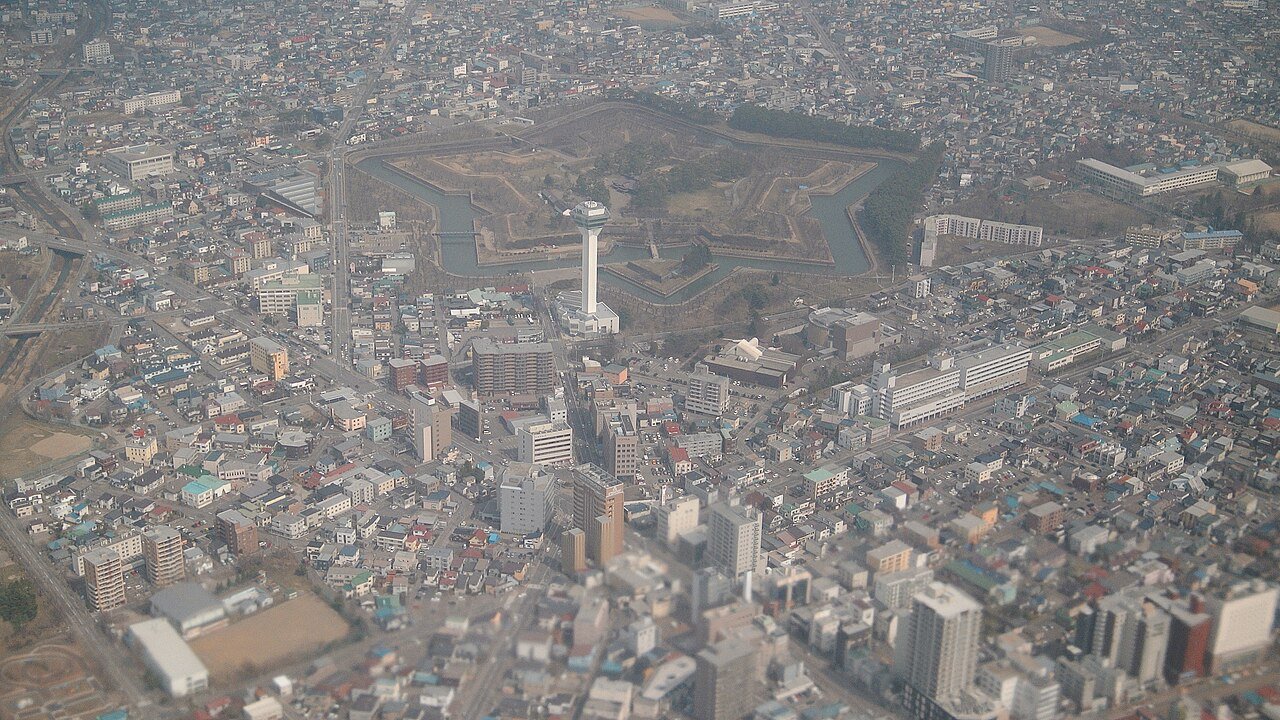
With a second day, you can add Goryokaku — Japan's only Vauban-style star fort, seen from a 107-metre observation tower — and either a 30-minute train ride to Onuma Quasi-National Park or a slow afternoon soaking at Yunokawa Onsen at the end of the tram line. That second day is the one that turns a good trip into a genuinely memorable one.

Hakodate is at the southern tip of Hokkaido, and it was one of the first Japanese ports opened to foreign trade in 1854. That history shows in the streets: Russian Orthodox domes, French Catholic towers and British consulate buildings all stand on the same hillside, barely a 10-minute walk from each other.

Day One

Morning Market, Motomachi and the Night View That Named a Fortune

Live seafood at dawn · stone-paved lanes lined with Gothic spires · the view from a volcanic summit that makes grown travellers go very quiet
01
Day 1
Morning Market · Motomachi · Mt. Hakodate at Sunset
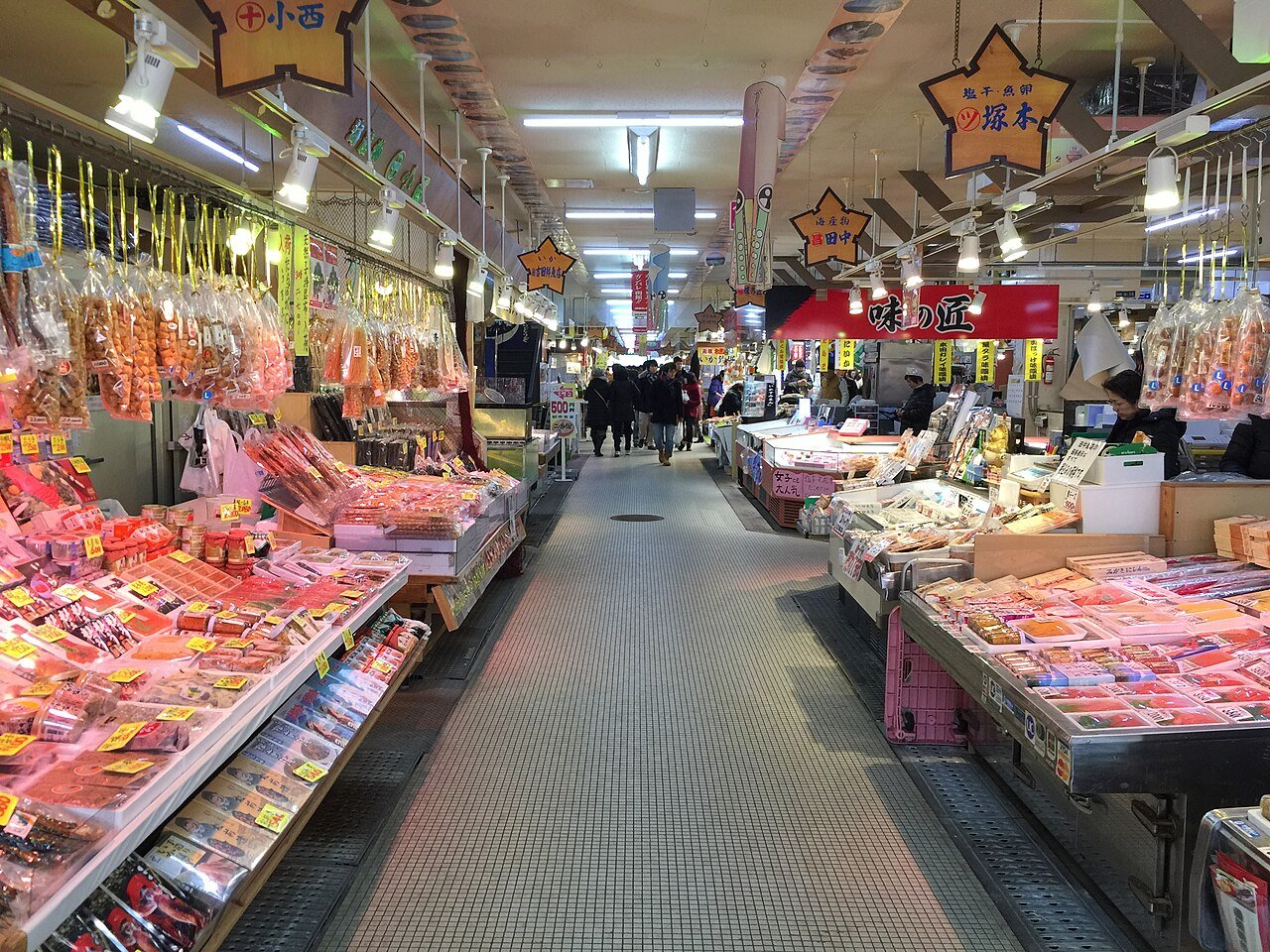
Hakodate Morning Market — rows of fresh Hokkaido seafood including crab, sea urchin and squid at dawn
Early Morning · 5:00–7:30 am
Hakodate Morning Market (朝市 Asaichi)

The market is a two-minute walk from Hakodate Station and opens at 5:00 am from May through December (6:00 am in winter). Come before 7:00 am — that is when the stock is freshest and the aisles are still navigable. By 9:00 am it turns into a proper scrum of tour groups.

The must-order is kaisen-don: a rice bowl you build yourself by pointing at whatever you want — sea urchin (uni), salmon roe (ikura), scallop, snow crab, sweet shrimp. Prices run from ¥1,500 for a modest bowl to ¥3,000 for a mountain of the good stuff. If you want a story to tell at dinner, try the squid-fishing experience (ika-tsuri): you drop a line into a tank of live squid, catch one, and the stall immediately turns it into ikizukuri sashimi. The texture is noticeably different from anything you have eaten before.

Getting there: 2-minute walk from Hakodate Station
Hours: May–Dec 5:00–14:00 · Jan–Apr 6:00–14:00
Budget: kaisen-don ¥1,500–3,000 · breakfast set ~¥1,000 · squid fishing ~¥3,000/60 sec
Tip: Several stalls do not accept cards — carry cash. The further from the main entrance you walk, the less tourist-marked-up the prices tend to be.
Mid-Morning · 8:00–10:30 am
Kanemori Red Brick Warehouses — Bay Walk and Coffee

Walk down to the bay and spend an hour at Kanemori (金森赤レンガ倉庫), a row of 1909 red-brick warehouses converted into shops, cafes and a small brewery. The morning light on the water with Mt. Hakodate as a backdrop is genuinely photogenic — this is a good place to sit with a coffee and let the morning unfold before heading uphill. In cherry blossom season (late April to early May) the scene is almost unreasonably pretty.

Getting there: 8-minute walk from the station, or tram line D to Jujigai stop, then 5 minutes on foot
Hours: most shops 9:30–19:00 · cafes may open earlier
Entry: free (shopping and food are separate)
Afternoon · 11:00–15:30
Motomachi — European Quarter on a Hillside

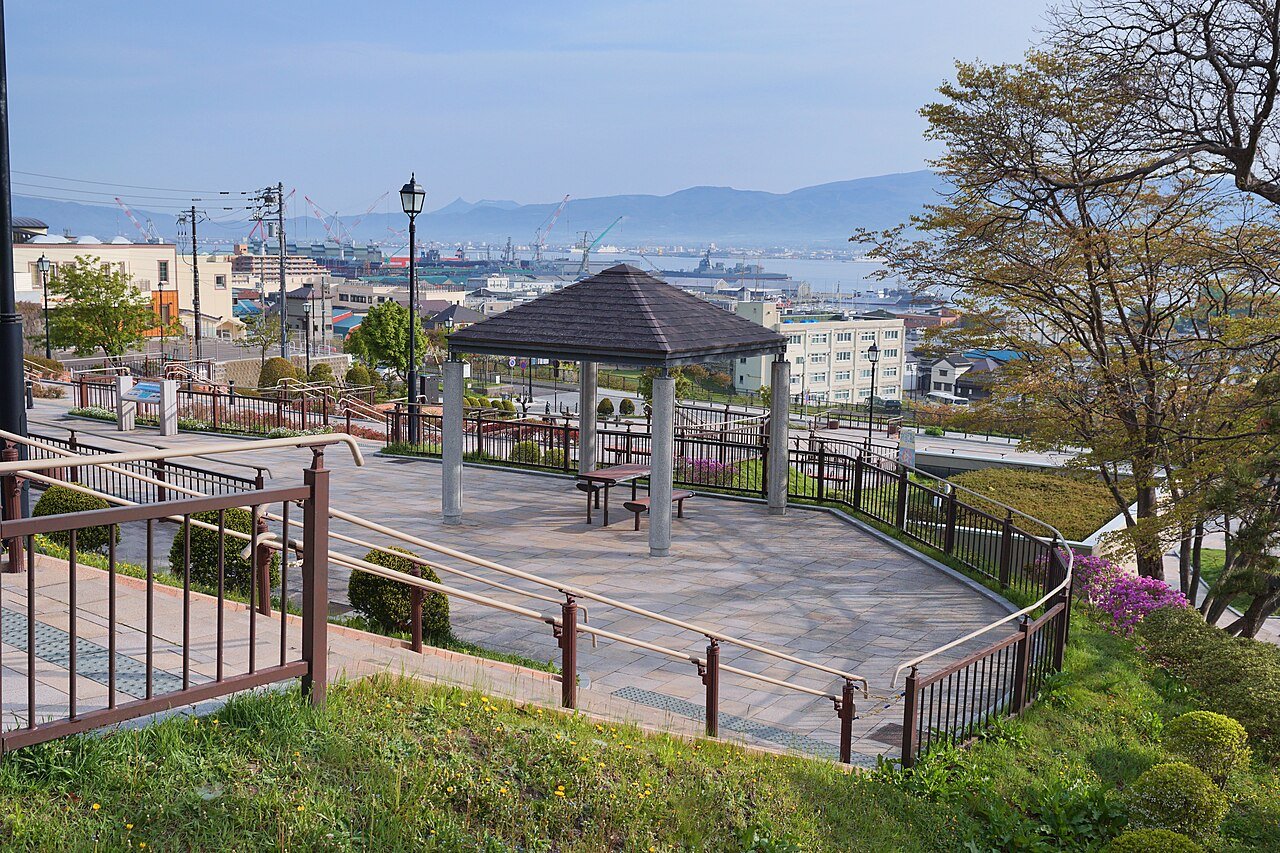
Take tram line D to Suehirocho stop, then walk uphill into Motomachi (元町). This is the neighbourhood where foreign consulates settled in the 1860s — and it still looks the part. A Russian Orthodox cathedral with green onion domes, a French Catholic church in Gothic stone, a British consulate that is now a public park, and a row of candy-coloured wooden houses all occupy the same short hillside. None of it looks like the Japan most visitors picture.

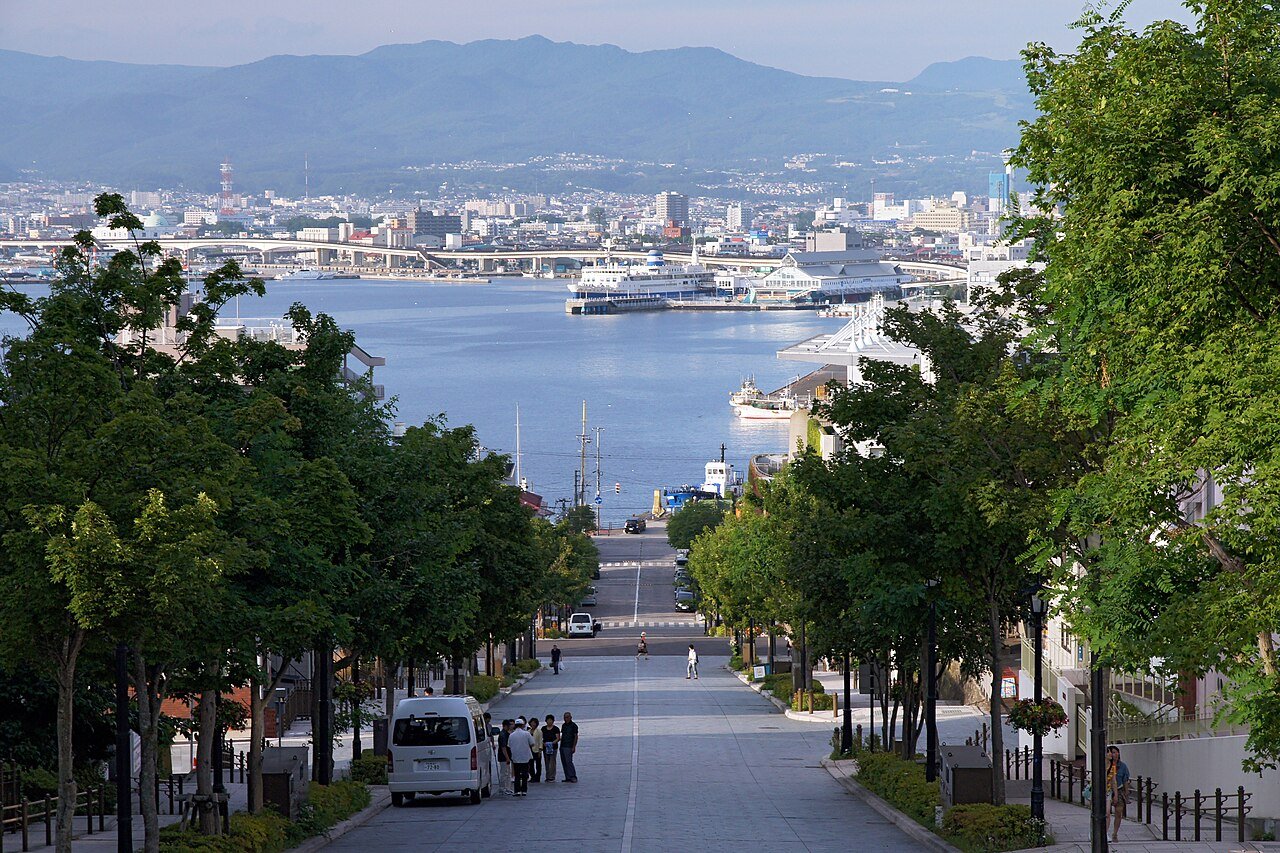
The unmissable moment is Hachimanzaka (八幡坂) — a perfectly straight stone-paved slope that drops from the hill straight down to the bay, framed on both sides by ginkgo trees. Stand at the top looking down: the slope, the sea, a ship in the harbour, and the mountain behind you. That is the image that ends up on every Hakodate postcard. After Hachimanzaka, continue uphill to Motomachi Park for a higher viewpoint over the bay.

Tram: Line D to Suehirocho, walk uphill ~5 min
Catholic Church: Mon–Sat 10:00–16:00, Sun 12:00–16:00 · free
Orthodox Church: Mon–Fri 10:00–17:00, Sat 10:00–16:00, Sun 13:00–16:00 · ¥200
Tip: Hachimanzaka faces northwest, so the afternoon light falls directly down the slope. Morning fog from the bay can make it atmospheric in a different way entirely — both versions are worth seeing if you happen to be there for both.
Late Afternoon · 15:30–17:30
Rest and Prepare for the Summit

Head back to your hotel for a break and a layer of clothing. The summit of Mt. Hakodate sits at 334 metres and is consistently 5–8 degrees cooler than the city, with strong wind even in summer. A light jacket is essential any time of year; in autumn or winter, something genuinely warm. Check the forecast before going up — on heavily overcast days the view is lost and the trip is not worth making. On a clear evening, it is one of the best night views in the world.

Forecast check: Japan Meteorological Agency app or hakodate.travel/en/information/mt-hakodate
Getting there: tram Line D to Jujigai, walk uphill ~7 min to ropeway base station
Evening · 17:30–21:00
Mt. Hakodate Ropeway — The 100 Billion Yen Night View

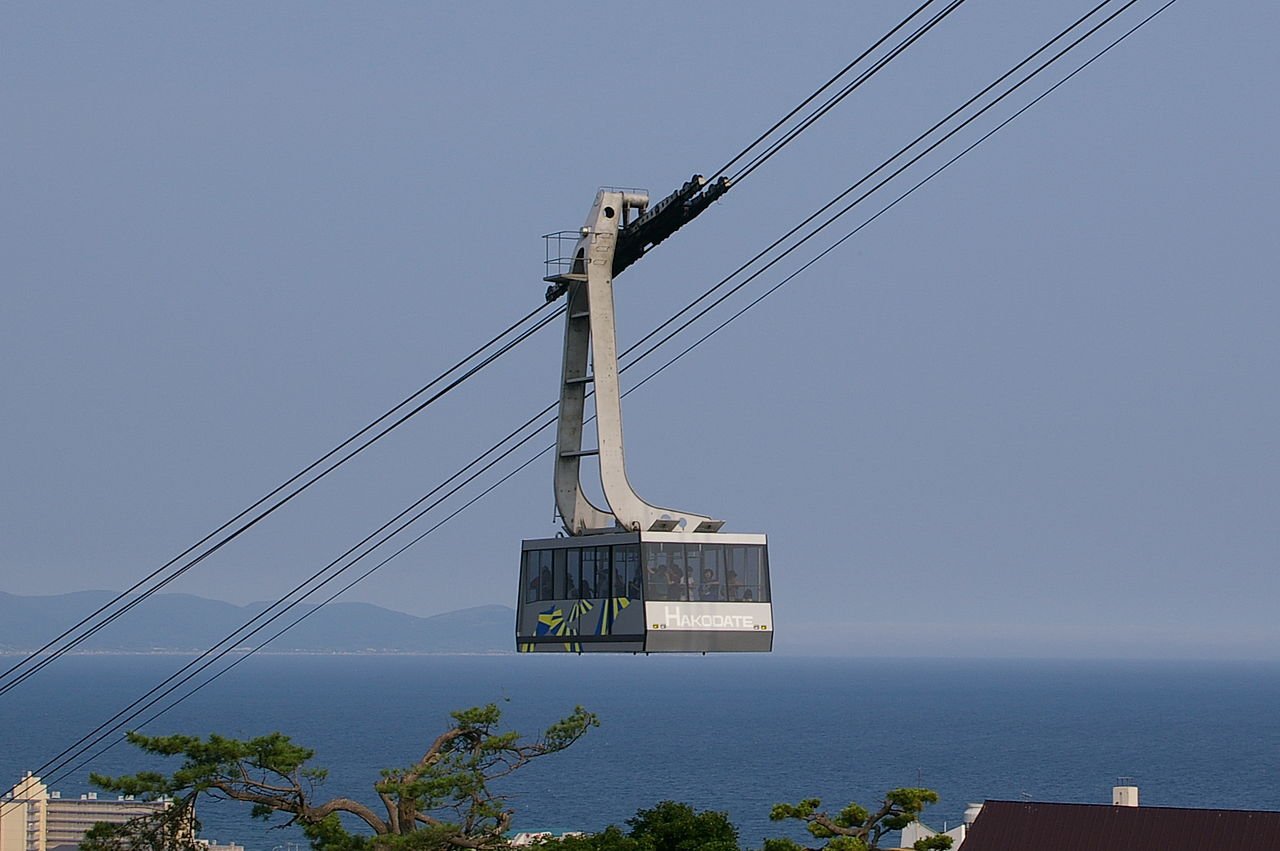
Arrive at the ropeway base 30–45 minutes before sunset to queue and get a good spot on the observation deck. The Mt. Hakodate Ropeway takes three minutes to climb 334 metres and runs gondolas every 10–15 minutes. The observation deck at the top is open air on three sides.

The view is called the "100 billion yen night view" (百億円の夜景) — a name that came from a 1980s stockbroker who said the panorama was worth his entire portfolio. What you see: Hakodate sits on an hourglass-shaped peninsula. From above at night, the city lights spread out in two wide arcs on either side of the narrow waist, the dark ocean separating everything with absolute precision. The best window is the 30 minutes after sunset, when the sky is still a deep gradient but the city lights are fully on. Stay an hour, have a drink at the summit cafe, then come back down for dinner.
Ropeway: ¥1,500 round trip (adults) · open 10:00–22:00 (Oct–mid Apr until 21:00)
Frequency: every 10–15 min · peak crowds 30 min before sunset
Alternative: bus route Sanroku from Hakodate Station ~¥360 if you prefer not to use the ropeway
Tip: The summit restaurant is expensive and not particularly good. Eat a light snack before going up, then come down and find a proper seafood dinner in the city — you will be much happier with the food and the price.
Mt. Hakodate ropeway gondola rising at dusk — the city lights beginning to spread across the peninsula below
Day Two

Goryokaku and Out of the City

Japan's only star-shaped fort seen from above · a volcanic lake 30 minutes away by train · or an afternoon soak at the end of the tram line

02
Day 2
Goryokaku · Onuma Park · Onsen
Goryokaku from above — the five-pointed star-shaped fort moat surrounded by cherry blossom trees in Hakodate
Morning · 8:30–12:00
Goryokaku (五稜郭) — Japan's Only Vauban Star Fort

Imagine a perfectly symmetrical five-pointed star moat, 1,600 cherry trees lining its inner banks, and the crumbled red brick of walls that saw the last battle of the Boshin Civil War in 1869. Goryokaku was built in 1864 on the Western Vauban fortress design — the only one in Japan — to defend the country's northern frontier. It ended up as the site of the final stand of the Tokugawa shogunate's remaining forces before the new Meiji government prevailed.

Climb the Goryokaku Tower (五稜郭タワー) first — from 107 metres the star shape is crystal clear, the moat and five bastions laid out below like a textbook illustration. In cherry blossom season (late April to early May) the fort transforms into something close to surreal: the entire five-pointed star fills with pink. After the tower, walk down into the fort itself, where the restored Hakodate Magistrate's Office and the park grounds are free to explore.

Tram: Line D to Goryokaku-Koenmae stop, walk ~10 min
Tower: ¥1,000 adults / ¥600 students · Summer 8:00–19:00, Winter 9:00–18:00
Fort entry: free · park open all day
Cherry blossom season (late Apr–early May): Goryokaku is considered the best sakura spot in Hokkaido. Arrive early in the morning — it becomes very crowded by 10:00 am.
Afternoon · 13:00–17:00
Option A — Onuma Quasi-National Park Day Trip

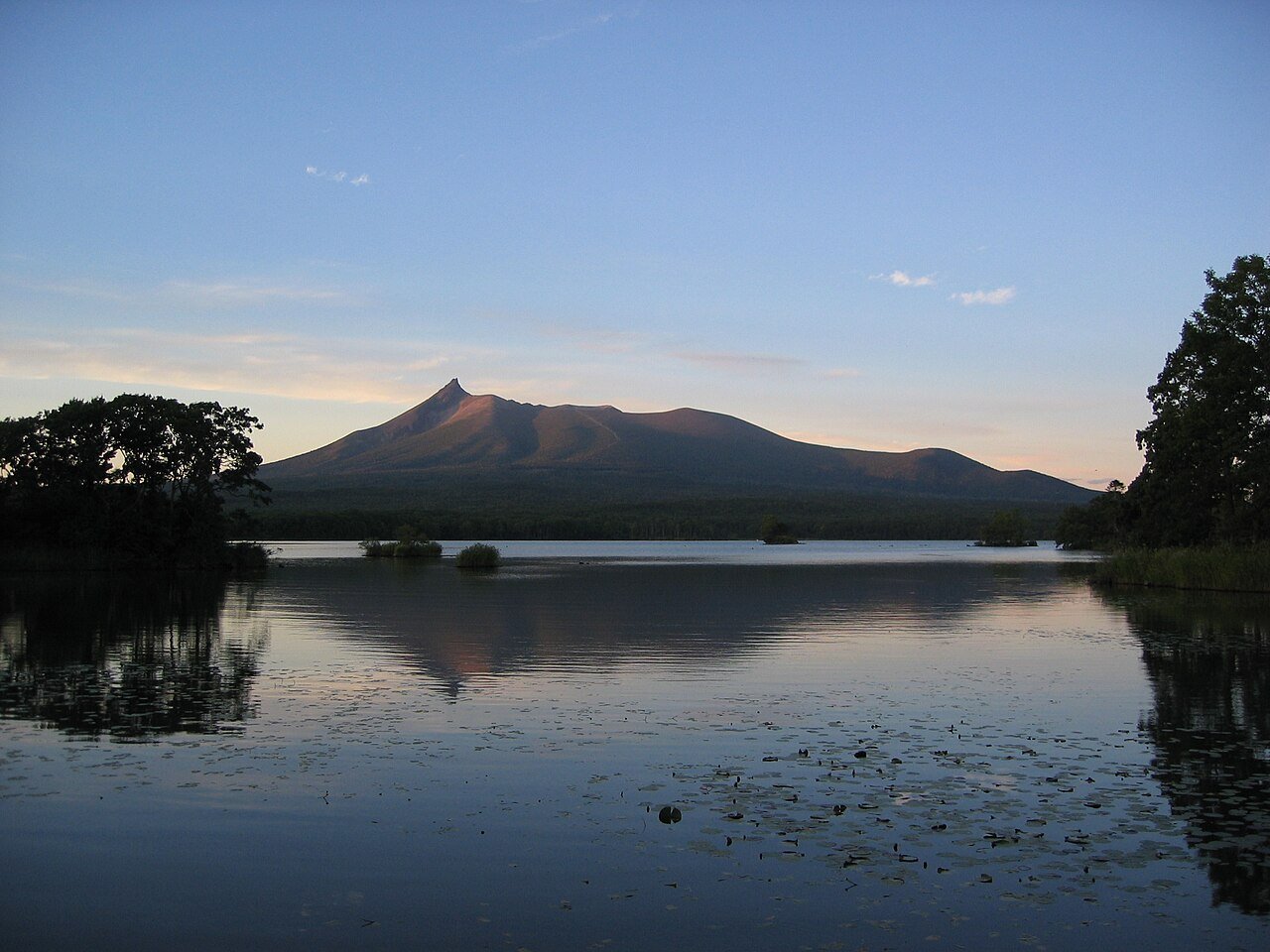
If you want to get out of the city, Onuma Quasi-National Park (大沼国定公園) is only 30 minutes from Hakodate Station by Limited Express (¥1,840) or 40 minutes by local train (¥680). The park formed when eruptions of Mt. Komagatake flooded the valley — the result is two interconnected lakes dotted with more than 100 small islands, all linked by short wooden bridges. Walking the full circuit takes 60–90 minutes; the shorter loop around the main lake takes 30 minutes.

In winter (January–February) the lakes freeze and you can walk on the ice. In summer there are rowboats, rental bicycles, and stands selling roasted corn beside the water. It is a genuinely different landscape from the city — volcano, lake, islands, forest — and the combination is surprisingly striking.

Train: Limited Express from Hakodate Station ~30 min ¥1,840 · Local ~40 min ¥680
Time in the park: 2–3 hours covers the main trails comfortably
Return: last trains to Hakodate run until approximately 19:00–21:00 (check timetable)
Afternoon · 13:00–17:00
Option B — Yunokawa Onsen: Soak at the End of the Line

If your legs ache from Day 1, stay on the tram instead. Yunokawa Onsen (湯の川温泉) is the last stop on tram Line Y — 20 minutes from the station — and is the largest onsen district in southern Hokkaido. Most ryokan and hotels have public baths (daiyoku) that non-guests can use for ¥500–1,000. The water is a sodium-chloride spring, slightly milky, and warm enough that 45 minutes is about right before you turn pink.

In winter (November–March) a flock of whooper swans overwinters at the park beside the river — seeing large white swans floating on a river in a snow-covered Japanese town is a properly unusual sight.

Tram: Line Y to Yunokawa terminus (~¥260 or use Day Pass)
Day-use onsen: ¥500–1,000 · typically available 14:00–21:00
Evening · 17:30–20:00
Last Dinner: Hokkaido Seafood

Your final evening in Hakodate calls for a proper Hokkaido seafood dinner. The bay-side restaurants around Kanemori and the streets near the station range from counter-style sushi bars to lively izakaya with whole crab on the menu. What to order: hairy crab (毛ガニ, kegani) from the Sea of Okhotsk in season (November–January), Hakodate squid (函館イカ) which is sweet and tender in a way that imported squid is not, and Hokkaido sea urchin (uni) if it is in season and you have not tried it already.

For atmosphere, the restaurants with window seats facing Kanemori Bay are the ones to aim for — the red-brick warehouses lit up at night reflect in the harbour water and close the trip on a high note.

Budget for dinner: izakaya ¥2,000–4,000/person · sushi bar ¥3,000–8,000/person
Recommended area: around Kanemori Bay or Hakodate Station streets
🚉
Where next?
Hakodate to Sapporo by train is 3.5 hours — or continue north with a JR Pass
Hakodate City Guide →
Practical Info

Getting Around · Staying · Budget

🚃
The Tram Network

Hakodate has two streetcar lines: the red Y line and the blue D line. They share tracks between the station and Jujigai, then split. Between them they cover every tourist attraction in the city. A one-day tram pass costs ¥800 (adults) and pays off after three rides. Buy it from the driver, the tourist information centre at the station, or most hotels.

🏨
Where to Stay

Stay near Hakodate Station for the most practical base — two minutes to the morning market, trams in both directions. Mid-range hotels around the station run ¥8,000–15,000 per night. For an onsen experience choose a ryokan at Yunokawa (end of Line Y) — water is excellent and most include dinner and breakfast. See the Hakodate city guide for hotel picks.

🚄
Getting to Hakodate

From Sapporo: Limited Express Hokuto ~3.5 hours, ¥8,000–10,000 (free with JR Pass). From Tokyo: Hayabusa Shinkansen to Shin-Hakodate-Hokuto ~4 hours, then 15 minutes on a local train into the city. Flying into Hakodate Airport is possible with ANA and JAL from Tokyo Haneda (~1h 20min).

Budget

Estimated Daily Cost Per Person

Item Budget Mid-range Comfortable
Hotel (per night) ¥5,000–8,000
(~USD 33–52)
¥10,000–15,000
(~USD 65–98)
¥20,000–40,000+
(~USD 130–260+)
Three meals ¥1,500–2,500
(market breakfast + noodles)
¥3,000–5,000
(kaisen-don + ramen + izakaya)
¥6,000–12,000
(sushi counter + full seafood dinner)
Tram and local transport ¥800
(Day Pass)
¥800–1,500
(Day Pass + Onuma train)
¥1,500–3,000
(+ taxi for convenience)
Admission ¥1,500
(ropeway round trip)
¥2,500–3,000
(+ Goryokaku Tower ¥1,000)
¥3,000–5,000
(+ onsen day use)
Total per day (approx.) ¥8,800–12,800
(~USD 57–83)
¥16,300–24,500
(~USD 106–159)
¥30,500–60,000+
(~USD 198–390+)

Exchange rate reference: ¥1 ≈ USD 0.0065 · Prices are approximate and may vary by season

Hakodate Through the Seasons

The City Looks Different Every Month

Motomachi district Hakodate — European colonial-era buildings and stone lanes on a hill above the bay

Motomachi — European quarter on the hillside

Hachimanzaka slope Hakodate — stone-paved street dropping straight to the harbour with ginkgo trees on both sides

Hachimanzaka — the slope that frames the harbour

Onuma Park Hokkaido — Lake Onuma reflecting Mt. Komagatake in autumn colours

Onuma Park — volcanic lake 30 min away

Frequently Asked Questions

FAQ · Hakodate Itinerary

How many days do you need in Hakodate?
One full day covers all the main highlights: the morning market, Motomachi churches, Hachimanzaka slope, and the Mt. Hakodate ropeway night view. With two days you can add Goryokaku star fort and a half-day trip to Onuma Park, which is only 30 minutes away by train. A third night works well if you want to base at Yunokawa Onsen or slow down before continuing to Sapporo.
How do you get to Hakodate and get around once there?
From Sapporo, take the Limited Express Hokuto for about 3.5 hours (¥8,000–10,000, free with JR Pass). From Tokyo, the Hayabusa Shinkansen reaches Shin-Hakodate-Hokuto in about 4 hours, then a local train takes 15 minutes into the city. Within Hakodate, the two-line streetcar network covers every tourist spot. A one-day tram pass costs ¥800 and pays off after three rides.
When is the best time to see the Mt. Hakodate night view?
The 30 minutes after sunset are considered the best — the sky shifts from orange to deep blue while the city lights gradually brighten on both sides of the narrow peninsula. Arrive 30–45 minutes before sunset to claim a good viewing spot. The ropeway runs until 22:00 in summer and 21:00 in winter, so there is no need to rush. On cloudy days the view is obscured, so check the forecast before making the trip up.
What should you eat at Hakodate Morning Market, and when does it open?
The market opens at 5:00 am (May–December) or 6:00 am (January–April) and closes at 2:00 pm. The must-order is kaisen-don — a rice bowl loaded with whatever seafood you choose (sea urchin, salmon roe, scallop, crab) for ¥1,500–3,000. The squid-fishing experience, where you catch a live squid and eat it as sashimi, costs around ¥3,000 for 60 seconds. Come before 7:00 am for the freshest stock and thinnest crowds.
Is the Hakodate tram day pass worth buying?
Yes, if you ride more than three times in a day. The day pass costs ¥800 per adult (single fares are ¥230–260). Lines Y (red) and D (blue) cover the morning market, Motomachi, Goryokaku Park and Yunokawa Onsen. Buy the pass from the tram driver, the Tourist Information Center at Hakodate Station, or most hotel front desks.