6 things to eat before you leave Hakodate
Ranked by how irreplaceably local they are — dishes that are either impossible or simply worse anywhere else.
 1
1
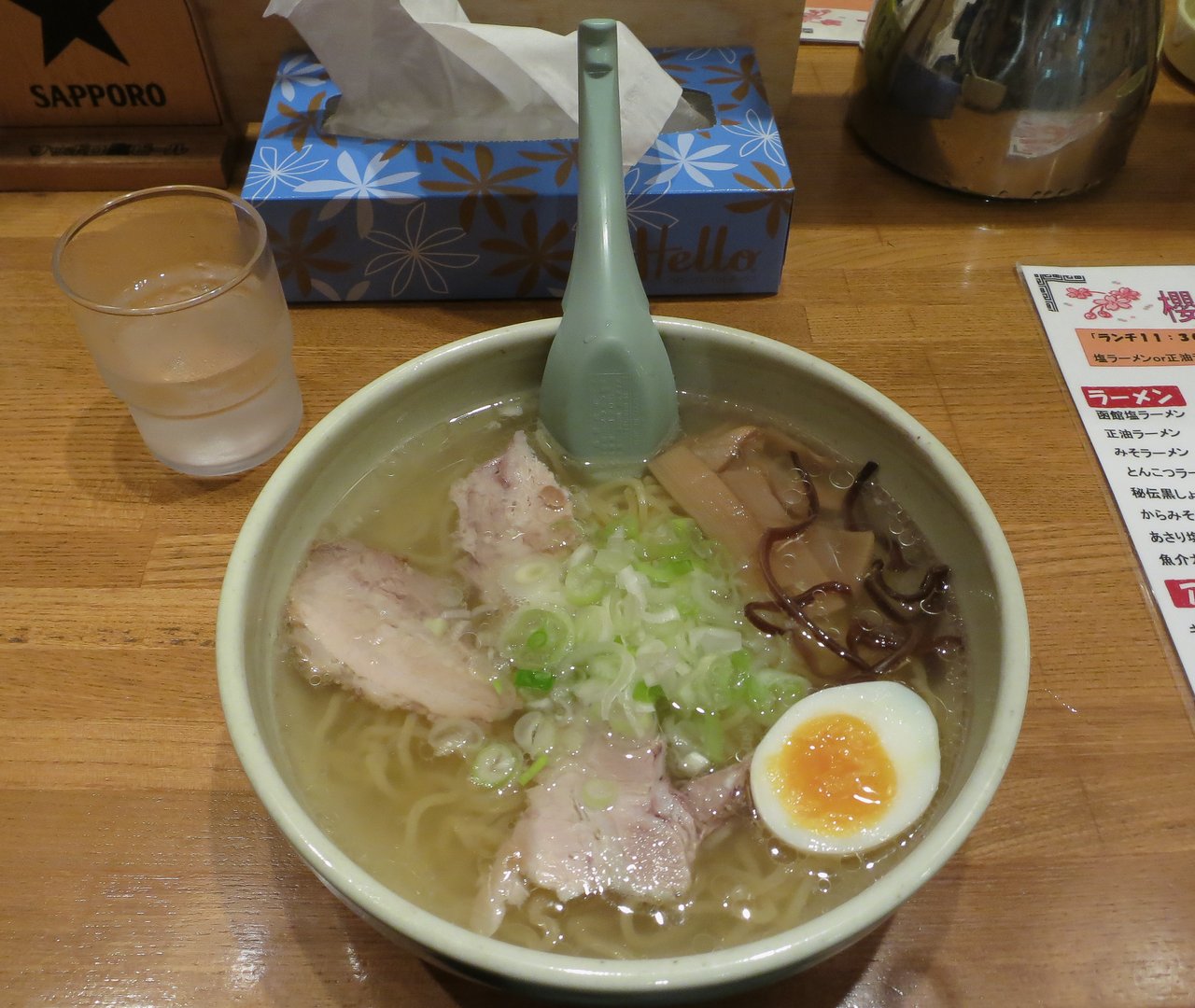
Most ramen cities in Japan go for intensity — thick miso, deep tonkotsu, dark soy. Hakodate went the other direction: a broth so clear and refined it catches light like tea. Shio means salt, and the seasoning here works in a way that sounds simple and isn't: the bowl is built from pork bones, chicken bones and dried kombu, seasoned lightly so the ingredients are audible rather than buried. The noodles are thin and slightly wavy, with just enough resistance. You get chashu pork, spring onion, bamboo shoots, and usually a soft-boiled egg. One bowl at Ajisai — which has been doing this since 1930 — and you understand why this city argues it invented Hokkaido ramen.
 2
2
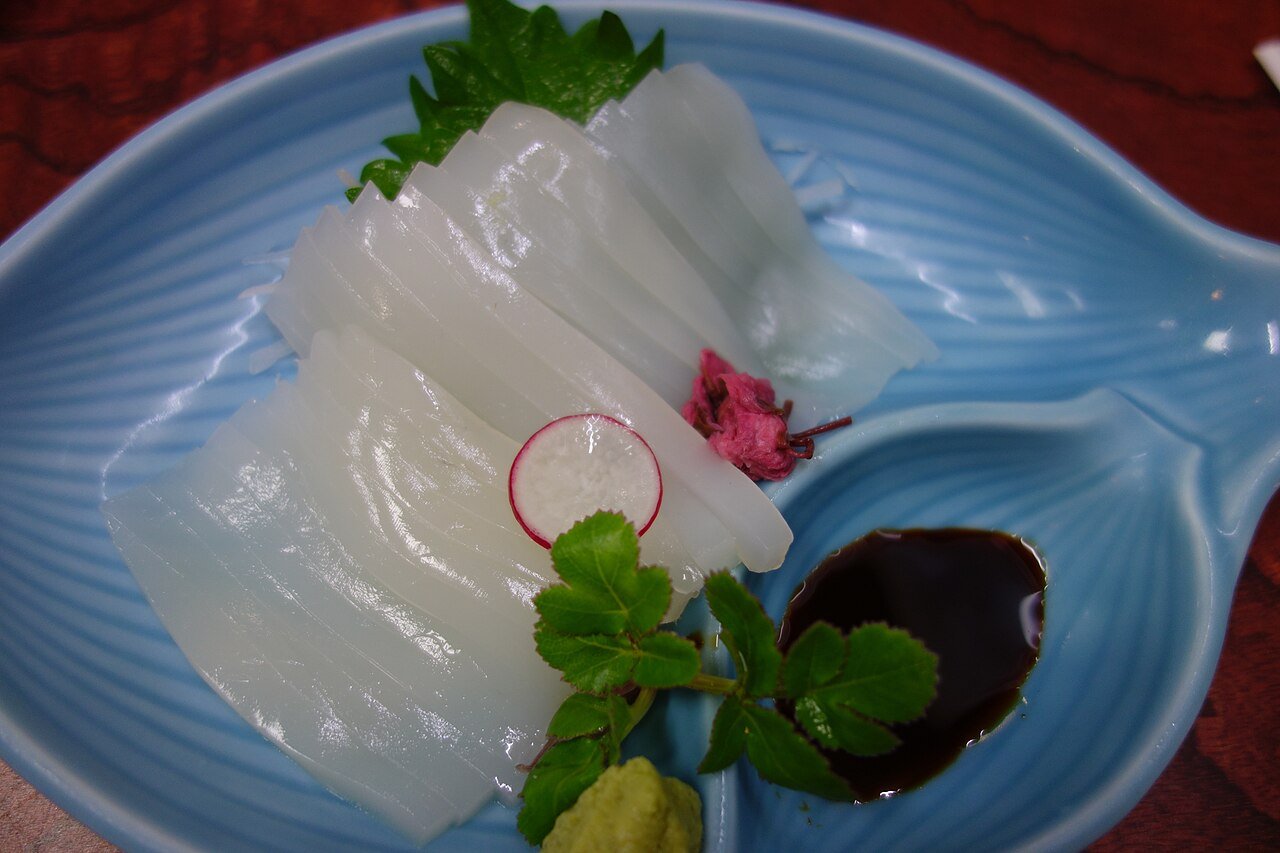
There is a moment when you eat squid sashimi in Hakodate that you understand why people who live in Hokkaido still make special trips here for it. The squid caught in the Tsugaru Strait — particularly the surume ika variety — is sweet and has a clean, almost delicate chew that sets it apart from squid found inland or shipped further. The season runs from June 1 through October, when the squid is at its absolute best. Order it as straight sashimi with wasabi and soy, or — if you want the full Hakodate experience — as Iki-Ika Odori-don: a rice bowl where the freshly cut squid tentacles still move after serving, a phenomenon caused by sodium in the soy sauce triggering the muscle fibres.
 3
3
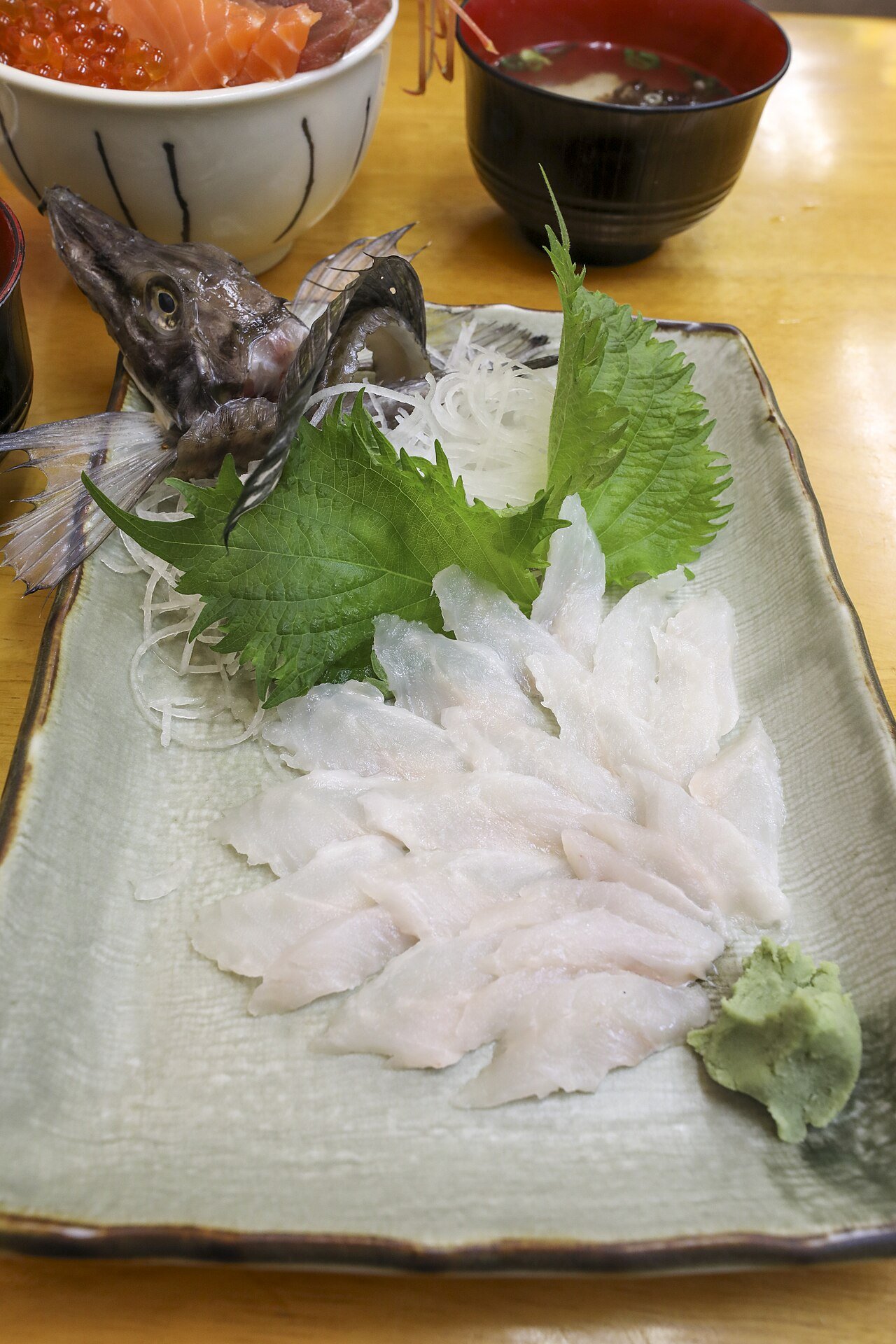
If you eat one meal in Hakodate, make it a kaisen-don at Donburi Yokocho. The alley of 19 restaurants opens at 6 am, when the day's catch is at its most vivid. A bowl of hot steamed rice is piled with thin-sliced squid, salmon, ikura (salmon roe), sea urchin, scallop, crab, and whatever else came in that morning. Some restaurants let you customise your own combination from a tray of toppings. Pair it with a bowl of hot miso soup made with crab or clam broth, and the meal feels like the ocean has been handed to you in a bowl. Some restaurants sell out of premium toppings well before noon.
Japan has a culture of ekiben — bento sold at railway stations — and Hakodate's entry into that tradition is one of the country's most celebrated. Ikameshi is a small whole squid, its body cavity packed with a blend of two glutinous rice varieties, then braised slowly in a sweet soy broth. As it cooks, the rice swells and absorbs the squid's flavour from the inside while the squid takes on the sweetness of the soy from the outside. The result is dense, savoury-sweet and deeply satisfying — it tastes like umami concentrated into a small parcel. The original came from Mori Station, east of Hakodate, in 1941. You do not need to go to Mori: it is sold at Asaichi, JR Hakodate Station shops, and souvenir stores throughout the city.
 5
5
The word yakitori means grilled bird, and visitors arriving expecting chicken often do a double-take when the menu arrives. In Hakodate, yakitori almost invariably means pork skewers — the local tradition goes back to a time when pork was more economical and nutritious than chicken in the cold north, and it stuck. Each stall has its own basting sauce — typically a blend of soy, mirin, sake and sugar — and the skewers come off the charcoal grill glistening and smoky. The best setting for this is Daimon Yokocho, a lane of small counter-seat izakayas five minutes on foot from the station. Charcoal smoke drifts from the doorways from 5 pm, and a couple of cold Sapporo beers and five or six skewers costs less than dinner at most ramen shops.
Every city deserves a restaurant that is entirely its own, and Hakodate has Lucky Pierrot. Founded in 1987, it now has 17 branches — every single one in Hakodate, with no plans to franchise elsewhere. It was voted Japan's best local burger chain, which matters less than the actual experience: you order the Chinese Chicken Burger, a piece of fried chicken coated in a sweet-and-sour sauce that sits inside a soft white bun, and you wonder why the combination works so well and why you have not encountered it anywhere else. Prices are modest. The branch outside JR Hakodate Station is the easiest to reach, and the interior decor is cheerfully chaotic in the way that only confident local institutions can get away with.