Home Beppu Japan Beppu Onsen About
Home  ›  Asia  ›  Japan  ›  Beppu  ›  Things to do
♨️ Beppu Attractions · 2026

Beppu is Far More Than a Hot Spring
7 Hells, black-sand baths, wild macaques — a city that boils beneath your feet

Steam rises from drains, gaps in the pavement and the rooftops of a thousand houses. Beppu does not just offer relaxation — it shows you what the earth looks like when it refuses to stay still.

Why Visit

A City Where the Ground Itself is the Attraction

Most people arrive in Beppu expecting to soak and leave. What they do not expect is a cobalt-blue pond that looks like the Caribbean transplanted inside a Kyushu hillside, a blood-red pool that has been quietly simmering for over 1,300 years, or a hillside of mud bubbles that look exactly like a monk's freshly shaved head — none of it designed, all of it just here. Beppu discharges more geothermal water than anywhere else in Japan except Yellowstone on a global scale: around 130,000 kilolitres a day from over 2,800 springs.

We have put together 6 essential experiences that cover Beppu honestly — what each one actually feels like, how much it costs, the best order to visit, and a 1-day and 2-day route that we have tested rather than invented.

Top Sights

6 Experiences Worth Your Time in Beppu

Ordered by what visitors talk about most after they leave
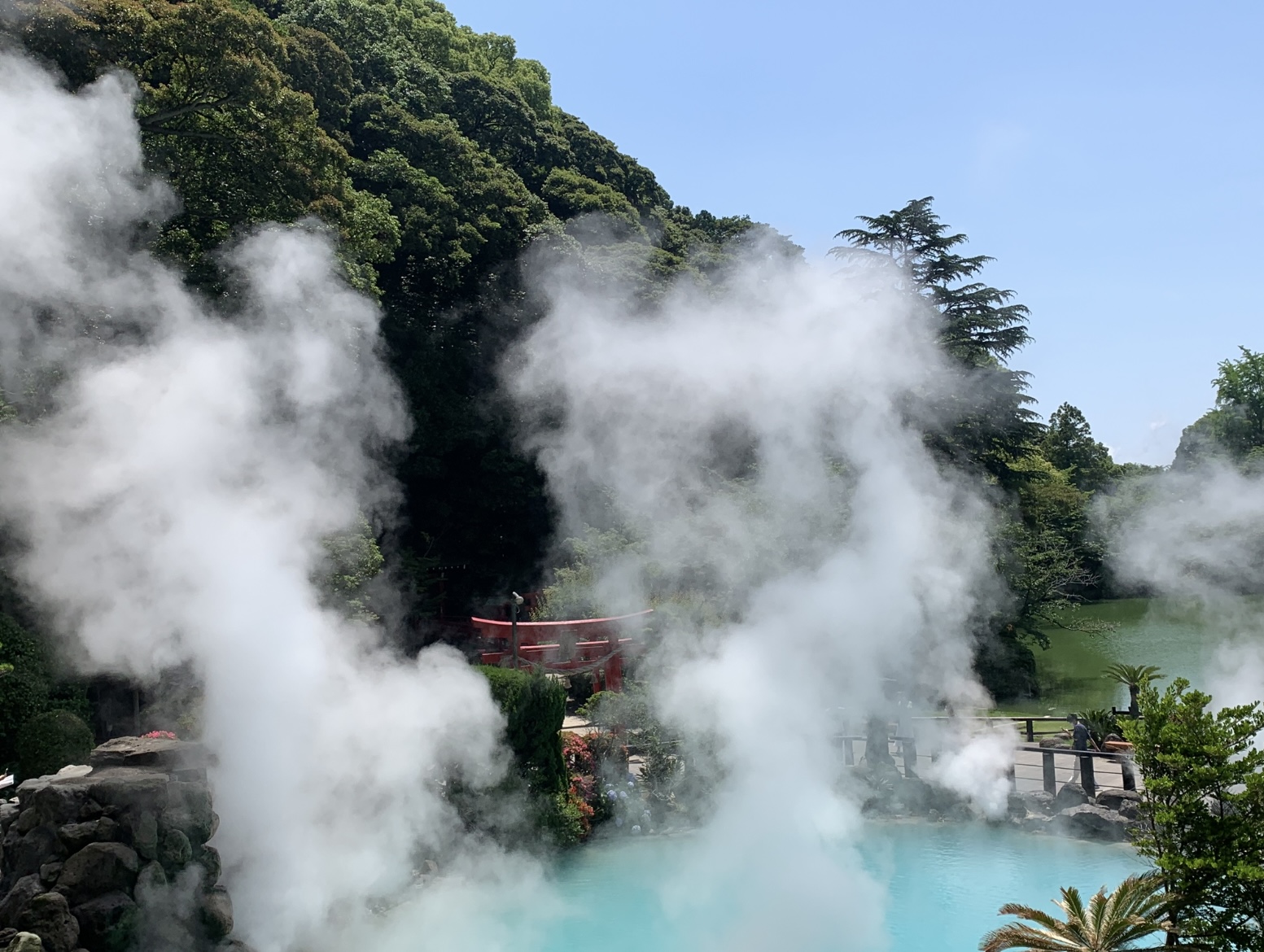
Umi Jigoku (Sea Hell) Beppu — cobalt-blue geothermal pond with billowing white steam, red bridge, lush green trees 1
Jigoku Meguri — The 7 Hells Tour (地獄めぐり)
Beppu's unmissable headline · Seven steaming ponds you VIEW, not bathe

The question everybody asks first: why hells? Because the temperature runs 90–99°C — no human is getting in. What you get instead is something rarer: a circuit of seven naturally coloured geothermal pools that look like the earth is showing off. Umi Jigoku (Sea Hell): cobalt blue, hot spring-blue so vivid it stops conversation. Chinoike Jigoku (Blood Pond Hell): deep red from iron oxide, recorded in texts 1,300 years ago. Shiraike Jigoku (White Pond): milky and opaque, tropical fish somehow surviving inside. Kamado Jigoku (Cooking Pot Hell): demon-themed with Oni statues and steam treatments for your skin. Oniishibozu Jigoku: grey mud bubbles rise and burst like enormous bald heads. Oniyama Jigoku (Devil Mountain): crocodiles living in the geothermal warmth. Tatsumaki Jigoku: a geyser that erupts every 30–40 minutes on schedule.
Combo ticket: ¥2,200 adults · ¥1,000 children (covers all 7; cheaper than buying separately)
Hours: 08:00–17:00 · Allow half a day for both clusters
Clusters: Kannawa (5 hells) + Shibaseki (2 hells) · ~3 km apart · Kamenoi Bus ¥220
Route tip: Start at Kannawa in the morning — pick up steamed corn and eggs (¥100–200) sold at stalls between the ponds. Then bus south to Shibaseki after lunch, timing your arrival at Tatsumaki Jigoku to catch the geyser. Buy the combo at the first hell you enter.
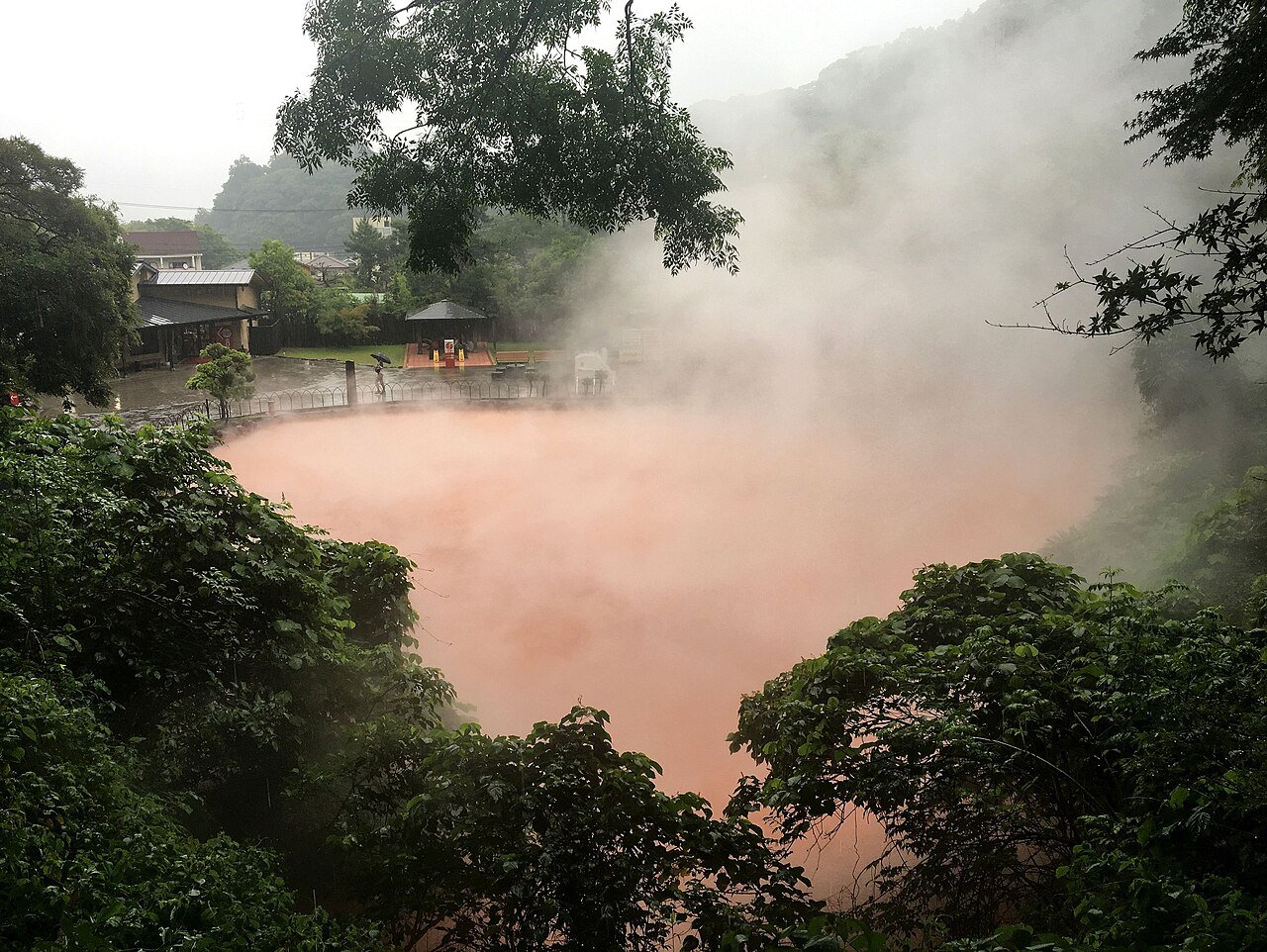
Chinoike Jigoku (Blood Pond Hell) Beppu — deep blood-red geothermal pond with steam rising, 1,300-year-old hell spring 1b
Chinoike Jigoku — Blood Pond Hell (血の池地獄)
Japan's oldest natural hell · Blood-red from iron hydroxide clay

Among the seven, Chinoike Jigoku is the one that lodges itself most stubbornly in memory. The red comes from iron hydroxide and red clay forced up from deep in the earth — the same colour has been here for over 1,300 years, documented in 8th-century Buddhist texts as a manifestation of the actual hell realm. It sits in the Shibaseki cluster alongside Tatsumaki Jigoku (the geyser). If you time your visit to catch the geyser eruption — which staff will indicate with a board — you can see both in under an hour. The site also sells a red "chinoike cream" skin ointment that has been made from the mineral-rich clay here since 1879.
Cluster: Shibaseki — paired with Tatsumaki Jigoku (geyser)
Bus: Kamenoi Bus from Kannawa ~15 min · ¥220
Souvenir: Chinoike soft-serve ice cream (red) ¥350 · mineral skin cream from ¥380
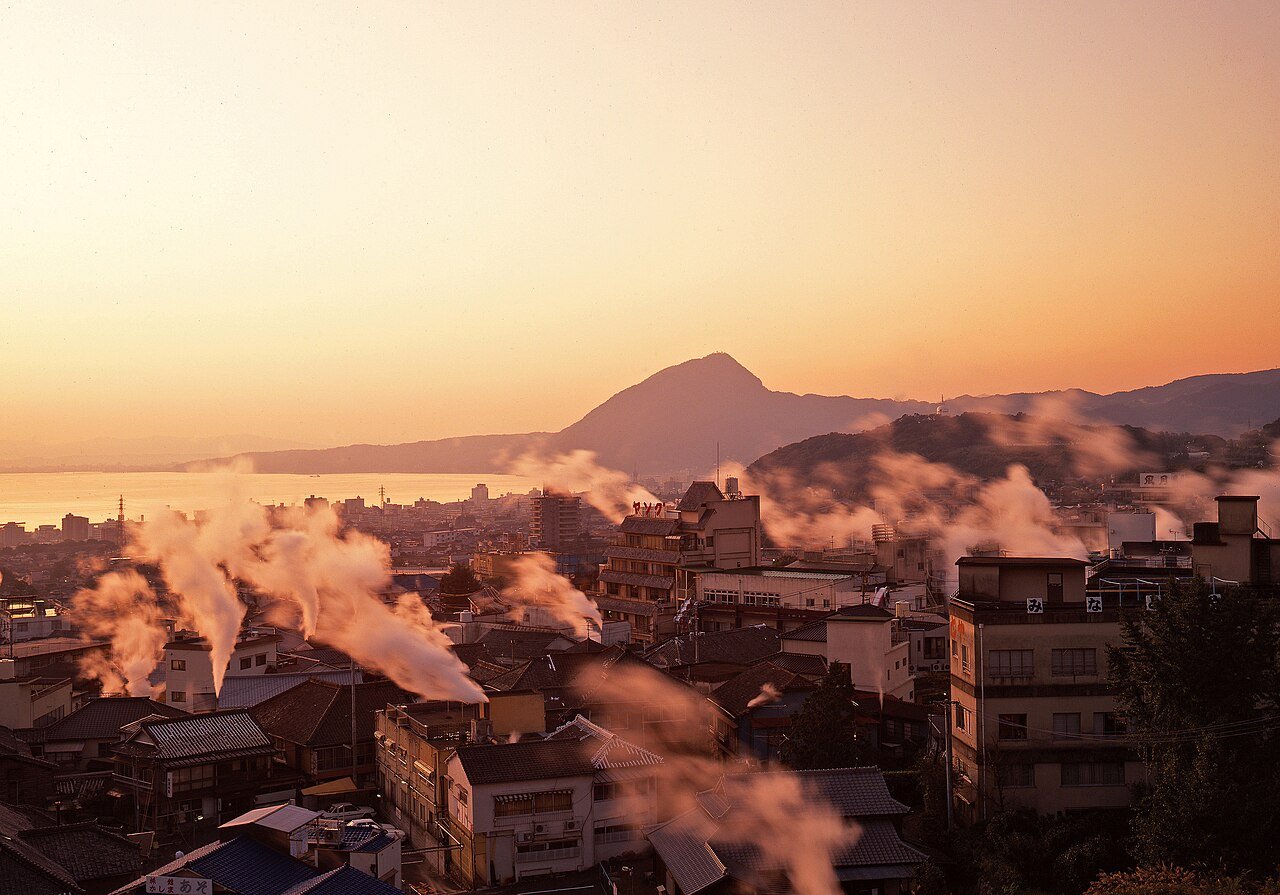
Yukemuri Beppu — white onsen steam rising from rooftops across the city at dawn, Kannawa district viewpoint 2
Yukemuri — The Steam View (湯けむり)
One of Japan's 100 Soundscapes Worth Preserving · Free

This is the sight most visitors do not plan for and remember longest. Yukemuri — literally "hot-spring steam" — is the panorama of white mist rising simultaneously from hundreds of rooftops, drains, gaps in walls and patches of bare earth across the Kannawa district. On a cold morning before the city wakes, it looks like the whole town is dreaming. The Japan Environment Ministry selected it as one of Japan's "100 Onsen Soundscapes Worth Preserving". There is a raised viewing platform in the Kannawa district that frames the scene across the rooftops perfectly. It costs nothing to stand there.
Best time: Before 08:00 · October–March gives the densest steam (cold-air contrast)
Viewpoint: Kannawa district, near Kannawa Mushi Onsen — multiple vantage points
Free: No entry charge
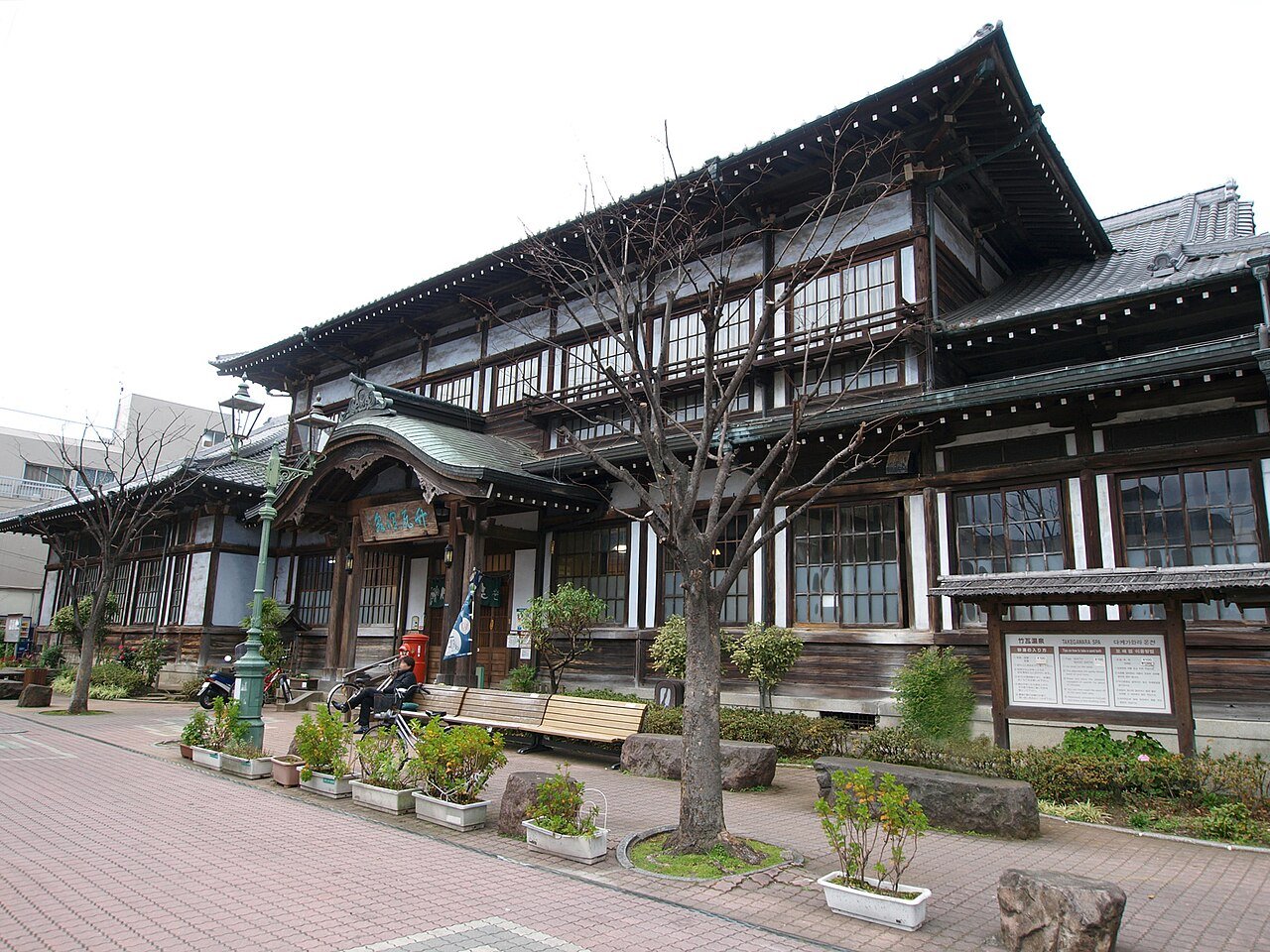
Takegawara Onsen Beppu — late-Meiji era wooden bathhouse, traditional Japanese architecture, home of Beppu's sand bath 3
Sunamushi Sand Bath at Takegawara (砂湯)
Buried in naturally heated black sand · Meiji-era wooden bathhouse

The idea sounds odd until you try it. You change into a provided yukata, lie down on the indoor beach, and staff shovel naturally geothermally heated black sand — held at about 50–55°C — over your body from neck to toes. The weight presses gently, the heat works inward. After 10–15 minutes you rinse off in the adjacent onsen bath. It is somewhere between a massage, a hot spring and being gently buried by a very warm beach. Takegawara Onsen itself is worth visiting for the building alone — wooden ceilings, creaking floorboards, late-Meiji construction that has barely changed in a century.
Price: ¥1,500 per person including yukata + onsen after
Address: Takegawara Onsen, central Beppu · Hours: 08:00–22:30 (closed Wed)
From JR Beppu: 10–12 minutes on foot
Prepare: Remove metal jewellery before entering — it heats up in the sand. Long hair should be tied up. Towels available for hire at ¥100–200.
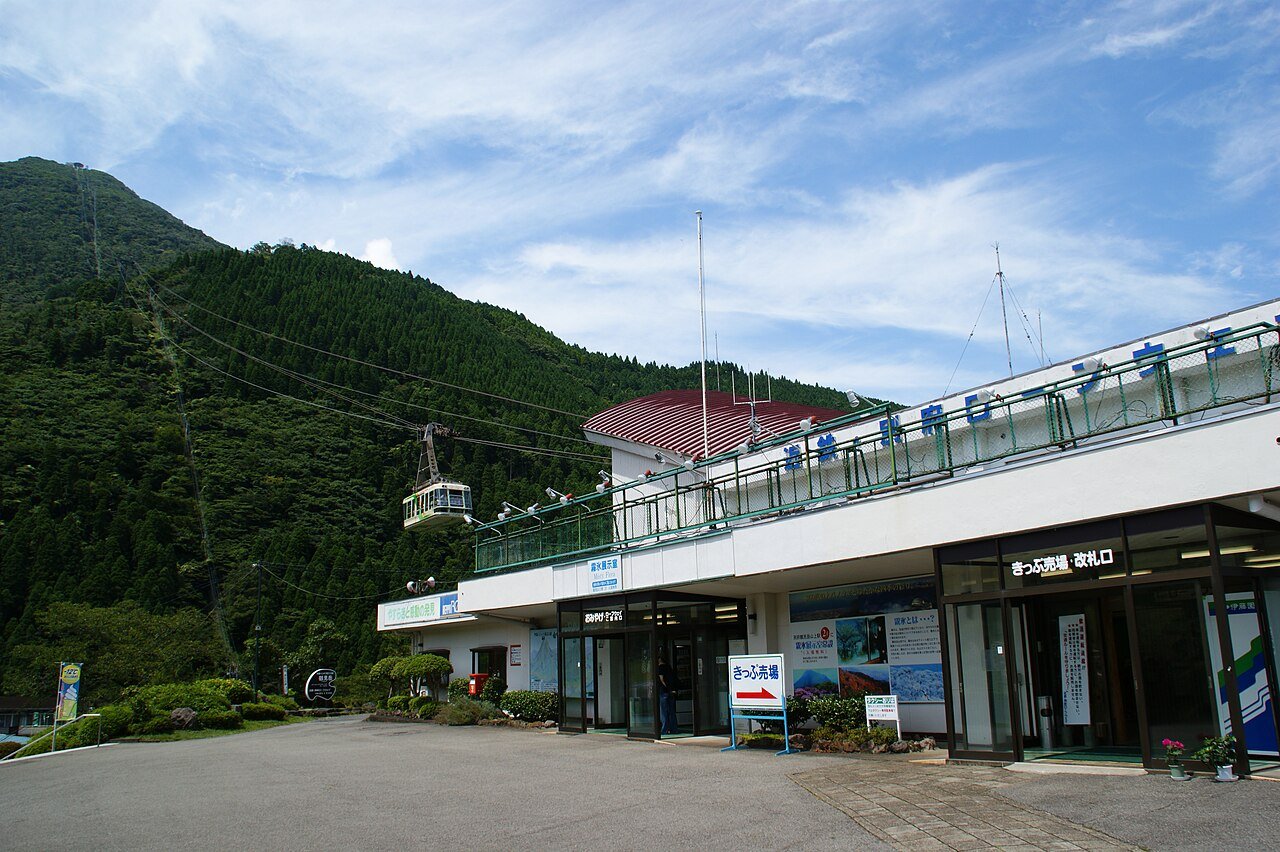
Mt Tsurumi Ropeway Beppu — cable car ascending forested mountain to 1,375 m summit with Beppu Bay panorama 4
Mt Tsurumi Ropeway (鶴見岳ロープウェイ)
1,375 m summit in 10 minutes · 360° views of Beppu Bay and Iyo Sea

The ropeway ride itself is the experience. In ten minutes of ascent you watch the steam rising from hundreds of points across the city below, Beppu Bay stretching out toward the horizon, and on clear days the distant outline of Shikoku across the Iyo Sea. The summit at 1,375 m has a small shrine, a rest house and a viewing terrace. In spring (April–May) the upper slopes are covered in rhododendrons; in autumn (October–November) the foliage turns the mountain orange-red. If the weather closes in — which happens — the cable stops running, so check conditions before making the trip out.
Tickets: ¥1,800 return · ¥950 one way · Children ¥900/¥480
Hours: 09:00–17:00 · May suspend in strong winds
From JR Beppu: Kamenoi Bus Line 34, ~25 minutes
Book ahead: Klook carries combo and advance tickets for the ropeway — see Tsurumi Ropeway tickets on Klook →
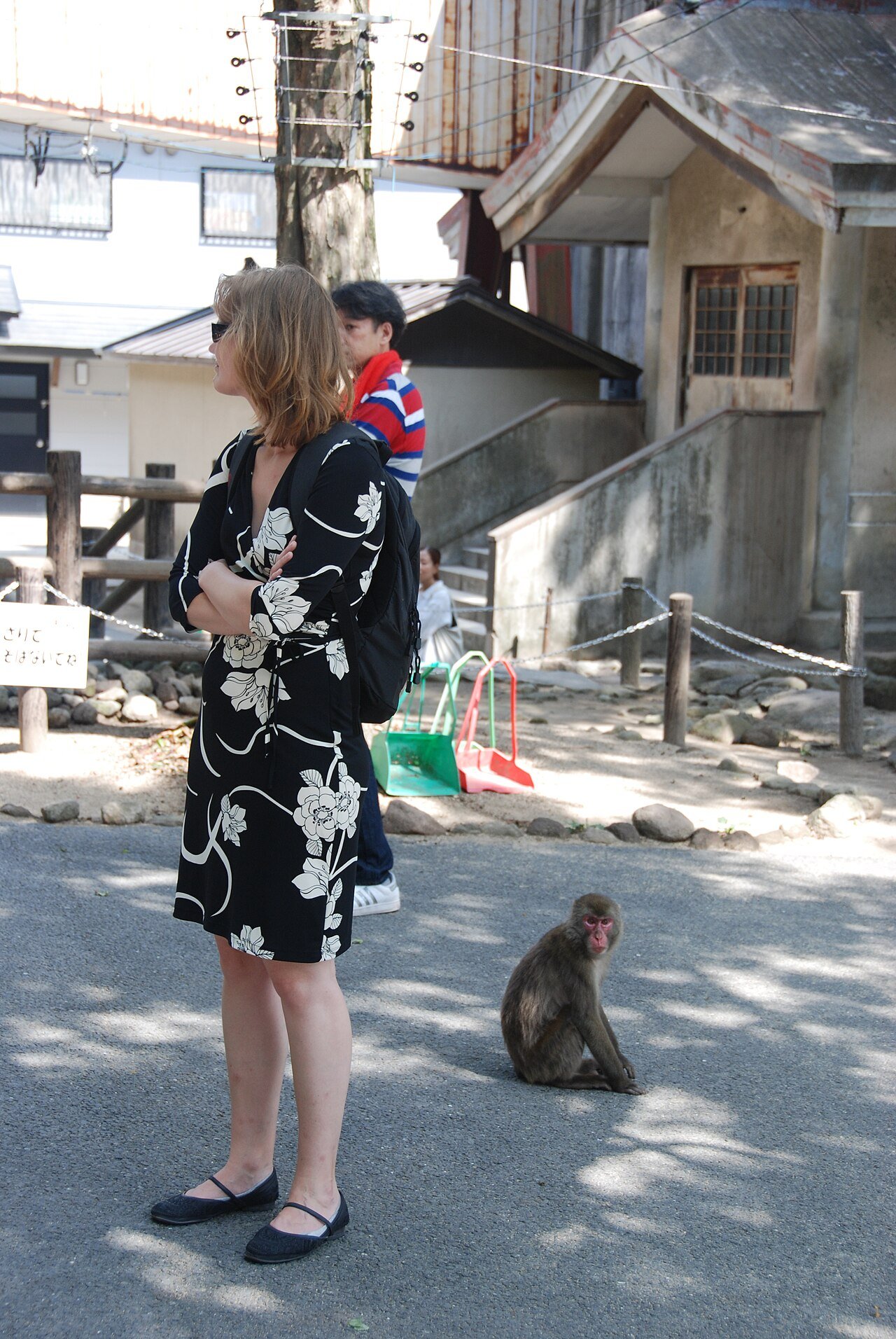
Takasakiyama Monkey Park Beppu — group of wild Japanese macaques on a forested mountain between Beppu and Oita 5
Takasakiyama Natural Zoological Garden (高崎山自然動物園)
~1,000 wild Japanese macaques · Family-friendly · Between Beppu and Oita

This is not a zoo. Takasakiyama is a forested mountain where roughly 1,000 wild Japanese macaques (snow monkeys) live freely and descend to a feeding area near the base of the trail. You walk in through the trees — no cage, no glass — and the monkeys are simply there. An older male sits on a rock. A mother carries a tiny infant on her back. Three juveniles chase each other past the path at waist height. Staff feed the troops on a schedule, which draws the monkeys down in groups; on busy mornings you may see over a hundred at once. It is particularly good with children — approachable, naturalistic and genuinely unpredictable.
Tickets: ¥520 adults · ¥260 children · Hours: 08:30–17:00
Location: Between Beppu and Oita city — bus from JR Beppu ~30 min
Note: Do not feed the monkeys · Secure loose items · Cameras and bags can attract attention
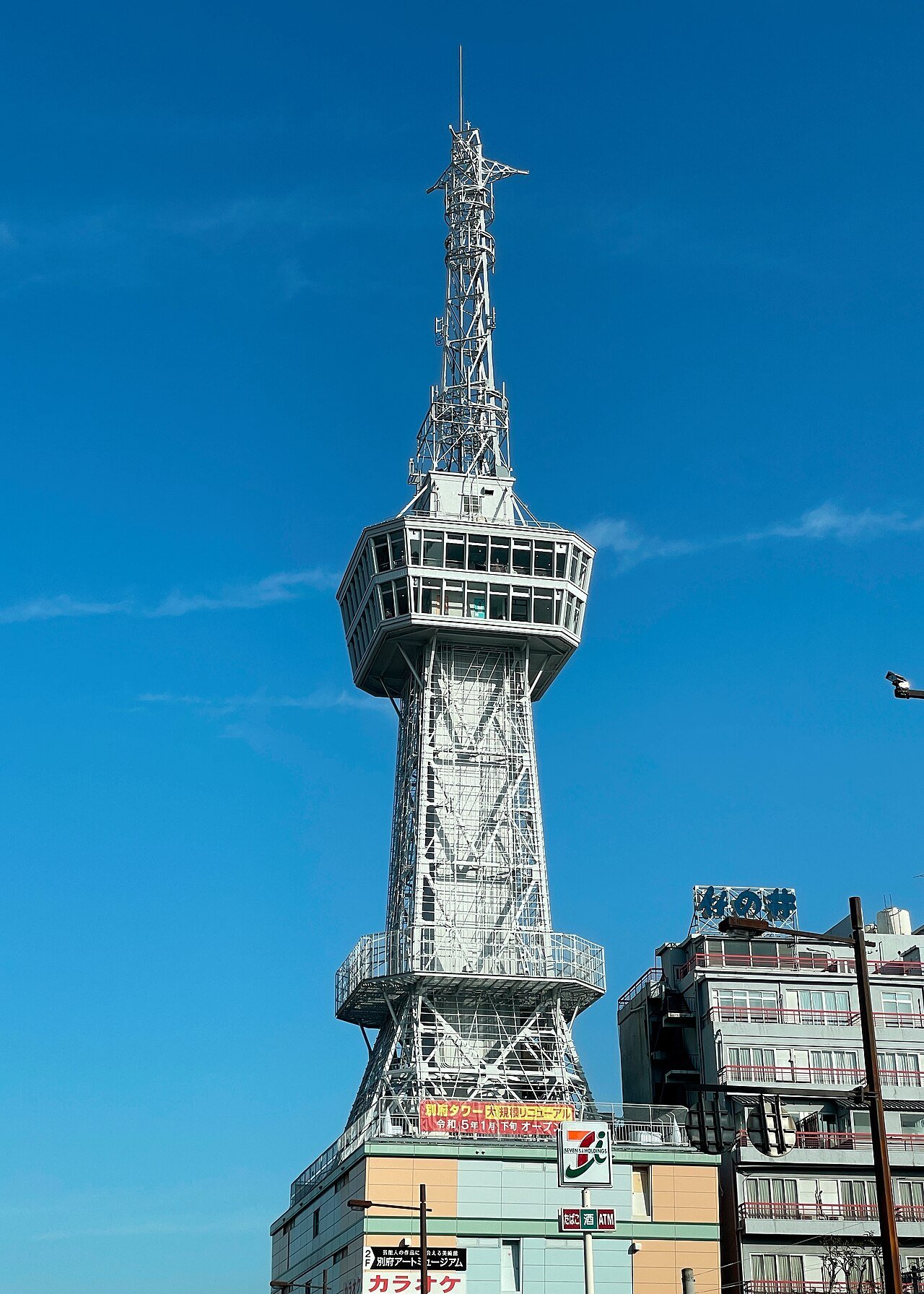
Beppu Tower retro landmark 1957 with Beppu Bay in the background — city steam and sea view from the observation floor 6
Beppu Tower + Beppu Bay (別府タワー)
Asia's oldest standing tower · Built 1957 · City and sea panorama at dusk

Beppu Tower was built in 1957 by the same architect who designed Tokyo Tower, making it the oldest tower of its type still standing in Asia. It is not tall by modern standards, but the view from the observation floor captures what the ropeway cannot: the relationship between the city — steaming, low-rise, half-hidden in mist — and the bay behind it. At dusk, the water turns silver-grey and the city lights come on through the haze. The tower sits in the middle of Beppu's main shopping arcade, so combining it with an evening walk and dinner requires no planning at all.
Tickets: ¥200 adults · ¥100 children · Hours: 09:00–22:00
From JR Beppu: 7–8 minutes on foot along Ekimae-dori
Best time: After 17:00 — city lights, bay reflection, steam visible against dark sky
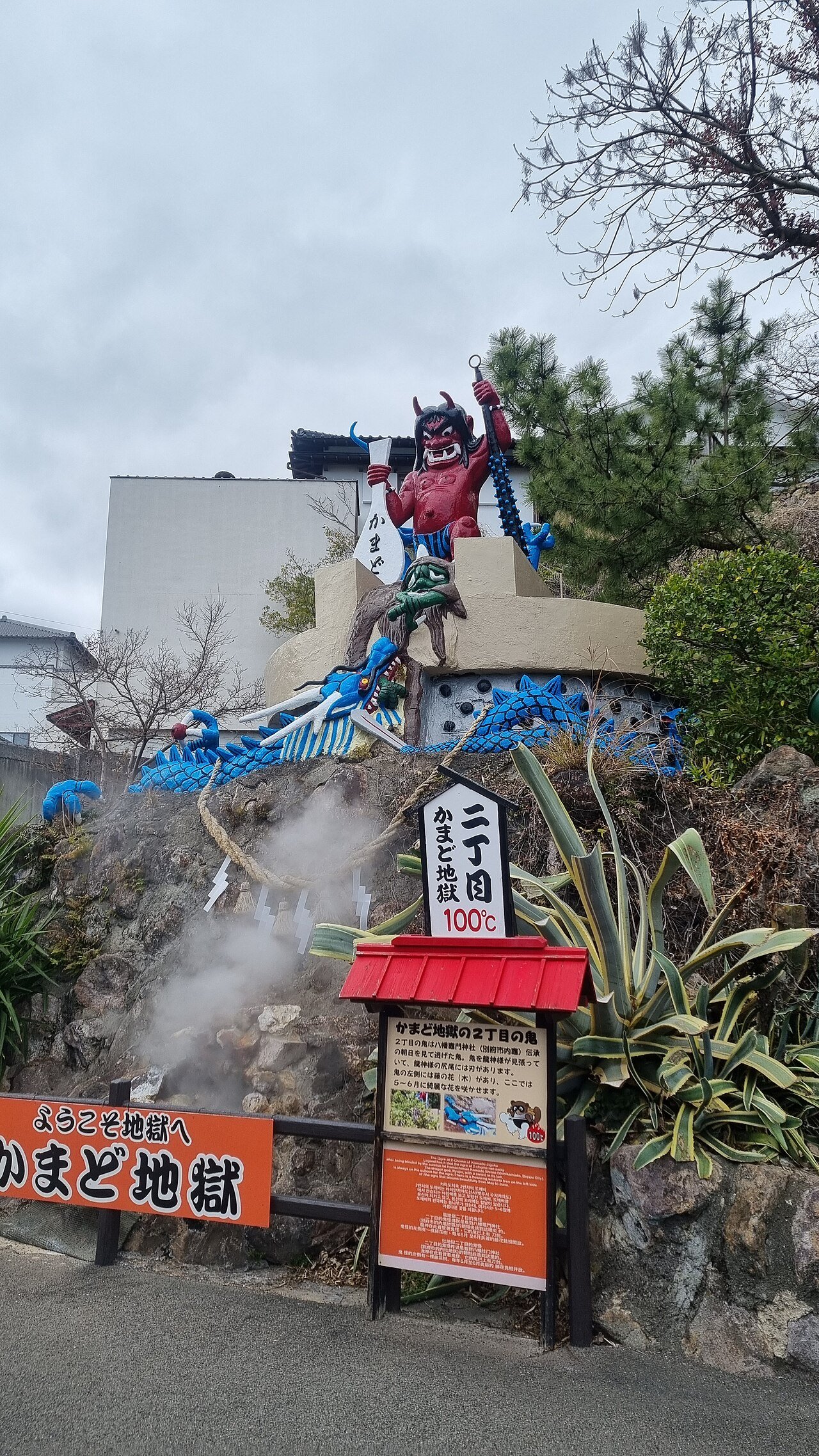
Kamado Jigoku Beppu — demon-themed hell with Oni statue, red bubbling mud, steam — part of Kannawa jigoku cluster 1c
Kamado & Shiraike Jigoku — Demon Pot and White Pond
Often overlooked · Two of the most distinctive hells in Kannawa

Two Kannawa hells that visitors sometimes rush through are worth slowing down for. Kamado Jigoku (Cooking Pot Hell) is built around the theme of the Buddhist hell kitchen — a large red Oni statue stands at the gate, and the site has half a dozen small pools of different temperatures with a steam booth where you can hold your face over gently vented steam for skin benefits (around 45–50°C, genuinely tolerable). Shiraike Jigoku (White Pond Hell) is quieter than the others: pale milky water coloured by silica and calcium, shallower than the other ponds, and — remarkably — home to tropical fish that survive in the warm, mineral-rich water. Both are inside the Kannawa cluster and walkable from Umi Jigoku.

Cluster: Kannawa — walkable from Umi Jigoku and each other
Tickets: Included in ¥2,200 Combo Ticket
Tip: Allow 35–45 minutes at Kamado for the steam treatment experience
Route Planning

One Day or Two — How to Make the Most of Beppu

Beppu's sights are compact enough that one day works well; two days lets you breathe

1-Day Route — The Full Highlights
Start 08:00 · Finish ~17:00

08:00–08:30 Yukemuri dawn view at Kannawa (steam thickest before the city wakes) · 08:30–12:30 Jigoku Meguri Kannawa cluster — Umi / Kamado / Shiraike / Oniishibozu / Oniyama (buy combo at first gate; pick up steamed snacks along the way) · 12:30–13:30 Lunch in Kannawa (local restaurants from ¥1,000–1,500) · 13:30–15:00 Kamenoi Bus to Shibaseki → Chinoike Jigoku + Tatsumaki geyser · 15:30–16:30 Return to central Beppu, Takegawara Onsen sand bath (book ahead on busy weekends)

Budget: ¥5,000–6,000 per person (hells + sand bath + buses + meals) · Day pass: Kamenoi 1-day bus pass ¥1,100 — saves money vs single fares
2-Day Route — Add Ropeway and Monkeys
Day 2 in the green hills

Day 1: Follow the 1-day route above. Evening: soak in a public onsen (kōshū onsen from ¥100–200) and walk the Ekimae shopping arcade · Day 2 morning: Takasakiyama Monkey Park (opens 08:30 — monkeys gather in larger groups early) · Day 2 afternoon: Mt Tsurumi Ropeway (check weather first) — 10-min ride to 1,375 m · Day 2 evening: Beppu Tower at dusk + seafood dinner near the harbour

Budget: ¥8,000–10,000 per person over 2 days (excluding accommodation) · Stay in Kannawa: Walk to the hells at night when steam looks best against the dark sky
Getting to Beppu
Flights, trains and buses

From Oita Airport (OIT): Airport Liner bus direct to JR Beppu ~45 min, ¥1,500 · From Fukuoka: Sonic Limited Express train ~2 hours, ¥4,000–5,000 (JR Pass accepted) · From Oita city: JR Kyushu local train 15 min, ¥200 · Within Beppu: Kamenoi Bus covers all sights; 1-day pass ¥1,100 is good value for a full day

JR Pass: Valid on the Sonic Express from Fukuoka — worthwhile if visiting multiple Kyushu cities · Shinkansen: No direct shinkansen; change at Kokura or Hakata
Beppu + Onsen (the full picture)
Link to the onsen guide

Beppu has over 2,000 hot-spring sources organised into 8 distinct onsen towns known collectively as the "Beppu Hatto" (Eight Baths). Each district has different mineral content, water colour and character — from Takegawara's sand bath to Kannawa's steam cooking and Myoban's hillside ryokan with sulphur-yellow water. For the full district guide read — Beppu Onsen Guide →

Public onsen: ¥100–200 per soak · Ryokan onsen: ¥1,000–3,000 with private rooms · Best districts: Kannawa for atmosphere, Myoban for outdoor rock baths
FAQ

Questions Before You Go

How much does the Jigoku Meguri combo ticket cost, and is it worth it?
The combo ticket covering all 7 hells costs ¥2,200 for adults and ¥1,000 for children. Buying each separately at ¥400–450 per site would cost more, so the combo is better value if you plan to see all seven. Most visitors describe it as easily worthwhile — especially Umi Jigoku's impossible blue and Chinoike's blood-red pond, which look like nothing else in Japan.
Can you bathe in the hell ponds?
No — water temperatures run from 90 to 99°C, hot enough to boil eggs and corn (both sold at the sites). All seven hells are strictly viewing attractions, not bathing spots. For a genuine soak, Beppu has over 2,000 onsen including cheap public bathhouses from ¥100–200 — see the full guide at Beppu Onsen Guide →
How does the Sunamushi sand bath work, and what should I bring?
Staff provide a yukata robe and you lie down in the sand area. They shovel naturally geothermally heated black sand — around 50–55°C — over your body from neck to feet. You stay buried for about 10–15 minutes; the sand's weight provides gentle pressure while heat soaks into muscles. The entry fee is approximately ¥1,500, which includes the yukata and an onsen bath afterwards. Remove metal jewellery before entering — it heats up in the sand.
When is the best time to see Yukemuri?
Early morning before 08:00, especially during cooler months (October–March), gives the most striking view. The temperature differential between cold air and the geothermal water makes the steam billow much higher than in summer. The Kannawa district viewing area near Kannawa Mushi Onsen is the most photographed vantage point. Yukemuri is free to view at any time.
How far apart are the Kannawa and Shibaseki clusters, and how do I get between them?
The two clusters are about 3 km apart — too far to walk comfortably. The Kamenoi Bus connects them regularly (roughly 15 minutes, ¥220); a taxi costs approximately ¥800–1,000. Kannawa holds 5 of the 7 hells (Umi / Shiraike / Kamado / Oniishibozu / Oniyama); Shibaseki has 2 (Chinoike / Tatsumaki). The most practical approach: Kannawa in the morning, lunch there, then bus to Shibaseki in the afternoon — timing arrival at Tatsumaki Jigoku to coincide with the geyser eruption (every 30–40 minutes).
Klook · Beppu Tours

Jigoku Hell Combo, Tsurumi Ropeway and Beppu Day Trips — Skip the Queue

Jigoku Meguri combo tickets covering all 7 hells, Mt Tsurumi ropeway passes and day-trip tours from Fukuoka — book on Klook in advance and arrive with your entry sorted.

See Beppu Tours on Klook →
Wherebest is an affiliate partner of Klook. We may earn a commission when you book through our links, at no extra cost to you.