Home Beppu Japan Oita About
Home  ›  Japan  ›  Beppu  ›  Food Guide
Beppu Food Guide · 2026

What to eat in Beppu
6 dishes before the steam clears

Beppu is Japan's hot-spring capital — but the steam rising from every crack in the pavement also cooks the food. Crispy toriten chicken tempura dipped in ponzu, clams and corn steamed over live volcanic vents, a bowl of cold noodles after an afternoon soak. Here is where to start.

Why eat here

A kitchen fired from underground

Beppu discharges more hot-spring water per day than almost anywhere on earth — second in volume only to Yellowstone. That geothermal energy doesn't just run the bathhouses: in the Kannawa district, steam from natural volcanic vents has been used to cook food for over four hundred years. The technique is called jigoku-mushi (地獄蒸し) — "hell steaming" — and the flavours it produces are unlike anything cooked by conventional heat.

Alongside the steam-cooking tradition, Oita prefecture — where Beppu sits — has its own regional kitchen. Toriten, a lighter, crispier version of chicken tempura served with ponzu and karashi mustard, is the dish Oita people claim with real pride. Dango-jiru, a miso soup laden with wide flat noodles and vegetables, is the comfort food eaten at home. Beppu reimen, cold chewy noodles in clear chilled broth, arrived with Korean influence after the Second World War and became entirely the city's own. We picked six dishes and experiences that together tell the full story.

The essential dishes

6 things to eat before you leave Beppu

Ranked by how irreplaceably local they are — dishes you won't find done quite like this anywhere else.
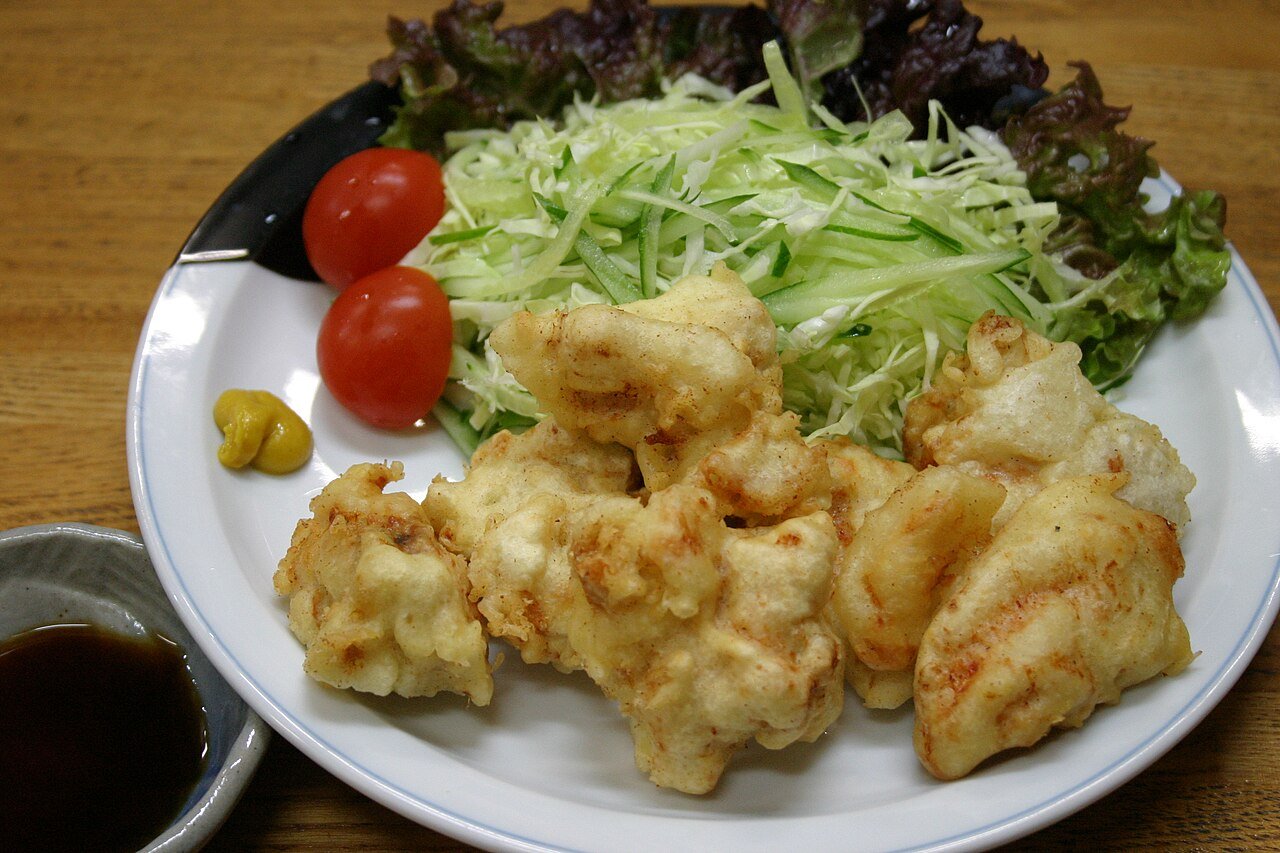
Toriten Oita-style chicken tempura — large pieces of marinated chicken in a thin, airy batter, served on a white plate with ponzu dipping sauce and yellow karashi mustard 1
Toriten (とり天)
Oita chicken tempura · the prefecture's defining dish

Think of the lightest chicken tempura you can imagine — and then make it a little lighter. Toriten starts with chicken marinated in soy, ginger and garlic, then coated in a thin, whipped tempura batter and fried fast until the coating puffs and shatters. The inside stays juicy. You eat it dipped in ponzu (citrus soy) and a streak of hot karashi mustard. Oita has been arguing about who invented it for decades; the restaurant Toyoken on Kitahama Street puts in the most credible claim. Try it once and you will wonder why the rest of Japan isn't doing it this way.
Where: Toyoken (東洋軒 · Kitahama · the originator claimant) · Tokiwa Market food court · neighbourhood teishoku restaurants throughout Beppu and Oita
Price: ¥700–1,200 / set with rice and soup
Rule: Eat immediately — the batter is thinner than karaage and softens within minutes
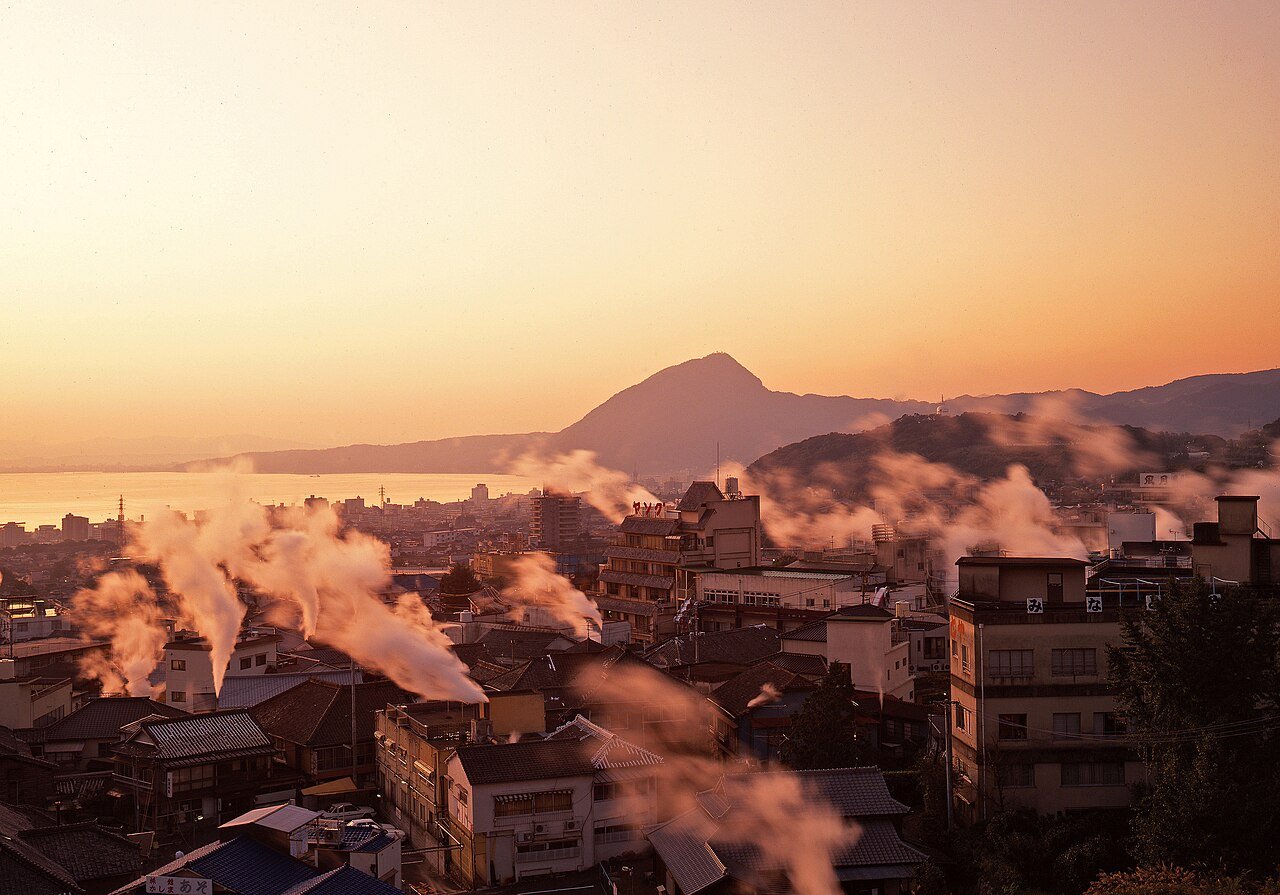
Natural hot-spring steam rising through the streets of Kannawa district, Beppu — thick white vapour from geothermal vents on a cool morning 2
Jigoku-mushi (地獄蒸し)
Hell steaming · four centuries of cooking over volcanic vents

In the Kannawa district, steam erupts from cracks in the ground around the clock. Residents have been placing bamboo baskets of food over these vents since the 1600s — chicken, oysters, prawns, eggs, sweet potato, corn, and a rich caramel custard pudding called jigoku-mushi purin. Everything cooks in 5 to 15 minutes at around 100°C, with no oil added and nothing standing between the ingredient and the steam. The flavours are intensely clean and sweet. Corn tastes like the best corn you have ever eaten. The custard pudding is dense, almost smoky, and it costs ¥300–400 per pot.
Where: Kannawa district · Jigoku Mushi Kobo Kannawa (details in dish 3) · several restaurants near Kannawa Bus Stop
Don't miss: The steam-cooked custard pudding (地獄蒸しプリン) — ¥300–400, sold at stalls near the Kannawa hells
Getting there: Bus 26 from Beppu Station, approximately 25 minutes to Kannawa
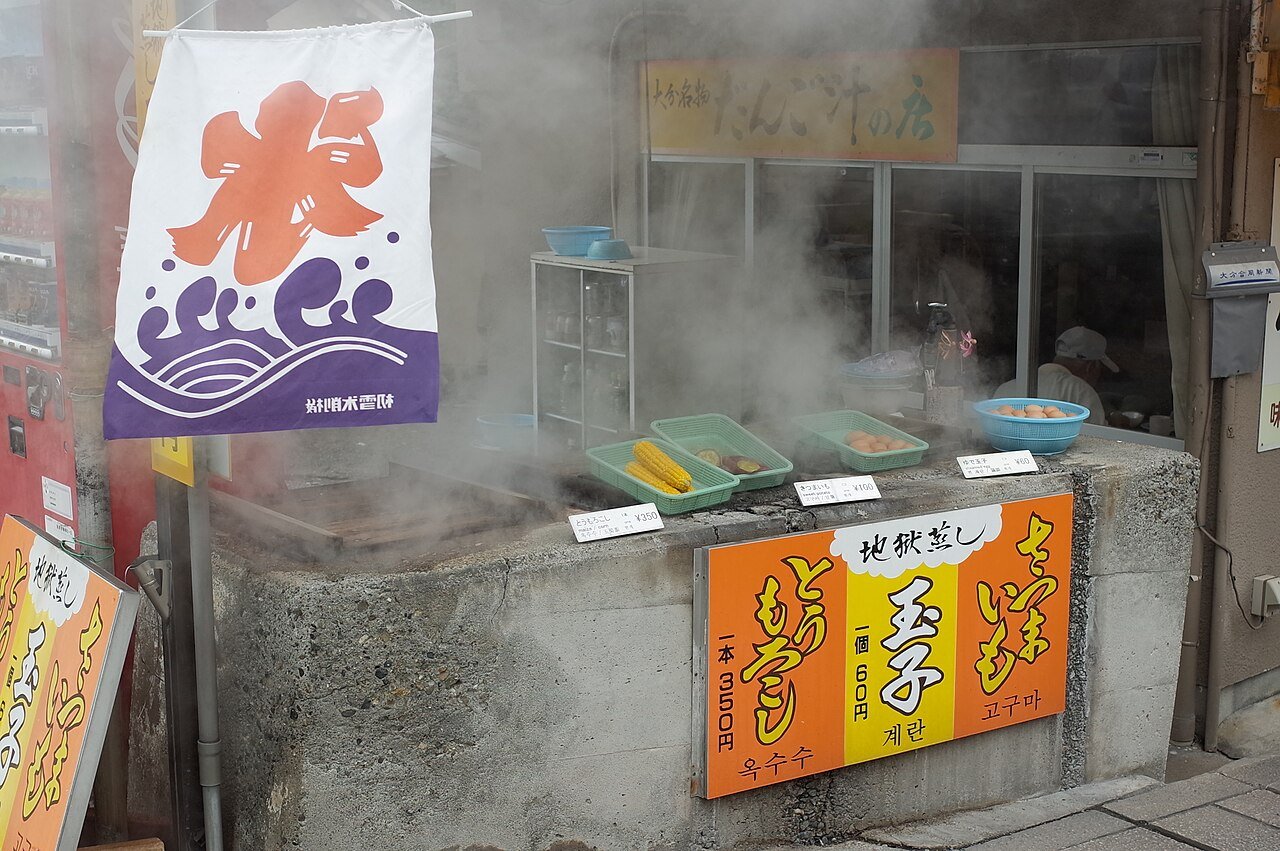
Jigoku-mushi steam stall in Kannawa, Beppu — white volcanic steam rising around a concrete counter, green trays holding corn cobs and eggs, signboards in Japanese and Korean 3
Jigoku Mushi Kobo Kannawa
地獄蒸し工房鉄輪 · steam your own food over a live vent

This is the experience that most visitors come to Kannawa for — and it delivers. You choose your ingredients from the shop next door: prawns, clams, chicken, tofu, vegetables, sweet potato. Pay the steaming fee. A staff member shows you how to place the wooden basket over the actual volcanic vent. Ten to fifteen minutes later, you lift the lid onto perfectly cooked, clean-tasting food that no other method quite replicates. The shop has large Korean-language signage because Korean visitors discovered this place early and word spread fast. The queues on weekends are real.
Address: Kannawa district · 5-minute walk from Kannawa Bus Stop
Hours: 10 am–9 pm · closed Wednesdays · booking recommended on holidays
Price: Steaming fee ¥500–700 / round · ingredients priced separately ¥150–800 depending on choice
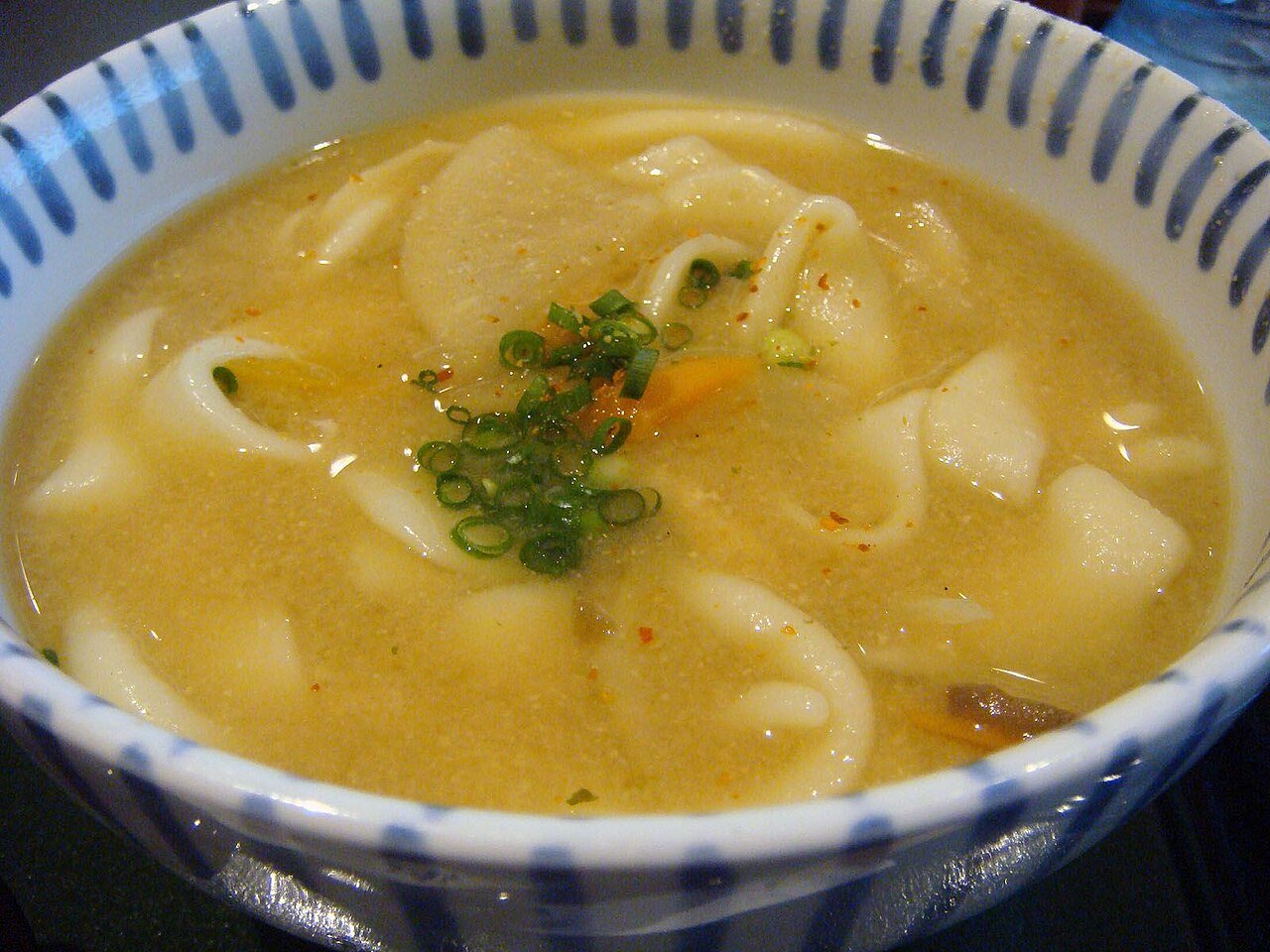
Dango-jiru — a deep bowl of golden miso broth filled with wide flat wheat noodles, daikon, sweet potato and spring onion, in a blue-and-white ceramic bowl 4
Dango-jiru (だんご汁)
Wide flat noodle miso soup · Oita's household comfort dish

Someone once described dango-jiru to me as "the dish that Oita families eat when someone comes home after a long journey." It earns that description. A rich miso broth, darker and more robust than the clear soups you find elsewhere, holds flat wide wheat noodles — wider and more yielding than udon — along with daikon, sweet potato, burdock root, mushrooms and sometimes chicken or pork. The noodles have a pleasant resistance, the broth coats every strand. One bowl is filling. It costs ¥600–900 and warms you from the inside in a way that feels particularly right after a soak in one of Beppu's outdoor baths on a cool evening.
Where: Local restaurants throughout Beppu and Oita · Kannawa district eateries · Tokiwa Market · most shabu-shabu restaurants
Price: ¥600–900 / bowl
Tip: Order as a set with toriten — most teishoku lunch menus pair the two
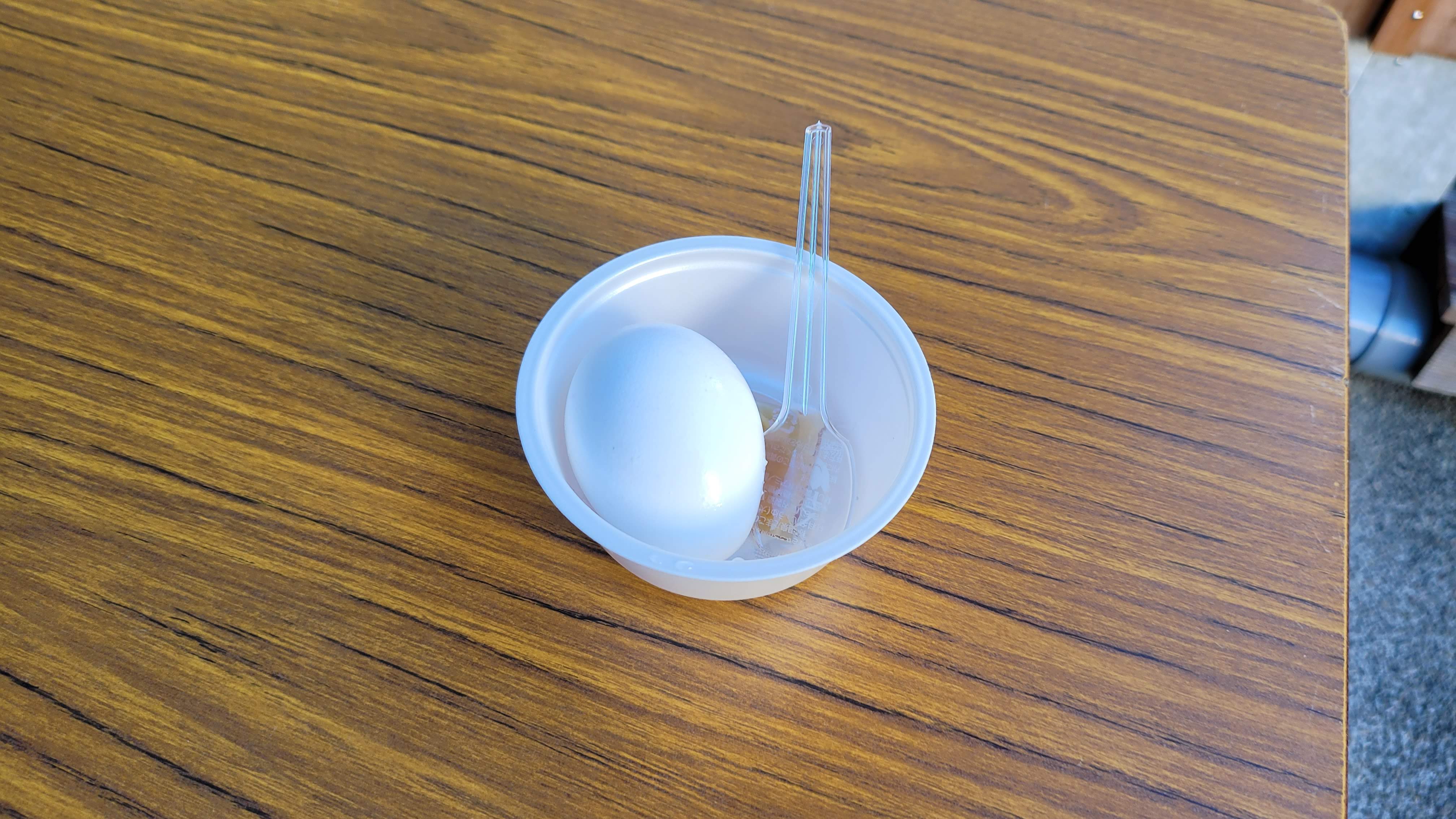
Onsen tamago — a hot-spring-cooked egg served in a small white bowl with a plastic spoon, the egg white set to a soft custard texture 5
Onsen tamago + Steam-Cooked Corn
温泉卵・地獄蒸しとうもろこし · street snacks you can only get here

Before or between main meals, the Kannawa street stalls sell two things worth stopping for. Onsen tamago (温泉卵) are eggs cooked slowly at 68–70°C in the hot spring water itself — the white sets to a silky, trembling custard while the yolk stays bright orange and creamy rather than chalky. One egg costs ¥150–200 and tastes clean and faintly mineral, nothing like a boiled egg. Steam-cooked corn emerges from the volcanic vents sweeter and more concentrated than water-boiled corn because the steam penetrates the kernels without washing flavour out. ¥350–400 per cob, eaten standing on the pavement. Worth every moment.
Where: Street stalls throughout the Kannawa district · convenience stores in Beppu sell pre-packaged onsen tamago year-round
Price: Egg ¥150–200 · Corn ¥350–400
Hours: Stalls generally 9 am–5 pm
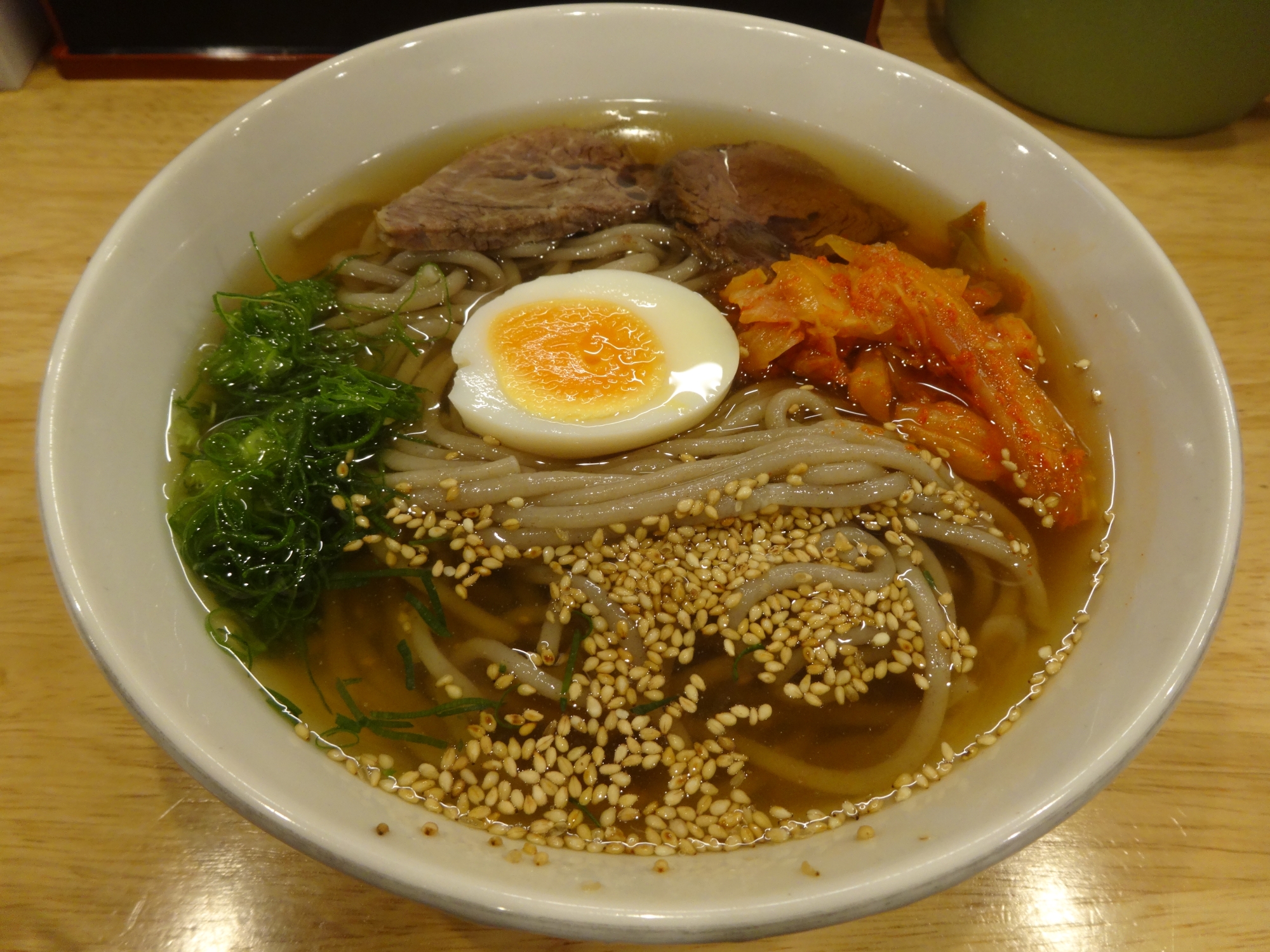
Beppu reimen cold noodles — a wide bowl of grey buckwheat noodles in clear chilled broth, topped with sliced beef, kimchi, a half-boiled egg and scattered sesame seeds 6
Beppu Reimen + Bungo Seafood
別府冷麺・豊後水道の海鮮 · cold noodles and the channel's catch

Beppu reimen began around 1950 when a chef who had lived in Manchuria opened a noodle shop and adapted Korean naengmyeon to local tastes. The noodles — buckwheat flour blended with potato starch — are chewier and denser than ramen noodles. They are served cold in a clear, subtly complex broth alongside braised beef, kimchi, a half-boiled egg and sesame. The combination of cool broth, chew, mild heat and umami is exactly right after a long afternoon in the onsen. Separately, Bungo Channel seafood — flounder, sea bream, snow crab — lands daily at Kitahama market and appears on izakaya menus from the evening.

Reimen: Rokusei (六盛 · near Kitahama) · Shinpachi Shokudo · ramen shops throughout the city · ¥700–1,000
Bungo seafood: Kitahama fish market · izakayas in the Kitahama district from 6 pm
Price: Reimen ¥700–1,000 · izakaya seafood ¥500–2,000 per dish
One day of eating

How to eat Beppu in a single day

A route that covers everything — without much walking.

7:00 am
Breakfast — dango-jiru at a local teishoku shop A set near Beppu Station: miso noodle soup, rice and a couple of toriten pieces. Full before the day begins. Around ¥600–800.
9:30 am
Bus to Kannawa — pick up street snacks along the way One onsen tamago (¥150–200) and one steam-cooked corn cob (¥350) eaten while walking through the Kannawa lanes.
11:00 am
Jigoku Mushi Kobo Kannawa — steam your own lunch Pick prawns, clams and vegetables from the shop next door. Steam over a live vent for 15 minutes. Steaming fee ¥500–700, ingredients ¥500–1,500 depending on what you choose. Order the custard pudding too.
1:30 pm
Back in town — toriten at Toyoken or Tokiwa Market The city's signature dish: light crispy chicken dipped in ponzu and karashi. A lunch set runs ¥900–1,200.
7:00 pm
Dinner — beppu reimen + Bungo seafood at an izakaya A bowl of cold noodles at Rokusei (¥800), followed by fresh fish and shellfish from the Bungo Channel at a Kitahama izakaya. Plan ¥1,500–3,000 per person for the evening.
Where to stay

Hotels in Beppu worth knowing

Sleep close to the food and the steam — from boutique onsen ryokan to a five-star with bay views.

1
ANA InterContinental Beppu
Five-star on Beppu Bay · in-house Bungo seafood dining

The tallest hotel in the city and the clearest view of Beppu Bay from the onsen floor. The in-house restaurant runs a daily menu built around Bungo Channel fish and local produce. Well placed for Beppu Station, the Kitahama dining district and day trips to the hell springs.

2
Suginoi Hotel
Beppu's largest onsen resort · hilltop bay panorama

A classic large-scale onsen hotel on the hill above the bay, with outdoor baths that look straight over Beppu at night. The buffet restaurant includes toriten, dango-jiru and local Oita dishes every day. The best base if you want the full onsen-resort experience without leaving the property.

3
Kannawaen
Boutique onsen inn in Kannawa · walk to Jigoku Mushi Kobo

If you want to spend the morning at the steam-cooking workshop and the afternoon at a private onsen bath, Kannawaen puts you in exactly the right place. A small, well-kept inn in the Kannawa district, five minutes on foot from the Jigoku Mushi Kobo and the Kannawa hell springs. Private baths use the same geothermal water that cooks the food.

Frequently asked

FAQ · Before you go eating

Is jigoku-mushi (hell-steamed food) spicy?
Not at all. Jigoku-mushi cooks food entirely in hot-spring steam at around 100°C — no seasonings are added during cooking. The flavour comes purely from the ingredients: prawns and clams taste intensely sweet and clean, corn is extraordinarily sweet, sweet potato turns creamy. Ponzu, salt and karashi mustard are provided as condiments at the table. It suits everyone, including young children.
Where can I steam my own food over a hot spring?
Go to Jigoku Mushi Kobo Kannawa (地獄蒸し工房鉄輪) in the Kannawa district — about a 5-minute walk from Kannawa Bus Stop, reachable via Bus 26 from Beppu Station (around 25 minutes). Hours: 10 am to 9 pm, closed Wednesdays. Choose fresh ingredients next door, pay the steaming fee (around ¥500–700), and cook over a live volcanic vent. On public holidays and weekends, reservations are strongly advised as queues develop quickly.
Is toriten available everywhere in Beppu, or only at specialist restaurants?
Toriten is the signature of Oita prefecture and appears on menus across the city — in ramen shops, teishoku lunch sets and tempura restaurants. The most famous address is Toyoken (東洋軒) on Kitahama Street, which claims to have created the dish. The food court in Tokiwa Market also serves a reliable version. Most neighbourhood teishoku sets include toriten as an option. A typical set with rice and soup costs ¥700–1,200.
How is Beppu reimen different from ordinary ramen, and where should I try it?
Beppu reimen is cold. The noodles — made from buckwheat and potato starch — are served in chilled clear broth with braised beef, kimchi, a half-boiled egg and sesame. The noodles are chewier and denser than regular ramen. The flavour is subtly sour, mildly spicy and deeply savoury — a very good thing to eat after a long afternoon in the onsen. Recommended: Rokusei (六盛) near Kitahama and Shinpachi Shokudo. A bowl runs ¥700–1,000.
What can vegetarians eat in Beppu?
Jigoku-mushi is perfect: choose corn, sweet potato, tofu, mushrooms and eggs to steam — no meat required. The steam-cooked corn and onsen tamago sold at Kannawa street stalls are also fully vegetarian. Many dango-jiru shops can make a meat-free version on request — just ask. Toriten is chicken, but most tempura restaurants offer a full vegetable tempura set as an alternative. Bungo Channel seafood suits those who eat fish but not meat.