Matsu Blue Zhuhai B&B — Clifftop Sea-View Balcony in Siwei Village, Score 9.0
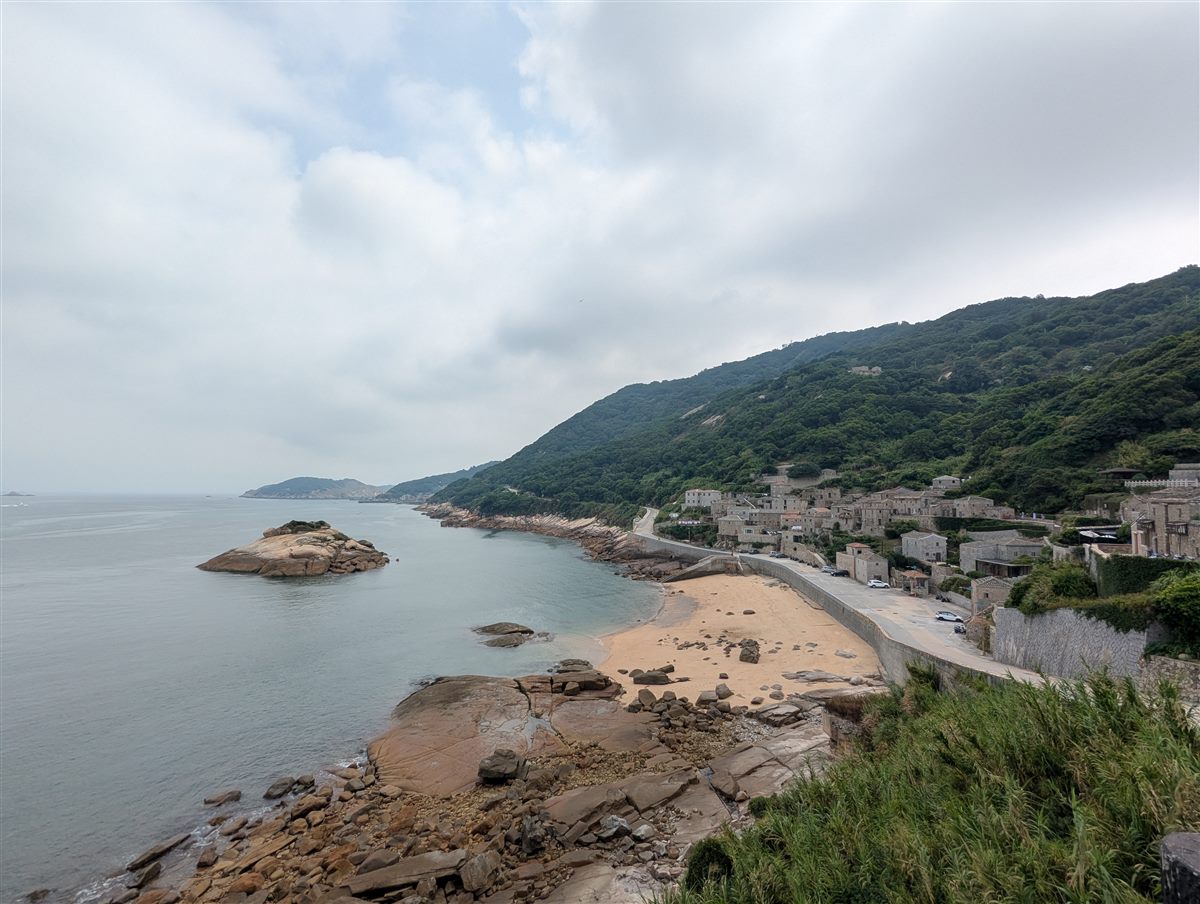
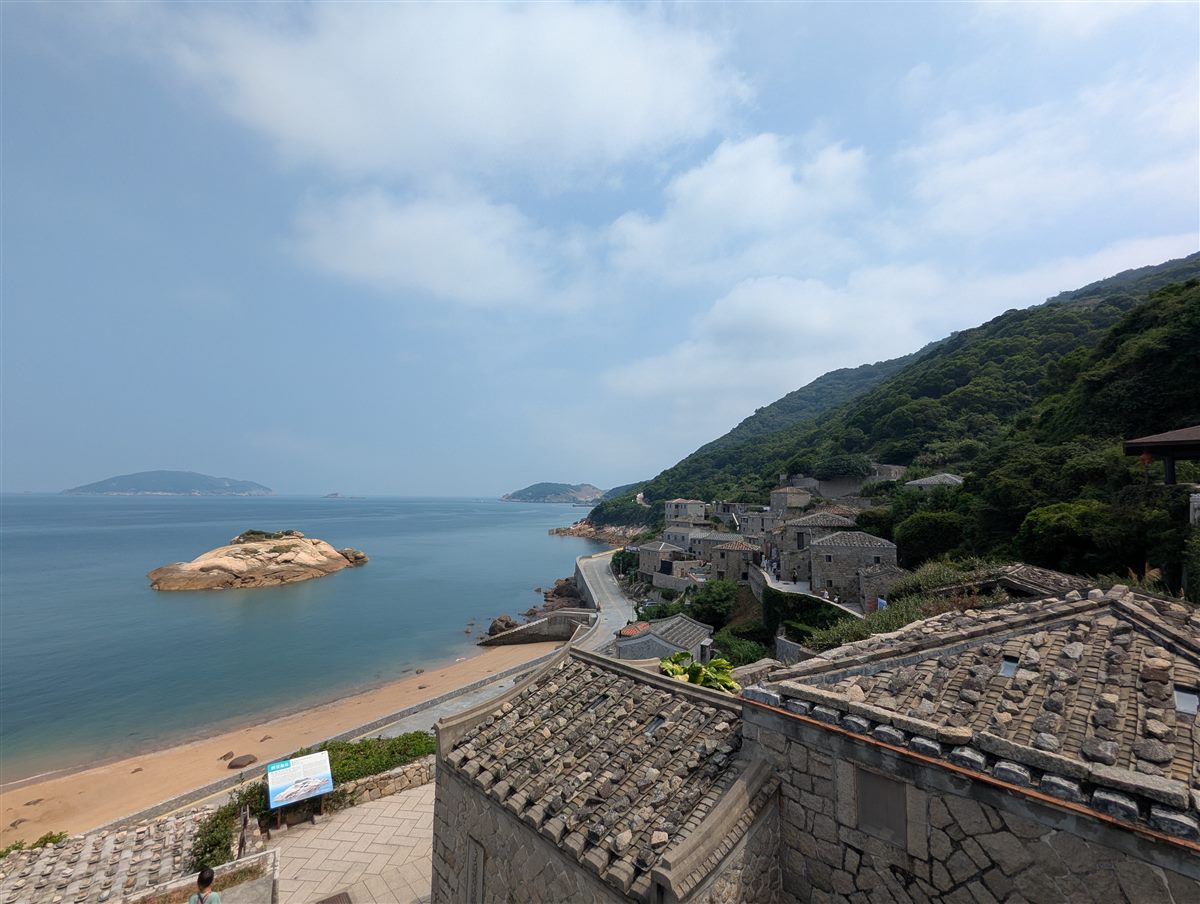
If the Matsu Islands are Taiwan's best-kept secret, then Matsu Blue Zhuhai B&B (蔚藍珠海民宿) is the seat closest to the edge — a clifftop minsu whose front elevation faces the East China Sea without a single obstruction, where waves, wind, and an enormous open sky make up the view from your balcony. Set in quiet Siwei Village at the northern end of Nangan Island, the property offers breakfast included with vegetarian and vegan options — rare for a small island guesthouse — along with a garden, shared sun terrace, a lift (equally rare), and a 5-minute walk to the Blue Tears Ecology Museum, base camp for one of Asia's most extraordinary natural phenomena.
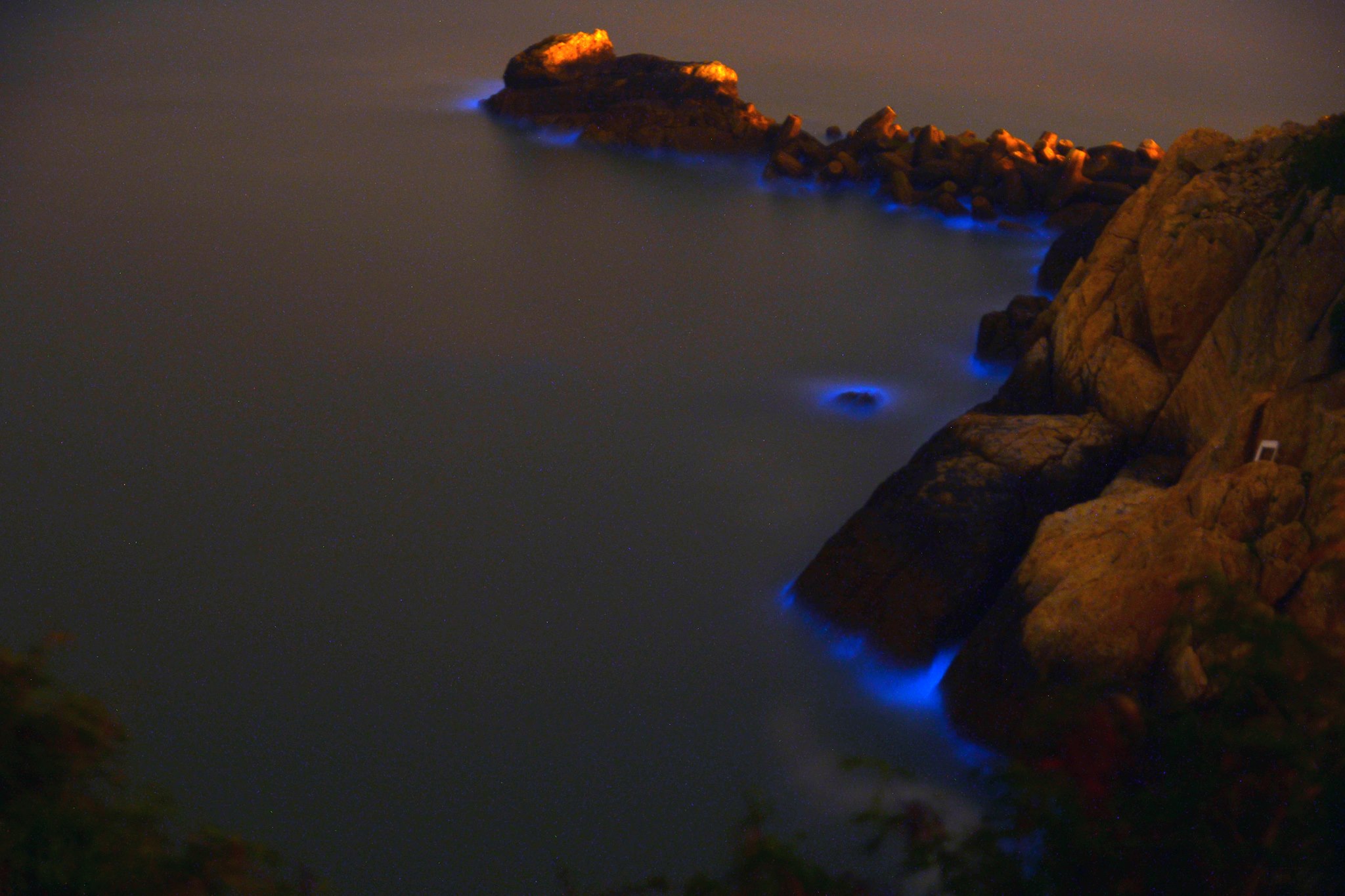
The Matsu Islands (馬祖) sit just 20 kilometres from Fujian, China — far closer to the mainland than to Taipei — and carry the weight of that geography in their landscape. Cold War-era tunnels carved through granite by military conscript labour, Fujianese stone-house villages with terracotta rooftops, the giant Mazu goddess statue looking out to sea, and the famous Gaoliang (高粱酒) spirit that locals press from sorghum. In summer, add the Blue Tears (藍眼淚): bioluminescent Noctiluca scintillans that turn the harbour waters a glowing electric blue after dark. Matsu Blue Zhuhai B&B (蔚藍珠海民宿) places you in the middle of this — at No. 20, Siwei Village, with the entire front of the building looking directly out to sea.
Guests describe it this way: "The sea-view balcony was stunning — they sat there watching the sunset for an hour without wanting to move. Breakfast was excellent and they had proper vegetarian options. The owner picked them up from the airport and gave them great tips for the island. If you come for Blue Tears, this is the best-placed place to stay."
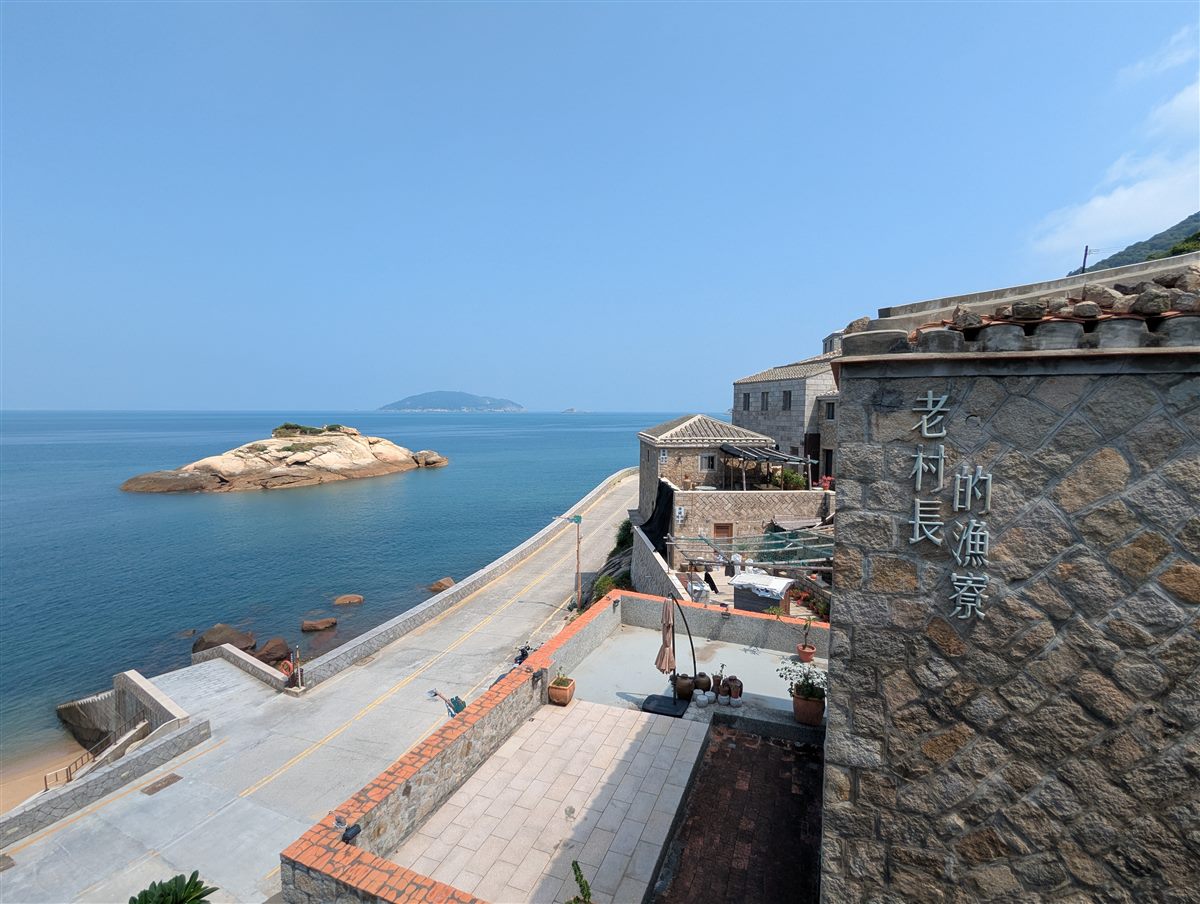
The property's most-praised feature is consistent across reviews: the private balcony rooms that face the East China Sea with nothing between you and the horizon. Double and triple rooms include a dedicated "ocean-view sitting nook" (看海情人雅座) — a pair of vintage sofa chairs positioned for exactly this purpose. The shared sun terrace on the ground floor extends the sea-facing outdoor space further, with constant sea breeze and an unbroken view that stretches across the water toward the Fujian coast. In the evening, with the right moon phase between April and September, the glow of Blue Tears occasionally makes that dark water shimmer electric blue.
Breakfast is included in the room rate — and notably, the kitchen offers Asian vegetarian and vegan options, prepared fresh each morning. This is not standard practice for small island guesthouses in Taiwan, where dietary accommodation is often limited, and it features in reviews from guests who had expected to struggle. The property also has a lift — another rarity among Matsu's older minsu stock — making it genuinely accessible for guests with heavy luggage or mobility considerations. Bathrooms in the double and triple rooms feature wet-dry separation with Japanese TOTO fixtures.
Siwei Village sits at the north end of Nangan and is one of the quietest, least-touristed parts of the island. This matters for the Blue Tears experience: darker skies make for brighter sightings. The Blue Tears Ecology Museum — the island's dedicated facility for viewing and understanding the phenomenon — is a 5-minute walk from the front door. The Matsu Giant Buddha Statue trail entrance is similarly close. What requires a bit more travel is the island's commercial centre at Magang (馬港), where most restaurants, souvenir shops, the iconic Tianhou Temple, and the ferry terminal are located — roughly 5–8 minutes by scooter or car.
Matsu's cultural identity runs deep. The islands were administered as a military zone until 1992, and the remnants of that era — Beihai Tunnel, Dahan Stronghold, Andong Tunnel — are now among the most compelling attractions. Fujianese traditions persist in the food (fish noodles, red yeast rice lees, oyster cake), the temples, and the architecture. Staying in Siwei Village rather than the busier Magang area gives you the Matsu that existed before tourism: stone paths, fishing nets drying in the sun, and an almost complete absence of crowds after sunset.
Room rates running from approximately NT$2,800 to NT$4,200 per night — with breakfast included — are fair for a clifftop sea-view B&B on an island where getting here costs NT$3,000–5,000 in airfare alone. The score of 9.0 from over 60 reviews is strong for a remote island property where the guest profile skews toward more experienced and considered travellers rather than mass-market tourism. Rooms with a private sea-view balcony are limited, and not every room type offers the full open-ocean aspect — this is worth specifying at the time of booking.
In summary, Matsu Blue Zhuhai B&B is the most well-placed property on Nangan Island for travellers who have come specifically for Blue Tears, and a strong choice for anyone who wants a genuine clifftop sea-view minsu experience rather than a hotel stay. The owner's free airport transfers, local knowledge, and evident care for the property give the stay a warmth that complements the raw natural setting. Come for the Blue Tears, stay for the view from the balcony at golden hour — and leave with a clearer sense of why people who visit Matsu tend to return.
Summary from Booking & Agoda
- ✓ Balcony rooms face the East China Sea directly with no obstruction — the most-cited highlight across all reviews
- ✓ 5-minute walk to Blue Tears Ecology Museum — best-positioned property on Nangan for Blue Tears viewing
- ✓ Breakfast included, with fresh vegetarian and vegan options that are rare at island guesthouses
- ✓ Warm, knowledgeable owner with free airport transfers and good local recommendations
- ! Sea-view balcony rooms are limited — must specify at booking that a sea-view balcony room is required
- ! Siwei Village is quiet and a short drive from Magang's restaurants and ferry terminal — a scooter is needed
- ! Review count (~60) is modest, reflecting Matsu's niche visitor profile rather than quality issues
- ✓ Genuine clifftop sea view from the balcony — the building literally faces the open ocean, not a garden or carpark
- ✓ Breakfast quality and vegetarian options were a genuine surprise on a small remote island
- ✓ Lift in the building makes it far more manageable than most older Matsu minsu
- ✓ Walking to Blue Tears Museum in 5 minutes was a huge advantage over staying in Magang
- ! Sea-view balcony rooms limited — confirm which room type you've booked before arrival
- ! Siwei is very quiet at night; dinner options require a scooter ride to Magang
- ! Matsu flight schedules are weather-dependent; build flexibility into your itinerary
- 💡Sea-view balcony rooms are limited and not guaranteed by default — double and triple rooms vary; not every unit has the full open-ocean balcony view. Specify clearly at booking and confirm your room type with the property directly → call or email ahead to confirm you have a sea-view balcony room.
- 💡Siwei Village is remote from Magang's restaurants and facilities — the island's night-time dining, souvenir shops, Gaoliang spirit stores, and ferry terminal are all in Magang, roughly 5–8 minutes by scooter → rent a scooter or electric bicycle (approx. NT$300–500/day); the owner can assist with arrangements.
- 💡Blue Tears are seasonal and weather-dependent — bioluminescent Noctiluca scintillans appear only from approximately April to September, and best sightings require a nearly moonless night and calm, clear sea conditions. Visiting October–March means no Blue Tears → the island remains beautiful but the headline natural attraction will not be present.