Chin-Be Village Homestay Matsu — 300-Year Fujian Stone House, Beachfront Café, the Most Atmospheric Stay in Matsu
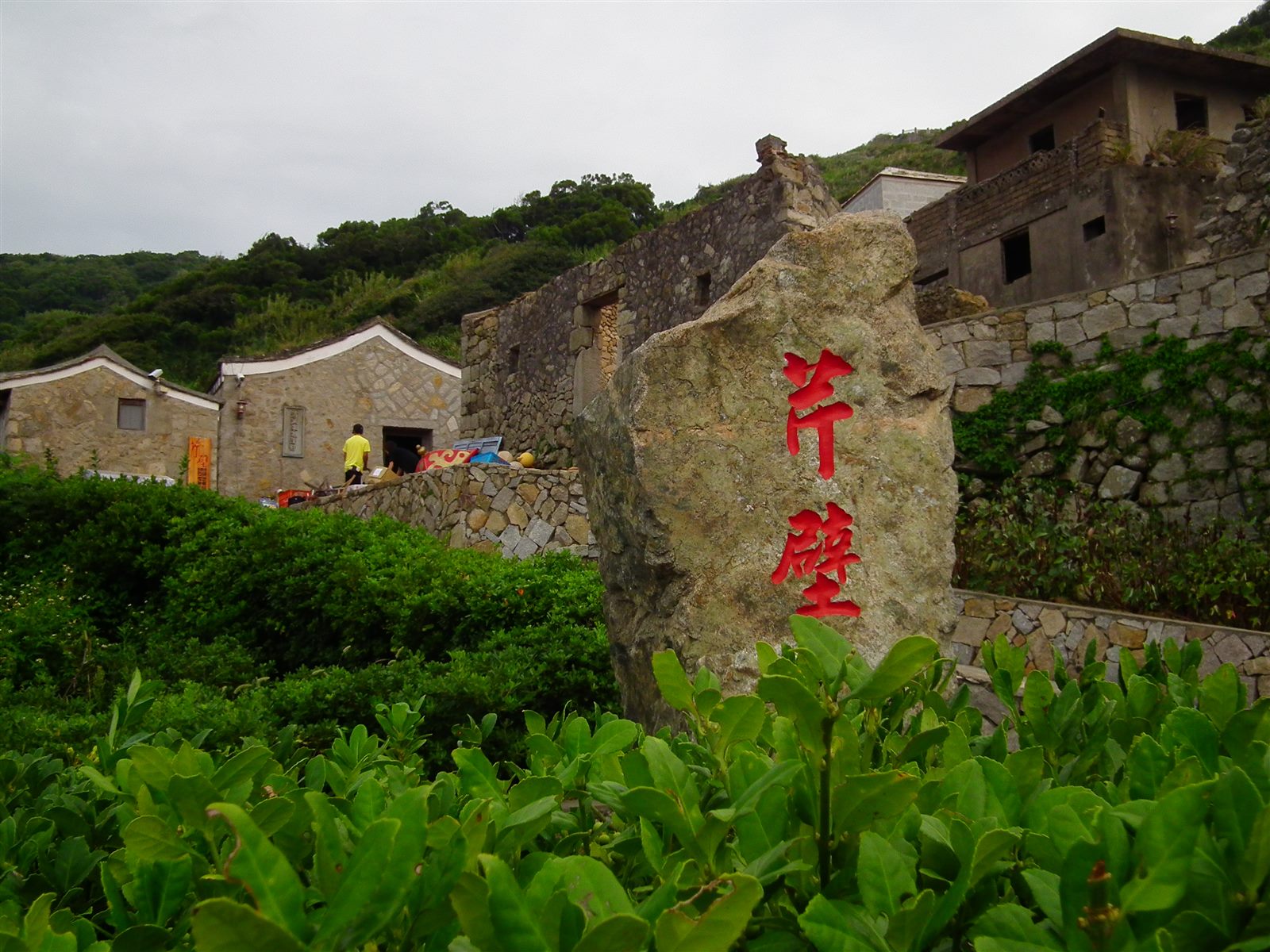
If you have come all the way to Matsu, Chin-Be Village Cafe & Homestay (芹壁地中海民宿) is the property that answers the question of why the journey was worth it. It sits inside Qinbi Village, one of the best-preserved eastern Fujian stone-house settlements in the Matsu archipelago — 18th-century granite walls rise around you on every side, the lane outside your door is paved with the same stone that has been here for three centuries, and the attached beachfront café offers a view of Turtle Island that guests tend to linger over for hours. The owners, descendants of the Chen clan who have lived in Qinbi for generations, bring a warmth and local knowledge that turns a night's accommodation into something considerably more than that.
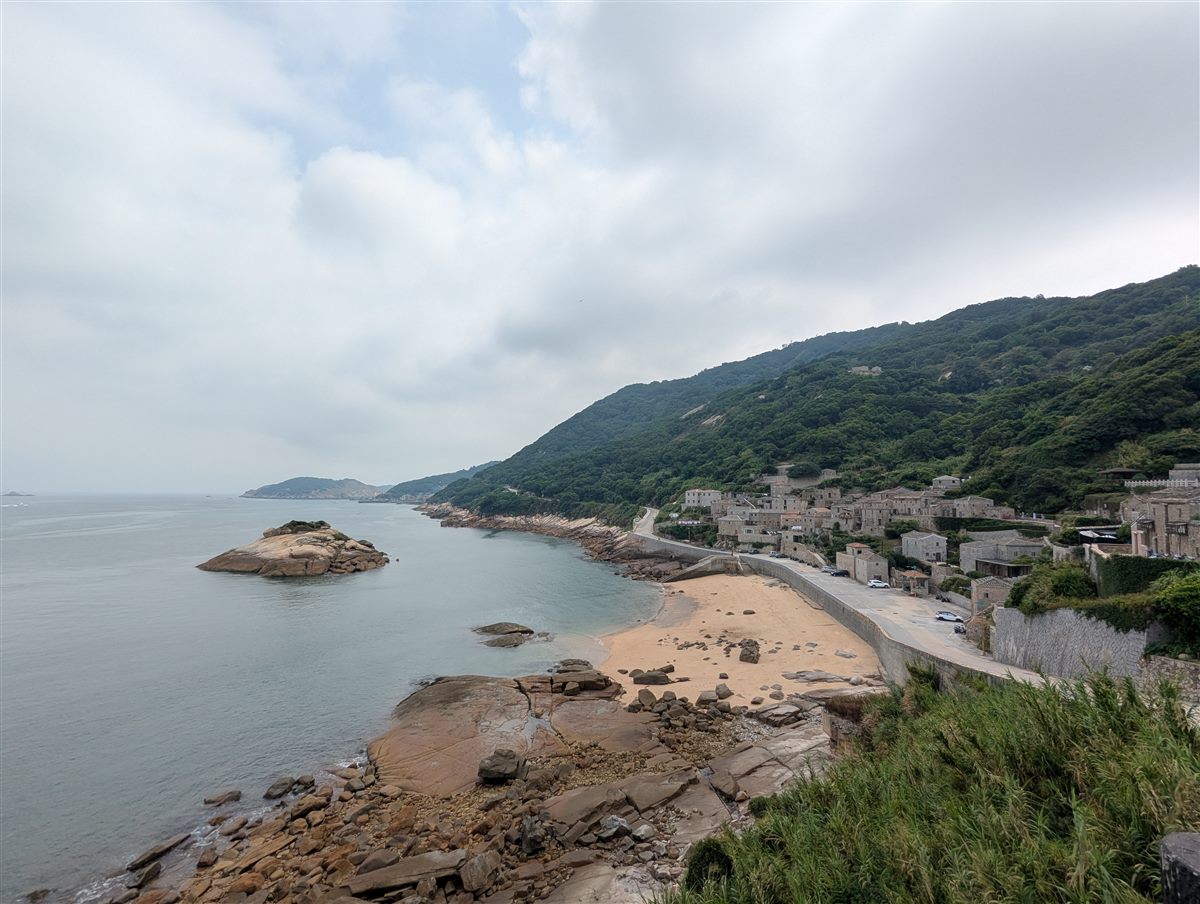
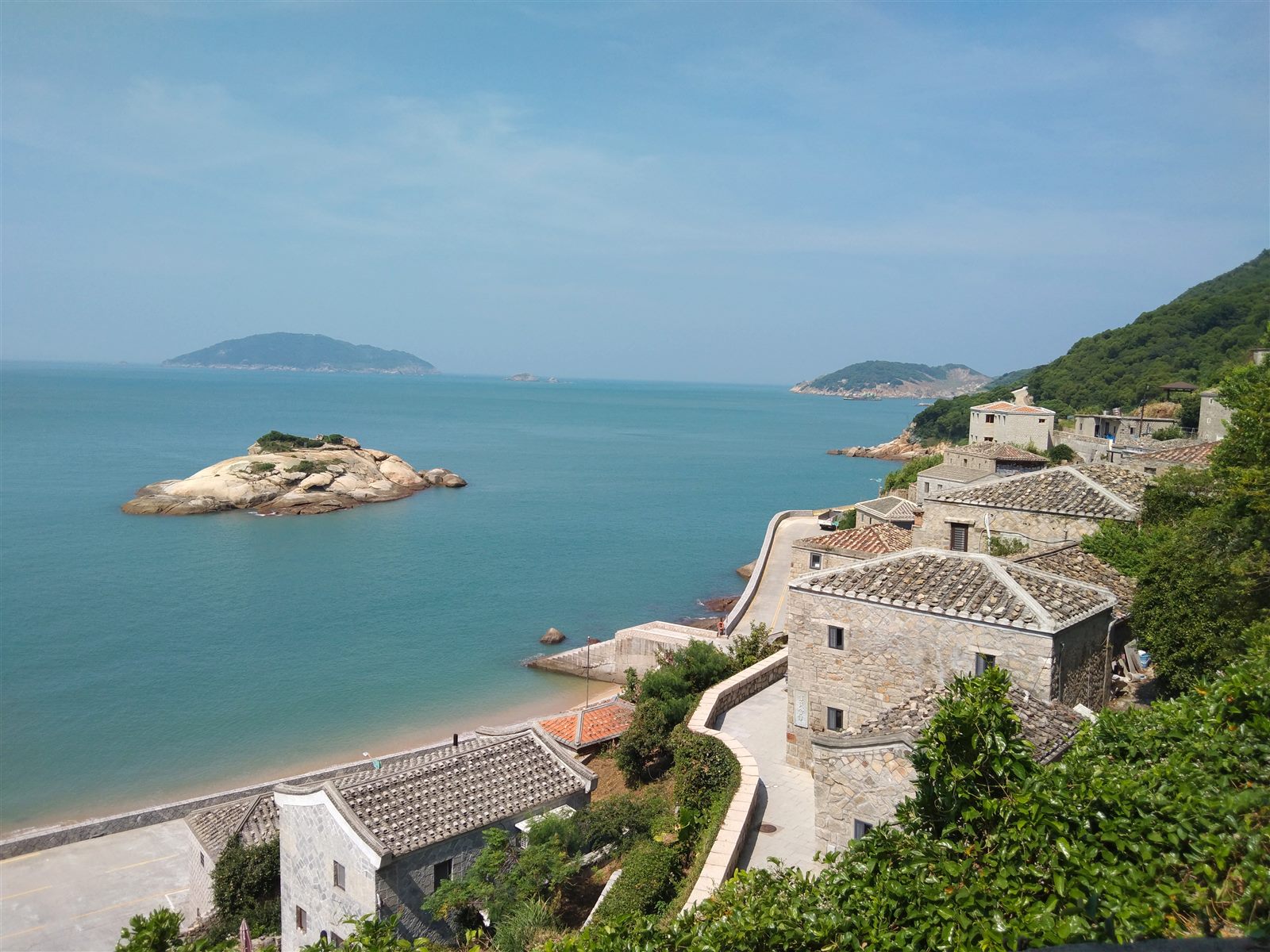
Qinbi Village (芹壁) on Beigan Island has earned the nickname 'Taiwan's Mediterranean' — tiers of grey-gold granite houses stacked up a steep hillside above a crescent of sea, the visual similarity to a Greek island village genuinely striking. The history reaches back over 300 years, to Fujianese fishermen of the Chen clan who settled here and built their homes in the Mindong architectural style: thick walls of local granite and blue limestone from the mainland, fish-shaped roof ornaments to channel rainwater, stone lions at the entrances to ward off bad spirits. Chin-Be Village Homestay occupies several of these original houses, converted into accommodation by the current generation of the Chen family. It is the only way to spend a night inside the village itself, rather than outside looking in.
One guest recalls: "They never expected to feel this way about a stay in Taiwan. Sleeping in a stone house that's been here for hundreds of years, waking up to a sea view, sitting at the beachfront café in the morning with a coffee and Turtle Island floating on the horizon — it was quiet, beautiful, and felt like the rest of the world didn't exist."
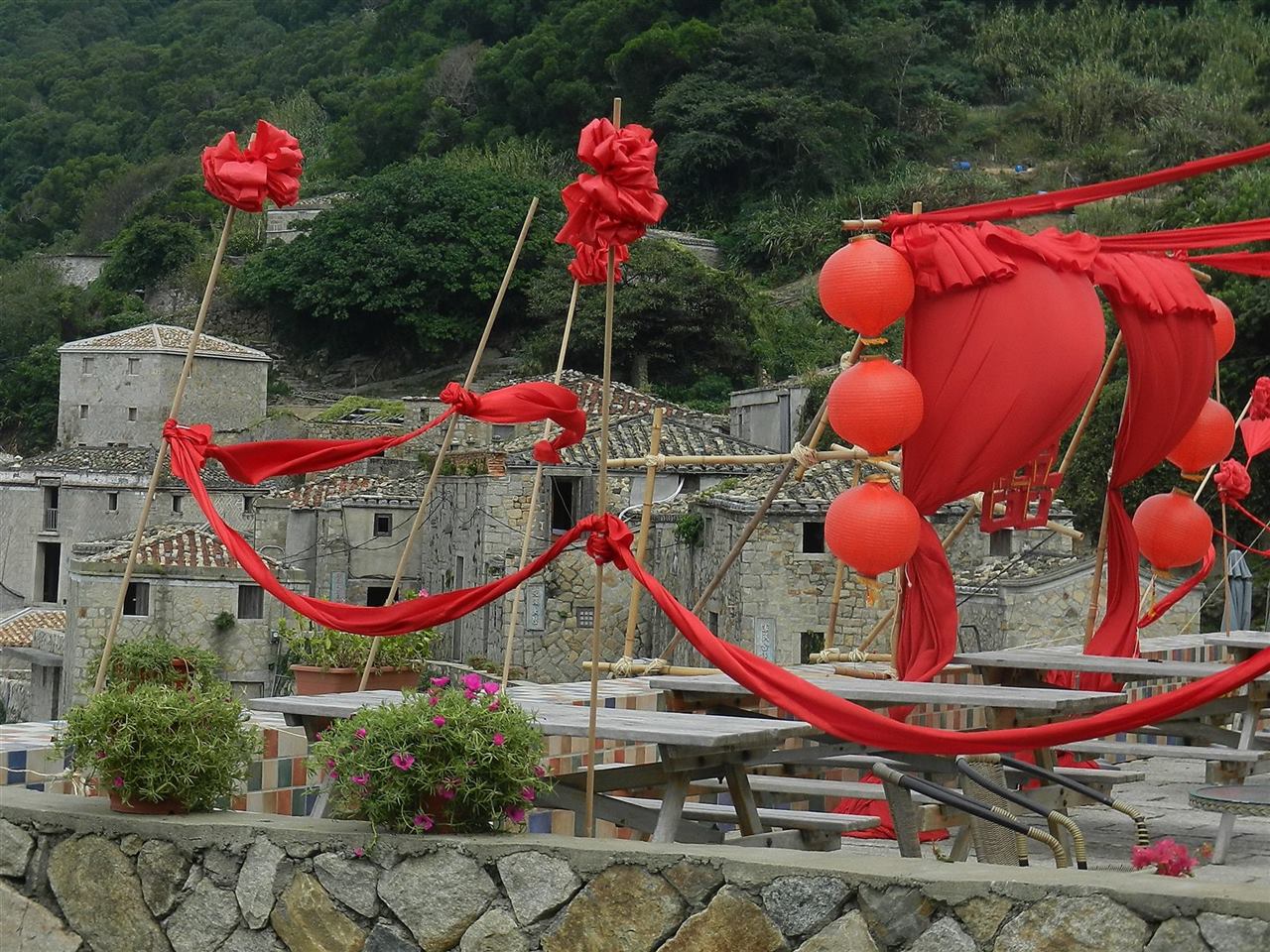
The property's decisive advantage over any other accommodation in Matsu is its position: you are not near Qinbi Village, you are inside it. Step out of your room and you are on a stone lane used by the same family for centuries. Climb three minutes up the hill behind the houses and you have the entire village laid out beneath you with the sea as a backdrop. The beachfront café attached to the homestay is open to guests throughout the day, serving local coffee and Taiwanese snacks in a setting that most visitors say is the single strongest memory they take home from Matsu. Several reviewers report spending the better part of a day there without moving, which may be the most honest endorsement a café can receive.
The rooms are integrated into the original stone buildings, carefully restored rather than reconstructed. Thick granite walls provide natural insulation — cool in summer, warmer in the island's brisk winters. Interior furnishings are clean and simple; there is no attempt at luxury hotel aesthetics, and that restraint is exactly right. What guests respond to is the feeling of sleeping inside a genuine piece of living history — not a themed resort, not a replica, but the actual house where the Chen family has lived for generations. This is a quality that no amount of marble or rainfall showers can replicate.
Reaching Qinbi Village requires commitment. Beigan Island is served by propeller aircraft from Songshan Airport in Taipei (roughly an hour, with limited daily flights), or by an inter-island ferry from Nangan (Matsu's main island, 15–20 minutes). From the ferry pier on Beigan, Qinbi Village is a short drive or taxi ride. The logistics are real: getting here takes most of a day from Taipei. Every traveller who has made this journey and stayed at Chin-Be reports that it was worth the effort, which says something significant about how different this experience is from mainstream Taiwan tourism.
The overall score of 8.1 from 81 reviews on Booking is worth unpacking. The primary reasons scores fall below the property's location rating of 9.1 are expectations misaligned with a heritage building: some guests mention firm mattresses, compact rooms, and limited amenities — all inherent features of a centuries-old stone house. Guests who arrive understanding that this is a traditional minsu (民宿), not a boutique hotel, consistently rate the atmosphere and location at or above 9.0 and describe the stay as one of their most memorable in Taiwan. The gap between the overall score and the location score is the most telling signal: the physical space is modest; the setting is extraordinary.
Rates of NT$2,500–3,800 per night are reasonable for an experience with no direct equivalent in Taiwan. If your goal in coming to Matsu is to understand why these islands were worth preserving — architecturally, historically, and culturally — then Qinbi Village is where that understanding lives, and Chin-Be Village Homestay is its most direct door. Book with clear expectations and you will almost certainly leave with a story you will still be telling years from now.
In summary: Chin-Be Village Cafe & Homestay is not for every traveller, and it makes no pretence of being so. For those who come to Matsu specifically for its irreplaceable Fujian heritage — who want to sleep inside that heritage, eat breakfast beside a beach that has looked the same for three centuries, and walk out their door directly into one of Taiwan's most singular landscapes — it is the most atmospheric stay on the island chain, and nothing in Matsu comes close to replicating what it offers.
Summary from Booking & Agoda
- ✓ Location score 9.1 — inside Qinbi Village, the best-preserved Fujian stone village in Matsu
- ✓ Beachfront café with Turtle Island views — consistently described as a highlight of the entire Matsu trip
- ✓ Owners are local to the village and share genuine knowledge about Matsu's history and hidden spots
- ✓ Sleeping inside original 18th-century granite stone houses is an experience with no equivalent in Taiwan
- ! Heritage rooms have firm mattresses and limited space — inherent to the authentic stone-house setting
- ! Modern amenities are minimal compared with a standard hotel
- ! Requires an additional ferry crossing from Nangan (15–20 minutes)
- ✓ The atmosphere of Qinbi Village alone makes the trip to Matsu worthwhile — and staying inside it multiplies that tenfold
- ✓ The beachfront café is exceptional — great coffee and a view that justifies sitting for three hours doing nothing
- ✓ Owner-hosts are from the village and bring a depth of local knowledge that enriches the entire stay
- ! A heritage minsu in a 300-year-old building — rooms are authentic and modest, not luxury-hotel-standard
- ! Some beds are firm; worth requesting softer bedding arrangements in advance if needed
- ! Getting to Beigan adds travel time — factoring in flights and inter-island ferry, Matsu demands a dedicated itinerary
- 💡The overall score of 8.1 reflects heritage-building reality, not poor management — firm beds and compact rooms are intrinsic to authentic 300-year-old stone houses. If you need hotel-standard comfort and amenities → choose a more modern property on Nangan or Beigan's main township.
- 💡Beigan Island requires an extra ferry from Nangan — you fly into Nangan or Beigan (separate routes), then take a 15–20 minute inter-island boat if arriving via Nangan. If time is tight and you want to stay on one island → Nangan has a wider range of accommodation.
- 💡Facilities are genuinely limited in the traditional minsu style — no pool, no spa, no full-service restaurant. The attached café covers morning and daytime needs well → but guests who need extensive F&B options should plan to explore Beigan's small town centre a short drive away.