Home Kyoto Japan Kyoto Attractions Kyoto Food About
Home  ›  Japan  ›  Kyoto  ›  3-Day Itinerary
🇯🇵 Kyoto · 3-Day Itinerary

Kyoto in 3 Days
Golden Pavilion, bamboo grove, red torii — a route planned to skip the burnout

Visit the places that sit close together on the same day, without crisscrossing the city — less walking, more seeing — with timings, entry fees, getting around and where to stay laid out for every day.

Before you set off

Three days in Kyoto — how to make every hour count

You have just three days in Kyoto and you want it all — the Golden Pavilion, the bamboo grove, the old-town lanes and the red torii tunnel — but you are dreading walking your legs off. We have mapped the route for you. The simple idea is to travel by zone: keep places that are close together on the same day so you are not riding across the city all afternoon. You walk less, and you have time left over to stop, eat and take photos.

Kyoto is laid out as clusters of temples and shrines ringing the city centre — the east (Higashiyama) groups Kiyomizu-dera with Gion · the north and west group the Golden Pavilion with the bamboo grove · the south is Fushimi Inari. So we split the three days exactly that way: Day 1 Higashiyama · Day 2 north-west · Day 3 south, then an add-on of your choosing.

For every stop on this plan we have checked the 2026 opening hours and entry fees. Prices are given in yen (¥) with a rough baht conversion (~฿ at ¥1 ≈ ฿0.23) so you can budget before you go. If you want the bigger picture of the city first, read the full Kyoto guide.
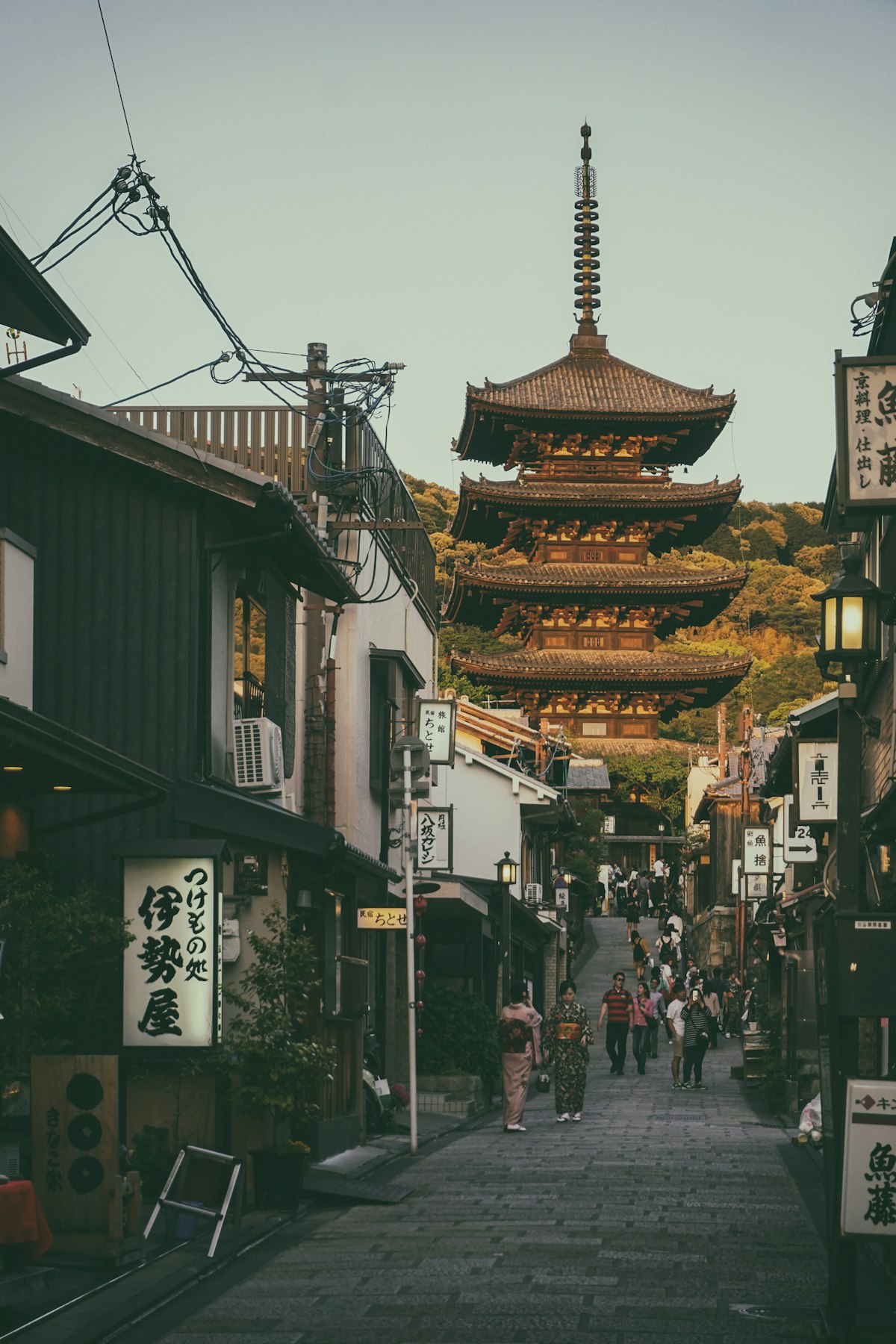
View over Kyoto, Japan — a wooden pagoda and old temple roofs amid the ancient city, the destination of this 3-day itinerary
Kyoto — the old capital that gathers temples, shrines and historic districts into a single route
📅
Length
3 days, 2 nights
Just right for Kyoto's main highlights
🚌
Getting around
Bus + subway
Tap on every line with an ICOCA card
💴
3-day temple entry budget
~¥2,400 (~฿550)
Several stops are free (Gion, Fushimi Inari)
🎟️
Best-value pass
Subway & Bus 1-Day Pass
¥1,100 (~฿250) on heavy-riding days
🌸
Best time to visit
Mar–May · Oct–Nov
Cherry blossom and autumn colour
🛏️
Where to stay
Kyoto Station / Gion / Kawaramachi
Pick to match your travel style
Budget tip: many of Kyoto's famous temples take cash only at the ticket window (Kiyomizu-dera, Kinkaku-ji), so always keep coins and yen notes on you. There is rarely an ATM near the temples — withdraw enough at a convenience store around Kyoto Station before you head out each day.
1 Day 1 · Higashiyama (the east)

The Pure Water Temple, old-town stone lanes and an evening in Gion

The first day starts at Kyoto's icon — climbing the Higashiyama hills past old temples and stone lanes, then closing with the old-town atmosphere after dark.

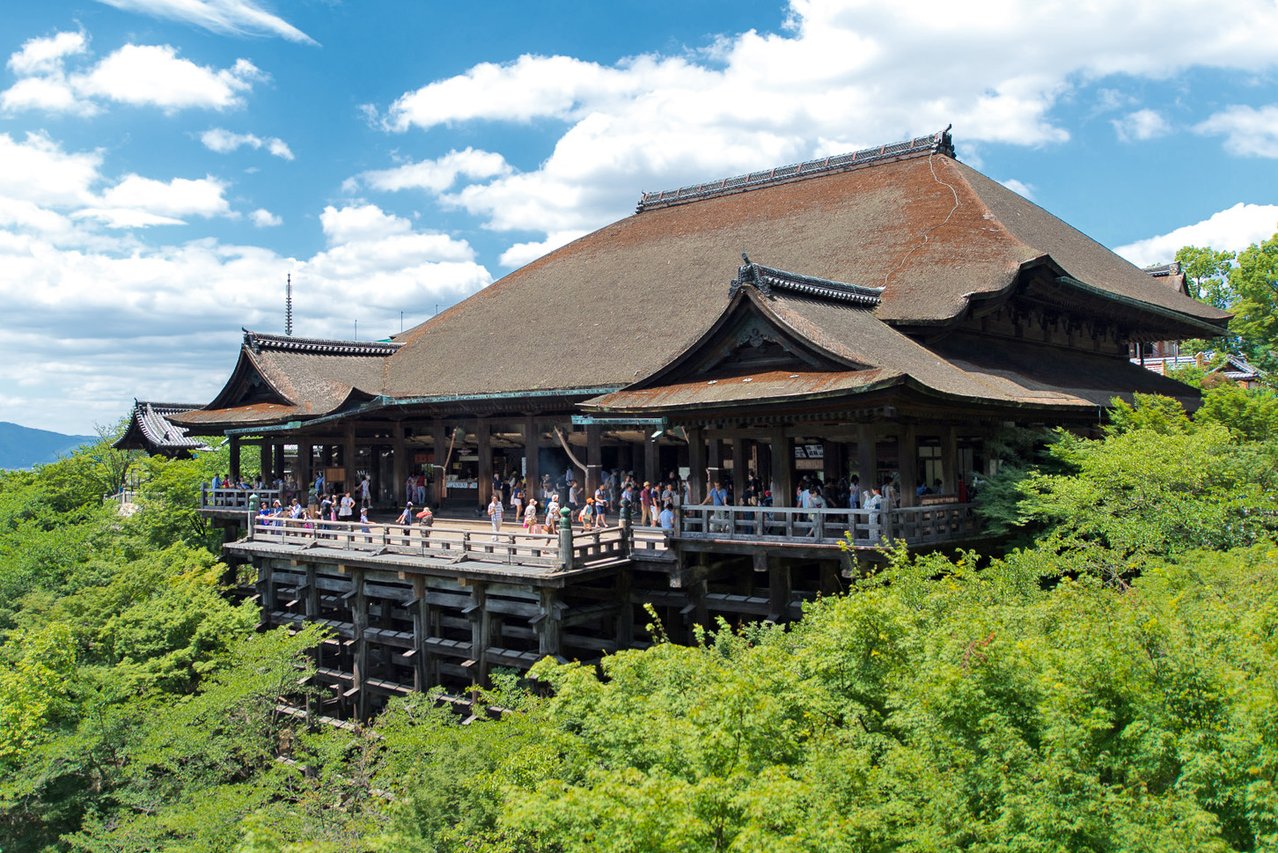
Kiyomizu-dera, Kyoto — a wooden veranda jutting from the cliff above green forest, the Pure Water Temple highlight of Day 1
Kiyomizu-dera (the Pure Water Temple) — a giant wooden veranda built out from the cliff without a single nail
Day 1 tip: today is mostly on foot and everything sits close together, so there is no rush to catch a bus. Wear comfortable shoes, because Sannenzaka is a slope with stone steps. If you start from a hotel in Gion/Higashiyama, you barely need a bus all day.
2 Day 2 · North and west

The Golden Pavilion, a Zen rock garden and the Arashiyama bamboo grove

Today you move out of the city centre to the north-west, picking up three stops that line up in a row — starting at the Golden Pavilion, on to the rock garden, then finishing in Arashiyama.

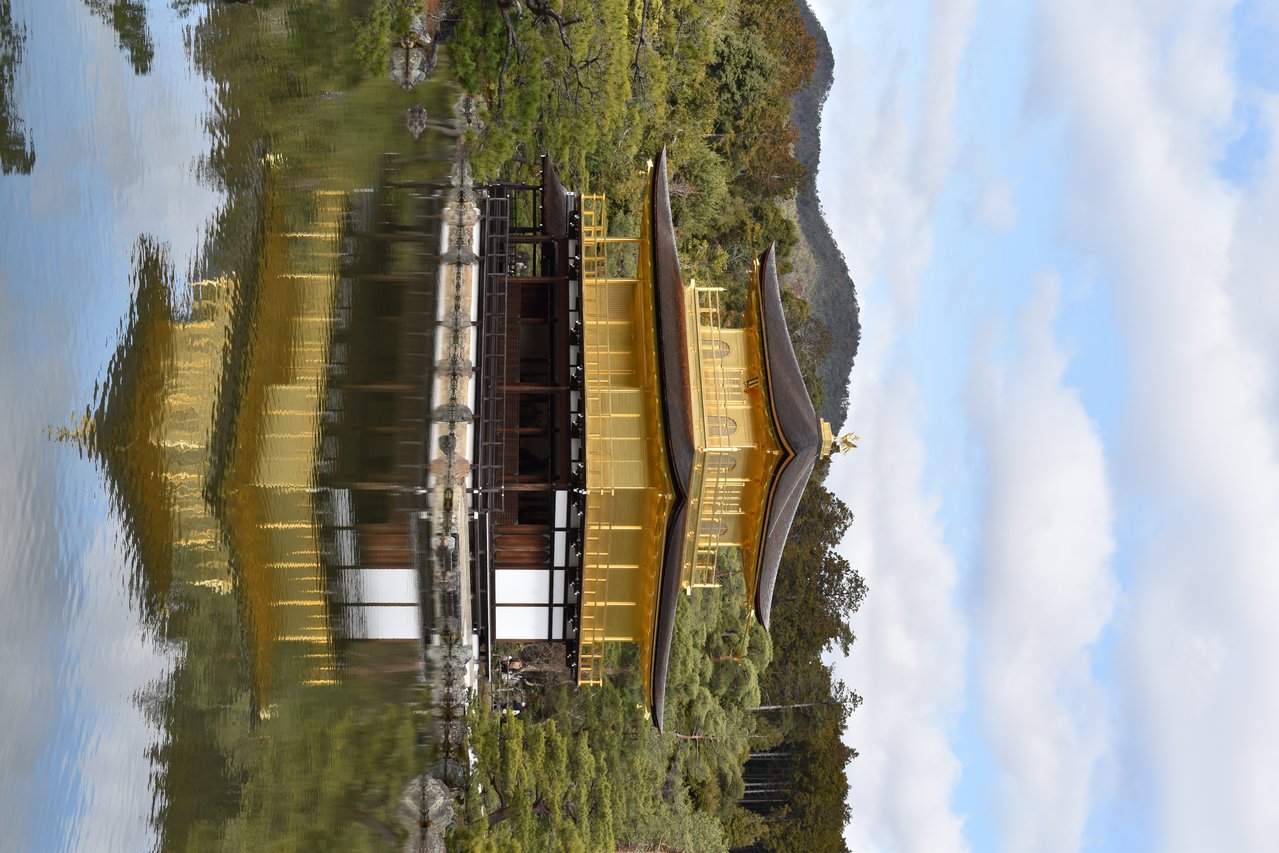
Kinkaku-ji, the Golden Pavilion, Kyoto — a gold-leafed building mirrored on a glassy pond amid a green garden
Kinkaku-ji (the Golden Pavilion) — its top two storeys covered in real gold leaf, mirrored on the Kyoko-chi pond
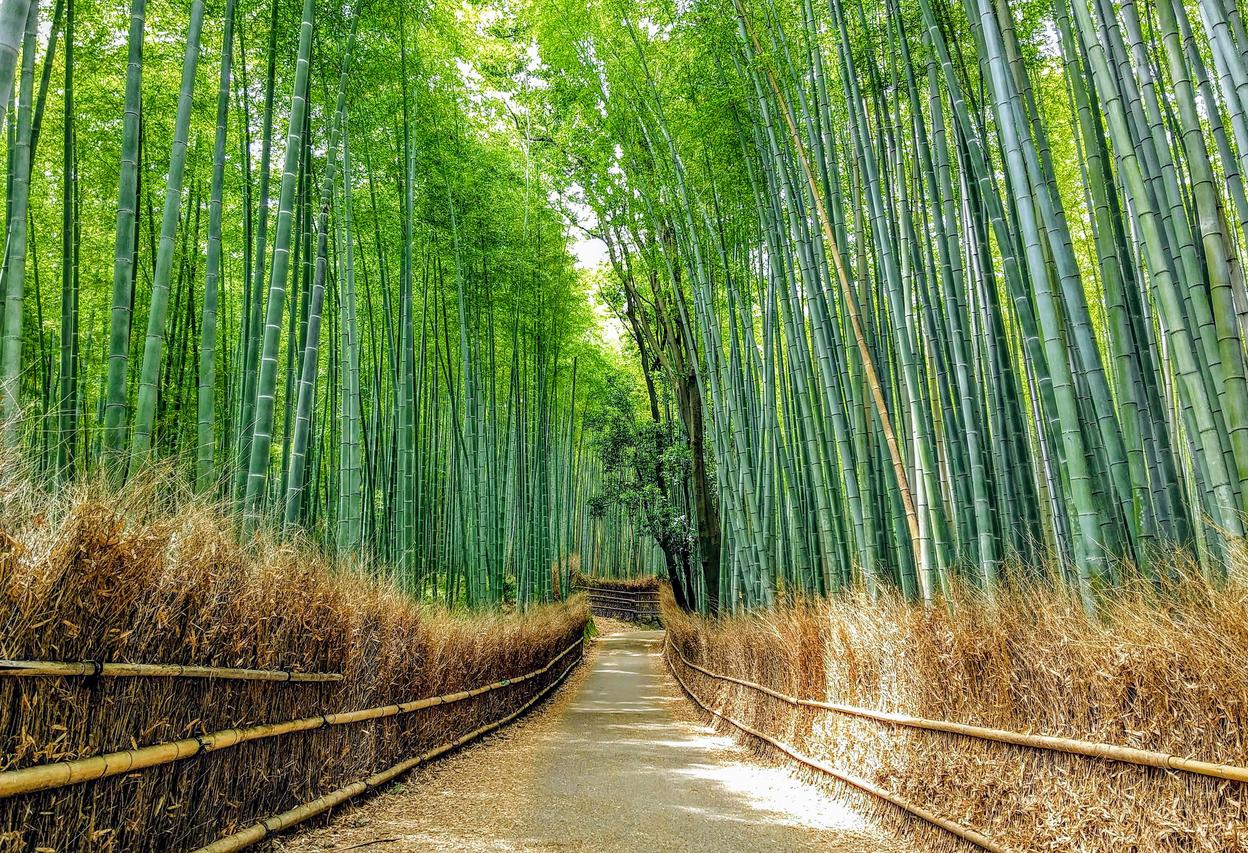
Arashiyama bamboo grove, Kyoto — a walking path between tall green bamboo on both sides, light filtering down in stripes
The Arashiyama bamboo path, about 400 metres long — come in the late afternoon as the crowds head off and it is easier to walk than at midday
Day 2 tip: today involves several bus/train transfers, so this is the day the Subway & Bus 1-Day Pass (¥1,100) is most worth it — or just tap and pay as you go with ICOCA, which is convenient too. Start at the Golden Pavilion as early as you can, because the Arashiyama bamboo grove gets packed between 11.00 am and 3.00 pm — come in the late afternoon as the crowds leave and it is easier to walk.
3 Day 3 · The south + an add-on

The red torii tunnel at first light then choose your own path

The last day starts at Fushimi Inari at first light, while it is still quiet, then gives you two ways to go — on to Nara to meet the deer, or an easy day in central Kyoto.

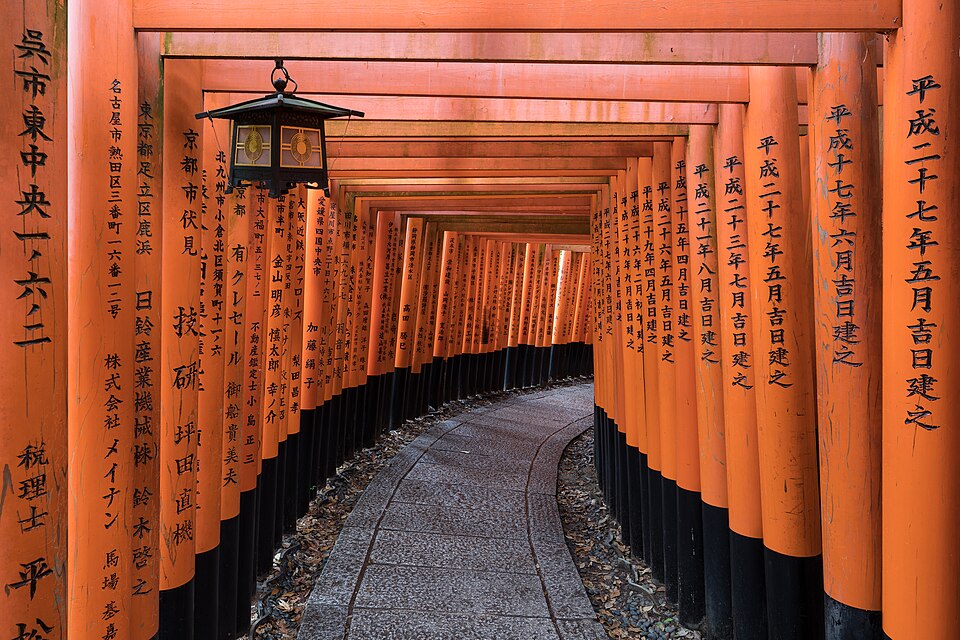
Fushimi Inari, Kyoto — a tunnel of thousands of vermilion torii gates lined up the mountainside
Fushimi Inari Taisha — thousands of red torii gates winding up Mount Inari; come early for crowd-free photos
Day 3 tip: if you fly home or catch an onward shinkansen on the last day, Option B (central Kyoto) is more flexible, because everything is close to Kyoto Station and you don't have to worry about a long journey. If you have a full day and want a fresh experience, Option A to Nara is well worth the trip.
Getting around Kyoto

Buses, the subway and the cards to carry

Kyoto runs mainly on buses, because most temples sit off the subway lines — a little know-how saves you both money and time.

🚌 City buses — your main tool for temples

Many famous temples (Kinkaku-ji, Kiyomizu-dera) are off the subway lines, so you ride city buses most of the time. The fare is a flat ¥230 per trip (~฿55) regardless of distance within the city. You board at the rear door and pay as you exit at the front — tap ICOCA or drop in coins. Bus 205 is the popular route running from Kyoto Station to Kinkaku-ji.

💳 The ICOCA card — one tap and done

Carry an IC card such as ICOCA (or a Suica/Pasmo you already have — they work too) to tap on every bus, subway and JR train across Kyoto and all of Japan. Fares are deducted automatically, with no scrambling for change or buying single tickets. Top it up at station machines, and use it to pay at convenience stores and vending machines too — it is something worth having from your first day in Japan.

🎟️ Subway & Bus 1-Day Pass — for heavy-riding days

A full-day pass at ¥1,100 (~฿250) gives unlimited city bus and subway rides within a single day. It pays for itself straight away if you take 4–5 rides or more that day — which makes it ideal for Day 2, when you hop across several zones (Golden Pavilion–Ryoan-ji–Arashiyama). On a mostly-walking day like Day 1, paying as you go with ICOCA works out better. Do the maths before buying for each day.

Tip: Google Maps gives accurate bus-and-train directions in Kyoto — it tells you the bus route, the stops to get on and off, and the timing precisely. Keep it open while you explore; it helps a lot, especially when finding a bus stop where several routes sometimes share one spot.
Where to stay

Choose the neighbourhood that fits your plan

Each Kyoto neighbourhood offers a different experience — picking one to match your travel style is the easiest call.

Want to compare hotel prices across neighbourhoods before deciding? See the full Kyoto guide or search Kyoto hotels on Agoda — compare several areas side by side and pick the one that fits your plan.
Frequently asked questions

FAQ · Kyoto 3-day itinerary

Is 3 days enough for Kyoto?
It is enough for the main highlights. If you plan your route by zone, three days covers Kiyomizu-dera (the Pure Water Temple), Gion, Kinkaku-ji (the Golden Pavilion), the Arashiyama bamboo grove and the red torii of Fushimi Inari. The trick is to visit places that sit close together on the same day, rather than crisscrossing the city — you walk far less and finish far fresher. If you have more time, add a full day in Arashiyama or a day trip to Nara.
Which travel pass should I buy for Kyoto?
Carry an IC card such as ICOCA or Suica to tap on every city bus and subway line — the fare is deducted automatically and you never need loose change. On temple-heavy days you ride the bus most of the time (city buses are a flat ¥230 per trip). On a day with several bus or subway transfers, the Subway & Bus 1-Day Pass at ¥1,100 (~฿250) usually works out cheaper — especially Day 2, when you hop across several zones.
When should I visit Fushimi Inari?
Early morning, 6.30–8.00 am, is best, because the shrine is free and open 24 hours, and at that hour the crowds are thin enough to photograph the red torii tunnel with almost no one in the frame. Take the JR Nara Line from Kyoto Station — only 5 minutes (¥150) — and get off at Inari station, right in front of the shrine. See the full hiking route up the mountain in the Fushimi Inari guide.
On Day 3, should I go to Nara or stay in central Kyoto?
If it is your first visit to Kyoto and you want to meet the deer in the park, go to Nara for the day — the JR train from Kyoto Station takes about 45 minutes. But if you would rather take it easy, walk less and tick off the in-city sights, choose central Kyoto: Nijo Castle (entry ¥800), then graze your way through Nishiki Market. That option is flexible and does not require an early start — ideal if you fly home on the last day. See more day-trip options in the Kyoto day-trips guide.
Which neighbourhood should I stay in in Kyoto?
The three most convenient areas are around Kyoto Station (easy onward train connections, handy for Fushimi Inari and Arashiyama), the Kawaramachi/Nishiki area (city centre, where you can eat and shop on foot at night) and Gion/Higashiyama (old-town atmosphere, with temples within walking distance from early morning). Pick whichever suits your travel style — read more in the Kyoto guide.
Klook · Kyoto tours & tickets

Kyoto tours, temple tickets and day trips — book ahead and skip the queue

Early-morning Arashiyama tours, guided Gion walks, day trips to Nara and a host of other Kyoto activities — book ahead on Klook and skip the on-site line.

See Kyoto activities on Klook →
Wherebest is a Klook affiliate partner — we may earn a commission when you book through our links, at no extra cost to you.