Home Destinations Taiwan Taipei Guide Taipei Night Markets About 🇹🇭 ไทย🇬🇧 English🇨🇳 中文🇪🇸 Español🇫🇷 Français
📷 Photography Guide · Updated 2026

Photographing Taiwan's
Night Markets

Neon reflections on rain-slicked lanes, charcoal smoke curling above a pepper-bun oven, a vendor's flour-dusted hands working in low amber light — Taiwan's night markets are the finest open-air photography studio in Asia. Here is every setting, technique and market you need to know.

Why They Photograph So Well

Taiwan's Night MarketsAre Built for the Camera

Night markets concentrate everything a street photographer dreams about into a single block: multicoloured neon that creates an instant mood with no post-processing, steam and charcoal smoke that add depth and atmosphere, genuine unposed action from vendors too busy to notice the lens, and dense human energy that fills every frame with life.

Better still, Taiwan's night markets provide a light level that is genuinely camera-friendly — bright enough to shoot handheld without a tripod, varied enough to be interesting. And if it rains lightly — especially on the straight lanes of Raohe or the temple approach at Shilin — neon reflections pooling on wet asphalt deliver the kind of images that stop a scroll dead.

💡
Multicolour neon
Sign clusters build a colour palette you can't buy in post — just point and expose correctly.
💨
Steam & smoke
Charcoal ovens and woks produce natural atmosphere that adds depth to every frame.
🙋
Real candid action
Vendors are genuinely too busy to pose — every frame captures authentic human behaviour.
🌧️
Rain is a bonus
Light drizzle turns the street into a mirror. While others run for cover, you shoot.
The 8 Best Markets for Photographers

Which Market to VisitBased on Your Shooting Style

Ranked for photographic potential — each market has distinct strengths. Match the market to the type of images you want to make.

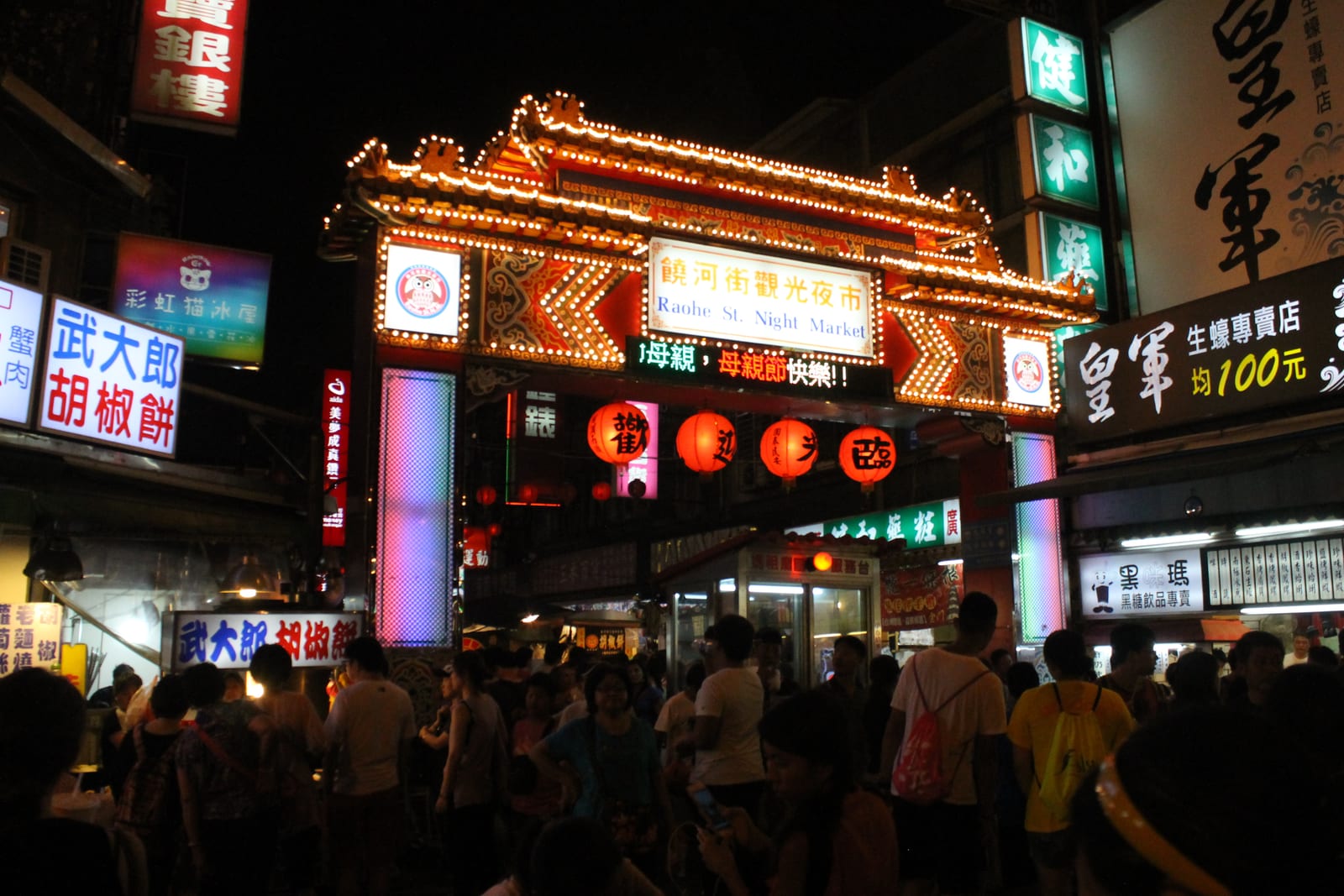
The ornate red archway entrance of Raohe Street Night Market in Taipei at night ⭐ Best for Photographers1
Raohe
Raohe Street Night Market · Taipei

The ornate temple gate at the market's entrance is the single most photographed night-market shot in Taiwan. The 600-metre dead-straight lane invites natural leading-line compositions, the Fuzhou pepper-bun charcoal oven produces continuous photogenic smoke, and the warm-toned neon gives images natural depth without any editing.

Shots to Get
  • Temple gate leading line — wide angle from the entrance draws the eye deep into the market
  • Hands pressing pepper buns — tight crop with charcoal flame as backdrop; shoot at 1/250
  • Ciyou Temple at dusk — at 17:30 golden light rakes the temple roof behind the entrance gate
Full Raohe guide →
Crowds navigating the lanes of Shilin Night Market in Taipei at night 🎡 Most Variety2
Shilin
Shilin Night Market · Taipei

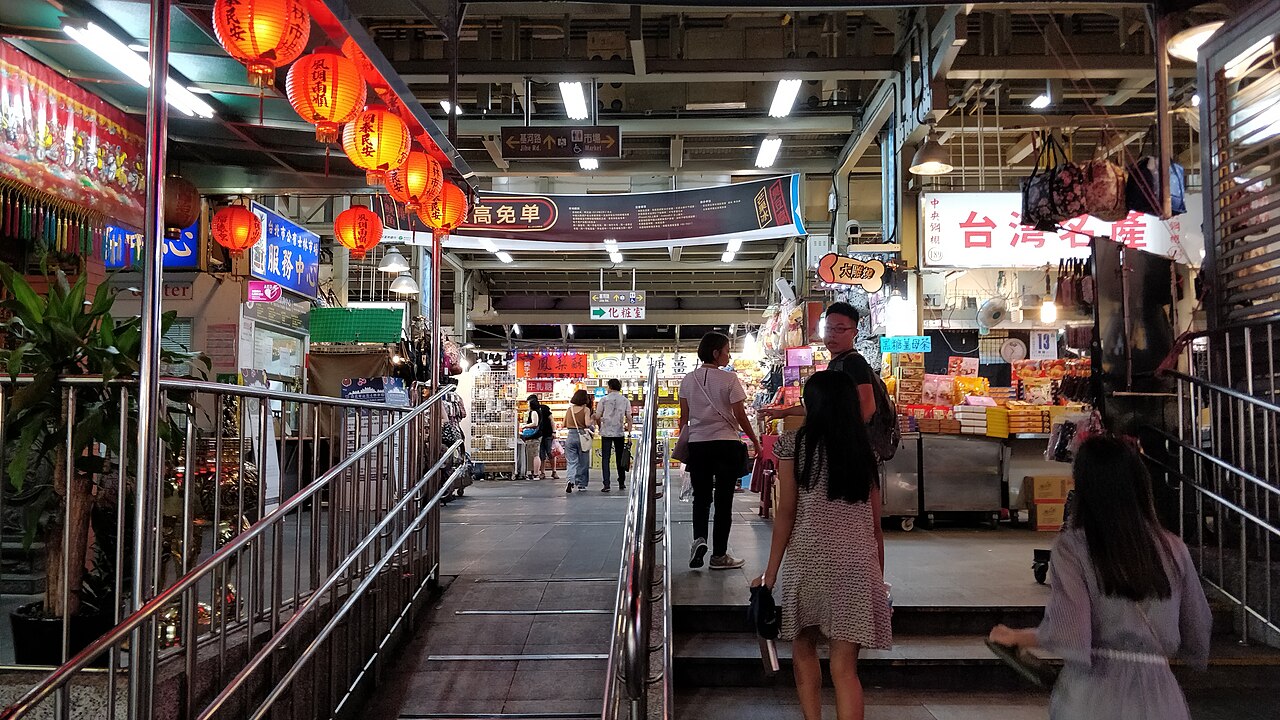
Taipei's largest market gives you the greatest photographic variety — sign-heavy overhead lanes, the dense crowd energy that makes street photography thrive, and the underground food hall (renovated and reopened April 2025) which offers a compelling low-light, high-contrast challenge unavailable anywhere else.

Shots to Get
  • Layered neon overhead — telephoto compression turns signage into a glowing abstract
  • Underground food hall — ISO 6400, f/2; contrasting pools of light make strong frames
  • Giant chicken cutlet in the air — wait for the vendor to lift it; fire at 1/500
Full Shilin guide →
Warm amber-lit lane of Tonghua Night Market in Taipei showing local vendors 🏮 Authentic Local Feel3
Tonghua
Tonghua / Linjiang Night Market · Taipei

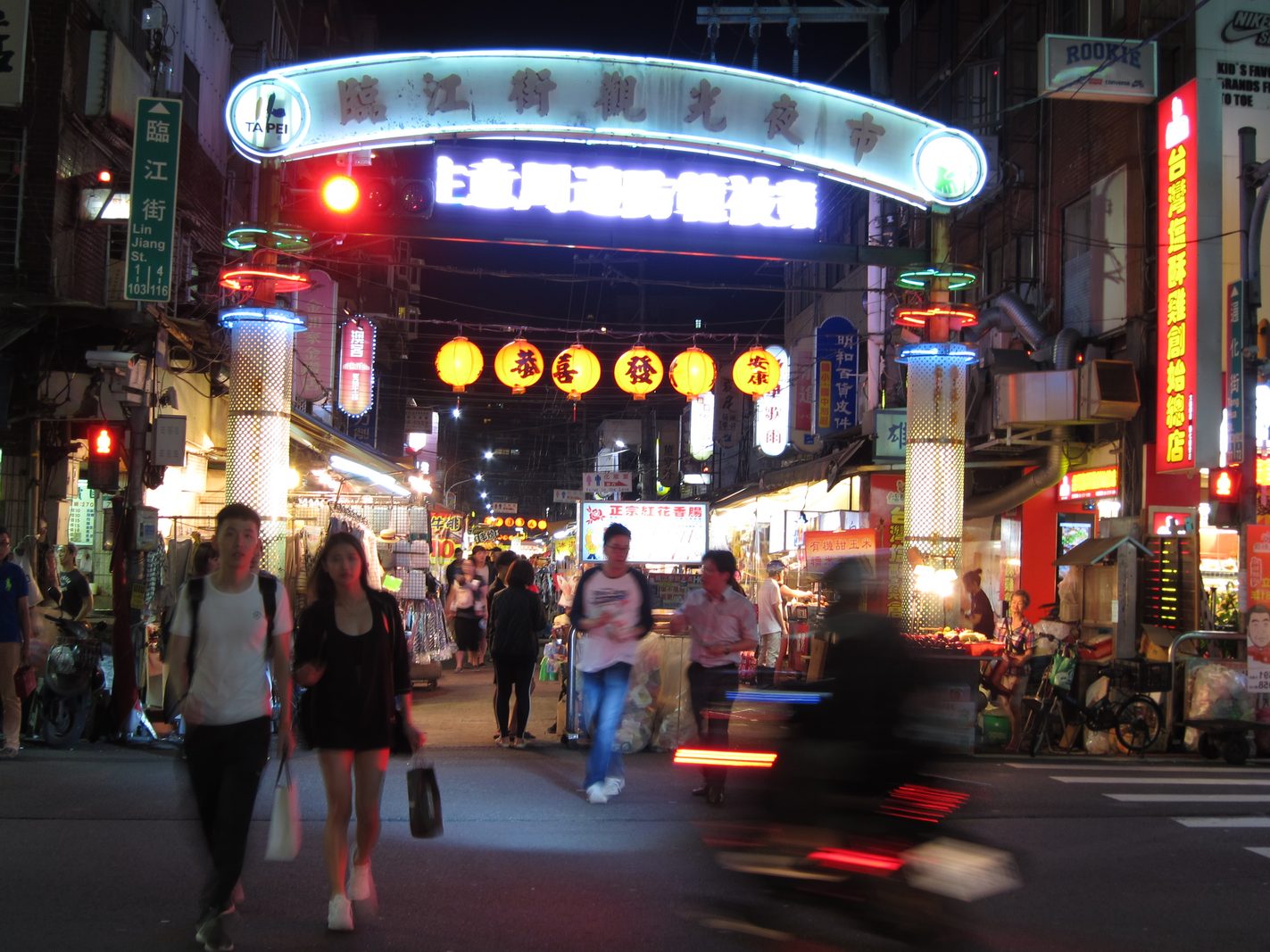
Far more locals than tourists means genuinely candid images rather than the posed-for-foreigners expressions common at Shilin. The warm amber tone of Tonghua's signage gives photographs a natural vintage quality, and the moderate crowd level lets you move and frame without constantly being pushed off your shot.

Shots to Get
  • True candid portraits — fewer tourists means local faces unguarded and natural
  • Amber-lit old signage — vintage mood that is genuinely difficult to recreate in editing
  • Bowl of stinky tofu under stall light — low angle, stall lamp behind = warm glow around the bowl
Taipei night markets overview →
A vendor serving oyster omelette at Ningxia Night Market in Taipei 🦪 Best for Vendor Portraits4
Ningxia
Ningxia Night Market · Taipei

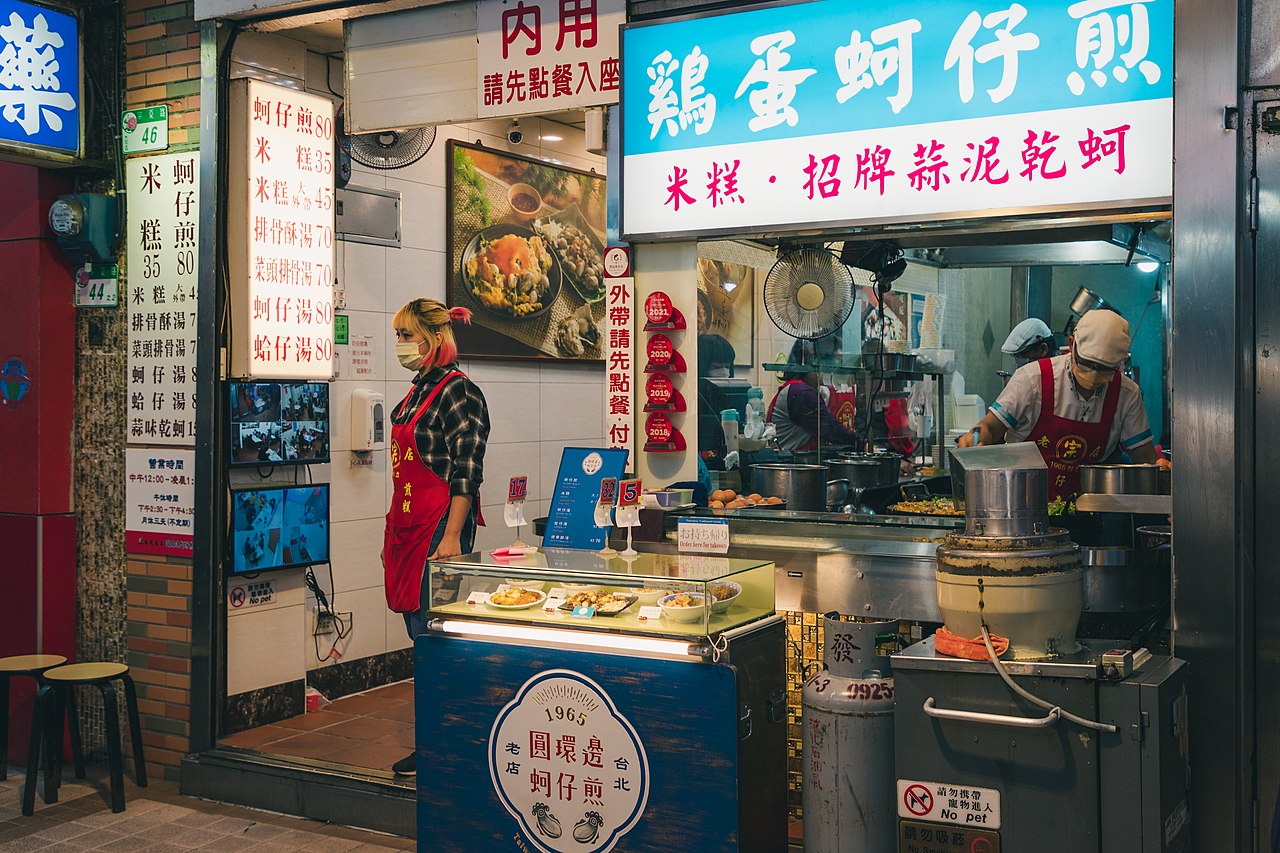
No clothing stalls, no game booths — entirely food, which means every single stall is a photography opportunity. Many of Ningxia's vendors have worked the same recipe for decades; their faces and hands tell stories that the food alone cannot. This is the best market in Taipei for classic vendor-portrait work.

Shots to Get
  • Portrait of a long-standing stall owner — buy first, ask second; you'll nearly always get a warm smile
  • Tight crop of hands frying taro balls — detail that conveys craft more powerfully than a wide shot
  • Michelin queue + sign — context image showing this small stall has earned global recognition
Full Ningxia guide →
Seafood displayed on ice under bright lights at Liuhe Night Market in Kaohsiung 🦞 Seafood Colour5
Liuhe
Liuhe Night Market · Kaohsiung

Kaohsiung's flagship night market specialises in fresh seafood on open-road stalls. The broader street makes wide-angle compositions far easier than Taipei's narrow lanes. Lobsters, abalone and giant prawns arranged on ice under halogen lights create natural still-life subjects in red, blue and orange that need almost no compositional thought.

Shots to Get
  • Lobster on ice — red on blue, shoot vertical; natural still life that reads instantly
  • Road-level wide shot — stand in the centre of the open street for a symmetrical leading line
  • Open-air grill flames — fire against a cool night sky; shoot at 1/500 to freeze the flare
Kaohsiung city guide →
Crowded neon-lit alley at Fengjia Night Market in Taichung ⚡ Neon & Student Energy6
Fengjia
Fengjia Night Market · Taichung

Taiwan's largest market by area, dense with creative neon signage from new-generation food vendors competing for attention. Sign design here is bolder and more graphic than Taipei's markets. If you shoot for urban neon or cyberpunk aesthetics, Fengjia delivers more raw material per block than anywhere else in the island.

Shots to Get
  • Layered neon compression — telephoto from 50mm+ stacks the signs into an abstract pattern
  • Young crowd with food — high energy candid; no permission needed for walking shots
  • Narrow side alley — step off the main road for reduced light and more intimate mood
Taichung city guide →
Night market stalls in Tainan with historic building facades in the background 🏯 Heritage Backdrop7
Garden Night Market
Garden Night Market · Tainan

Taiwan's oldest city provides historic architectural backdrops unavailable at any Taipei market — colonial-era facades and old temples set behind food stalls in ways that feel genuinely layered and earned rather than constructed. Note it opens Thursday, Saturday and Sunday only; plan accordingly.

Shots to Get
  • Stalls against colonial facade — the contrast between old stonework and glowing woks is unique
  • Silhouette against stall lights — spot metering on the background light; foreground falls to black
  • Tainan braised pork rice close-up — local food detail that instantly identifies the city
Tainan city guide →
Steam rising from hot soup stalls near City God Temple in Hsinchu on a cool night ❄️ Best in Winter8
Hsinchu City God Temple Area
City God Temple Night Market · Hsinchu

Hsinchu is Taiwan's coldest city (December–February), which means steam from hot soup stalls rises dramatically against cold air in a way that simply does not happen in warmer markets. The temple forecourt provides a ceremonial setting, and the Hakka squid soup and meatball stalls have a visual distinctiveness not found in Taipei.

Shots to Get
  • Rising steam from squid soup — best December–February; ISO 3200, f/2; keep shutter at 1/125
  • Temple gate at dusk — shoot at 17:30 before the sky goes fully black for blue-hour colour
  • Hakka meatball in broth — a food detail that tells viewers they've left Taipei behind
Hsinchu city guide →
Gear & Settings

Camera SettingsThat Actually Work in Night Markets

Starting-point settings (adjust for each market's actual light)

ISO1600–6400 · Start at 1600 and increase if the scene is too dark · Full-frame sensors handle 6400 cleanly; crop sensors stay cleaner at 3200
Aperturef/2 to f/2.8 to gather light and produce natural background separation · For food detail, open to f/1.8 if your lens allows
Shutter speed1/60–1/125 s for handheld; 1/250 or faster to freeze a vendor's moving hands or a flame flare
White balanceTry Tungsten (~3200K) for cooler neon tones, or shoot Auto RAW and adjust in Lightroom · Mixed markets often look best at Auto
FlashOff — always. Flash destroys ambient mood and is rude to diners and vendors alike
Recommended lens35mm f/1.8 (natural field of view, unobtrusive) · 50mm f/1.4 (slight compression, beautiful for food) · Avoid kit zoom lenses at f/5.6 in night-market conditions

Best cameras for this context: A compact, quiet camera — Fujifilm X100VI, Sony ZV-E10 II, or any mirrorless with a small prime — is genuinely advantageous over a large DSLR. Vendors are demonstrably less guarded when they see a small camera. If you own a full-frame body, bring it for the low-light advantage, but consider pairing it with the smallest prime you own.

Technique & Etiquette

How to Frame the Shotand How to Behave

📐
Tight crop: hands + steam
Fill the frame with hands, food and rising steam — no face needed. This close-up tells a complete story of craft in a single image.
🌅
Wide: archway + crowd
Shoot Raohe's gate at 17:30 for golden-hour light, crowd depth and a leading line converging toward the temple. The single best establishing shot in Taiwan market photography.
💧
Rain puddle reflections
Light drizzle turns any lane into a mirror for neon. The moment others run inside is the moment you should be shooting from a low angle.
🗣️
Ask permission first
Say 可以拍照嗎 (kě yǐ pāi zhào ma) — "may I take a photo?" — while smiling and pointing at the camera. Most vendors agree. If they decline, accept that immediately.
🛒
Buy before you shoot
Purchase something at a stall before asking to photograph the vendor. It is the ethical approach — and vendors who've just served you are relaxed and genuinely glad to be photographed.
🚶
Don't block the lane
Night-market alleys are narrow. Step to the side against a stall before stopping to compose a shot — never stand in the middle of the flow.
Ethics

What Not to Do

  • 🚫
    No flash near people eating — it is genuinely disturbing and it ruins the ambient light you need for the rest of your shots anyway.
  • 📱
    Don't tag vendors on Instagram without asking — some prefer privacy around their stall's exact location or appearance.
  • 👀
    Read body language — if someone turns away, covers their face or looks uncomfortable, that is a clear answer. Move on.
  • 💼
    Always use a strap — physical bumps in tight alleys are common. A wrist strap matters more than a neck strap here; it prevents drops, not theft.
Timing

When to Arrivefor Each Type of Shot

17:30–18:00

Golden-hour window. Shoot the market exterior and entrance gate before it gets dark. Stalls aren't fully open, but setup shots and architectural frames are excellent.

19:30–21:00

Peak energy — densest crowds, brightest neon, most cooking action. Ideal for street photography and crowd images, but tight and difficult to move freely.

22:30 onwards

The market thins. Vendors relax and are far more willing to talk and be photographed. Some stalls are packing up — "closing time" images are underrated and beautiful.

Best seasons: Winter (December–February) is ideal for markets with hot-food stalls — cold air makes steam visible and dramatic. The typhoon shoulder season (June–August) brings light rain that creates neon reflections without wind. Autumn (October–November) is comfortable weather for long shooting sessions on foot.

Plan Your Visit

Read the Market GuidesBefore You Go

🌃

Taipei Night Markets — All 8

MRT directions, opening hours and signature dishes for every major Taipei night market.

Taipei Night Markets Guide →
📍

Raohe — Best for Photographers

The deep-dive guide to Raohe: top stalls, best time to arrive and the shots not to miss.

Raohe Night Market Guide →
🏮

Ningxia — Vendor Portraits

A compact food-only market ideal for classic vendor-portrait work with seasoned stall owners.

Ningxia Night Market Guide →
🎡

Shilin — Taiwan's Most Famous

The full guide to Shilin: how to navigate the basement food hall and beat the crowds.

Shilin Night Market Guide →
🌄

Taiwan Sunrise & Landscape Spots

Beyond the night markets — Taiwan's best daytime photography locations, from Alishan to Jiufen.

Taiwan Photography Spots →
Frequently Asked

Everything You Need to KnowBefore You Pack the Camera

Which Taiwan night market is best for photography?
Raohe Street Night Market in Taipei is widely considered the best for photographers — the ornate temple gate entrance, a straight 600-metre lane providing a natural leading line, and the charcoal smoke from the Fuzhou pepper-bun stall combine to create instantly compelling images. Fengjia in Taichung excels for layered neon and student-crowd energy, while Liuhe in Kaohsiung offers vivid seafood colours on an open road that is easy to shoot wide.
What camera and lens are best for night markets?
A camera with clean high-ISO performance matters most — Sony A7 series, Fujifilm X-T5, or OM System OM-5 all work well. The best lens choices are a 35mm f/1.8 (natural field of view) or 50mm f/1.4 (slight compression, great for food). Compact cameras like the Fujifilm X100VI are advantageous because they feel less intimidating to vendors. Avoid kit zoom lenses at f/5.6 — they struggle badly at night-market light levels.
How do I ask permission to photograph a vendor?
Say 可以拍照嗎 (kě yǐ pāi zhào ma — "may I take a photo?") while pointing your camera and smiling. Most vendors agree immediately. If they shake their head or look uncomfortable, respect that without argument. The golden rule: buy something first, then ask — vendors who have just served you are almost always happy to be photographed.
What is the best time of day to photograph night markets?
17:30–18:00 gives you golden-hour light for exterior and entrance shots before the stalls are fully open. 19:30–21:00 is peak energy — densest crowds, brightest neon, most cooking action — ideal for street and crowd images. After 22:30 the market thins, but vendors relax and are more willing to chat and pose, making it the best window for portrait work.
How do I protect my camera gear at a night market?
Always use your camera's neck or wrist strap. Watch out for oil spray and steam from frying stalls — keep a microfibre cloth handy to wipe the front element. Store the camera in a zippered bag when navigating narrow crowded lanes. Pickpocketing is rare at Taiwan's night markets, but physical bumps are common in tight alleys, so a wrist strap is more important than a neck strap for protection against drops.
Ready to Go

Stay Close to the MarketWalk Out and Shoot

Raohe and Shilin are both within a short walk of Taipei MRT stations. Several hotels are positioned to make a late-night market run genuinely easy.

🌃 Night Markets Guide Taipei Guide