A short trip east of Sapporo, the Historical Village of Hokkaido (Kaitaku-no-Mura) gathers more than 50 real Meiji and Taisho-era buildings into one big open-air museum. Ride a horse-drawn streetcar down a frontier-town main street, meet staff in period costume, and step right back into turn-of-the-century Hokkaido — a Golden Kamuy filming location and an easy half-day from the city.
Imagine walking down a dirt main street lined with wooden shops, a real horse pulling a streetcar past you, and shopkeepers dressed exactly as they were a century ago — that's the Historical Village of Hokkaido, known in Japanese as Kaitaku-no-Mura (the "Pioneer Village"). It's an open-air museum that has gathered up more than 50 genuine buildings from the Meiji and Taisho eras, moved them here brick by beam, and arranged them into a living slice of frontier Hokkaido.
The village sits inside Nopporo Forest Park, a big green belt just east of Sapporo, so it pairs a museum visit with a bit of nature. The buildings are split into four zones — a town, a farm village, a fishing village, and a mountain village — each showing a different side of how settlers actually lived. People who've been will tell you to give it half a day: ride the horse-drawn streetcar (a horse-drawn sleigh in winter), watch the costumed staff demonstrations, and leave time for the Hokkaido Museum next door. This page walks you through what to see, the practical details, and how to get there.
The site is laid out as four distinct zones, each capturing a different way settlers lived in old Hokkaido. This table helps you see what's in each one and roughly how the day fits together — most people walk them in order from the entrance.
| Zone / highlight | Area | What you'll see | Don't miss | Good for |
|---|---|---|---|---|
| Town ZoneShigaichi-gun | Entrance | Main street of shops, inns, a newspaper office, a police box | Streetcar ride | First-timers |
| Horse-Drawn StreetcarBashatetsudo | Town | A real horse pulling a carriage down the main street | The ride itself | Everyone, kids |
| Farm Village ZoneNoson-gun | North side | Farmhouses, barns, and the tools settlers worked the land with | Thatched farmhouse | History buffs |
| Fishing Village ZoneGyoson-gun | West side | Herring fishery boss's house and net stores by the "coast" | Herring mansion | History buffs |
| Mountain Village ZoneSanson-gun | Far side | Forestry and mountain-trade buildings tucked among the trees | Charcoal hut | Quiet wanderers |
| Costumed StaffVolunteer guides | Throughout | Staff in period dress doing hands-on demonstrations | Live demos | Families |
| Hokkaido MuseumNext door | Forest Park | The region's nature and pioneering history, under one roof | Pair them up | Rainy days |
You can cover the whole village in a half-day on foot — a frontier main street, a working horse-drawn streetcar, four lived-in zones, and live demonstrations. People who've been agree on one thing: the streetcar ride is the part you'll remember.
🏘️ Town1
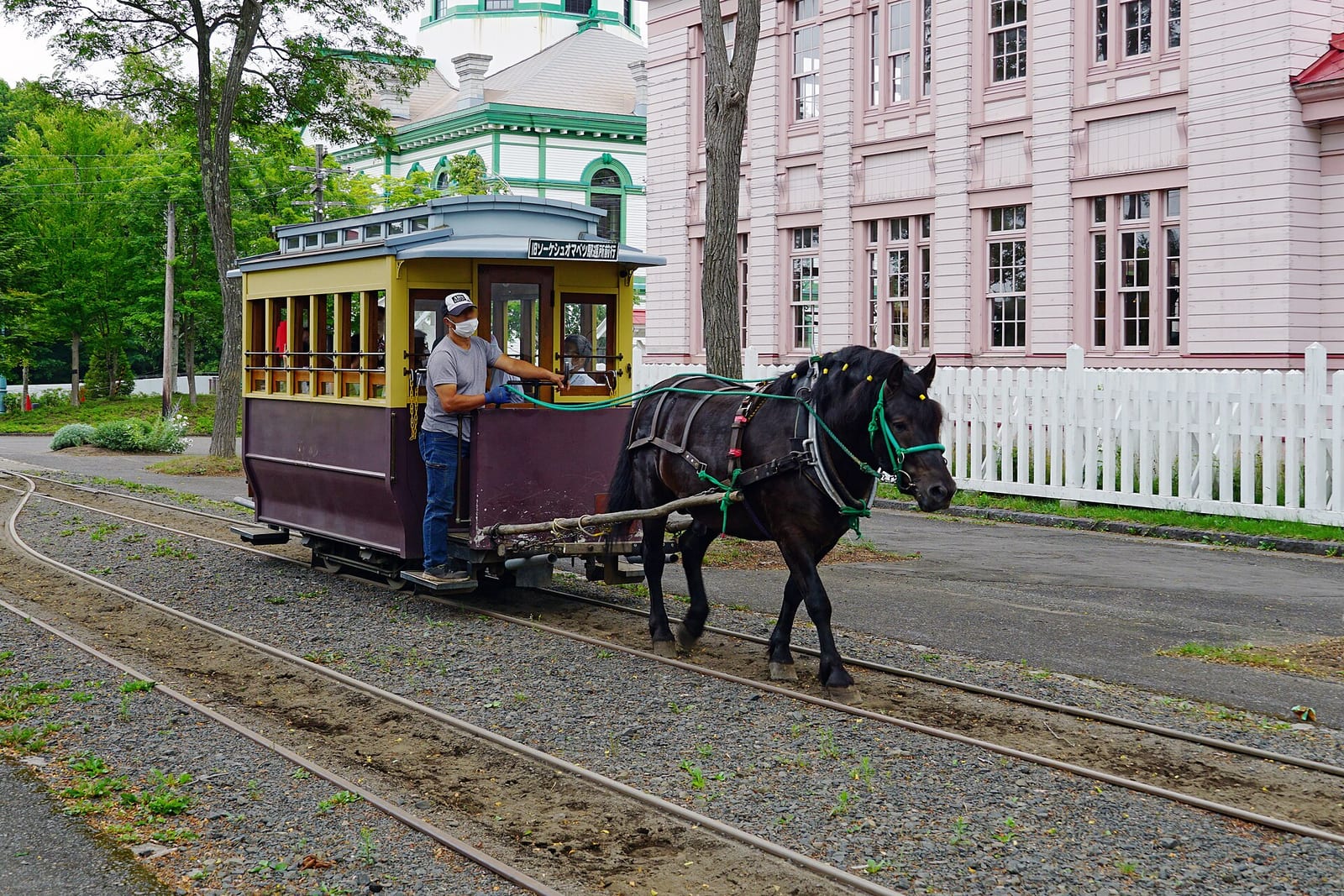
The first thing you reach past the entrance: a wide frontier main street lined with shops, inns, a newspaper office, a fire station, and a police box — all real wooden buildings from the era. Step inside and many are kitted out just as they would have been a century ago. This is where the horse-drawn streetcar runs, and it's the most photogenic corner of the whole site.
Sapporo Attractions →The signature experience: a real horse pulls an old-style streetcar down the main street of the town zone, on rails, exactly as it did in the Meiji era. It runs in the warmer months, roughly April to November, and is swapped for a horse-drawn sleigh once the snow arrives. Slow, gentle, and oddly magical — it's the highlight for most visitors, kids especially.
Sapporo Attractions →
🌾 Farm3
Out past the town, the land opens up into farmhouses, barns, and the implements settlers used to break and work the tough Hokkaido soil. You'll see thatched and timber farmhouses laid out as working homesteads, with displays of pioneer farm life. It's a quieter, more spread-out part of the village that really shows how hard those first years were.
Hokkaido Travel Guide →
🐟 Fishing4
Herring once made fortunes on Hokkaido's coast, and this zone tells that story. The centrepiece is a herring fishery boss's mansion — a big timber house with its workers' quarters and net stores — recreating a "coastal" village where the catch came in. It's a side of pioneer history that surprises a lot of visitors, and the scale of the fishery buildings is impressive.
Hokkaido Travel Guide →The most tucked-away part of the village, set among the trees of the forest park. Here you'll find the buildings of mountain trades — forestry, charcoal-making, and small-scale industry — that settlers leaned on away from the towns and the coast. It's the quietest zone, and walking it among the trees feels closest to the wild Hokkaido the pioneers actually faced.
Hokkaido Travel Guide →Dotted through the village, staff and volunteers in period dress run hands-on demonstrations — old crafts, daily chores, seasonal customs — which is what makes the place feel alive rather than static. And right next door in the same forest park is the Hokkaido Museum, covering the region's nature and pioneering history, so the two pair into one easy outing.
Hokkaido Travel Guide →The village is east of the city, so it's a subway ride plus a short bus. There's no station at the door — remember these three steps and the trip is straightforward. Allow about 45 minutes door to door.
From the city centre, take the Tozai subway line east to its terminus, Shin-Sapporo Station — about 20 minutes from Odori. This is a major sub-centre with a big bus terminal upstairs, so it's easy to find your way to the next step.
From the bus terminal at Shin-Sapporo, catch the JR Hokkaido bus bound for Kaitaku-no-Mura (the Historical Village). The ride is about 15 minutes and drops you right at the entrance. Buses don't run very often, so check the timetable before you set off.
The whole trip is around 45 minutes each way, and the village is large, so treat it as a half-day out. Note the last bus back, and consider pairing it with the Hokkaido Museum next door to make the most of the journey.
A handful of things worth knowing before you set out — from how long to budget, to what to wear, to where to grab a bite. The village is mostly outdoors, so a little planning goes a long way.
You can see how the Historical Village sits inside Nopporo Forest Park, with the Hokkaido Museum right next door — and Shin-Sapporo Station to the west, where the subway meets the bus that brings you in.
The village is a day trip, so most people base themselves in central Sapporo and ride out for the morning — easy on the Tozai line and well placed for everything else in the city.
An overview of where to stay, what to see, and how to get around the whole of Sapporo — pick the right area for your trip.
Open the Sapporo Guide →How the subway, trams, and buses fit together — including the Tozai line out to Shin-Sapporo for this trip.
Sapporo Transport →Search and compare Sapporo hotels on Agoda for your dates and budget before you decide to book.
Search on Agoda →A whole-city overview — sights, hotels, transport, and the districts beyond the Historical Village.
Open the Sapporo Guide →The best of Sapporo's sights, in the city and beyond, with how to get there and opening hours.
Sapporo Attractions →Miso ramen, soup curry, jingisukan, Hokkaido crab, and dairy desserts — a deep dive into the best places.
Sapporo Food Guide →The whole island — cities, nature, hot springs, and seasons, with links into city and attraction guides.
Hokkaido Guide →Every region and city, with links into city guides, hotels, and attractions across Japan.
Japan Guide →Visa · eSIM · IC cards · JR Pass · yen · power plugs · etiquette — everything before you fly to Japan.
Travel Prep →Stay central and the village is a simple subway-plus-bus trip east — with the rest of Sapporo's food and sights on your doorstep. Open our city guide, or compare prices on Agoda for your dates and budget.