Juemon — Gassho-Zukuri Minshuku, a 300-Year Thatched Farmhouse by the Irori Hearth
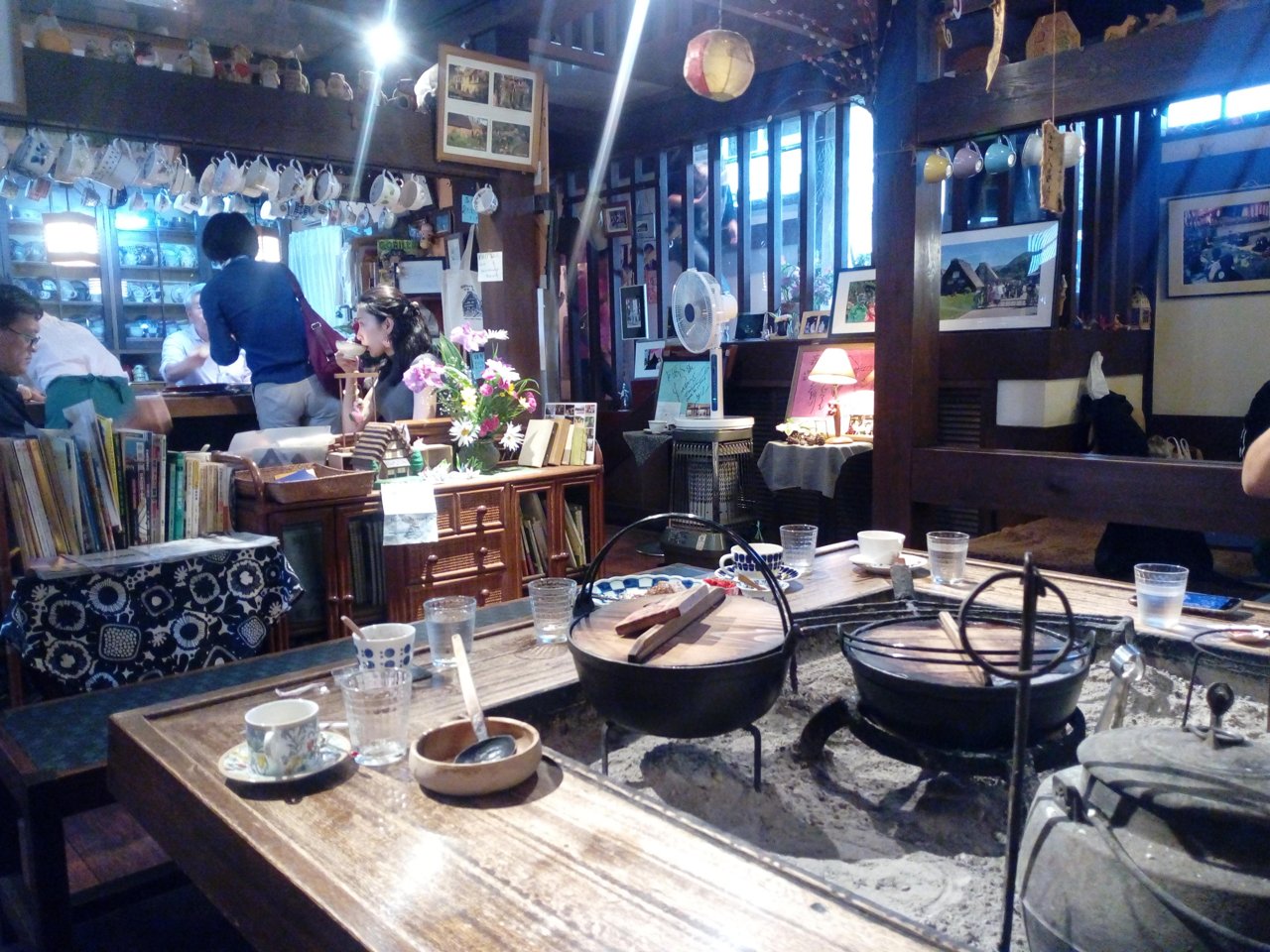
Picture this — an evening gathered around an irori, the sunken hearth at the centre of a farmhouse that has stood for nearly three centuries. Smoke drifts slowly up through darkened timber beams. On the low table: grilled river fish, a pot of Hida beef simmering in season broth, mountain vegetables, and steamed rice. And then the host grandmother picks up her shamisen and begins to play. That is an ordinary evening at Juemon, a family-run minshuku in Ogimachi, Shirakawa-go. No five-star hotel can manufacture that.
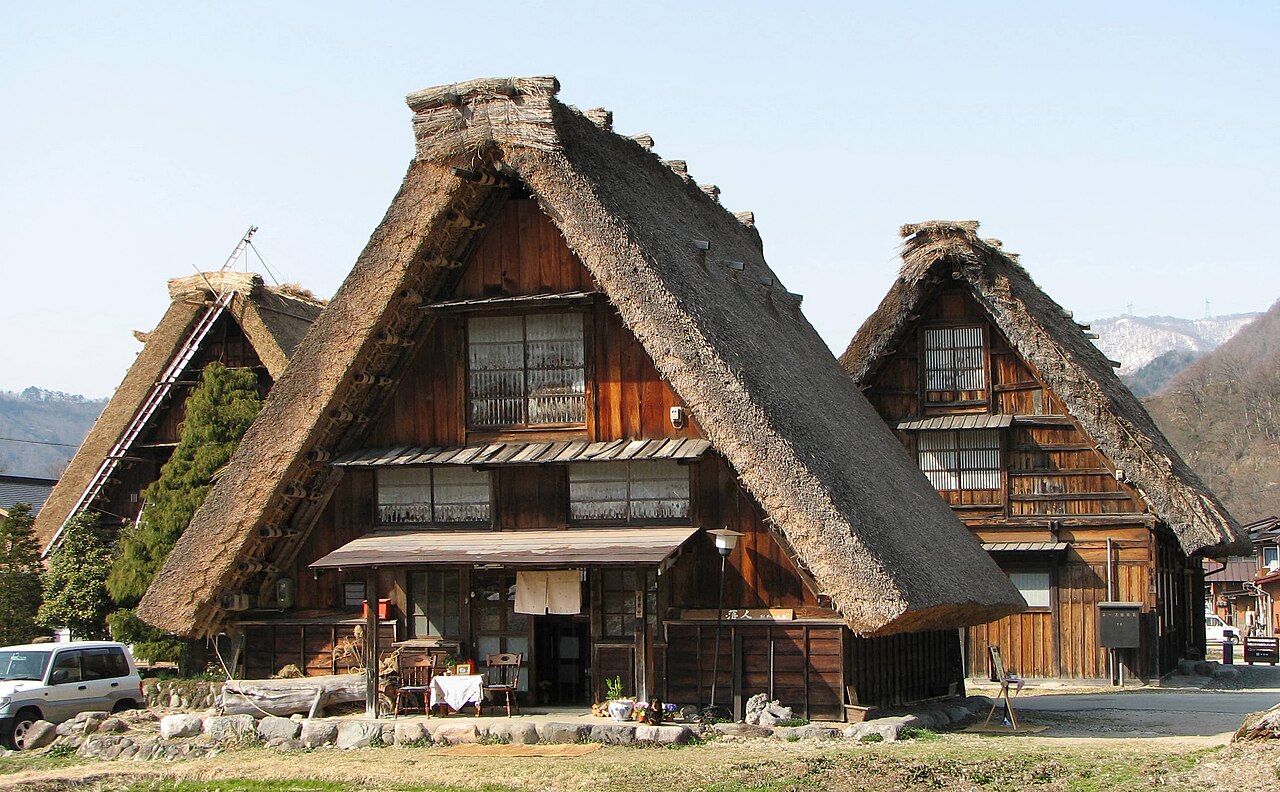
Honestly — if you come to Shirakawa-go just to walk around, take photos and catch the bus back, you have only seen the surface. The real experience is inside. Juemon is your entry point into a thatched farmhouse that people have actually lived and worked in for nearly three hundred years. This is not a museum reconstruction or a themed resort. It is the home of a family who open their door to guests with hot green tea and traditional sweets, then lead you to sit beside an irori — the sunken charcoal hearth at the heart of the house, warming the room and filling it with the slow, woody scent that has defined life in this valley for generations.
"Guests describe the dinners here as some of their favourite meals across an entire two-and-a-half-week stay in Japan — grilled fish, vegetables, Hida beef, everything fresh and beautifully done. The host grandmother plays shamisen for guests while they eat. It's the kind of experience, many say, you genuinely cannot find anywhere else."
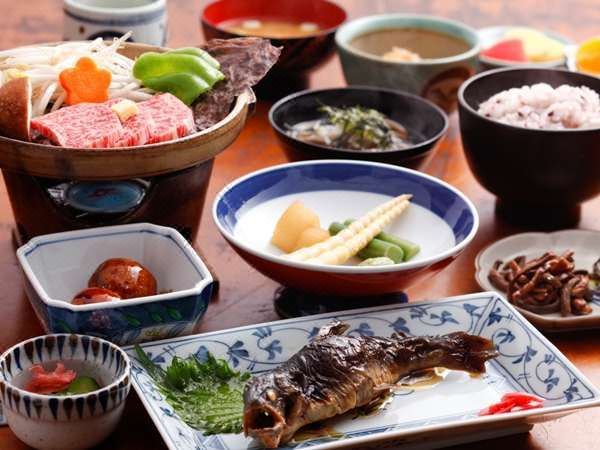
Dinner at Juemon is what guests talk about most. Everything is prepared by the host family from scratch, using ingredients sourced locally from the Hida-Shirakawa region. The centrepiece is Hida beef cooked on a hoba leaf over charcoal — the fat rendering slowly, the charred leaf adding a faint bitterness that balances the richness perfectly. Alongside it comes a whole grilled river fish, simmered mountain vegetables, miso soup and freshly cooked Japanese rice. On some evenings the grandmother of the house performs on the shamisen — a three-stringed lute — while guests eat. No one leaves the table feeling like a stranger. Breakfast holds its own as well: a spread of rice porridge or plain rice, grilled fish, pickled vegetables, soft-boiled egg, and miso soup. Simple, precise, and exactly right.
The rooms are genuine tatami-floor spaces — no beds, but thick futon laid out each evening. Each room looks out over a pond, rice paddies, and forested hills. There is no television and no Wi-Fi. For guests who chose Juemon deliberately, that is precisely the point: an evening with no screen between you and the sound of the Sho River and the faint creak of three-hundred-year-old timber. The farmhouse has only three or four rooms, which means it never feels crowded, and the bathroom and shower are shared among all guests. Shower times are reserved by writing your name on a whiteboard — a small but telling detail that sets the tone for the whole experience.
Juemon sits slightly at the edge of Ogimachi village rather than in the centre — a 14-minute walk from Shirakawa-go Bus Terminal. That modest distance means noticeably more quiet than the properties right on the main path. When the day-trip buses empty out and the tour groups go home, the silence that settles over this corner of the village is something you feel in your chest. The owners speak limited English — the husband manages better than his wife — but the warmth of the household communicates without words. Multiple guests describe feeling like temporary members of the family rather than paying visitors.
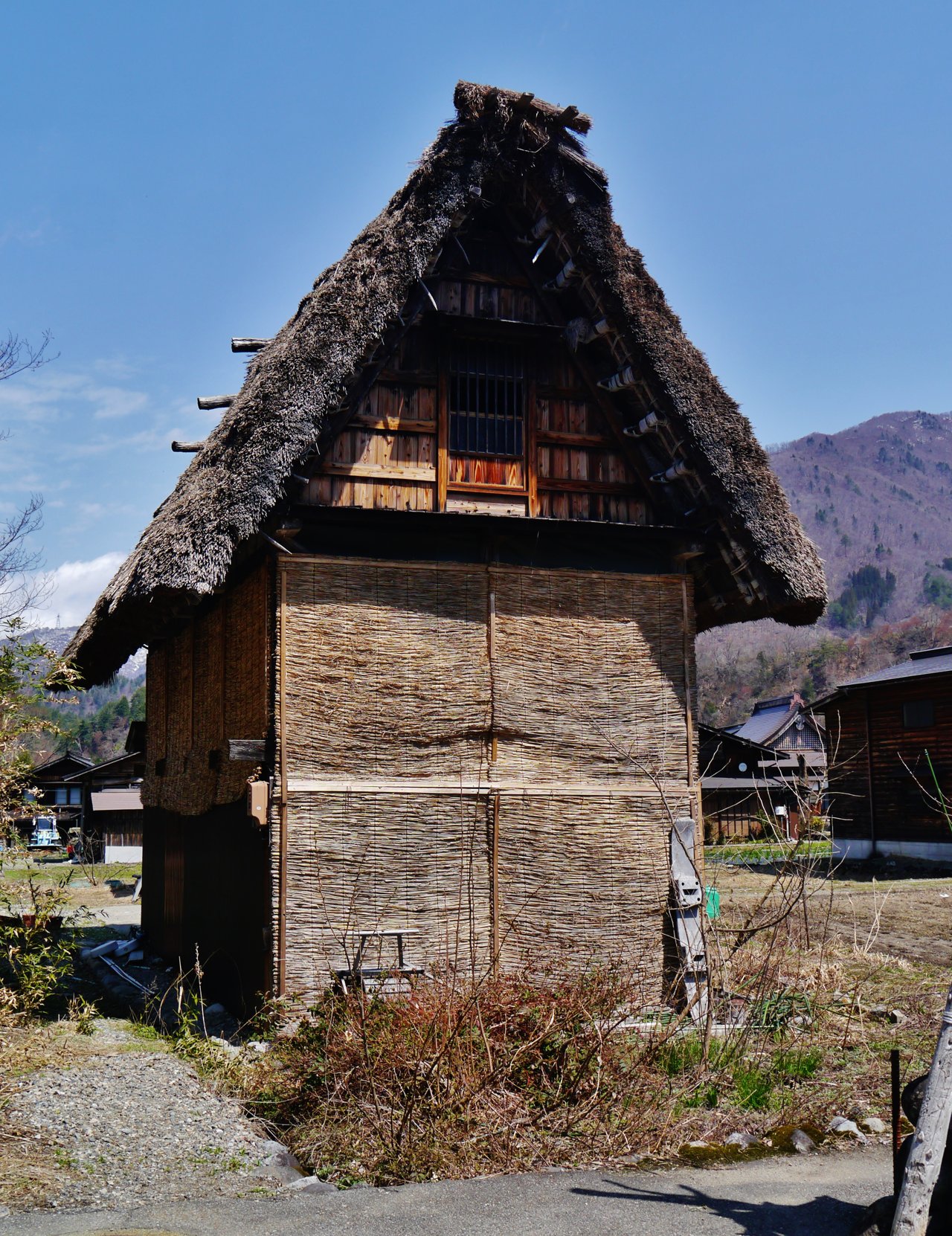
The farmhouse itself has a history of nearly 300 years. Walking under the steep thatched eaves and stepping through the low entrance, you enter a space where the walls and ceiling beams carry a deep, centuries-old patina of woodsmoke. In the morning, before the day-trippers arrive in Ogimachi, the view from the tatami room across the pond to the forested hills is the Shirakawa-go that photographs try and fail to capture. That early-morning stillness, available only to guests who spent the night, is the real reason to book Juemon.
A few things to know clearly before you book. All bathroom and shower facilities are shared, with shower times allocated via whiteboard. There is no private en-suite for any room. At around ¥9,000 per person per night (meals included), the rate is not low when you measure it against pure facilities — no private bathroom, no Wi-Fi, no television. In peak periods — winter snow season (January–February) and autumn foliage (November) — prices rise to ¥13,000–¥16,000 per person. What you are paying for is not luxury infrastructure but an unrepeatable experience: sleeping under a thatched gassho roof, eating home-cooked Hida cuisine by firelight, and waking to mountain mist through latticed wooden windows. If shared bathrooms or no internet feel like dealbreakers, Shirakawago no Yu offers en-suite bathrooms and a natural onsen. But if those are not your priority, Juemon is one of the most honest and rare lodging experiences Japan offers — and the 9.6/10 on Trip.com reflects guests who understood exactly what they were booking. One final note: bring cash yen from Takayama or Kanazawa, as Juemon accepts no cards, and book as early as you can.
Summary from Booking & Agoda
- ✓ Dinner described by multiple guests as the best meal of their entire Japan trip — Hida beef, grilled fish, seasonal vegetables
- ✓ Host grandmother plays shamisen during dinner; the warmth of the family makes guests feel at home within minutes
- ✓ Tatami room overlooking the pond and mountain fields; quieter than central-village properties
- ✓ Host family assisted guests with morning transport to the bus terminal without being asked
- ! Shared bathroom and shower facilities only — shower times must be signed up on a whiteboard
- ! No Wi-Fi, no television; cash yen only — guests unprepared for this find it frustrating
- ! Owners speak very limited English; communication requires patience and good humour
- ✓ Genuine gassho-zukuri structure nearly 300 years old — one of the rarest lodging experiences in Japan
- ✓ All food made from scratch; local Hida ingredients throughout; nothing packaged or pre-prepared
- ✓ Only 3–4 rooms means a genuinely private, uncrowded atmosphere; more like a private home than an inn
- ! No internet access of any kind; some guests unprepared for a full digital detox
- ! Slightly longer walk from the bus terminal than centrally positioned minshuku
- ! Peak-period availability is extremely tight; late bookers will find nothing
- 💡If shared bathrooms are a firm dealbreaker — Juemon has shared facilities only, with shower times allocated by whiteboard. There is no en-suite option. If this matters to you, Shirakawago no Yu offers private bathrooms and a natural onsen in a riverside setting one step up in comfort.
- 💡If Wi-Fi or television are travel essentials — Juemon has neither, by design. The farmhouse runs as a traditional household. This is the appeal for most guests who choose it; it will be a genuine frustration for those who did not expect it. Know before you book.
- 💡If cash is an issue — Juemon accepts yen cash only. There is a Lawson ATM in the village, but stock up in Takayama or Kanazawa. The nightly rate of ¥9,000–¥16,000 per person (2 meals included) is not cheap for what the facilities offer — you are paying for the irreplaceable experience and the food, not for comfort infrastructure.