What a day tour covers in the order the boat stops
Sorted as the boats usually moor, with an honest note on which to check the status of first, which gets busy, and which depends on the season and the swell.
 1
1
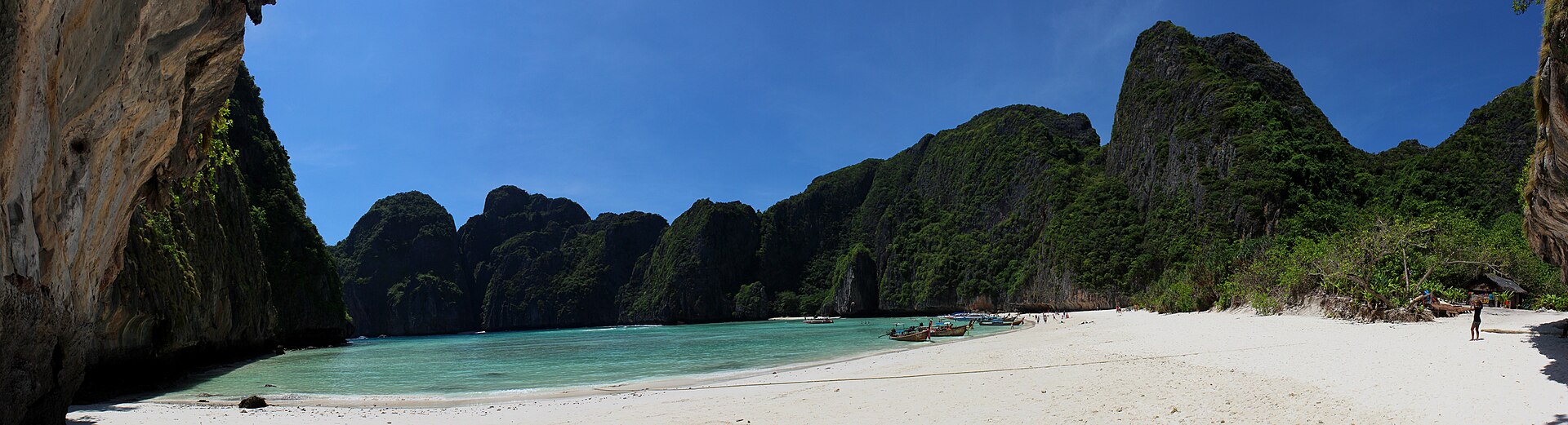
If there's one spot everyone wants to see on this trip, it's Maya Bay — a small cove on Phi Phi Leh ringed almost all the way round by tall limestone cliffs, with fine white sand and clear emerald water. It became famous worldwide from a film shot here years ago.
It was closed for several years to let nature recover; it's open again now, but the rules are strict — boats can't moor at Maya Bay beach itself, so they dock at the back (Loh Samah Bay) and you walk across, and swimming off the beach is banned to protect the recovering coral. I'll be honest: it gets very busy by mid-morning — take the earliest tour to catch the bay while it's still quiet and the light is good — and always check first, as the park closes the bay in some seasons.
 2
2
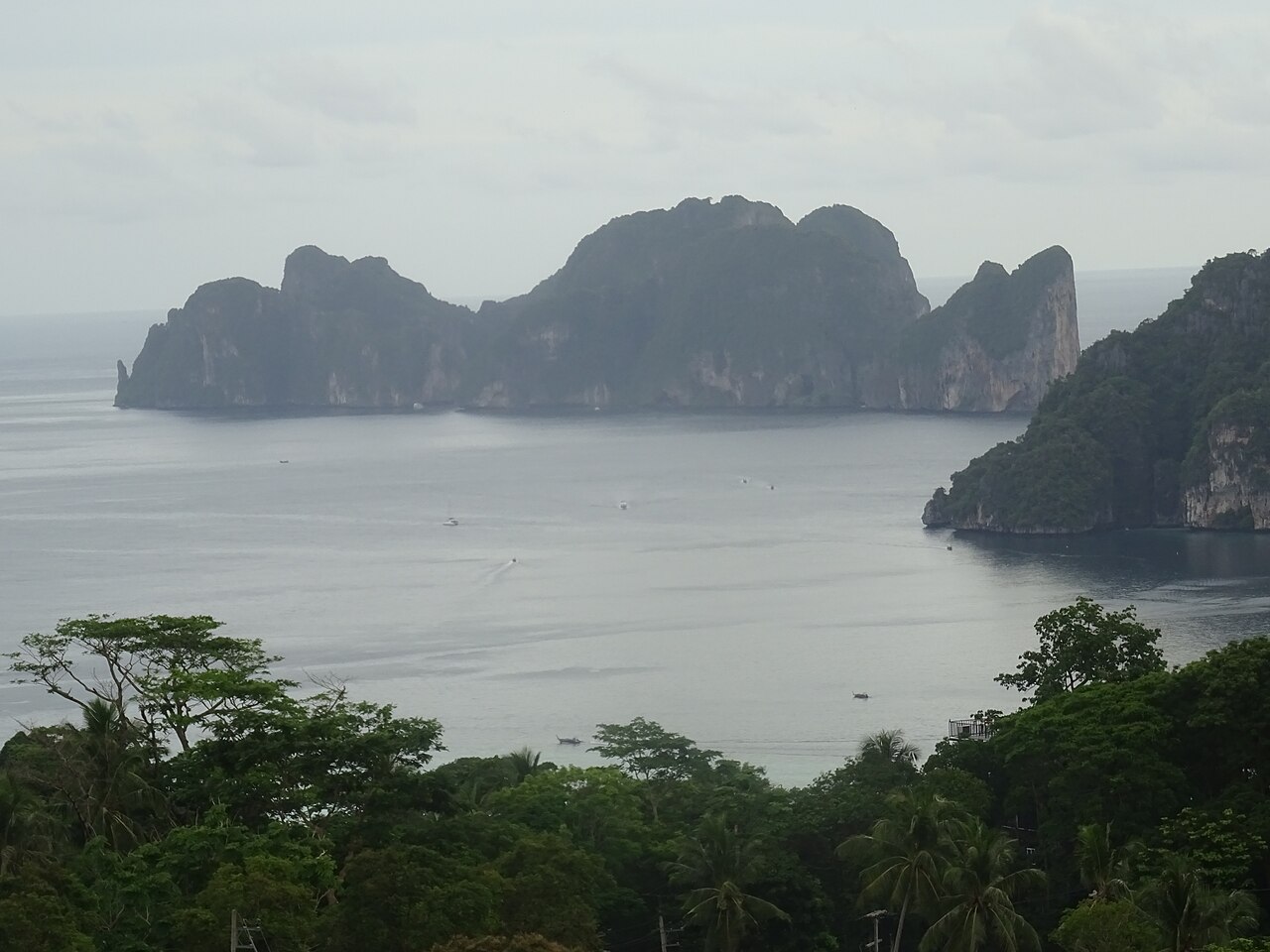
Just around the corner of Phi Phi Leh from Maya Bay sits Pileh Lagoon — a lagoon enclosed almost all the way round by tall limestone walls, with only a narrow channel for boats to slip through. Once inside, the water turns still and a deep emerald green, like a natural swimming pool.
This is where tours usually let you swim or paddle a kayak; the water is shallower and calmer than the open sea, ideal for floating about and photos. Honestly, when several tour boats arrive together it gets packed and noisy, so if your tour comes early, ahead of the others, the atmosphere is far better. Keep your life jacket on the whole time — the water is deeper than it looks.
Around Phi Phi Leh are several shallow, clear bays where tours take you snorkelling — Loh Samah Bay, the outer side of Maya Bay, and spots near Viking Cave. Some of the coral is still healthy, with shoals of small, bright fish coming in close. A few tours hand out fish food (though many have stopped, to protect the ecosystem).
Honestly, how clear the water is depends on the day and the current — when the swell is up, underwater visibility drops. The tour provides a mask and snorkel, and you can keep a life jacket on the whole time if you're not a strong swimmer. One warning — use reef-safe sunscreen, and don't stand on or touch the coral: it's fragile and slow to recover.
Phi Phi Don is the large, inhabited island, unlike Phi Phi Leh, which is uninhabited rock. Almost every day tour stops on Phi Phi Don around midday so you can eat and rest on land. The island has a village, restaurants, cafés and beaches to stroll.
If you have time to spare, the best thing to do is the Phi Phi Viewpoint — a fair climb up steps, but from the top you get a lovely view over the narrow isthmus with a bay on each side (Tonsai and Loh Dalum). Honestly, a day tour usually only gives you ~1–1.5 hours on Phi Phi Don, just enough for lunch. If you want to climb the viewpoint without rushing, stay a night on the island.
On Phi Phi Don's narrow isthmus there's a bay on each side — Tonsai on the pier side, and a few minutes' walk across is Loh Dalum Bay, a curve of white sand over shallow water. At low tide it opens into a wide flat of sand, easy to wander and photograph while you wait for the boat.
The lunch break is a good time to try southern Thai food or seafood in the village. Honestly, prices on the island run higher than on the mainland, since everything has to come in by boat. If your tour includes lunch, eat what's laid on; if not, you can find a place in the village, from simple made-to-order spots to cafés. Bring cash, as some places don't take cards.
Many tours pass Viking Cave on a cliff of Phi Phi Leh — a cave with old paintings that's also a source of swiftlet birds' nests. The boat slows so you can see it from outside (you can't go in, as it's a licensed nest-collecting site) while the guide tells the story.
Tours that range further sometimes continue to Bamboo Island (Ko Phai), north of Phi Phi Don — a small island with fine white sand and shallow, clear water, good for swimming and photos. Honestly, Bamboo Island is far out and depends on the sea state; in some seasons or on some days tours skip it, and there's an extra national park fee. Check with the tour first whether Bamboo Island is included — if you want to go, choose a package that says so explicitly.