Climb above Nikko's old shrines up a road of 48 hairpins and you reach the side of Nikko few travellers ever see — a 97-metre waterfall, Japan's highest mountain lake, a flat marsh made for walking, and a sulphur onsen to soak in at the end.
Most people come to Nikko for the gilded Tosho-gu shrine and then head home, missing the best part. Stay on the bus another 45 minutes or so up a road of tight switchbacks and you reach "Oku-Nikko", which translates literally as inner Nikko — a world of high mountains with the 97-metre Kegon Falls, Lake Chuzenji (the highest of all Japan's natural lakes), and a wide, flat marsh that's an easy stroll. Straight up: this is a completely different side of Nikko from the town.
This page follows the route in order, from the Irohazaka winding road that climbs the mountain up to the waterfall, the lake, the Senjogahara marsh, and finally the sulphur springs of Yumoto Onsen. It also covers how to ride the bus up from Nikko town, when the autumn leaves are at their best, and whether you're better off staying the night up top or doing it as a day trip.
Every spot is listed in the order the bus climbs from Nikko town — get the big picture of which ones suit you, then dive into the detail in the sections below (travel times are approximate; check the latest bus timetable before you go).
| Spot | Type | Known for | From Nikko | Good for |
|---|---|---|---|---|
| IrohazakaIrohazaka | Winding road | 48 hairpins, autumn-leaf views | Passed on the way up | Views / autumn leaves |
| Kegon FallsKegon Falls | Waterfall | 97 m tall, lift to the base | ~45 min + 5-min walk | Everyone · the highlight |
| Lake ChuzenjiLake Chūzenji | Lake | 1,269 m up, sightseeing cruise | By the Chuzenji Onsen stop | Slow days / photos |
| Akechidaira RopewayAkechidaira | Panorama | Falls + lake + Nantai view | Akechidaira stop ~40 min | View photographers |
| SenjogaharaSenjogahara | Marsh plateau | Flat wooden boardwalk, ~1,400 m | Ryuzu / Akanuma stops | Easy hiking |
| Yumoto OnsenYumoto Onsen | Onsen | Cloudy sulphur water by Lake Yunoko | End of the line ~80 min | Soaking / overnight |
Everyone who's made the trip up agrees the extra bus ride into the mountains is worth it — we've listed them in the order the bus climbs from Nikko town, so you can tick them off in a row in one day, or just pick the ones that suit you.
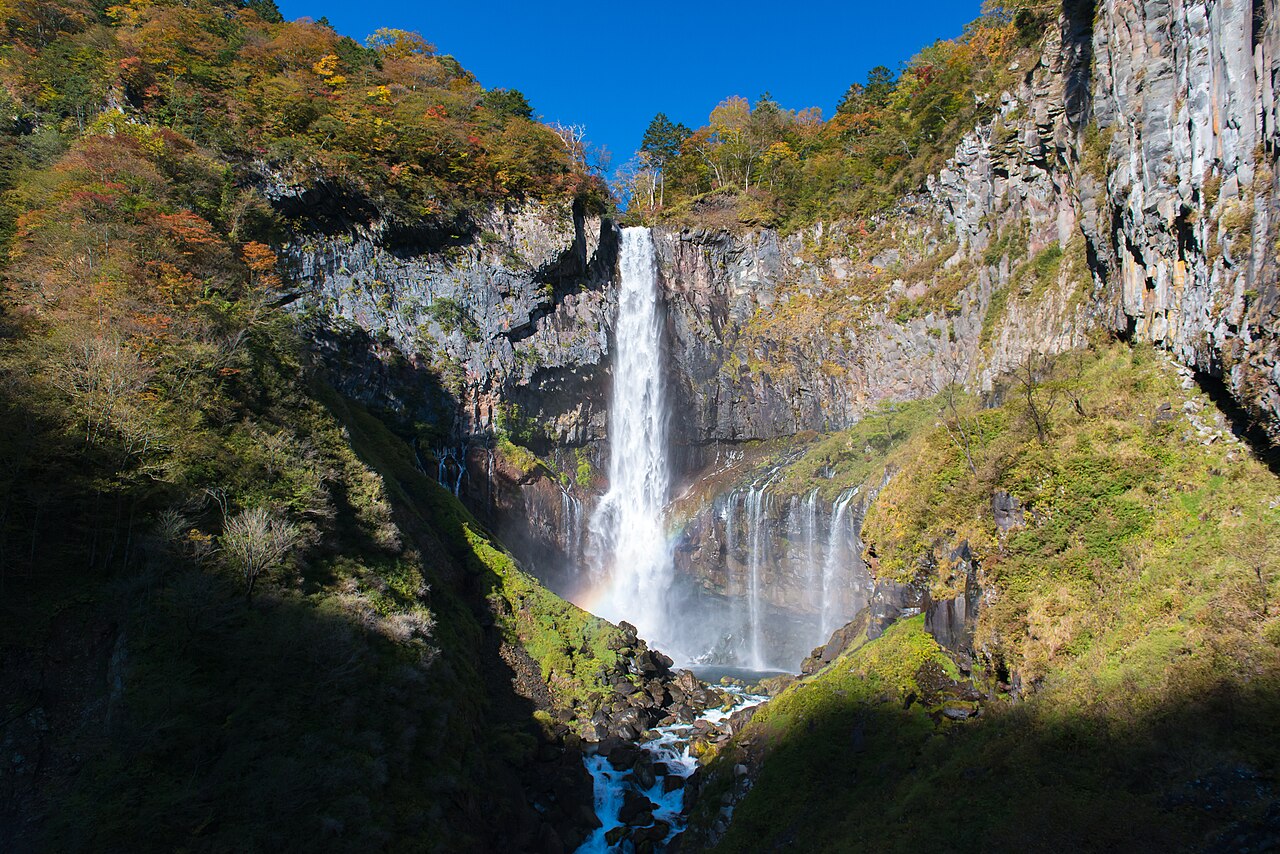
💧 Highlight1
Nikko's most famous waterfall drops straight down a 97-metre cliff and ranks among Japan's three most beautiful. An old lift from 1930 takes you down about 100 metres to a close-up platform at the base, where the cool spray drifts over you. The upper viewpoint is free; pay the lift fare only if you want to go down to the base.
Nikko Attractions →
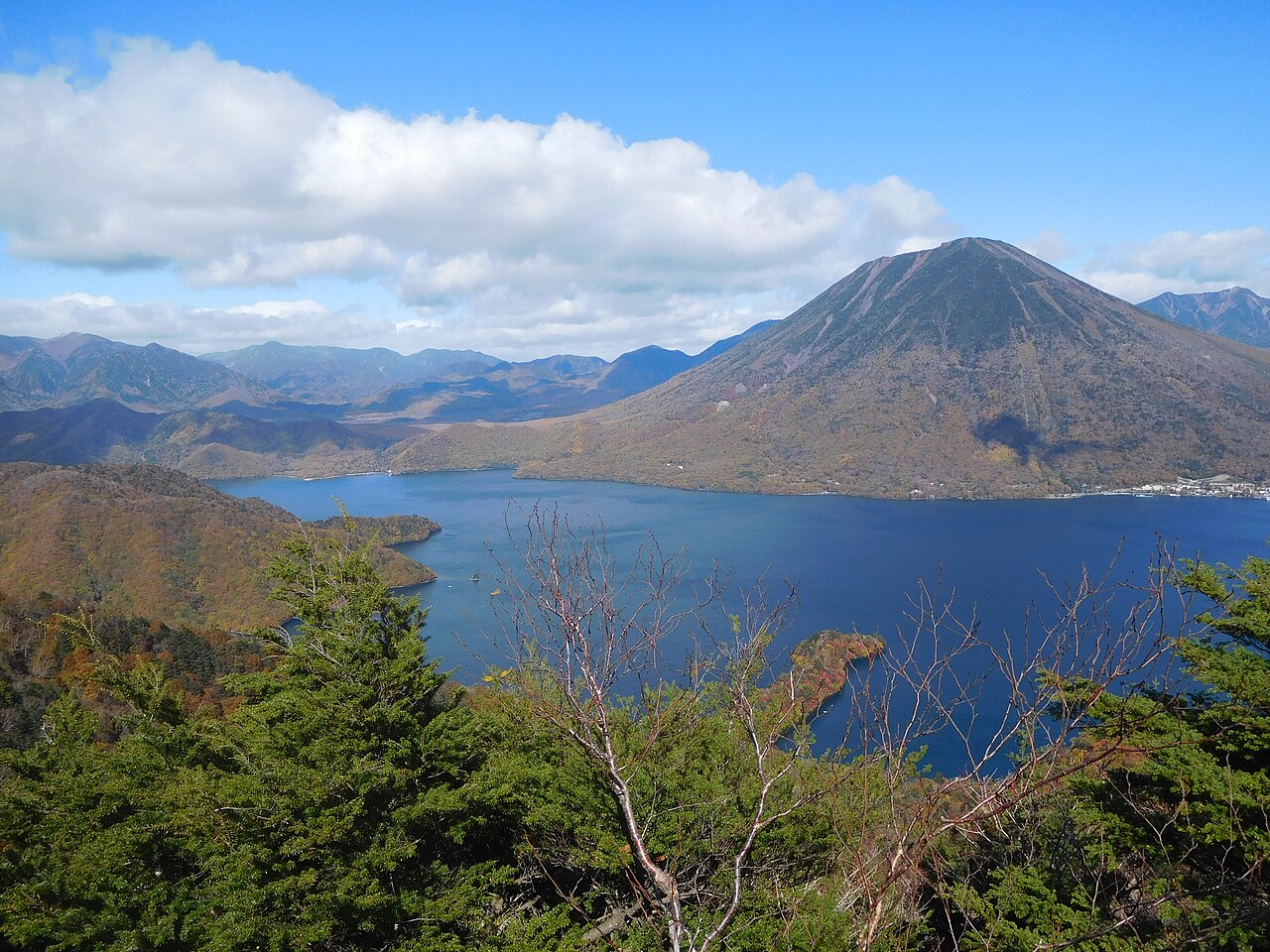
🏞️ Mountain Lake2
Japan's highest natural lake sits at 1,269 metres, formed by lava from the Mount Nantai volcano (2,486 m) that rises behind it like a backdrop. The water is calm and clear and the air stays cool all year. Walk the shore or take a sightseeing boat — and it's this lake that feeds Kegon Falls just downstream.
Nikko Attractions →A wide wetland of about 400 hectares at roughly 1,400 metres, once a shallow lake that silted up into grassland. A raised wooden boardwalk runs the whole length, so it's a flat, easy walk with no climbing — beginners can manage it. Lush green in summer, the grasses turn gold and red across the whole plain in autumn.
Nikko Attractions →A mountain road that climbs from Nikko town (~600 m) up to Lake Chuzenji (~1,270 m) through a total of 48 hairpin bends, named after the old Japanese "iroha" syllabary, which has 48 characters. It splits into an uphill line (20 bends) and a downhill line (28 bends), and in autumn the whole valley turns red and orange. Your bus drives right along it.
Nikko Attractions →One of the finest viewpoints in Oku-Nikko — ride the ropeway up to a lookout at 1,473 metres and you'll have Kegon Falls, Lake Chuzenji, and Mount Nantai all in a single frame. It's the best angle for photographing the falls from above, and in autumn it's where the queues get long.
Nikko Attractions →At the end of the bus line is a tiny onsen town on the shore of Lake Yunoko, where the sulphur water is so concentrated it runs cloudy yellow and an egg-like smell hangs over the whole place — pure bliss after a day on your feet. Just below the lake is Yudaki Falls, which spreads down in a wide curtain, beautiful in the autumn-leaf season.
Japan Onsen Guide →There's no train up to Oku-Nikko — everyone uses the same single bus line. Get these three steps and planning your day is easy (2026 timetables and fares may change, so check at the Tobu counter first).
From Tokyo, ride to Tobu-Nikko station (the Tobu train from Asakusa is easiest) or JR Nikko — the two stations sit side by side and both are the starting point for the climb. For the full route into Nikko, see the Nikko city guide.
In front of the station you'll find Tobu buses bound for Chuzenji Onsen or Yumoto Onsen, climbing the Irohazaka winding road. It's about 45 minutes to Kegon Falls / Lake Chuzenji and around 80 minutes to Yumoto. Buses run on a schedule — check the times at the stop.
If you're hitting several spots in a day, an unlimited-ride pass (for the Chuzenji or Yumoto zone, say) is far better value than paying per ride, because fares climb steeply with distance. Buy it at the Tobu counter in front of the station.
Nikko's signature food is "yuba" (tofu skin) — almost every restaurant has a yuba dish. Up the mountain around Lake Chuzenji and Kegon Falls there are places to stop and refuel between the sights.
See clearly how close Kegon Falls, Lake Chuzenji, the Senjogahara marsh, and the Akechidaira Ropeway sit to each other — all linked by the bus from Nikko town that climbs the Irohazaka winding road.
Oku-Nikko has no big luxury chains, but there are onsen ryokan with a real mountain feel. Pick from three options to match the style of your trip.
1) Lakeside ryokan at Chuzenji Onsen — wake up to a view of the lake and Mount Nantai, close to Kegon Falls, ideal if you want to see the main sights without rushing · 2) Yumoto Onsen — higher and quieter, with cloudy, concentrated sulphur water, ideal for serious soakers and anyone walking Senjogahara · 3) Stay in Nikko town — more rooms and a wider range of prices, then ride the bus up in the morning, ideal if you also want to see the town's shrines. During the October autumn-leaf season every kind of room fills up fast, so booking ahead and picking a free-cancellation rate is the safest move.
The full Nikko guide — the Tosho-gu shrine, where to stay, what to see, and how to get there from Tokyo. Your base before heading up to Oku-Nikko.
Nikko Guide →Map out a Nikko route covering both the town's shrine district and Oku-Nikko up the mountain, whether you've got one day or an overnight.
Nikko Itinerary →The sacred mountain in Wakayama — sleep in a temple (shukubo), the Okunoin cemetery, and shojin-ryori vegetarian cuisine. Another spiritual mountain to explore.
Koyasan Guide →The Japan Alps valley in Nagano — Kappa Bridge, Taisho Pond, and the Hotaka range. A paradise for hikers who love mountain views.
Kamikochi Guide →How to bathe, the etiquette, and what to know about tattoos before you try the sulphur water at Yumoto.
Onsen Guide →A 7-day route through Japan's main cities, in case you want to slot Nikko and Oku-Nikko into a bigger trip.
7-Day Plan →Start with the Nikko city guide to plan the shrines and in-town sights, then build on it by heading up the mountain for Kegon Falls, Lake Chuzenji, and Yumoto Onsen — or book a room in Nikko early, especially for the fast-filling October autumn-leaf season.