6 things to eat before you leave Nara
Ranked by singularity — dishes you simply cannot replicate anywhere else.
 1
1
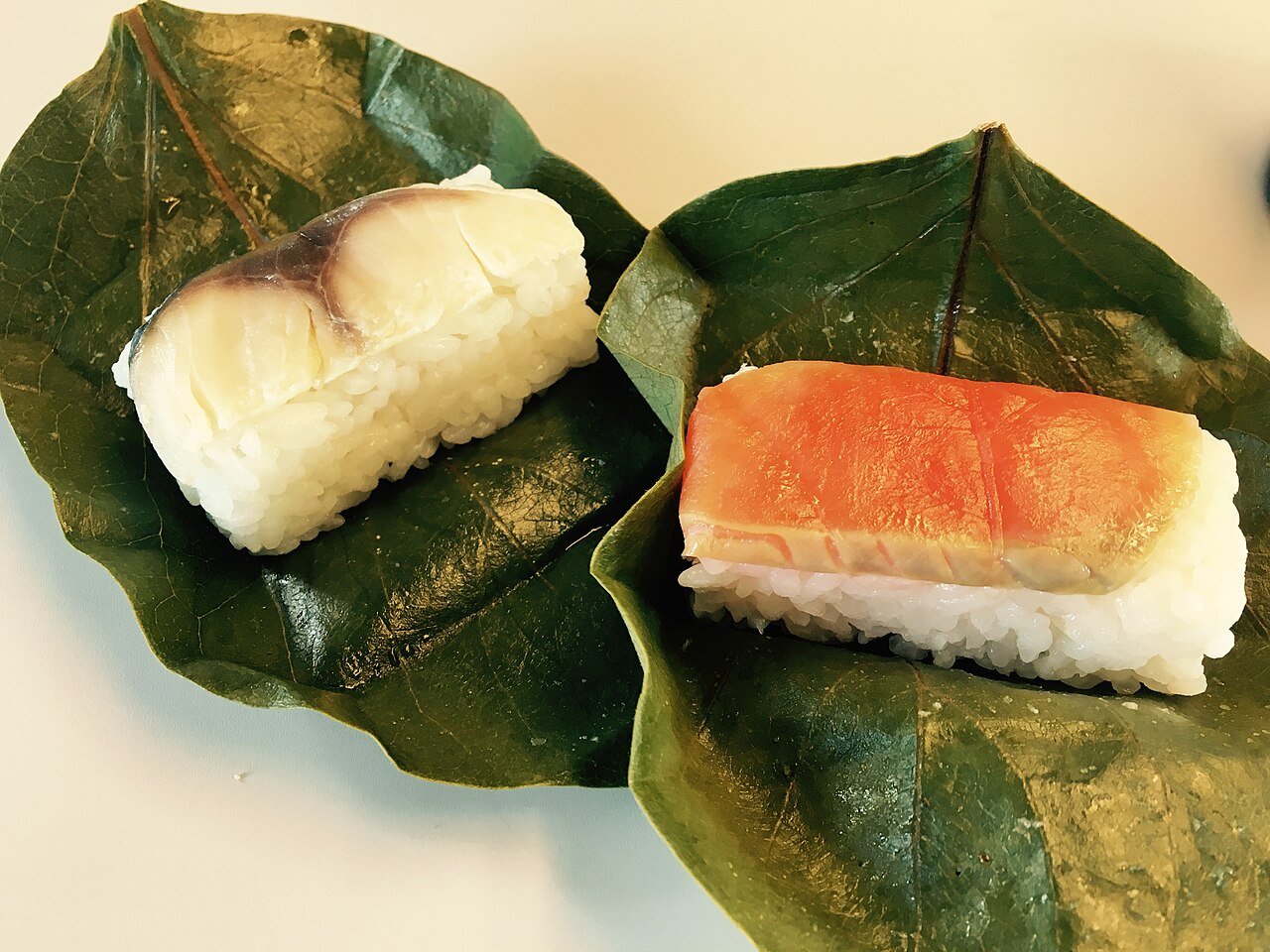
Before refrigeration, getting fish to Nara meant days on mountain roads. Salt-marinated mackerel wrapped in persimmon leaves was the solution: the tannins and phytoncides in the leaf suppressed bacteria while the journey itself fermented the fish to a gentle, complex sweetness. You unwrap the leaf at the table — it is not edible — revealing a cool, firm block of vinegared rice topped with just enough cured fish to perfume every bite. Modern Kakinoha-zushi adds salmon, sea bream, shrimp, and eel, but the original mackerel (saba) version remains the one to try first.
 2
2
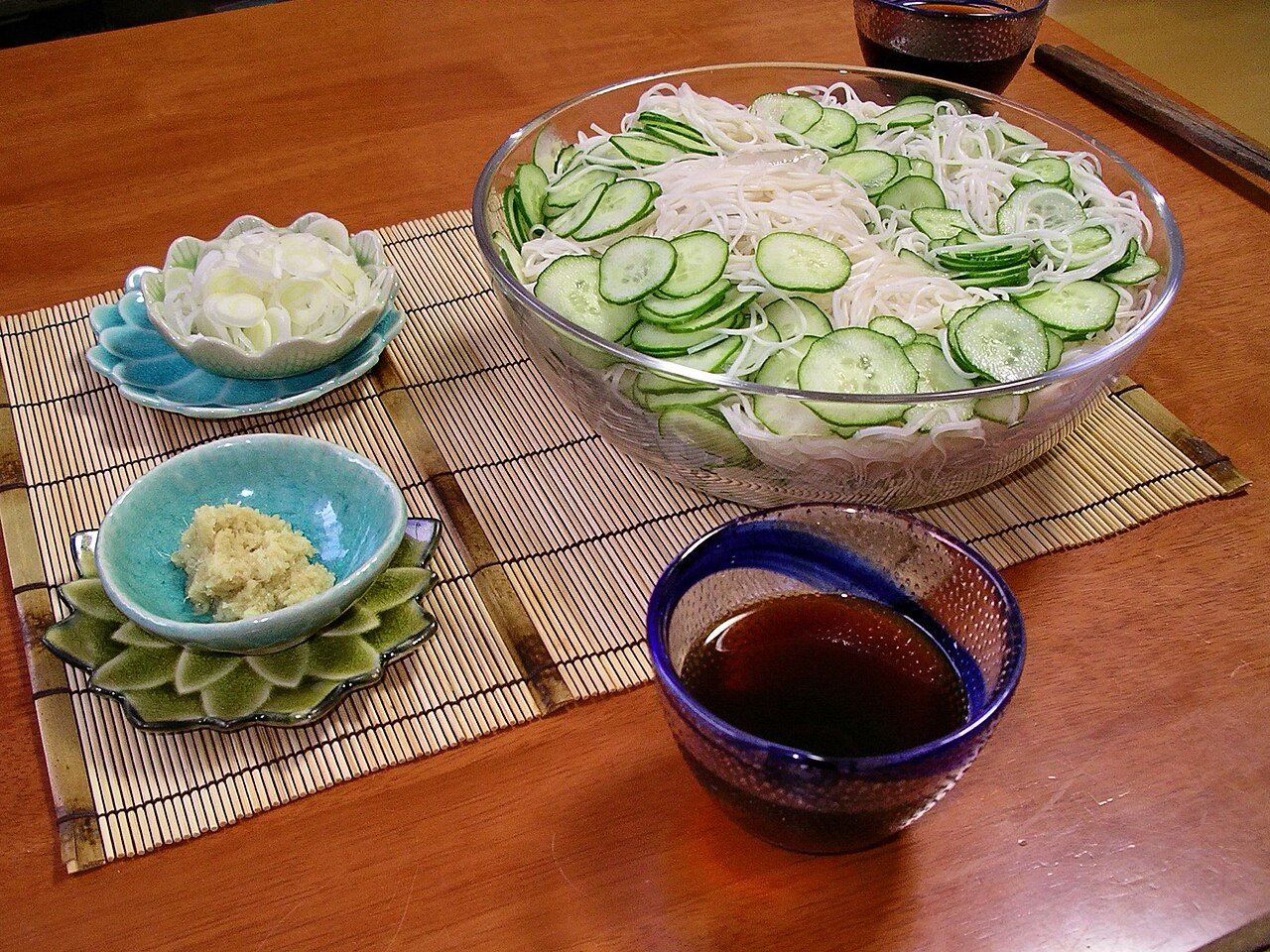
If you have ever dismissed somen as bland supermarket noodles, Miwa Somen will recalibrate your expectations entirely. Made by hand in the Miwa district near Omiwa Shrine — Japan's oldest Shinto shrine — these noodles are stretched on cedar and bamboo poles in cold valley air until they measure under 1.3 mm in diameter: thinner than spaghettini, but with a snappy resilience that machine-made noodles cannot achieve. Edo-period pilgrims carrying them home from the Ise Grand Shrine were known to rhapsodise about their texture. Eat cold in summer with dashi dipping broth and grated ginger; hot in a clear broth in winter.
 3
3
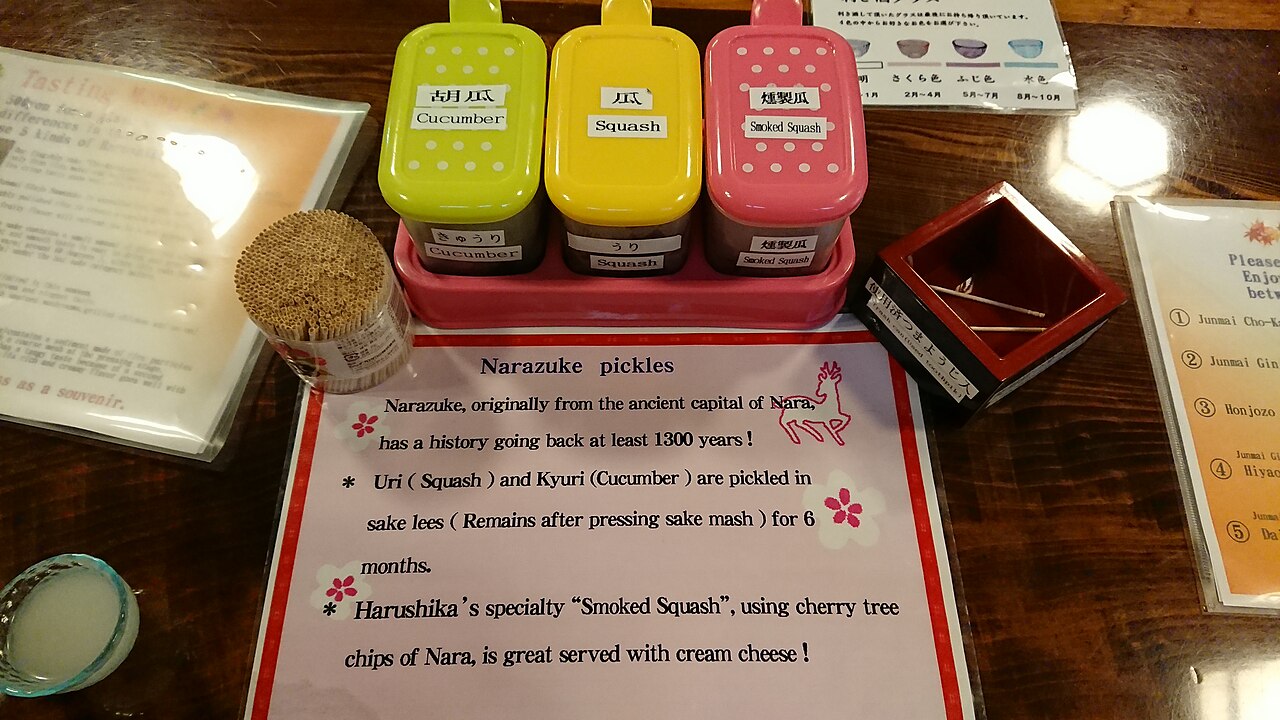
Nara has brewed sake for longer than almost anywhere in Japan, and Narazuke was born from what the breweries left behind: sake lees, the thick, fragrant paste that remains after pressing. Cucumbers, white melons, daikon, and gourd are buried in the lees for six months to three years, absorbing the mild sweetness of the grain alcohol and developing a distinctive, clean fermented depth. The texture is firm and crisp — nothing soggy here. The flavour is subtly salty with a quiet sake fragrance that lingers pleasantly. Buy at Harushika Sake Brewery Store in Nara city, where you can taste the pickles alongside five sakes before you commit.
 4
4
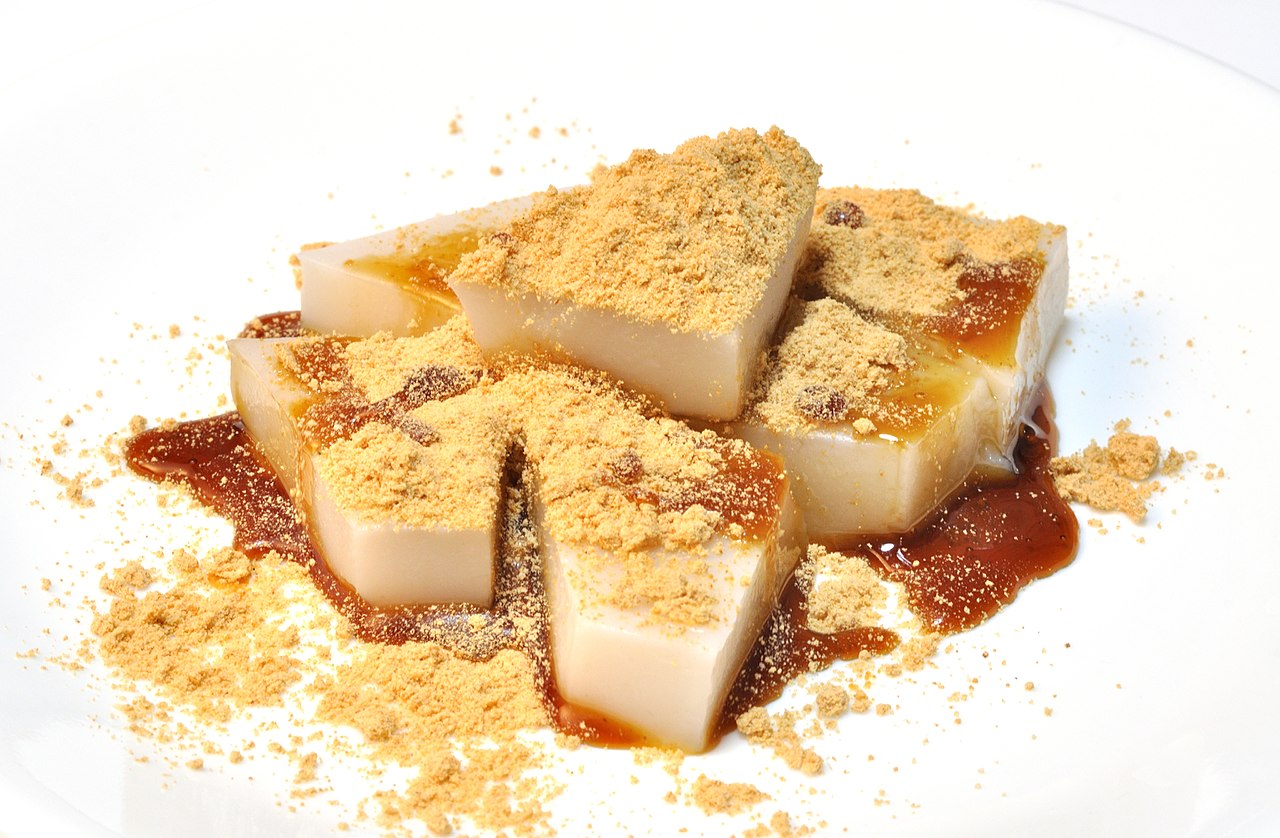
Yoshino, in the mountains south of Nara city, is famous for its thousand cherry trees — but it also produces the finest kudzu starch in Japan, and this is what kuzumochi is made of. Wild kudzu roots are harvested from mountain slopes in winter, processed into a pure white powder, dissolved in cold water, then cooked until it sets into a translucent, wobbly block that is somehow both firmer than tofu and more yielding than jelly. Cut into squares, crowned with roasted soybean flour (kinako) and a slow pour of dark brown-sugar syrup (kuromitsu), it tastes of almost nothing you can name — clean starch, caramel depth, a hint of earth — and the moment it touches your tongue it disappears. Eat immediately; kuzumochi hardens as it cools.
There is a saying in Nara: "Mornings in Yamato — the old name for Nara — begin with Chagayu." Unlike the thick, starchy congee of Shanghai or Cantonese cooking, Chagayu is a light, almost soupy rice porridge cooked in roasted green tea until each grain has softened but still holds its shape. The colour is pale gold, the aroma is warm and subtly toasty, and the aftertaste is clean. It comes surrounded by its traditional companions: slices of Narazuke, a small grilled fish, a pickled plum, and perhaps a raw egg to stir in. It is the meal of farmers and monks, and after a long day walking between ancient temples it settles the stomach in a way nothing more elaborate could.
 6
6
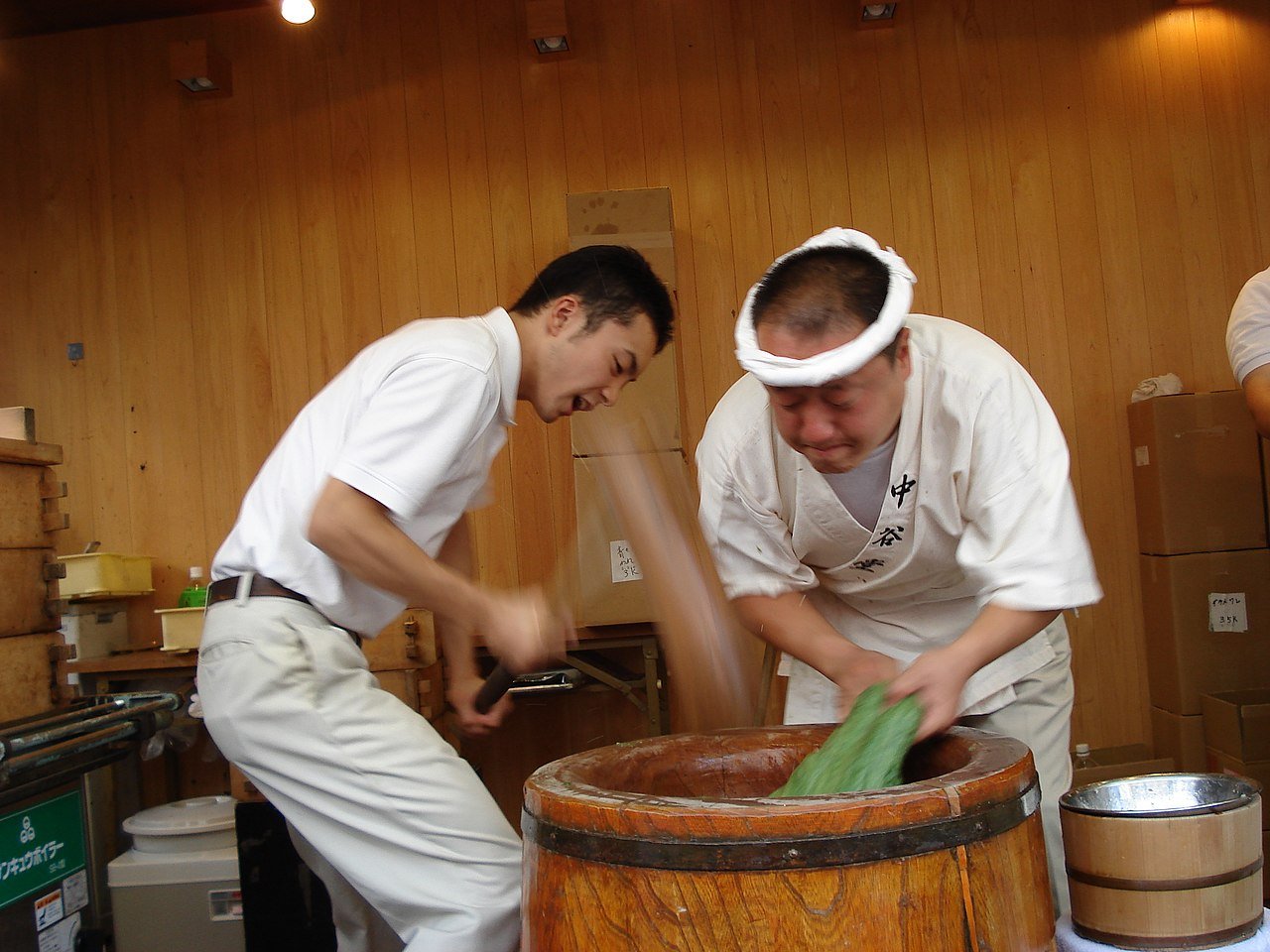
On Higashimuki Shopping Street, the sound of Nakatanidou's mochi pounding stops pedestrians every few minutes: two staff in white, swapping hammer blows at extraordinary speed on a mound of glutinous rice, while a third folds and shapes the dough between strikes with practiced, dangerous-looking efficiency. It draws a crowd every time. The resulting mochi — wrapped around sweet azuki bean paste or rolled in kinako — has a warmth and elasticity that packaged mochi simply cannot match. Eat it within minutes. Meanwhile out in Nara Park, sika deer roam freely and Shika Senbei crackers sold by street vendors (¥200/pack) are the designated food to offer them. The deer are polite but quick — hold a cracker up and one will bow to you before taking it.