Home Nagasaki Nagasaki Prefecture Japan About
Home  ›  Asia  ›  Japan  ›  Nagasaki  ›  Itinerary
🗺️ Nagasaki Itinerary · 1–3 Days · 2026

How Many Days
Does Nagasaki Need?

From the red-brick colonial villas of Glover Garden at first light, to the million-dollar night view from Mt Inasa and a boat ride to the world's most photogenic ghost island — this plan is built to work, with real tram numbers, ticket prices and honest timing for every stop.

How Many Days for Nagasaki

Honestly: one day works, but two days is the better version

Picture this — you walk up the hill toward Glover Garden early in the morning, the harbour air still cool, and you find that the brick villa a Scottish merchant built here over 160 years ago is still standing intact. Iron-hinged shutters, arched stained glass, cherry trees in the courtyard. That is Glover Garden — the first of many moments in Nagasaki where visitors say the place turned out better than they expected.

Nagasaki is unlike any other Japanese city because it tells several stories at once — a Dutch trading post, a Chinese settlement, Portuguese missionaries, the atom bomb, and the longest-surviving underground Christian community in history. Every one of those stories is reachable by a ¥150 tram ride.

The plan below covers three durations: one day for the history highlights and the Mt Inasa night view, two days adding Dejima and Nagasaki's flavours, three days extending to Gunkanjima Island. Pick what fits your schedule. For the full picture of what to do and where to stay in Nagasaki, see the city guide.

Day One

History You Can Walk in a Single Tram Day

Colonial garden at dawn · UNESCO cathedral in golden light · the Bridge that wears spectacles · Peace Park · Atomic Bomb Museum · million-dollar night view — the day that explains why Nagasaki keeps coming up in conversation
01
Day 1
Glover Garden · Peace Park · Mt Inasa Night View
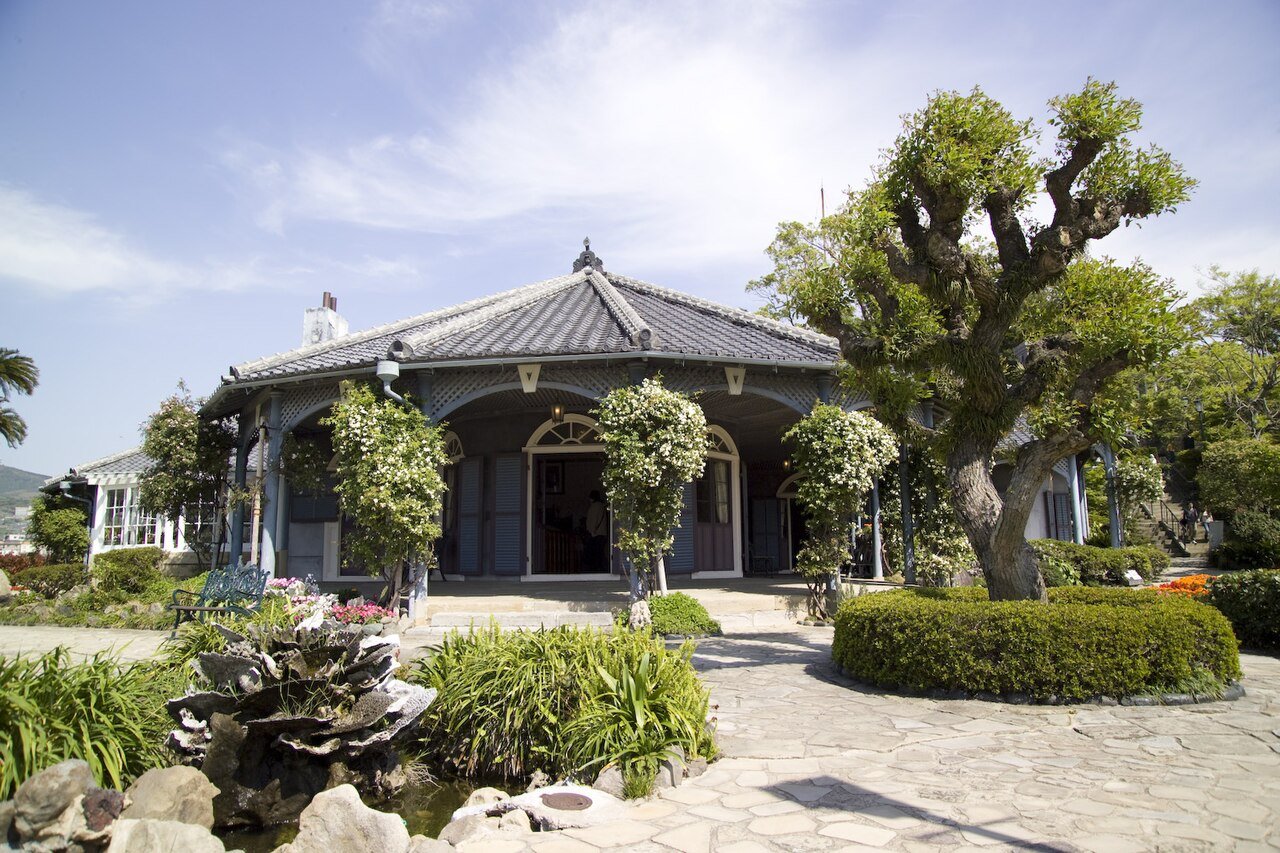
Glover Garden Nagasaki — red-brick colonial villa on a hill overlooking Nagasaki harbour
Morning · 08:30–12:00 · ~3.5 hours
Glover Garden + Oura Cathedral (UNESCO)

Start the day at Glover Garden by 08:30–09:00, before tour-bus crowds arrive mid-morning. The garden holds the preserved homes of foreign merchants who settled in Nagasaki during the late Edo period. Thomas Glover, the Scottish businessman whose 1863 house is the oldest Western-style building in Japan, is the star exhibit — but walk up the escalators to the hilltop first. The view over Nagasaki harbour, with container ships and island silhouettes in the bay, photographs best before 10:00 when the light is still low and golden.

From Glover Garden, walk ~5 minutes downhill to Oura Cathedral (Urakami Tenshudo) — a Gothic Catholic church built in 1864 and the only Western building in Japan designated a National Treasure. It was constructed in memory of 26 Japanese martyrs who were crucified in 1597. The stained-glass windows cast blue and violet light into the interior on a sunny morning. It is one of those buildings that is quieter and more moving than you expect.

Tram: Line 5 to Oura Tenshudo-shita (大浦天主堂下) · walk uphill ~5 minutes
Glover Garden: ¥1,300 adults / ¥650 students · open 08:00–18:00 (extended to 21:30 in some seasons)
Oura Cathedral: ¥1,000 adults (includes museum) · open 08:30–18:00
Combination ticket: Oura Cathedral + Glover Garden ¥1,580 (saves ¥720)
Tip: Buy the 1-day tram pass (¥600) at the Nagasaki Station Tourist Information Center before you set off — it is not sold on the trams themselves and pays off from your 4th ride onward.
Afternoon · 12:00–17:00 · ~5 hours
Megane Bridge + Peace Park + Atomic Bomb Museum

After lunch (champon or sara-udon from any of the restaurants near Chinatown is a logical choice), ride tram Line 4 to Megane Bridge (Meganebashi) — a double-arched stone bridge from 1634 whose reflection in the Nakashima River creates a perfect pair of spectacle circles on calm water. It is the oldest stone arch bridge in Japan, free to walk across, and surrounded by small cafes and riverside benches where locals sit through the afternoon. You need 20 minutes here, not more.

Continue by tram Line 1 north to Peace Park (Heiwa Koen) and the Nagasaki Atomic Bomb Museum — alight at Matsuyama-cho (松山町). The Peace Park holds the iconic 9.7-metre bronze Peace Statue and is the site of the annual August 9th memorial ceremony. A 5-minute walk from the park leads to the museum, which records the atomic bombing of 9 August 1945 with a directness that leaves most visitors quiet for a while afterwards.

Tram (Megane Bridge): Line 4 to Meganebashi (眼鏡橋) · 1-minute walk
Tram (Peace Park): Line 1 to Matsuyama-cho (松山町) · ~5-minute walk
Peace Park: Free · open 24 hours
Atomic Bomb Museum: ¥200 adults / ¥100 students · open 08:30–17:30 (closed Dec 29–31)
Allow time: The Nagasaki Atomic Bomb Museum is not a quick walk-through — plan 90–120 minutes if you want to read the exhibits properly. Many visitors sit in the Peace Park for a while before moving on.
Evening · 18:00–22:00
Mt Inasa Ropeway — the "New Three Great Night Views of the World"

Mt Inasa (稲佐山, 333 m) was re-certified in 2021 as one of the "New Three Great Night Views of the World" alongside Hong Kong and Monaco. Getting there: take bus routes 3 or 4 from Nagasaki Station to the Ropeway-mae stop (~5 minutes, ¥160), then ride the 5-minute gondola to the summit. The ropeway runs until 22:00.

From the observation deck, the harbour, bay islands, residential hillsides and city streets fan out below you in a bowl shape that concentrates every light source into one frame. The sweetest 20–30 minutes are just after sunset when the sky still holds a deep blue behind the amber city glow. There is a restaurant and cafe on the summit if you want to eat up there before the last gondola down.
Bus: Routes 3 or 4 from Nagasaki Station → Ropeway-mae · ~5 minutes · ¥160
Ropeway: ¥1,040 one way / ¥1,900 round trip · open 09:00–22:00 (closed 2nd Thursday each month)
Summit observation: Free after ropeway · cafe and restaurant on-site
Day Two

Dejima, Chinatown and the Tastes That Made Nagasaki

The artificial Dutch island cut off from the city by a canal · a Ming-dynasty temple still thick with incense · the original bowl of champon · Castella from a 400-year-old Portuguese recipe — the day you realise how different Nagasaki is from every other city in Japan

02
Day 2
Dejima · Sofukuji Temple · Chinatown · Champon
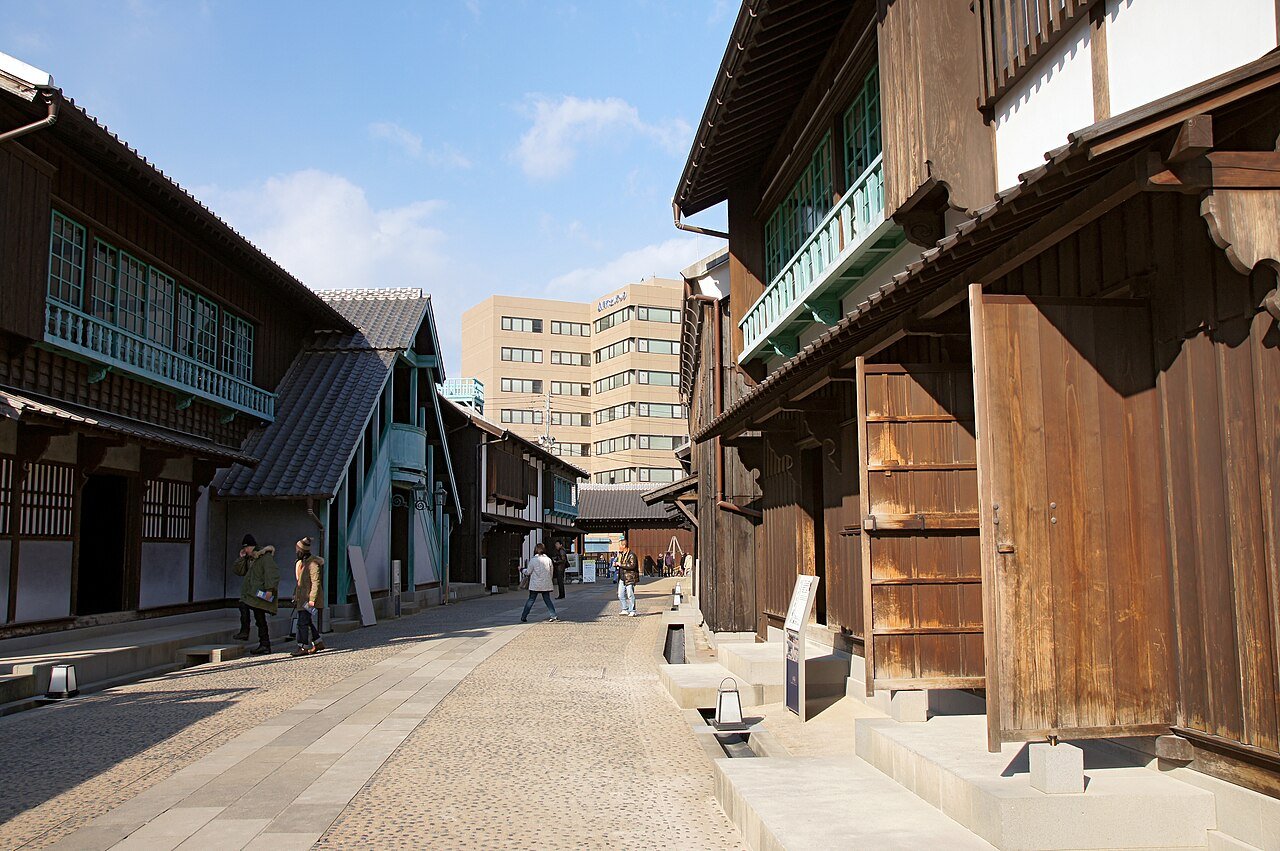
Dejima Nagasaki — reconstructed Dutch trading post, orange-tiled roofs and white walls at the historic waterfront
Morning · 09:00–12:00 · ~3 hours
Dejima (出島) — Where Japan Met the West for Two Centuries

During Japan's period of national isolation (1641–1853), the only Western trading partner permitted to do business with Japan was the Dutch East India Company — and they had to operate from a small artificial island in Nagasaki harbour called Dejima. The island was surrounded by a canal on all sides with a single bridge to the mainland. Today the site has been meticulously restored as an open-air museum: over 20 buildings from the 17th–19th centuries, each furnished to period detail. Walk through counting houses, a captain's quarters, a warehouse of Dutch trade goods, and a garden. It takes about 1–1.5 hours and rewards a slow pace.

From Dejima, walk about 10 minutes south or take tram Line 1 one stop to Sofukuji Temple (崇福寺), built in 1629 by the Chinese community from Fujian Province. The crimson gates and curved Ming-dynasty roof tiles are conspicuously unlike anything in standard Japanese Buddhist architecture. The main hall was completed in 1646 and is a National Treasure. Entry is ¥300 and the temple is usually quiet.

Tram (Dejima): Line 1 to Dejima (出島) · 2-minute walk
Dejima: ¥520 adults (rising to ¥1,100 from April 2026) · open 08:00–21:00
Tram (Sofukuji): Line 1 to Sofukuji (崇福寺) · 3-minute walk
Sofukuji Temple: ¥300 adults · open 08:00–17:00
Note: Dejima's admission is increasing from ¥520 to ¥1,100 in April 2026. Buying online in advance may save a little — check the official Dejima site before you go.
Afternoon · 12:00–17:30 · ~5.5 hours
Shinchi Chinatown + Champon Lunch + Urakami Cathedral

Ride the tram to Shinchi Chinatown (新地中華街) — Japan's oldest Chinatown, established when Chinese merchants lived in Nagasaki as trade intermediaries. Four red ceremonial gates mark the cardinal directions, and the street is lined with restaurants and shops. It is quieter and less commercialised than Chinatown in most large Japanese cities, and that is part of its appeal.

Lunch here means champon (ちゃんぽん) — thick wheat noodles in a rich pork-and-seafood broth loaded with vegetables, pork and shellfish. The dish was created in Nagasaki by a Chinese restaurant owner in the 1890s as a cheap, filling meal for Chinese students. People who have eaten champon elsewhere in Japan and then tried it in Nagasaki consistently say the local version is noticeably deeper and more rounded. Try Shikairou (四海楼) — the five-storey restaurant near Glover Garden that claims to be the birthplace of the dish — or Ryotei in Chinatown for a more local atmosphere.

After lunch, ride tram Line 1 north to Urakami Tenshudo Cathedral (浦上天主堂) — a large red-brick Catholic church built by Nagasaki's underground Christian community after persecution ended in the Meiji era. It stands near the atomic bomb's hypocenter. The interior is calm, spacious and worth the short visit.

Tram (Chinatown): Line 1 to Tsukimachi (築町) · 3-minute walk
Champon lunch: ¥1,000–1,500 per person · Shikairou open 11:30–15:00, 17:00–21:00
Urakami Cathedral: Free · open 09:00–17:00 · tram to Urakami Tenshudo-mae
Evening · 17:00–20:00
Castella Shopping + Hamanomachi + Toruko Rice Dinner

Before dinner, stop at Fukusaya (福砂屋) or Shooken (松翁軒) for Nagasaki Castella — the sponge cake Portuguese missionaries brought to Japan in the 16th century. The Nagasaki recipe drifts from the original with a finer, moister crumb and a thin caramelised bottom from sugar-coated baking trays. It is one of the few things you genuinely cannot buy anywhere else quite the same way. Fukusaya has branches near the main shopping street and close to Nagasaki Station.

For dinner, try Toruko Rice (トルコライス) — a Nagasaki invention that puts pilaf rice, pork cutlet in demi-glace sauce, and spaghetti on one plate. It has been on local menus since the 1950s and locals eat it without irony. Find it at restaurants around the station and in the Hamanomachi arcade district.

Fukusaya Castella: branches citywide · ¥1,500–3,000 per box · a proper souvenir
Toruko Rice: ¥1,000–1,500 per person · widely available around the station and Hamanomachi
Day Three (Optional)

Gunkanjima — The Ghost Island the World Wants to Step On

Nagasaki Harbour at dawn · a boat to an abandoned future · concrete buildings slowly dissolving in the sea air — the day that is unlike anything else in Japan

03
Day 3
Gunkanjima Island — UNESCO World Heritage Site
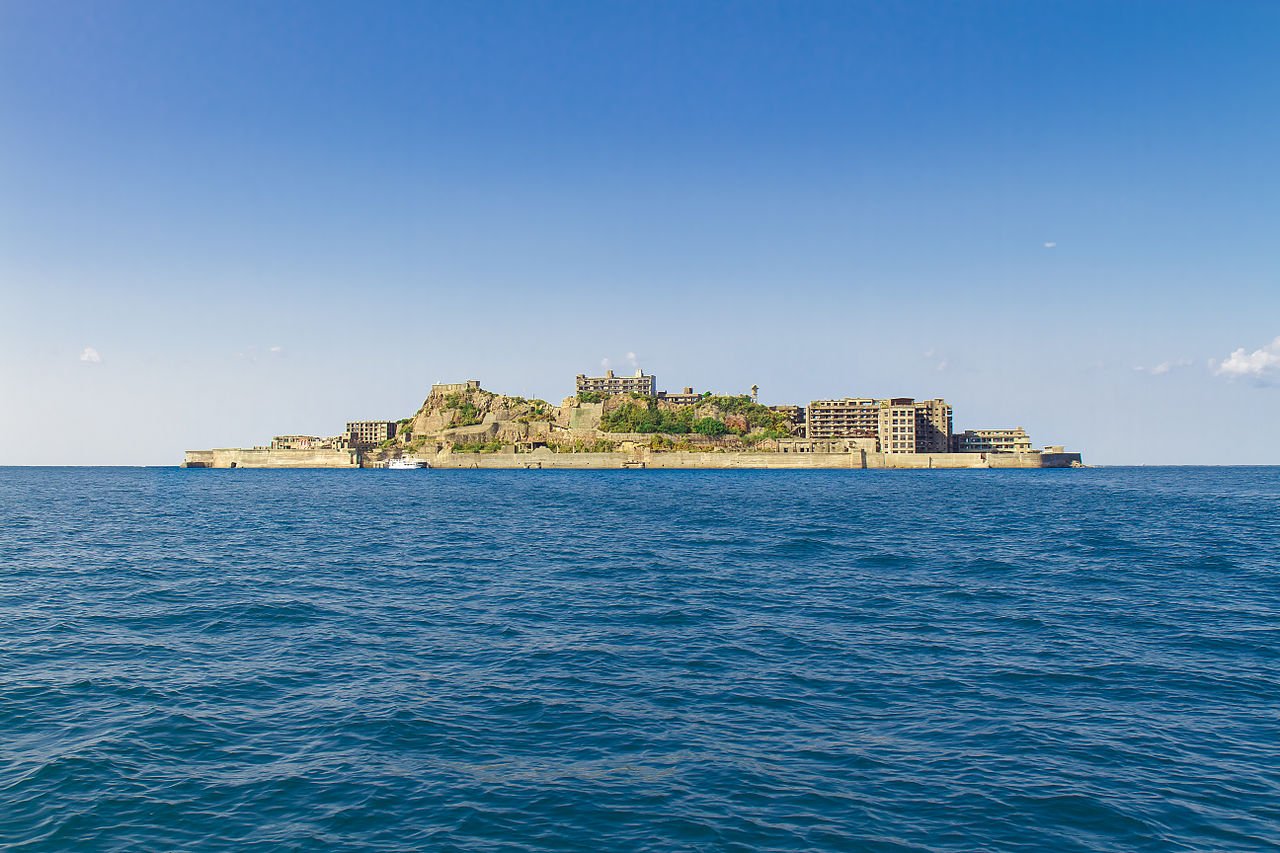
Gunkanjima (Hashima Island) Nagasaki — abandoned island with crumbling concrete tower blocks seen from a cruise boat
Morning · 08:00–13:00 · ~2.5-hour cruise
Gunkanjima Cruise — Nagasaki Port Terminal

Gunkanjima (軍艦島 / Hashima Island) was once the most densely populated place on earth — 5,259 people lived on 6 acres of reclaimed rock in the middle of the East China Sea, working in an undersea coal mine 600 metres below the seabed. When the mine closed in 1974 every resident left within three months, leaving behind a complete city of seven-storey concrete apartment blocks, a school, a cinema, a pachinko hall and a temple. Salt air and time have been working on the concrete ever since.

In 2015 Gunkanjima became a UNESCO World Heritage Site as part of the "Sites of Japan's Meiji Industrial Revolution." Licensed tour boats depart from Nagasaki Port Terminal with a morning departure around 09:00 and an afternoon departure around 13:00. The tour lasts about 2.5 hours including transit. When sea conditions allow, passengers land on the island for a 30–40 minute guided walk through three designated viewing areas. When swell prevents landing, the boat circles the island closely instead — still worthwhile. English-speaking guides are available on Tuesdays, Thursdays and Saturdays.

Port Terminal: Nagasaki Port Terminal, opposite Nagasaki Station · tram to Ohato (大波止) · 3-minute walk
Gunkanjima Cruise Co.: ¥3,600 adults (most affordable) · advance booking recommended
Yamasa Shipping: ¥4,500 + ¥310 island entrance fee = ¥4,810 total · English guide Tue/Thu/Sat
Landing success rate: ~30–50% year-round · best June–September · lowest December–February
Before you go: Seasickness is a real possibility if the sea is choppy — take anti-nausea medication before boarding. There are no toilets on the island during the tour. Use the terminal facilities before departure.
Afternoon · 13:00–17:30
Hamanomachi Shopping Street + Shinchi for Souvenirs

After the cruise, the Hamanomachi (浜町) covered arcade is a five-minute tram ride away — Nagasaki's most popular shopping street, with local clothing shops, cafes, confectionery stores and souvenir sellers in a pleasant pedestrianised arcade. This is the last good chance to pick up Castella or sara-udon noodle kits to take home.

If time allows, stop by the Shinchi market area near Chinatown to see what local Nagasaki residents buy and eat before heading to the station for your onward train. The Limited Express Kamome to Hakata (Fukuoka) takes 1 hour 20 minutes and runs frequently throughout the day.

Tram (Hamanomachi): Line 3 to Kanko-dori (観光通り) · 2-minute walk
Train to Fukuoka: Limited Express Kamome from Nagasaki Station → Hakata · ~1h 20min · ¥5,970 or JR Pass
🏔️
Continue Your Kyushu Trip?
Fukuoka is 80 minutes away — Beppu's hell springs are 3 hours from here
Nagasaki Prefecture Guide →
Practical Information

Getting Around · Accommodation · Budget

🚃
The Nagasaki Tram

Four colour-coded tram lines cover almost every major sight. Fare: ¥150 per ride, paid on exit. A 1-day pass costs ¥600 and must be bought at the Nagasaki Station Tourist Information Center or selected hotels before boarding — it is not sold on board. Pay by dropping ¥150 coins or tapping a Suica/PASMO IC card into the collection box beside the driver. Trams run every 5–8 minutes from 06:00 to 23:00; all stop signs have English.

🏨
Where to Stay

Stay near Nagasaki Station or in the Hamanomachi / Dejima area for the best tram access to every sight. Mid-range hotels (3–4 star) run ¥6,000–10,000 per night. Budget hostels from ¥2,500–4,500. See the Nagasaki city guide for hotel picks at every price point.

✈️
Getting to Nagasaki

From Fukuoka (Hakata): Limited Express Kamome, 1 hour 20 minutes, ¥5,970 (or JR Pass). From Tokyo/Osaka: fly or take the Shinkansen to Fukuoka first, then connect. Nagasaki now has the Nishi-Kyushu Shinkansen running from Nagasaki to Takeo-Onsen (~23 min, ¥2,130), where it connects to Hakata via limited express.

Budget Breakdown

Estimated Daily Costs Per Person

Item Budget Mid-range Comfortable
Hotel (per night) ¥2,500–4,500
(~US$17–30)
¥6,000–10,000
(~US$40–67)
¥12,000–20,000+
(~US$80–135+)
3 meals ¥1,000–1,500
(~US$7–10)
¥2,000–3,500
(~US$13–23)
¥4,000–8,000
(~US$27–53)
Tram Day Pass ¥600 ¥600 ¥600
Entry tickets (Day 1) ¥1,780
(cathedral + ropeway)
¥3,200
(+ Glover + museum)
¥3,200+
(combo ticket)
Gunkanjima tour (Day 3) ¥3,600
(cruise only)
¥4,810
(landing tour)
¥5,500+
(premium tier)
Total per day (approx.) ¥5,000–6,500
(~US$33–43)
¥8,000–12,000
(~US$53–80)
¥16,000–28,000+
(~US$107–187+)

Exchange rate reference: ¥150 ≈ US$1 · Prices approximate and subject to seasonal variation.

Frequently Asked Questions

FAQ · Nagasaki Itinerary

Is one day enough for Nagasaki?
One full day is enough to hit the main highlights — Glover Garden, Oura Cathedral, Megane Bridge, Peace Park, the Atomic Bomb Museum, and the Mt Inasa night view. You need an early start (before 09:00) and a pre-planned tram route. Two days gives you room to add Dejima, Sofukuji Temple, Chinatown, and a proper champon lunch without rushing.
Can you always land on Gunkanjima?
Landing on Hashima (Gunkanjima) depends entirely on sea conditions. The average success rate across the year is around 30–50%, with the best odds in June–September and the highest cancellation rates in winter. If landing is not possible, the tour boat circles the island instead so you still see it up close. Book in advance online — tours sell out on weekends and holidays.
How does the Nagasaki tram system work?
The Nagasaki Electric Tramway has four colour-coded lines covering almost all major sights. The fare is ¥150 per ride, paid on exit (drop coins or tap an IC card at the driver-side collection box). A 1-day unlimited pass costs ¥600 and must be bought at the Nagasaki Station Tourist Information Center before boarding — it is not sold on the trams. Trams run every 5–8 minutes from 06:00 to 23:00 and all stop signs have English.
What is the best time of year to visit Nagasaki?
Spring (March–May) brings cherry blossoms in Glover Garden and the Peace Park, with comfortable walking weather. Autumn (September–November) gives the clearest skies for the Mt Inasa night view. Summer (June–August) is hot and humid with rainy season, but landing rates for Gunkanjima are highest. Avoid Golden Week (late April to early May) when crowds and prices spike.
How much does a 2-day Nagasaki trip cost?
A mid-range budget works out to roughly ¥8,000–12,000 per person per day (around US$53–80): hotel ¥6,000–10,000, three meals ¥2,000–3,500, tram day pass ¥600, entry tickets ¥2,000–3,000 (ropeway + Glover Garden + Oura Cathedral + Dejima). Budget travellers can get by on ¥5,000–6,500 staying in hostels and eating at local shops. The Gunkanjima tour at ¥3,600–4,810 is the single biggest expense if you add Day 3.