Home Nagasaki Japan Nagasaki Prefecture About
Home  ›  Asia  ›  Japan  ›  Nagasaki  ›  Attractions
🕊️ Nagasaki Attractions · 2026

Nagasaki is deeper than you expect
Peace, a ghost island, Ming temples — the city Japan built on four cultures

The New York Times chose Nagasaki as one of its 52 Places to Go in 2026 — not just for its wartime history, but for the Chinese, Dutch, Portuguese and Japanese layers that nowhere else in Japan has lived with for four centuries.

Why come here

A city where history is still standing around every corner

Picture this: you board a single tram line and pass Japan's oldest Catholic church, a 400-year-old Chinatown, the street where Dutch merchants once lived, a Ming-dynasty stone arch bridge, and then stop near the Peace Park that still carries a silence you can feel. All of this in a compact city you can cover on foot or by tram in a day.

Nagasaki was Japan's only port open to the outside world during the sakoku period (1641–1853), which is why it has a Chinese community, a Dutch trading post, hidden Christian churches, and Portuguese-influenced sweets that no other Japanese city shares. We chose 10 sights that tell every layer of that story — from places that will leave you quietly moved to places that will leave you genuinely astonished.

Top sights

10 Sights Worth Your Time

Ranked by the experiences visitors keep talking about long after they leave
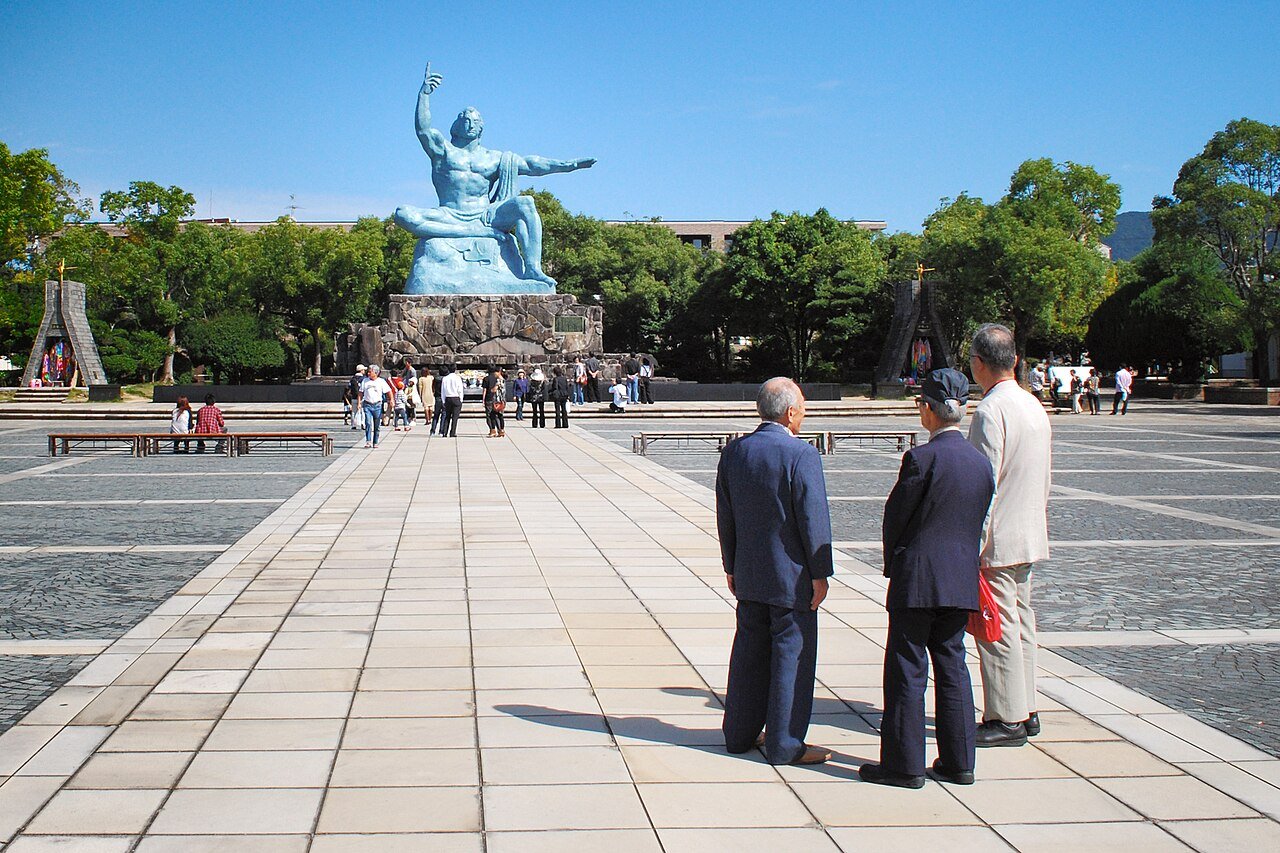
Nagasaki Peace Park — the Peace Statue by Seibo Kitamura, right hand pointing skyward toward nuclear threat, left hand extended horizontal for peace 1
Peace Park + Atomic Bomb Museum
長崎平和公園 · Japan's most powerful wartime memorial

Have you ever stood at the exact spot where a nuclear bomb fell? Nagasaki Peace Park marks the hypocentre of the August 9, 1945 blast — the second atomic bomb ever used in warfare. The 9.7-metre Peace Statue by sculptor Seibo Kitamura is impossible to simply glance at: the right hand points toward the threat of nuclear weapons, the left is outstretched for peace, and the closed eyes are a prayer. The park is free and open around the clock. The Atomic Bomb Museum below is unflinching and profoundly honest. People who have been to both Hiroshima and Nagasaki say the latter feels quieter, more intimate, more personal — worth two hours of your time at minimum.
Peace Park: Open 24 hours · Free
Atomic Bomb Museum: 08:30–17:30 (closed 31 Dec) · ¥200 adult · ¥100 child
Tram: Line 1 or 3 to Hamaguchi-machi, walk ~5 min uphill
Tip: Arrive at 08:30 when the museum opens, before tour groups arrive. Leave Urakami Cathedral for after — it is a 10-minute walk away and the two sights pair naturally.
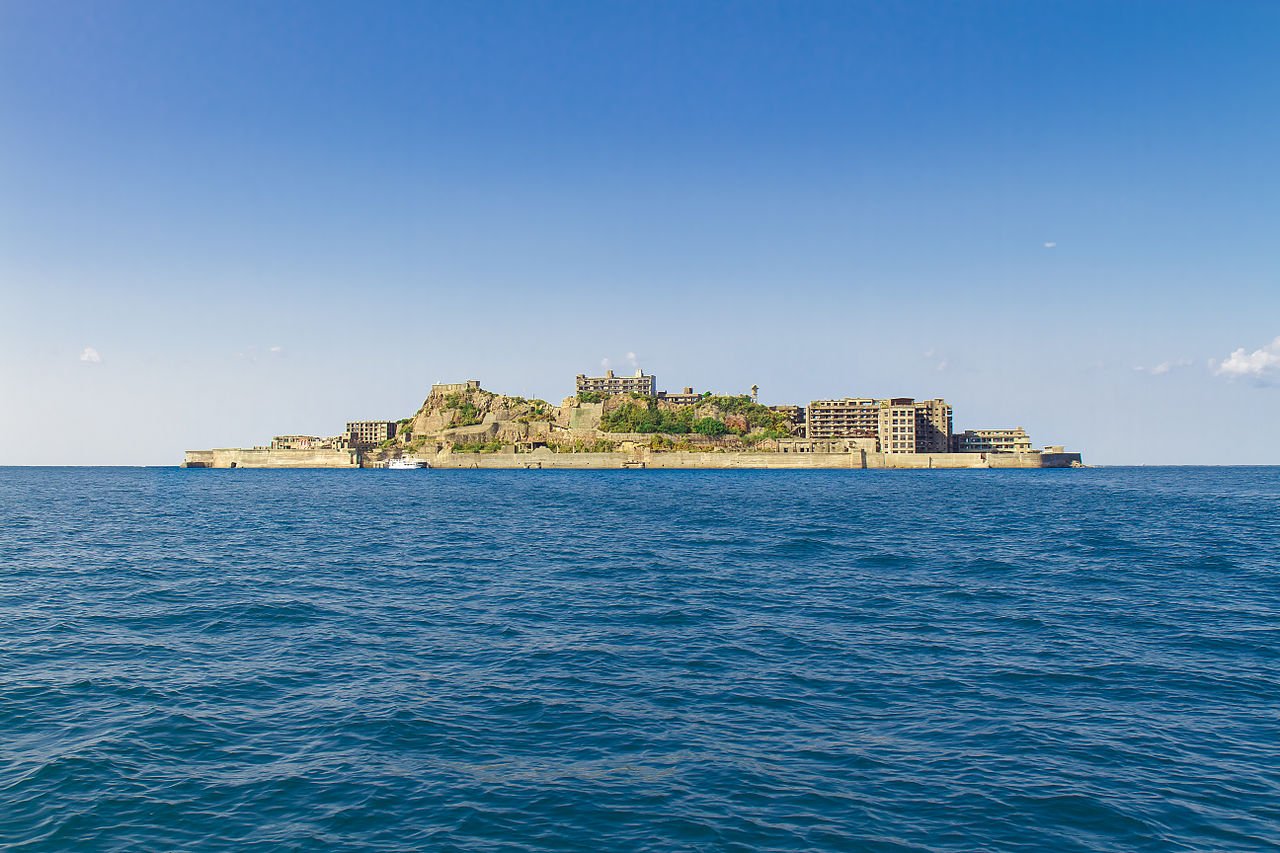
Gunkanjima (Battleship Island / Hashima Island) Nagasaki — rows of crumbling concrete apartment blocks rising from the sea, a UNESCO World Heritage Site abandoned since 1974 2
Gunkanjima — Battleship Island (軍艦島)
Hashima Island · UNESCO World Heritage Site · abandoned 1974

The boat leaves Nagasaki Port and 45 minutes later you see it — a mass of concrete rising out of the sea, shaped like a warship at anchor. Hashima Island was a coal-mining community that held 5,259 people in 1959: nine times denser than Tokyo. It had schools, a hospital, a cinema, a rooftop swimming pool. When the mine closed in 1974, everyone left within three months. The seven-storey concrete apartment blocks are still standing, unseen by anyone, exactly as they were left. No demolition, no renovation — just the sea and the wind working on the walls. It became a UNESCO World Heritage Site in 2015, and it is still the eeriest place most visitors will ever stand.
Boat tour: ¥4,000–5,500 incl. ¥650 landing fee · ~2.5 hours total · ~45 min on the island
Booking: Advance reservation required — no walk-ups. Landing success ~50–60% (cancelled in rough seas)
Departures: Nagasaki Port at 09:00 and 13:00
Book ahead: Tours sell out on weekends and in summer. Book via Klook for instant confirmation — See Gunkanjima tours on Klook →
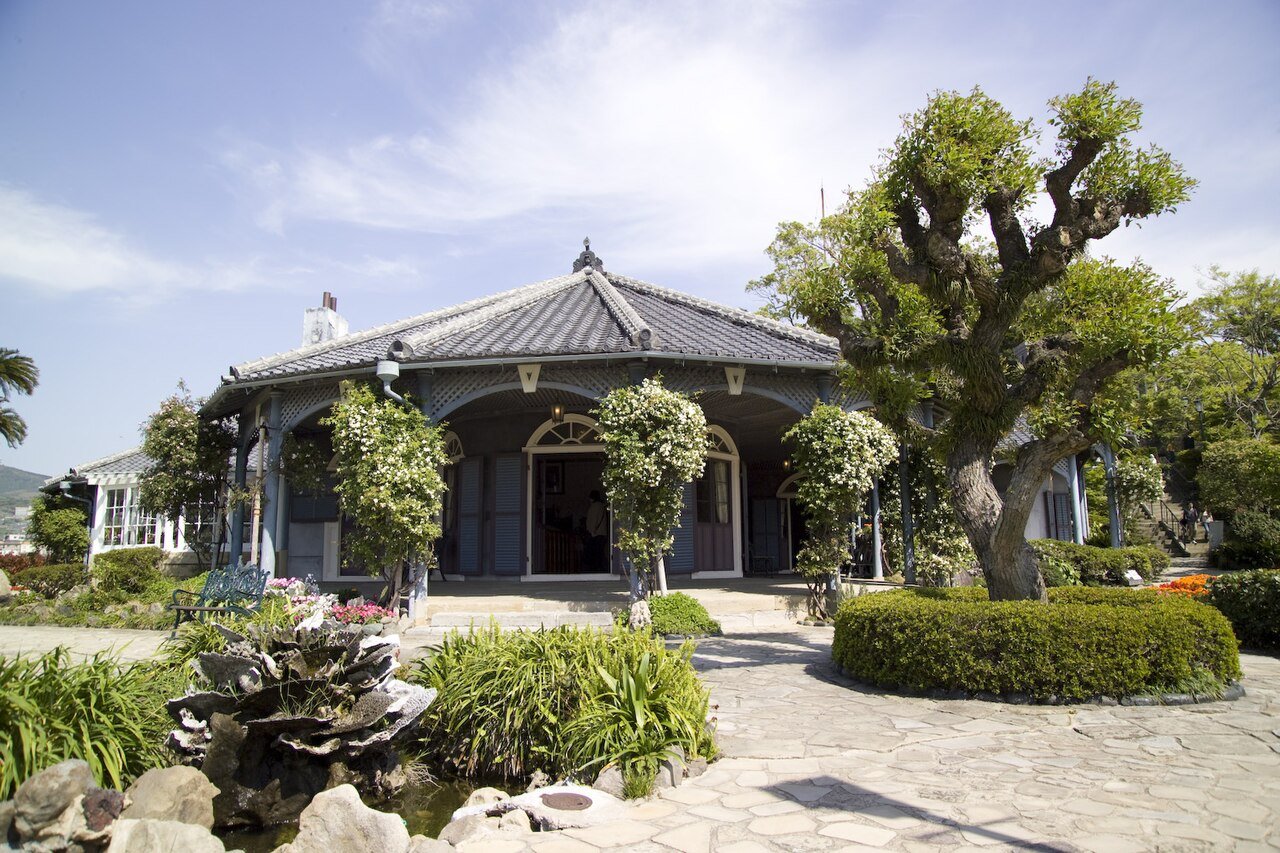
Glover Garden Nagasaki — the Glover Residence, a 160-year-old Western-style wooden house on a hillside, with views across Nagasaki harbour and green hills beyond 3
Glover Garden (グラバー園)
Japan's oldest Western-style wooden house · built 1863 · harbour views

The image most people carry of Nagasaki — a white colonial house on a hillside, harbour spread below — is Glover Garden. Thomas Blake Glover, a Scottish merchant who arrived in 1859, built the house that still stands in 1863. It is the oldest surviving Western-style wooden building in Japan. Today the garden is an open-air museum of nine historic residences, accessed by outdoor escalators that carry you to the hilltop viewing area. The 180-degree panorama of Nagasaki Bay from the top is genuinely unexpected. Glover himself supplied ships and weapons to the Meiji reformers — his story is inseparable from Japan's rapid modernisation.
Hours: 09:00–18:00 (extended to 19:00 during cherry blossom season and light-up events)
Admission: ¥620 adult · ¥310 child · Combo with Oura Cathedral ¥1,420
Tram: Line 5 to Oura-Tenshu-Do, walk ~5 min
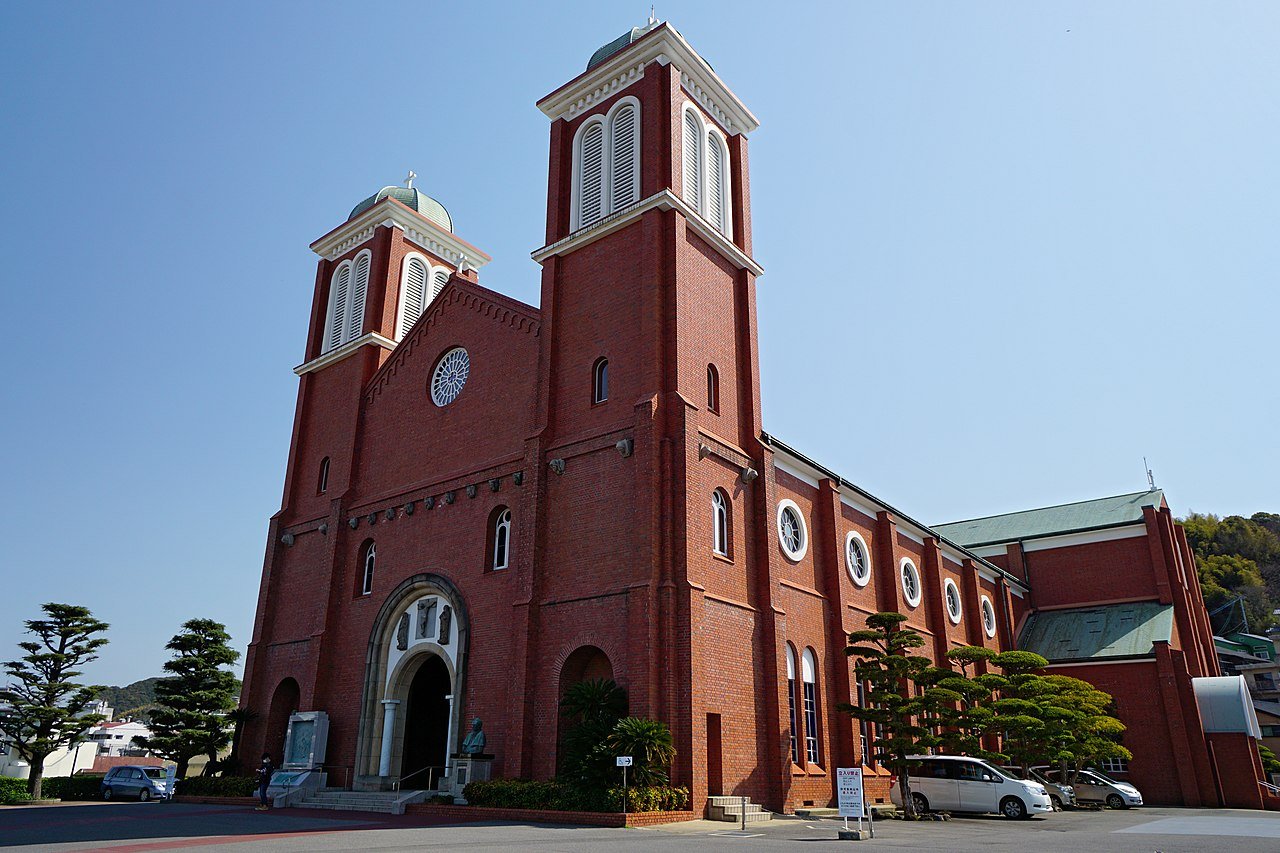
Urakami Cathedral Nagasaki — twin-spired red-brick Catholic church rebuilt after the atomic bomb, a symbol of the Urakami Christian community's perseverance 4
Urakami Cathedral (浦上天主堂)
Built 1925 · destroyed by atomic bomb · rebuilt in the 1950s

The deeper you know this place's story, the more it stays with you. Urakami Cathedral was completely obliterated on August 9, 1945, and rebuilt in the 1950s by the Urakami Christian community — people who had secretly practised their faith for 250 years while Japan's ban on Christianity was in force. Step inside and you will see the Virgin Mary statue that survived the blast: the face scorched, the head tilted at an angle from the explosion. It was recovered from the rubble and returned to stand outside the rebuilt church. It is damaged and it is beautiful and the two things are inseparable.
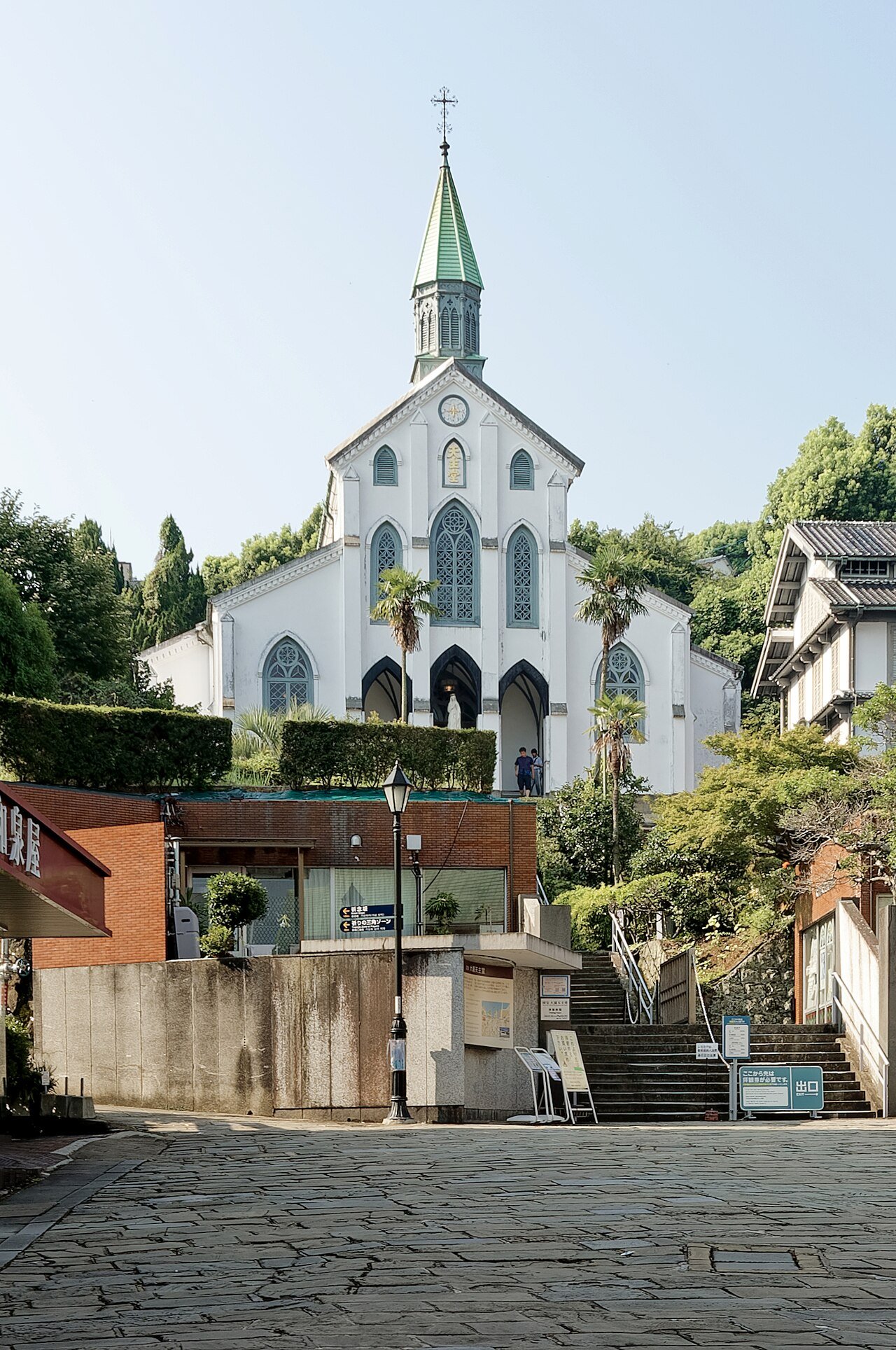
Admission: Free (voluntary donation box) · Dress modestly — an active place of worship
Hours: 09:00–17:00 daily
Tram: Line 3 to Maruyamamachi, walk ~10 min
Pairing: Urakami Cathedral is a 10-minute walk from the Peace Park. Visit both in the same morning — start with the museum, then walk to the cathedral.
Oura Cathedral Nagasaki — elegant white Gothic Catholic church with a single spire, built in 1864, UNESCO World Heritage Site and National Treasure of Japan 5
Oura Cathedral (大浦天主堂)
Japan's oldest Catholic church · National Treasure · UNESCO · built 1864

If Nagasaki is the city of hidden Christians, Oura Cathedral is where that story ended well. French missionaries built the church in 1864, dedicating it to the Twenty-Six Martyrs executed in Nagasaki in 1597. Just one year after it opened, villagers from Urakami walked in and quietly revealed to the priest that they had been practising Christianity in secret for 250 years — an event now called the Miracle at Nagasaki. The church is both a National Treasure and a UNESCO World Heritage Site. The Gothic white facade against the hillside is one of Nagasaki's most recognisable images.
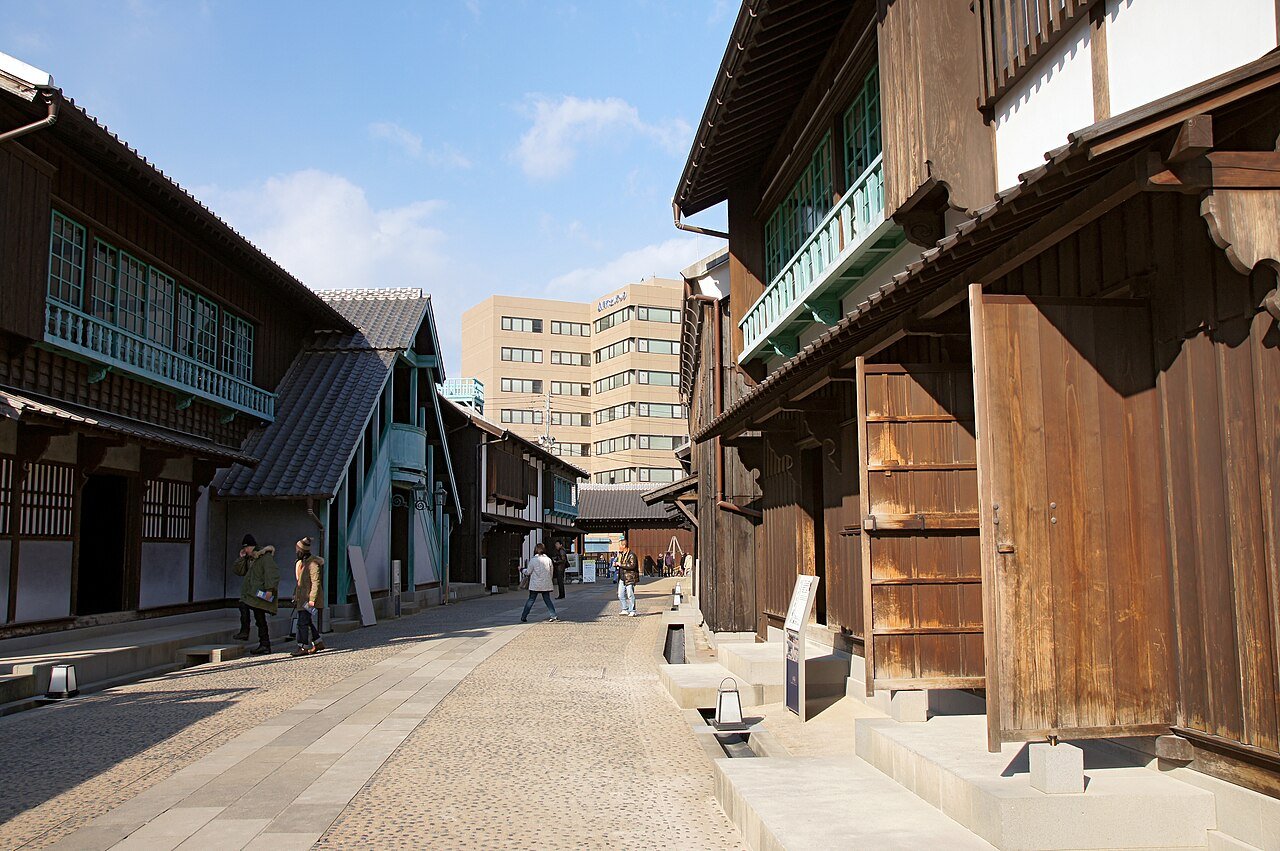
Admission: ¥1,000 adult · ¥400 child (increased in 2026) · Combo with Glover Garden ¥1,420
Hours: 08:00–18:00 daily
Tram: Line 5 to Oura-Tenshu-Do, uphill walk ~3 min
Dejima Nagasaki — the fan-shaped artificial island built in 1636 for Dutch merchants, now an open-air museum recreating Japan's only gateway to the Western world 6
Dejima — Japan's Window to the World (出島)
Artificial island for Dutch merchants · 1641–1854 · Japan's sole Western trading post

Want to understand why Nagasaki has food, architecture, and ideas that differ from every other Japanese city? Dejima is the answer. The Japanese government built this fan-shaped artificial island specifically to contain Dutch merchants — and then used it as the only channel through which Western science, medicine, astronomy and technology could enter Japan during the 213 years of sakoku. Every piece of knowledge that modernised Japan arrived through this narrow gate. Today Dejima is a meticulously reconstructed open-air museum where you can walk through the warehouse, the chief's residence, the gardens and the gates. Staff in period Dutch costumes add to the atmosphere.
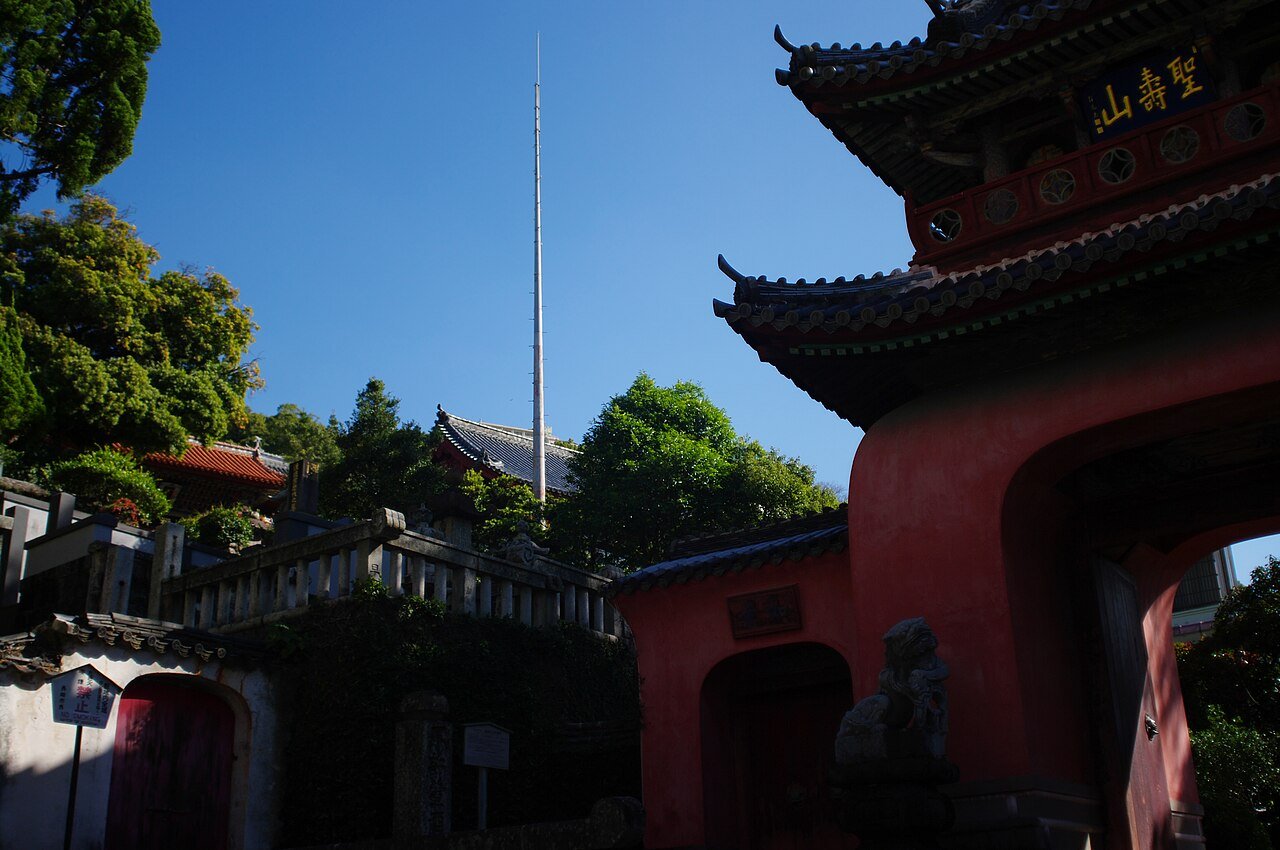
Admission: ¥1,100 adult (increased from ¥520 in April 2026) · ¥550 child
Hours: 08:00–21:00 (last entry 20:40) daily
Tram: Line 1 to Dejima stop, 1-minute walk
Sofukuji Temple Nagasaki — the vibrant red Sanmon gate in Ming-dynasty Chinese style, carved wooden eaves, stone lanterns in the courtyard, built 1629 7
Sofukuji Temple (崇福寺)
Ming-dynasty Chinese Zen temple · founded 1629 by Chinese immigrants from Fujian

This is the most photogenic spot in Nagasaki that most visitors walk straight past. Sofukuji was founded in 1629 by the Buddhist monk Chaonian, who came from Fujian, China, and brought the architectural style of the Ming dynasty with him. The Sanmon gate (1644), blazing red with intricately carved wooden panels, is a National Treasure. So is the main hall, Daiyuho-den. The Chinese community in Nagasaki has used this temple as its spiritual centre for four centuries. If you are wondering why it looks more elaborate than most Japanese temples, it is because the architect also designed parts of the Forbidden City in Beijing.
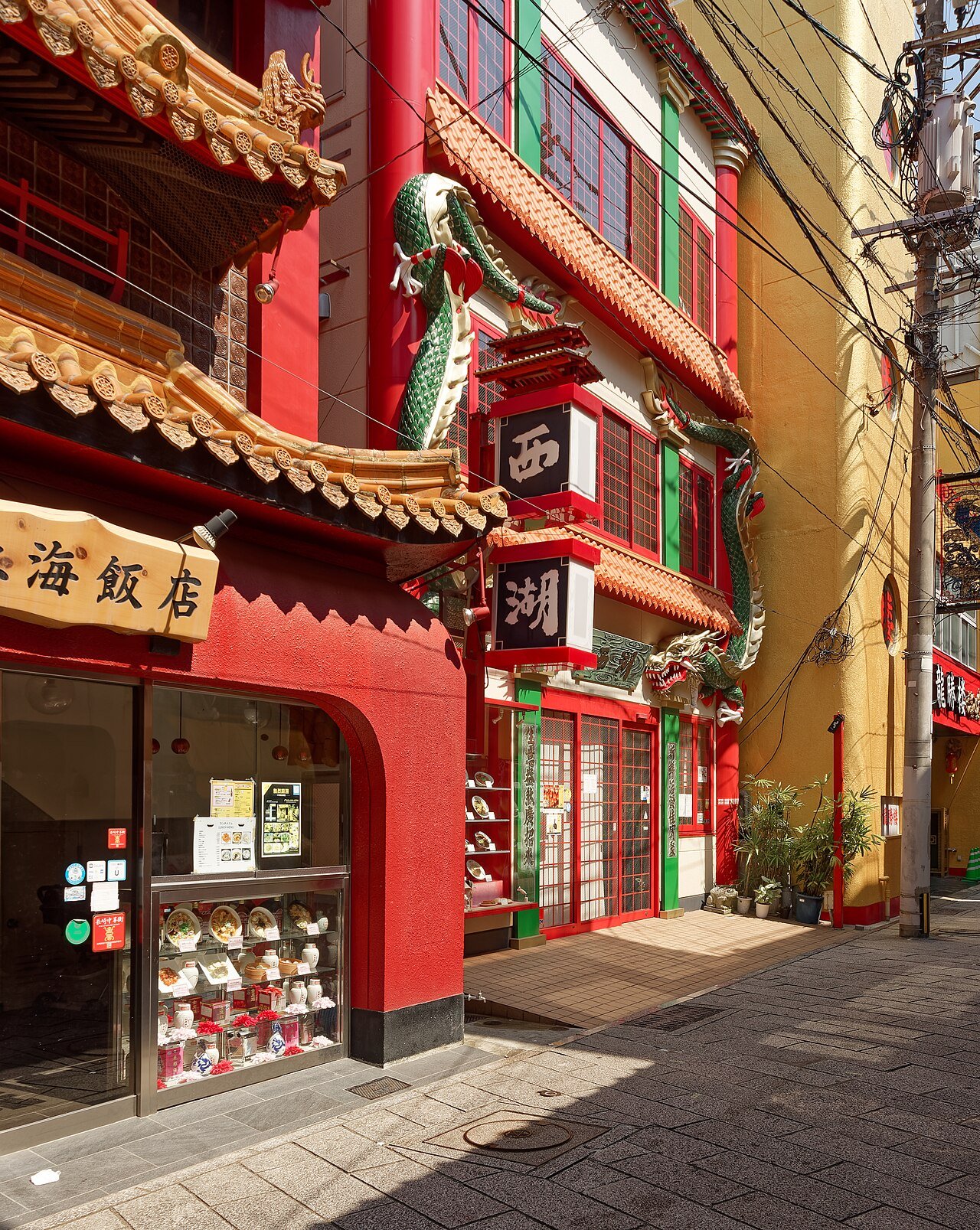
Admission: ¥300 adult · children free
Hours: 08:00–17:00 daily
Tram: Line 1 to Sofukuji terminus, walk ~3 min
Worth knowing: Inside the temple grounds stands a giant cauldron once used to cook rice porridge for famine victims — a reminder that this temple served both spiritual and community roles for centuries.
Shinchi Chinatown Nagasaki — red ceremonial gate over a narrow lantern-hung street, Japan's oldest Chinatown dating back to the late 16th century 8
Shinchi Chinatown (新地中華街)
Japan's oldest Chinatown · birthplace of Nagasaki champon noodles

Nagasaki's Chinatown is not a tourist recreation — it grew organically from the late 16th century as Chinese merchants settled here, making it Japan's oldest Chinatown (predating Yokohama and Kobe by two centuries). The main street runs just 250 metres but packs in Chinese restaurants, sellers of Nagasaki Castella (the Portuguese sponge cake adapted by the Chinese community), and souvenir shops. Come at Chinese New Year and the entire street disappears under hundreds of lanterns in one of Japan's biggest celebrations. The food you should try here is champon — the thick soup noodle with pork, vegetables and seafood invented at a Chinese restaurant in Nagasaki in the late 1800s.
Entry: Free · Open at all hours
Restaurants: Most open 10:00–20:00 weekdays · until 21:00 weekends
Tram: Line 1 to Tsuki-machi, walk ~3 min
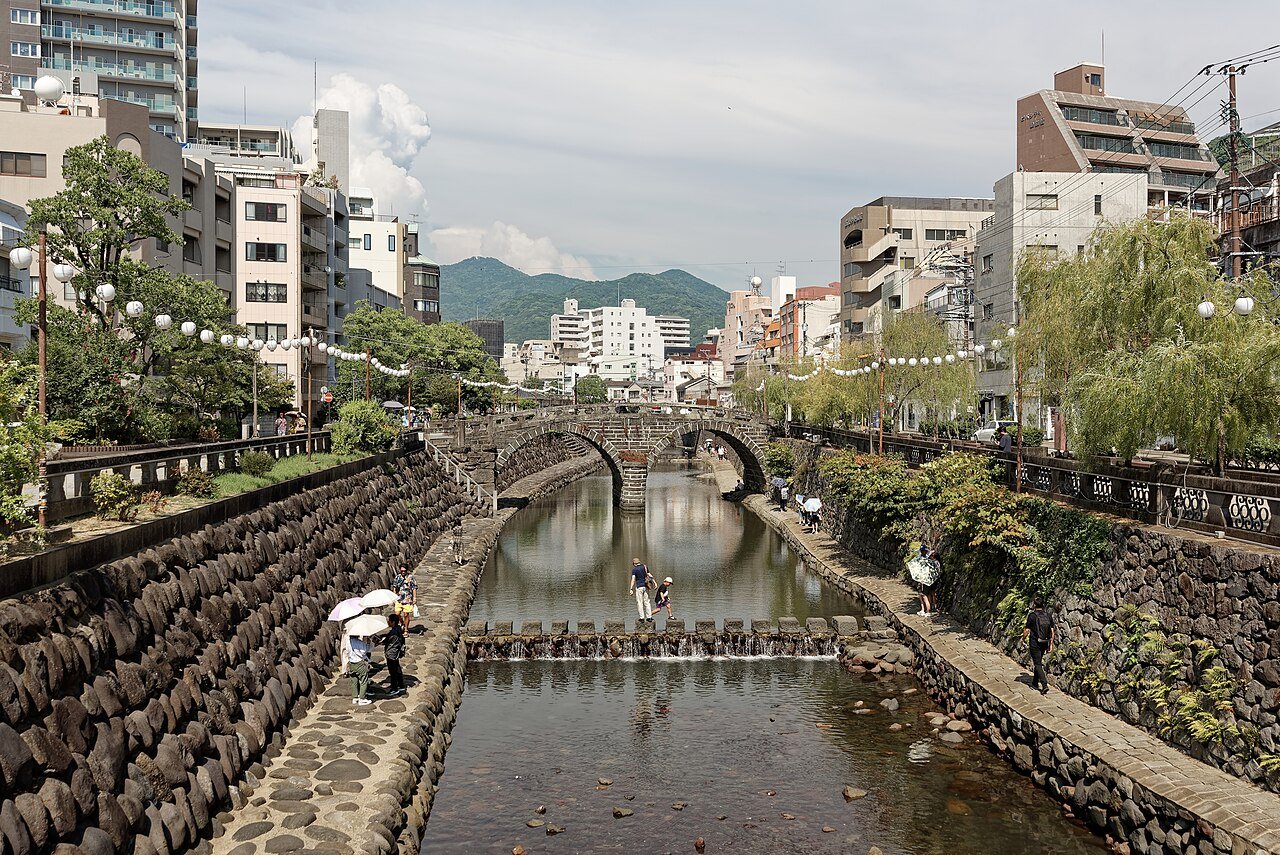
Meganebashi (Spectacles Bridge) Nagasaki — twin stone arch bridge reflected in the Nakashima River, forming four circles that resemble a pair of glasses 9
Meganebashi — Spectacles Bridge (眼鏡橋)
Japan's oldest stone arch bridge · built 1634 by Chinese monk · free

Stand on the bank of the Nakashima River and look down at the water. The two arches of the stone bridge reflect in the surface to create four circles — two above, two below — that look exactly like a pair of spectacles. The monk Mokusunyojo from nearby Kofukuji Temple built the bridge in 1634, and it is Japan's oldest surviving stone arch bridge. Meganebashi is the centrepiece of the Nakashima River walk, a stretch of the river lined with five or six historic stone bridges that you can stroll between in under an hour. Each bridge has its own character; the walk is free and quiet and completely unhurried.
Free: Open 24 hours
Best time: Early morning 06:00–08:00 or late afternoon 16:00–18:00 for calm reflections
Tram: Line 4 or 5 to Meganebashi, 2-minute walk
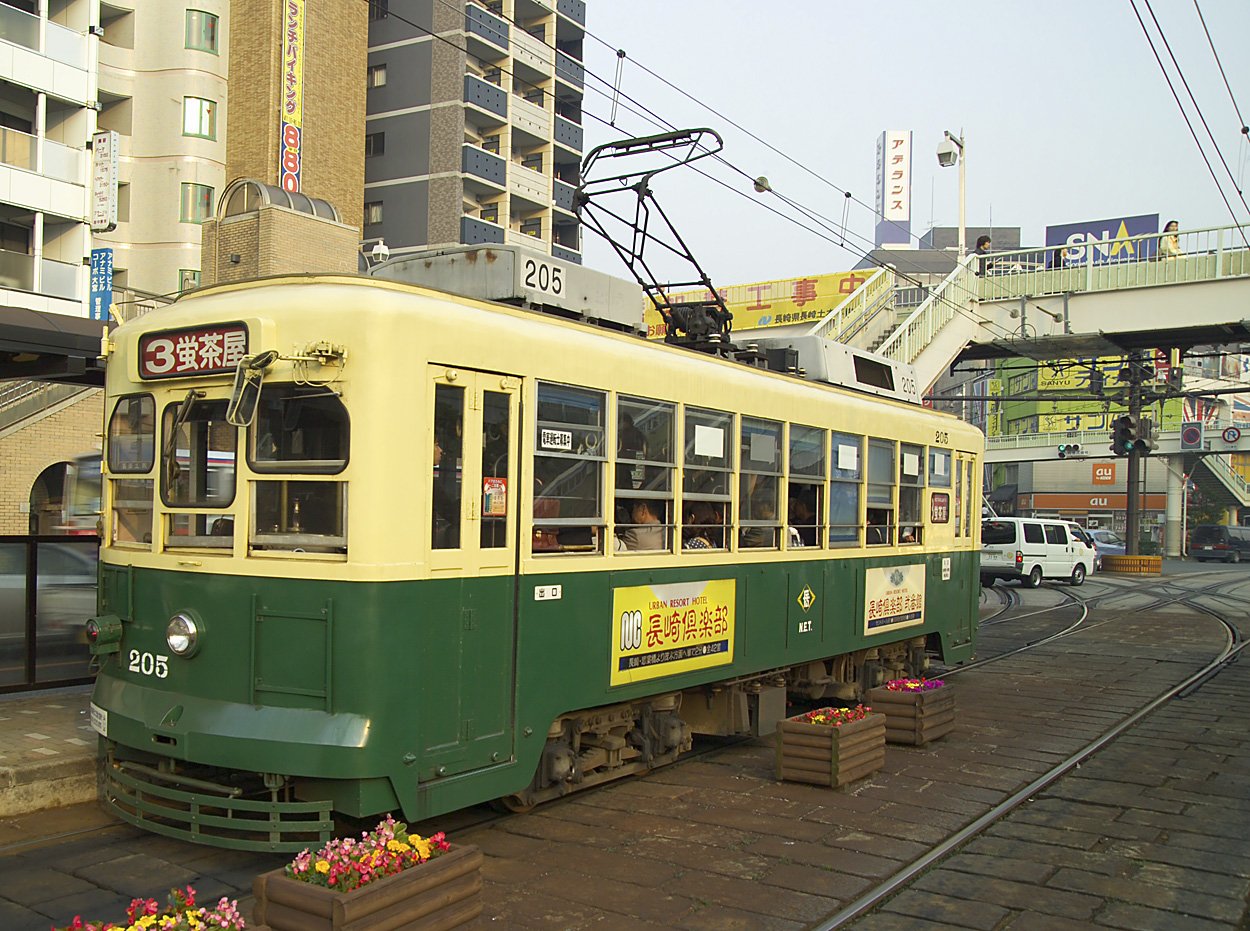
Nagasaki Electric Tram — a vintage streetcar in red and green livery running along a narrow city street, in service since 1915, still the best way to see Nagasaki 10
Nagasaki's Trams — Transport as an Experience
長崎電気軌道 · in operation since 1915 · 4 lines, covers every sight

Riding Nagasaki's trams is not just a way of getting around — it is worth doing slowly. Some cars from the 1950s and 1960s are still in daily service. They lean into tight corners on narrow streets, pass the fronts of old houses, ring their bell at intersections, and smell faintly of sea air when you open the window. A single ride is ¥140, paid when you exit. The one-day unlimited pass is ¥600 — it pays off after five rides, and a full day of sightseeing typically means six to eight rides. Buy the pass from the driver on your first ride of the day.

Fare: ¥140 per ride · Day pass ¥600 unlimited
Line 1: Dejima · Chinatown · Sofukuji
Line 3: Peace Park · Urakami Cathedral
Line 5: Glover Garden · Oura Cathedral
Tip: Ask for a "ichi nichi josha-ken" (one-day pass) when boarding your first tram. The driver will understand immediately — no Japanese required beyond those five syllables.
Plan your visit

One day or two or three — how to structure it

Nagasaki is a compact city. A good single day covers the highlights; two days is comfortable; three means nothing rushed.

1-Day Route — Core Highlights
Start 08:00 · Finish around 18:00

08:00–10:30 Atomic Bomb Museum + Peace Park (allow 2 hours minimum) · 10:30–11:30 Tram to Urakami Cathedral, see the scorched Mary statue · 12:00–13:00 Lunch: champon at Shinchi Chinatown · 13:00–14:00 Walk Chinatown + Sofukuji Temple (15-min walk apart) · 14:00–15:00 Meganebashi bridge walk along Nakashima River · 15:00–17:30 Glover Garden + Oura Cathedral combo (¥1,420)

Budget: ~¥4,000–5,000/person (tram day pass + attractions + lunch) · Tram day pass: ¥600, buy from driver
2-Day Route — Add Gunkanjima
Day 2 adds the boat tour and Dejima

Day 1: Follow the 1-day route above · Day 2 morning: Gunkanjima boat tour, 09:00 departure (book in advance), back by 11:30 · Day 2 afternoon: Lunch, then Dejima 13:00–15:00 (open until 21:00, plenty flexible) · Day 2 evening: Stroll Chinatown at night, try Sara Udon or Castella for dessert

Budget: ~¥10,000–12,000/person for 2 days (including boat tour), excluding accommodation · Base: Stay near Nagasaki Station for tram access to all four lines
Getting to Nagasaki
From airports and major cities

From Nagasaki Airport (NGS): Direct bus to Nagasaki Station ~40 min, ¥900 · From Fukuoka: Kamome Limited Express ~2 hours, ¥4,500 (JR Pass accepted) · or highway bus ~2.5 hours, ~¥2,500 · Nishikyushu Shinkansen (opened 2022): Fukuoka to Isahaya, then JR to Nagasaki ~1.5 hours (requires a transfer; not yet fully connected) · Getting around: Tram day pass ¥600 covers the whole city

JR Pass: Valid on Kamome Limited Express from Fukuoka · good value if travelling multiple Kyushu cities
Nagasaki and onwards
Nearby cities worth combining

Nagasaki sits in western Kyushu and pairs naturally with: Huis Ten Bosch — the Netherlands-themed resort park, Japan's biggest, about 45 minutes by train · Fukuoka: ~2 hours by train, the main transport hub for Kyushu connections · Beppu — hell springs and hot sand baths, 3–4 hours via Fukuoka · Kumamoto: Kumamoto Castle and Mt Aso volcano, ~2 hours via Isahaya

Classic loop: Nagasaki → Fukuoka → Beppu is the most popular Kyushu circuit among international visitors
Frequently asked

FAQ · Before you go to Nagasaki

How much does a Gunkanjima (Battleship Island) boat tour cost, and do I need to book in advance?
Tours from Nagasaki Port cost approximately ¥4,000–5,500 per adult, including the ¥650 city landing fee (increased April 2026). Tours run about 2.5 hours, with around 45 minutes on the island. Advance booking is mandatory — no walk-ups. Five licensed operators run tours, including Gunkanjima Cruise Co. and Yamasa Shipping. Landing success averages 50–60%; rough seas will cancel the trip at short notice. Summer (June–September) offers the highest landing rates. — Book Gunkanjima on Klook →
How do I get to the Peace Park and Atomic Bomb Museum?
The Peace Park is free and open 24 hours. The Atomic Bomb Museum is open 08:30–17:30 (closed 31 December), admission ¥200 adults. Take tram line 1 or 3 to Hamaguchi-machi stop, then walk uphill about five minutes. Plan at least two hours — the museum is small but the content is dense and deeply affecting.
What are Glover Garden's opening hours and admission price?
Glover Garden is open 09:00–18:00 (extended to 19:00 during the cherry blossom season and special light-ups). Admission is ¥620 adults, ¥310 children. A combo ticket with Oura Cathedral costs ¥1,420, saving ¥200. Outdoor escalators carry you to the hilltop with a 180-degree harbour view. Take tram line 5 to Oura-Tenshu-Do and walk about five minutes.
How do Nagasaki's trams work, and is the day pass worth it?
Four tram lines cover virtually every major sight. A single ride is ¥140, paid on exit. The one-day unlimited pass is ¥600 — it pays off after just five rides. A full day of sightseeing typically means six to eight rides, so the pass is clearly worth it. Buy from the driver on your first ride. Line 1 covers Dejima and Chinatown; Line 3 covers Peace Park and Urakami Cathedral; Line 5 covers Glover Garden and Oura Cathedral.
How many days should I spend in Nagasaki, and why did the New York Times pick it?
Two to three days is ideal. Day one: Peace Park, museum and Urakami Cathedral (northern route). Day two: morning Gunkanjima boat tour, then Glover Garden, Oura Cathedral and Chinatown (southern route). Day three: Dejima, Meganebashi bridge, and Sofukuji Temple (central). In 2026, the New York Times named Nagasaki one of its 52 Places to Go, praising its peace history and its rare multi-cultural character — the only Japanese city where Chinese, Dutch, Portuguese and Japanese influences have coexisted for four centuries.
Klook · Nagasaki Tours

Gunkanjima boat tour, Glover Garden tickets and Nagasaki activities — book ahead and skip the queue

The UNESCO Gunkanjima ghost island cruise, Glover Garden admission, Peace Park walking tours, and day trips from Fukuoka — all bookable on Klook with instant confirmation, no queuing at the gate.

See Nagasaki tours on Klook →
Wherebest is a Klook affiliate partner — we may earn a commission when you book through our links, at no extra cost to you.