If Kyoto's Higashiyama side is all temples and stone lanes, downtown is the city's stomach and its shopping legs — Nishiki Market, "Kyoto's Kitchen"; the Pontocho alley along the Kamo River; the Kawaramachi-Teramachi arcades you could browse all day. We'll walk the whole lot in one page.
Picture a Kyoto with no temples and no steep stone lanes — just narrow covered alleys where the smell of grilled fish, pickles and roasted green tea drifts past, and crowds shuffle along holding a skewer to nibble as they walk. That's the downtown district, the eating-and-shopping heart of Kyoto, with Nishiki Market as its star, flanked by the Kawaramachi shopping street and the Teramachi-Shinkyogoku arcades. Come evening, the whole area drifts toward the Kamo River and the Pontocho alley as the lanterns flicker on.
The best part of this district is that everything is within walking distance — from the east end of Nishiki Market it's just 5–10 minutes to the riverside, so you can have lunch, shop for gifts, then round things off with dinner by the river, all in one easy day. This page walks you through it point by point: what to eat, where to shop, how to get there, and whether staying here is worth it. The temples and historic lanes are over on the Higashiyama side — we'll link you onward at the end of the page.
This district is really four zones layered together in the city centre. Read this table to see what each zone is for, when to come, and which station is closest — before we walk you through it point by point.
| Zone | Type | Known for | Best time to come | Closest station |
|---|---|---|---|---|
| Nishiki Market錦市場 | Eat | Street food, pickles, kitchenware | Late morning–noon (full stock, fewer people) | Shijo / Kawaramachi |
| Kawaramachi河原町 | Shop | OPA/Marui stores, brands, youth fashion | Afternoon (all shops open) | Kyoto-kawaramachi |
| Teramachi & Shinkyogoku寺町/新京極 | Shop | Covered arcades, souvenirs, rain-proof | Any time / rainy days | Kyoto-kawaramachi |
| Pontocho & the Kamo River先斗町 / 鴨川 | Night | Dining alley, riverside terraces, atmosphere | Evening (lanterns lit) | Gion-Shijo / Sanjo |
Working from Nishiki Market, the star of the show, out to the riverside lanes you'll want to save for the evening — every stop is close to the next, so you can string them together in half a day to a full one.
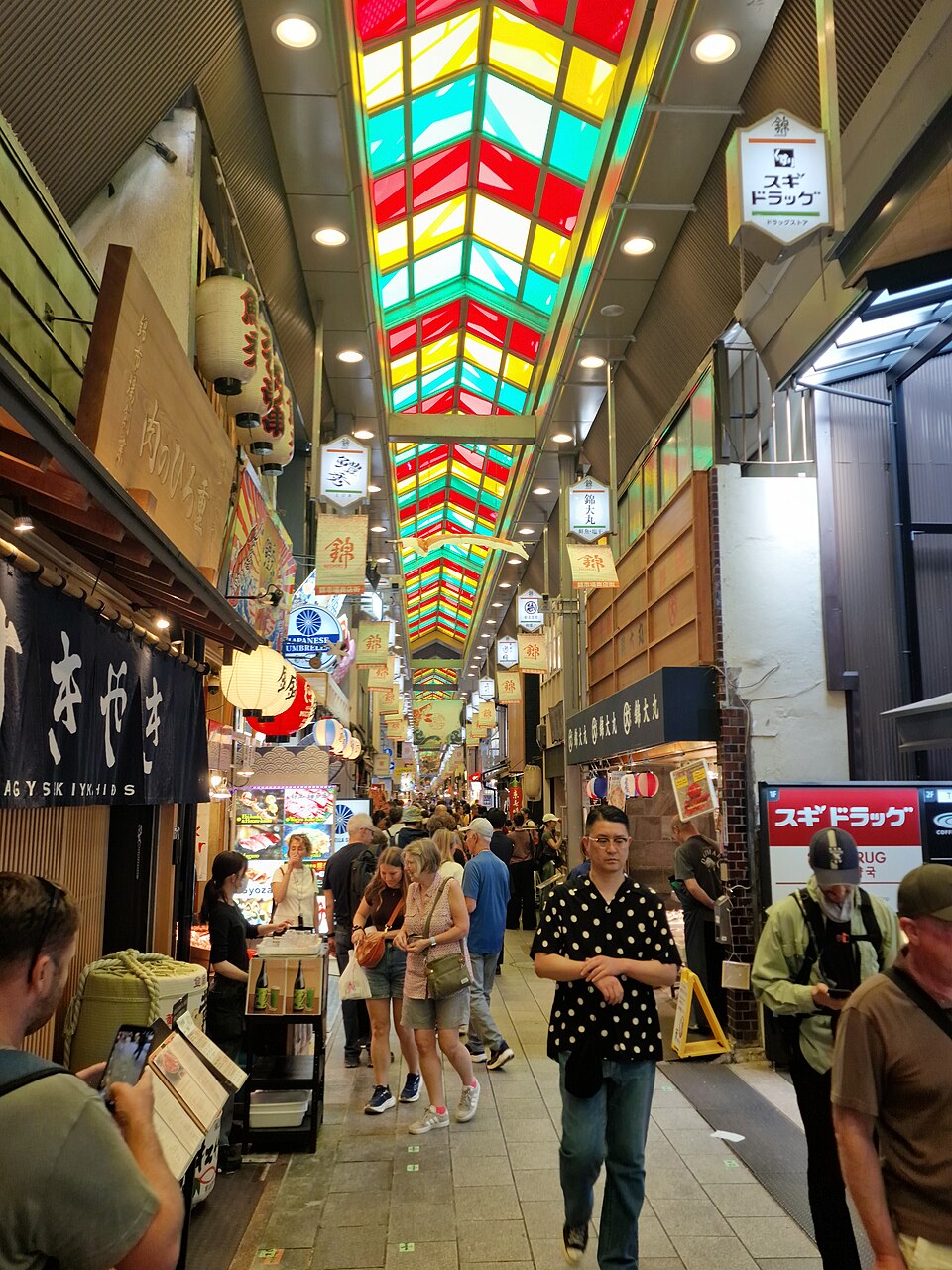
🍢 Heart of the District1
They call it "Kyoto's Kitchen" — a narrow arcade under a coloured glass roof, about 400 metres long, with roughly 120 shops packed along both sides: pickles (tsukemono), grilled fish, sweet tamago omelette, even Kyoto kitchen knives. Some things you eat on the spot; others are the raw ingredients chefs across the city come to buy. There's something to try from one end to the other.
Kyoto Food Guide →
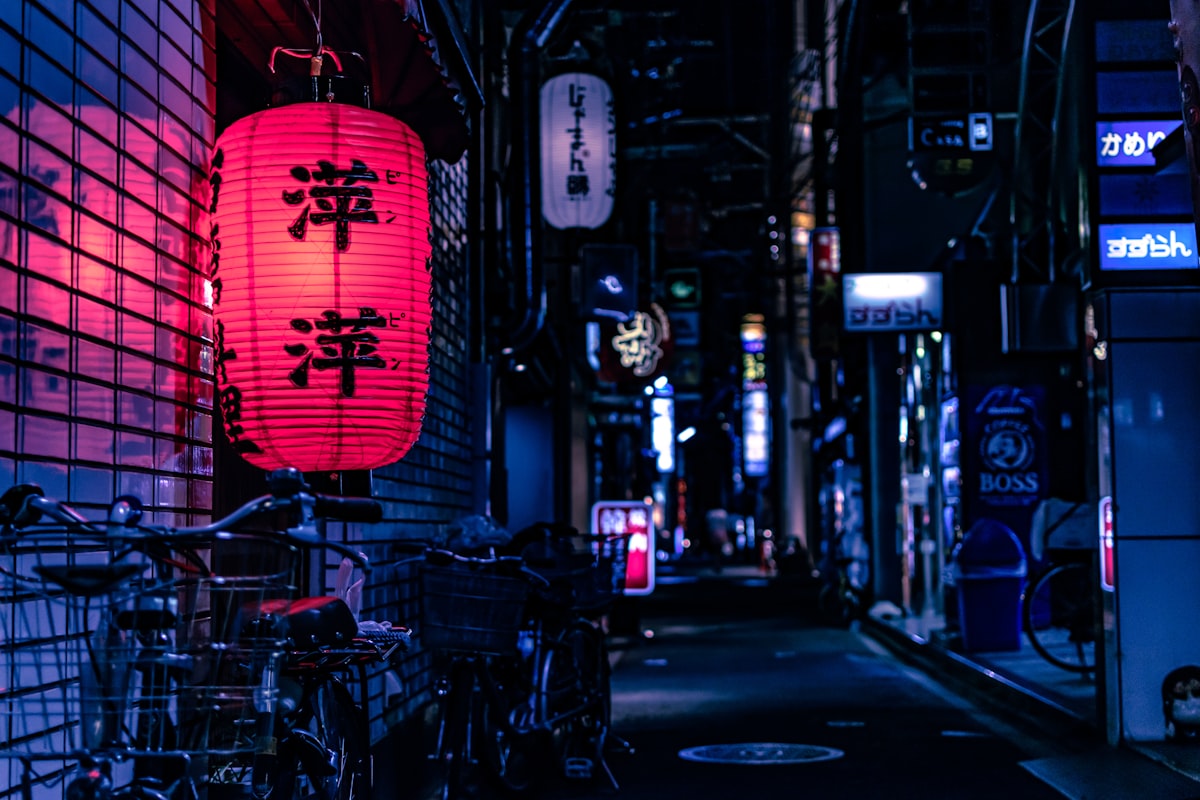
🏮 Along the Kamo River2
A long, narrow restaurant alley running parallel to the Kamo River, from Shijo Street up to Sanjo — quiet by day, but once the lanterns come on at dusk it becomes the most atmospheric place to eat and drink in Kyoto. There's everything from upscale kaiseki and yakiniku to tiny izakaya. In summer many places open their "riverside terraces" (kawayuka) out over the water to dine in the cool evening air.
Kyoto Food Guide →The main shopping street of modern Kyoto, crossing Shijo Street at the city's busiest intersection. Around it sit OPA, Marui, Takashimaya and rows of brand stores — this is where Kyoto's young people come to hang out, with drugstores, clothing shops and cafés all within walking distance. If Nishiki Market is the food, this is the shopping.
Kyoto City Guide →Two parallel covered shopping arcades running north from the east end of Nishiki Market — Teramachi leans toward antiques, stationery, green tea and genuine Kyoto souvenirs, while Shinkyogoku alongside it is livelier, full of youth shops, toys and sweets. The big plus is the roof: rain or shine, you can keep shopping in comfort.
Kyoto City Guide →The river through the centre of the city, with banks wide enough to sit down on — a classic Kyoto sight is couples and groups of friends settling along the bank at strangely even intervals (locals jokingly call it "Kamogawa spacing"). Walking the waterside from Shijo up to Sanjo is a cool, pleasant stretch — a free breather between eating and shopping.
Kyoto Attractions →A small shrine tucked at the east end of Nishiki Market, right where it meets the Shinkyogoku arcade — the odd detail everyone stops to photograph is the torii gate whose two ends vanish straight into the walls of the buildings beside it. There's a reclining bronze ox (nade-ushi) to rub for luck in your studies, and a drinkable spring called "Nishiki no Mizu". It's a quiet little pocket in the middle of a packed district.
Kyoto Attractions →Three ways of eating this district does best — snack your way through Nishiki by day, sit at a riverside restaurant by night, and finish with the green-tea sweets Kyoto is famous for. Want to go deeper? See the food guide at the end.
The crowd-favourite walking snacks in Nishiki Market — tamagoyaki (rolled sweet omelette), grilled squid on a skewer, bean mochi and warabi mochi, samples of tsukemono pickles, and matcha soft-serve. Take it one skewer at a time as you walk. The etiquette is to eat in front of the shop you bought from, not while strolling.
Come evening, shift to the Pontocho alley or parallel Kiyamachi Street — everything from kaiseki, yakiniku and obanzai (Kyoto-style home cooking) to tiny izakaya. In summer (May–Sep), try a kawayuka terrace jutting out over the river. Booking ahead is the safer bet.
Kyoto is a green-tea town, and the area is dotted with well-known matcha cafés — green tea parfaits, warabi mochi and tea-ceremony sets. Duck into the Teramachi arcade or the streets around Kawaramachi and you'll find them. A good way to rest your legs after shopping.
The district sits right in the middle of the city, ringed by several stations — pick your stop based on which zone you're hitting first: Kawaramachi/Shijo for the shopping side, Gion-Shijo/Sanjo for the riverside.
You can see at a glance how it all clusters together in the city centre — Nishiki Market, Pontocho, Kawaramachi and the Kamo River are all within a few blocks' walk.
If your trip is all about eating, shopping and strolling — and you'd rather not keep hopping on trains — the Nishiki-Kawaramachi area is the most convenient base in Kyoto. Step out of your hotel and you're already eating, and there's somewhere to go at night, too.
The other side of the city — Kiyomizu-dera, the Ninenzaka-Sannenzaka stone lanes, Yasaka Pagoda, and kimono rental for photos.
Higashiyama District →The historic geisha quarter — Hanamikoji and Shirakawa, right next to Higashiyama — an easy walk across from the Kamo River.
Gion Guide →The gateway to the city — Kyoto Tower, convenient first-and-last-night stays, and the rail-and-bus hub to everywhere.
Kyoto Station Area →Kyoto's must-try dishes, from obanzai, kaiseki and yudofu to matcha sweets and the spots we recommend.
Kyoto Food Guide →Nara, Osaka, Arashiyama, Uji — easy day trips you can do round-trip from Kyoto.
Kyoto Day Trips →A spread of well-located Kyoto hotels across price levels, with highlights and links to check availability.
10 Kyoto Hotels →If your Kyoto trip is all about eating, shopping and strolling, basing yourself in the Nishiki-Kawaramachi area is as convenient as it gets — markets, stores and the riverside, all from your doorstep. Browse the recommended hotels or check live availability now.