Home Kawaguchiko Japan Yamanashi About
Home  ›  Asia  ›  Japan  ›  Kawaguchiko  ›  Things to Do
🗻 Kawaguchiko Attractions · 2026

Kawaguchiko Has More Than Mount Fuji
Chureito Pagoda, spring ponds, record coasters — a lake that never runs out of things to do

Picture waking up, walking to the window, and finding Fuji floating just above the water in the soft light of early morning. That is the image that brings people back here twice — and the reason this lake is worth more than a day trip.

Why Visit

A Lake Where Fuji Is Always Watching

The photo of Chureito Pagoda with cherry blossoms and snow-capped Fuji behind it is not a lie — it is just that standing there in person, before the crowds arrive, in the cold mountain air with the faint scent of blossom drifting up 400 steps, is a completely different experience from seeing it on a screen. That gap between expectation and reality is what makes Kawaguchiko memorable.

But there is more here than one famous viewpoint. Oshino Hakkai has eight spring ponds so clear you can count individual pebbles several metres down — water that fell as snow on Fuji's summit and spent 80 years filtering through porous lava before surfacing here. There is a tiny European village hiding antique self-playing organs. There is a cable car that climbs to 1,075 metres in three minutes. And there is Fuji-Q Highland with a roller coaster that drops at 121 degrees — steeper than vertical. We picked 9 sights and experiences that cover Kawaguchiko honestly.

Top Sights

9 Things Worth Doing in Kawaguchiko

Ordered by what visitors talk about most after they leave — not by what every list recycles
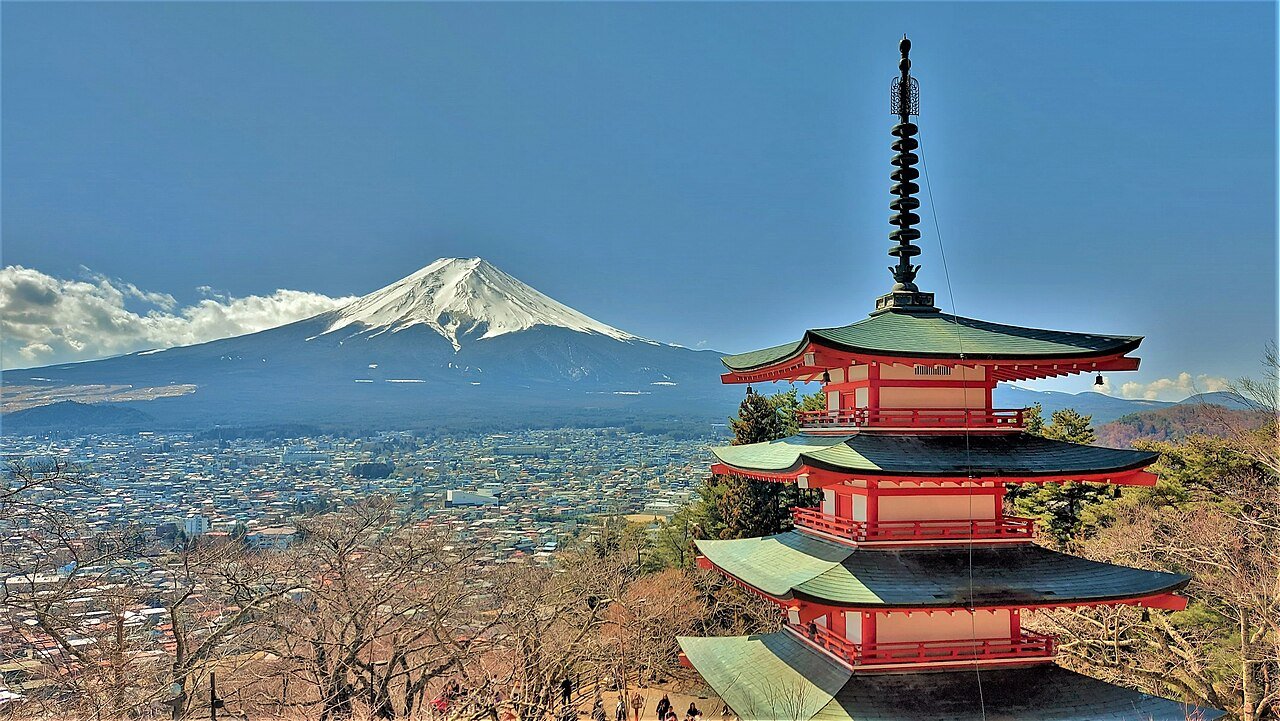
Chureito Pagoda at Kawaguchiko — white five-storey pagoda against pink cherry blossoms with snow-capped Mount Fuji in the background 1
Chureito Pagoda (忠霊塔)
400 STEPS · MOST ICONIC JAPAN SHOT · FREE ENTRY

There is a reason this view — five-storey white pagoda, cherry blossoms on either side, snow-capped Fuji behind — has been shared millions of times without ever going stale. It genuinely looks that good. The pagoda sits inside Arakurayama Sengen Park above the town of Fujiyoshida, a short train ride from Kawaguchiko Station. The 400-step climb from the torii gate passes through tall cedar forest before the mountain and pagoda open up above you. In cherry blossom season (mid to late April) the path is lined with pink on both sides. Autumn colours (early to mid November) give a warm red-orange version of the same view. Outside these seasons it is quieter and perfectly worth visiting — just check the sky before you climb.
Access: Fujikyuko Line from Kawaguchiko Stn to Shimoyoshida Stn (~5 min, ¥220), then walk ~10 min + ~400 steps
Entry: Free · Open 24 hours
Best time: 06:00–08:30 before crowds · Cherry blossoms mid-Apr · Autumn foliage early Nov
Honest tip: If the sky is hazy today, do not climb — wait for tomorrow's early morning instead. Fuji disappears behind afternoon cloud more often than the photos suggest.
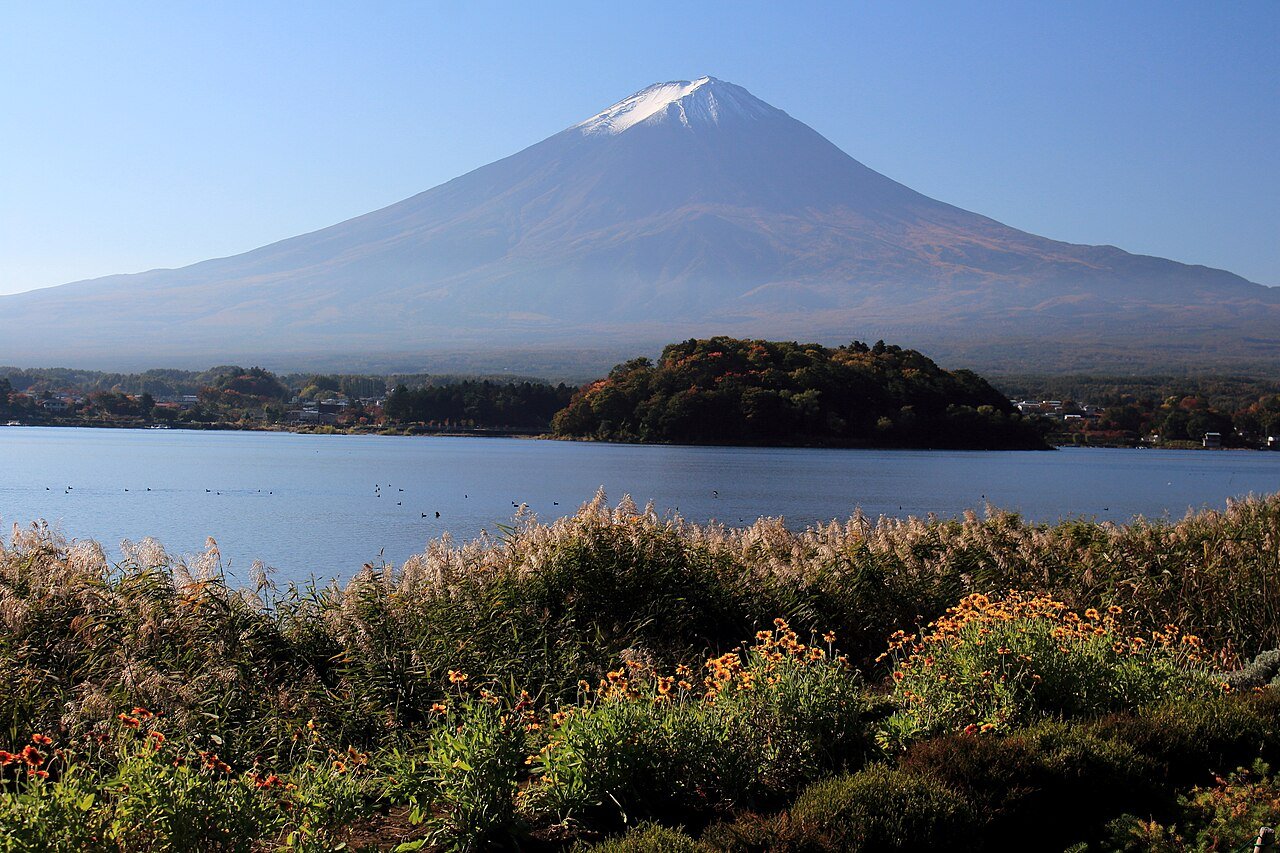
Oishi Park Kawaguchiko — colourful flower fields along the lakeshore with an unobstructed view of Mount Fuji reflected in the water 2
Oishi Park (大石公園)
NORTH SHORE · CLEAREST FUJI VIEW · FREE

If you want to know where Fuji looks biggest and most unobstructed, Oishi Park on the northern shore is the answer. Nothing sits between the flower beds and the mountain — no ridge, no tree line, no building. The park reinvents itself every season: tulips in April, lavender in late June and July (the purple against Fuji's white is the park's signature shot), and round red kochia bushes in October that turn the whole field a burnished crimson. Adjacent to the park is the Kawaguchiko Natural Living Center with local crafts and food — worth a short browse before or after. The park itself is free and open all the time; the Natural Living Center runs normal retail hours.
Access: Red Retro Bus from Kawaguchiko Station, alight at Oishi Park stop (~20 min)
Entry: Free · Open at all times
Seasons: Tulips Apr · Lavender late Jun–Jul · Kochia (red) Oct
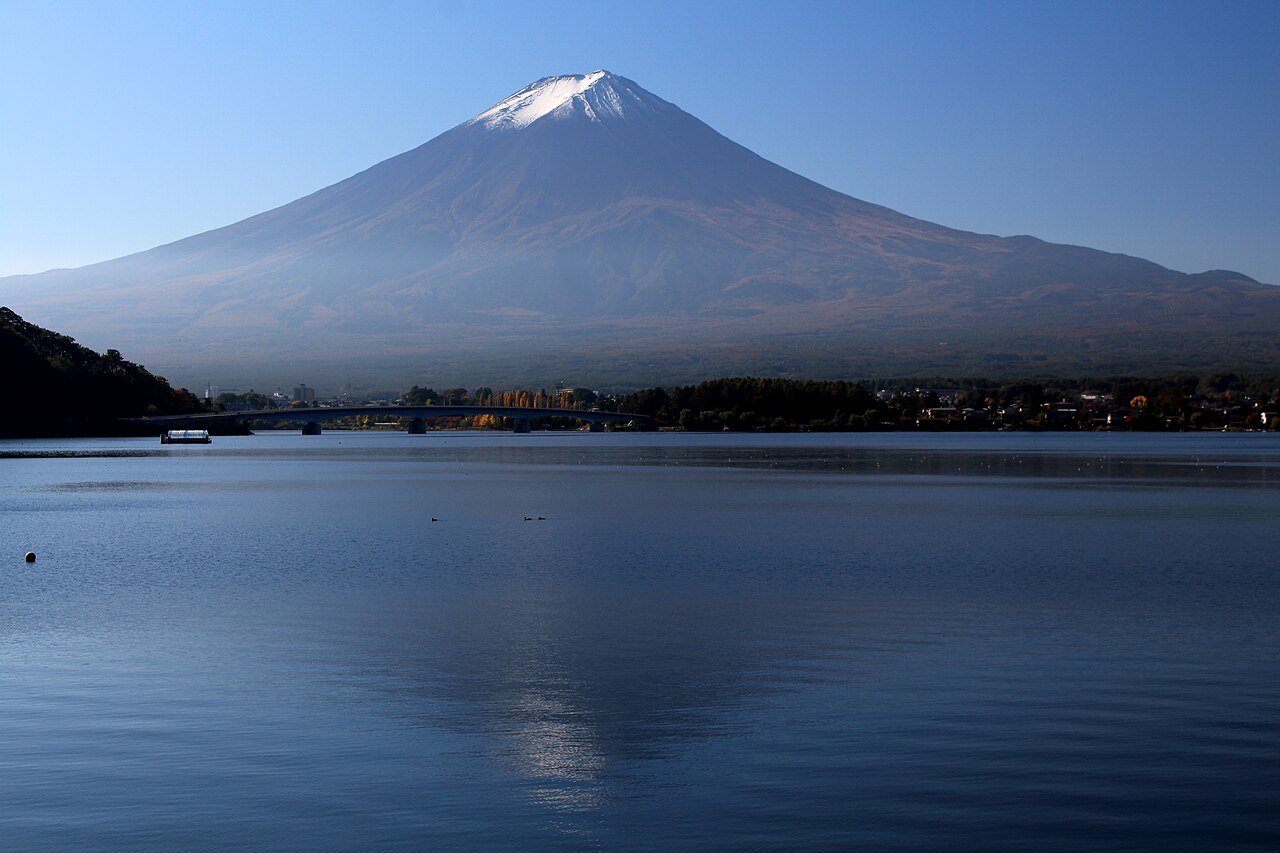
Sakasa Fuji (inverted Fuji reflection) at Kawaguchiko — Mount Fuji mirrored perfectly upside-down in the still lake at dawn with golden light 3
Sakasa Fuji — The Inverted Reflection (逆さ富士)
MIRROR IMAGE AT DAWN · NO TICKET · LAKESHORE WALK

This is the image that makes people say the photo looks edited — but it does not. When the lake is completely still and the light is right in the early morning, Fuji reflects in the water with the same sharpness as the mountain itself, perfectly inverted. The best position is along the northern lakeshore near Oishi Park or at the Kawaguchiko boat pier near the town centre. The window is narrow: from about 05:30 to 07:00 before the morning breeze ruffles the surface. Late autumn and winter offer the cleanest sky and the most dramatic snow-capped summit to reflect. On windy mornings it does not work at all — come back the following dawn.
Best spots: Northern lakeshore near Oishi Park · Kawaguchiko boat pier in town
Best time: 05:30–07:00 before morning breeze · Oct–Feb for clearest sky
Cost: Free — lakeshore path is open and public
Honest tip: A faint ripple on the water means the reflection is already broken. If you can hear small waves, come back tomorrow morning — it is worth the early alarm.
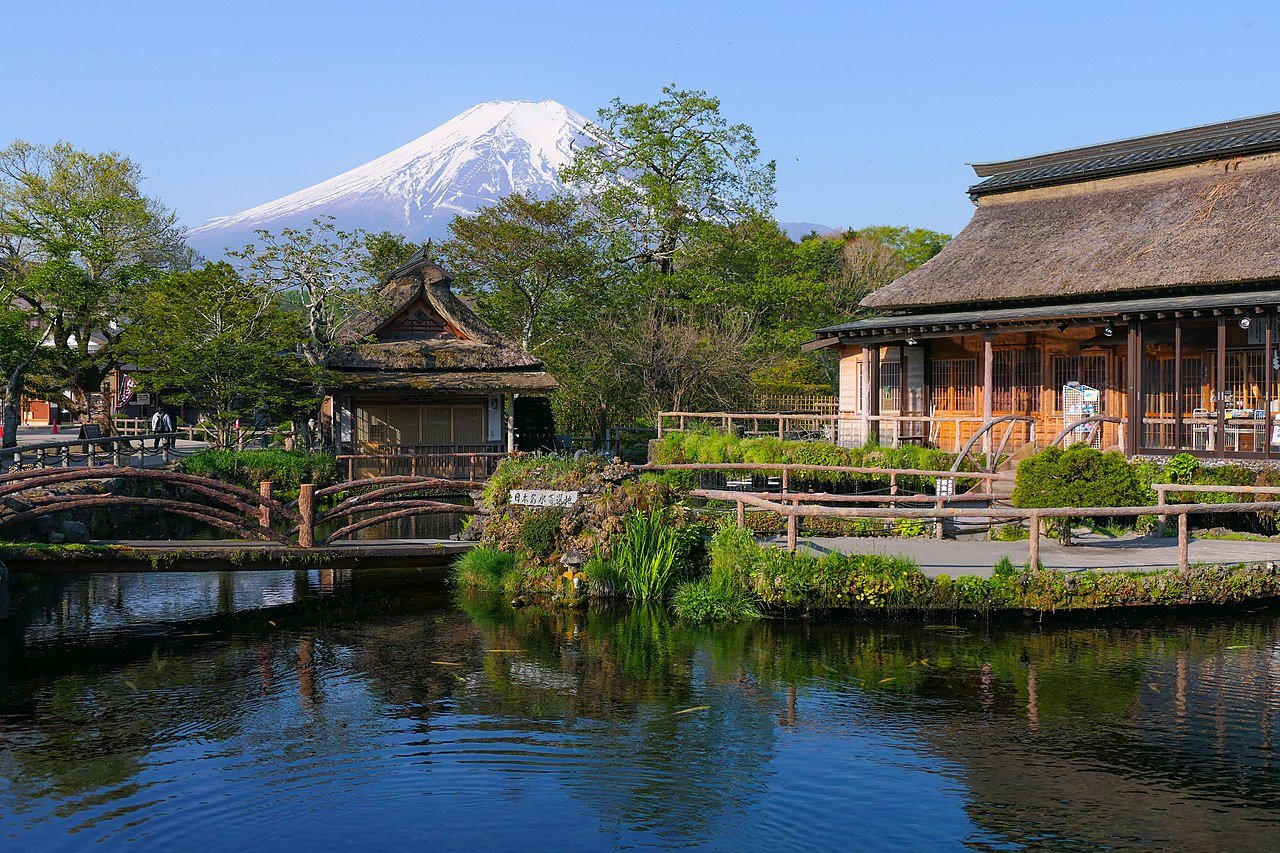
Oshino Hakkai Kawaguchiko — crystal-clear spring pond surrounded by traditional thatched-roof Japanese farmhouses with Mount Fuji visible in the background 4
Oshino Hakkai (忍野八海)
8 UNESCO SPRING PONDS · 80-YEAR LAVA FILTRATION · FUJI SNOWMELT WATER

Eight spring ponds so clear you can see individual pebbles on the bottom through four or five metres of water. The reason is remarkable: the water is snow that fell on Fuji's summit and spent roughly 80 years filtering through porous volcanic lava before surfacing here, naturally purified. The ponds are set among thatched-roof farmhouses (gassho-zukuri style) and traditional stone paths that create a scene that feels genuinely old, not reconstructed for tourism. The site is part of the Fujisan UNESCO World Heritage Area. Some ponds charge a small entry fee (¥300–500); others are viewable from the public path at no cost. Crowds peak on weekends and public holidays — weekday mornings are considerably calmer.
Access: Green Retro Bus (F-line) from Kawaguchiko Station ~30 min · or taxi ~¥2,000
Hours: Approx. 08:00–18:00 · Some ponds ¥300–500/person
Best time: Weekday mornings · Autumn when maples colour the surroundings
Mt Tenjo Ropeway Kawaguchiko — cable car ascending above the lake with Mount Fuji and the full expanse of Lake Kawaguchi visible from the top 5
Mt Tenjo Ropeway (天上山ロープウェイ)
3-MINUTE RIDE · 360° VIEW AT 1,075 M · DEPARTS EVERY 5–10 MIN

Three minutes in a gondola from the lakeshore to 1,075 metres. From the observation deck at the top, Fuji fills the view ahead, Lake Kawaguchiko stretches out below, and on a clear day you can pick out two or three of the other Fuji Five Lakes. There is a short walking trail from the summit station toward Mt Mitsutoge if you want more time on the ridge. Alternatively, you can walk down through the forest to the boat pier — about 40 minutes, well-marked. The ropeway runs every five to ten minutes, so there is rarely a long wait outside peak holiday periods.
Tickets: ¥1,000 round trip · ¥600 one way · Children ¥500/¥300 · also on Klook
Hours: 08:30–17:00 (until 18:00, July 20–Aug 31)
Access: Red Retro Bus from Kawaguchiko Station, or walk ~20 min along the lakeshore
Worth knowing: The Rail & Rope combo pass (Fujikyuko Line + ropeway) saves money if you are using the train to get around the area anyway.
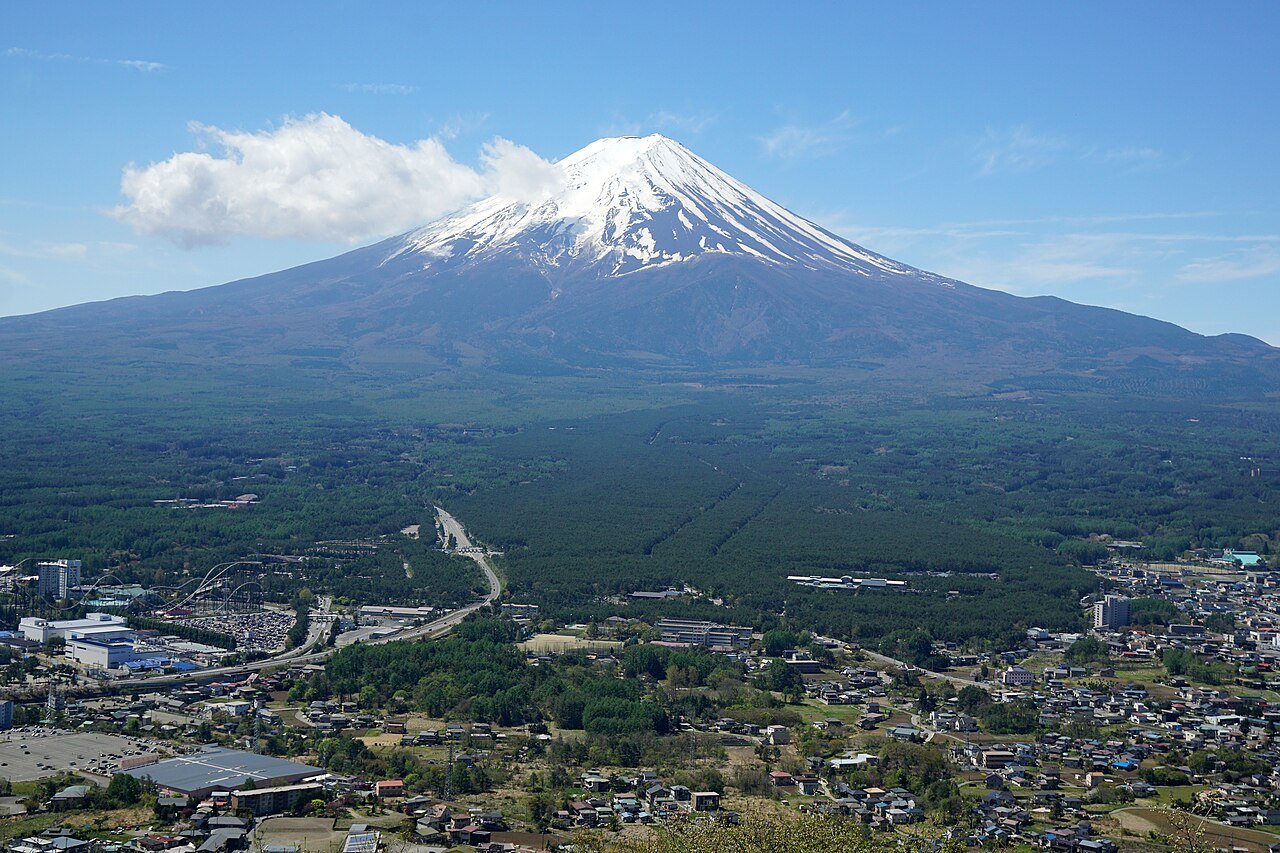
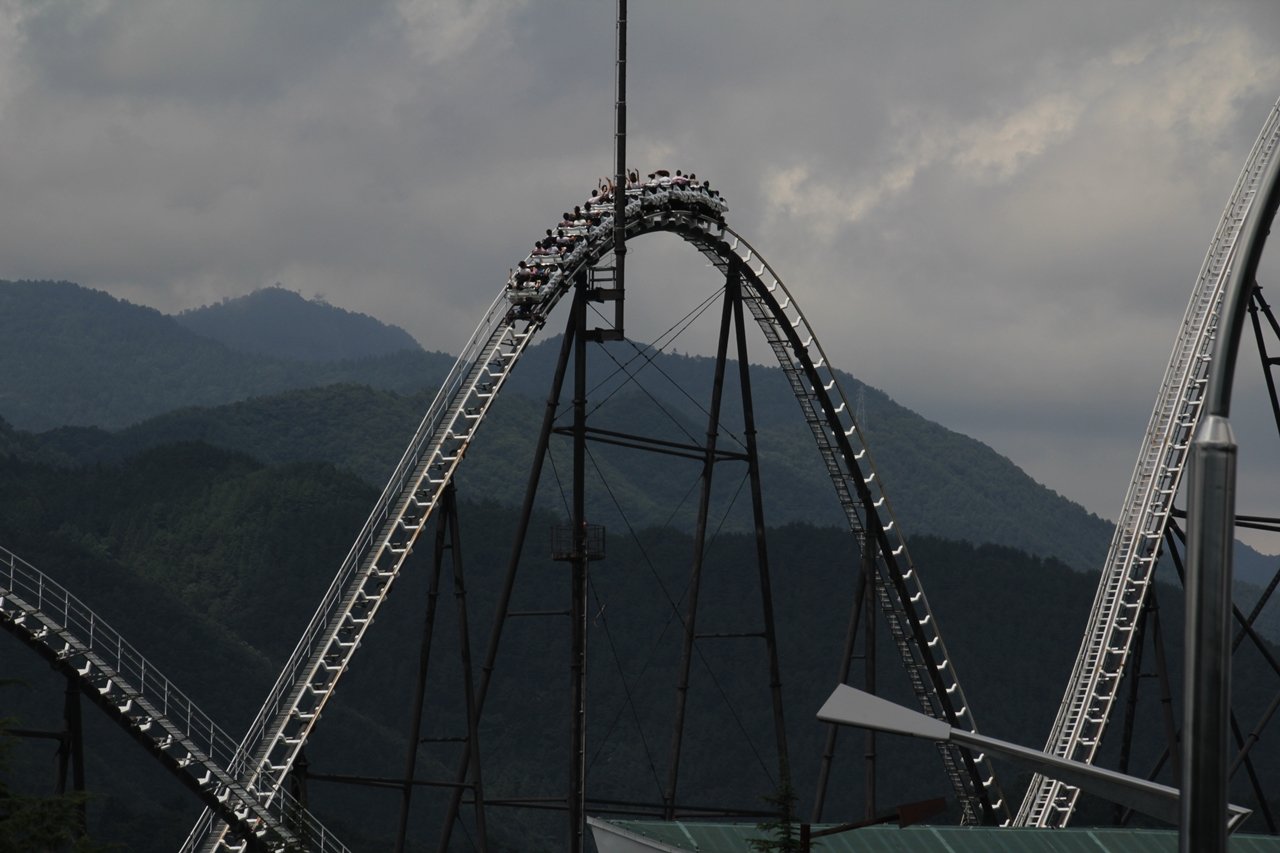
Fuji-Q Highland Kawaguchiko — extreme roller coasters at the foot of Mount Fuji, Takabisha visible with the iconic white mountain in the background 6
Fuji-Q Highland (富士急ハイランド)
WORLD-RECORD COASTERS · FULL DAY · UNDER THE SHADOW OF FUJI

What makes Fuji-Q Highland different from any other amusement park is the view from the top of every ride: Mount Fuji, close enough that you can distinguish the lava fields on its lower slopes. The park holds several world records: Takabisha drops at 121 degrees — beyond vertical, the steepest coaster drop on earth; Eejanaika spins riders 14 times across 4D axes; Fujiyama (79 m tall, 130 km/h) was Asia's tallest coaster when it opened; Do-Dodonpa accelerates from zero to 172 km/h in 1.56 seconds. There is also Thomas Land for families with young children, and the park transforms for winter snow and autumn illumination events.
Tickets: ¥3,500–5,900 Unlimited Ride Pass · book via Klook for better pricing
Hours: 09:00–19:00 (seasonal variations apply)
Access: Fujikyuko Line direct to Fujikyu-Highland Station
Booking tip: Buy through Klook ahead of your visit — cheaper than the gate price and you skip the ticket queue. Weekdays are significantly less crowded than weekends.
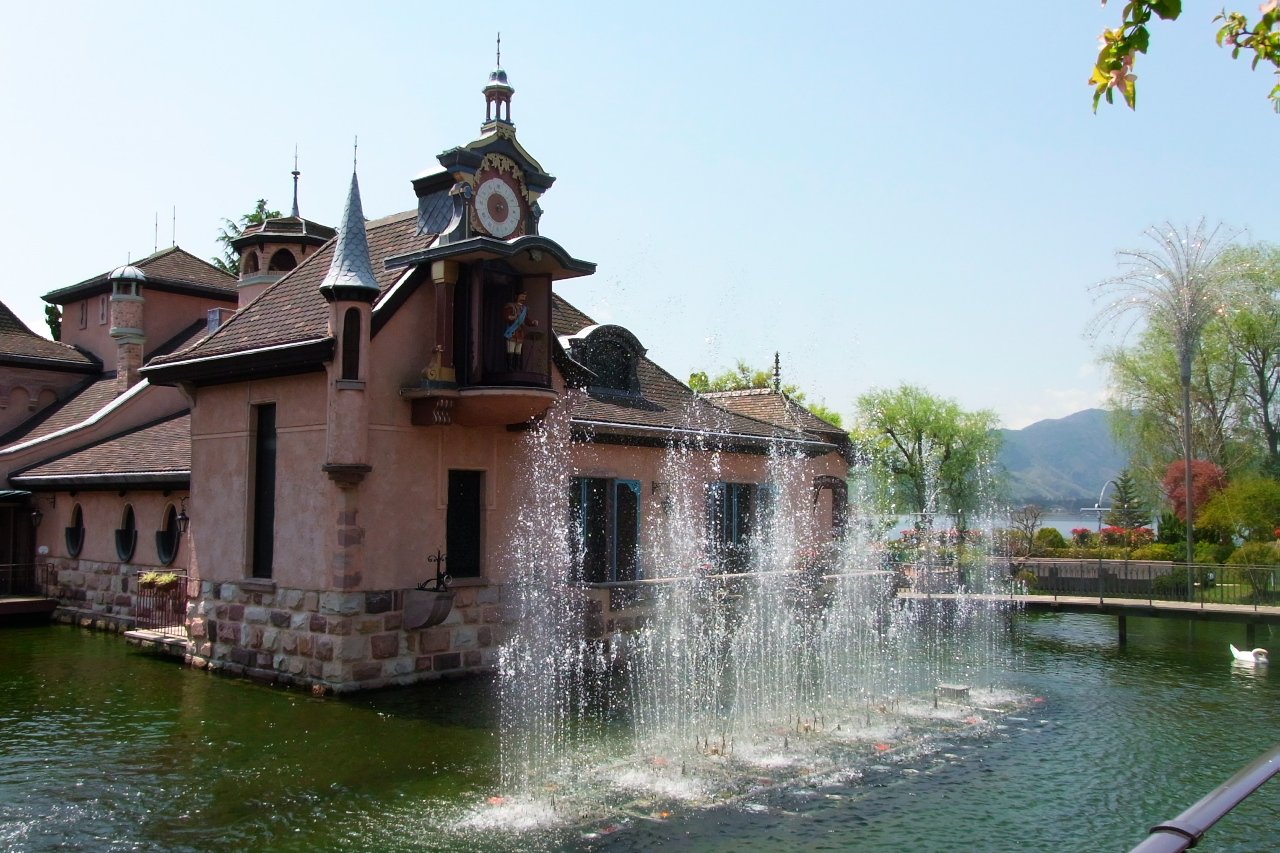
Kawaguchiko Music Forest — European-style glass dome and flower gardens with Mount Fuji visible above the rooftops 7
Kawaguchiko Music Forest (河口湖音楽と森の美術館)
AUSTRIAN VILLAGE REPLICA · ANTIQUE AUTOMATIC INSTRUMENTS · FUJI GARDEN VIEW

Walk through the gate and you genuinely need a moment to remember you are in Japan — the buildings, the clock tower and the rose gardens look transplanted from a small Austrian or Swiss town. The museum's collection of automatic musical instruments is what sets it apart: enormous barrel organs that play themselves, music boxes with mechanisms the size of a wardrobe, a player piano that performs without human hands. Concerts in the organ hall run on a schedule throughout the day. The garden provides an unexpected angle on Fuji: peer above the rooftops and you will find the mountain framed between the gabled building edges. This is a good half-day break if Fuji-watching and hiking have occupied the rest of your itinerary.
Tickets: ¥1,800 adults · ¥1,200 students · Open 09:00–17:30
Access: Red Retro Bus, alight Music Forest stop · or walk ~15 min from Oishi Park
Closed: Wednesdays (confirm before visiting, closures may vary seasonally)
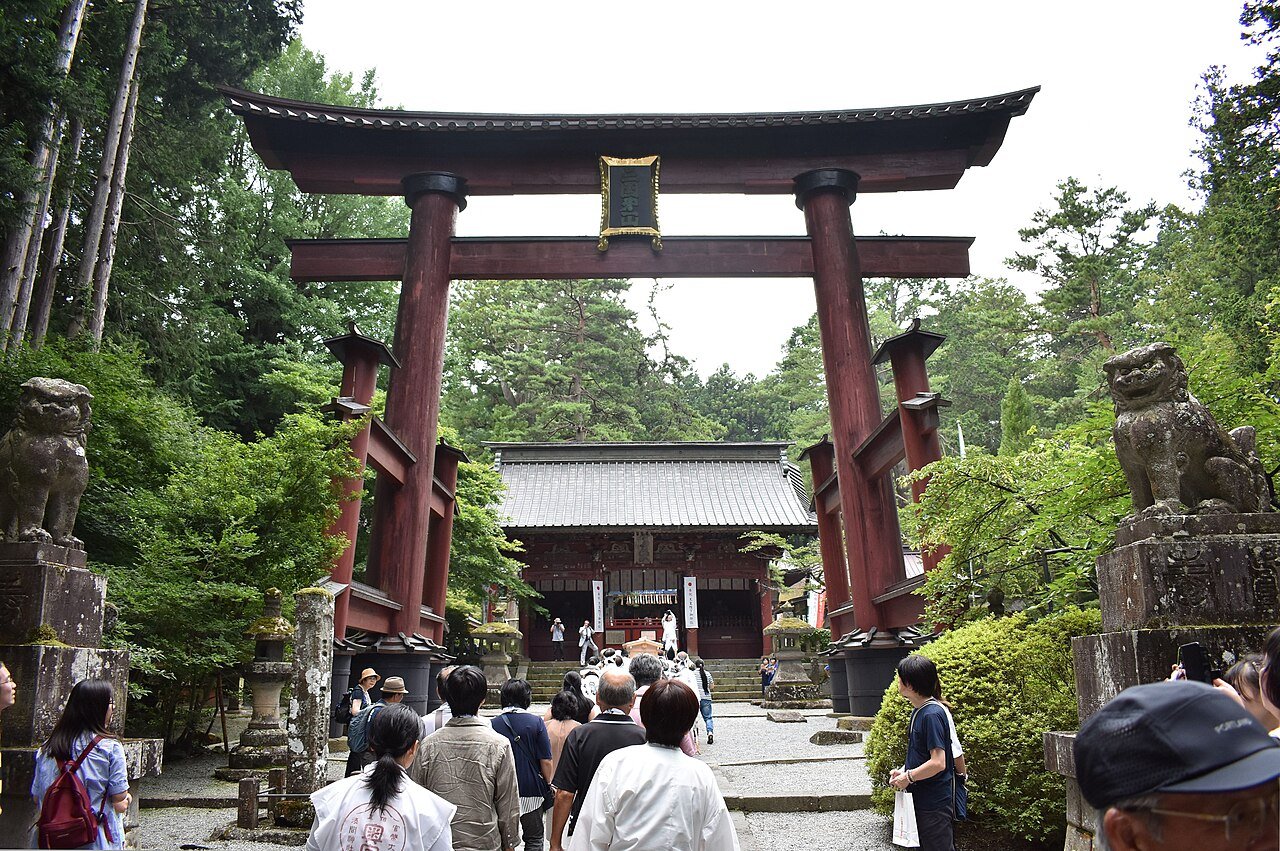
Arakurayama Sengen Shrine Kawaguchiko — rows of red stone lanterns and vermilion torii gates beneath tall cedar trees leading to Chureito Pagoda 8
Arakurayama Sengen Shrine (浅間神社)
THE PATH THAT LEADS TO CHUREITO · RED LANTERNS · CEDAR FOREST

Most visitors rush past Arakurayama Sengen Shrine in their hurry to reach the pagoda at the top. That is understandable — the famous view is up there. But the shrine itself is worth slowing down for. From the first vermilion torii gate at the base, hundreds of stone lanterns line both sides of the steps all the way up; the old cedar trees close overhead, making the path cool and dim even in summer. At the main shrine level, the architecture mixes red painted woodwork with polished black stone, and the surrounding lanterns are lit at dusk. There is a mid-level viewing platform where you can see the lake and town before committing to the final climb to the pagoda. The whole complex is free and open around the clock.
Access: Walk ~10 min from Shimoyoshida Station · same route as Chureito
Entry: Free · Open at all times
Best time: Early morning or after dark when the lanterns are lit
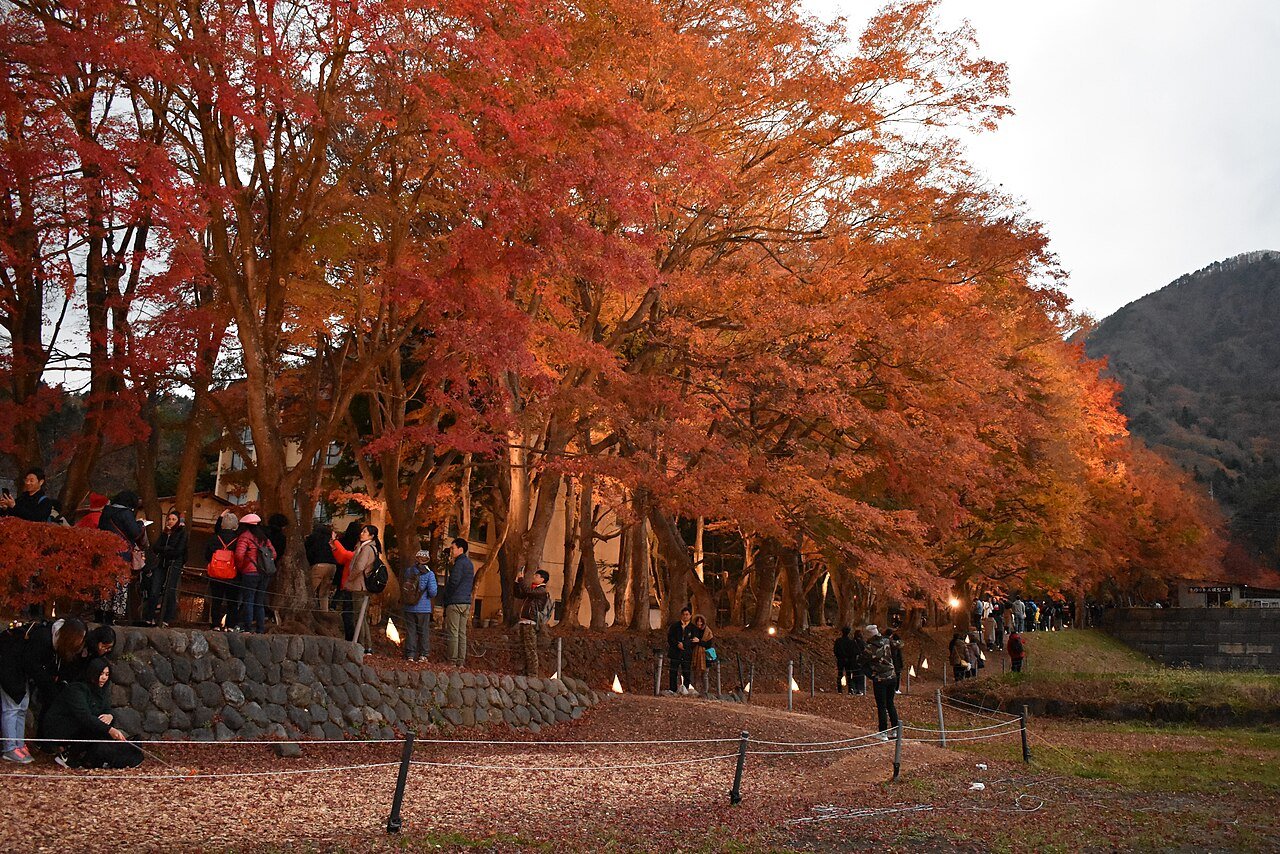
Autumn maple leaves at Lake Kawaguchiko — red, orange and yellow trees reflected in the still lake with Mount Fuji in the background 9
Boating, Cycling & the Lakeshore Walk
FUJI FROM THE WATER · 18 KM CYCLING LOOP · SLOW IS BEST HERE

The view of Fuji that stays with people longest is rarely from the famous viewpoints — it is often from a random moment along the lakeshore path when the mountain appears between two trees at a slightly different angle than before. Kawaguchiko has an 18-kilometre cycling loop around the lake (roughly 1.5–2.5 hours), with bike rentals available outside the station from around ¥600–1,500 depending on type. For a completely different angle, rent a pedal boat or rowboat from the Kawaguchiko pier (from ¥700–2,000, about 09:00–17:00) and drift out to where Fuji is reflected beneath you. A panda pedal boat costs around ¥2,000 for 30 minutes and is thoroughly undignified, which is half the appeal.

Bikes: ¥600–1,500/day from shops near Kawaguchiko Station
Boats: From ¥700–2,000 at the pier · approx. 09:00–17:00
Best time: Morning of day two — water is calm and the lakeside crowd is thin
🎫 Book Activities · Klook
Book Fuji-Q Highland & Mt Tenjo Ropeway in Advance

Klook tickets for Fuji-Q Highland are cheaper than the gate price and let you skip the ticket line — also day tours from Tokyo, the ropeway combo pass, and lake activities all in one place.

Browse Kawaguchiko on Klook

Prices and promotions change — verify before booking.

Sample Itinerary

A Tested 1-Night, 2-Day Route

This covers the main highlights without rushing — the point is to feel the lake, not race past it

Day 1 — Afternoon
ARRIVE · LAKESIDE · ONSEN

Arrive at Kawaguchiko Station around midday. Take the red Retro Bus to Oishi Park and walk the northern lakeshore — you are positioning yourself for the best Fuji views without needing to do anything strenuous yet. Check in to your accommodation (aim for a lake-view room on the north shore if budget allows). In the late afternoon, find a public or hotel onsen with a Fuji-facing bath — Hotel Mifujien opens to day-visitors (¥1,200, 13:00–21:00). Dinner: hoto nabe, the local thick flat-noodle hot pot, at any restaurant near the station.

Timing: Arrive 12:00–14:00 · Check-in 15:00 · Onsen 17:00–19:00
Day 1 — Evening
LAKESHORE NIGHT · EARLY SLEEP

After dinner, walk to the lakeshore pier near the town centre. If the sky is clear you will find Fuji silhouetted against stars or lit by the town lights in a way that is completely different from daytime. Set an early alarm — you need to be outside before 05:30 tomorrow.

Timing: After dinner ~20:00 · In bed by 22:00
Day 2 — Early Morning
SAKASA FUJI · CHUREITO

Up at 05:30. Walk to the northern lakeshore while the water is still — this is Sakasa Fuji territory, the inverted reflection that disappears once the breeze picks up. Then take the Fujikyuko train to Shimoyoshida Station and climb the 400 steps to Chureito Pagoda. Before 08:00 you will nearly have it to yourself. Return to the station and continue by train or bus to Oshino Hakkai.

Timing: Wake 05:30 · Chureito 07:00–08:30 · Oshino 10:00–12:00
Day 2 — Afternoon
ROPEWAY · LAKESIDE · DEPART

Return to Kawaguchiko Station and ride the red bus to Mt Tenjo Ropeway (¥1,000 round trip) for a final aerial view before heading home. If you have an hour spare, rent a bike and ride the section of the lakeshore you have not yet seen. Pick up gifts along Honcho-dori, the main shopping street near the station, before catching your bus or train back to Tokyo.

Timing: Ropeway 13:00–14:30 · Depart 15:00–16:00
FAQ

Kawaguchiko Questions Answered Directly

How many days do you need in Kawaguchiko?
One night is the sweet spot. Arrive in the afternoon for a lakeside walk and onsen with Fuji views, then use the early morning of day two — before the crowds — for Chureito Pagoda and Oshino Hakkai. A day trip from Tokyo is possible but forces you to choose between Chureito and Fuji-Q, which sit on opposite sides of the area. Two nights lets you add Fuji-Q and still have pace.
When is the best time to see Mount Fuji clearly?
Early morning before 09:00, especially from late autumn through winter (October–February), gives the sharpest view with snow on the summit. Fuji hides behind afternoon cloud more often than not. Check the forecast the evening before; if the sky is hazy, do not climb Chureito's 400 steps — wait for the following morning. Spring (late March to May) brings cherry blossoms but also more cloud and humidity.
How do you get to Chureito Pagoda from Kawaguchiko Station?
Take the Fujikyuko Line from Kawaguchiko Station to Shimoyoshida Station (about 5 minutes, ¥220). Walk about 10 minutes following signs to Arakurayama Sengen Shrine, then climb approximately 400 steps to the pagoda. Total time from Kawaguchiko Station is around 25–30 minutes. Signs are clear in English the entire way.
When does the lavender bloom at Oishi Park?
Lavender peaks in late June to early July. The park switches to vibrant red kochia bushes in late September and October — equally photogenic against Fuji's white peak. Tulips bloom in April alongside cherry blossoms. Each season brings a completely different foreground colour to the same Fuji backdrop: the park is worth visiting in any season.
Is the Kawaguchiko bus pass worth buying?
If you plan to cover multiple spots over two days, the 2-day Retro Bus Pass at ¥1,700 is excellent value. It covers the red-line bus (northern lakeshore: Mt Tenjo Ropeway, Oishi Park, Music Forest) and the green-line bus (Oshino Hakkai, Lake Saiko). For a single day or just two or three stops, individual tickets at ¥200–400 per ride may work out cheaper. Day-tour passes from Tokyo that bundle transport plus some admissions are another option if you are coming from the city without a rail pass.
Related Guides

Plan Your Kawaguchiko Trip from Every Angle