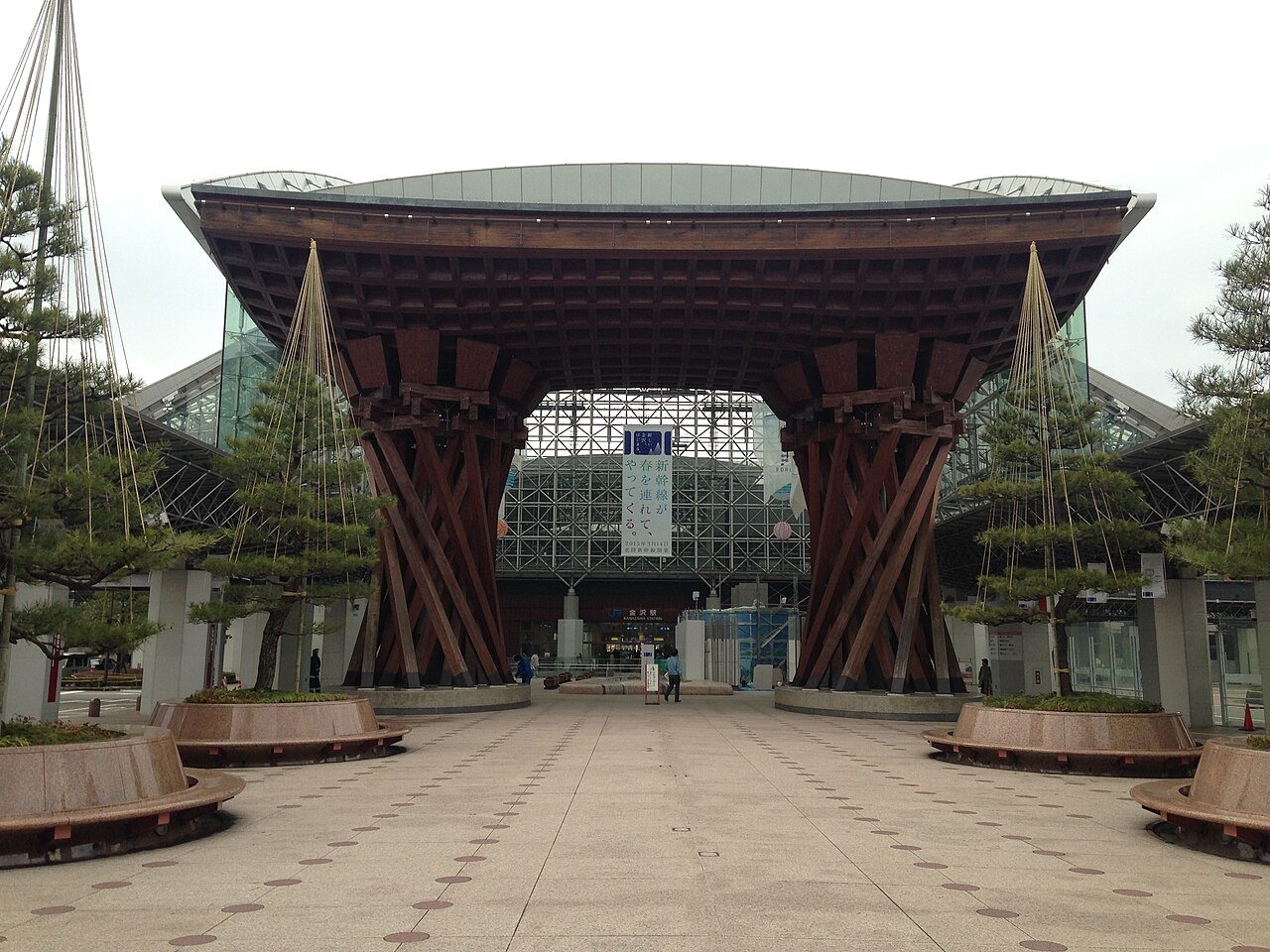
A Michelin 3-star garden before the crowds arrive, fresh seafood over rice at a 300-year-old market, and a geisha street where gold-leaf workshops still hum along — this plan gives you Kanazawa the way it's meant to be seen. Every stop, every time, every yen counted.
Picture this: you step off the loop bus at 7 am and walk into Kenroku-en while mist still sits on the ponds. The two-legged stone lantern — the one on every Kanazawa postcard — is right in front of you, and there are barely ten other people in the garden. An hour later the place fills up. That gap between early and late makes a genuine difference here.
Kanazawa is often called "little Kyoto," but the comparison undersells it. The teahouse districts were never bombed, so the atmosphere in Higashi Chaya isn't reconstructed nostalgia — those latticed wooden facades are the originals. The Omicho Market still serves its neighborhood first. And the 21st Century Museum of Contemporary Art sits in a glass circle that makes you rethink what a museum should feel like.
The plan below is built around three time slots: one day for the headline sights, two days to also take in the samurai quarter and Ninja Temple, three days to add a Shirakawa-go day trip. Pick whatever fits your trip.
Japan's finest garden at dawn · fresh kaisendon at the city's oldest market · afternoon tea-house street with gold-leaf soft cream — the day that answers why people keep returning to Kanazawa
Leave Kanazawa Station by 07:00. Take the Right Loop Bus from stop number 7 on the east side of the station — the Kenroku-en Shuttle stop takes about 16 minutes and costs ¥200. If you buy a Hokutetsu One Day Pass for ¥500 here, you ride free for the rest of the day.
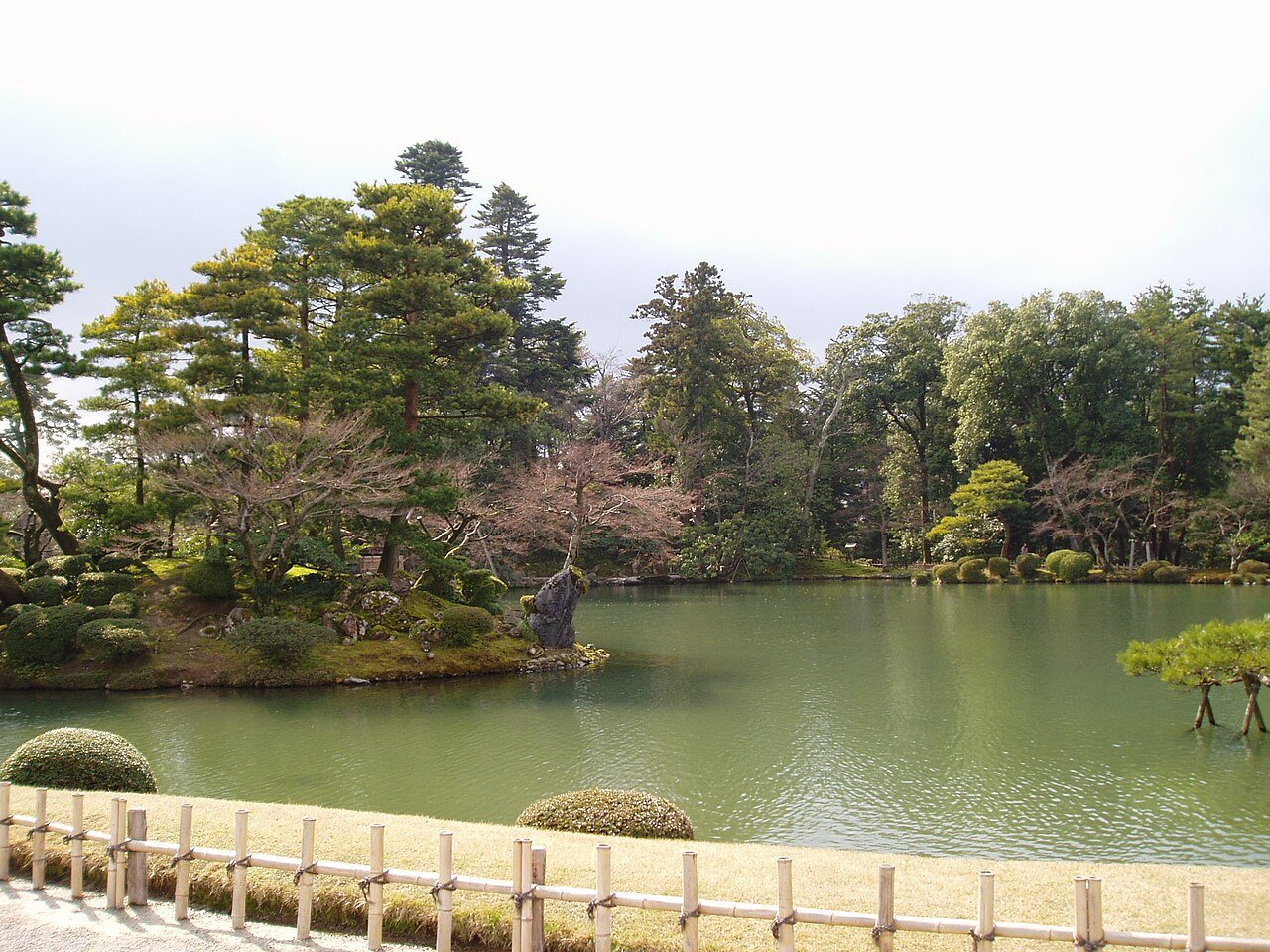
Enter Kenroku-en at opening, before the tour groups arrive around 09:00. The garden's name translates as "garden of six attributes" after a Chinese landscaping ideal: spaciousness, seclusion, artifice, antiquity, water and panoramas. The kotoji-toro lantern standing on two legs at the edge of Kasumigaike Pond is the image on every Kanazawa souvenir — but photographed in person with morning mist it surpasses the postcard. Spend around 90 minutes here. On the way out, walk five minutes through Ishikawa Gate into Kanazawa Castle Park, where the brilliant-white walls reflect the sky.
Walk five minutes south from the castle to reach the 21st Century Museum of Contemporary Art, Kanazawa. The building itself — a perfect glass circle — is the first exhibit. Inside, Leandro Erlich's "Swimming Pool" installation is a perennial queue-worthy moment: visitors standing on the bottom peer upward at people standing on the surface, separated by a shallow layer of water. Both groups are at ground level; the illusion is flawless. The museum has free public zones open daily and a paid exhibitions wing.
Walk ten minutes north from the castle to Omicho Market, a covered seafood and produce market that has been running for 300 years. This is genuinely where Kanazawa residents buy their fish — the stalls piled with snow crabs, sweet shrimp (ama-ebi) and sea urchin from the Japan Sea are there for locals, not just visitors.
Lunch here means kaisendon — a bowl of sushi rice topped with whatever sashimi is freshest that morning. Hirai Honten, in the Ichiba-kan building, opens at 10:30 and serves until 15:00 (closed Wednesdays). A bowl with premium toppings runs ¥2,500–4,500. Eat immediately while the fish is at its best.
From the market, board the Right Loop to Hashibacho (~8 minutes, ¥200) and walk five minutes to Higashi Chaya. This is the best-preserved geisha entertainment district in Japan outside Kyoto — a single narrow street flanked by two-story wooden buildings whose latticework facades filtered candlelight into the road centuries ago. Because Kanazawa was never bombed in World War II, these buildings are not reconstructions; they are the originals.
Kanazawa produces over 99 percent of Japan's gold leaf, and Higashi Chaya is where you feel that most directly. Workshops sell gold-leaf lacquerware, ceramics and cosmetics, and several cafes serve soft cream cones with a sheet of gold leaf draped over them (¥500–800). Stop into Ochaya Shima, a former geisha house now open as a museum (¥500), for a close look at original Edo-period rooms, instruments and robes.
Return by Left Loop to Katamachi, the neighbourhood of izakayas and small restaurants. Try nodoguro (blackthroat sea perch — locals call it "the black pork of the sea" for its intense marbling) or a plate of jibu-ni, Kanazawa's signature stew of duck, wheat gluten and vegetables in a thick dashi broth. Pair with Ishikawa sake, which draws on mountain snowmelt water and has a noticeably clean finish. Budget ¥2,000–4,000 per person.
Mud walls that have stood since the Edo period · a temple with 29 hidden rooms and trap doors · quiet Higashiyama at dusk — the side of Kanazawa that most visitors skip entirely
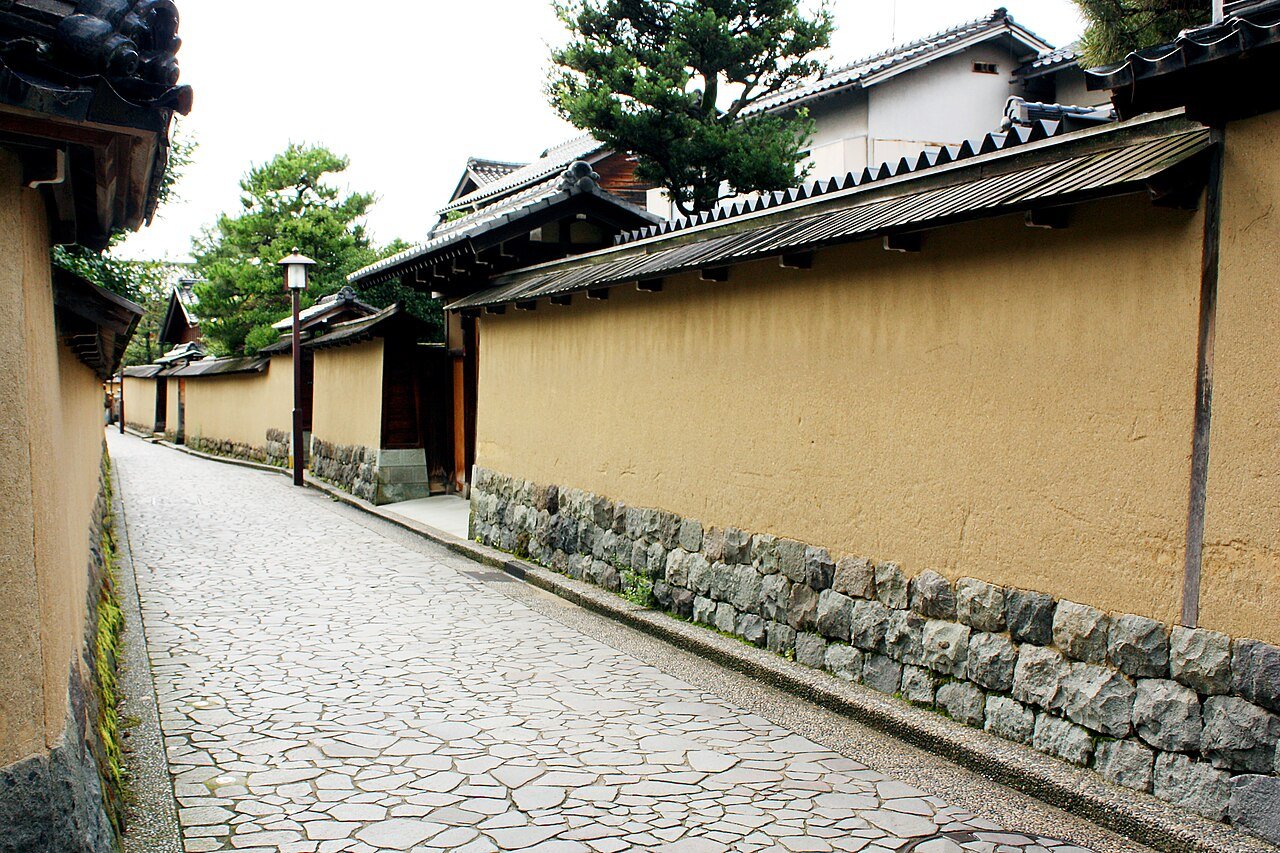
Take the Right Loop to Korinbo (~8 minutes from the station), then walk five minutes into Nagamachi — the residential district where middle-ranking samurai of the Kaga domain lived. High river-stone walls run along both sides of the lanes, a clear canal traces the base of the walls, and the green overhang of garden trees above makes the whole place feel sealed off from the modern city.
The Nomura Samurai House is the best-preserved residence in the district. The reception room uses 200-year-old nagi pine, the alcove pillars are black persimmon, and the small rear garden is a textbook example of compressed-scale Japanese garden design. Give it 45–60 minutes.
Walk about ten minutes from Nagamachi to Myoryuji Temple, nicknamed the Ninja Temple not because it ever housed ninja, but because the 17th-century lord of Kaga filled it with 29 hidden staircases, trap doors, false floors and escape tunnels as a refuge if the Tokugawa shogunate ever came for him. The interior contains seven levels on four floors — from the outside it appears to have three. A tour guide leads each group through the labyrinth explaining how each device worked.
Entry is by guided tour only (about 45 minutes). Tours are conducted in Japanese, but the architecture speaks for itself. You must reserve in advance — call 076-241-0888 or ask your hotel's front desk to book on your behalf.
After the Ninja Temple, find lunch near Nagamachi before catching the Left Loop (~5 minutes) to the D.T. Suzuki Museum. Suzuki was a Kanazawa-born philosopher who brought Zen Buddhism to the Western world in the early 20th century. The museum, designed by Yoshio Taniguchi, is deliberately spare: a meditation water garden enclosed by high walls with nothing but sky above. Sit quietly for ten minutes and the design starts making sense.
From the museum, walk ten minutes uphill into Higashiyama, a hillside temple and shrine district that most visitors bypass in favour of Higashi Chaya. The lanes here are silent mid-afternoon, stone lanterns line the approach paths to each temple, and the views back over the rooftops of Kanazawa are good.
Walk down from Higashiyama to Higashi Chaya at dusk for a second visit. The amber lamplight glowing through the lattice windows gives the street a different mood entirely — calm in a way that midday crowds prevent. Restaurants nearby serve kappo style Kanazawa cuisine, which means counter dining where the chef works directly in front of you using same-day seafood from the Japan Sea. Prices run ¥4,000–8,000 per person, which is notably lower than equivalent omakase experiences in Tokyo or Kyoto.
50 minutes by bus · steep-thatched farmhouses in snow or summer green · a valley that looks unchanged for centuries — the most scenically different day you can add to a Kanazawa trip
The first Nohi Bus to Shirakawa-go leaves Kanazawa Station at 08:35 from bay 11 on the ground floor. The journey takes about 50 minutes through mountain scenery. A single fare is ¥2,600; a round-trip ticket costs ¥4,840. Book in advance — seats are limited and autumn and winter departures fill quickly. Tickets are available online at the Nohi Bus website or at the station counter.
Arriving at Shirakawa-go, cross the suspension bridge over the Sho River to enter the village. The farmhouses you see ahead — with steep thatched roofs shaped like praying hands — are called gassho-zukuri (praying-hands construction), built to shed the heavy snowfall that buries this valley each winter. UNESCO listed Shirakawa-go in 1995.
The village is entirely walkable in 4–5 hours. Several farmhouses are open as museums (¥300–500 each) — Wada House is the largest, and its top floor under the thatch still shows the original silk-worm farming equipment on open timber frames. Climb to the Shiroyama Viewpoint (a 10-minute walk up the hillside, or a short shuttle from the car park) for the aerial view that appears on every Shirakawa-go poster. Better in person.
Lunch in the village means ayu (sweetfish grilled over coals on long skewers), Hida beef burgers or tofu donut sold from small stands. Most sit-down restaurants serve from 11:00 to 14:00, after which food options narrow. Eat earlier rather than later.
Nohi Bus runs back to Kanazawa roughly every two to three hours. The 14:35 or 16:35 departures both arrive in time for dinner. If you catch the 16:35 return you still have time to browse Hyakuban-gai, the shopping complex connected directly to Kanazawa Station, for Kanazawa-specific souvenirs: gold-leaf castella cake, matcha confectionery, Ishikawa sake in ceramic bottles and gold-leaf lacquerware gift boxes. Prices are similar to the shops in Higashi Chaya.
The station area gives easiest access to loop buses and trains. The Katamachi-Korinbo area puts you close to restaurants and nightlife. See reviews: Hotel Nikko Kanazawa (city-view tower hotel) · Hatchi Kanazawa (design hotel near Higashi Chaya) · Hakuchoro Sanraku (ryokan with kaiseki dinner)
Right Loop + Left Loop buses cover every major sight every 15–20 minutes. Single fare ¥200; buy the Hokutetsu One Day Pass ¥500 for unlimited rides — it pays for itself from the third trip. Buy at the station ticket counter or on the bus. All stops have English-language signage.
Shinkansen Hakutaka or Kagayaki from Tokyo ~2.5 hours. Thunderbird limited express from Osaka ~2.5 hours. The JR Pass covers both. From Bangkok, fly into Osaka Kansai (KIX) or Nagoya (NGO) and continue by rail.
| Item | Budget | Mid-range | Comfortable |
|---|---|---|---|
| Accommodation (per night) | ¥3,000–5,500 (~$19–37) |
¥8,000–15,000 (~$54–101) |
¥20,000–45,000+ (~$135–305+) |
| 3 meals | ¥1,500–2,500 (~$10–17) |
¥3,000–5,000 (~$20–34) |
¥6,000–15,000 (~$41–101) |
| Bus One Day Pass | ¥500 (~$3.40) |
¥500 (~$3.40) |
¥500–5,200 (+Shirakawa-go ¥4,840) |
| Admission fees | ¥320–1,000 (Kenroku-en + 1 venue) |
¥2,000–3,500 (Kenroku-en+21CM+Ninja+Nomura) |
¥3,500–5,000 (all venues across 2 days) |
| Daily total (approx) | ¥5,500–9,500 (~$37–64) |
¥13,500–24,000 (~$91–162) |
¥30,000–65,000+ (~$203–440+) |
Exchange rate reference ¥150 ≈ $1 USD · Prices approximate and subject to seasonal change