🌏 Destinations · All 🇯🇵 Japan · Full guide Kanazawa Kyoto Kanazawa Food Guide 🏮 Higashi Chaya 🧭 Travel Prep Guide About Contact 🇹🇭 ไทย🇬🇧 English🇨🇳 中文🇪🇸 Español🇫🇷 Français
🏮 Higashi Chaya District · Kanazawa

Higashi Chaya — Kanazawa's Geisha District of Teahouses & Gold Leaf

Walk a cobbled street between Edo-era wooden teahouses where geisha still work to this day — step inside Shima and Kaikaro, try a soft-serve wrapped in a whole sheet of gold leaf, then cross the bridge to riverside Kazuemachi as the lanterns flicker on.

Start Here

Walking Into Higashi Chaya Feels LikeStepping Back Into the Edo Era

Picture a cobbled lane lined on both sides by two-storey wooden buildings in deep brown, their fronts covered in fine wooden lattices that let the people inside look out while keeping the people outside from seeing in — this is Higashi Chaya-gai, the largest of Kanazawa's three geisha districts. The city came through the war almost untouched by bombing, so this district still keeps nearly its full Edo-era face, and what makes it special is that geisha still work here to this day — it isn't a set built for photos.

Honestly, the charm of this district isn't only that it's pretty — it's the things you can only find here. Kanazawa makes nearly all of Japan's gold leaf, so you get to try a soft-serve wrapped in a whole sheet of gold, sit inside a two-hundred-year-old teahouse, then cross a bridge to Kazuemachi, a riverside geisha district that's quiet and especially lovely at dusk. This page walks you through the whole district — what to see, what to eat, how to get there, and the best times to go.

🏮 Worth knowing before you go: "chaya" (茶屋) literally means "teahouse", but in this context it refers to a house where geisha perform music and dance for guests. "Higashi" (東) means "east" — named for its position on the eastern bank of the Asano River. Both Higashi Chaya and Kazuemachi are registered as Important Cultural Properties of Japan.
🏮
The Largest Geisha District
One of Kanazawa's three chaya districts, where geisha still work.
🏯
Edo-era Wooden Houses
A cobbled street and kimusuko lattice windows kept almost fully intact.
Capital of Gold Leaf
Kanazawa makes ~99% of Japan's gold leaf · try the gilded ice cream.
🌊
Pairs With Kazuemachi
Cross the bridge to a quieter riverside geisha district, best at dusk.
Know Before You Go

Higashi Chayaat a Glance — Fees, Hours, Getting There

The district itself is free to wander at any time; you only pay if you go inside a teahouse. This table rounds up the essentials — 2026 prices and hours may change, so check the official sites once more before you go.

Spot / Thing to doTypeEntryHoursNotes
Walk Higashi Chaya-gaiHigashi Chaya-gaiStreetFreeAnytimeQuietest before 10am
Ochaya ShimaOchaya Shima · built 1820Museum~¥50009:00–18:00Open daily
KaikaroKaikaro · working teahouseTeahouse~¥75010:00–17:00Usually closed Wed · last entry 16:30
Gold-leaf ice creamGold leaf soft serveFood~¥800–900By shopThe district's signature treat
Gold-leaf craft workshopGold leaf craftWorkshop~¥1,000+By shopBooking ahead possible
Kazuemachi districtKazuemachi · riversideStreetFreeAnytimeLoveliest at dusk
🚌 How to get there: from the East Exit of Kanazawa Station, take a bus from platform 7 on a route via Hashiba-cho, get off at the Hashiba-cho stop, then walk about 5 minutes (around 7 minutes total · ~¥200). Or take the Kanazawa Loop Bus (right loop), about 15 minutes. The district is small, so take your time and walk it slowly.
6 Things to Do & See

Walking Higashi Chaya —What Not to Miss

The district is small but packed; you can cover it all in half a day. We've ordered it from the main street, into the teahouses, on to the gold-leaf treats, and out to the quieter riverside district.
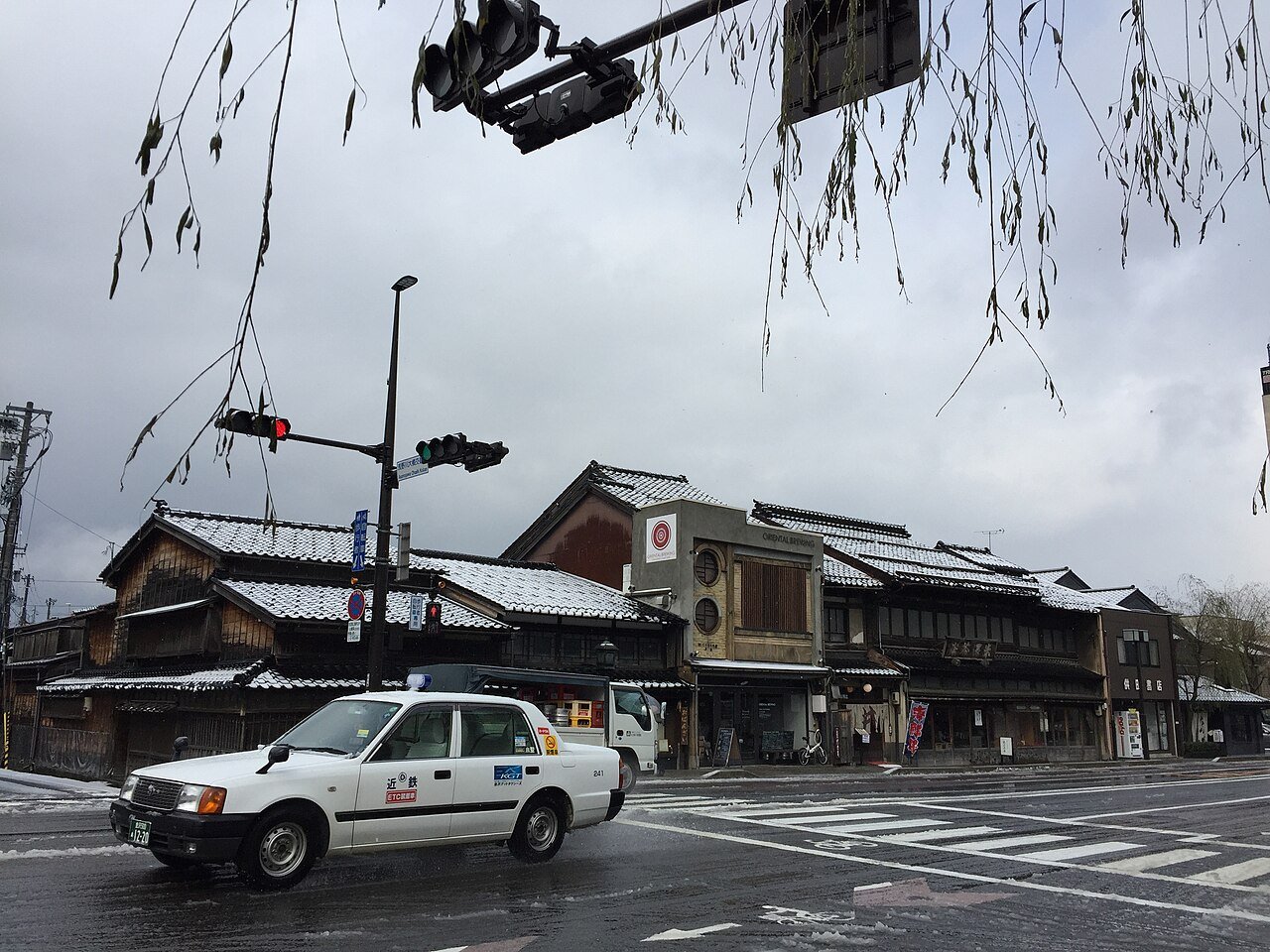
The street through Higashi Chaya district in Kanazawa, Edo-era wooden houses with lattice windows 🏮 Main Street1
Higashi Chaya-gai Street
Higashi Chaya-gai · Main Street

The heart of the district is its main cobbled street, flanked by two-storey wooden teahouses whose deep-brown kimusuko lattice windows line up in neat, beautiful rows. Walk it slowly — you can photograph the whole stretch and drop into shops set in the old houses selling tea, souvenirs, and craftwork. The street itself is free to walk at any hour.

📍Location: Higashiyama, on the east bank of the Asano River
Hours: open anytime · most shops ~09:00–17:00
🚌Getting there: bus from Kanazawa Station, off at Hashiba-cho, 5-min walk
💡Tip: come before 10am while it's still quiet — the empty cobbled street photographs far better.
Kanazawa Travel Guide →
🏮 🎴 Open to visitors2
Shima & Kaikaro
Ochaya Shima & Kaikaro

To see inside a real teahouse, these are the two to enter. Ochaya Shima, built in 1820, is preserved as a museum that's barely changed — you'll see the performance rooms, the instruments, and the geisha's belongings. Kaikaro still operates as a working teahouse, with a café serving gold-dusted coffee (ohgon) and matcha to sip.

🎟️Entry: Shima ~¥500 · Kaikaro ~¥750
Hours: Shima 09:00–18:00 daily · Kaikaro 10:00–17:00 (usually closed Wed)
📷Note: check each teahouse's photo rules — some rooms are no-photo
💡Tip: if you're short on time, one is enough — Shima suits history lovers.
Kanazawa Travel Guide →
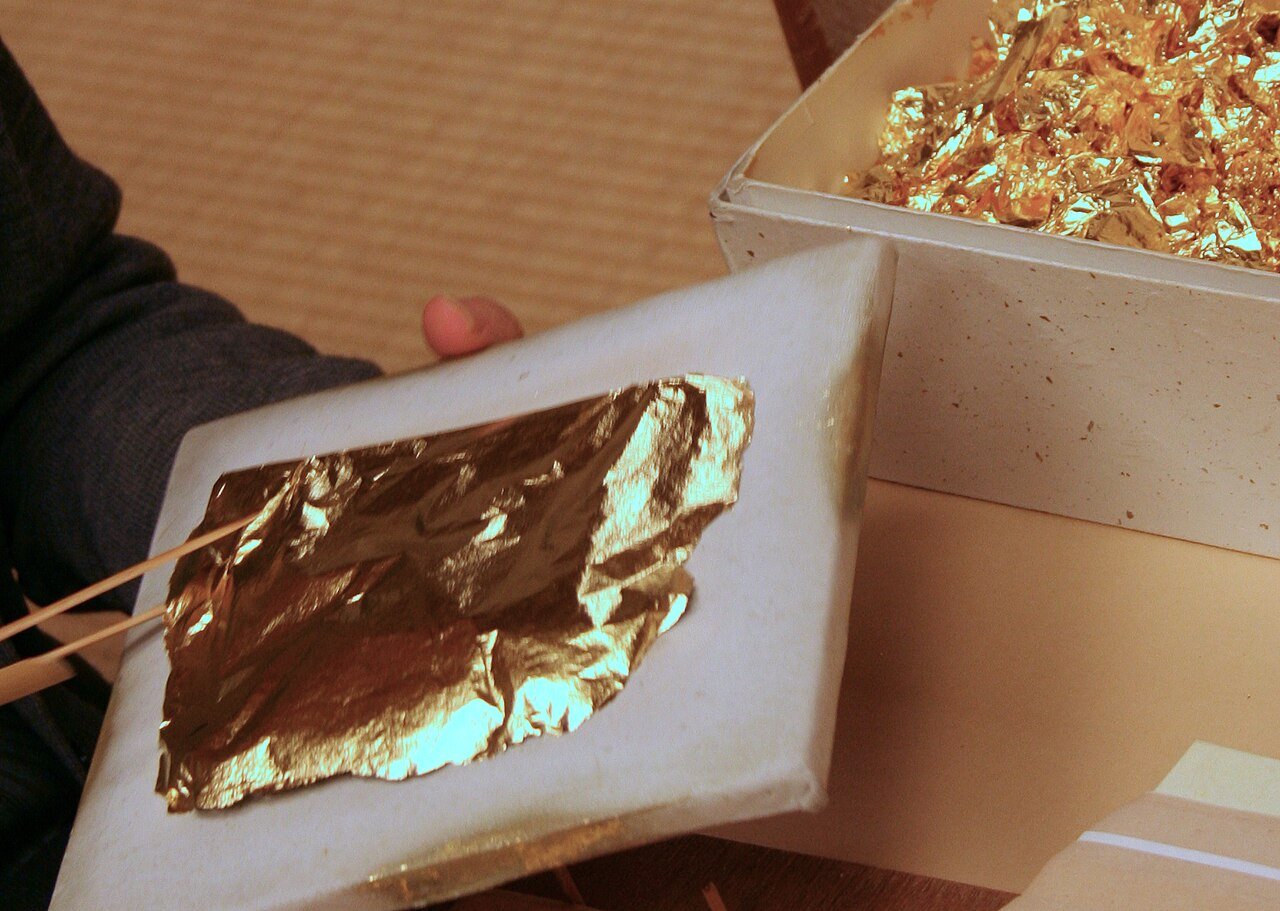
Kanazawa gold leaf (kinpaku), wafer-thin sheets of gold on paper ✨ Signature3
Kanazawa Gold Leaf
Kanazawa Gold Leaf · Kinpaku

Kanazawa makes around 99% of all gold leaf in Japan, sheets hammered to roughly one ten-thousandth of a millimetre — a craft handed down since the Edo period. In this district you can try the soft-serve ice cream wrapped in a whole sheet of gold leaf that's become Kanazawa's signature image, alongside gilded lacquerware, cosmetics, and souvenirs. Some shops run workshops where you apply the gold leaf yourself.

🍦Gold-leaf ice cream: about ¥800–900 · several shops on the main street
🎨Workshop: apply gold leaf to a keepsake · from ~¥1,000
🛍️Souvenirs: lacquerware, cosmetics, edible gold-leaf sheets
💡Tip: edible gold leaf has no taste, but it photographs beautifully and makes a memorable gift.
Kanazawa Food Guide →
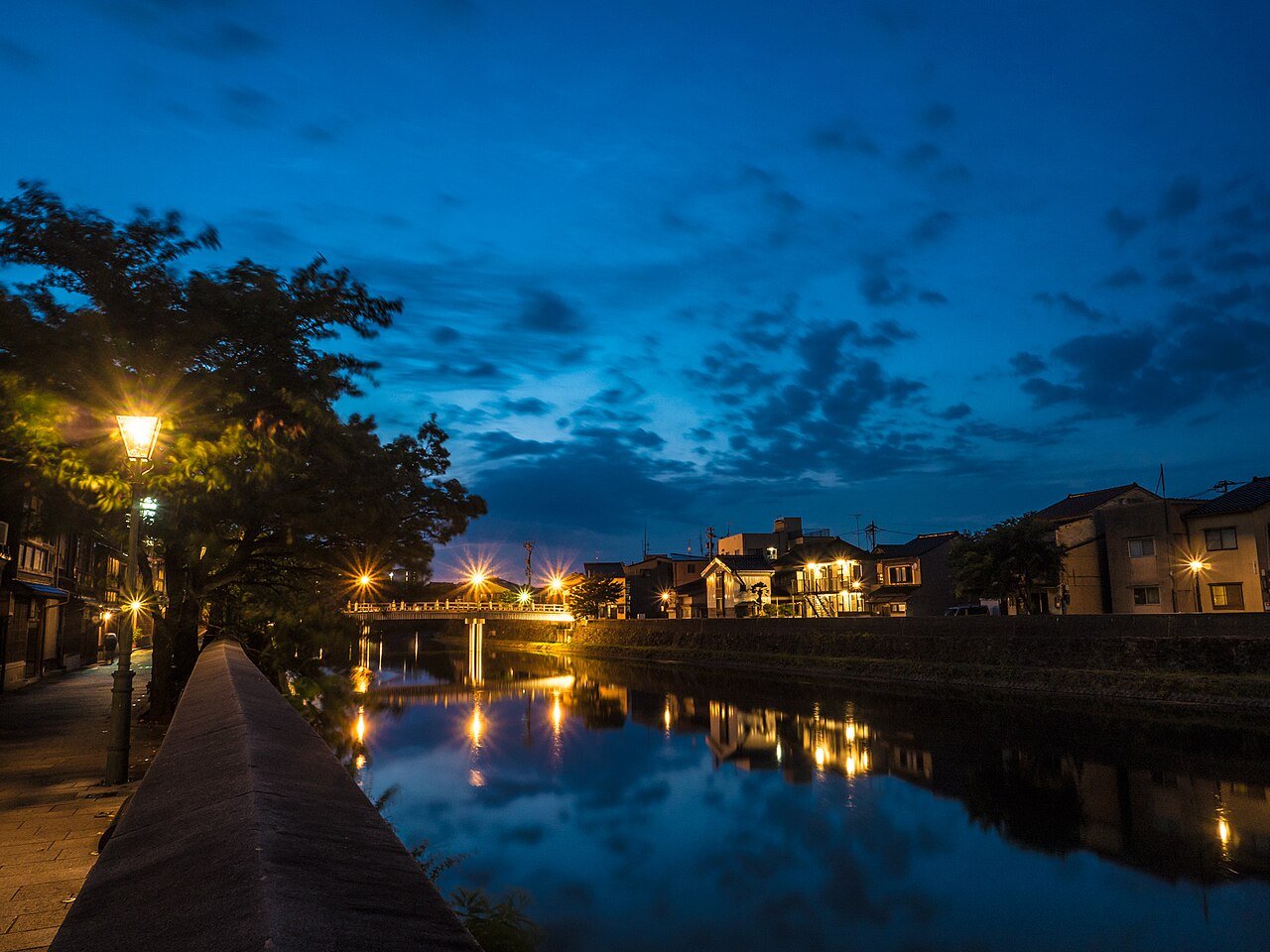
Kazuemachi district in Kanazawa along the Asano River at dusk, lanterns reflected in the water 🌊 Riverside4
Kazuemachi District
Kazuemachi Chaya District

Cross the bridge over the Asano River from Higashi Chaya and you reach Kazuemachi, another of Kanazawa's three geisha districts. It's smaller, with around 30 houses, red-latticed wooden buildings lined along the water, far fewer people, and a quiet calm. The most beautiful time is dusk, when the lanterns come on and reflect across the water — exactly like the photo here.

📍Location: along the Asano River · ~5-min walk from Higashi Chaya
🌆Best time: dusk into evening, once the lanterns are lit
🏛️Status: Important Cultural Property of Japan (registered 2008)
💡Tip: people still live here, so walk softly and keep the noise down.
Kanazawa Travel Guide →
🍵 🍡 Tea break5
Teahouse Cafés & Wagashi
Teahouse cafés & Wagashi

When your feet need a rest, settle in for matcha and wagashi sweets inside one of the old houses. Kanazawa takes its tea ceremony seriously, and its Japanese sweets are equally renowned. Many places have turned former teahouses into cafés where you sit on tatami looking out over a garden or the cobbled street, and some serve a matcha set with seasonal sweets.

🍵What to order: matcha + wagashi · gold-dusted ohgon coffee
💴Price: a tea-and-sweet set around ¥700–1,500
🪑Setting: sit on tatami in an old house overlooking a garden / the street
💡Tip: the popular spots have long queues in the afternoon — go mid-morning or near closing for an easier seat.
Kanazawa Food Guide →
🌉 🚶 The link6
Asano River & Bridges

The Asano River (Asanogawa) runs between Higashi Chaya and Kazuemachi; locals call it the "feminine" river for being gentler than the other one, the Saigawa. Asanogawa Ohashi bridge and the smaller riverside bridges are the photo spots that frame the wooden houses on both banks in a single shot. A relaxed walk along the water links the two districts with ease.

📍Location: between Higashi Chaya and Kazuemachi
📷Photo spot: from the bridge, with wooden houses on both banks
🌿Setting: a quiet riverside stroll · lovely autumn foliage
💡Tip: use the river as your axis — Higashi Chaya on one side, Kazuemachi on the other, both in one loop.
Kanazawa Travel Guide →
Eat & Drink in the District

In Higashi Chaya,What Should You Try?

The food here is tied tightly to the city's culture — gold leaf, tea, and Japanese sweets. For a proper meal, walk on to Omicho Market or open our Kanazawa food guide.

THE SWEET TO TRY
Gold-Leaf Ice Cream

Kanazawa's signature image — a soft-serve wrapped in a whole sheet of gold leaf, around ¥800–900. The edible gold has no taste, but it photographs beautifully and is hard to find elsewhere. Several shops on the main street sell it; just pick one with a short queue.

SIT IN AN OLD HOUSE
Matcha & Gold-Dusted Coffee

Step into Kaikaro or a café set in a former teahouse and order a matcha-and-wagashi set by the season, or an ohgon coffee dusted with gold leaf on top. Sit on tatami looking out over the inner garden — it's a rest stop that suits the mood of the district perfectly.

WANT A REAL MEAL
Walk On to Omicho Market

This district leans toward sweets and cafés. If you're properly hungry, Omicho Market isn't far, with sushi, seafood rice bowls, and fresh Kanazawa seafood. Open our food guide to scout the best stalls before you go.

🍶 Want to know what to eat across the whole city: Kanazawa is famous for its seafood, sushi, and Japanese sweets — open our Kanazawa food guide for recommended spots across Omicho, Kenroku-en, and Higashi Chaya.
Where to Stay

Where to Sleep for an EasyHigashi Chaya Stroll

Higashi Chaya itself has little accommodation. Most people stay near Kanazawa Station (most convenient) or close to Kenroku-en, then take a bus to the district — about 10 minutes.

🚉
Around Kanazawa Station
The most convenient transport hub, with hotels at every level and easy buses to Higashi Chaya and Kenroku-en — ideal if you're touring several cities.
🌳
Near Kenroku-en
In the heart of the old city, within walking distance of Kenroku-en Garden, the castle, and the samurai district — quieter than the station area.
🏮
A Ryokan in the City
For a traditional Japanese feel, Kanazawa has ryokan and guesthouses in old houses, some close to the chaya districts.
🏨 Find a place in Kanazawa: browse stays at every level in our Kanazawa travel guide, or open 10 hotels near Kanazawa Station · or search and compare prices directly on Agoda — Kanazawa hotels →
Map

Higashi Chayaon the Map

You can see clearly that Higashi Chaya and Kazuemachi sit on opposite banks of the Asano River, a bridge apart — the Shima teahouse and the gold-leaf shops are on the district's main street.

Tips Before You Go

6 Things That Make Higashi ChayaEasy & Worth It

🌅
Come Early for an Empty Street
Before 10am it's still quiet, so you can photograph the cobbled street and wooden houses with no one in the way. From afternoon into evening it gets far busier.
🚶
You Can Walk the Whole District
It's small — about a 5-minute walk from Higashi Chaya across the bridge to Kazuemachi. No car needed; leave time for a riverside stroll.
📷
Respect the Residents
People still live here and geisha still work here. Don't enter private areas, and if you spot a geisha, don't chase them for close-up photos.
🌆
Save an Evening for Kazuemachi
Riverside Kazuemachi is loveliest at dusk when the lanterns are lit. If you have time, come back for a separate evening walk for a different mood.
💴
Carry Cash & an IC Card
Some small shops take cash only, so keep coins and small notes handy. Bus fares can be paid with an IC card (Suica/ICOCA).
🗓️
Check the Teahouse Closing Days
Kaikaro is usually closed on Wednesdays, and opening days can shift for events or seasons. Check the official site if you plan to go inside a teahouse.
Related Guides

Keep Exploring Kanazawa — Garden, Castle, Food, and Prep

🏯

Kenroku-en & Kanazawa Castle

One of Japan's three most beautiful gardens, plus the castle, the 21st Century Museum, and the samurai district — easy to pair with Higashi Chaya in one day.

Kenroku-en & Castle →
🏮

Kanazawa Travel Guide

The whole city at a glance — where to stay, what to see, what to eat, how to get around, and a full Kanazawa itinerary.

Kanazawa Guide →
🍣

Kanazawa Food Guide

Sushi, Omicho Market seafood, Japanese sweets, and gold-leaf treats — the best spots across the city, hand-picked.

Kanazawa Food Guide →
⛩️

Kanazawa Attractions

All of Kanazawa's standout sights in one place — from gardens and old houses to markets and museums.

Kanazawa Attractions →
🏨

Hotels Near Kanazawa Station

10 well-placed stays around the station with easy transport and quick buses to Higashi Chaya and Kenroku-en.

10 Hotels Near the Station →
ℹ️

Japan Travel Prep

Visa · eSIM · IC cards · JR Pass · yen · power plugs · Japanese etiquette — everything before you fly.

Travel Prep →
Frequently Asked Questions

Questions AboutHigashi Chaya

What is Higashi Chaya?
Higashi Chaya-gai is the largest of Kanazawa's three geisha districts, set in the Higashiyama area along the Asano River. It's a cobbled street lined with two-storey Edo-era wooden buildings fronted by fine wooden lattice windows (kimusuko). Geisha still work here today, a couple of the teahouses are open to visitors, and the district is registered as an Important Cultural Property of Japan.
Can you go inside the teahouses in Higashi Chaya, and how much is it?
Two main teahouses are open to visitors. Ochaya Shima, built in 1820 and preserved as a museum, costs about ¥500 and is open 09:00–18:00 daily. Kaikaro, which still operates as a working teahouse, costs about ¥750 and is open 10:00–17:00 (last entry 16:30), usually closed on Wednesdays. Prices and hours can change, so check the official site before you go.
What is Kanazawa gold leaf, and why try it?
Kanazawa produces around 99% of all gold leaf (kinpaku) in Japan, a craft handed down since the Edo period because the city's climate and water suit hammering gold down to roughly one ten-thousandth of a millimetre. In Higashi Chaya you'll find gilded foods and souvenirs — most famously a soft-serve ice cream wrapped in a whole sheet of gold leaf for about ¥800–900 — plus gold-leaf lacquerware and cosmetics.
How do you get to Higashi Chaya from Kanazawa Station?
From the East Exit of Kanazawa Station, take a bus from platform 7 on a route via Hashiba-cho, get off at the Hashiba-cho stop, then walk about 5 minutes — roughly 7 minutes in total, fare about ¥200. Alternatively the Kanazawa Loop Bus (right loop) takes about 15 minutes. From there it's an easy walk on to the riverside Kazuemachi district.
How is Kazuemachi different from Higashi Chaya?
Kazuemachi is another of Kanazawa's three geisha districts, on the opposite bank of the Asano River and very close to Higashi Chaya — you cross a bridge to reach it. It's a smaller district of around 30 houses, quieter and less crowded, with red-latticed wooden buildings lined along the water. It's especially lovely at dusk when the lanterns come on, ideal if you want a calmer geisha-district atmosphere.
How long should you spend in Higashi Chaya, and when's the best time to visit?
Strolling and taking photos, stepping into one teahouse, and stopping for gold-leaf treats and souvenirs takes about 2–3 hours, which is plenty. Mornings before 10am are quietest, so the cobbled street photographs beautifully with few people around, while dusk is the time to walk riverside Kazuemachi. It pairs easily with Kenroku-en Garden and Kanazawa Castle in a single day.
Ready to Explore Kanazawa?

Plan Your Kanazawa Trip
and Book a Well-Placed Stay

Higashi Chaya pairs easily with Kenroku-en Garden and Omicho Market for a relaxed day. Open the city guide for the full itinerary, or start looking for a well-placed stay around Kanazawa Station.

🔴 Book a Kanazawa Stay Kanazawa Guide