6 things to eat before you leave Kanazawa
Ranked by how uniquely Kanazawa each one is — these are not dishes you will find anywhere else quite like this.
 1
1
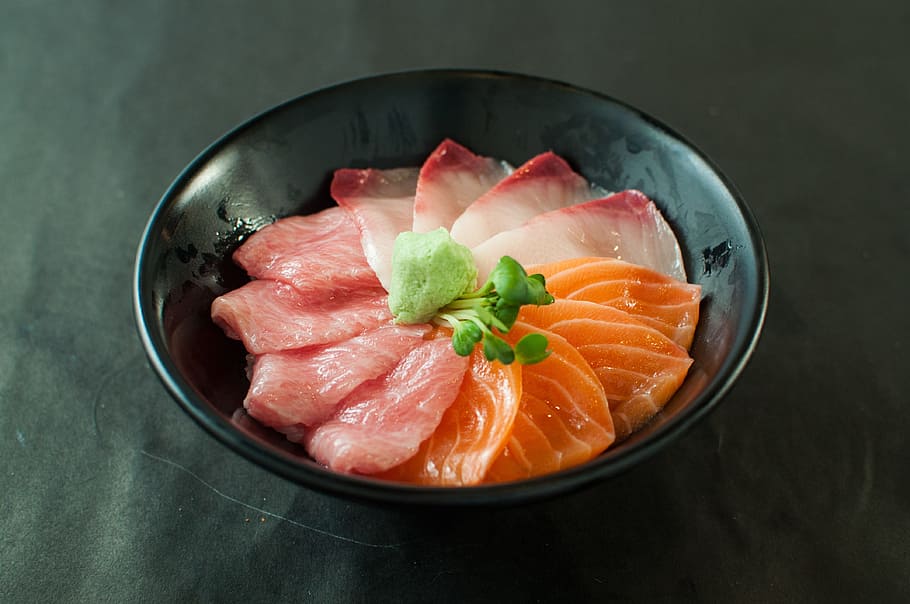
The kaisen-don at Kanazawa really is different — the fish landed a few hours ago, not yesterday, not from Tsukiji. More than a dozen rice-bowl restaurants ring Omicho Market, and the best ones change their daily toppings based on what arrived that morning. You might find nodoguro (blackthroat seaperch), amaebi (sweet shrimp), snow crab legs, botan shrimp and uni (sea urchin roe) piled over a bowl of warm short-grain rice. Budget ¥2,000–4,000 for a proper bowl, which is still significantly less than you would pay for the same quality at a Tokyo sushi counter. The honest tip: arrive between 09:30–10:00 before tour groups descend. By 11:30 the queue is long and the premium toppings start running out.
 2
2
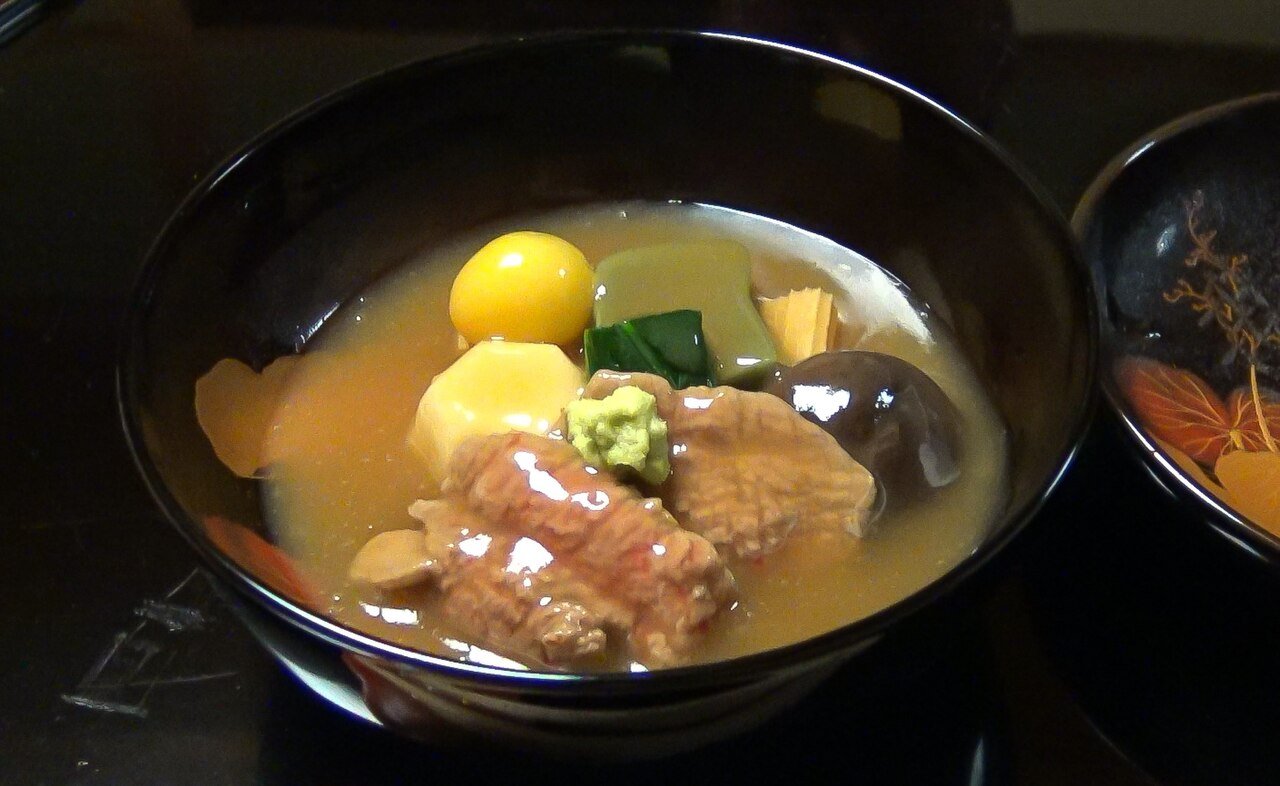
Picture this: the Maeda clan ruled Kanazawa for over two centuries during the Edo period, spending lavishly on arts, crafts and — food. Jibuni is what survived. Duck slices are dredged in flour, then simmered in a broth of dashi, mirin, soy and sake until the liquid turns glossy and the duck is tender all the way through. The dish is always served with kuruma-fu — a round, egg-yellow baked wheat-gluten cake that drinks up the broth — along with shiitake mushrooms, mitsuba (Japanese parsley), and sometimes burdock root. The flour on the duck thickens the broth just slightly, giving each spoonful a silky weight. Eat it with plain white rice on a cold evening and you will understand immediately why Kanazawa is proud of this bowl.
Nodoguro translates literally as "black throat," named for the dark interior of its mouth. Its other name, Rosy Seabass, suits the pink glow of the flesh better. The fat content is unusually high for a white-fleshed fish — Japanese food writers call it "the otoro of white fish" — and when you taste it, either as silky sashimi or grilled whole with just salt (shioyaki), the comparison makes sense: a sweet, buttery richness that coats the mouth. Tokyo's most celebrated omakase counters fly it in from Kanazawa and the Noto Peninsula. Here, it comes off the boat and onto your plate in the same morning. Nodoguro is available year-round but peaks between October and March when cold water raises the fat content further.
Yes, oden is everywhere in Japan — but Kanazawa's version has ingredients you will not find elsewhere. The broth is made from katsuobushi and kombu, kept deliberately light and clear rather than the dark, intense stock used in Tokyo. Two items are non-negotiable in a proper Kanazawa bowl: kani-men, a round wheat-gluten cake moulded to vaguely resemble a crab, and kuruma-fu, an egg-yellow baked gluten ring that swells with broth until it is barely solid. Fresh seasonal seafood from the Sea of Japan — oysters, clams, whole fish — also goes in. The broth is so restrained that you can eat a large bowl without feeling heavy, which makes it perfect after a cold afternoon at Kenroku-en. Best season: winter (December–March), but shops are open year-round.
If you think Japanese curry is always that mild, warm-brown gravy, Kanazawa will prove you wrong. The local style is darker — almost black — because caramel, extra spices and a long reduction bring the sauce to a thick, glossy depth that clings to the rice like a slow-pouring molasses. It is served in a shallow stainless steel plate, not a bowl, with the rice mounded in the centre and sauce poured generously over. The eating implement is a fork, not a spoon, and locals usually mix as they go. Standard topping is katsu (breaded pork cutlet or chicken) fried to order on top of the pile. Go Go Curry (ゴーゴーカレー) started here in Kanazawa before expanding across Japan and is the obligatory first port of call for any visitor — the small bowl is actually very filling.
 6
6
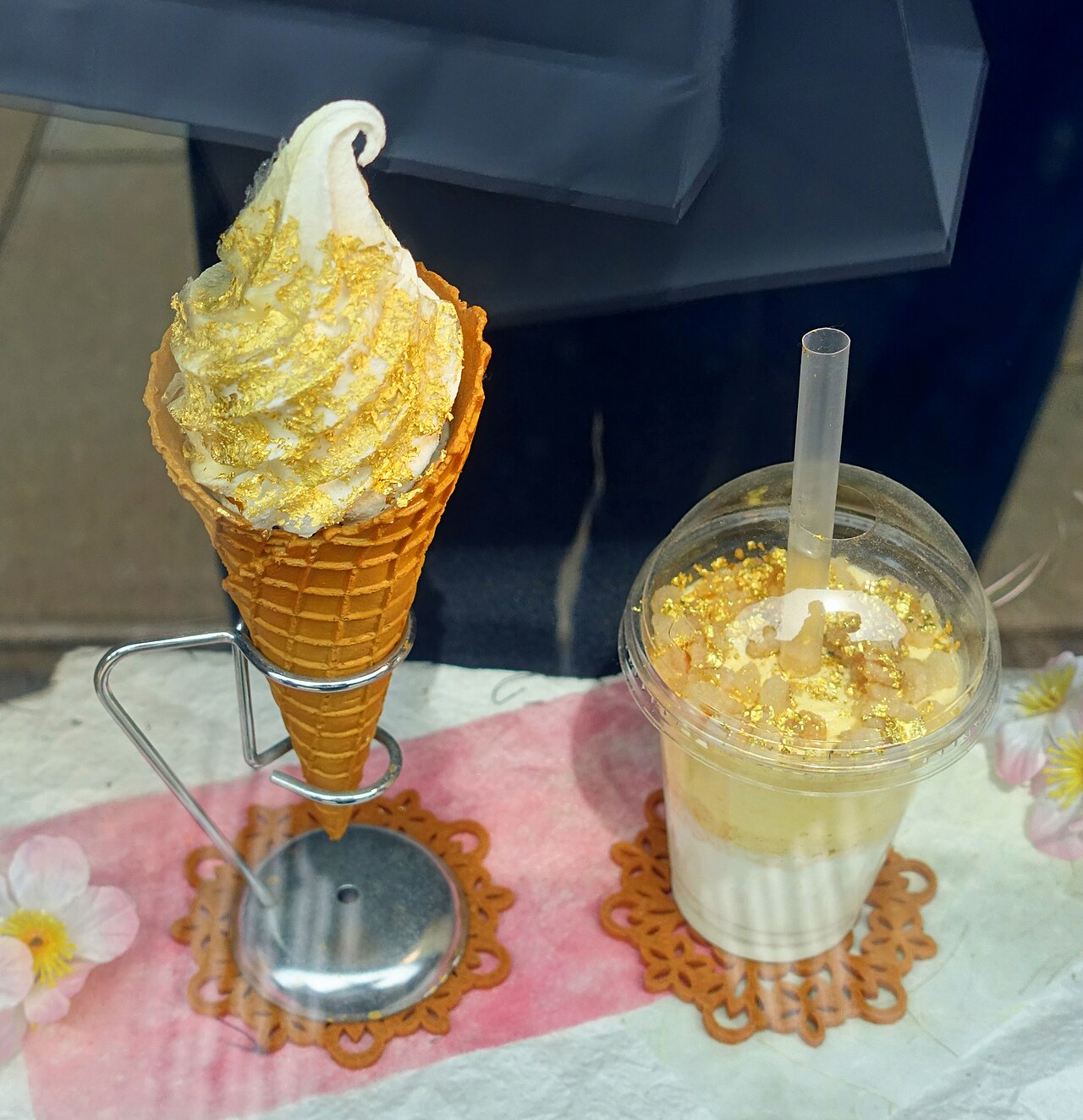
Kanazawa makes about 99% of all the gold leaf produced in Japan. The artisans here have been hammering gold into paper-thin sheets for centuries — supplying the gold for Kyoto's Kinkaku-ji, for lacquerware, for Noh costumes and ceremonial objects. At this level of thinness, gold leaf becomes food-safe: the body cannot absorb pure gold, and it has no taste, but the shimmer as you hold the cone up and the flakes catch the light is one of the more memorable sensory moments you can have in Japan for under ¥1,500. The vanilla soft-serve underneath is genuinely good — dense, cold, milky — which matters because the gold is the spectacle and the ice cream is the meal. Buy yours at the Hakuichi branch in Higashi Chaya and the backdrop of Edo-period wooden townhouses makes the photograph inevitable.