Fukuoka is the birthplace of tonkotsu ramen — milky pork-bone broth, thin straight noodles, the barikata firmness you call out yourself, and the kaedama noodle refill. Here's how the original works, where it came from, and the real shops where it's best.
Every tonkotsu shop you've ever walked into — in Tokyo, in New York, in a Bangkok food court — traces straight back to one city. Fukuoka (Hakata) is where someone first boiled pork bones hard enough, and long enough, that the broth turned thick and milky-white instead of clear. That white pork-bone soup is what the word tonkotsu (豚骨) means, and the rest of the ramen world has been chasing it ever since.
The bowl came out of necessity, not fine dining. At the old Nagahama fish market, cooks needed to feed dock and night-shift workers something fast, cheap and filling. So they used very thin straight noodles that cook in seconds, served them firm, and gave the workers the option to order a fresh portion of noodles — a kaedama (替え玉) — when the first batch ran out before the broth did. That single idea, born by the fish market, is why a Hakata bowl works the way it does.
This guide walks you through what actually makes the original tick — the broth, the thin noodles, the firmness scale from kata to harigane, kaedama, the difference between Hakata and Nagahama styles, and where the famous chains like Ichiran and Ippudo came from. Then we point you at real shops and the riverside yatai stalls where it tastes best.
From the broth and the thin noodles to barikata firmness, kaedama and the chains that took it worldwide
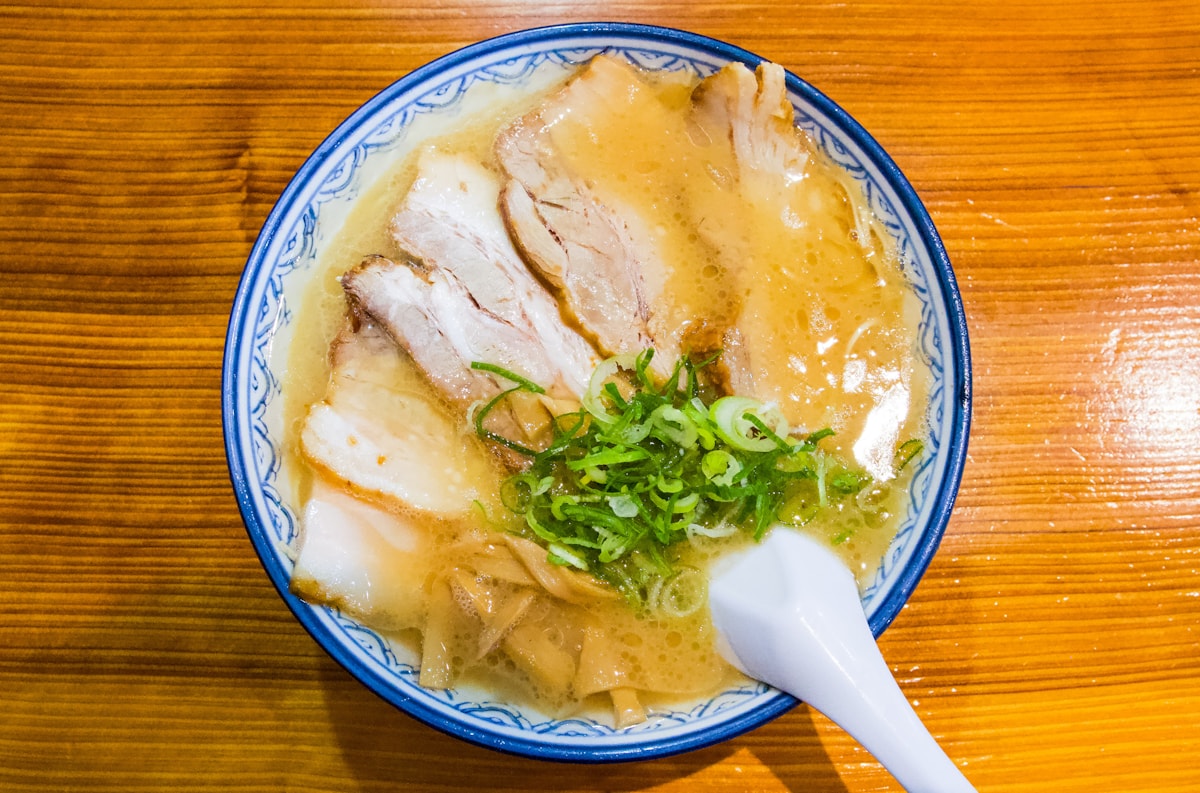
This is the whole point. Pork bones — backbone, trotters, sometimes head — are boiled hard at a rolling heat for hours, often overnight, until the collagen, fat and marrow break apart and emulsify into the soup. That's what turns it thick and milky-white instead of clear. Done right it's rich and almost creamy but not greasy, with a deep pork sweetness. A proper Hakata broth in Fukuoka is usually saltier and stronger than the toned-down tonkotsu served to tourists elsewhere.
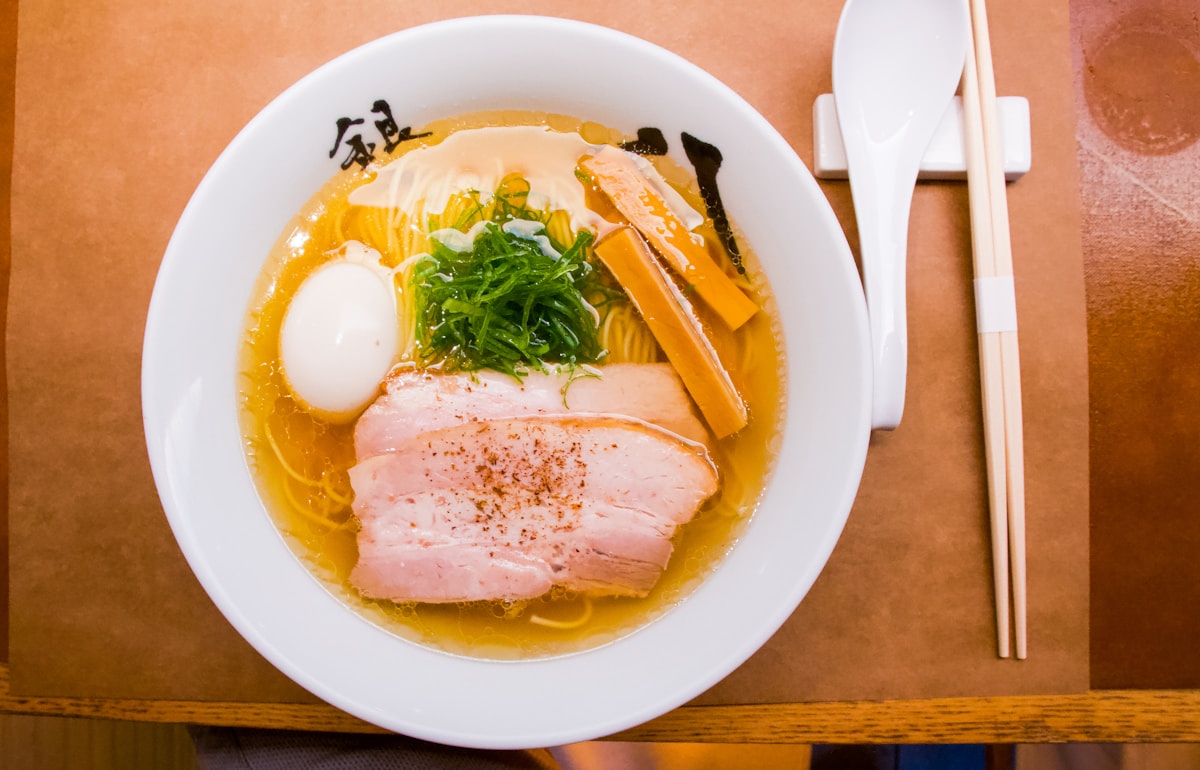
Hakata noodles are thin, straight and low in egg — nothing like the thick wavy noodles of Sapporo or the chewy ones in Tokyo. Why so thin? Because they cook in about 15-45 seconds, which is exactly what a fish-market kitchen needed. They don't hold up forever in hot broth, which is why you eat fast and why the kaedama refill exists. The thin noodle is the engine that makes the whole Hakata system run.
Because the thin noodles keep cooking in the broth, Hakata shops let you choose how firm they arrive. From soft to firm: yawa (soft) → futsuu (normal) → kata (firm) → barikata (very firm, a little bite left) → harigane (literally "wire" — barely cooked). First-timers should try kata or barikata. Harigane is for people who want them almost raw and plan to slurp fast before they soften. Say it when you order, or write it on the slip.
The Hakata invention everyone copies. Kaedama is a refill of noodles only: you finish the first batch, leave most of the broth, and order a fresh portion that gets dropped straight into your remaining soup. It started at Nagahama so workers could keep eating without buying a whole second bowl, and it costs roughly ¥100-200. Order it by saying "kaedama kudasai", and at many shops you can state the firmness again — order it barikata and you'll taste a more concentrated broth on the second round.
A Hakata bowl is deliberately plain — the broth is the star, so the toppings stay simple. Two or three slices of chashu (braised or rolled pork belly), finely sliced fresh spring onion, and often a sheet of nori and a little crushed sesame. That's usually it. You won't see the loaded toppings of other cities. If you want more, you add it yourself from the table condiments rather than ordering a busy bowl.
"Hakata ramen" is the broad city style — thin straight noodles, milky tonkotsu broth, the firmness choice and kaedama. Compared with Nagahama it tends toward a slightly richer, rounder broth and a touch more chashu and topping, the version most shops in Tenjin and around Hakata Station serve. When people say "Fukuoka ramen" to a visitor, this is usually what they mean.
Nagahama is where it began. Created at the Nagahama fish market for dock and night-shift workers who needed to eat fast, this version uses even thinner noodles cooked extra-firm, a leaner broth, and the cheapest prices of the lot — and it's the reason the kaedama refill was invented in the first place. If you want to taste the bowl closest to the original idea, find a Nagahama shop or a yatai in that district near the port.
Look at the table and you'll find the two condiments that locals use to remix a tonkotsu bowl: beni shoga (bright-red pickled ginger), which cuts the richness with a sharp acid kick, and karashi takana (spicy pickled mustard greens), which adds salt, heat and crunch. Start with a small pinch — they're strong. Knowing how to use them is the difference between eating ramen like a tourist and eating it like someone from Hakata.
The broth is unsalted on its own — the seasoning comes from the tare, a concentrated salt-and-soy base spooned into the bowl before the soup goes in. It's the part each shop guards as its recipe, and it's why two shops with similar-looking white broth taste completely different. When a counter asks "kotteri or assari?" they're letting you choose a heavier or lighter hand with the fat and tare. This unseen step is most of why a great Hakata bowl is great.
Fukuoka is the only city in Japan with a living yatai culture — over 100 mobile night stalls with 8-10 seats each, set up along the river and back streets, many of them serving tonkotsu ramen right in front of you. Eating a bowl at a Nakasu stall with neon reflecting on the Naka River, or at a no-frills Nagahama stall by the port, is the most atmospheric way to do it. Order at least one drink per person, keep bags off the stools, and bring cash — most don't take cards.
Ichiran was born in Fukuoka, and its idea is famous worldwide: you sit in a private booth, fill out a slip for broth richness, garlic, spice and noodle firmness, and never have to speak to anyone — the staff slide your bowl through a small hatch. People debate whether it's the "best" tonkotsu, but eating at the original Souhonten in Nakasu, open 24 hours, is a proper Fukuoka rite of passage and clearly fresher than the branches abroad.
Ippudo opened in Fukuoka in 1985 and became the chain that carried tonkotsu ramen out into the world — New York, London, Bangkok, Singapore and beyond. Its Shiromaru (classic) and Akamaru (with a dab of miso-garlic oil) bowls are smoother and more polished than a rough yatai bowl, which is exactly why they travelled so well. Trying Ippudo at home in Fukuoka is a neat way to taste the bridge between the fish-market original and the version the rest of the world now knows.
6 rules to know before you sit down at a riverside ramen stall — get them right and it's a night you'll remember
A mobile food stall the owner sets up fresh every night, with only 8-10 seats, a roof and a stove inside, open from roughly 18:00 until 02:00. Fukuoka is the last city in Japan where yatai still thrive, and a bowl of tonkotsu eaten elbow-to-elbow by the river is the experience this city is built on.
6 places to know — each with its own take on tonkotsu, from riverside stalls to the station's ramen hall
This is the cradle of the whole style. The old Nagahama fish market is where tonkotsu and kaedama were created for dock and night-shift workers, so the bowls here are the leanest, fastest and cheapest, with extra-thin firm noodles. The yatai near the port have a rawer, more local feel than Nakasu. If you only have time to understand one thing about Fukuoka ramen, come here and order it the way the workers did.
An island in the city centre between two rivers — the postcard image of Fukuoka. The riverside yatai line up along the bank with neon reflecting on the water, and several serve tonkotsu ramen, making this the prettiest spot for a first night. Ichiran's original Souhonten is here too, open 24 hours. Prices run 20-30% higher than Tenjin because of the location, but for atmosphere it's hard to beat.
Fukuoka's main shopping centre hides yatai in the alleys between office buildings — that's its charm. This is where office workers eat ramen after work, with a more local feel than Nakasu, cheaper prices and more interesting stalls. Hakata Shin-Shin, one of the most loved non-chain tonkotsu shops in the city, is here. A good base for both a sit-down shop at lunch and a yatai bowl at night.
In and around Hakata Station you can taste several tonkotsu shops in one place. Hakata Ichiban Gai under the station lines up multiple ramen brands, and a short walk away at Canal City is Ramen Stadium, a floor that gathers eight ramen shops from different regions so you can compare Hakata tonkotsu against styles from elsewhere in Japan. Ideal for your first day in the city, or for a bowl before catching a train out.
Walkable from Tenjin, Daimyo is the trend-led district — and a good place to find newer-wave tonkotsu and tsukemen shops alongside coffee bars and craft beer. The young chefs here play with the classic broth, so it's where you go after you've had the traditional bowls and want to see how the next generation is pushing the style. No subway needed; just walk over from Tenjin.
Just east of Nakasu around the Nakasu-Kawabata and Gion stations sits the older heart of Hakata, where some of the longest-running tonkotsu shops keep their counters. It's quieter than the neon of Nakasu and less polished than the station, with the kind of small, decades-old shop where the broth recipe hasn't changed in a generation. Worth a detour if you want an old-school bowl away from the crowds.
Verified to be real · worth every minute in the queue
Ichiran's very first branch — the world-famous solo-dining tonkotsu brand — and the broth at the Souhonten in Fukuoka is clearly fresher and richer than the overseas branches. You sit in a private booth and fill out a slip for richness, garlic, spice, chashu and noodle firmness, so you never have to speak. Order kata or barikata, then add a kaedama through the slot when your noodles run out. Open 24 hours, so a 2am bowl is fair game.
The first Ippudo, in the Daimyo district — the bowl that eventually opened branches in New York, London and Bangkok. Try the Shiromaru Motoaji (the classic clean tonkotsu) or the Akamaru Shinaji, which adds a swirl of miso-garlic oil for extra depth. It's smoother and more polished than a rough yatai bowl, and tasting the original in the city where the brand was born makes the global story click.
The shop Fukuoka people recommend to each other when they want tonkotsu that isn't a chain. Shin-Shin's broth isn't extreme like some — it's balanced and rounder, so you can finish the whole bowl without feeling heavy. Thin straight authentic Hakata noodles, two slices of chashu, coarsely cut spring onion, and a ¥100 kaedama. The queue is long, but it moves, and it's well worth it.
On the 5th floor of Canal City Hakata, Ramen Stadium gathers eight ramen shops from different regions of Japan, with a rotating line-up. It's the easiest place to compare a local Hakata tonkotsu against, say, a Sapporo miso or a Kumamoto pork bowl in a single sitting — order from one shop, sit at the shared seating, then go again. Great for a rainy day or for travellers who want to taste the spread without crisscrossing the city.
Not one shop but the cluster of yatai and small counters in the Nagahama district near the old fish market — the place tonkotsu and kaedama were born. The bowls are lean, the noodles extra-thin and cooked hard, the prices the lowest of the three yatai districts, and the crowd often dock and market workers ending a shift. Order it barikata, get a kaedama, and you're eating the closest thing there is to the original. Cash only.