Honestly — Fukuoka is the city with the best food in Japan. Tonkotsu ramen was born here, riverside yatai open every night, and mentaiko (spicy cod roe) is shipped across the whole country. 12 dishes you have to try, with the real shops and the districts locals will take you to.
If you've ever eaten tonkotsu ramen anywhere in the world — a shop in Tokyo, in New York, in a Bangkok mall — all of it started here. Fukuoka (Hakata) is the birthplace of that white, thick pork-bone broth that can never be simmered long enough. Eat it in Hakata and you'll understand instantly why no other version can compete.
But Fukuoka isn't only ramen. The city has its own fishing port, so it gets mackerel so fresh that the goma saba (sesame mackerel sashimi) tastes like nowhere else in Japan can manage. It has the yatai culture — mobile food stalls along the river with only 8-10 seats, open only at night, with an atmosphere unlike anywhere else on earth. And it has mentaiko, the bright-red, fiercely spicy fish roe that, eaten over rice, is beyond description.
We picked 12 dishes that tell you what Fukuoka eats — nothing that repeats Osaka or Tokyo, ranked by how Hakata each dish is, with verified shops, real prices, and the tips that let you eat them the right way.
Ranked by how Hakata they are — from the originals to the specialities you can't find anywhere else
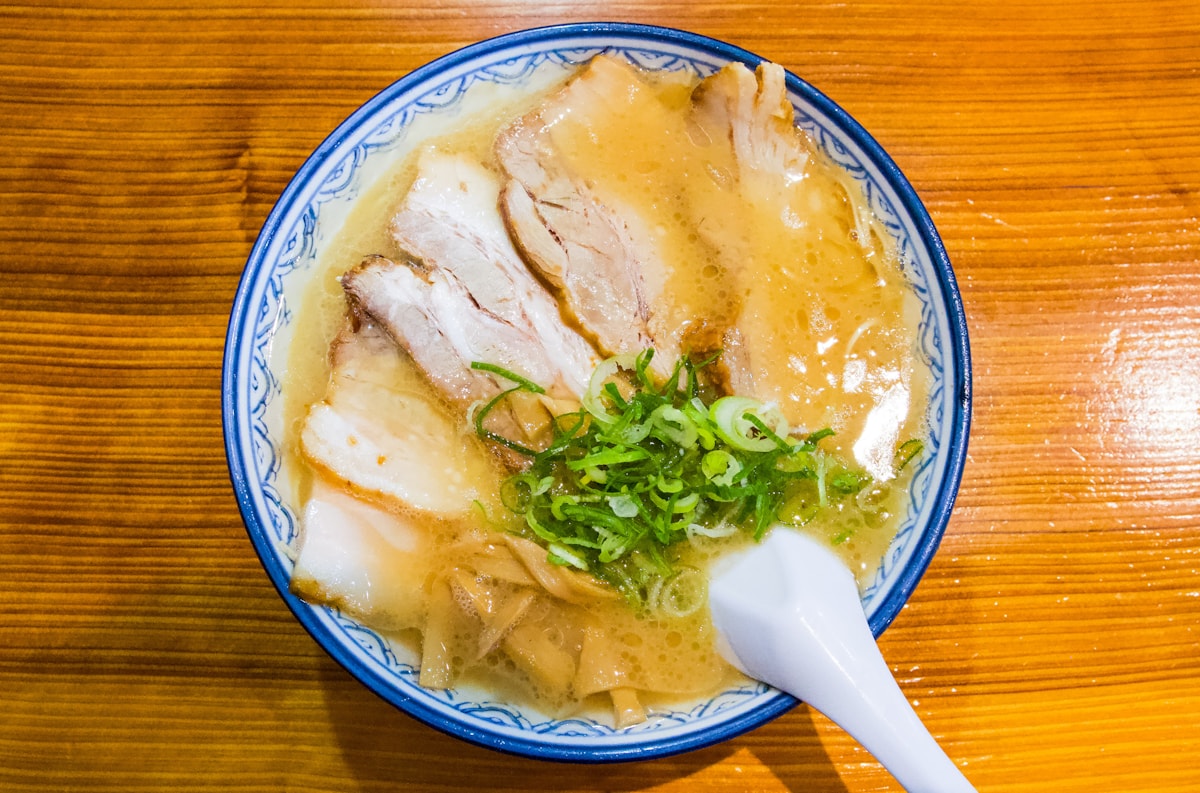
Honestly — Fukuoka is the birthplace of tonkotsu ramen. A bowl here differs from anywhere else in one thing: an overnight white broth, with pork bones simmered until all the collagen melts away, thin straight Hakata-style noodles cooked for just 45 seconds so they still have bounce, two or three slices of chashu pork, and finely sliced fresh spring onion — that's it, nothing extra. Order the noodles "kata" (firm) or "barikata" (very firm) if you like them with more bite.
If you've never eaten at a yatai, Fukuoka is the only place in Japan where it really happens. There are over 100 of them across three main districts, open only at night along the streets or the riverbank, each with just 8-10 seats, a roof and a stove right inside. You eat amid the steam and the sound of boiling water, next to people who might be company owners or tourists from elsewhere. The menus run from ramen to yakitori, oden, seafood and seasonal dishes.
Have you ever eaten hot white rice topped with mentaiko? If not, that's an experience missing from your life. Orange-red pollock roe, marinated in a spicy, salty sauce, eaten over hot steamed rice — one bowl and you're happy. Fukuoka is the city that invented this dish — the Fukuya brand created the original recipe in 1949. Today you can have it raw, grilled, in pasta, or wrapped into onigiri.
If "pork offal" doesn't sound appetising, try it first and decide afterwards. Motsunabe is the hot pot Fukuoka is proudest of after ramen — fresh pork or beef offal simmered in a shoyu- or miso-style broth with a huge amount of cabbage, garlic, spring onion and red togarashi chilli. You eat it around the table at a shop that sets up the stove for you. The offal is meltingly tender, the rich broth soaks into the vegetables, and you finish with a bowl of chanpon noodles in the leftover broth.
This dish can only exist in Fukuoka — because it needs mackerel so fresh it comes off the boat and reaches the table within the same hour. Fresh sliced mackerel sashimi, lightly marinated in soy sauce, mirin, sake, ground white sesame and sesame oil, eaten as a rice bowl (goma saba donburi) or as straight sashimi. The flavour is full-on ocean fish with no fishiness, a fragrant sesame aroma, and a faint sweetness from the mirin — the best seafood in this city.
If motsunabe is intense winter food, mizutaki is elegance — a Hakata chicken hot pot simmered in a chicken stock until the broth turns a soft creamy white, with fresh pieces of chicken, tofu and leafy greens, eaten with a mild-sour ponzu dipping sauce and white sesame. The traditional way is to drink the broth first, then eat the chicken, and finish with zosui rice porridge in the leftover broth. A meal that fills you up cleanly.
Hakata gyoza are served in a screaming-hot iron skillet — the whole pan, not a ceramic plate — and that's the difference. Minced pork filling with ginger, garlic and finely chopped cabbage, wrapped in a thinner-than-standard skin and fried in the iron pan until the bottoms turn crisp like a bread crust. Eat them dipped in vinegar and chilli oil — you can finish a whole pan without realising. Hakata gyoza are usually smaller and fried drier than Tokyo's.
Something most people don't know: before Fukuoka became famous for ramen, people here ate udon first — and Hakata udon is clearly different from Sanuki udon (the Kagawa style). Hakata udon noodles are softer, smoother and soak up more broth; they don't aim for the "bounce" of Sanuki. The broth is clear, made from kombu and fish, a pale gold colour. The most distinctive toppings are kitsune (sweet fried tofu) or gobou ten (burdock root tempura). A dish that looks simple but, once you eat it, shows care in every part.
A dish invented in Fukuoka that you can barely find anywhere else — tonkotsu ramen noodles stir-fried on a screaming-hot iron griddle with minced pork, vegetables and Worcestershire sauce, finished with a splash of tonkotsu broth instead of water. The result is stir-fried noodles with the smoky scent of hot iron — not a soup, not ordinary fried noodles, somewhere between the two. It's believed to have started at a yatai in the Nagahama district, from a chef experimenting to create a new dish out of the ingredients on hand.
The best example of Japanese fusion that actually makes sense — spaghetti (or linguine) tossed with raw mentaiko, butter, soy sauce and crushed dried seaweed, stirred while hot so the roe melts and coats the strands. The flavour is a mild salty cream, faintly spicy, with the pretty pink-orange colour of mentaiko. It's a dish invented in Tokyo but built on Fukuoka's signature ingredient. In Fukuoka there are many mentaiko pasta shops using fresh roe from the local market.
Fukuoka is the birthplace of Akiyoshi — the largest yakitori chain in Japan — but the best is still found at small shops and yatai that grill each skewer right in front of you. Negima skewers (chicken and spring onion), tsukune (chicken meatballs), torikawa (crispy chicken skin) — eaten with a draft Asahi or Sapporo beer at a night-time yatai. Choose tare (sweet soy) or shio (salt) as you like. At most yatai, skewers run ¥100–200 each; pick several and it's a lot of fun shared with friends.
Fukuoka has its own port, and Yanagibashi Market calls itself "the kitchen of Fukuoka" — fish, shellfish and shrimp arrive every morning. The kaisen-don here is hot white rice topped with uni (sea urchin roe), salmon sashimi, tuna, shrimp and ikura (salmon roe); some shops add goma saba too. Eat it as a lunch at Yanagibashi Market or at a kaisendon shop near Hakata Station. If you're going to eat seafood, this is the most worthwhile meal of all.
6 rules to know before you sit down — get them right and it'll be a night you remember for life
A mobile food stall that the owner sets up fresh every night, with only 8-10 seats, a roof and a cooking stove inside, open from roughly 18:00 until 02:00. It's an institution that survives in Fukuoka because yatai have disappeared everywhere else in Japan.
6 districts and markets to know — each with its own personality and dishes
An island in the city centre sitting between two rivers — most people know it as the nightlife district, but in truth the riverside yatai at Nakasu are the prettiest image of Fukuoka. Neon lights from the stalls reflect on the Naka River, the yatai line up in a long row along the bank, perfect for photos and perfect for a first night when you want the atmosphere. That said, prices at Nakasu are usually 20-30% higher than Tenjin because of the beautiful location.
The centre of Fukuoka and the main shopping district, but it hides yatai in the alleys between office buildings and department stores — that's the charm Tenjin has over the rest. The yatai here are where office workers come to eat after work, with a more local atmosphere than Nakasu, cheaper prices and often more interesting menus. The Showa-dori area in Tenjin has several good yatai, including Kokinchan, which is believed to have invented yaki ramen.
Beneath and around Hakata Station there's a very complete food zone — Hakata Ichiban Gai (under the station) has multiple ramen brands, Deitos in the basement is for takeaway food, and Kitte Hakata has both sit-down restaurants and a food court. Ideal for your first day in the city or before catching a train out, including Ramen Stadium in nearby Canal City, which gathers 8 ramen shops from different regions.
A fresh market that calls itself "the kitchen of Fukuoka," because this is where chefs and home cooks come to buy ingredients from early morning — fresh fish, shrimp, vegetables, mentaiko and seafood from the port. Open from the early hours, closing in the afternoon, with the atmosphere of an old-style fresh market, not a tourist spot. You can buy fresh goma saba, mentaiko or fresh food to take away here at prices far below the department stores.
The Daimyo district is the Brooklyn of Fukuoka — specialty coffee shops, craft beer bars, Italian restaurants using mentaiko as a signature, Asian-fusion eateries and bakeries from young owners who've just come back from abroad. You can walk here from Tenjin, no subway needed, and it's ideal for lunch, an afternoon coffee, or a Saturday night when you want something beyond the yatai.
The district where fishermen and dock workers come to eat after the late shift — the yatai at Nagahama are famous for ramen especially, with a stronger "kaedama" culture than other districts, the cheapest prices of the three main yatai districts, and a rawer atmosphere. If you're only here for 2-3 days but want a more genuinely local yatai experience than Nakasu, come to Nagahama.
Verified to be real · worth every minute in the queue
Ichiran's very first branch — the world-famous solo-dining ramen brand — but the flavour at the Souhonten in Fukuoka is clearly fresher and richer than other branches. You sit in a private booth and fill out a form for richness, meat and noodles — no need to talk to anyone. Open 24 hours, so you can come even at 2am. Eat here and you'll understand why the branches back home can't match the original.
The shop Fukuoka locals recommend to each other when they say "if you're going to eat ramen that isn't a chain" — Shin-Shin uses a tonkotsu broth that isn't extreme like Ichiran's but more balanced, softer, and you can finish the whole bowl without feeling too heavy. Thin straight authentic Hakata noodles, 2 slices of chashu pork, coarsely cut fresh spring onion, nothing extravagant. The queue is long but well worth it.
A mizutaki shop that has dominated the Fukuoka market for decades — 10 branches across the city, but the Hakata Ekimae branch is closest to the station. A white, thick chicken broth simmered a long time, which you drink first before eating the chicken, followed by vegetables and tofu, finishing with zosui rice porridge in the leftover broth. Good service, with an English menu — booking ahead is recommended for dinner.
Fukuya invented karashi mentaiko in 1949 — the owner, Kawahara Toshio, brought a fermented fish-roe recipe from Korea and developed it into a Japanese dish. The main shop is in Nakasu, with a branch at Fukuoka Airport, offering mentaiko at many price levels and many flavours (raw, grilled, very spicy, mild), as well as canned mentaiko pasta sauce to take home.
The yatai believed to have invented yaki ramen (iron-griddle stir-fried ramen) — naturally famous enough to draw a long queue, but worth the wait. An old-style yatai atmosphere, a chatty owner, and they'll take solo diners. Eat yaki ramen here and you'll understand why it was invented and why it has lasted.