Home Bangkok Chiang Mai Thailand About
Home  ›  Asia  ›  Thailand  ›  Bangkok vs Chiang Mai
Which Thai City First · 2026

Bangkok or Chiang Mai
which one first?

Big-city energy or the laid-back North — two very different sides of Thailand. Here is how to choose, before you book.

The dilemma

Two cities, two sides of Thailand

You've decided on Thailand — and then you stall on the booking page, unsure whether to land in Bangkok or fly straight to Chiang Mai. Almost everyone planning a Thai trip hits this exact wall, and there isn't one right answer, because these two cities run at genuinely different speeds.

Bangkok is the high-energy capital — the Grand Palace and Wat Phra Kaew, Wat Pho, Wat Arun, Chatuchak market, Chinatown (Yaowarat), big malls, riverside rooftop bars, and food at every level from a roadside cart to a Michelin table. This is the city that has everything, and it's the country's main gateway. Chiang Mai is the easygoing North — old-city temples, Doi Suthep and Doi Inthanon, cooking classes, ethical elephant sanctuaries, and a deep cafe and digital-nomad scene. It's cheaper, slower and gentler.

Here's the part most people miss: the two cities are only about a 1h15 flight apart, or an overnight sleeper train. So for many travellers the best answer isn't "which city" — it's "do both". This guide compares them honestly across every factor, then shows you how to fit both into a single trip.

Quick verdict

The short answer, before the detail

If you need to decide right now

Here for big-city buzz / temples, markets, malls, rooftops and nightlife Choose Bangkok — the Grand Palace, Wat Pho, Wat Arun, markets, malls and rooftop bars, with food at every level. No other Thai city packs in this much. Cross town all day on the BTS and MRT.
Here to slow down / old-city temples, mountains, cafes, a cooking class, elephants Choose Chiang Mai — the relaxed North, with old-city temples, Doi Suthep, Doi Inthanon, plenty of cafes, and cool, comfortable weather in the cool season. Easier on the wallet, too.
Bangkok · The Capital

The high-energy capital, the city that never sleeps
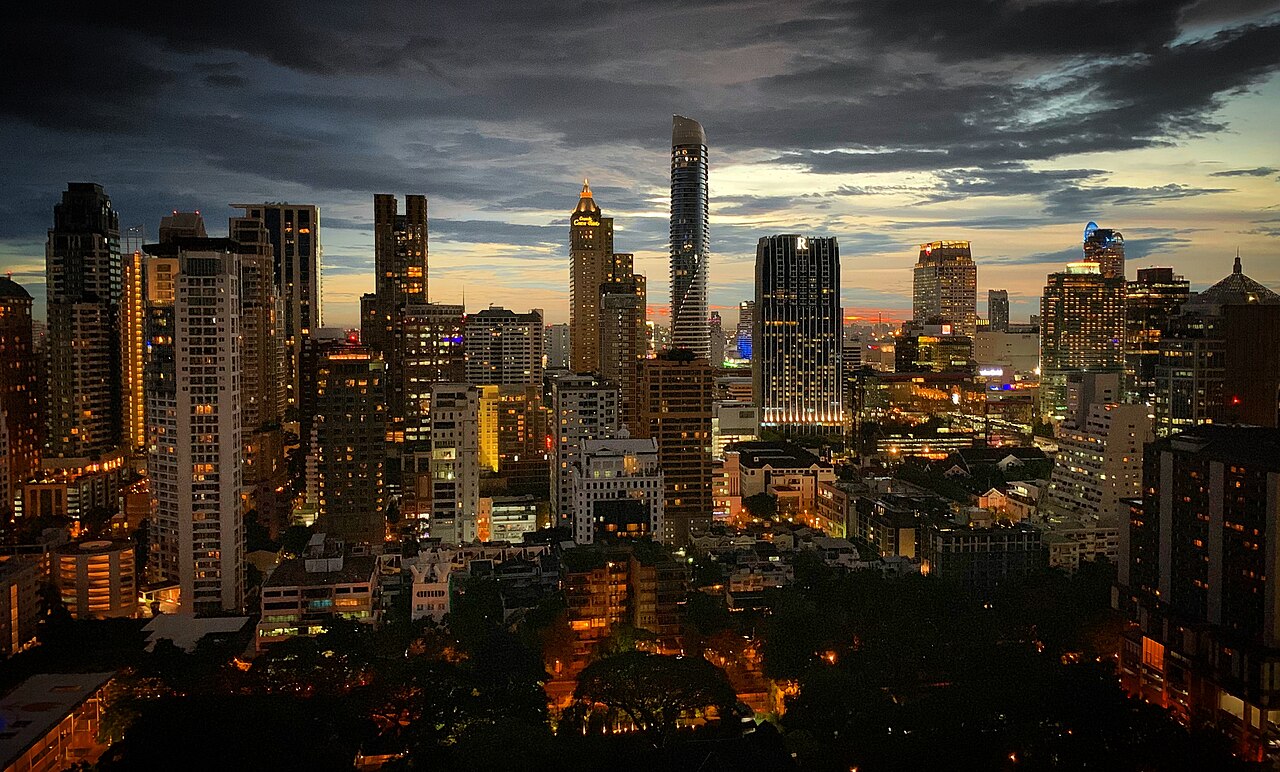
The Bangkok skyline at night seen from a rooftop bar, with high-rise towers and city lights

Bangkok is the city that puts everything in one place — the Grand Palace and Wat Phra Kaew, the historic heart of the nation; Wat Pho with its giant Reclining Buddha and home of traditional Thai massage; Wat Arun, the river-temple that glows at sunset; Chatuchak, the largest weekend market in Thailand; and Yaowarat, the legendary Chinatown street-food strip.

But the real draw is the city's relentless energy. The BTS Skytrain and the MRT metro carry you across town all day without hitting the traffic, Chao Phraya express boats glide you past riverside temples, and the rooftop bars serve a drink with a city-wide night view. Add huge malls like ICONSIAM and Siam Paragon, then finish with food at any level — from a street cart to a Michelin kitchen. The longer you stay, the more it keeps giving you to do.

Pros & cons
The only Thai city with rail — BTS + MRT + boats let you skip the traffic
Wat Phra Kaew · Wat Pho · Wat Arun: the nation's most iconic temples
Food at every level, from Yaowarat street stalls to Michelin, open late
Chatuchak market, big malls and rooftop bars with city views
A lively, varied nightlife — pick the neighbourhood that suits you
The main gateway: most flights land here, easy onward connections
Hot and humid most of the year; heavy traffic at rush hour
Busy, crowded and loud — not for travellers wanting quiet downtime
Central-area stays and upscale dining cost more than Chiang Mai
Nature and mountains mean a trip well out of the city
Where to start · Bangkok

Start planning the Bangkok side

🛕
Grand Palace + Wat Pho + Wat Arun
The headline sights · three river temples in a day

These three are the main reason people come to Bangkok. Read our full attractions guide for opening hours, ticket prices, the dress code, and how to link all three by boat before you plan your trip.

All Bangkok attractions →
🍜
Yaowarat + Bangkok food
For food lovers · street to Michelin, every area

Bangkok is a food lover's city. Start with our food guide for the best Yaowarat spots, street markets and signature dishes by area, with how to reach each one by BTS and boat.

Bangkok food guide →
Chiang Mai · The North

The laid-back North, temples, mountains and cafes

Chiang Mai is the city that asks you to slow down. The old city — a square moat ringed by Lanna temples like Wat Chedi Luang and Wat Phra Singh — is easy to wander in a day. Doi Suthep is the mountain temple that looks out over the whole city, Doi Inthanon is the highest peak in Thailand, and the cafe scene, with its digital-nomad community, spreads across town, concentrated around the Nimman (Nimmanhaemin) district.

The appeal here is the gentler pace, the cool-season weather, and things to do that lean into nature and culture — a half-day northern Thai cooking class, an ethical elephant sanctuary where you bathe and feed the elephants rather than ride them, the Sunday Walking Street market, and a bowl of original khao soi. And all of it in a city that's clearly easier on the wallet than Bangkok.

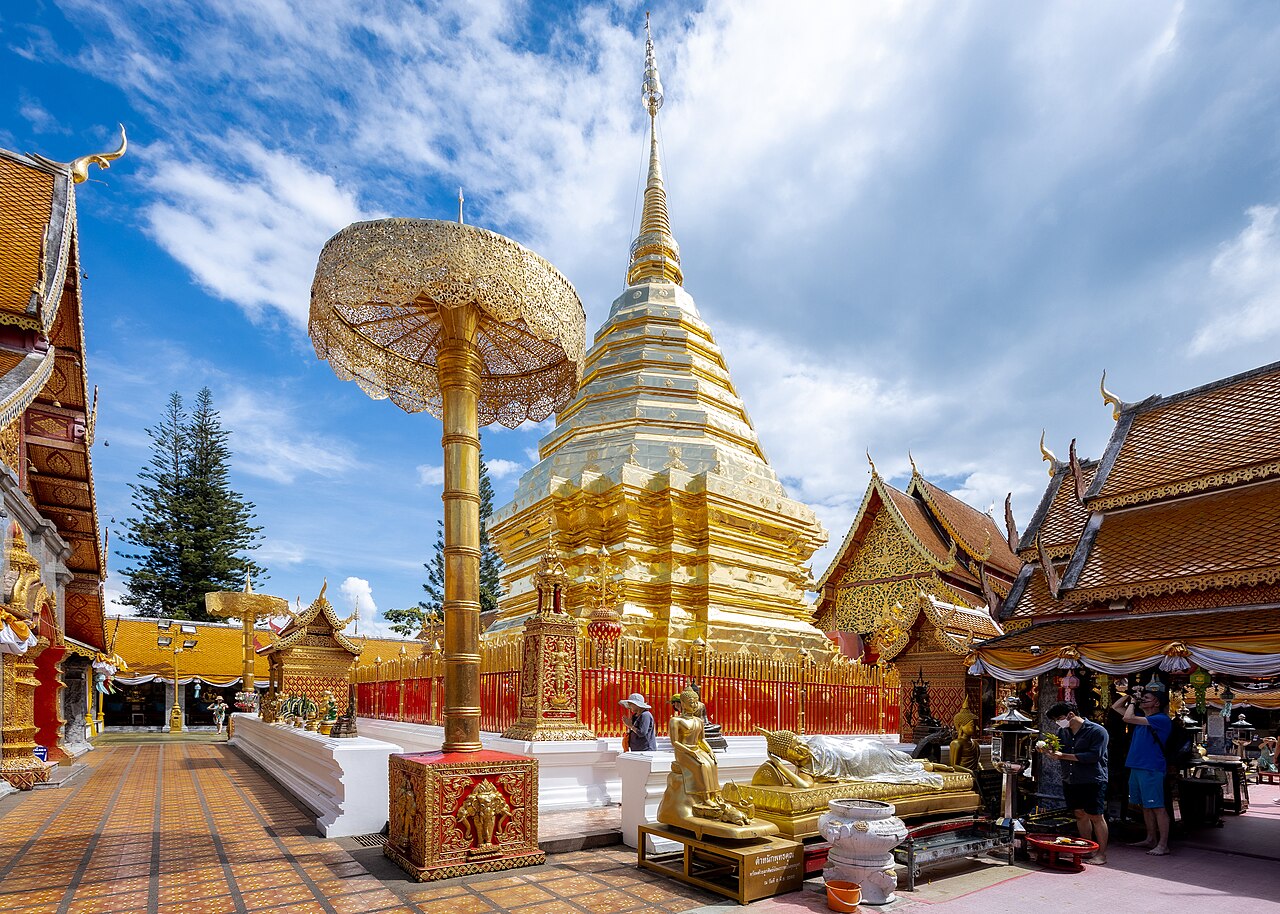
Wat Phra That Doi Suthep in Chiang Mai — a golden chedi on the mountain overlooking the city below
Pros & cons
Slow, easy and relaxed — ideal if you actually want to unwind
Old city inside the moat, with Lanna temples walkable in a day
Mountains and nature near the city — Doi Suthep, Doi Inthanon, waterfalls
Northern cooking classes + ethical, no-riding elephant sanctuaries
A strong cafe and digital-nomad scene around Nimman
Cheaper stays and food than Bangkok; cooler in the cool season
No Skytrain or metro — you rely on red songthaews, Grab or a scooter
Burning season around Mar–Apr brings heavy haze and dust; avoid it
Nightlife and malls are much smaller than Bangkok's
Fewer direct international flights — most connect via Bangkok
Where to start · Chiang Mai

Start planning the Chiang Mai side

⛰️
Doi Suthep + Old City + Doi Inthanon
The headline sights · mountain temple + old-city Lanna

The heart of Chiang Mai is in this set of sights. Read our full attractions guide for hours, ticket prices, how to get up the mountain, and the best time of day to see each one.

All Chiang Mai attractions →
🐘
Elephant sanctuary + cooking class
The signature activities · book ahead on Klook

Two things first-timers in Chiang Mai shouldn't skip. Pick a sanctuary that cares for elephants without riding, and a half-day cooking class — compare options and book ahead via Chiang Mai activities on Klook.

Plan your activities →
Side by side

The full comparison, in one table

Factor Bangkok Chiang Mai
Vibe High-energy capital, busy, modern, never sleeps Laid-back North, slow, relaxed, Lanna culture
Headline sights Grand Palace · Wat Pho · Wat Arun · markets · rooftops Doi Suthep · old city · Doi Inthanon · elephants · cafes
Nature A trip out of town — Bang Krachao, city parks Mountains and waterfalls near the city; cooler in cool season
Getting around BTS + MRT + boats — the only Thai city with rail Red songthaews · Grab · scooter (no metro), but small enough to walk
Food The most varied — Yaowarat street food to Michelin, open late Northern food — khao soi, gaeng hung lay, cafes, cooking classes
Nightlife Lively, many areas — rooftop bars, clubs, night markets Easygoing — small bars, walking-street markets, the Night Bazaar
Overall budget A little higher — more central stays and upscale dining Friendlier — cheaper stays, food and cafes
Best for City lovers, shopping, food, rooftops, nightlife, first time in Thailand Slow travel, nature, culture, cafes, remote work, downtime
Weather Pleasant Nov–Feb · hot Mar–May · rainy Jun–Oct Best Nov–Feb · ⚠️ burning-season haze Mar–Apr
The decision

Choose this city if you are…

After big-city energy — temples, markets, malls, rooftops and nightlife — choose Bangkok. No other city in Thailand has this much in one place. See the Grand Palace, Wat Pho and Wat Arun, then ride the BTS and the boats to keep going all day without tiring out.
Wanting to travel slowly, close to nature and culture — choose Chiang Mai. Old-city temples, Doi Suthep, a northern cooking class and an ethical elephant sanctuary, all at a relaxed pace and a friendly price.
A cafe person or a remote worker — choose Chiang Mai. The Nimman district is full of cafes, work-friendly spots and a digital-nomad community, and the cooler air makes it easy to settle in for the long haul.
On your first ever trip to Thailand and wanting a city that has it all — choose Bangkok. It's the main gateway, with the most flights, the easiest getting around thanks to the rail network, and the simplest onward connections to everywhere else.
Travelling with six to seven days or more — do both. A 1h15 flight or an overnight train links them, so you can have both the big city and the mountain North in one trip. Read how to combine them below.
The honest answer for many

Why not do both?

✈️ Bangkok + Chiang Mai in one trip

This is what many Thailand travellers eventually figure out: you don't have to choose. The two cities are about 700 km apart, but a flight takes only around 1 hour 15 minutes, with dozens of departures a day from Don Mueang and Suvarnabhumi, and fares start low if you book ahead. If you prefer the experience, an overnight sleeper train from Krung Thep Aphiwat Central Terminal up to Chiang Mai takes roughly 11–13 hours — sleep on board and arrive in the morning.

If you have six to seven days or more, doing both is the most complete Thai trip there is — big-city energy and the easygoing North in one go. See more in our getting around Thailand guide.

START IN
Bangkok, 3 days
Do the Grand Palace, Wat Pho, Wat Arun, the markets, malls and a rooftop — the BTS and boats make it easy.
FLY OR TAKE THE TRAIN
Flight ~1h15
Fly from Don Mueang or Suvarnabhumi, or take the overnight sleeper train (about 11–13 hrs) — pick by budget and taste.
FINISH IN
Chiang Mai, 3 days
A more relaxed rhythm — old-city temples, Doi Suthep, cafes, a cooking class and an ethical elephant sanctuary.
Frequently asked

FAQ · Bangkok vs Chiang Mai

Should I visit Bangkok or Chiang Mai first in Thailand?
If you want big-city energy — the Grand Palace and Wat Phra Kaew, Wat Pho, Wat Arun, markets, malls, rooftop bars, nightlife and food at every level from street stalls to Michelin — start in Bangkok. It has everything and is the main gateway into the country. If you'd rather travel slowly — old-city temples, mountains, cafes, a cooking class and an ethical elephant sanctuary — Chiang Mai is the better fit. Both are excellent in different ways, and because they're only about a 1h15 flight apart, most travellers simply do both in one trip. See the Thailand travel guide for the bigger picture.
Which city is easier to get around?
Bangkok is clearly easier for public transport, because it's the only city in Thailand with a rail network: the BTS Skytrain and the MRT metro cover much of the city, plus Chao Phraya express boats and canal boats let you skip the traffic. Chiang Mai has no Skytrain or metro — you rely on red songthaew shared trucks, Grab, taxis or a rented scooter (always with a licence and a helmet). But Chiang Mai is far smaller, and the old city in particular is easy to explore on foot, so it isn't difficult. More in getting around Thailand.
How far apart are Bangkok and Chiang Mai, and is it easy to do both?
The two cities are about 700 km apart, but getting between them is easy. Flights take around 1 hour 15 minutes, with dozens of departures a day from Don Mueang and Suvarnabhumi airports, and fares start low if you book ahead. If you prefer the experience, an overnight sleeper train from Krung Thep Aphiwat Central Terminal up to Chiang Mai takes roughly 11–13 hours — sleep on board and arrive in the morning. Doing both cities in one trip is very doable, ideal if you have six to seven days or more. See our getting around Thailand guide.
Which city is better for travelling with kids or family?
It depends on your family's style. Bangkok has water parks, big malls, children's museums, a SEA aquarium and food on every corner — handy if your kids like city activities and air conditioning. Chiang Mai is stronger on nature and animals — ethical elephant sanctuaries, waterfalls, farms, and cool, comfortable weather in the cool season — ideal if you want your children closer to nature. Getting around Chiang Mai is also less hectic than Bangkok. See the sights in Chiang Mai and Bangkok.
What's the best time of year to visit Bangkok and Chiang Mai?
Both cities are at their best in the cool season, November to February, when the weather is most comfortable. Bangkok is hot from March to May and rainy from roughly June to October. Chiang Mai's cool season is lovely and noticeably cooler than Bangkok, but watch out for the burning season around March to April, when smoke haze and dust are especially heavy — avoid it if you're sensitive to air quality. Festivals like Songkran and Loy Krathong–Yi Peng bring crowds and higher prices, so book ahead. More in the Chiang Mai city guide.
If doing both, should I start in Bangkok or Chiang Mai?
Most people start in Bangkok, because it's the main gateway — the majority of international flights land here. Get your fill of temples, markets, malls, rooftops and city life first, then fly or take the overnight sleeper train up to Chiang Mai to wind down with old-city temples, mountains and cafes. A common split is 3 days in Bangkok plus 3 days in Chiang Mai, linked by a 1h15 flight or an overnight train. See the Bangkok city guide and the Chiang Mai city guide.