Home Destinations 🇯🇵 Japan Tokyo Guide Tokyo Attractions Japan Café Guide ☕ Kiyosumi-Shirakawa 🧭 Travel Prep About 🇹🇭 ไทย🇬🇧 English🇨🇳 中文🇪🇸 Español🇫🇷 Français
Kiyosumi-Shirakawa · Tokyo

Kiyosumi-Shirakawa — Tokyo's Coffee Town, a Japanese Garden & Art on the East Side

An eastern Tokyo neighbourhood most tourists skip — the specialty-coffee roastery district where Blue Bottle chose to open its first Japan branch, Kiyosumi Garden where you cross the pond on stepping-stones, the MOT contemporary art museum, and a recreated Edo town you can actually walk into.

Start Here

The Neighbourhood Coffee Lovers Fly In to Visit — and Most Tourists Walk Past

Picture a district of old canal-side warehouses in east Tokyo that quietly became the destination for the city's coffee lovers. The turning point came when Blue Bottle Coffee chose it for its first branch in Japan (and its first store outside the US) in February 2015, converting an old warehouse into a high-ceilinged roastery-café. Specialty coffee shops followed all over the area, because rents were cheaper than central Tokyo and the warehouse spaces had room for roasting machines. Today you'll pass several roasteries within a few blocks, and people call this place Tokyo's "coffee town."

But Kiyosumi-Shirakawa is about more than coffee — there's Kiyosumi Garden, a circuit-style Japanese garden you can cross on stepping-stones (isowatari), the MOT contemporary art museum, one of the largest of its kind in Japan, and the Fukagawa Edo Museum, which recreates an Edo town indoors that you can genuinely walk into. The whole district sits around one station, all within walking distance, making it a perfect relaxed half-day away from the crush of Shibuya and Shinjuku.

Straight up, before anything else: this isn't a landmark district for rapid-fire photo check-ins — it's a "walk slowly" kind of place: sip coffee, stroll the garden, look at art. People who like that will fall for it; anyone trying to tick off lots of spots in a short time may find it quiet. Set it aside as an easy half-day and you'll enjoy it most · the entry prices and opening hours below reflect the latest information; 2026 figures may change, so always check the official sites before you go.
Specialty Coffee Town
Blue Bottle's first Japan branch, plus several more roasteries across the district.
🌳
A Garden to Circle
Kiyosumi Garden — cross the pond on stepping-stones, close to the fish and turtles.
🎨
Contemporary Art
The MOT museum — art and architecture, reopened after renovation in 2019.
🏮
Edo Heritage
The Fukagawa Edo Museum and Tomioka Hachimangu Shrine.
Getting There · The Station

Two Subway Lines Drop YouRight at the District

Kiyosumi-Shirakawa Station has two lines running through it — the Hanzomon Line (orange) direct from Shibuya-Otemachi, and the Oedo Line (magenta) from Shinjuku-Roppongi. Step out and Kiyosumi Garden and the Fukagawa Edo Museum are just a ~3-minute walk away.

FromLineApprox. timeFareNote
ShibuyaShibuyaHanzomon~20 min~210 yenDirect, no transfer
OtemachiOtemachi · centralHanzomon~12 min~180 yenConnects from Tokyo Station
ShinjukuShinjukuOedo~25 min~280 yenOedo loop line, direct
RoppongiRoppongiOedo~20 min~220 yenStraight from Roppongi
AsakusaAsakusaTransfer~20 min~260 yenChange at Oshiage/Sumiyoshi
Haneda AirportHanedaTransfer~40–50 min~600 yenKeikyu → transfer into town
🚇 Travel tip: an IC card (Suica/PASMO/Welcome Suica) is the easiest way to tap in and out — no buying single tickets each ride · out of the station, Exit A3 is closest to Kiyosumi Garden · times and fares are approximate and may shift slightly in 2026, so check Google Maps or Navitime before you set off.
Things To Do

6 ReasonsKiyosumi-Shirakawa Is Worth the Walk

This district plays on three things that go together better than you'd expect — specialty coffee, a Japanese garden, and art-and-history. You can do the whole area in a comfortable half-day.
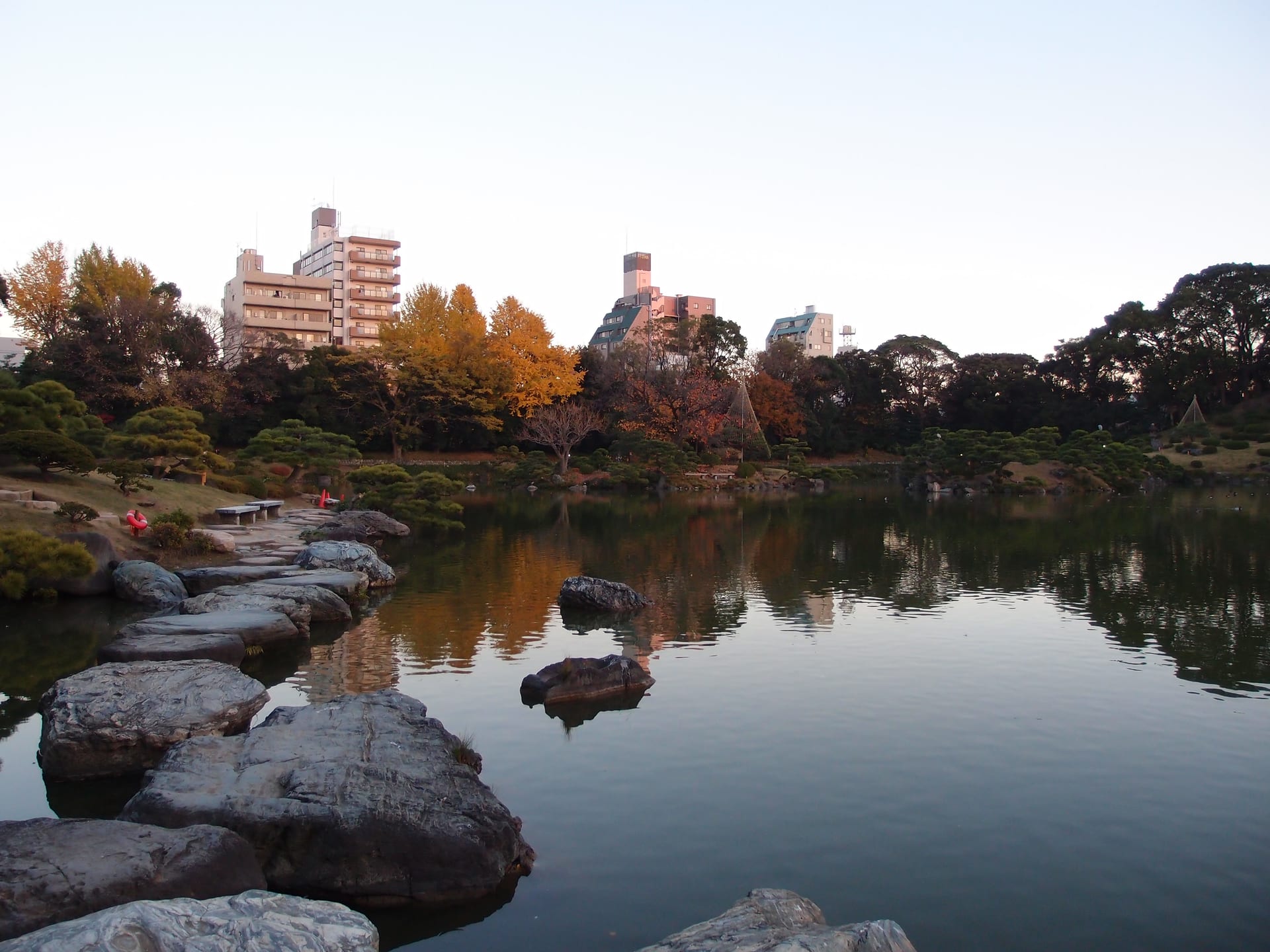
Kiyosumi Garden's isowatari stepping-stones across the pond, with trees and the Tokyo skyline reflected in the water 🌳 Japanese Garden1
Kiyosumi Garden
Kiyosumi Garden · Kiyosumi Teien

A circuit-style ("walk-around-the-pond") Japanese garden laid out by the Iwasaki family (founders of Mitsubishi) in the Meiji era. The highlight is the stepping-stones (isowatari) arranged as a path across the pond, where you can get close to the carp and turtles below, alongside reflections of trees and decorative rocks brought from all over Japan. A full loop takes about 30–40 minutes.

📍Location: about 3 minutes on foot from Kiyosumi-Shirakawa Station, Exit A3
🎟️Entry: ~150 yen (65+ ~70 yen · primary-school children free · may change in 2026)
🕘Hours: 09:00–17:00, last entry 16:30 · closed for New Year, 29 Dec–1 Jan
💡Tip: Wear non-slip shoes — the stepping-stones can get wet. It's loveliest in autumn colour and during the iris season.
Tokyo Attractions →
☕ Coffee Town2
Specialty Coffee Roastery District
Specialty Coffee Roasteries

The heart of what made this area famous — Blue Bottle Coffee's first branch in Japan opened here in February 2015, in a high-ceilinged old warehouse converted into a roastery-café. Other specialty roasters then followed all over the district, so within a few blocks you'll pass shop after shop hand-dripping fresh coffee. Perfect if you want to spend the day café-hopping.

📍Location: spread around Kiyosumi-Shirakawa Station, all within walking distance
Known for: third-wave/specialty coffee · roasted on site · warehouse-style café design
🕘Hours: most open morning to evening; times vary by shop, so check ahead
💡Tip: Come on a weekday morning for fewer people and an easy seat · read our Japan café guide to understand the coffee culture.
Japan Café Guide →
🎨 🎨 Contemporary Art3
Museum of Contemporary Art Tokyo
MOT · Museum of Contemporary Art Tokyo

One of the largest contemporary art museums in Japan, set in Kiba Park. It first opened in 1995 and reopened after a major renovation in March 2019, and the building and its walkways are themselves a piece of architecture people love to photograph. It runs both a permanent collection and rotating special exhibitions across many genres, from contemporary art to design.

📍Location: Kiba Park · about a 13–15 minute walk from Kiyosumi-Shirakawa Station
🎟️Entry: permanent collection ~500 yen · special exhibitions priced separately (may change in 2026)
🕘Hours: 10:00–18:00 (tickets until 30 min before closing) · closed Mondays
💡Tip: Check what's on before you go, as there are closure periods between exhibitions · there's a café and an art bookshop inside.
Tokyo Attractions →
🏮 🏮 Edo Heritage4
Fukagawa Edo Museum
Fukagawa Edo Museum

An indoor museum that recreates a late-Edo neighbourhood (around the 1840s) at full scale — you can walk into the alleys, houses, shops, an inn and a boat landing. A light-and-sound system simulates the times of day, from morning to evening, and at times volunteers tell stories of Edo life (some speak English). Great for anyone who loves history and wants a tangible sense of how Edo people lived.

📍Location: about a 3-minute walk from Kiyosumi-Shirakawa Station
🎟️Entry: ~400 yen (children 6–18 ~50 yen · may change in 2026)
🕘Hours: 09:30–17:00, last entry 16:30 · closed the 2nd and 4th Mondays of the month
💡Tip: Allow about 45–60 minutes — it pairs perfectly with nearby Kiyosumi Garden for a morning round.
Tokyo Attractions →
⛩️ ⛩️ Shrine + Market5
Tomioka Hachimangu Shrine
Tomioka Hachimangu · Monzen-Nakacho

The largest Hachiman shrine in Tokyo, founded in 1627 and the birthplace of commercial sumo (kanjin-zumo) in the Edo period. In the grounds you'll find stone monuments to yokozuna and ozeki, and most Sundays there's an antique market of around 120 stalls — a laid-back spot to browse for collectables.

📍Location: near Monzen-Nakacho Station (one stop from Kiyosumi-Shirakawa on the Oedo Line)
🛍️Known for: sumo monuments · Sunday antique market (check the schedule first)
🎟️Entry: free to enter the shrine · generally open during daytime hours
💡Tip: The Monzen-Nakacho streets around the shrine have long-running restaurants and Japanese sweet shops worth a stop.
Tokyo Attractions →
🚃 🚃 Canal-side Stroll6
Canal-side Walk + Small Galleries
Canal-side Walk & Small Galleries

The real charm here is simply wandering between cafés — small canals and a river cut through, and independent galleries, ceramic shops, bakeries and second-hand bookstores hide down the side streets. This is a genuine residential neighbourhood of east Tokyo, so it has a "real life" feel that tourist districts don't.

📍Location: the back streets around Kiyosumi-Shirakawa Station and along the canals
🚶Known for: independent galleries-studios · bakeries · second-hand bookshops
🕘Hours: walkable all day; most shops open late morning and close in the evening
💡Tip: Don't over-plan — letting yourself get a little lost and dropping into whatever catches your eye is the best way to do this area.
Japan Café Guide →
Eat & Drink

Fresh-Dripped Coffee, Bakeries and Fukagawa Cooking

Coffee is a given in Kiyosumi-Shirakawa — but the area also has its own traditional Fukagawa dishes to try. You can sip and snack your way around all day.

DEFINITELY DRINK
Go Roastery-Hopping

Start at Blue Bottle's first Japan branch, then walk on to the other roasters in the district — most hand-drip cup by cup and roast their own beans. To understand why Japanese coffee is so meticulous, read our Japan café guide alongside it.

THE TRADITIONAL ONE
Fukagawa Cooking

This area is known for "fukagawa-meshi" — rice topped with miso-simmered clams, or a clam soup poured over rice, the everyday dish of Edo's fishermen. You'll find it at long-running restaurants around Monzen-Nakacho. For the bigger picture of Japanese food, see our Japan food guide.

SOMETHING SWEET
Bakeries + Japanese Sweets

Stylish bakeries and patisseries are tucked in among the roasteries, and there are old-school Japanese sweet (wagashi) shops near the shrine. They pair perfectly with a cup of coffee and a sit-down break between the garden and the museum.

Staying Here

Where to Sleep — Kiyosumi-Shirakawa or Central Tokyo?

Kiyosumi-Shirakawa itself doesn't have many hotels, because it's a residential area. Most people base themselves in a larger, better-connected district and ride the train in for a half-day.

🏨 How to choose a base: if you'd love to wake up and walk the quiet coffee streets early, look for a stay around Fukagawa/Monzen-Nakacho, a few minutes from the Hanzomon or Oedo lines · but if you're covering several districts, we'd suggest staying in Shibuya/Shinjuku/Tokyo Station where the train connections are easier, and dropping into Kiyosumi-Shirakawa during the day. See the standout Tokyo hotels in the guides below.
🏆

10 Top Hotels in Tokyo

Our pick of recommended Tokyo hotels for every budget, with real locations and prices — choose a base that connects easily to Kiyosumi-Shirakawa.

See Top Tokyo Hotels →
🗼

Tokyo City Guide

The whole-city overview — which areas to stay in, what to see, where to eat, and how to get around. Everything before you plan the trip.

Tokyo Guide →
🔍

Search Tokyo Hotels

Compare stays across Tokyo on Agoda, filtered by budget, location and reviews — find the right room before it fills up.

Search on Agoda →
Map

Kiyosumi-Shirakawa's Highlights on One Map

Everything is within walking distance of Kiyosumi-Shirakawa Station — start at Kiyosumi Garden, head to the Fukagawa Edo Museum, sip coffee along the way, then carry on to the MOT in Kiba Park, all in an easy half-day.

Before You Go

6 Things That Make Kiyosumi-Shirakawa Even Better

⏱️
A Half-Day Is Plenty
The garden + a museum + two or three cafés runs about 3–4 hours, so it pairs easily with another district in the same day.
📅
Avoid Mondays
MOT closes on Mondays, and the Fukagawa Edo Museum closes the 2nd and 4th Mondays of the month. Check first so you don't miss out.
Mornings Mean Easy Café Seats
The popular cafés fill up fast on weekend mornings. Come early on a weekday for a seat and a much quieter atmosphere.
💴
Carry Cash + an IC Card
Most cafés and museums take cards, but a few small shops are cash-only. Keep a little yen on you just in case.
🛍️
Come Sunday for the Antique Market
The antique market at Tomioka Hachimangu runs most Sundays. Check the schedule if you want to browse for collectables.
🚇
Use the Direct Lines to Save Time
The Hanzomon runs straight from Shibuya-Otemachi and the Oedo from Shinjuku-Roppongi — no fiddly transfers needed.
More Tokyo Neighbourhoods

Keep Exploring Tokyo — the Area That Fits You

🌳

Nakameguro

The Meguro River, waterside cafés and design shops — another grown-up, easy-going area coffee lovers like to stroll.

Nakameguro Guide →
🕯️

Yanaka

Old back streets in north Tokyo — traditional shops, temples, and a Showa-era mood you rarely find in the big city.

Yanaka Guide →
🏮

Asakusa

Senso-ji temple, Nakamise street, and old Tokyo — an easy train ride from Kiyosumi-Shirakawa.

Asakusa Guide →
🐟

Tsukiji-Toyosu

The old Tsukiji fish market and the new Toyosu market, morning sushi and street food — close by on the east side.

Tsukiji-Toyosu Guide →

Japan Café Guide

Japan's coffee culture, old-school kissaten, and the specialty-coffee wave — why it's all so meticulous.

Japan Café Guide →
🗼

Tokyo City Guide

The whole-city overview — which areas to stay in, what to see, where to eat, and how to get around before you plan.

Tokyo Guide →
Frequently Asked Questions

Questions AboutKiyosumi-Shirakawa

Where is Kiyosumi-Shirakawa in Tokyo, and how do I get there?
Kiyosumi-Shirakawa sits in east Tokyo, in Koto Ward, in the area known as Fukagawa. It's easy to reach on two subway lines that meet at Kiyosumi-Shirakawa Station — the Hanzomon Line (direct from Shibuya/Otemachi) and the Oedo Line (direct from Shinjuku/Roppongi). From Shibuya or Shinjuku it takes roughly 20–30 minutes, and both Kiyosumi Garden and the Fukagawa Edo Museum are only about a ~3-minute walk from the station.
Why is Kiyosumi-Shirakawa known as Tokyo's coffee town?
The turning point was Blue Bottle Coffee opening its first Japan branch (and its first store outside the US) here in February 2015, in an old warehouse converted into a roastery-café. Specialty (third-wave) coffee shops then followed all over the district, because rents were cheaper than central Tokyo and the warehouse spaces had room for roasting machines. Today you'll pass several roasteries within a few blocks of one another.
Is Kiyosumi Garden free, and what are its hours?
Kiyosumi Garden charges about 150 yen for adults (around 70 yen for seniors 65+, free for primary-school children and younger). It's open 09:00–17:00 with last entry at 16:30, and closes over the New Year period (29 Dec–1 Jan). The highlight is the stepping-stones (isowatari) that let you cross the pond up close to the fish and turtles. 2026 prices may change, so check the official site before you go.
When is the Museum of Contemporary Art Tokyo (MOT) open, and how much is entry?
MOT (Museum of Contemporary Art Tokyo) is open 10:00–18:00 (tickets sold until 30 minutes before closing), closed on Mondays (or the next day if Monday is a public holiday) and during exhibition changeovers. The permanent MOT Collection costs around 500 yen for adults, while special exhibitions are priced separately. It first opened in 1995 and reopened after a major renovation in March 2019. 2026 prices may change, so check the official site before you go.
What is the Fukagawa Edo Museum like — is it worth visiting?
The Fukagawa Edo Museum recreates a late-Edo neighbourhood (around the 1840s) at full scale inside a covered hall, so you can walk into the alleys, houses, shops and a boat landing. A light-and-sound system simulates the times of day from morning to evening. It's open 09:30–17:00 with last entry at 16:30, closed on the 2nd and 4th Mondays of each month, and entry is about 400 yen. It's a 3-minute walk from the station, ideal for anyone who likes history and wants a hands-on feel for everyday Edo life.
Which other Tokyo areas pair well with Kiyosumi-Shirakawa?
There are several easy pairings — the Hanzomon Line runs straight to Shibuya and Omotesando, and the Oedo Line links on to Roppongi/Shinjuku. Close by is Tomioka Hachimangu Shrine (the birthplace of commercial sumo, with a Sunday antique market) in the Monzen-Nakacho area, and Asakusa or the Tsukiji-Toyosu waterfront are an easy ride away. It works best as a relaxed half-day in a wider Tokyo trip.
Ready to Walk the Coffee District?

Sip Coffee, Stroll the Garden, See the Art
and Line Up Your Tokyo Stay

Slot Kiyosumi-Shirakawa in as a relaxed half-day on your Tokyo trip. Open the Tokyo city guide to plan the other districts, or start looking early for a well-placed hotel with easy train access to this area.

🔴 Search Tokyo Hotels Tokyo Guide