🌏 Destinations · All 🇯🇵 Japan · Full guide Tokyo Tokyo Attractions Nakameguro 🏮 Kagurazaka Guide 🧭 Travel Prep Guide About Contact 🇹🇭 ไทย🇬🇧 English🇨🇳 中文🇪🇸 Español🇫🇷 Français
🏮 Kagurazaka District · Tokyo

Kagurazaka — An Old Stone Slope, Geisha Alleys, and French Bistros in Tokyo

Picture a narrow cobbled lane, black-painted wooden walls, dark street lanterns along a shopping slope — then you turn a corner and there's a French bistro warm with the smell of butter. This is Kagurazaka, a former geisha quarter people call the 'Little Paris of Tokyo.' We'll walk you through the temples, the shrine, the hide-and-seek alleys, and where to eat, all in one neighbourhood.

Start Here

Step Off the Busy City Grid —Into Stone Lanes Where Time Slows Down

Let's be honest: most people who come to Tokyo head straight for Shibuya, Shinjuku, and Harajuku — but just a few steps from Iidabashi Station there's a small neighbourhood that feels like the complete opposite. Kagurazaka is a single shopping slope climbing up the hill, flanked by winding cobbled alleys, dark street lanterns, and black-painted wooden walls. This was once one of the liveliest geisha quarters in Edo- and Meiji-era Tokyo, and even today it keeps old restaurants, teahouses, and an atmosphere you won't easily find anywhere else in the metropolis.

What makes Kagurazaka unlike anywhere else is that it's also Tokyo's French quarter — the Institut français has stood nearby since 1952, drawing bistros, bakeries, and patisseries that now line the lanes, which is why people call it the 'Little Paris of Tokyo.' On this page we'll walk it all with you, from the shopping slope and the hide-and-seek alleys to Bishamonten temple and the Akagi Shrine that the famous architect Kengo Kuma redesigned — plus where to eat and how to get there.

🏮 Straight up, before anything else: Kagurazaka isn't a neighbourhood of big landmarks or major check-in spots — its charm is in getting lost in the little alleys and stumbling on a place tucked away. Come unhurried, set aside half a day, and note that the lanterns in the evening make it prettier than daytime, so it pairs perfectly with dinner in the area.
🏮
Geisha Heritage
Cobbled alleys, black wooden walls — the surviving feel of an Edo-era geisha quarter.
🥐
Little Paris of Tokyo
Bistros, bakeries, and French patisseries clustered around the Institut français.
⛩️
Old Temple & Shrine
Bishamonten temple plus the Akagi Shrine redesigned by Kengo Kuma.
🚶
Easy Walk, Near the Station
Step out at Iidabashi/Kagurazaka and walk it — quieter than the famous districts.
Getting There — Stations

Kagurazaka IsEasy to Reach from Central Tokyo

The neighbourhood is bracketed by several stations, so you can choose to start from the foot of the slope (Iidabashi) or the top (Kagurazaka) — walking the whole district from one end to the other takes just 10–15 minutes.

StationLinesWhere it sits in the districtWalk to Kagurazaka-dori
Iidabashi飯田橋 · main hubJR Chuo-Sobu · Tokyo Metro (Tozai/Yurakucho/Namboku) · Toei OedoFoot of the slope, near the Institut français~3–5 min
Kagurazaka神楽坂Tokyo Metro Tozai (sky-blue line)Top of the slope, near Akagi Shrine~1–3 min
Ushigome-Kagurazaka牛込神楽坂Toei Oedo (pink line)West side, far end of Kagurazaka-dori~3–5 min
🚶 How to walk it for the most fun: the classic move is to exit at Iidabashi and walk up the Kagurazaka slope, browsing the shops on either side as you go. At the top, stop by Bishamonten temple and Akagi Shrine, then duck into the little cobbled alleys along the way. The charm of this area is in the side lanes, not the main street — if you spot a narrow paved alley, just turn in.
Things To Do

6 Things YouShouldn't Miss in Kagurazaka

No rushing, no queueing — this is a neighbourhood for slow walking and stopping wherever you fancy. These are the 6 spots that make Kagurazaka what it is, and you can cover them all in half a day.
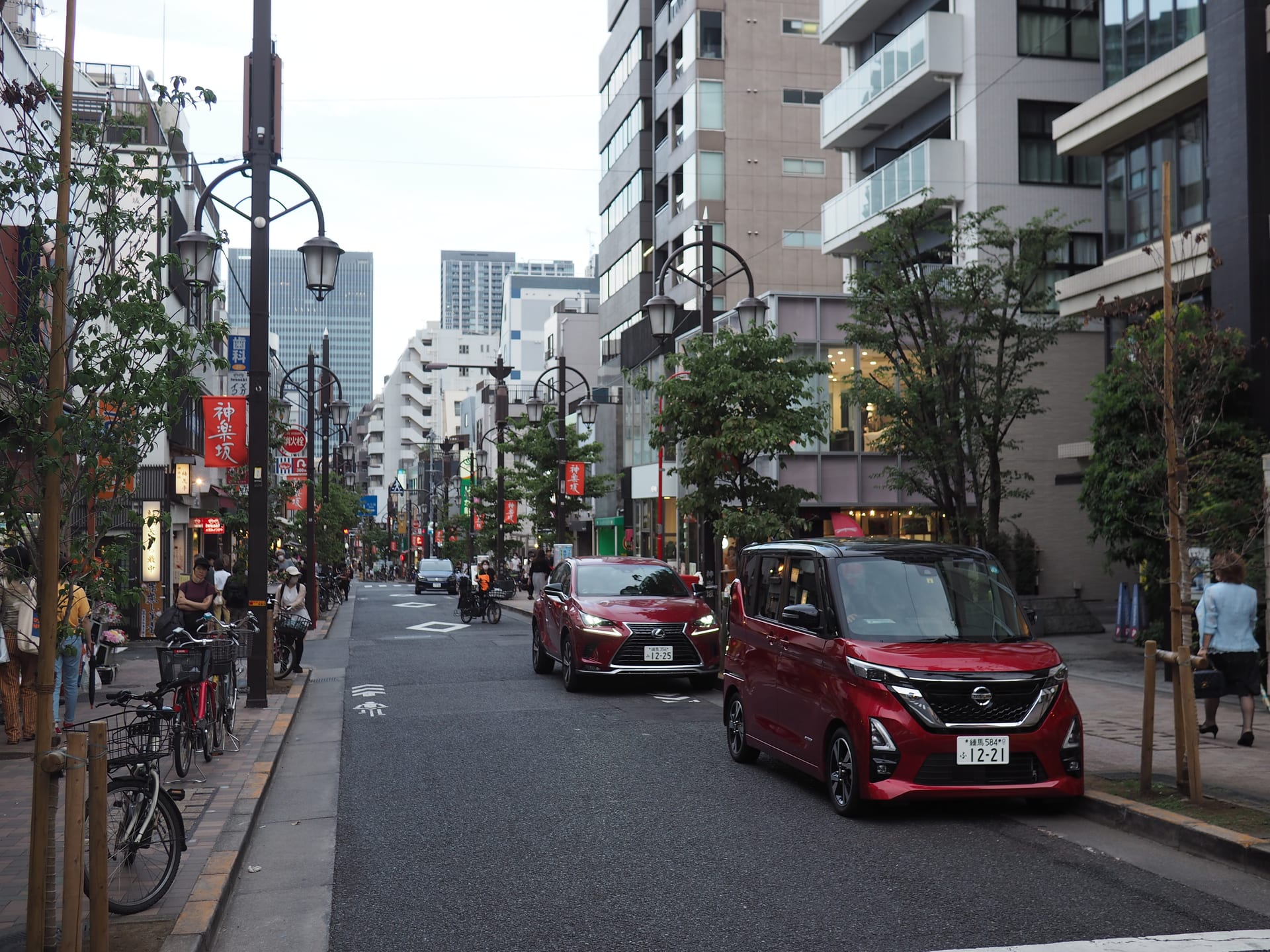
Kagurazaka-dori, the shopping slope in Tokyo with dark street lanterns and red banners 🏮 Heart of the District1
Walk Up Kagurazaka-dori
Kagurazaka-dori Slope

The main street that climbs the hill from Iidabashi Station is the spine of the neighbourhood. Both sides are lined with sweet shops, tea houses, bistros, and the signature old black lantern posts. Walk up and down, browse as you go, then peel off left and right into the little alleys that hide the good stuff.

📍Location: Kagurazaka-dori, heading west uphill from Iidabashi Station
🕐Walking hours: the street is always open; most shops open late morning to evening, busiest in the afternoon and evening
🚆Getting there: exit Iidabashi (foot of the slope) or Kagurazaka (top of the slope)
💡Tip: Come in the evening, when the black lanterns light up and the mood turns far more romantic than during the day.
All Tokyo Attractions →
🏮 🚶 Cobbled Alley2
Kakurenbo Yokocho Alley
Hide-and-Seek Alley

The alley's name means 'hide-and-seek,' because the path twists like a maze and anyone who turns in seems to vanish in an instant. It's paved with around 28,000 small granite stones (pincoro) and lined with black-painted wooden walls that hold onto the Edo-era geisha-quarter atmosphere — which is why it's so often used as a film and TV backdrop. Today it hides kaiseki restaurants and fine eateries down its quiet lanes.

📍Location: between Kagurazaka Naka-dori and Honda Yokocho
🕐Hours: the alley is always walkable · most restaurants open for dinner
🚆Getting there: ~5-min walk from Iidabashi, turn left into the lanes off the middle of the slope
💡Tip: Walk softly and respect the quiet — some of these are private restaurants or homes, not a noisy photo stop.
Want more old alleys? Yanaka →
⛩️ 🛕 The District Temple3
Zenkoku-ji Temple (Bishamonten)
Bishamonten Zenkoku-ji

An old temple regarded as the guardian deity of Kagurazaka, enshrining Bishamonten — the god of war and good fortune. It sits right on the Kagurazaka slope, and in the Edo era the neighbourhood thrived as a temple town with a constant stream of worshippers. Today it makes a calm stop in the middle of a shopping walk up the hill.

📍Location: 5-36 Kagurazaka, on the main slope
🏛️History: founded in 1595 by Shogun Tokugawa Ieyasu, later relocated here
🚆Getting there: on the Kagurazaka slope, ~5-min walk from Iidabashi
💡Tip: Open daily for visits and easy to find — handy as a meeting point in the middle of the district.
A famous temple elsewhere? Asakusa →
🏯 🎨 Contemporary Design4
Akagi Shrine
Akagi Jinja · by Kengo Kuma

A rare kind of Shinto shrine, because it was completely redesigned by the celebrated architect Kengo Kuma and finished in 2010, using glass, wooden louvres, and a steel roof for a modern feel that still respects its roots. The grounds even include a café where you can sip coffee while looking out at the shrine — old and new brought together into a stop for anyone who loves architecture.

📍Location: upper side of the district, near Kagurazaka Station (Tozai Line)
🏛️History: founded 1300 · moved to Kagurazaka 1555 · redesigned 2010
🚆Getting there: Kagurazaka Station (Tozai), a few minutes' walk up to the top of the slope
💡Tip: There's a café in the shrine grounds for a coffee break, and entry to visit is free.
Into design? Nakameguro →
🥐 🍷 Little Paris5
French Bistros & Patisseries
Tokyo's French Quarter

This is the reason people call Kagurazaka 'Little Paris' — the Institut français has stood in the Iidabashi area since 1952, drawing a French community and a line-up of bistros, bakeries, and patisseries. In the little alleys you'll catch the smell of freshly baked croissants mixed with the scent of rice balls — a combination you'd be hard pressed to find anywhere else in Tokyo.

📍Location: spread along Kagurazaka-dori and the surrounding alleys
🇫🇷Highlights: bistros, crêpes, croissants, French patisseries side by side with old Japanese restaurants
🚆Getting there: walk along Kagurazaka-dori and stop wherever a sign catches your eye
💡Tip: Many of the best spots are small and packed at dinner, so book ahead if you have a place in mind.
Japan Food Guide →
🎐 🎉 Summer6
Awa Odori Festival
Kagurazaka Matsuri · Awa Odori

If you visit in summer, don't miss the Kagurazaka Matsuri, the neighbourhood's big festival. Its second half features the 'Awa Odori' dance, which originated in Tokushima Prefecture, with troupes of dancers parading down Kagurazaka-dori, plus a Chinese-lantern-plant (hozuki) market at Bishamonten temple. The buzz is a world away from the quiet of an ordinary weekday.

📍Location: along Kagurazaka-dori and around Bishamonten temple
📅When: late July (around July 22–25 in 2026 · check the latest before you go)
🕐Hours: the dancing usually runs around 17:00–21:00
💡Tip: Festival days get very crowded, so allow extra walking time and avoid the rush hours.
Travel by season →
Eat & Drink

What to Eat inKagurazaka

Eating here is fun because two worlds share the same alleys — a French kitchen and an old Japanese one — plus great cafés hidden down the lanes. Just pick whatever your mood calls for.

SOMETHING SPECIAL
French Bistros

This is Tokyo's French quarter, with bistros, crêperies, and French-style patisseries scattered throughout — perfect for a relaxed lunch or a romantic dinner. Many of the standout spots are small and busy, so if you have a place in mind, book ahead. For more ideas in the area, see the Japan Food Guide.

LOCAL FLAVOURS
Old Japanese Sweets & Tea

The other side is the Japanese sweet shops (wagashi) and tea houses that have stood with the geisha quarter since the old days. Try mochi, dorayaki, or matcha ice cream as you walk up the slope. Many are decades-old shops that locals drop into regularly — a world apart from the franchise stores around the big stations.

SIT AND RELAX
Cafés in the Alleys

When your feet tire, drop into a café down a quiet lane, or the café at Akagi Shrine where you can sip coffee and admire Kengo Kuma's design. Kagurazaka is made for sitting a while without rushing. If you love coffee towns in depth, follow up with the Japan Café Guide.

Tips Before You Go

Make the Most of KagurazakaWithout Feeling Awkward

The neighbourhood has its own rhythm — a little know-how will help you move through it smoothly and respect the people who live there.

🌆
Afternoon to Evening Is Best
Most shops open late and the area buzzes from afternoon into the evening. As the light softens and the black lanterns come on, the district looks lovelier than by day.
🚶
Turn Into the Small Alleys
The charm is in the side lanes, not the main street. When you see a narrow cobbled alley, just turn in and explore.
🤫
Keep the Alleys Quiet
Some lanes are lined with private restaurants and homes. Keep your voice down and don't barge in to photograph closed storefronts.
📞
Book Popular Spots Ahead
The good bistros and kaiseki restaurants tend to be small and fill up fast in the evening. If you have one in mind, reserve a table first.
💴
Carry Some Cash
Some long-running and small shops still take cash first, so keep a little yen on you to make things easier.
🗓️
Check Festival Dates First
If you come in summer during the Kagurazaka Matsuri (late July), it gets very crowded — allow extra walking time and avoid the rush hours.
Map

The Key Spots in Kagurazakaon One Map

The whole district is within a few minutes' walk — Kagurazaka-dori, Bishamonten temple, Akagi Shrine, and Iidabashi Station all sit close together. Get the overview first and your walking route comes together easily.

Staying Here

Sleep Near Kagurazakaor in Central Tokyo?

Kagurazaka is a quiet residential neighbourhood, not a big hotel district — but the location is excellent, only a few minutes by train from Shinjuku, Tokyo Station, and the main shopping hubs. It suits travellers who want to avoid the chaos yet still get around easily.

🏨 How to choose where to stay: around Iidabashi Station you'll find good-value business hotels with access to several lines. If you want a wider choice, Tokyo's classic accommodation bases are Shinjuku or Tokyo Station — both only ~10 minutes from Kagurazaka by train. See your options in our 10 best hotels in Tokyo and the full Tokyo travel guide.
🚉
Stay Near Iidabashi
Walk to Kagurazaka plus connect to several train lines — ideal if you like a quiet base that's still easy to move from.
🗼
Stay in Shinjuku / Tokyo Station
A far bigger choice of hotels. Visit Kagurazaka as a daytime trip, then head back for a comfortable night's sleep.
📅
Book Ahead in Peak Season
During cherry blossom season (late March–early April) and autumn colours, Tokyo hotels fill up fast and get pricey — book several months ahead.
Related Neighbourhoods

Loved Kagurazaka — Try These Other Tokyo Districts

🌳

Nakameguro

A district along the Meguro River with boutique cafés and stylish shops — a chilled, grown-up vibe much like Kagurazaka.

Nakameguro Guide →
🏮

Yanaka

An old Tokyo neighbourhood that survived the war — narrow lanes, lots of temples, long-running shops, and a step-back-in-time feel.

Yanaka Guide →
⛩️

Asakusa

Senso-ji temple, Nakamise street, and the old-town side of Tokyo — a must for anyone into temples and tradition.

Asakusa Guide →
🎸

Shimokitazawa

A vintage district of second-hand stores, small theatres, and indie cafés — another of Tokyo's most laid-back walking neighbourhoods.

Shimokitazawa Guide →
🗼

All Tokyo Attractions

Every district and landmark in Tokyo, with links into each spot's guide and how to get around.

Tokyo Attractions →
🏙️

Tokyo Travel Guide

The big picture for visiting Tokyo — where to stay, where to eat, what to see, and how to get around the whole city.

Tokyo Guide →
Frequently Asked Questions

Questions AboutKagurazaka

What kind of neighbourhood is Kagurazaka?
Kagurazaka is an old hillside neighbourhood northwest of central Tokyo. It was a lively geisha quarter through the Edo and Meiji eras, and you can still find cobbled alleys and long-running restaurants today, alongside so many French bistros and patisseries that it has earned the nickname 'Little Paris of Tokyo.' The mood is far quieter than Shibuya or Shinjuku, which makes it perfect for a slow stroll through the old lanes.
Why is Kagurazaka called Tokyo's French quarter?
Because the Institut français de Tokyo has stood in the Iidabashi–Kagurazaka area since 1952, drawing a French community and a line-up of bistros, bakeries, and patisseries. The result is that the alleys mix a European atmosphere with the old Japanese geisha-quarter lanes in a way you won't find elsewhere in the city.
Where is the Kakurenbo Yokocho alley?
Kakurenbo Yokocho means 'hide-and-seek alley.' It's a narrow, winding cobbled lane in Kagurazaka, paved with around 28,000 small granite stones (pincoro) and lined with black-painted wooden walls that preserve the feel of the Edo-era geisha quarter. Today it hides kaiseki restaurants and fine eateries down its quiet lanes.
What is special about the Kengo Kuma-designed Akagi Shrine?
Akagi Jinja was completely redesigned by the architect Kengo Kuma and finished in 2010, using glass, wooden louvres, and a yamato-buki steel roof to give a Shinto shrine a thoroughly contemporary look. The grounds also include a residential building and an in-house café, blending old and new in a way that's rare to see. The shrine itself dates back to 1300 and moved to Kagurazaka in 1555.
How do you get to Kagurazaka?
Get off at Iidabashi Station (JR Chuo-Sobu Line plus several Tokyo Metro lines and the Toei Oedo Line) and simply walk up the Kagurazaka slope, or use Kagurazaka Station (Tozai Line) at the top of the neighbourhood. The Toei Oedo Line also has Ushigome-Kagurazaka Station as another option. It's only a few minutes by train from central Tokyo.
How long do you need to visit Kagurazaka?
Walking the main route (Kagurazaka-dori, the cobbled alleys, Bishamonten temple, and Akagi Shrine) takes about half a day. If you want to stop for lunch at a French bistro or a café tucked down an alley, allow 4–5 hours. In the evening the black street lanterns light up and the mood turns more romantic than during the day, so it pairs nicely with dinner in the neighbourhood.
Ready to Walk Kagurazaka?

Grab Your Bag
and Go Get Lost in the Stone Lanes

Map out your route from the map above, then open the Tokyo travel guide for other districts, hotels, and how to get around the city — or start lining up a well-located place to stay near a major station early.

🔴 Find Hotels in Tokyo Tokyo Guide