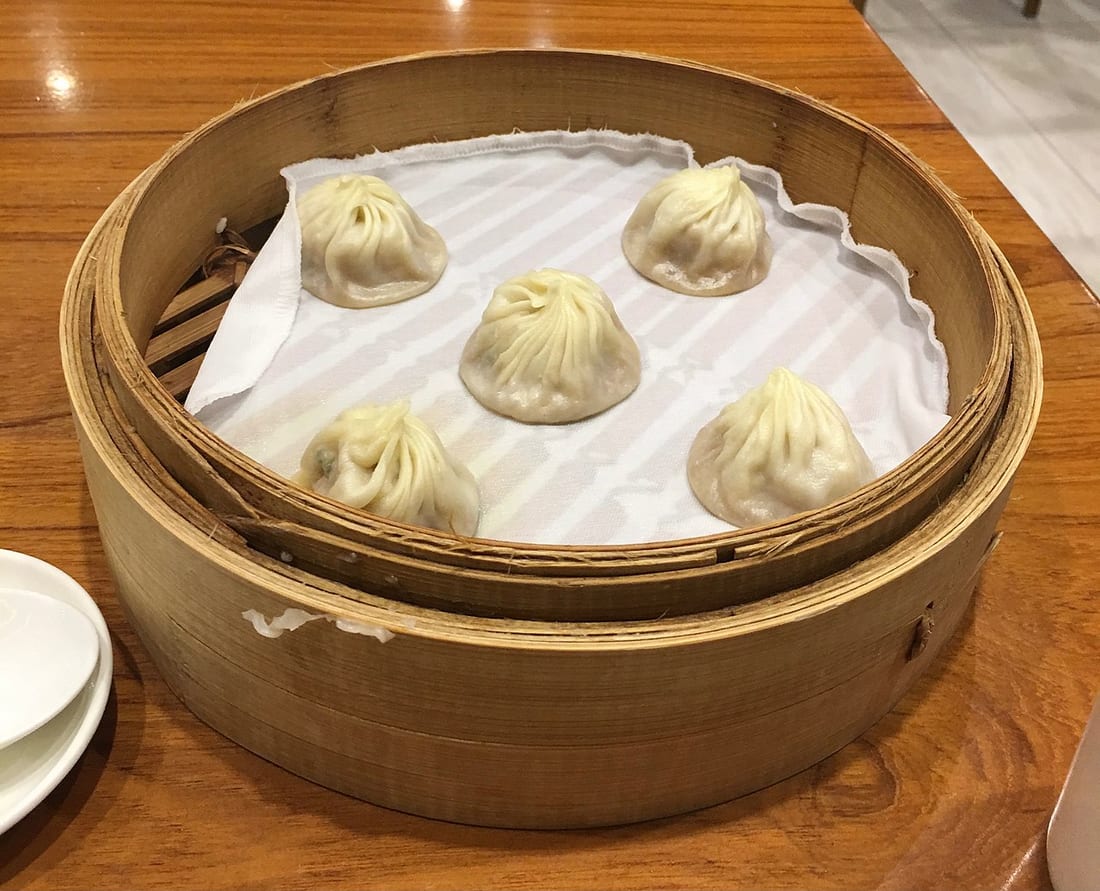
Lift it gently, the skin so thin it trembles on the spoon, nibble a hole and a rush of hot, sweet broth pours out — this is the soup dumpling that carried Taipei's name around the world. We unpack what it is, how Din Tai Fung grew from a cooking-oil shop, how to eat one without scalding yourself, and 8 Taipei shops you can actually walk into.
Xiaolongbao (小籠包) translates literally as "little steamer-basket bun" — but the magic is what hides inside: a thin, beautifully pleated skin wrapping minced pork together with a chilled cube of rich, jellied stock. Set the basket over steam and that jelly melts into a pool of scalding broth, so a single bite delivers meat, dough and a spoonful of soup all at once. The dumpling itself was born around Nanxiang and Shanghai on the Chinese mainland — but the world came to know it through Taipei, the city that turned a humble dim-sum item into a craft worthy of a Michelin nod.
To tell the story of Taipei xiaolongbao, you have to start with Din Tai Fung (鼎泰豐) — and its origin is anything but ordinary. In 1958, husband and wife Yang Bing-yi and Lai Penmei opened not a restaurant but a cooking-oil shop. By the early 1970s the traditional oil trade collapsed as mass-produced salad oil took over. A friend who ran a Shanghai restaurant suggested they switch to delicate Shanghainese dim sum — and in 1972 Din Tai Fung began selling xiaolongbao from a small red-brick storefront on Xinyi Road, near Yongkang Street. The shop sign was the calligraphy of a prominent figure of the era. Today that original store is takeaway-only, while the dine-in restaurant has moved into a four-storey, 330-seat building across the road.
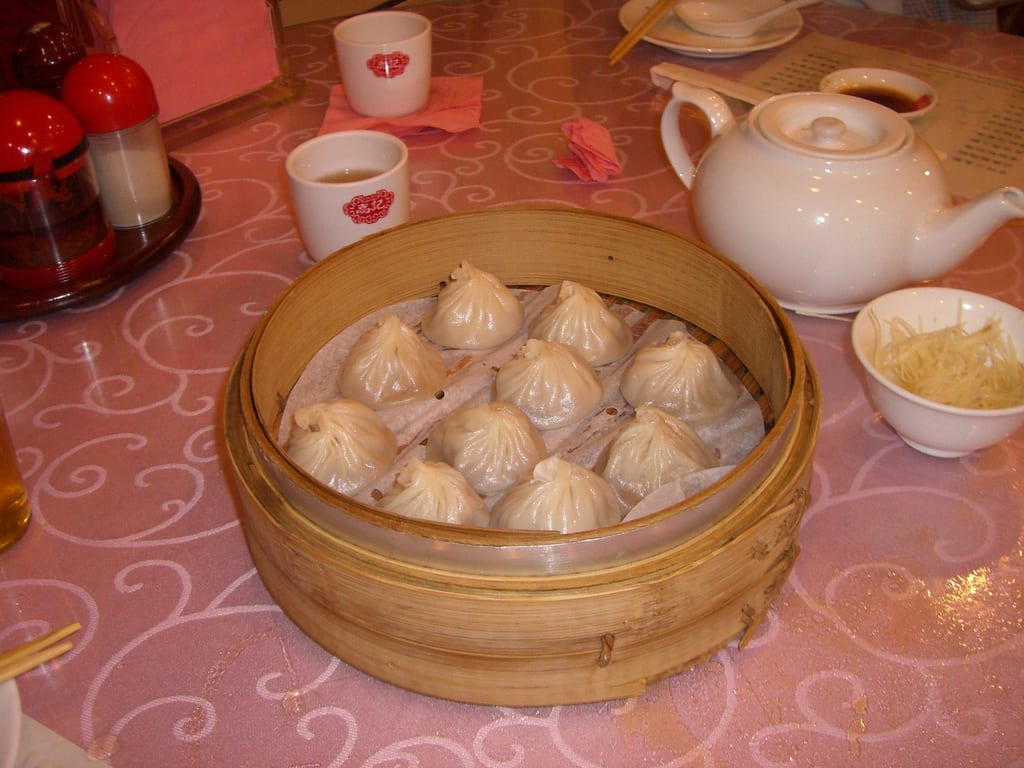
The 18-fold standard is what turned Din Tai Fung into a legend. Yang Chi-hua, the next-generation son, mastered the pleating and helped devise the formula that became the brand's signature — every xiaolongbao carrying exactly 18 pleats, its weight controlled to the gram, the skin rolled so thin it is almost translucent yet never tears. That obsessive consistency carried the shop from a single storefront to a global brand with branches across Asia, the Americas and Europe, complete with Michelin Guide recognition.
But here is the secret every Taipei local knows — great xiaolongbao is not only at Din Tai Fung. The city is dotted with old-school restaurants and tiny storefront shops turning out soup baskets that rival it, or that some eaters love even more, at half the price and a fraction of the queue. This guide takes you into both worlds.
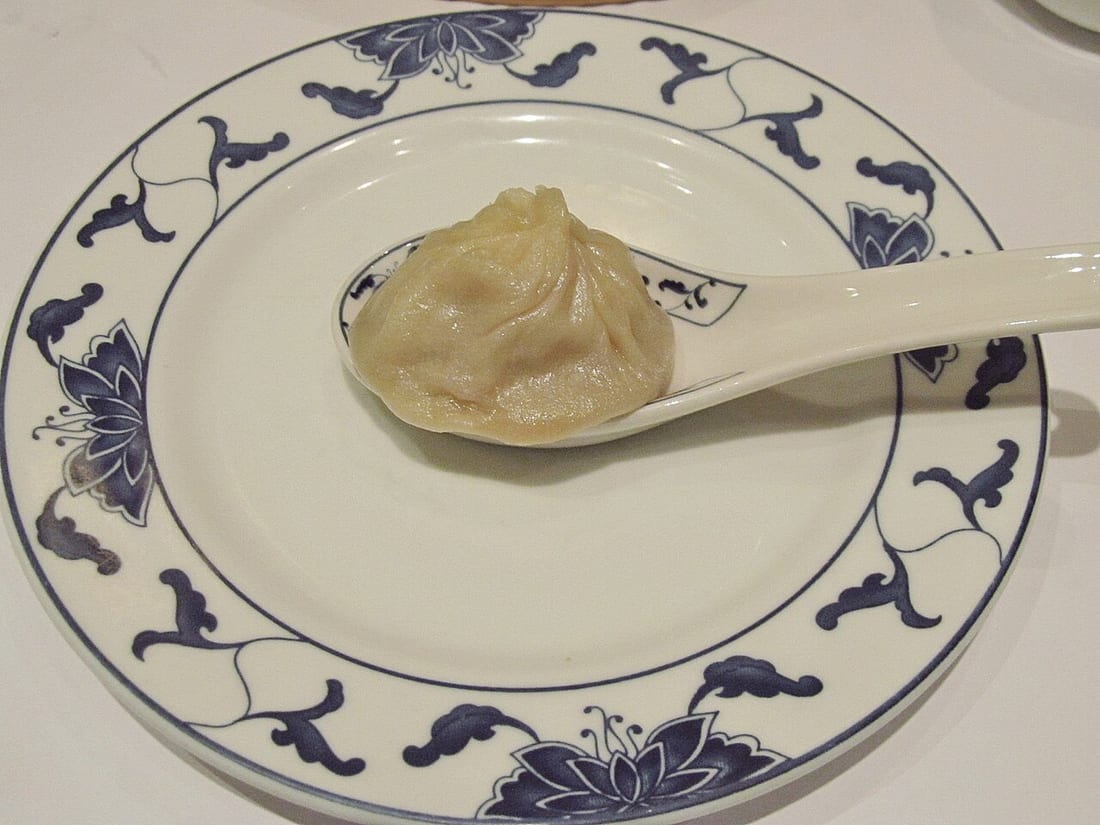
The broth inside is always scalding. Eating a soup dumpling has its own little ritual — follow these five steps for both the flavour and the safety.

The Chinese soup spoon is your best friend here. The classic beginner's mistake is grabbing a whole xiaolongbao straight into your mouth — and the broth, hot enough to bubble, instantly burns the roof of your mouth. Rest it on the spoon, let it cool, then work through the rhythm. You'll get to taste that broth — deep and sweet from pork bones and skin slow-cooked into gelatine — which is the single best part of the whole dumpling.
Use your chopsticks to pick the dumpling up by the pleated knot at the top, gently. Never grab it around the middle — the thin skin tears and the soup runs straight out, leaving you with a deflated wrapper and regret.
Move the dumpling onto your Chinese soup spoon. The spoon catches every drop if the skin happens to split, and gives the dumpling a place to rest and cool for 10–20 seconds — don't rush.
Use your front teeth to nibble a tiny release hole in the side of the skin. A puff of steam will escape — that's your signal the soup inside is still scalding. Let it ease off before the next step.
Gently sip the hot broth that pools onto the spoon or runs from the hole. This is the heart of the xiaolongbao — sweet, deep stock from pork gelatine that liquefied in the steamer. Savour it fully before eating the rest.
Drizzle Zhenjiang black vinegar into the spoon, lay slivered ginger on the dumpling, and eat the whole thing in one bite. The vinegar's tang and the ginger's bite cut the richness of the pork — the classic ratio is generous ginger and just enough vinegar to coat.
We've picked 8 shops that local eaters and food guides come back to again and again — each with what it's known for, the neighbourhood, nearest MRT, rough price and queue notes.
The shop that carried xiaolongbao around the world — it began as a cooking-oil store on Xinyi Road and grew into a Michelin-recognised brand. The hallmark is precision: 18 identical pleats on every dumpling, a skin rolled paper-thin, a glass kitchen on view. The menu reaches well beyond soup dumplings — crab baskets, fried rice, stir-fried greens, desserts. The safest first xiaolongbao if you've never had one — at the cost of a longer queue and a higher price than the rest of this list.
The shop Taipei locals name as "the Din Tai Fung alternative" — a soup basket with a slightly thicker, chewier skin and a bolder, richer broth inside, at a clearly gentler price. The main branch sits near the Chiang Kai-shek Memorial (CKS), an easy walk for any visitor. There's a queue, but it turns over faster than Din Tai Fung's, and some branches even offer creative baskets like a dark-chocolate filling to try.
A long-running Shanghainese restaurant on Yongkang Street, just around the corner from Din Tai Fung — many eaters rate the two neck and neck. The soup baskets here have a thicker, chewier skin, and the unmissable dish is the sheng jian bao (生煎包), a pan-fried bun with a crisp base and soup hiding inside too. It's a full multi-storey restaurant with a long menu, a more relaxed feel and prices below Din Tai Fung.
A Huaiyang–Shanghainese restaurant with a Michelin Bib Gourmand that treats the xiaolongbao as an art form. It's known for creative soup baskets — crab, shrimp and truffle fillings, plus skins tinted with natural vegetable juices for a rainbow steamer. The dining room is elegant, decked in classic Chinese décor — a good choice for a special meal, or for anyone curious how far the soup dumpling can be pushed.
A Suzhou–Hangzhou dim-sum shop beloved by budget eaters. The standout is the broth inside — darker and heavier than most, deep and full in every bite. A basket holds 8 dumplings at a very gentle price, good enough that many people order a second. The room is plain and genuinely local, and the menu also runs to soup wontons and fried snacks — proof that great xiaolongbao needn't be expensive.
A backstreet shop in the Da'an district that wins locals over with its unfussy, homemade character — and serious skill behind it. The room looks plain, but the thin-skinned, juice-filled baskets are beautifully balanced and cost far less than Din Tai Fung. A basket holds 8, and many eaters rate it among the best xiaolongbao in Taipei at a price anyone can afford — ideal if you want to eat the way locals really do.
Another Yongkang Street shop locals call "as good as Din Tai Fung" — but with a far shorter queue and a much lighter bill. The juicy soup baskets pour broth in every bite, the service is quick, and the long menu spans dim sum, rice and stir-fries. The perfect move when you reach Yongkang and find the Din Tai Fung line too long — turn the corner to here and you won't be disappointed.
A storefront shop with its own signature — a loofah xiaolongbao (絲瓜), where slivers of fresh loofah gourd are folded into the pork, giving the broth a sweeter, fresher, lighter character than an all-pork basket. It's a flavour hard to find anywhere else. The classic pork basket is well done too, prices are gentle, and the weekday queue is usually short and fast — a great pick for an eater who wants a xiaolongbao that's a little different.

The original shop on Xinyi Road, near the mouth of Yongkang Street, is where it all began in 1972. Today that red-brick storefront is takeaway only, while the dine-in restaurant has moved into a four-storey, 330-seat building across the road. If you want a photo with the birthplace, head to the takeaway side — but to actually sit down and eat, cross to the other side of the street.
Surviving the queue: Din Tai Fung runs a same-day ticket-queue system at the door. At lunch (11.30–13.30) and dinner (18.00–20.00) the wait can stretch 30–60 minutes — arrive 10–15 minutes before opening, or aim for the mid-afternoon lull from 2–5pm. Mall branches around the city are usually quieter than the flagship. While you wait, don't miss the glass kitchen, where you can watch the chefs fold those 18 pleats live — one of the best free shows in Taipei.
Xiaolongbao is just the first round — Taipei has plenty more waiting.
Soup dumplings, braised pork rice, stinky tofu, bubble tea — the full Taipei eater's guide
Open the 25-dish guide →Taiwan's national dish — red-braised vs clear broth and 10 legendary bowls to chase down
Open the beef noodle guide →The origin story of bubble tea, plus 10 top shops to sip your way through in Taipei
Open the bubble tea guide →Open the full Taipei travel guide to plan every meal, or start booking a stay in a neighbourhood within walking distance of Din Tai Fung, the legendary shops and the night markets.