Set your alarm for 6 am just once. Step out into streets already alive with steam, sizzling pans and the nutty scent of fresh soy milk. Taiwan takes breakfast seriously — and the breakfast shops of Taipei are among the great unsung pleasures of any food trip to Asia.
Walk out of your hotel before nine in the morning and Taipei is a different city entirely. Breakfast shops — zao can dian (早餐店) — open at five or six, and by seven the pavement outside is a revolving door of scooter riders, schoolchildren and office workers collecting brown paper bags and plastic cups of soy milk. It is one of the great daily rituals of the city, and most tourists sleep straight through it.
The culture has deep roots. After 1949, waves of migrants from across mainland China brought their regional breakfast traditions to the island — northern-style shao bing (sesame flatbreads) baked in clay ovens, Shanghai-style you tiao (fried dough sticks), Sichuan-inflected savoury soy milk. On the island these traditions blended and mutated. Dan bing — the egg crepe roll unique to Taiwan — was invented here and is now arguably more beloved than anything it displaced. What you eat at a Taipei breakfast shop is genuinely Taiwanese, not imported.
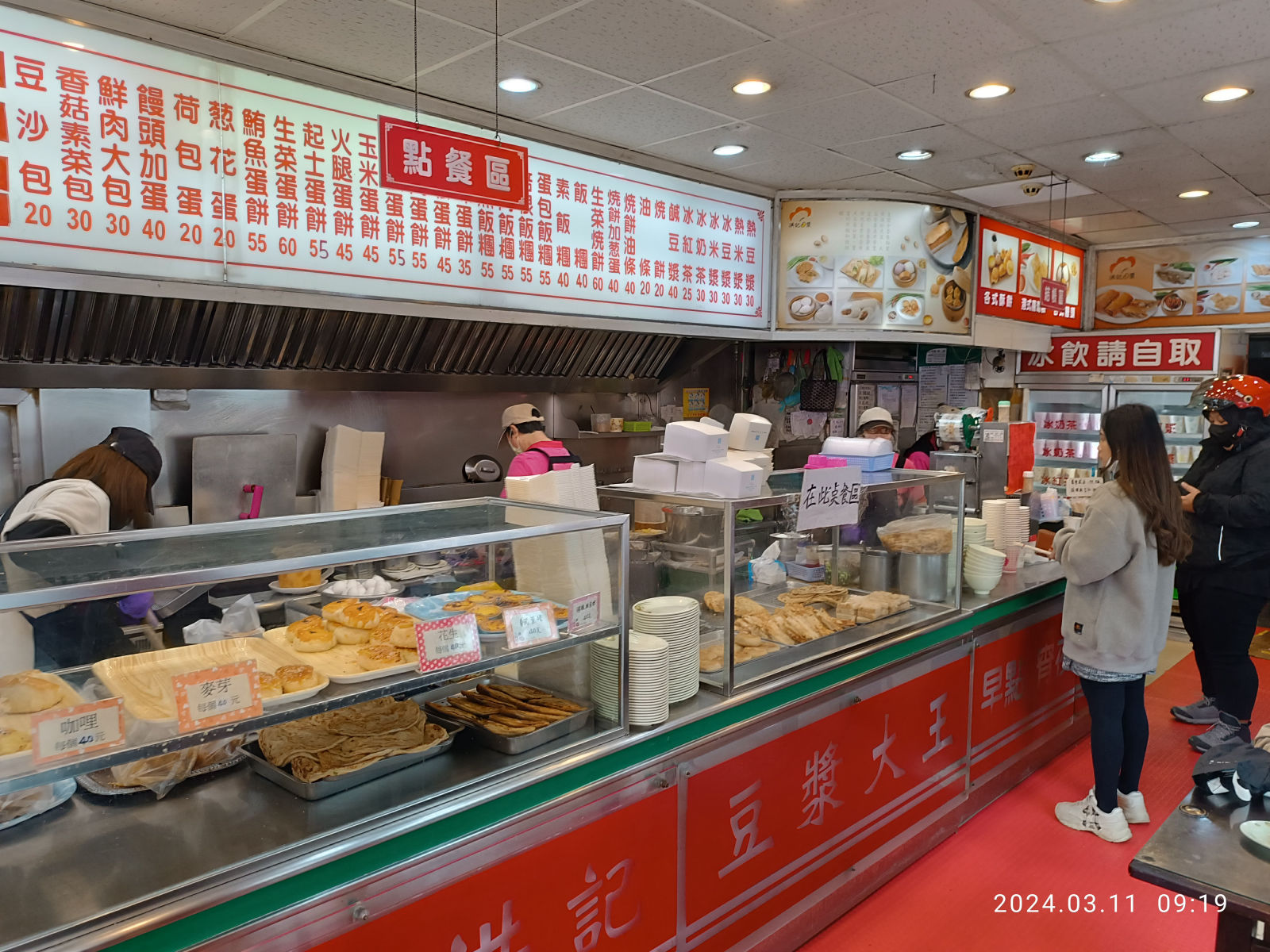
The genius of the Taiwanese breakfast is its economy. A complete, satisfying meal — dan bing, hot soy milk, a you tiao — costs NT$80–120, roughly US$2.50–4. The ingredients are simple; the execution, at a good shop, is extraordinary. Fresh soy milk made from whole beans and strained the same morning tastes nothing like the carton at home. A shao bing pulled from the clay oven ten minutes ago is a different object entirely from one that has been sitting out.
This guide covers the 8 classic dishes you need to know, the three types of breakfast shop, and 8 legendary Taipei spots — including an honest account of the queue at Fuhang, the most famous breakfast shop in the city. Plan one early morning around it and your entire understanding of Taipei will shift.
Not all breakfast shops are alike. Understanding the three main formats helps you choose what kind of morning you want.
The most common format — clean, fast-moving shops open from 5 am. The menu centres on dan bing, sandwiches, corn soup and milk tea. Prices run NT$30–60 per item. You will find one within a five-minute walk of nearly any hotel in Taipei. Perfect for a quick meal before a full day of sightseeing.
The older, more characterful format — often family-run for decades. The menu is built around fresh soy milk, you tiao, shao bing and fan tuan. This is the "authentic" Taiwanese breakfast experience that serious food travellers seek out. Fuhang is the most famous example, but good ones exist in every district.
Taiwan's thriving bakery culture means many bread shops open at dawn, selling pillowy milk bread, pork floss rolls and sesame loaves alongside coffee. Chain 85°C is everywhere, but independent bakeries in Da'an and Zhongshan are often better. Ideal if you want to sit down, take your time and not queue.
Work through this list and you will understand why Taiwanese people consider their home breakfast the best in the world.
☀️ Start here
1
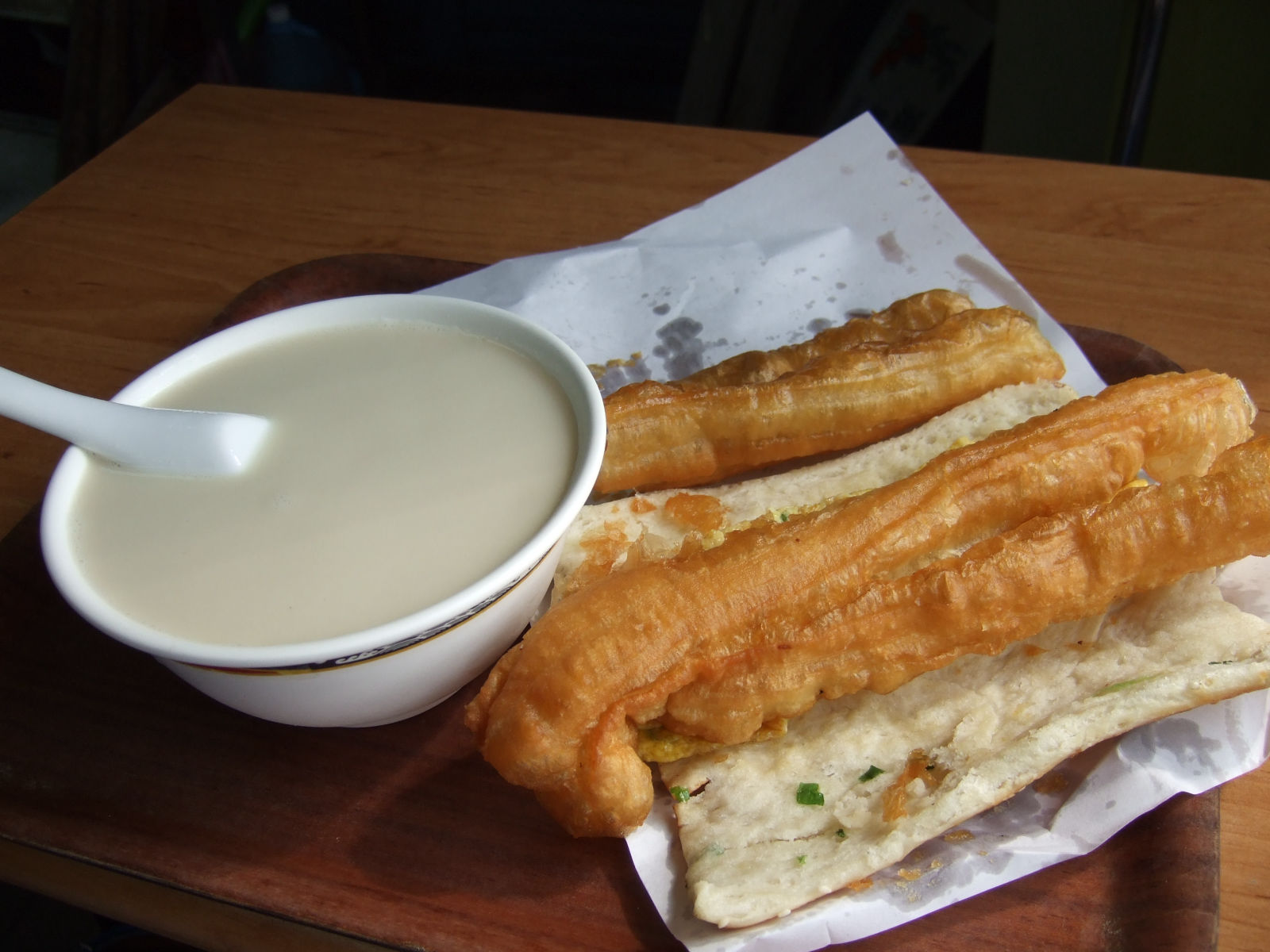
The cornerstone of the Taiwanese breakfast — whole soybeans ground, strained and simmered until the liquid turns silky and faintly sweet. You have two choices: sweet (甜豆漿), drunk warm from a bowl or cup; or savoury (鹹豆漿 xian dou jiang), where a dash of black vinegar curdles the hot milk into soft, silky clouds, topped with dried shrimp, spring onion, preserved vegetable and a drizzle of chilli oil. The savoury version is what the regulars order. Order it.
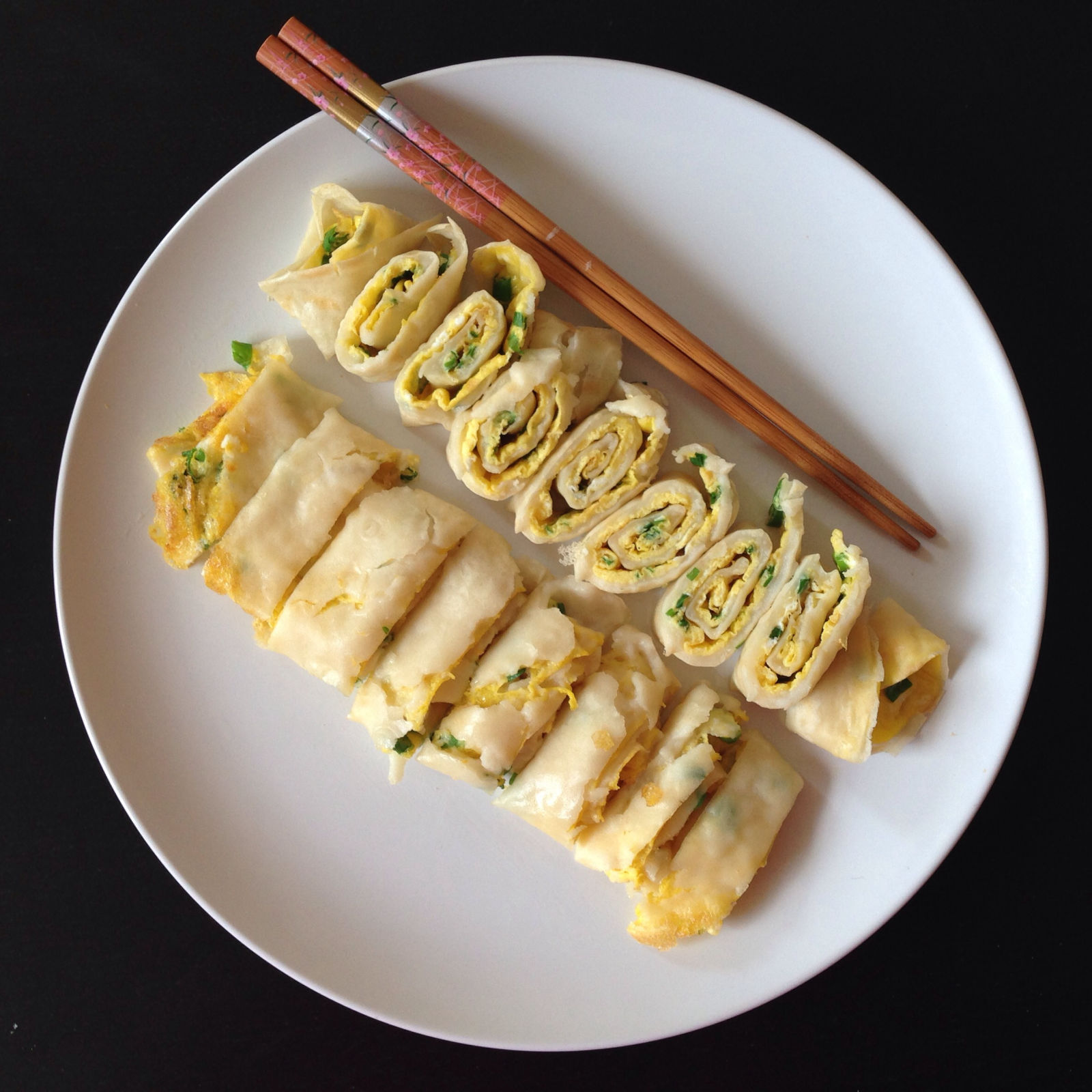
⭐ Invented on this island2Taiwan's most original breakfast creation — a thin, lightly chewy crepe cooked on a flat griddle, an egg cracked directly on top, then rolled up and sliced into rounds. Dressed with sweet soy sauce. The texture is somewhere between a French crepe and a fresh flour tortilla, with an egg-soft interior and just enough chew in the wrapper to make each bite interesting. Fillings range from cheese and tuna to corn, pork floss or — for the adventurous — stinky tofu. No morning in Taipei is complete without one.
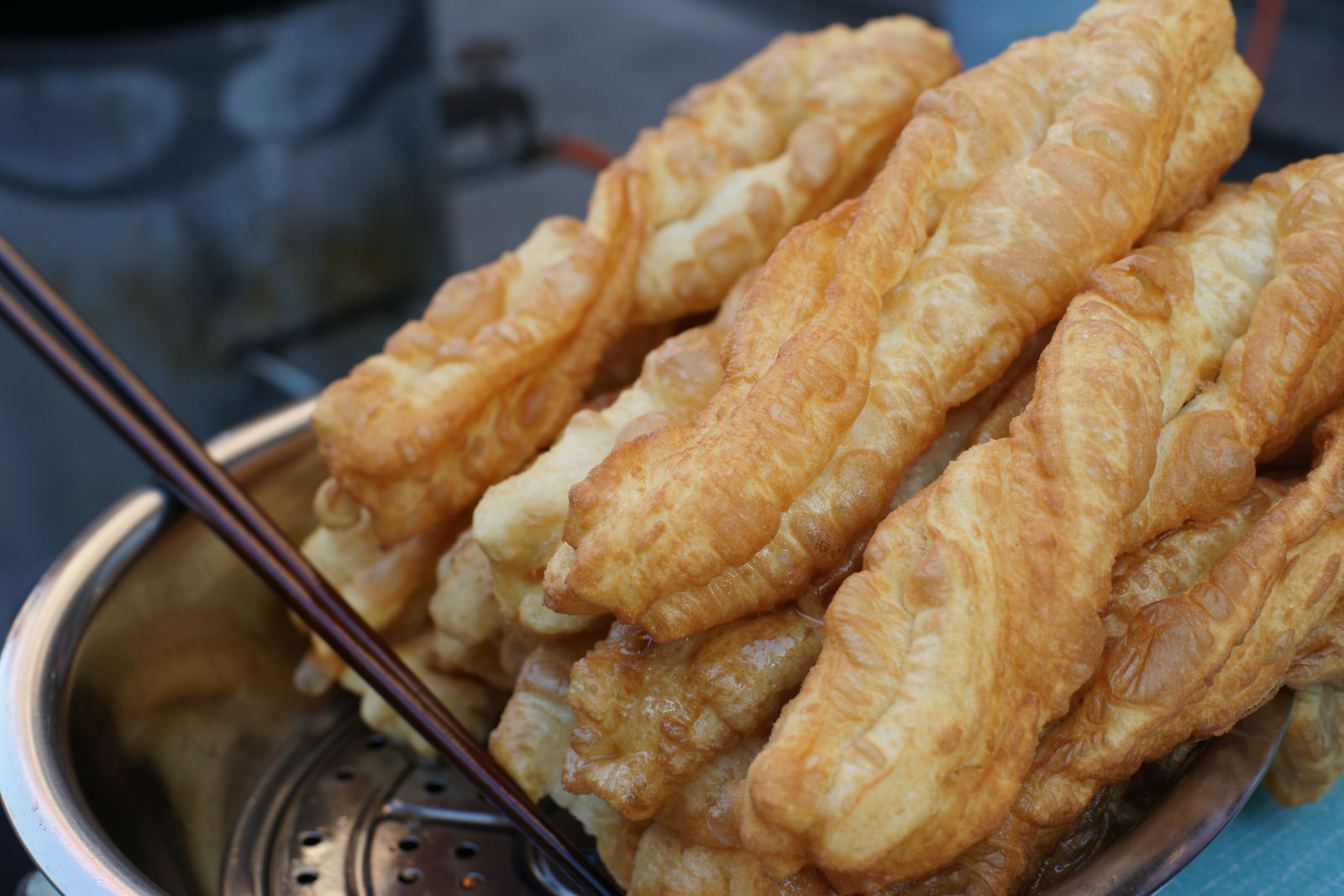
📜 Ancient recipe3Two strips of leavened dough twisted together and deep-fried until puffed, golden and shatteringly crisp outside, soft and airy within. The ritual is to snap off a section and dunk it into hot soy milk until it softens and swells with liquid, then eat it in one go. The contrast between the yielding soy milk and the oil-fragrant dough is the whole point. A you tiao fried fresh is entirely different from one that has sat for an hour — always seek a shop where you can see them cooking to order.
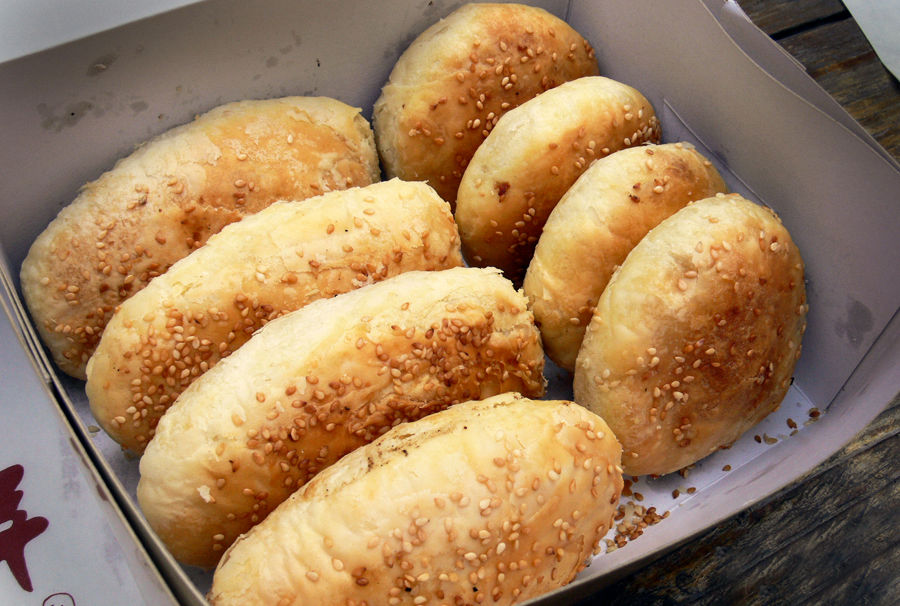
🧀 Northern Chinese style4A disc of layered dough coated in sesame seeds, baked in a cylindrical clay or steel oven at fierce heat until the sesame toasts golden and the layers separate into flaky, laminated strata. At the best shops — Fuhang most famously — the oven is a towering tandoor-like structure and the baker uses long metal tongs to plaster the raw discs against the inner walls. The result is simultaneously crisp, chewy and fragrant. Often served split open and stuffed with a section of you tiao: the shao bing you tiao (燒餅油條) is the breakfast sandwich that needs no improvement.
Warm glutinous rice pressed around a filling — typically a section of you tiao, pork floss, pickled vegetables and a salted egg — then rolled tightly into a cylinder and wrapped in paper. The rice is the wrapper, not a side dish: it clings to the fillings and keeps everything together as you eat it one-handed. Fan tuan is the Taiwanese breakfast for people in a hurry, and the best versions balance the sticky-sweet rice against the savoury, slightly crunchy fillings in every bite.
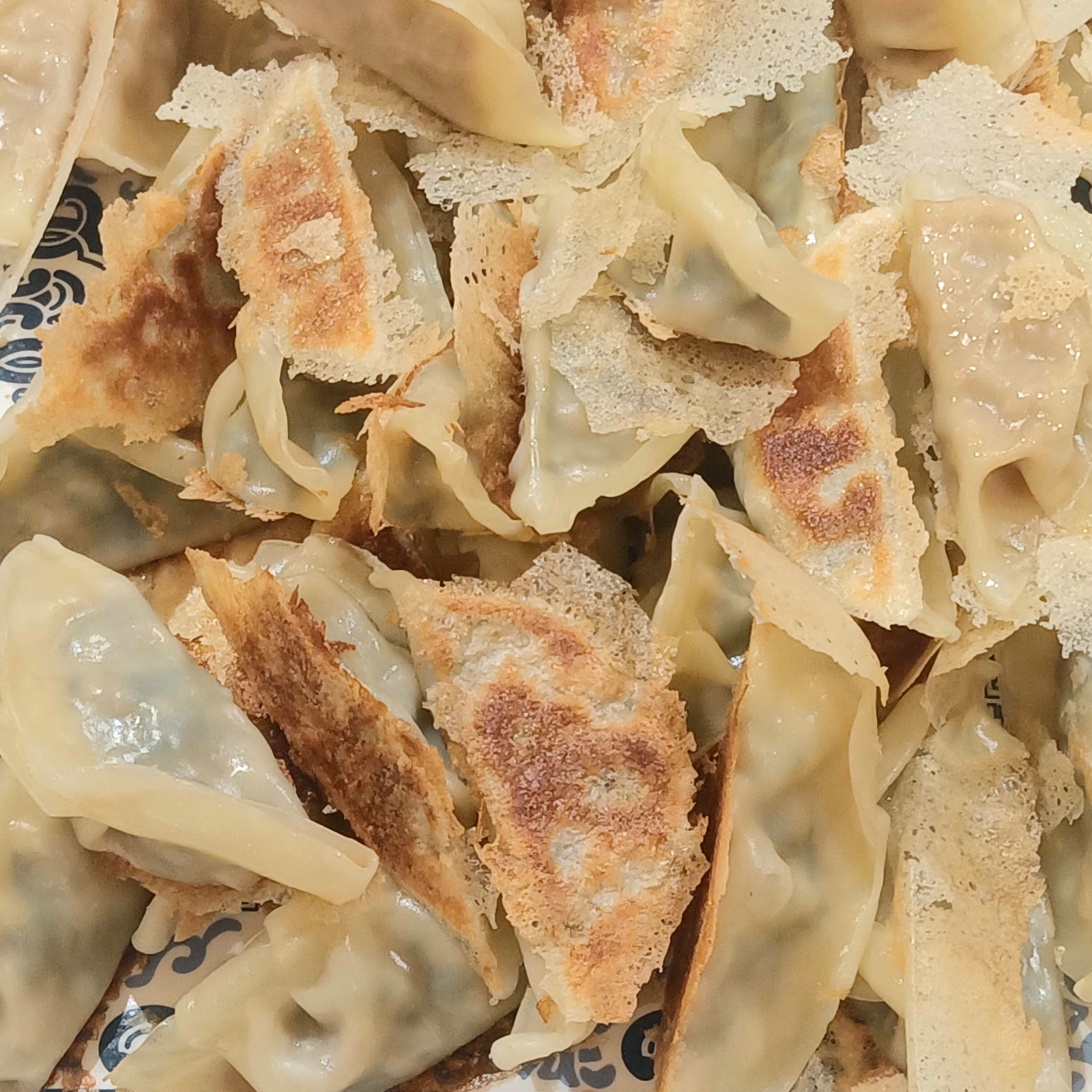
🔥 Pan-fried potsticker6Shanghai-style dumplings fried in a shallow pan with a splash of water, so the bottoms caramelise to a crisp golden crust while the tops steam to translucent tenderness. The pork and cabbage filling is juicy enough to produce a small burst of hot liquid with the first bite — be careful. Guo tie at breakfast is a Taiwan-specific pleasure; most good shops fry them in batches from around 7 am and sell out before noon. Eat with black vinegar and julienned ginger.
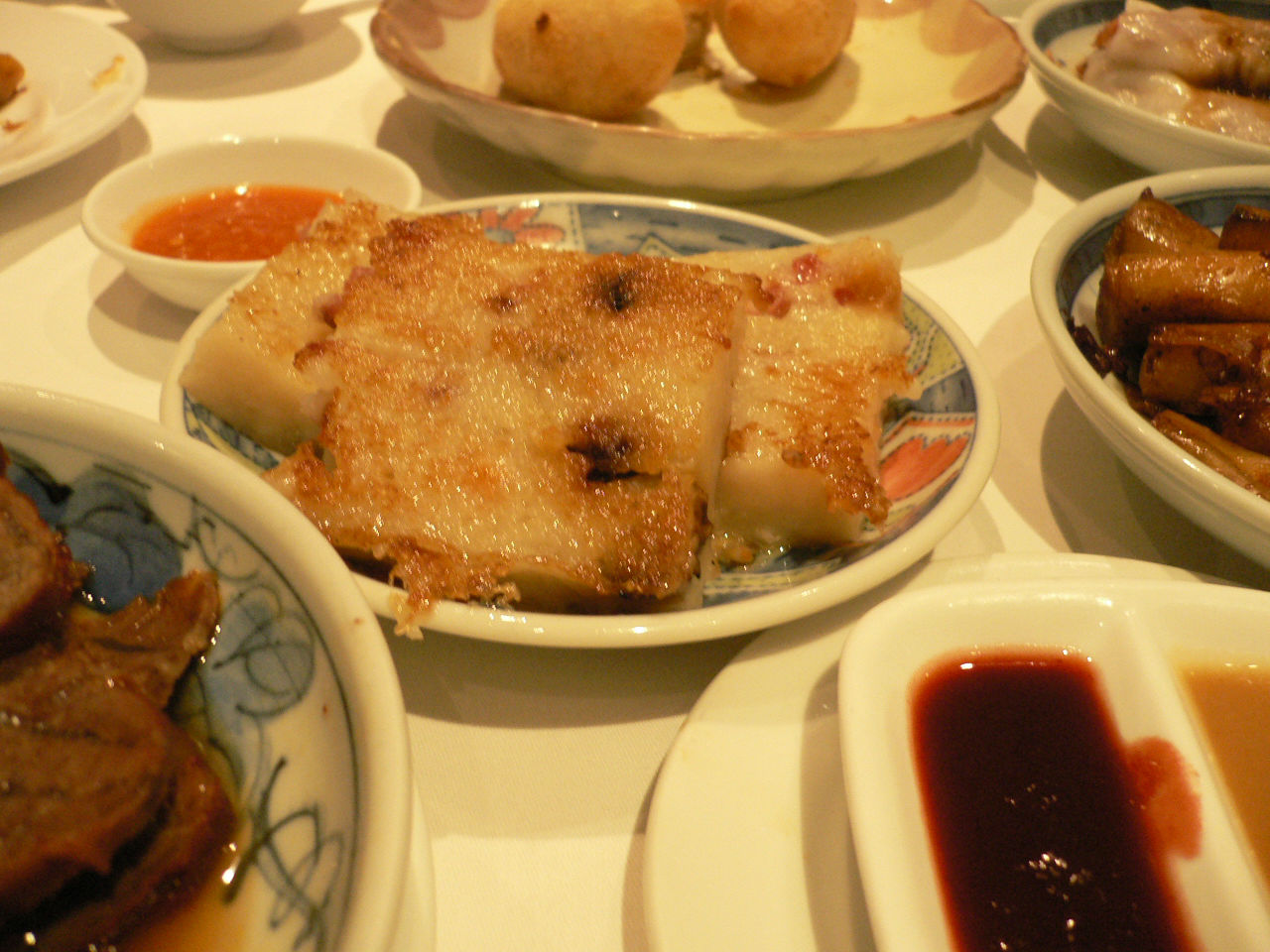
📜 Cantonese classic7Steamed rice flour and grated daikon radish, chilled until set, then sliced and fried until the exterior is crisp and golden while the interior stays silky and faintly sweet from the daikon. The flavour is gentle and easy — nothing aggressive, nothing sharp. Eaten with a dipping sauce of soy, or a smear of sriracha, it is the sort of breakfast that takes thirty seconds to appreciate and twenty years to forget. Found in morning markets and some soy milk shops.
A steamed folded bun of white dough, split and filled with a thick slice of soy-braised pork belly, pickled mustard greens, crushed peanuts and fresh coriander. The pork is tender enough to pull apart with a chopstick; the pickled greens cut the fat cleanly; the peanuts add crunch and sweetness. Gua bao is available at night markets and some morning markets from dawn. It is one of those combinations that sounds peculiar on paper and tastes inevitable in the mouth.
Each listing includes the neighbourhood, nearest MRT stop, what to order and a frank assessment of how early you need to arrive.
Every conversation about Taipei breakfast begins and ends here. Fuhang occupies the second floor of the Huashan market building; the queue begins on the ground floor and, on weekend mornings between 7 and 9 am, spills down the stairs and out onto the street. Waits of 45–60 minutes are normal on Saturday and Sunday. On weekday mornings before 6:30 am the line is manageable. What you are waiting for: shao bing baked against the walls of a massive clay oven, pulled out in a single motion and handed over, shattering hot. Order the shao bing you tiao and a cup of hot xian dou jiang (savoury soy milk). It is, genuinely, worth the wait — once. Go on a weekday.
The anti-Fuhang: a genuine legend with no queue problem whatsoever. Open around the clock since 1955, located across the river in Yonghe City and easily reached by MRT, this is the shop regulars go to when they want great soy milk on their own schedule. The xian dou jiang is consistently excellent, the you tiao properly crisp, and the shao bing correctly layered. If you have an early flight, a late arrival or simply refuse to queue for an hour, come here instead. Quality is high; ego is absent.
A stretch of Shida Road near National Taiwan Normal University lined with breakfast shops of every description — modern zao can dian, old-school soy milk shops, dan bing specialists and fan tuan counters. Ideal for visitors staying in the Da'an district who want choice rather than a single famous destination. The crowd is mostly students, the prices are friendly, and the atmosphere is cheerfully busy without the tourist-destination pressure of Fuhang. Arrive any time between 6 and 10 am and you will find something good.
The Zhongshan and Linsen area — where many mid-range and upscale hotels sit — has several excellent guo tie shops operating as breakfast venues. Most fry their first batch around 7–8 am and sell out by late morning. The skin is thin and properly crisp underneath, with a pork and cabbage filling that releases a small rush of liquid with each bite. Order a side of hot soy milk or thin rice porridge (xi fan) to complete the meal. Ask your hotel for the nearest; most staff know exactly where to send you.
The district most visitors know for its afternoon and evening energy has a quiet morning life that the same visitors almost never see. Breakfast shops open from 5 am for the market vendors, delivery workers and neighbourhood residents who need to eat before the crowds arrive. Dan bing, soy milk and guo tie at prices well below tourist-area rates. If your hotel is in Ximending, skip the convenience store and walk two minutes to find a local breakfast shop that has been feeding the same customers for decades.
The chain that proved Taiwan could build a global bakery brand. Branches throughout Taipei open early and bake throughout the day, so the bread is usually fresh. The sea salt coffee — cold brew topped with lightly salted cream — became a cult item among locals and is worth trying on its own merits. If you need a sit-down breakfast without queuing or pointing at photos, 85°C delivers reliably good milk bread, pork floss rolls and coffee at approachable prices. Several locations are open 24 hours.
The neighbourhood around Raohe Street Night Market transforms completely in the early morning. The night-market stalls are shuttered; a quieter community of breakfast shops and fruit vendors takes their place. Soy milk shops, dan bing counters and congee stalls line the back streets. This is the part of Taipei that most night-market visitors never see, and it is worth a morning detour. Prices are local rates; the atmosphere is neighbourhood rather than tourist.
Nanjichang is known among Taipei food people as the night market where locals actually eat — unlike the more tourist-facing Shilin or Raohe. It also runs as a morning market from the early hours. Pork congee shops, soy milk counters, dan bing and gua bao sit alongside fresh produce stalls. The prices are among the lowest in the city, the clientele is almost entirely local, and the experience of eating breakfast here feels nothing like a tourist activity. Take the MRT to Guting and walk ten minutes south.
Breakfast is just the beginning of what this city feeds you.
From xiaolongbao to stinky tofu — the complete guide to every meal of the day in Taipei.
Open the Food Guide →When breakfast ends, the night markets are already planning their evening. 8 markets, every dish worth eating.
Open Night Market Guide →After breakfast, slip into one of Taipei's remarkable cafés — a thriving third-wave scene hidden in lane buildings.
Open Café Guide →The full Taipei guide helps you plan every meal and every neighbourhood. Or start by finding a hotel near a great breakfast shop — the rest of the day takes care of itself.