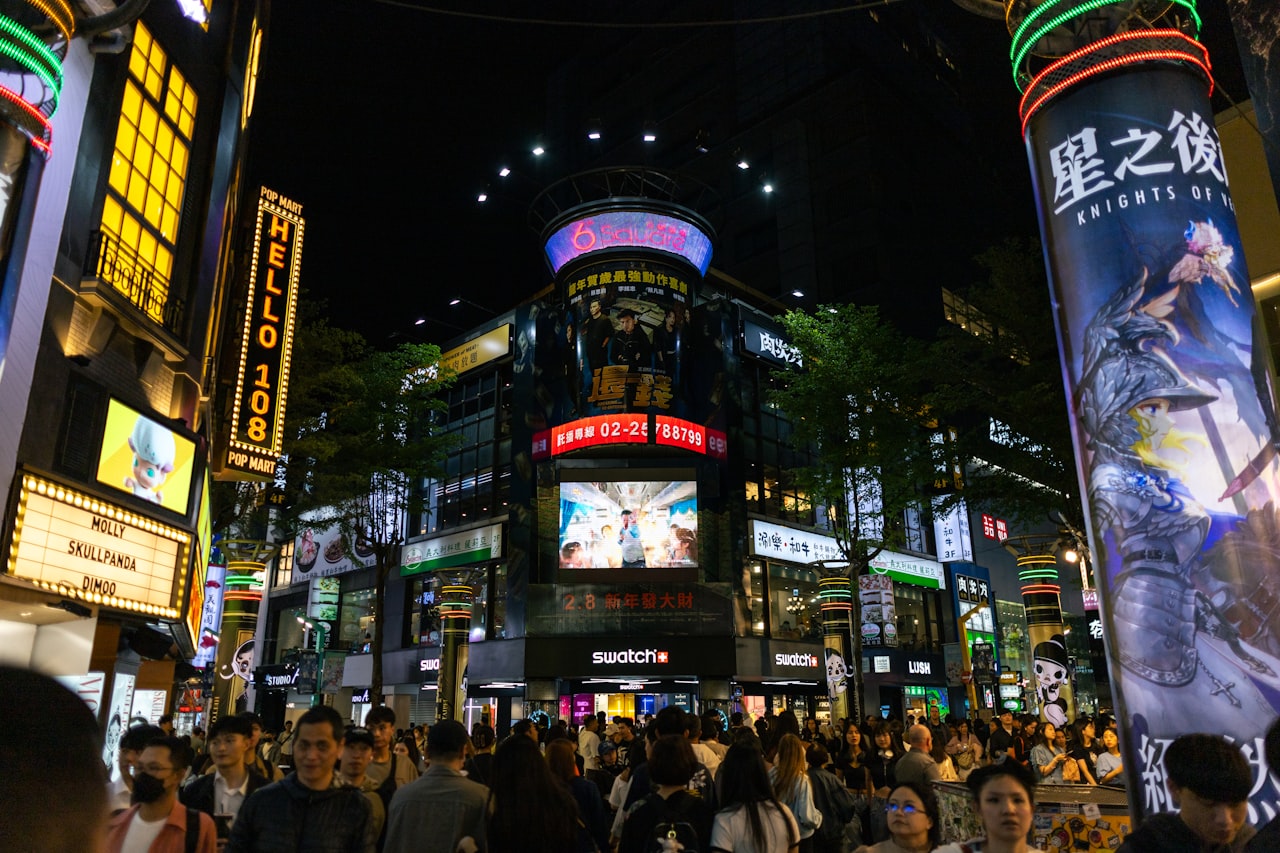
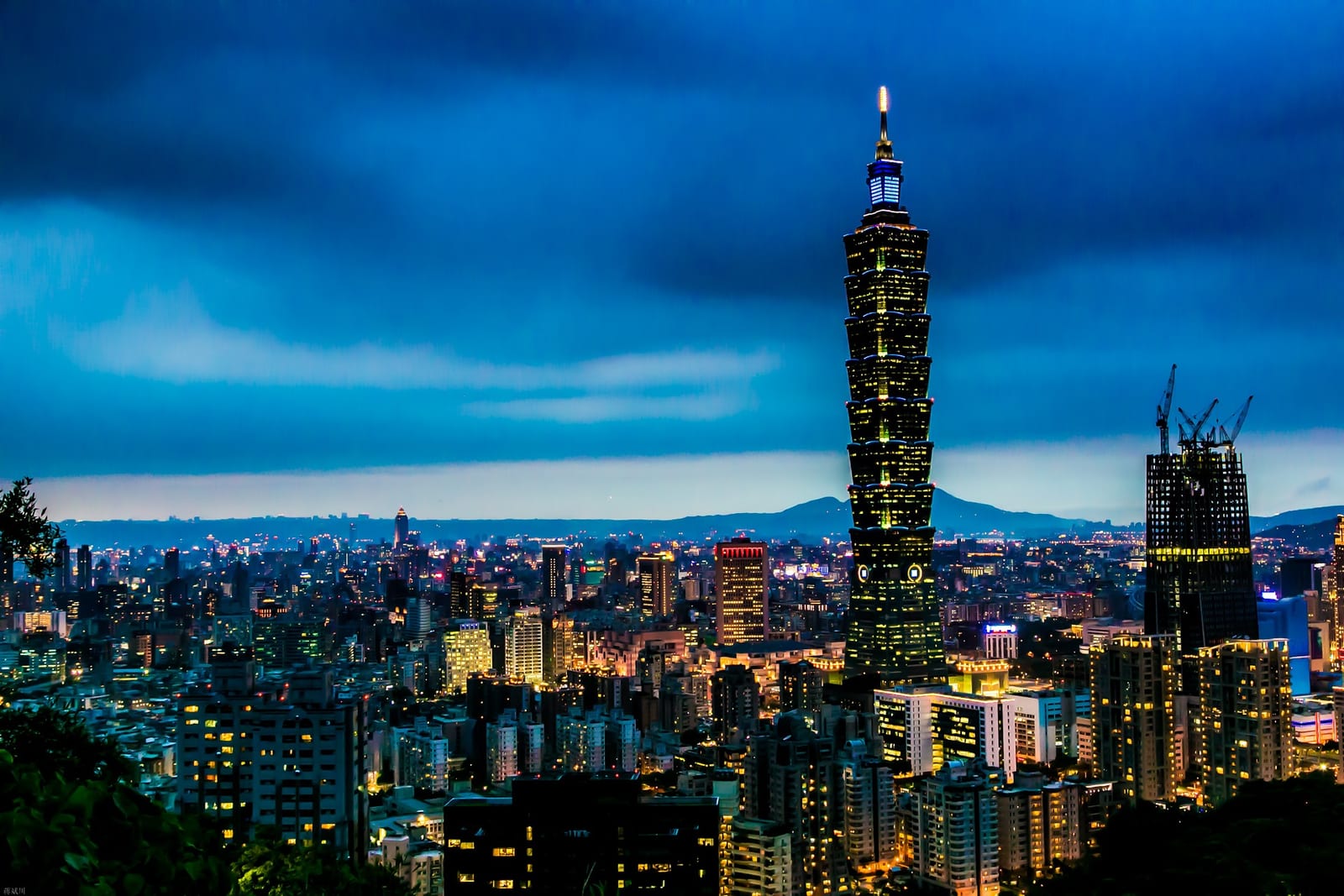
Taipei 101 burns gold against the dark. Elephant Mountain becomes someone's private rooftop. The night markets hiss with a thousand woks. Taipei after dark is not a footnote to the day — in many ways it is the reason to come.
Taiwan grew up on a culture of late nights — supper after midnight, shopping after 10, lingering over tea until the small hours. That culture is alive in every neighbourhood in Taipei. Night markets run until midnight. Twenty-four-hour restaurants outnumber most cities' dinner options. Rooftop bars pour until 2 am. Even the observatory atop Taipei 101 welcomes visitors until 10 pm every single night.
What surprises most first-time visitors is how safe it all is. Taipei consistently places among the world's safest cities. Streets are lit. Pavements are busy. 7-Elevens glow on every corner at 3 am. Walking alone — regardless of gender — is unremarkable here. This guide covers every dimension of Taipei after dark: the best night views, the three essential night markets, the neighbourhoods that thrive after hours, where to drink, where to soak, and where to eat when everything else is closed.
Klook offers Skyline 460 tickets (approximately NT$680+, limited slots), guided night market food tours (starting at ~NT$1,500-2,500), and Tamsui sunset dinner cruises (starting at ~NT$1,200-2,500) — turn a regular evening into a trip highlight.
Three very different vantage points — pay for the lift to the top, climb a free staircase to a rock face, or ride a gondola up into the hills for tea.
Open daily 09:00–22:00 (last admission 21:15). Tickets from NT$600. The express lift shoots you 89 floors in 37 seconds, and from the indoor observation deck you look out over a perfect grid of city light extending to the mountains in every direction.
For an outdoor experience, Floor 91 is an open-air terrace (weather permitting). For something altogether more dramatic, Skyline 460 lets you dangle your legs outside the building at 460 feet. Book the latter well in advance. Full details — ticket types, how to save money, and the best time of night to go — in the Taipei 101 guide.
The blue hour — the 20–40 minutes after the sun drops — is Elephant Mountain's defining moment. The sky turns from amber to deep violet while Taipei 101's lights come on floor by floor, close enough to feel as though you could touch it. No other viewpoint in Taipei puts you this near.
About 20 minutes up steep stone stairs from the trailhead (a short walk from MRT Xiangshan). There is lighting on the path. Arrive 30 minutes before sunset to claim a position on the six giant boulders. Everything you need to plan the hike is in the Elephant Mountain guide.
Ride the 4-kilometre gondola up to the Maokong tea district at dusk. From the hillside tea houses — open until 22:00 to midnight — you watch the city grid below gradually fill with light. Order a pot of oolong grown on these very slopes, settle in, and stay as long as you like.
The gondola does not run on Mondays and stops taking upward passengers around 21:30, so plan your descent before 22:00. The Crystal Cabin — glass floor, unobstructed views — is worth requesting at the ticket booth. Full operating details in the Maokong gondola guide.
Tamsui (淡水) is where Taipei comes to watch the sun go down — and has been for generations. Walk Old Street down to Fisherman's Wharf and watch an outsized orange disc sink into the river mouth. The atmosphere is openly romantic: couples, street food, the ferry light on the water.
After dark, the Wharf area stays lively with seafood restaurants, sweet-potato ice cream and the Lover's Bridge lit up in the water. A single MRT Red Line ride from anywhere in Taipei. All the details — supper spots, what to eat, and how to combine it with a day trip — are in the Tamsui guide.
Wherever you are staying, a night market is within reach. These three are in a class of their own — each one distinct, all three worth your time if you have it.
Taipei's biggest and most visited night market, open daily roughly 17:00–24:00. The must-eat here is the giant fried chicken cutlet (大雞排) — bigger than your face, golden, and aggressively seasoned. The underground Food Court zone collects dozens of stalls under one roof for rain-proof eating.
Take the MRT to Jiantan (劍潭) and cross the road. The market fills immediately. For a map of the best stalls, everything worth ordering and timing tips, see the full Shilin guide.
The market Taipei residents take their out-of-town friends to. Open daily roughly 17:00–24:00, about 600 metres of stalls along a single lane. The signature is the Fuzhou black pepper pork bun (福州胡椒餅) — baked in a wood-fired clay oven, handed to you scorching, to be eaten immediately on the pavement.
MRT Green Line to Songshan (松山), then five minutes on foot. Read the stall-by-stall breakdown in the full Raohe guide.
Smaller and less choreographed than Shilin, Ningxia is where you find Taipei residents eating, not performing for cameras. The standouts are pork congee, oyster omelette and old-style Taiwanese sausage. The pace is relaxed; the prices are honest.
MRT Red Line to Shuanglian (雙連), then roughly 10 minutes by foot. Every dish and how to order it is covered in the full Ningxia guide.
Beyond the three above, Taipei has several other markets worth knowing: Tonghua (通化) in Da'an, Huaxi (華西) or "Snake Alley" in Wanhua, Nanjichang (南機場) near Songshan Airport, and Gongguan (公館) near National Taiwan University — popular with students and full of cheap, interesting food.
Opening hours, stall highlights and directions to all eight markets are in the complete Taipei night-market guide.
If the night markets are the culture, these two districts are the entertainment — different in style, both blazing past 2 am with ease.
Taipei has a bar culture that punches well above its global profile — from rooftop terraces with 360-degree views to intimate cocktail dens in back alleys that rival Tokyo's best.
Taipei's most high-profile rooftop bar occupies the 48th floor of Nanshan Plaza — the second-tallest building in the city — with uninterrupted 360-degree views including an unusually close-range look at Taipei 101. Cocktails are pricey but the vantage point is worth it at least once.
Arrive during happy hour around 17:00–20:00 to watch the sunset and the transition into blue hour before full darkness. Reserve a table, especially on weekends and holidays.
The Zhongshan (中山) and Lin Sen North Road area has the densest concentration of Taiwanese craft beer bars in the city. Taiwan's microbrewery scene has grown quickly over the past decade — look for local labels from breweries like Taiwan Head Brewers and 23 Public.
Many bars here run happy hour from 17:00–20:00 and close around midnight to 02:00. The neighbourhood rewards slow wandering down side streets.
Taipei has developed a genuine speakeasy scene — bars accessed through restaurant back rooms, behind a laundromat facade, or down an unmarked staircase. The style has taken off in the past few years. Worth seeking out: Alchemy and Draft Land in the Da'an–Zhongshan corridor.
Dress code is rarely strict — smart casual is usually fine. Cocktail prices run roughly NT$350–600 per glass. The quality is consistently high.
Taipei has a strong independent music scene. The Wall near Gongguan (National Taiwan University) is the city's most respected live-music venue, open daily with local and international acts most nights of the week.
Legacy Taipei at Songshan Cultural and Creative Park handles mid-sized touring acts and local headliners. Check programme listings before you go — both venues regularly sell out.
Drinking age and general notes: The legal drinking age in Taiwan is 18. Most venues will ask for ID if you look young. Bars and clubs are generally safe, but keep an eye on your drink as you would anywhere. Taiwan has strict drink-driving laws and the MRT makes getting home alcohol-free simple before midnight.
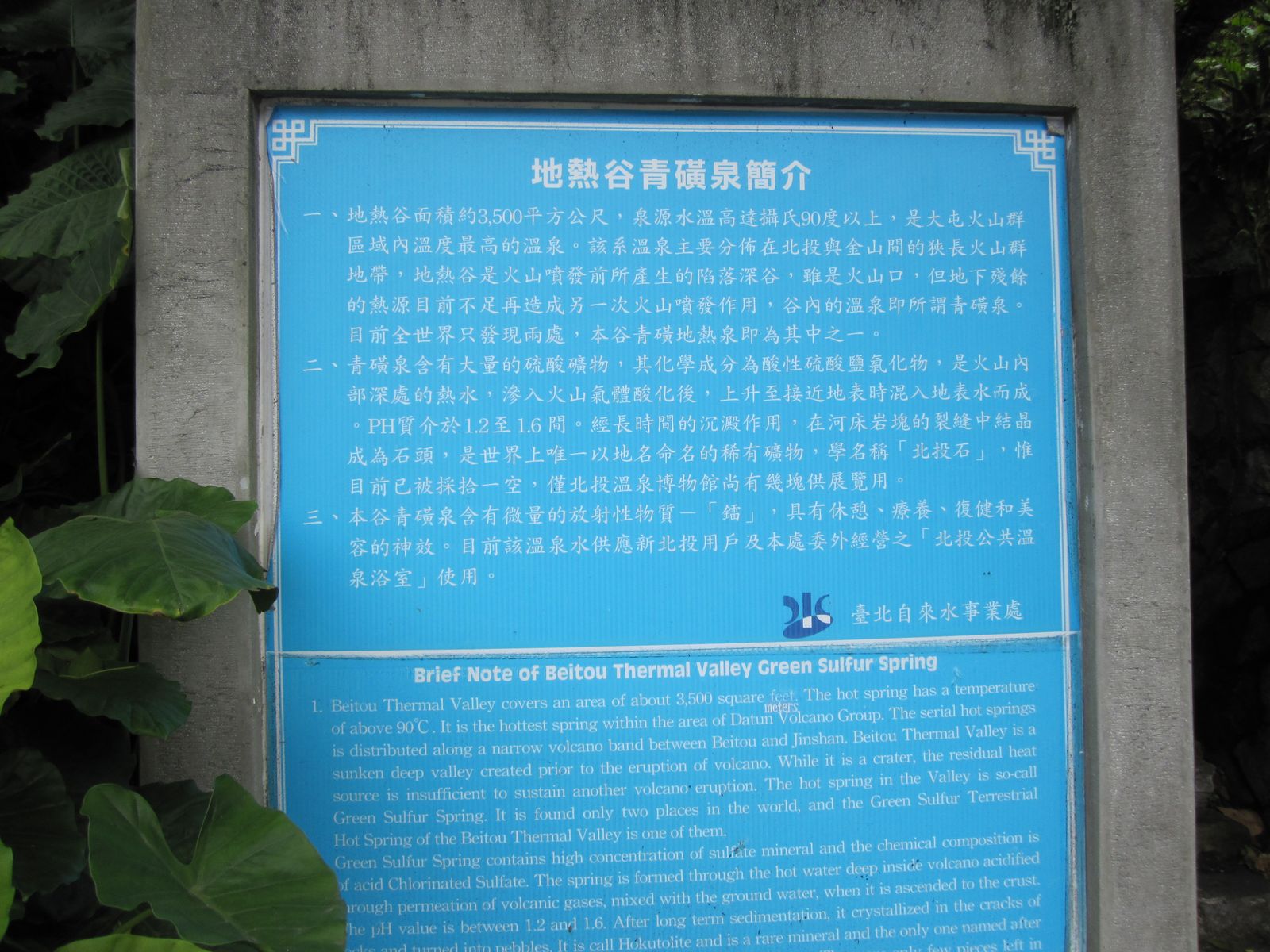
Soaking in a hot spring by day and by night are genuinely different experiences. After dark the crowds thin, the air cools, and the steam rises more dramatically against the dark. It is worth staying for.
The culture of eating late runs deep in Taiwan — restaurants open past midnight are common, 24-hour spots are everywhere, and the humble convenience store is a genuine meal option worth taking seriously.
Taiwanese beef noodle soup (牛肉麵) is one of the great late-night dishes — rich braised broth, tender shank, chewy noodles. Several shops in Taipei stay open late or run 24 hours. Yongkang Beef Noodle in Da'an is a classic that operates into the late evening, and the Lin Sen and Zhongshan North Road areas have several late-opening options.
The two broth styles, how to order and the ten best shops in Taipei are all covered in the beef noodle guide.
Taiwan has more convenience stores per capita than almost anywhere on earth — one per 1,582 people, all open 24 hours. What sets them apart is the quality: freshly made rice boxes, hot dumplings, tea-marbled eggs, fried chicken, glutinous rice balls, cold beer — all from a heated counter at 2 am without any shame.
Plenty of travellers will admit that their best late-night meal in Taipei was eaten standing outside a 7-Eleven. It is not a joke — it is an honest reflection of how good the food is.
Pork congee is the definitive Taiwanese late-night supper — warm, light, endlessly customisable with side dishes. Street-level congee shops in residential neighbourhoods often run until 02:00 or 03:00. The Ningxia Road and Lin Sen North Road areas have several worth finding.
Ordering is simple — point at the picture menu. Side dishes are rarely more than NT$80–150 each, and there are usually plastic tables set out on the pavement to sit and eat in the cool night air.
Several malls in the Xinyi area keep their food floors open until 22:00–23:00. ATT4FUN has restaurants and bars running well past that, and some food courts in the district stay open beyond 22:30.
Breeze Super (Breeze Nan Shan) is a premium supermarket with late hours — good for picking up Taiwanese fruit, local snacks and cold beer to take back to the hotel after a big night out.
Plan your transport home in advance and you can stay out as long as you like without stress. Everything you need to know is straightforward.
Taipei rains often: The city sees rain year-round, with the heaviest periods in May–June (plum rain season) and during late-summer typhoons. Carry a compact umbrella or a light rain jacket at all times. Some night market sections have shelter; others don't. Always have an indoor backup plan.
Click through for full details — opening hours, exact directions, ticket prices, and the insider tips that make the difference between a good visit and a great one.
Observatory ticket types, how to save money, the best time of night to go, and the Skyline 460 outdoor experience.
See Taipei 101 Guide →The trail, the six giant boulders, exactly when blue hour hits by season, and what to bring for an evening hike.
See Elephant Mountain Guide →The Crystal Cabin, how to get there, opening hours and the best tea houses to sit in with a view of the city below.
See Maokong Guide →All eight night markets — Shilin, Raohe, Ningxia and five more — with must-order dishes, directions and timing.
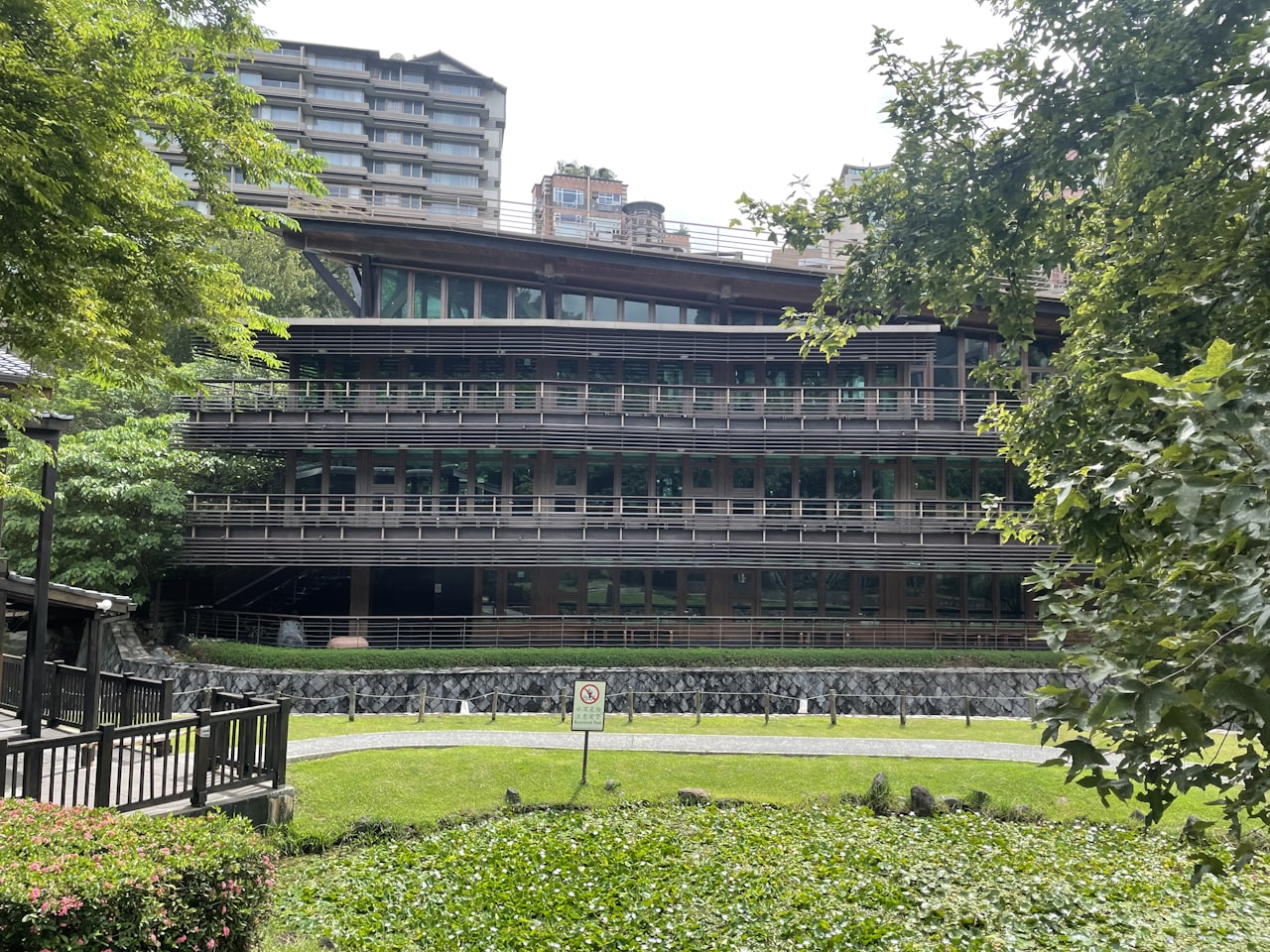
See Night Markets Guide →A full day plan for Beitou — the Hot Spring Museum, Thermal Valley, public bathhouses and the beautiful public library.
See Beitou Guide →The two broth styles, how to order, and the ten best shops — including several that stay open late.
See Beef Noodle Guide →The best base for Taipei's after-dark scene is a hotel within walking distance of an MRT station in Ximending, Xinyi or Zhongshan. You can reach the night markets, the rooftop bars and the views without worrying about the last train.